The fastest way to ruin a call night is to show up with a half‑empty bag and a dead phone.
You’re not packing for a cute weekend trip. You’re packing for war: pages, codes, consults, and maybe—if you’re lucky—90 minutes of broken sleep. A good on‑call bag will not save your call, but a bad one will absolutely make it worse.
Here’s exactly what needs to be in your on‑call bag, what’s optional, and what’s just dead weight.
1. The Core Essentials (Non‑Negotiable)
These are the “if you forget them, you will suffer” items. Do not rely on the hospital to have them. They often do not.
ID, Access, and Cash
You’d be surprised how many interns lock themselves out of half the hospital by 10 p.m.
You need:
- Hospital ID badge (on a solid badge reel or lanyard)
- Key cards/keys for call rooms, medication rooms, resident lounges
- A small amount of cash ($10–20) and a backup credit/debit card
Cafeterias close. Vending machines break. The one place that delivers after midnight sometimes only takes cash. I’ve watched residents beg other services for $2 for coffee at 3 a.m. Don’t be that person.
Phone, Power, and Connectivity
Your phone is your lifeline: orders, secure messaging, UpToDate, drug dosing, sign‑out. If it dies, your night becomes chaos.
Non‑negotiables:
- Phone (obvious, but I’ve seen it happen…)
- Portable battery pack (at least 10,000 mAh)
- Short charging cable (for the battery)
- Wall charger (for downtime)
- Headphones/earbuds (for white noise, quick videos, or step‑away calls)
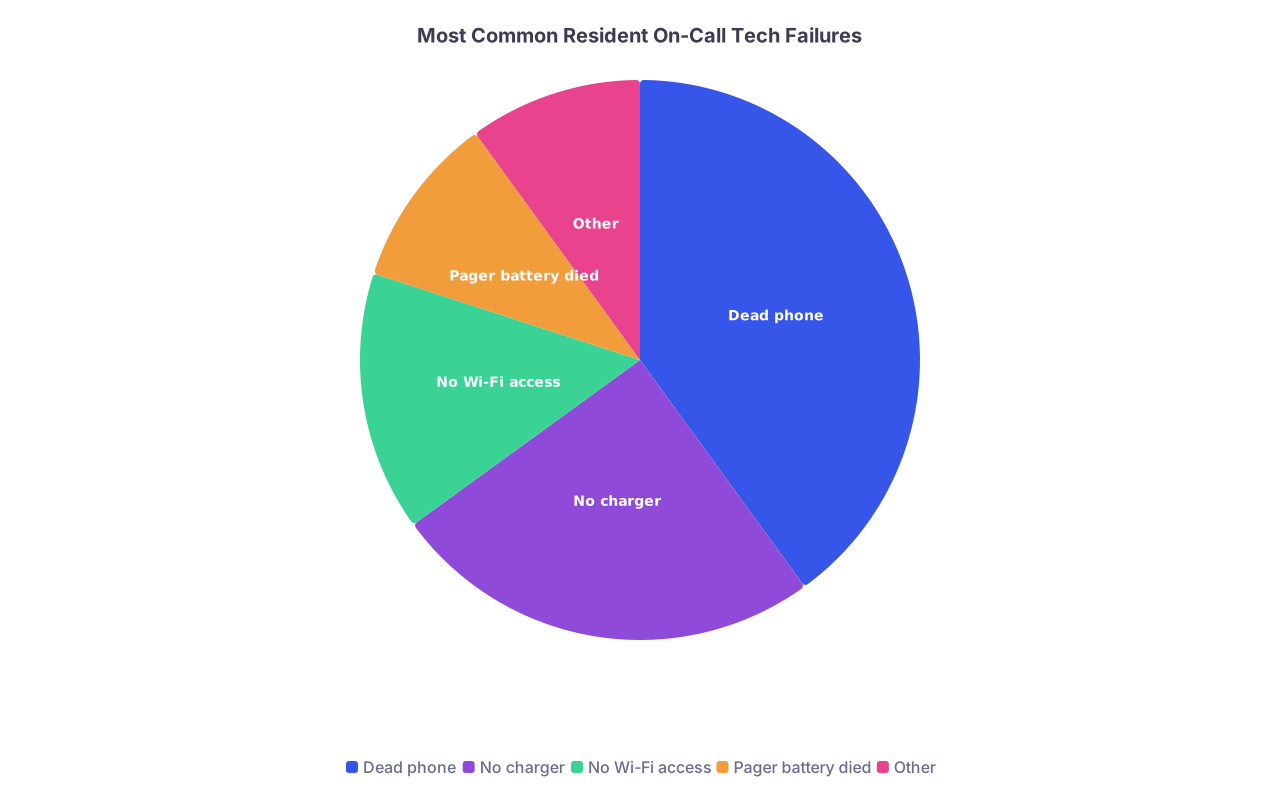
| Category | Value |
|---|---|
| Dead phone | 40 |
| No charger | 25 |
| No Wi-Fi access | 15 |
| Pager battery died | 10 |
| Other | 10 |
If your program still uses pagers, keep an extra AAA battery in a side pocket. When a pager dies during cross‑cover, you’ll know why.
Wallet and Documents
You do not need your entire life in your bag, but you do need:
- Driver’s license or government ID
- Insurance card (in case you end up as the patient)
- Hospital parking pass and/or validation card
Keep these in one small, consistent compartment so you are not tearing through your bag in the parking structure at 5:45 a.m.
2. Medical Tools You Actually Use
Half the stuff sold in those “doctor kits” is pointless for residents. You’re not an EM attending, you’re an overworked cog in the system. Pack what you will really pull out at 3 a.m.
The Absolutely Necessary Tools
Stethoscope
Keep a workhorse one in your bag and leave your nice one at home. Call nights are how Littmanns disappear forever.Penlight or small flashlight
For pupils, throat checks, and not tripping over someone sleeping on the call room floor.Pens. Many pens.
Black or blue ink, nothing fancy. Pens walk away constantly. Bring 3–4 and expect to finish the night with one.Small notebook or pocket cards
Some people live in Epic. Others need to write down: “2 a.m. — Mr. Jones, 7N, chest pain, trops pending.” Use what works, but have a paper backup for when the system freezes.Alcohol wipes and 1–2 spare masks
Yes, the hospital has them. No, they’re not always where you need them.
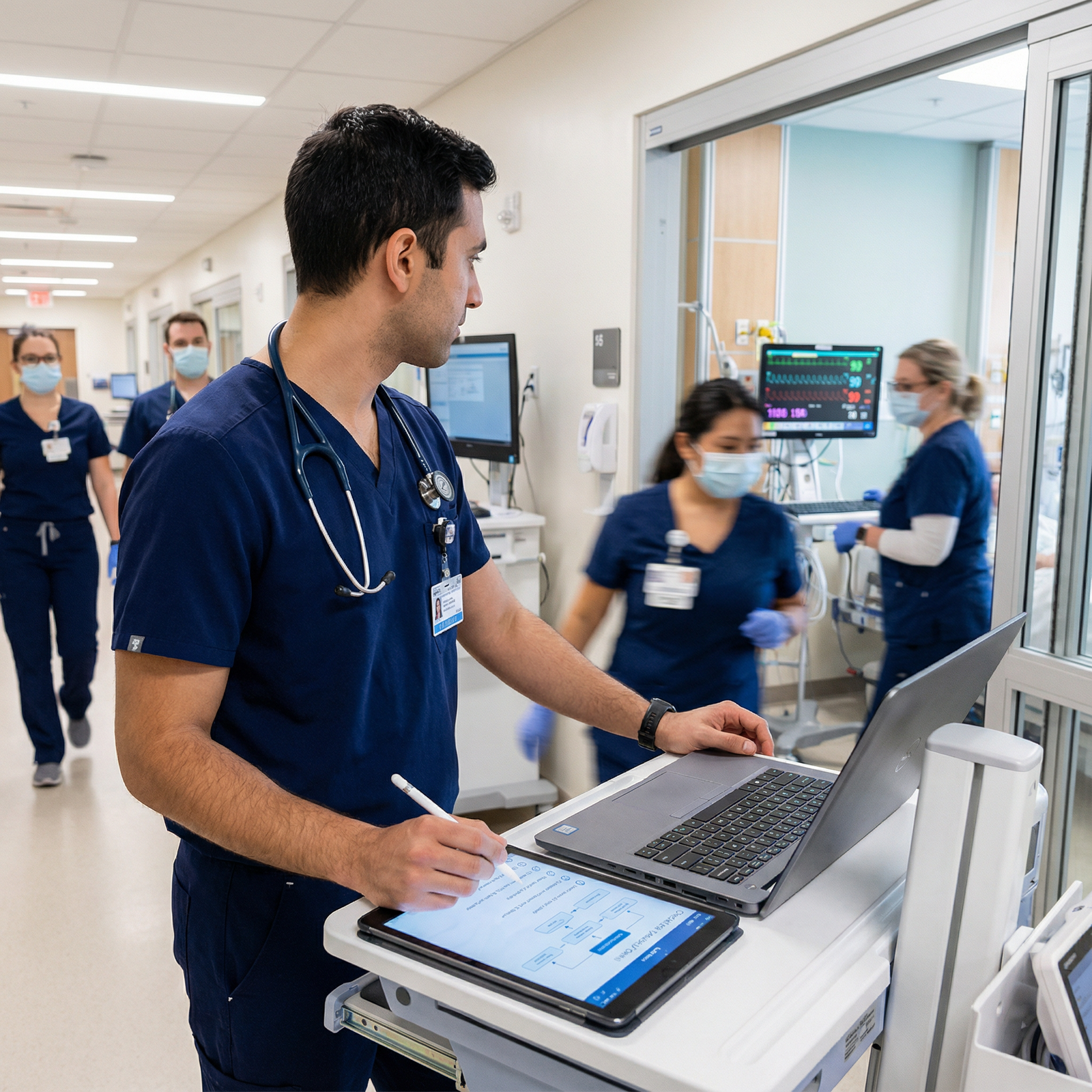
Situational Tools (Depends on Specialty)
These are “nice to have” if they match your rotation:
- Trauma scissors or bandage scissors (EM, surgery, ICU)
- Reflex hammer (neuro, neurosurgery)
- Extra hemostat or clamp (surgery; check that you’re allowed to carry it)
- Tape measure (wound care, derm, surgery)
- Small hand sanitizer (if you’re constantly bouncing between units)
If you haven’t used it in two weeks of call, it probably doesn’t belong in your bag.
3. Personal Survival Gear (Comfort Items That Matter)
This is where you move from “barely surviving” to “functional human.”
Clothing and Sleep
You are not packing a suitcase. You just need the right backups.
Must‑haves:
Extra pair of socks
Changing into clean socks at 2 a.m. after your feet have been sweating for 16k steps is life changing.Lightweight long‑sleeve layer or fleece
Hospitals are either freezing or sweltering. You will be dressed for the wrong one.Backup undershirt and underwear
For post‑code sweat, coffee spills, or getting caught in the rain walking between buildings.Minimal sleep kit:
- Eye mask
- Earplugs or white noise app + earbuds
- Small, inflatable or compressible pillow (optional but nice if your call rooms are awful)
If your hospital has decent linens and quiet call rooms, you can skip most of the sleep gear. If not, these are the difference between some rest and zero rest.
Hygiene and De‑Grossing
The “I feel like an actual human again” kit:
- Toothbrush + small toothpaste
- Deodorant
- Lip balm
- Hand cream (alcohol gel will wreck your skin)
- Travel‑size face wipes or gentle cleansing wipes
- Small bottle of lotion or moisturizer if you have sensitive skin
- Hair tie/clips (if you have longer hair)
- Spare contact lenses or glasses case/solution if you use them
This is not a full spa set. Think “I just did a two‑hour code brown cleanup and need to feel less disgusting.”
| Item Type | Minimal Kit Item | Overpacked Version |
|---|---|---|
| Oral care | Travel brush + tiny paste | Full-size brush, mouthwash, floss |
| Skin | 5–10 face wipes | Cleanser, toner, moisturizer set |
| Smell control | Travel deodorant | Full cologne/perfume bottle |
| Hands | Small hand cream | Multiple scented lotions |
| Hair | 1–2 ties/clips | Full styling kit + products |
If it doesn’t fit in a small toiletry pouch, you’ve packed too much.
4. Food, Caffeine, and Hydration
Hospital food is unreliable. Your hunger is not.
What to Pack So You Don’t Crash
You want things that:
- Don’t require refrigeration
- Won’t explode in your bag
- Have actual calories and protein
Good options:
- Protein bars or granola bars (not just sugar bombs)
- Nuts or trail mix (pre‑portioned so you don’t inhale 1,000 calories by accident)
- Jerky or other shelf‑stable protein
- Instant oatmeal packets (if you have access to hot water)
- A couple of electrolyte packets or tablets
Foods to avoid:
- Anything smelly (fish, strong garlic)
- Things that need a full meal setup
- Huge amounts of candy (sugar crash is brutal at 4 a.m.)
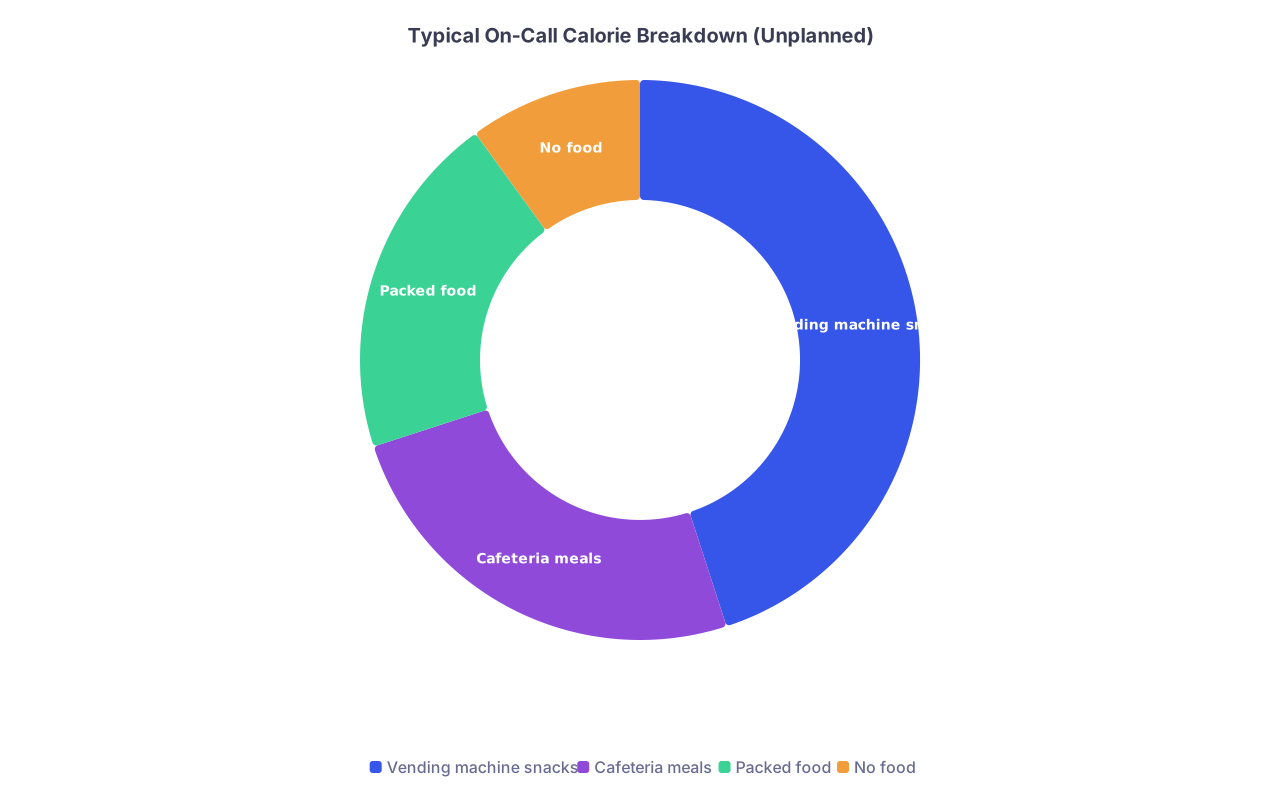
| Category | Value |
|---|---|
| Vending machine snacks | 45 |
| Cafeteria meals | 25 |
| Packed food | 20 |
| No food | 10 |
Your goal is to flip that—more from your bag, less from vending machines.
Caffeine and Fluids
You need:
- Reusable water bottle (leak‑proof, 20–32 oz)
- Your caffeine vehicle of choice:
- Reusable coffee tumbler
- A few instant coffee or tea packets
- Or plan for buying it, but keep a backup
Pro move: front‑load your caffeine early in the shift and taper. Slamming a double espresso at 3 a.m. then trying to drive home at 8 a.m. feeling wired and dead is a special kind of miserable.
5. Brain Support: Reference, Tech, and Sanity
Clinical Brain Support
Even if you live on apps, pack one offline backup.
- Pocket guide or small reference book (specialty‑specific if helpful)
- Printed sign‑out template or cross‑cover notes
- A tiny folder or clip for loose papers
You’re not in med school anymore, but you are still allowed to look things up. Smart residents do.
Sanity Items (For When You Get 15–20 Minutes)
You won’t always have time for this. But when you do, it helps.
Options:
- Kindle or small book (fiction works better than “productivity” books at 2 a.m.)
- Downloaded playlist or podcast
- Short meditation app or breathing exercise app
Keep these digital if you can. One small book or e‑reader is enough. If you’re packing three novels, you’re lying to yourself about how your night is going to go.

| Step | Description |
|---|---|
| Step 1 | Check pager |
| Step 2 | Handle priority task |
| Step 3 | Quick snack or hydration |
| Step 4 | Toothbrush, bathroom, short walk |
| Step 5 | Optional 5 min reading or music |
| Step 6 | Any active issues? |
| Step 7 | Next task due soon? |
6. How to Pack: Bag Choice and Organization
The bag matters less than what’s in it, but a terrible bag slows you down.
What Kind of Bag Works Best?
Most residents end up with one of these:
Medium backpack
Easiest to carry, handles laptop + clothes + snacks without looking like you’re moving in.Compact duffel
Good for those who carry extra clothes or shoes, a bit more annoying in crowded workrooms.Tote with zipper
Fine if you’re mostly floor‑based and not running between distant buildings.
Key features:
- At least 2–3 compartments
- One small, quick‑access pocket for ID, keys, pager
- Durable zippers (you will overstuff this at some point)
- Comfortable straps for long walks at strange hours
A Simple Layout That Actually Works
Think in layers:
- Outer small pocket: badge, keys, pens, pager, lip balm
- Main compartment: clothes, toiletries, snacks
- Secondary compartment: laptop/tablet, references, notebook
- Side pocket: water bottle, coffee tumbler
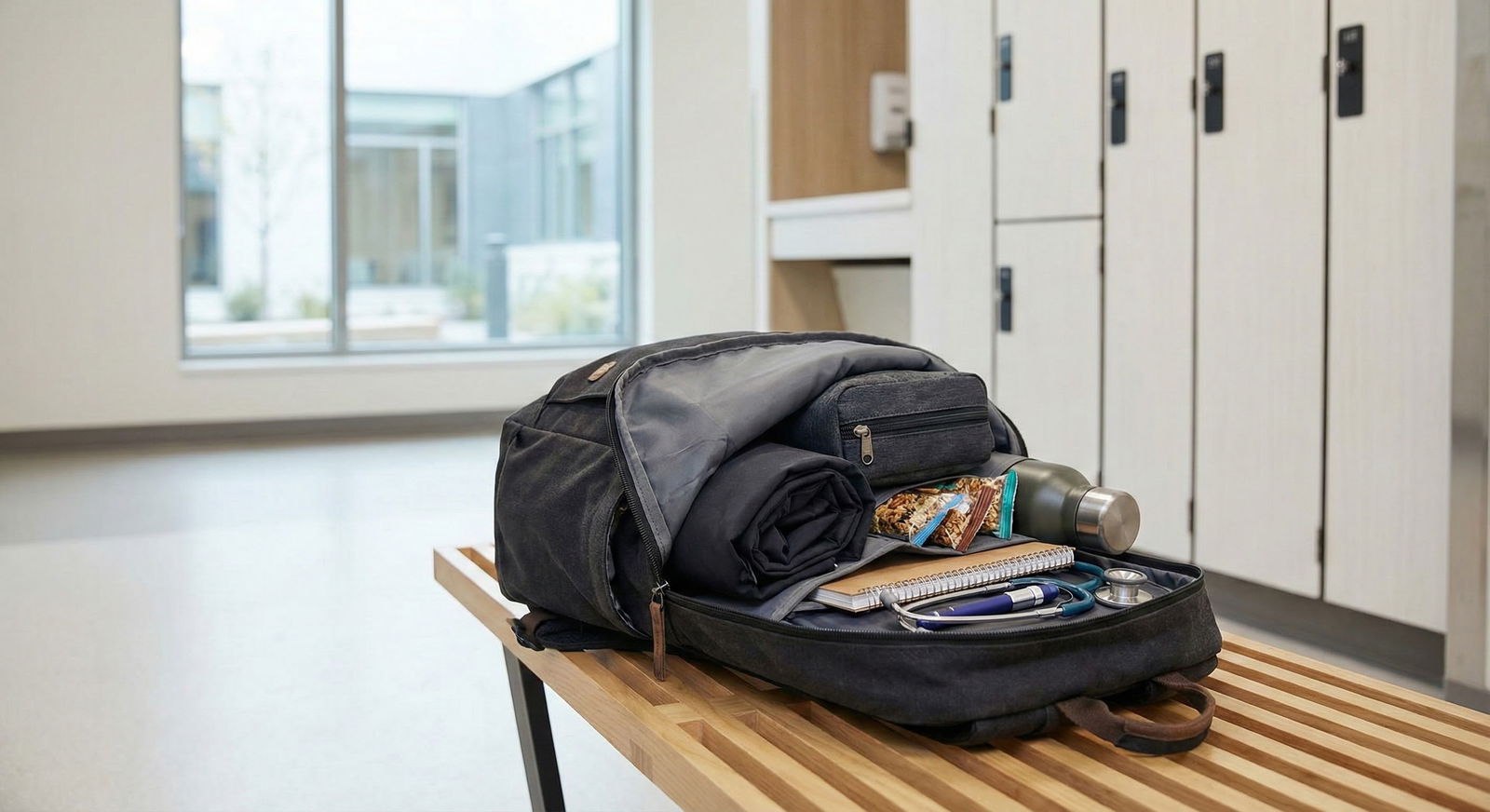
Do a 10‑second mental scan before leaving home:
“ID, phone, charger, stethoscope, snacks, toothbrush.”
If all those are in, you’re safe.
7. Sample On‑Call Bag Checklist (Realistic, Not Instagram)
Use this as a starting point and tweak for your specialty and hospital.
| Category | Must-Have Items |
|---|---|
| Access & ID | Badge, keys, parking pass, cash/card |
| Tech | Phone, charger, battery pack, earbuds |
| Medical Tools | Stethoscope, pens, penlight, notebook |
| Clothing | Socks, undershirt, underwear, fleece |
| Hygiene | Toothbrush, toothpaste, deodorant, wipes |
| Food & Drink | 2–3 snacks, water bottle, caffeine |
Personalize from there: add your one comfort item, your one specialty‑specific tool, and stop.
8. Common Mistakes and How to Avoid Them
I’ve watched residents repeat the same packing mistakes for years. You do not need to learn the hard way.
Overpacking Like You’re Moving In
If your bag is heavy enough to be used as a doorstop, you’ve gone too far.
Cut:
- Extra sets of clothes “just in case”
- Full textbooks (use apps or PDFs)
- Full‑size toiletries
- Extra shoes unless you truly need them (e.g., OR clogs vs. normal shoes)
Rule of thumb: if you did not use it on 3 out of your last 4 calls, it probably stays home.
Underpacking and Relying on the Hospital
Hospitals are not hotels. They run out of:
- Blankets
- Pillows
- Soap
- Towels
- Decent food after 8 p.m.
You are not special; they will be just as out of stock for you. Pack a minimal, self‑sufficient kit.
Never Re‑Setting Your Bag
Big mistake: unpacking your bag completely after every call. Then you forget half of it next time.
Better system:
- Keep a stable “core” in your bag that never leaves:
- Pens, notebook, spare pager battery, reference cards, toiletry pouch
- After each call, restock:
- Snacks
- Clean socks/undershirt/underwear
- Charged battery pack
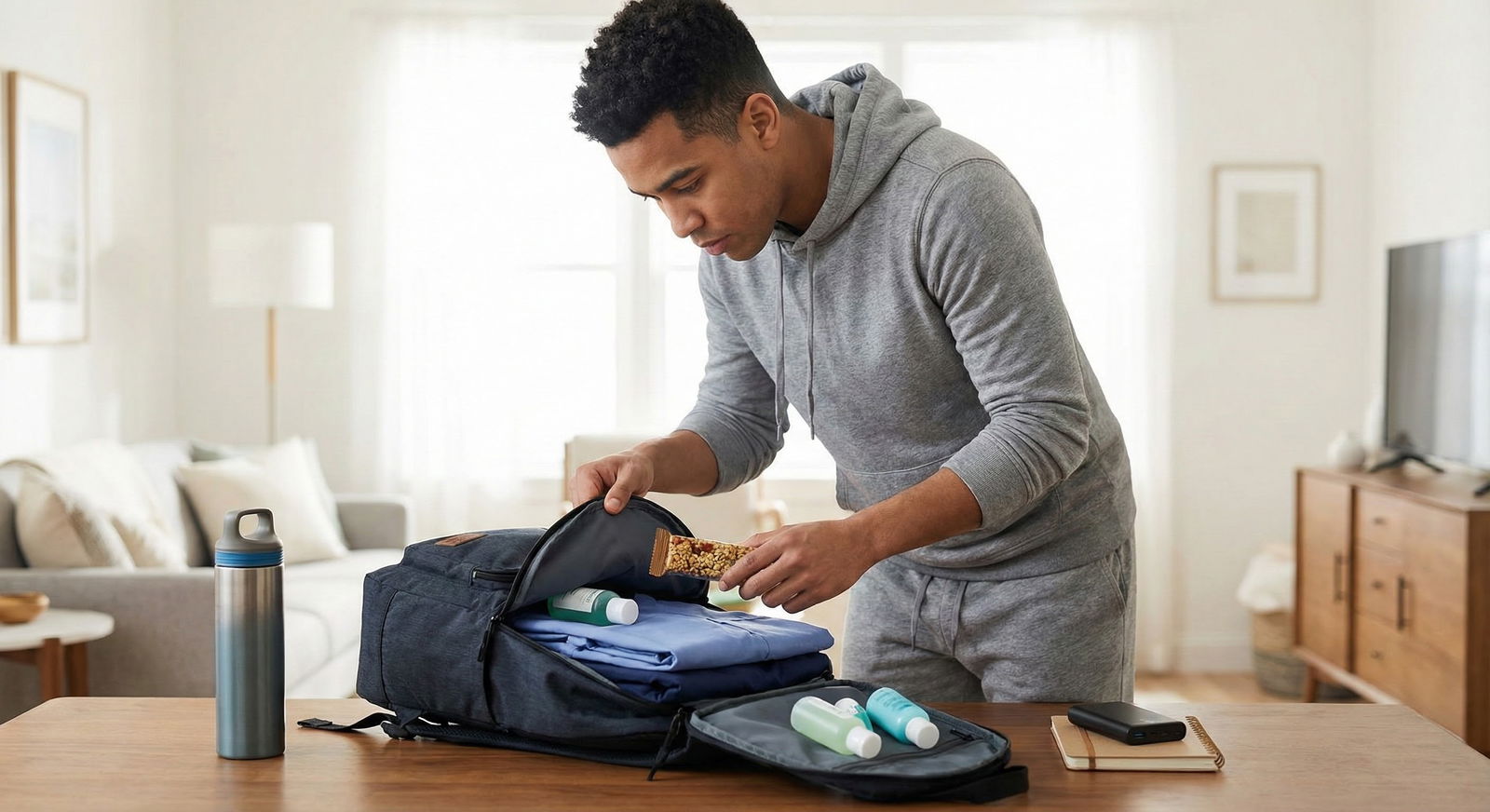
Do a 2‑minute reset when you get home. Future‑you will be grateful.
9. Tiered Packing Strategy (If You’re Minimalist vs Maximalist)
Some people want to carry the bare minimum. Others want a portable command center. Here’s a simple structure.
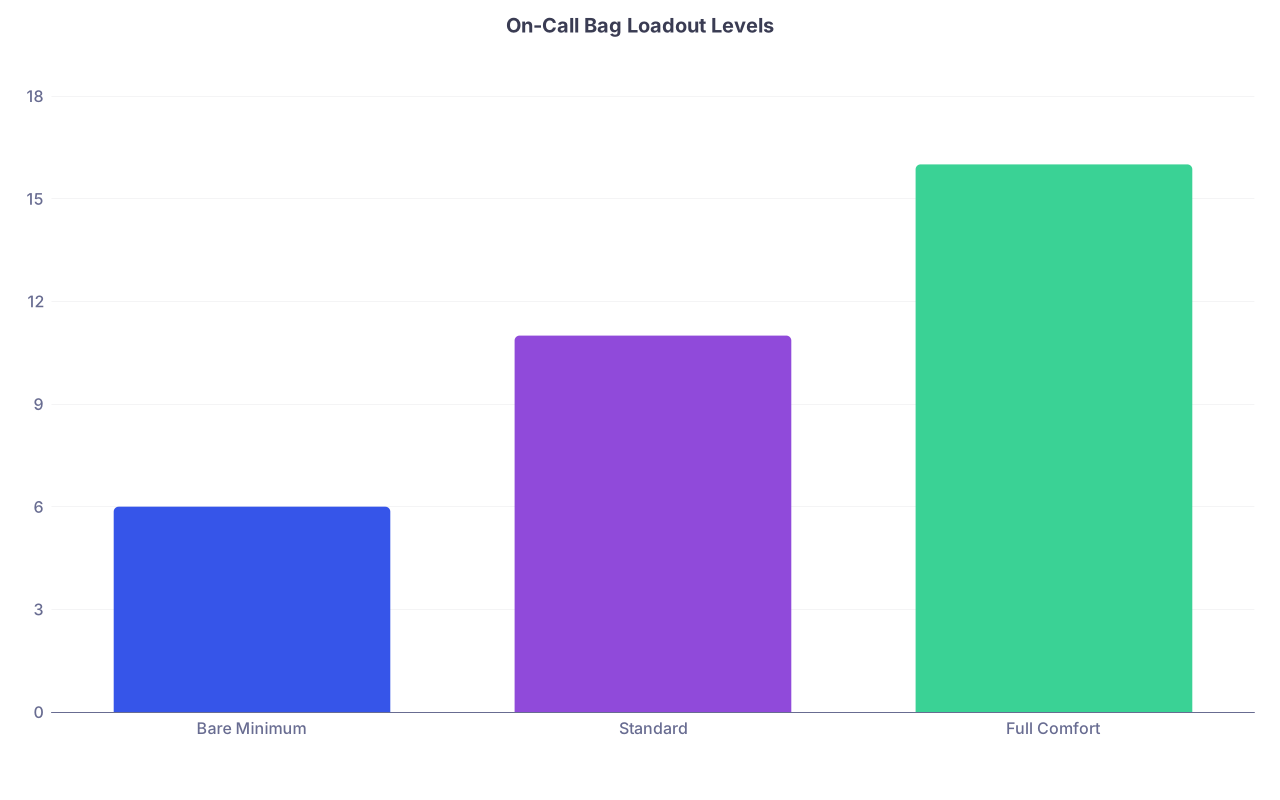
| Category | Value |
|---|---|
| Bare Minimum | 6 |
| Standard | 11 |
| Full Comfort | 16 |
Those numbers are rough counts of item groups, not individual objects.
Bare minimum (for short or home call):
- ID, keys, phone, charger
- Stethoscope, pens
- One snack, water bottle
- Toothbrush, deodorant
Standard (most 24‑hour or in‑house calls):
- Everything in “bare minimum”
- Extra socks/undershirt/underwear
- Light layer
- 2–3 snacks, electrolyte packet
- Small toiletry kit, earplugs, eye mask
- Notebook, small reference
Full comfort (ICU, brutal q3 call, trauma nights):
- Everything in “standard”
- Small pillow or better pillowcase
- E‑reader or short book
- Second pair of shoes if your feet die in clogs
- Extra scrubs if your hospital allows/needs that
Start standard. Then adjust based on reality instead of fantasy.
FAQ: On‑Call Bag Questions You Actually Care About
1. Should I leave my on‑call bag at the hospital or bring it back and forth?
If you have a secure, resident‑only call room or locker that’s truly safe, you can leave a “base kit” (toiletries, pillow, extra scrubs) there. I still recommend bringing your bag back and forth with your:
- Wallet and IDs
- Electronics and chargers
- Personal clothes
Hospitals have a very special talent for losing unattended things over time. Don’t risk your entire setup.
2. Do I really need a stethoscope in my bag if there are wall ones?
Yes. The wall ones are often broken, missing, or disgusting. On nights, you will not have time to hunt one down. Keep a mid‑range, “I won’t cry if I lose this” stethoscope in your bag and keep your fancy one for clinic or day shifts.
3. How much food should I realistically pack for a 24‑hour call?
Assume one real meal from the cafeteria and everything else from your bag. That usually means:
- 2–3 substantial snacks (bars, nuts, jerky, oatmeal)
- 1 “comfort” snack (chocolate, something salty)
If you’re on services where you routinely miss the cafeteria window (ICU, ED, L&D), increase that. Track one call: if you ended up scavenging at 1 a.m., you under‑packed.
4. Is it worth bringing a laptop, or is a phone enough?
If your hospital computers are ancient or constantly in use, a laptop can save your sanity for notes and reading. If the workstations are fine and you mostly use your phone for quick references, skip it on lighter calls. Many seniors only bring laptops for ICU or heavy ward call and leave them home for lighter cross‑cover.
5. What’s one thing most interns forget that makes a big difference?
Honestly: extra socks and a real phone charger + battery pack. I’ve seen people go from miserable to functional just by changing socks at 3 a.m. And nothing wrecks a call faster than a dying phone when you’re trying to return pages, check orders, and look up management for that weird overnight consult.
Key takeaways:
Pack a small, focused on‑call bag built around non‑negotiables: ID, phone + power, stethoscope, basic hygiene, snacks, and one backup set of clothes. Keep a stable “core” that never leaves your bag and just restock food and clean clothes after each call. If you have not used something on three calls in a row, pull it out—your shoulders and your sleep‑deprived brain will thank you.