The way programs actually review your on‑call incidents is far harsher—and far more calculated—than anyone tells you during orientation.
You’re told, “We’re a culture of safety, not blame.” That’s half true. The other half lives in closed‑door meetings, executive summaries, and whispered comments like, “Keep an eye on this intern.” I’ve sat in those rooms. I’ve watched careers get quietly redirected based on a single bad night on call and, more often, how someone handled the fallout.
Let me walk you through what really happens after that patient fall, rapid response, delayed page, or angry family complaint. And what people in charge are actually looking for when they pull your name up on the incident report dashboard.
What Actually Triggers a “Review” (Not What You Think)
Most residents think only catastrophic errors get serious scrutiny. Wrong. Programs track patterns long before anyone says the word “probation.”
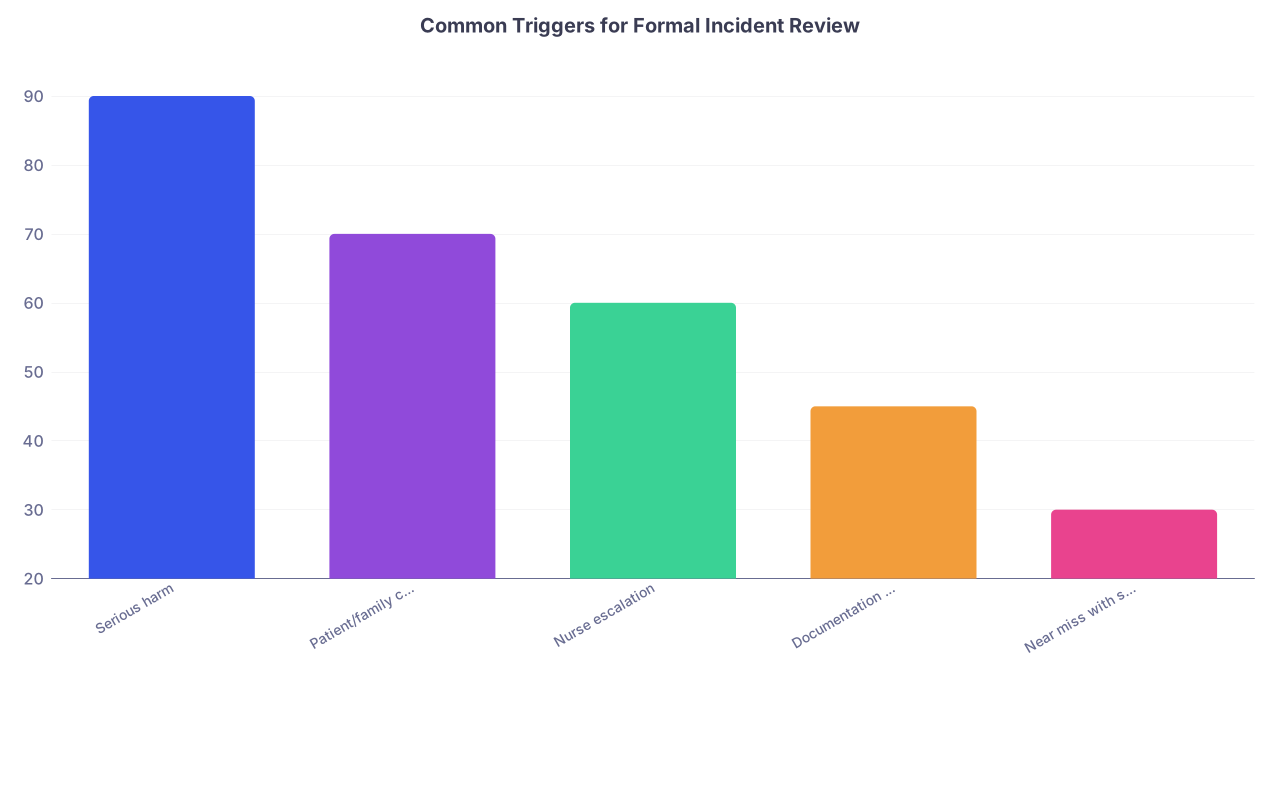
Here’s the internal logic that program directors and QI folks use, whether they admit it or not.
| Category | Value |
|---|---|
| Serious harm | 90 |
| Patient/family complaint | 70 |
| Nurse escalation | 60 |
| Documentation mismatch | 45 |
| Near miss with systems issue | 30 |
Let’s decode those.
Serious harm is obvious. Code that shouldn’t have happened, unrecognized sepsis, delayed OR, missed bleed. Those hit the incident reporting system, risk management, maybe even legal. Residents know those are big.
The quieter triggers are what catch you off guard:
Patient or family complaints during nights. “The doctor never came.” “The resident was rude.” Those get routed to patient relations, then often forwarded to the PD with subject lines like: “Concern about overnight coverage on 5E.” Your name’s in there.
Nurse‑driven incident reports. This is the one residents underestimate. A frustrated senior nurse files a report: “Resident was paged multiple times for hypotension, no response for 45 minutes.” That lands in the safety/QI queue. The QI nurse flags the attending, sometimes the PD, sometimes both.
Documentation vs reality. Example: your note says you examined the patient at 01:00. The nurse’s note and telemetry logs suggest nobody came until 02:10. Those discrepancies get noticed in sentinel event reviews and case conferences. People remember names.
Near misses with a systems flavor. Pharmacy catch, lab catch, radiology catch. The phrase “resident order” shows up enough and your PD starts seeing you in root cause analyses.
The point: you’re being “reviewed” more often than you ever hear about. Most of the time, programs let it slide with an email, a chat, or just a mental note. But they’re logging you in their heads.
The First 24–72 Hours: Who Looks At Your Night
After an on‑call incident, there’s an almost scripted choreography behind the curtain. Let me lay it out the way attendings and PDs actually experience it.

| Step | Description |
|---|---|
| Step 1 | Incident occurs on call |
| Step 2 | Incident report filed |
| Step 3 | QI or safety review |
| Step 4 | Notify attending or service chief |
| Step 5 | PD and Chair looped in |
| Step 6 | Local attending handles |
| Step 7 | Resident performance review |
| Step 8 | Coaching, remediation, or no action |
| Step 9 | Serious harm? |
Night of / early morning
Your senior or night attending hears about it first. They make the first call: “Is this just a rough night or is this a real performance concern?” Their impression of you in that moment matters more than the medical details. If you are panicked, evasive, or defensive at 3 AM, they remember that.
Next 1–2 days
The incident report hits the QI/safety system. At most hospitals, a safety nurse or risk manager screens it. They code it: severity, harm, contributors (resident, system, nursing, communication). If “physician decision‑making” or “delay in response” appears, that’s when your name might get escalated.
Your daytime attending gets looped in quietly. “Hey, there was a thing with your resident overnight—can we talk about it?” If that attending likes and trusts you, this becomes: “She was overwhelmed but did the right things, just needs more support.” If they already think you’re sloppy or disengaged, it becomes: “This isn’t the first time I’ve worried.”
That difference is everything.
By 72 hours
If the event is serious enough, it’s now on a QI meeting agenda. Maybe the departmental M&M list. Someone says, “Who was the resident that night?” Then it shifts from “what happened” to “who is this resident?”
Program directors don’t see every incident. They see:
- Anything with serious or unexpected harm
- Recurrent mentions of the same resident
- Events tied to angry complaints reaching hospital leadership
- Sentinal cases or high‑profile near misses
That’s when it transforms from “incident” to “performance data point.”
How PDs and Attendings Actually Judge You From Incidents
Programs do not care about perfection. They care about risk. They’re trying to answer one question: “Do I trust this person alone with a pager on a bad night?”
Here’s the uncomfortable truth: they aren’t just evaluating your clinical decision. They’re evaluating four things simultaneously: pattern, judgment, behavior under pressure, and honesty.
| Domain | What They Look For |
|---|---|
| Pattern of incidents | Repeated vs one‑off |
| Clinical judgment | Reasonable vs reckless |
| Professional behavior | Responsive vs avoidant |
| Integrity | Transparent vs deceptive |
Pattern
One isolated rough call where you missed mild early sepsis? That’s called being an intern. Three similar incidents over two months? Now you’re a “pattern,” and you will be on an informal watchlist whether anyone says it to your face or not.
In closed meetings, you’ll hear leadership say things like:
- “She worries me on nights.”
- “He’s fine when supervised, but his solo decisions scare me.”
- “We keep seeing his name in incident reports.”
That language starts the remediation machine.
Judgment
Nobody expects you to be clairvoyant. But they absolutely expect you to:
- Call for help earlier than you think you “should”
- Escalate when your gut says something is off
- Avoid cowboy decisions after midnight
When they review a bad outcome, they ask: “Was this decision reasonable with the information they had?” You can be wrong and still judged as safe. You get into trouble when you’re wrong and unreasonable.
Examples from actual reviews:
- “She didn’t call the attending despite progressive hypotension.” Red flag.
- “He ordered CT, called the senior, and escalated when lactate came back high.” Safer, even if outcome was bad.
Behavior under pressure
This is the part nobody tells you is being judged.
Was the resident reachable? Did they respond to pages? Were they physically present when the patient was tanking or did they send messages through the nurse? Did they snap at staff? Did they vanish into call room purgatory for 2 hours?
Nursing notes and unwritten hallway reports matter here. I’ve sat in PD offices and heard: “The nurses don’t feel safe with him at night.” That sentence alone can change your entire trajectory.
Integrity
This is the absolute line in the sand. If they suspect you altered a note, back‑timed entries, or misrepresented what you did? You’re done. Not necessarily fired, but your file is tainted.
Residents survive big clinical mistakes with honest, humbled transparency. They do not survive getting caught lying about those mistakes.
What Gets Discussed in Those Closed‑Door Meetings
Let me pull you into the room for a minute.
Picture: Department QI meeting. Conference room. Coffee. The “case of the month” gets presented. Your initials are on the screen, sometimes your picture if it’s a residency‑focused review.
Here’s how it really goes.
The case is framed around “systems issues” publicly. But in the smaller breakout—PD, APD, chief resident, a couple of key faculty—they talk about you.
Comments I’ve heard verbatim:
- “This is her second escalation‑worthy incident this block.”
- “He is very smart but lacks situational awareness on call.”
- “She calls for help all the time; I actually don’t mind that, but she needs better prioritization.”
- “He’s defensive every time we give feedback, so this may be hard to fix.”
Then they go through your record. Not the official HR file—the informal mental dossier:
- Prior narrative evals mentioning “concern” or “needs closer supervision”
- Nurses’ hallway feedback shared with chiefs
- Faculty remembering that night in the ICU when you froze
- Or the time you stepped up and handled a brutal night like a champ
That context colors how your incident is interpreted.
Same case, two different stories:
Resident A: “She had a bad call but she’s usually solid. Let’s coach her, no formal action.”
Resident B: “This confirms what we’ve been seeing. We need a formal remediation plan.”
On paper, the events may look nearly identical. Behind closed doors, they are not.
How On‑Call Incidents Feed Into Your Evaluation and Promotion
You think of your evaluation as those EPA/ACGME forms and end‑of‑rotation comments. PDs layer another set of data on top: incident‑linked impressions.
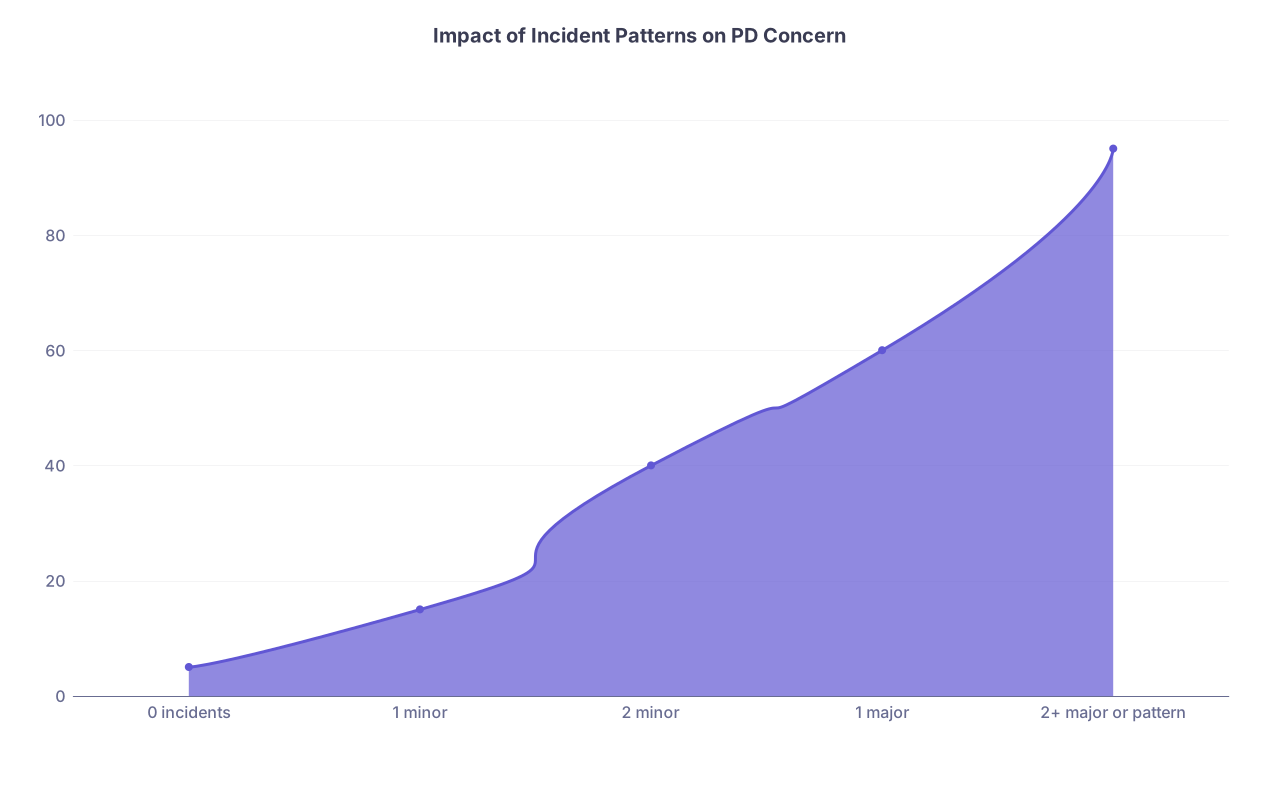
Here’s the unofficial calculus.
| Category | Value |
|---|---|
| 0 incidents | 5 |
| 1 minor | 15 |
| 2 minor | 40 |
| 1 major | 60 |
| 2+ major or pattern | 95 |
One isolated, well‑handled incident
Becomes a teaching point. Might even help you if your response showed maturity. I’ve seen chiefs say: “She had a rough M&M case but handled it with insight—she grew from it.”
Cluster of similar minor incidents
Now you show up on PD radar as “borderline.” Not failing. Not safe either. They’ll start getting “informal” feedback from attendings: “Watch him carefully on call.”
Single major incident with bad behavior
Example: serious delay + obvious ignoring of pages + angry family + defensiveness afterward. That’s the perfect storm. You’re not just “at risk,” you’re a liability. Legal, reputational, safety.
Multiple major incidents or registry of your name in QI
This is when formal letters appear. Performance improvement plan. Documented remediation. Rarely comes out of nowhere. There were whispers long before.
Promotion decisions
When PDs sit down to sign off on your advancement to the next PGY year or to graduate you, on‑call performance is one of the few things they mentally review even if it’s not on a form.
The question is simple: “Would I be okay if this person is the only resident in the hospital at 3 AM during a bad night?” If the answer is anything short of a clear yes, you’re going to feel it in delayed independence, extra supervision, or “we need you to repeat this rotation.”
What Actually Helps You Survive a Bad Night (From the Program’s Side)
You will have a bad night. Everyone does. The difference between “rough call” and “career‑altering event” is how you handle three stages: in the moment, right after, and during the fallout conversation.
In the moment: what PDs want to see in the chart and in behavior
They look for three things when they review the actual timeline:
You showed up. Physically. To the bedside. There is a world of difference between “resident evaluated patient at bedside at 01:05” and “no documentation of in‑person assessment until after rapid response arrived.”
You escalated appropriately. Called senior. Called attending. Called ICU. You can hear the respect in comments when faculty say: “He knew when he was over his head and got help.”
You made some kind of reasonable plan. Even if you chose the wrong pressor or the wrong imaging first, they want to see you were actively thinking and acting, not passively documenting.
If those three are there, the tone of review changes from “How dangerous is this resident?” to “How do we help them get better?”
Right after: your first conversations
This is where residents dig their own graves.
The version that buys you goodwill sounds like this:
“Last night was rough. I was called for hypotension at 2 AM. I saw the patient, ordered fluids and labs, but in retrospect I should have called you earlier and moved them to a higher level of care sooner. I want to walk through the case with you and get your feedback.”
The version that puts you under suspicion:
“Nurses keep overreacting. It wasn’t that bad. The system failed. Nobody told me they were worried. I did everything right.”
Do you hear the difference? Same medical facts. Completely different signal about insight and coachability.
Attendings and PDs are constantly asking themselves: “Can this resident recognize their own gaps and grow?” Your language answers that question.
During the formal fallout
If the event goes to M&M or a formal review, you will be watched very closely. Not just for what you say, but how you say it.
Residents who come out of this stronger usually:
- Present the facts without self‑pity or melodrama
- Explicitly state what they would do differently next time
- Acknowledge system issues and their own role without over‑apologizing
Residents who get labeled as “problematic”:
- Blame everyone else: nursing, ED, signout, cross‑cover, “confusing system”
- Minimize obvious red flags (“The MAP was low, but the patient looked fine”)
- Appear more worried about their reputation than the patient outcome
I’ve watched PDs nod approvingly during one resident’s M&M, then in the next month’s meeting quietly say about another: “This one worries me. No insight.”
How to Quietly Rebuild Trust After an Incident
If your name has already shown up in reviews, you are not doomed. But you need to understand how trust is rebuilt from the program’s side.
First, leadership watches for boring stability. They don’t want grand gestures. They want:
- A few months of uneventful, competent call shifts
- No new incident reports with your name
- Positive, low‑key nursing feedback like “He’s responsive” or “She comes quickly”
Second, they listen for attending comments changing over time. Chiefs and PDs trade notes in hallways and emails:
- “He seems much more on top of things on nights now.”
- “She called me early for a sick patient and did all the right initial steps.”
Third, they pay attention to how you show up in conference and teaching. Do you engage in case discussions with thoughtfulness? Or sit in the back radiating resentment?
If you want to accelerate the rebuild, be explicit with at least one trusted faculty: “I know my name came up after that night. I’m working hard on X, Y, Z. If you see gaps, please tell me directly.” That gives them a narrative: “He owned it and is improving.” PDs love that story.
The Ugly Extremes: When Things Really Go Bad
We should talk briefly about the worst‑case scenarios, because pretending they never happen is dishonest.
There are residents who:
- Repeatedly ignore pages on call
- Consistently under‑document or back‑time notes to cover delays
- Lie outright about being at the bedside
- Lash out at nurses so often that staff refuse to call them
Those residents become risk management problems. Not “needs coaching,” but “may harm a patient and expose the hospital.”
When a PD decides someone may be unsafe on call, you’ll see dramatic steps:
- Being pulled from nights or ICU
- Mandatory direct supervision on all calls
- Formal written remediation plans with specific metrics
- Extensions of training or, rarely, non‑renewal of contract
By the time it gets there, there have usually been many conversations, emails, warnings. But from the resident’s point of view, it often feels sudden because most of the discussion happened behind closed doors.
You do not want to be the resident whose name makes everyone around the table stiffen.
FAQs
1. Do programs really track individual residents’ incident reports?
Yes. Some more formally than others, but every PD I know mentally tracks which residents’ names appear repeatedly in safety reports, M&M cases, or complaint emails. A single minor incident won’t haunt you. A pattern absolutely will.
2. Will one bad on‑call night ruin my chances at fellowship?
Not if you handle it like an adult. A single tough case, even a serious one, that you respond to with insight, honesty, and growth rarely hurts you long‑term. In fact, some program letters explicitly praise residents who “faced a challenging case, took responsibility, and improved.” It’s repeated concerns and ongoing defensive behavior that kill fellowship support.
3. Should I self‑report my own mistakes from call?
If there was actual or potential harm, yes—and sooner rather than later. Self‑reporting with a clear account and a “here’s what I learned” stance signals integrity and maturity. When PDs review those cases, they almost always say some version of: “He brought this forward himself. That matters.” The cover‑ups, or the “maybe no one will notice,” are what sink people.
Key points to walk away with: Programs are always judging your on‑call performance, even when nobody says a word to you about that incident report. They care less about whether you were perfect and far more about whether you showed up, escalated, and told the truth. And the real differentiator between residents who survive bad nights and those who get quietly sidelined is simple: insight, humility, and a pattern of getting better instead of getting bitter.