
The way chiefs decide who gets the highest‑risk night admissions is not “fair.” It is brutally pragmatic. They give the scary patients to the people they trust not to crash the service.
Let me tell you how that trust is actually built and lost—because no one will ever say this to your face during residency.
The Real Algorithm Behind High‑Risk Night Admissions
Every chief I’ve worked with has an internal list. Not written. Not formal. But very real. It’s a mental ranking of: “Who can I hand a septic shock, a GI bleed with cirrhosis, or a borderline ICU case at 2 a.m. and still sleep for 45 minutes?”
Program leadership pretends the rotation schedule or triage rules decide. That’s fiction. Within whatever “system” exists, the chief quietly chooses who takes the hardest hits.
Here’s the uncomfortable truth: they are not rewarding the “nicest” residents. They are optimizing for survival—patient survival, service survival, and their own.
The Three Fast Filters Chiefs Use
When that trauma pager goes off and there are three new admissions waiting and only one looks like a disaster, the chief runs a mental three‑step filter in about two seconds:
- Who is clinically safe?
- Who is logistically reliable?
- Who is emotionally low maintenance?
You do not need to be brilliant. You do need to clear all three.
Let’s break those down, because this is where most residents misjudge themselves completely.
1. Clinical Safety: “Will This Person Miss Something That Kills the Patient?”
This is the first and non‑negotiable filter. If a chief has even a hint that you’re unsafe with bread‑and‑butter problems, they will never give you the razor‑edge admissions.
I have seen this play out in real time:
At one large academic IM program, a PGY‑2 missed cord compression twice in a month. The chiefs never said a word publicly. But overnight, that resident stopped getting neuro‑onc and complex heme admissions. Those quietly went to other people. For the rest of the year.
At a county hospital, a surgery PGY‑3 repeatedly wrote “monitor on floor” for borderline perf patients the ICU later bounced back. The trauma chief started routing all high‑risk abdomens to a different resident, even when technically it was that PGY‑3’s “turn.”
The question is simple: “If I hand you a patient who looks okay but is actually a landmine, will you recognize the smell of explosives?”
What Chiefs Look At (Even If They Don’t Admit It)
They do not sit down with a spreadsheet. They look at patterns.
| Signal Type | Example Red Flag |
|---|---|
| Sign-outs | Vague plans, missing contingencies |
| Admission notes | No differentials, no “sick vs not” |
| Pages from nurses | Frequent “MD to bedside now” escalations |
| Attending feedback | “Nice but misses big picture” |
| ICU transfers | Floor to ICU within 6–12 hours, often |
If your admission notes read like: “Admit for pneumonia. Start ceftriaxone and azithromycin. Monitor,” with no acknowledgment that the patient is 85, tachypneic, hypotensive‑ish, and on home O2, you’ve already told the chief you might be dangerous.
They ask themselves:
- Does this person frame sick vs not sick in every case?
- Do they have a differential beyond the first diagnosis that pops up?
- Do they call early when something doesn’t add up?
And here’s the ugly part: they extrapolate. One near‑miss on a relatively simple case and you just downgraded yourself in their mental triage system.
How You Quietly Signal “I’m Clinically Safe”
You do not do this with speeches in conference. You do it in small, repeated behaviors:
- You say on sign‑out: “This is either early sepsis or bad COPD. If needs more than 4 L, I’d call the ICU.”
- You check lactate, repeat it when someone doesn’t look right, and you communicate why.
- You document clearly: “High risk for decompensation due to X, Y, Z. Will reassess within N hours.”
Chiefs read those notes. Not every word. But enough to see your pattern.
They trust residents who think in “if/then” while writing the plan: “If worsening acidosis / pressor requirement / mental status change → call ICU, update chief.”
That reads like safety. And safety earns you the right to see sicker stuff.
2. Logistical Reliability: “If I Give Them a Trainwreck, Will They Sink the Entire Night?”
The second filter has nothing to do with medical knowledge. It’s about bandwidth and basic execution.
Here’s the reality chiefs will never put in an email: they don’t just triage by acuity; they triage by “who will blow up the service if I give them this?”
High‑risk admissions are labor‑intensive. Family meetings. Procedures. Extra labs and imaging. You can’t hand a septic shock or a fresh GI bleed to someone who already drowns in two straightforward CHF admissions.
At 1 a.m. a chief is juggling:
- 10 floor patients circling the drain
- 4 waiting admissions in the ED
- 1 ICU downgrade who shouldn’t be downgraded
- Multiple nurses about to lose patience
They are not giving the hardest case to the smartest person. They are giving it to the person who is least likely to choke operationally.
Behaviors That Quietly Kill Your Trust Score
These are the patterns chiefs memorize, even if they’re polite about it to your face:
- You’re always an hour behind on admissions.
- Nurses page the chief because they “can’t get a hold of you” more than once.
- You get flustered when three things happen at once.
- You disappear for 45 minutes “writing notes” when the floor is on fire.
- You present new admissions with no labs actually ordered yet.
I sat in a chiefs’ office once while they divided overnight admissions. The phrase I heard: “Don’t give that one to R3, they’re already maxed with just two admits.” That PGY‑2 was book smart. But chronically behind. That was the end of their chance at the sharpest cases.
How to Be the Resident Who “Can Take a Hit”
chiefs keep a mental list of who they can “hit” with a bad case without losing the night. You get on that list by showing:
- You can move quickly. Not sloppy, but decisive. Orders in within minutes, not half an hour.
- You prioritize. Sick first, paperwork later.
- You update them succinctly: “New admit in ED bed 3, high risk for ICU, I’m in there now. Other two admits are stable and orders are in.”
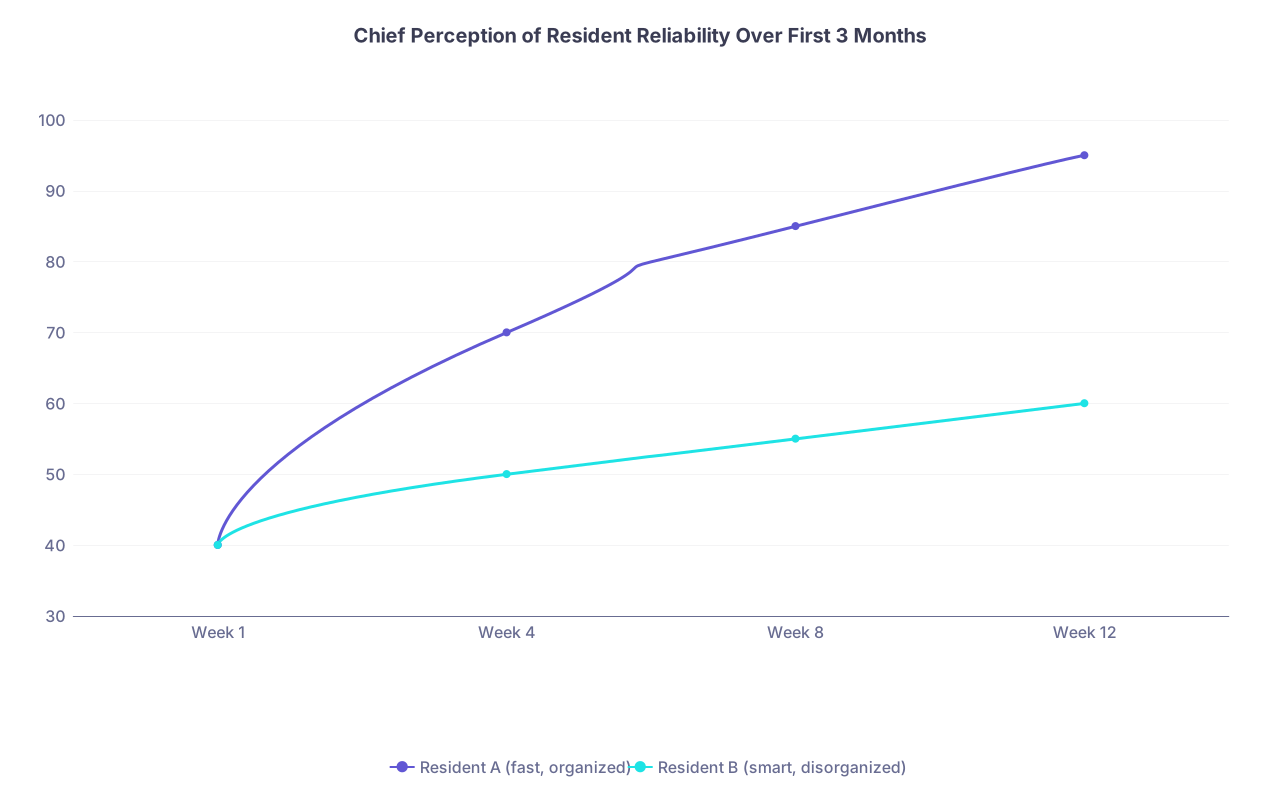
| Category | Resident A (fast, organized) | Resident B (smart, disorganized) |
|---|---|---|
| Week 1 | 40 | 40 |
| Week 4 | 70 | 50 |
| Week 8 | 85 | 55 |
| Week 12 | 95 | 60 |
Resident A might not have the “best” Step score. Resident A is who gets the nec fasc at 3 a.m.
If you want the high‑risk admissions, become the person they can dump a tough case on without having to babysit the rest of your list.
3. Emotional Load: “If This Goes Bad, Will This Resident Melt Down or Function?”
Chiefs are not just triaging patients. They’re triaging emotional volatility.
You can be clinically solid and reasonably efficient, but if you turn every bad night into a dramatic saga, chiefs will start protecting the system from you.
I once watched a chief redistribute cases mid‑night because one resident, after a single bad outcome, was pacing the hallway outside the room, saying “I can’t do this, I can’t do this” under their breath. The chief stepped in, took over, and for the next month, that resident saw mostly low‑acuity stuff at night.
Not as punishment. As damage control.
What Makes You “High Emotional Cost” to a Chief
- You catastrophize. “I’m drowning,” “This is impossible,” “I’m going to kill someone,” said loudly, in the workroom.
- You cry in patient rooms or in front of nurses more than once. Everyone breaks occasionally; patterns matter.
- You get defensive the second someone questions your plan.
- You call the chief for every small change in vitals not because you’re thinking, but because you’re anxious.
- Nurses roll their eyes when you walk onto the unit.
No chief wants to be the 3 a.m. therapist for a panicking resident when two other patients are coding.
What “Low Emotional Load” Actually Looks Like
“Low emotional load” does not mean stoicism or coldness. It means you can function when things are ugly.
You don’t freak out when a patient vomits blood. You say, “Okay, we knew this was coming. Let’s do X, Y, Z and then I’ll call the chief.”
You process emotions later. On the walk to your car. In supervision. With your own support system. But not in the middle of a code.
Residents who stay calm and task‑oriented when the wheels fall off earn a reputation fast. Chiefs will actually say: “Give that one to them, they don’t spook easily.”
4. Reputation Is Built in the First 4–6 Weeks
There is a cruel acceleration at the start of residency: your early weeks set your label.
Intern July, early PGY‑2 nights—people are watching. Nurses, seniors, chiefs, attendings. They are all deciding what kind of resident you are in their mental taxonomy.
I’ve literally heard these phrases in workrooms:
- “They’re solid. You can give them anything.”
- “They’re fine, but don’t give them something that needs fast movement.”
- “Don’t send anything sketchy to them at 2 a.m. unless you want a call every 10 minutes.”
- “Smart but fragile. Good days only.”
Once that narrative forms, it’s sticky. You can change it, but it takes months of consistent contradiction.
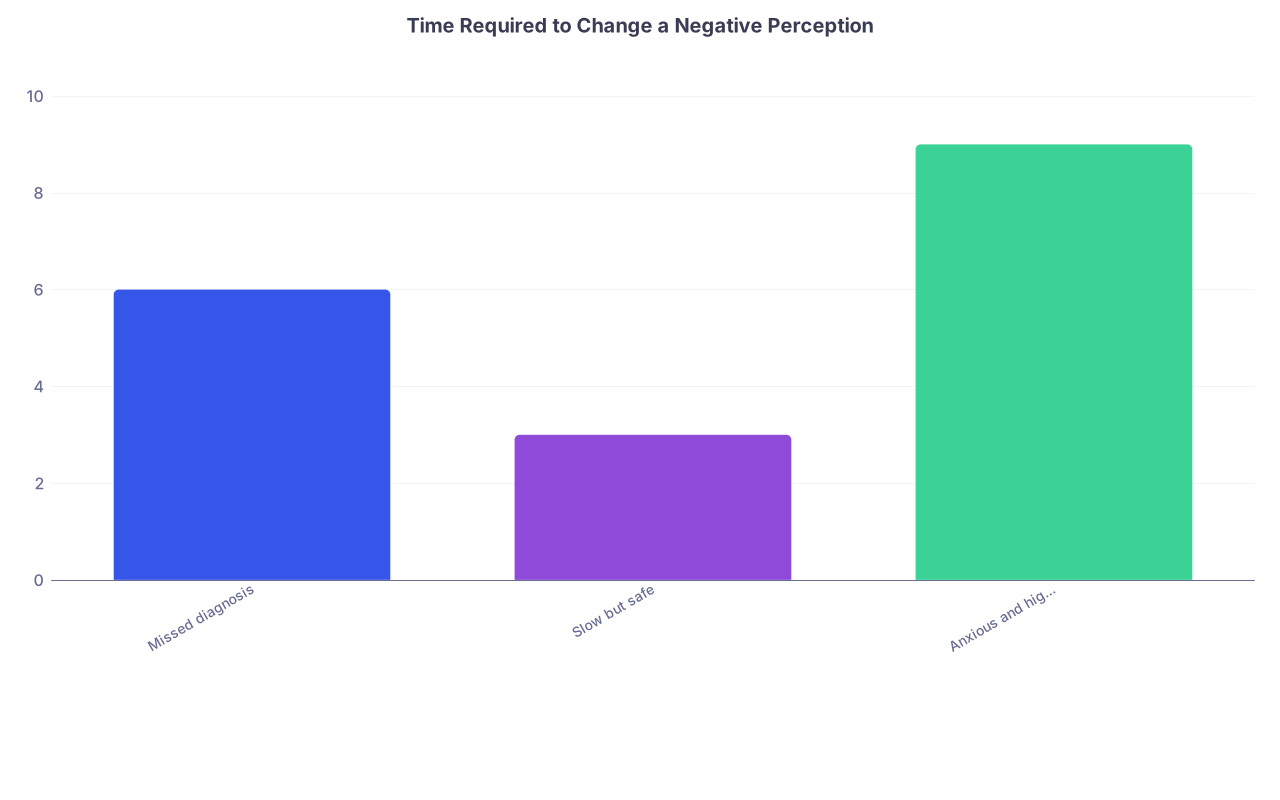
| Category | Value |
|---|---|
| Missed diagnosis | 6 |
| Slow but safe | 3 |
| Anxious and high drama | 9 |
(Values are rough months. I’ve seen exactly this pattern again and again.)
So your early strategy matters:
- On your first nights, call early and think out loud. Chiefs will forgive slowness more than silence.
- Use “I’m concerned because…” when updating. It flags insight, not panic.
- If you’re overwhelmed, say, “I’ve got X, Y, and Z going on. I can handle two of these; I need help deciding where to focus.”
This is how you get categorized as “self‑aware and coachable,” not “dangerous” or “dramatic.”
5. How Chiefs Actually Distribute High‑Risk Admissions
Forget the pretty triage flowchart your program director showed you. On the ground at 1:30 a.m., it looks more like this.

| Step | Description |
|---|---|
| Step 1 | New high risk admit |
| Step 2 | Resident 1 |
| Step 3 | Resident 2 |
| Step 4 | Resident 3 |
| Step 5 | Give lower acuity |
| Step 6 | Assign high risk |
| Step 7 | Chief stays closer, co-manage |
| Step 8 | Who is on? |
| Step 9 | Clinically safe? |
| Step 10 | Clinically safe? |
| Step 11 | Clinically safe? |
| Step 12 | Reliable and calm? |
If no one meets all three criteria perfectly, the chief picks the least risky and stays closer to that case. You’ll feel them hovering more, asking for more updates, maybe even pre‑writing orders with you.
They’re not doing that for fun. They’re patching holes in the system.
“Favorites” vs “Safe Hands”
Residents love to complain about “favorites.” Let me be blunt: most of what you’re calling favoritism is just “this person has repeatedly shown me they won’t implode with a bad admission.”
Yes, personality fit sometimes creeps in. But 80%+ is track record.
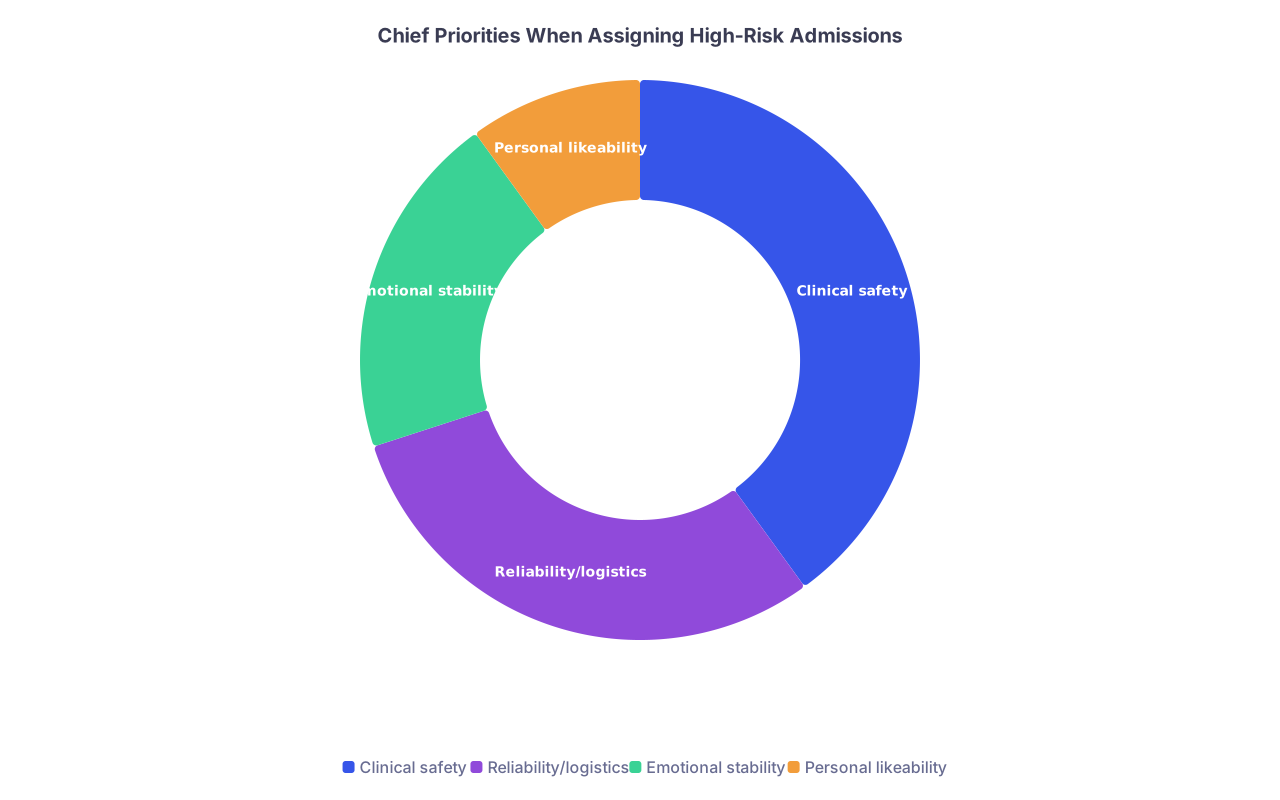
| Category | Value |
|---|---|
| Clinical safety | 40 |
| Reliability/logistics | 30 |
| Emotional stability | 20 |
| Personal likeability | 10 |
Likeability matters. But if you’re safe, fast, and calm, most chiefs will feed you the harder stuff even if you’re not their coffee buddy.
6. How to Move Up the Trust Ladder (Even If You’ve Already Slipped)
You might be reading this already branded as “slow,” “anxious,” or “misses stuff sometimes.” All is not lost, but you need a deliberate plan.
Step 1: Get Honest, Not Defensive
Pick one senior or chief you trust and say:
“I want higher‑acuity patients because I want to grow. I suspect I’m not at the top of your trust list right now. Where am I losing you—clinical judgment, speed, or my reactions when things go bad?”
Then shut up and listen. Do not explain. Do not justify. Write down what they say.
You’ll hate parts of it. It will also be exactly what nurses, attendings, and other chiefs are quietly thinking.
Step 2: Target One Dimension at a Time
You cannot simultaneously fix speed, clinical depth, and emotional volatility in one week. Pick the one that is making you most radioactive.

If your clinical judgment is shaky: pre‑round on high‑risk topics with seniors. Run your plans by ICU fellows when you’re unsure. Read up on 3–4 classic “oh god” scenarios: sepsis, UGIB/LGIB, DKA/HHS, ACS. Chiefs notice when your assessment of “sick vs not” improves.
If your speed is the issue: strip your notes down. Admit, stabilize, order, then document. Ask a fast co‑resident to watch you do an admission and critique your workflow.
If your emotional volatility is the problem: that’s often therapy plus deliberate practice: short breathing resets before walking into rooms, scripted phrases for nurses, and explicit self‑limits on venting volume in the workroom.
Step 3: Narrate Your Growth to Chiefs (Briefly)
You don’t need a TED talk. You do need to surface that you’re working on it.
A simple, “I’ve been paying more attention to early ICU‑worthy signs; on this admit I’m worried about X so I’m doing Y/Z and wanted to loop you in early,” signals both growth and safety.
The resident who is improving gets more rope. The resident who insists, “I’m fine, it’s just the system” while trailing messes behind them gets carefully insulated from the worst cases.
7. What to Do Tonight When You Get a High‑Risk Admission
Let’s get concrete. It’s 1:47 a.m. ED calls: hypotension, GI bleed, borderline pressors, DNR/DNI “but wants everything short of intubation and CPR,” family fractured, bed crunch everywhere.
You suspect this is “one of those” cases chiefs use to gauge residents.
Here’s how you play it.
You see the patient yourself immediately. No chart review for 20 minutes while they’re still in ED. Face, vitals, mental status first.
You decide: sick or not sick. If your gut says “this could go bad in an hour,” you act like it’s already bad.
You call your chief early, with structure:
- “I’m with a new admit who’s high risk and I want your eyes on the plan.”
- 30‑second story: who, why here, vitals, main concern.
- Then: “My concerns are X, Y. I’m planning A, B, C. I think they may need ICU if we cannot stabilize after fluids/pressors. Am I missing something?”
You over‑communicate with the nurse: “This is my sickest patient. If any of these three things happen—more blood, MAP under X, change in mental status—I want to hear about it immediately.”
You write a plan that reads like you understand risk: contingencies, monitoring, thresholds to escalate.
That is how you make a chief think, “Okay. I can trust them next time too.”

8. The Secret No One Tells You: High‑Risk Admissions Are a Currency
Chiefs use high‑risk admissions as a currency of trust and opportunity.
- They give you growth. You learn fast on cases that can actually die on you at 3 a.m.
- They build your reputation with attendings. The morning story is very different when you can say, “Came in crashing overnight, we did X/Y/Z, called ICU early, and they’re still alive,” instead of, “They crashed and we didn’t see it coming.”
- They set you up for fellowship letters. People remember who ran the difficult night cases.

You want to be the person chiefs think of when they say, “Who can handle this?” Not because of ego, but because that’s where the real learning and the strongest advocacy come from.
If you’re getting nothing but low‑acuity admissions every single night for months, that is not kindness. That is a warning sign about how you’re perceived.