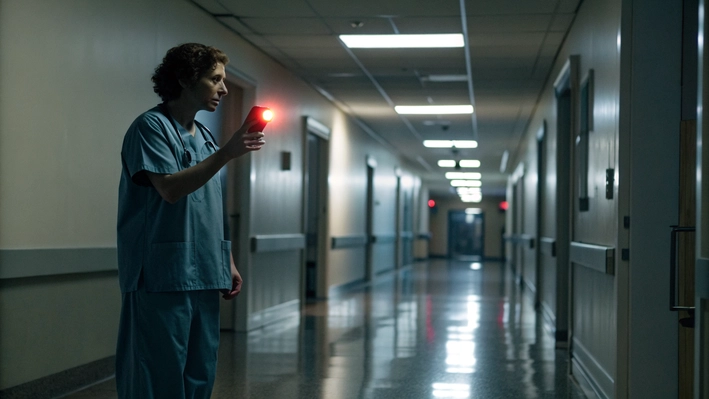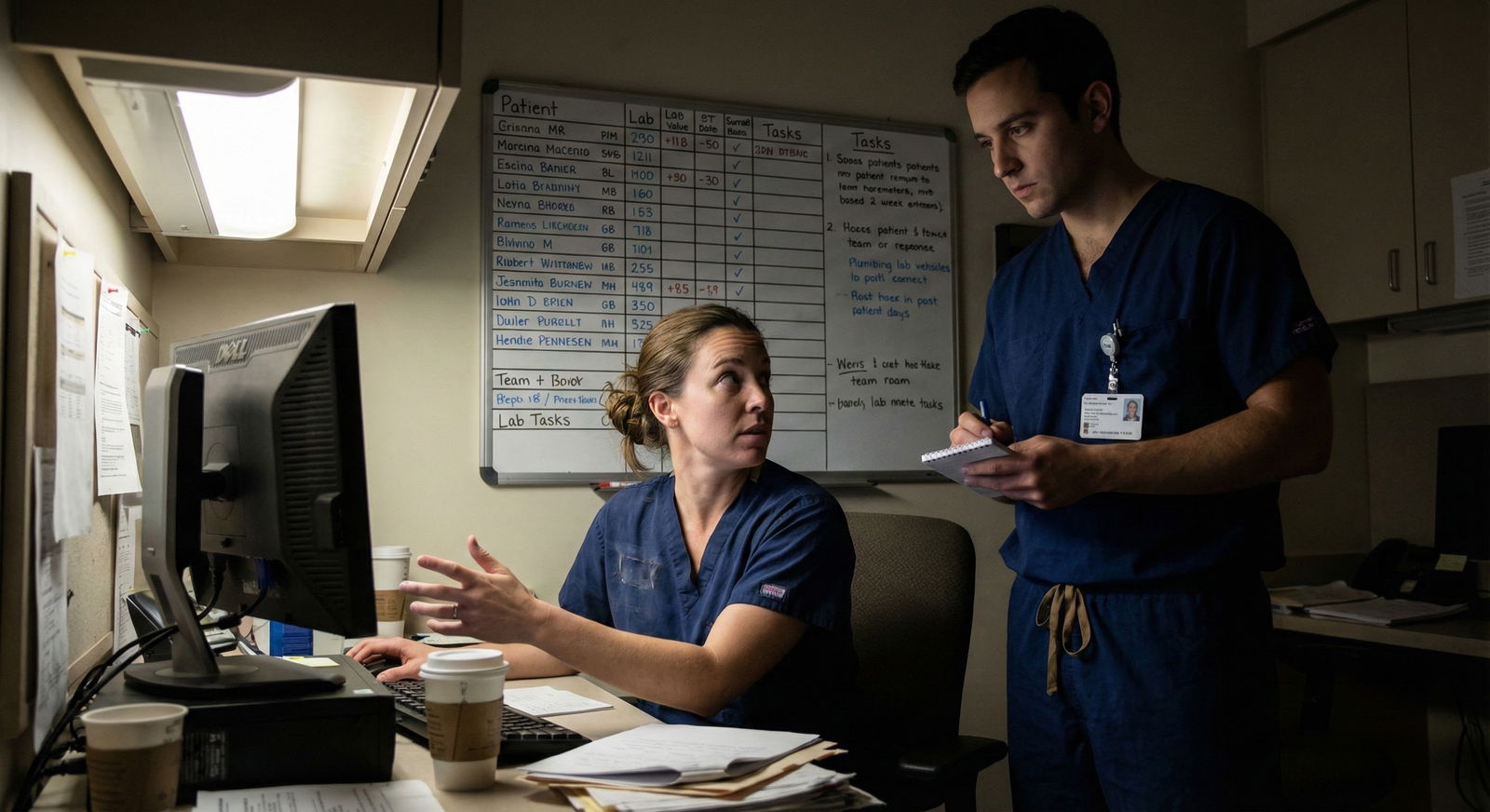
It’s 2:17 a.m. in your head.
You’re not even an intern yet, but you can already see it: you, alone in a half-lit hallway, pager screaming, nurse on the phone saying, “Doctor, you need to come now,” and you have no idea what to do. No attending in sight. Senior nowhere to be found. Just you and a crashing patient.
That’s the horror movie version most of us build in our minds during fourth year.
Let me say the quiet part out loud: a ton of people start residency absolutely convinced they’re going to kill someone on solo night call. I’ve sat next to MS4s who couldn’t even enjoy Match results because all they could think was, “I can’t even titrate insulin without UpToDate, how the hell am I supposed to run a code at 3 a.m.?”
So let’s rip the curtain back on what “solo” call actually means, what safety nets hospitals are legally and structurally forced to give you, and where the real gaps are (because there are some, but they’re probably not the ones you’re imagining).
“Solo Night Call” Isn’t What Your Brain Thinks It Is
First thing: hospitals are not allowed to just toss a brand-new intern onto nights with zero backup and say, “Good luck, champ.”
There are rules. Real, enforced ones.

| Step | Description |
|---|---|
| Step 1 | Intern on Night Call |
| Step 2 | Senior Resident On Call |
| Step 3 | In House Attending or Hospitalist |
| Step 4 | On Call Subspecialty Attending |
| Step 5 | Rapid Response Team |
In almost every ACGME-accredited program, “solo” usually means:
- You’re the only intern covering a set of patients or a unit
- But there is a senior resident in-house
- And there is at least one attending either in-house or immediately available by phone, who can physically come in if needed
No program is supposed to be structured as: intern alone in hospital, no resident, no attending, just vibes and UpToDate. That’s malpractice bait.
Are there sketchy places with thinner coverage? Yes. But even there, the legal and accreditation pressure means there is someone above you who is officially supervising.
Is it always as close and cozy as you’d like? No. But “truly alone with zero backup” is much more fantasy (or med student rumor) than reality.
The Formal Safety Nets You Don’t See as a Student
You don’t really see this stuff on rotations because you’re shielded by teams. But when you become the one holding the pager, this is what’s underneath you.
1. Supervision Rules (ACGME, hospital policies, and people who really like not getting sued)
Programs are required to define levels of supervision: direct, indirect with direct supervision immediately available, and oversight.
As an intern on nights, you’re generally in this bucket:
Indirect supervision with direct supervision immediately available. Translation in normal English:
- There is a resident or attending physically in the hospital whose actual job includes supervising you
- You’re allowed to see patients and make decisions, but anything serious should be run by someone above you
- For certain things, you’re required to get approval before acting
Things that almost always require you to loop someone in:
- Transfers to higher level of care (floor → step-down/ICU)
- Signing DNR/DNI orders or big goals-of-care changes
- New sepsis with hypotension
- Chest pain concerning for ACS
- New neuro deficits, acute mental status changes
- Anything where you’re thinking “this feels bad”
Good programs are explicit: “You call us for X, Y, Z. No judgment.” Bad programs…often say that but culture makes you second-guess calling. That’s a red flag on the interview day “ask the residents anything” panel.
2. The Senior Resident actually has your back (even if they look exhausted)
That PGY-3 you’re picturing as “busy and annoyed” is also the person whose name is attached to the cross-cover list, sign-out, and supervision logs. Which means:
- If you miss something huge, it’s partly their problem
- They are supposed to come see sick patients with you, not just over the phone
- They run codes and rapid responses. You’re rarely truly running the show alone in July.
Is every senior amazing? No. Some are jaded, some are lazy, some are just drowning in their own pager chaos. But structurally, they are your first safety net.
3. Attendings and hospitalists in the background
Most hospitals at least have:
- An in-house attending (often hospitalist or ICU attending) at night
- Or an on-call attending (for smaller or community sites) who must be reachable and able to come in
They hate being woken up. But they hate lawsuits more. You waking them up early for a crashing patient is 1000x better than them getting a “why didn’t anyone call you?” question in M&M.
The Emergency Systems That Don’t Care If You’re an Intern
This is the part that no one tells you in med school: a ton of people you’ve never met are literally paid to make sure you don’t kill someone when things go sideways.
Rapid Response & Code Teams
If your brain goes blank when a nurse says, “BP 60/30, I can’t get a pressure, can you come now?” you still have this escape hatch: call a rapid or code.
You pulling that trigger:
- Brings a swarm of people who actually know emergency algorithms in their sleep (critical care nurses, respiratory therapists, sometimes ICU residents/attendings)
- Automatically documents that the situation was serious and escalated appropriately
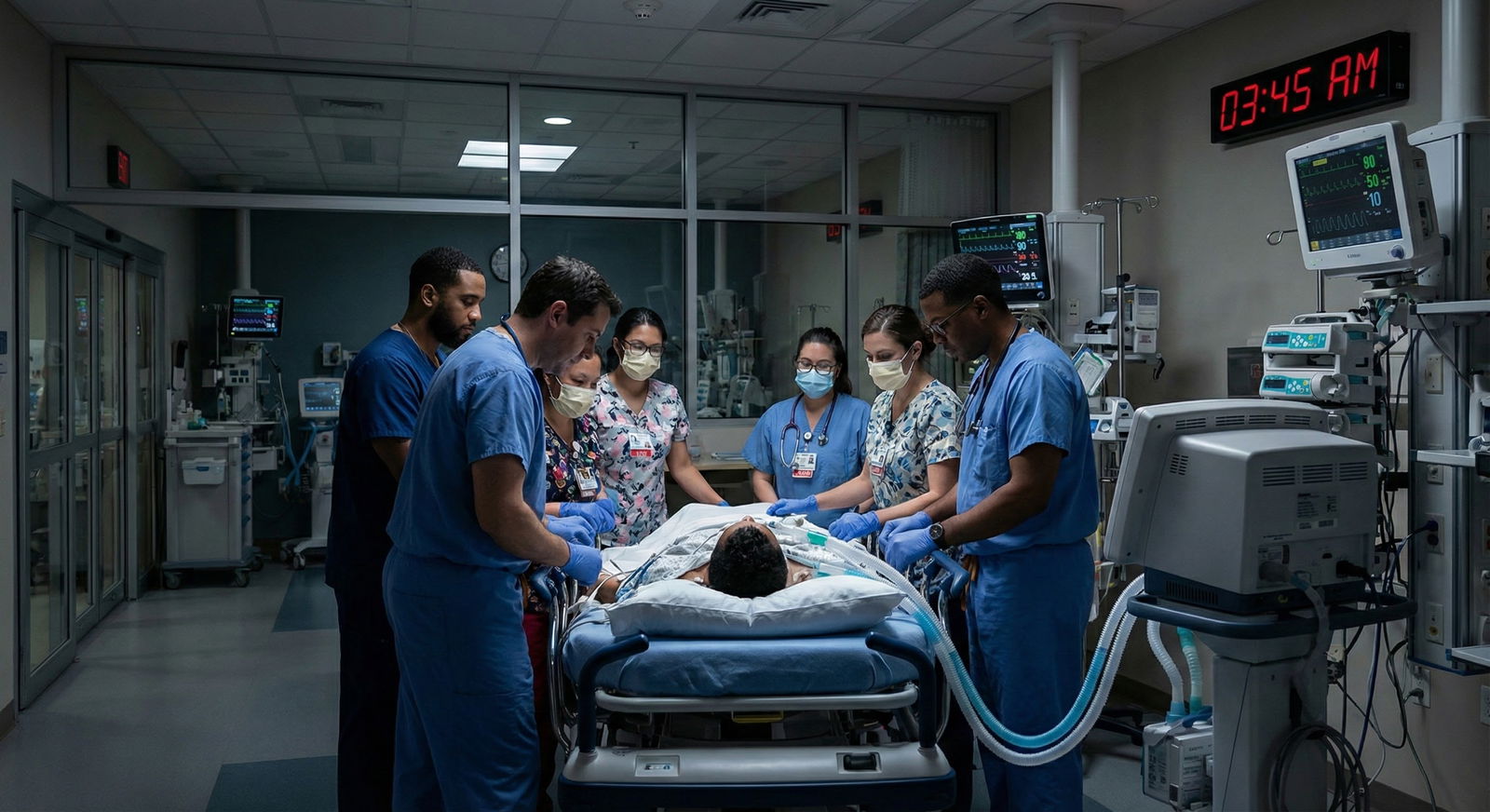
- Takes you from “lone intern drowning” to “member of a team managing a sick patient”
I’ve seen an intern freeze, a nurse quietly walk to the wall button, hit “rapid response,” and 60 seconds later the room was full. That intern was not a failure. The system did its job.
Nursing experience is a hidden safety net
The terrified version of the night in your head: you vs. the patient.
The actual version: you + a nurse who’s seen 300 interns and can smell badness from the doorway.
Good night nurses will:
- Call you earlier than your attending would ever expect
- Suggest orders you should be thinking about (“Do you want me to get a lactate too?”)
- Tell you with a straight face, “I’ve had this patient for 3 nights. This is not them. I’m worried.”
- Straight-up say, “If you don’t come see them, I’m calling your senior.”
All of that is a safety net. For the patient and for you.
Consultants and “phone-a-friend”
If a patient is spiraling from a specialty issue (GI bleed, acute neuro change, post-op complication), there is usually an on-call fellow or attending from that service.
You are not expected to magically know what to do with a super-complex transplant patient at 3 a.m. You are expected to:
- Recognize “this is bad”
- Stabilize basics (ABC, fluids, call rapid if needed)
- Call the right person
No one is impressed by the intern who waited to call GI on a variceal bleed until the hemoglobin hit 4.
The Less Obvious Safety Nets (That Matter Just as Much)
Some of the most real safety nets aren’t formal policies. They’re patterns and culture.
Sign-out structure: you’re not walking in blind
Proper sign-out is a minor miracle when done right. A typical night sign-out list:
- Identifies “watch closely” patients
- Flags the people who are most likely to crump
- Gives you pre-agreed plans for “if X happens, do Y”
That means at 3 a.m., you’re not inventing the plan from scratch half-asleep. You’re executing something the day team already thought through when their brains were working.
If you’re worried about nights, pay attention as a student: do sign-outs sound like “Eh, call me if they die” or are they specific: “If MAP <65 despite 2L fluids, call ICU fellow and me”?
Order sets, protocols, and embedded guardrails
Modern EMRs are annoying, but they’re also giant bumpers protecting you from driving fully off the cliff.
Things that help a ton at 4 a.m.:
- Sepsis order sets
- DKA/HHNK protocols
- Chest pain/ACS pathways
- Stroke alerts with auto-populated labs and imaging
- Insulin titration protocols
You don’t have to remember every detail of DKA management from Step 1. You need to know: “this is probably DKA,” open the order set, and not fight the protocol unless you have a really good reason.
| Tool | How It Protects You |
|---|---|
| Rapid Response | Brings emergency team fast |
| Order Sets | Standardizes complex care |
| Sign-out Plans | Pre-agreed “if X then Y” |
| Senior Backup | Real-time oversight & help |
| ICU Consult | Escalation for sick patients |
Culture: are you punished for calling?
This is huge.
Two programs can have identical written policies, but in one of them, seniors roll their eyes if you call about a borderline situation, and in the other they say, “Nice catch, let’s go see.”
In the first, interns stop calling. And that’s where badness lives.
You can sniff this out on interview day when residents say things like:
- Good sign: “We want our interns to over-call July to January. You’re new. That’s expected.”
- Bad sign: “You’ll figure out what does and doesn’t need to wake people up.” (Translation: we expect you to guess in the dark and hope you’re right.)
What Will Actually Feel Scary (And How the Nets Kick In)
Let’s be honest: even with all these safety nets, nights as an intern can feel like walking a tightrope without looking down.
A few real-feeling scenarios:
Scenario 1: The “something’s off” patient
Nurse: “Hi, can you come see Mr. X? His pressure is like 88/52 and he just looks…off.”
You go, you’re not sure what’s wrong, your brain is mush. Safety nets here:
- You can stall by using the normal script: vitals, brief exam, basic labs, maybe a bolus
- You can call your senior and literally say, “I don’t know. I just have a bad feeling and the nurse is worried.”
- If they actually look sick, you pull the rapid. No one will roast you for it if they’re genuinely unstable.
Scenario 2: You miss something, and it shows up at sign-out
Will you miss something? Yes. That’s not a moral failing, it’s part of learning.
You might have a patient who looks okay at 1 a.m., and by 5 a.m. their labs show they were quietly getting worse. The safety net here is the system review:
- Morning sign-out with the day team, where abnormal lab trends get caught
- Seniors and attendings looking back and saying, “We should probably tighten the threshold for calling on this kind of situation next time”
The whole point of residency is supervised practice. That implies: you will screw some things up, and the supervision part keeps those errors from turning lethal.
Scenario 3: You’re paralyzed by fear of “bothering” people
This one’s on all of us as a culture.
You’re shaking, hesitating to call your senior because “they’re so tired” and “this might be nothing.” Here’s the blunt version:
If your hesitation to call leads to harm, no one cares that you were “trying not to bother people.” They care that a deteriorating patient didn’t get help.
Programs that are serious about safety will say this explicitly in orientation: we’d rather ten extra calls than one missed decompensation.
If no one says it, you decide your own rule:
“When in doubt, I call. I’d rather be the annoying intern than the intern in the M&M case.”
How to Actually Prepare Yourself (Without Losing Your Mind)
You’re not going to study your way into being “ready” for night call. That’s not how this works. But you can make the safety nets work for you instead of just theoretically existing.
A few concrete things you can do:
- As a student, ask on rotations: “On nights, who’s physically in-house?” Get a picture of the structure.
- Watch sign-outs. Listen for those “if X, then Y” parts. That’s your future script.
- Skim your future hospital’s sepsis/DKA/ACS/stroke protocols once you get them. Not to memorize details, just to know they exist.
- When you’re an intern, write a tiny “panic card”: thresholds when you will 100% call senior/rapid/ICU, no self-negotiation.
And remind yourself: nobody feels ready. The senior who looks smooth on nights? They probably had the same 3 a.m. bathroom stall panic in PGY-1 that you’re imagining for yourself now.
Where the Safety Nets Aren’t Enough (And What to Watch For)
I’m not going to lie and say all programs are the same level of safe. They aren’t.
Red flags:
- Seniors openly bragging about “never calling” attendings
- PGY-2s admitting, half-joking, “Yeah, first month nights you basically fake it till you make it”
- Attendings who say things like, “Don’t call me unless they’re literally dying”
If you’re already matched and stuck with a program that sounds like this, your margin for error is thinner, but you’re not doomed. You just have to be a little more stubborn about using the system-level nets (rapid response, ICU consults, hospital policies) instead of relying on resident culture to protect you.
If you haven’t matched yet, ask targeted questions:
- “As an intern on nights, who else is in-house with me?”
- “What kinds of things do you expect interns to call seniors about?”
- “Are attendings okay being called overnight for acute changes?”
Watch residents’ faces when they answer. They’ll tell you more than their words.
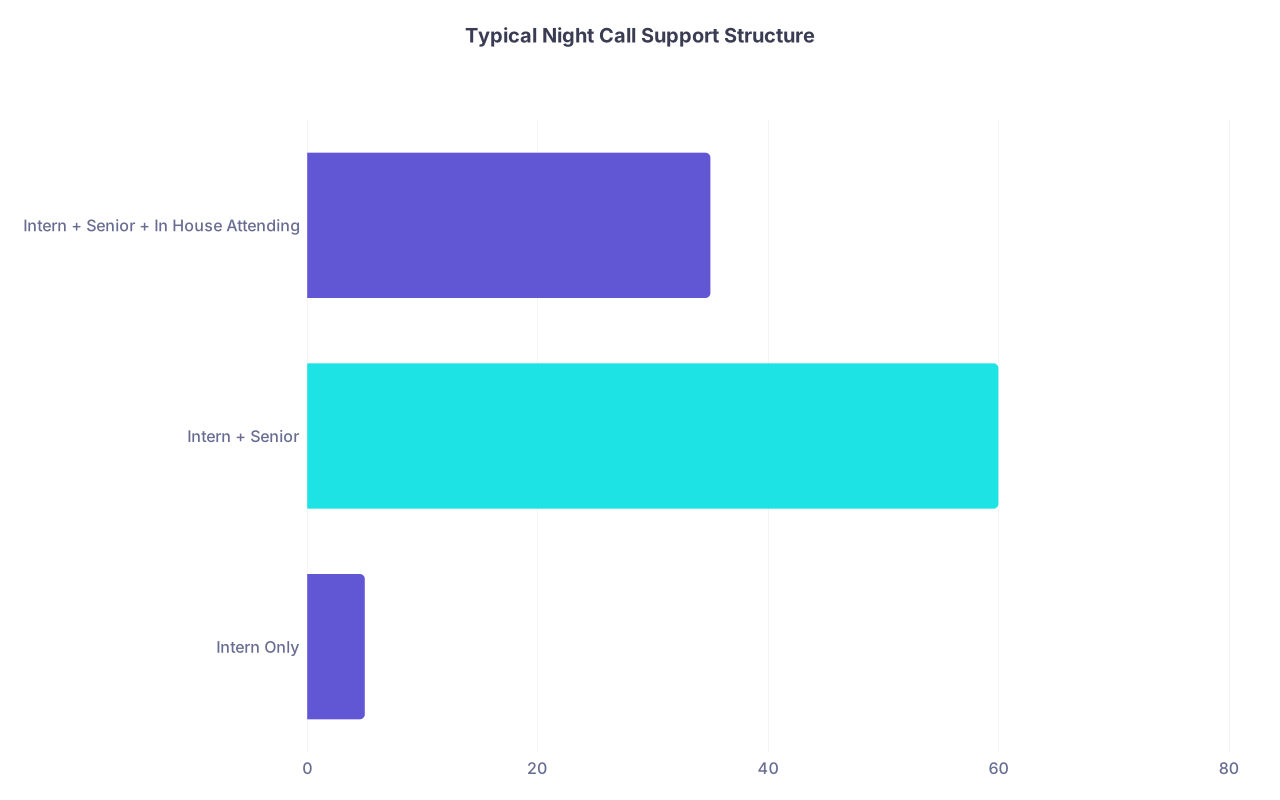
| Category | Value |
|---|---|
| Intern Only | 5 |
| Intern + Senior | 60 |
| Intern + Senior + In House Attending | 35 |
(The reality in most decent programs: you’re in the middle or right bar. Not the nightmare left one your brain obsesses over.)
The Part Your Brain Keeps Ignoring: You Are Not the First
Hospitals run on patterns. You are not the first underprepared, anxious, sleep-deprived intern to pick up that pager. You are like intern #4,392.
Every policy, protocol, backup attending, ICU escalation rule, and rapid response pathway exists because someone before you messed up, and the system decided, “We’re not letting that happen again.”
Is the system perfect? Of course not. People still fall through cracks. But your worst-case scenario brain is picturing a world with no nets.
That world just doesn’t exist in a halfway decent training program.
FAQ (Exactly the Stuff You’re Afraid to Ask Out Loud)
1. Could I actually be the only doctor in the entire hospital at night as an intern?
At any ACGME-accredited residency? Essentially no. You might be the only intern covering a service or unit, but there will be at least a senior resident or attending in-house or immediately available. If a program truly leaves an intern as the sole in-house physician without clear supervision and backup, that’s not just unsafe, it’s accreditation and liability suicide.
2. What if I totally freeze during a rapid or a code?
Then you freeze. For a second. And in that second, the code nurse, respiratory therapist, senior, or ICU team will start doing things because they do this constantly. You are not the engine; you’re one cog in a big machine. You can still be useful even if you’re not the one barking ACLS steps. And the more codes you see, the more that initial paralysis shrinks.
3. Will people judge me for calling too often overnight?
Some will roll their eyes. Some will make snarky comments. Fine. They don’t carry your malpractice risk or your conscience. Over-calling when you’re new is safer than under-calling. Interns who never call scare me a lot more than interns who call “too much.” You can calibrate with time, but early on, erring toward “bothering” people is the right call.
4. What if I actually make a mistake that harms someone?
You will make mistakes. Every resident you admire has at least one case that still wakes them up sometimes. The safety nets exist to reduce how often those mistakes are catastrophic. If something bad happens, there will be debriefing, M&M, supervision changes, protocol tweaks. It will feel terrible, but it will not mean you’re unfit to be a doctor. It will mean you’re human in a system designed to catch human error.
Open a blank note right now and write three headings: “Call Senior When…”, “Call Rapid/Code When…”, and “Call ICU/Attending When…”. Start a rough list from what you already know—severe hypotension, chest pain, new neuro deficit, major bleed, respiratory distress. That little list is the beginning of your personal safety net, so when the pager goes off at 2:17 a.m. for real, you’re not starting from zero.