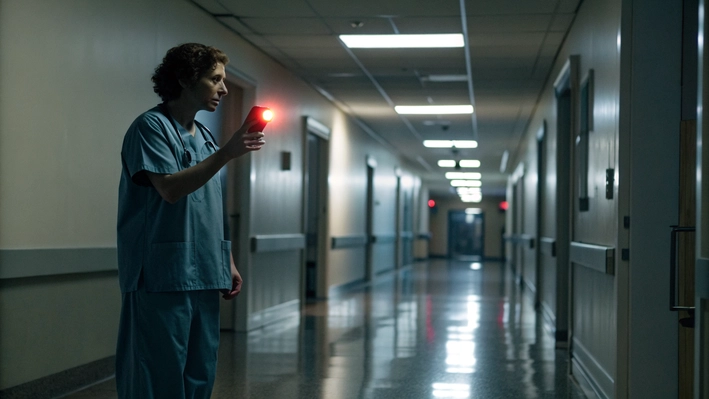
Last week, a PGY‑1 I know finished a brutal night shift where a patient decompensated and died at 4:30 a.m. She sat in her car afterward, hands shaking, convinced she’d be fired, reported to the board, and blacklisted from the profession. By noon, her program director had already called her—not to punish her, but to walk through the case and make sure she was okay.
You and I both know that’s the scenario that lives in your head: the bad outcome at 3 a.m. everyone secretly blames you for. The one that ruins your career.
Let’s walk through how this actually gets handled in residency. Not the fantasy nightmare your brain keeps looping—but the real, often messy, but much less catastrophic reality.
The Fear Nobody Admits: “What If It’s My Fault?”
Here’s the core anxiety: you’re on call, something awful happens, and you’re the one with your name on the chart.
You picture:
- Angry attendings.
- Morbidity and mortality conference with your case on a giant screen.
- Hospital lawyers.
- Program director “meetings.”
- People whispering: “That resident really screwed up.”
You also secretly wonder: if something goes wrong, will they all conveniently decide it was “my” fault because I was the lowest person on the ladder actually in the building?
I’m just going to say it: your fear isn’t totally irrational. Bad outcomes do get dissected. There are meetings. There are questions. Sometimes there is real criticism.
But the story in your head is missing half the picture. Residency training, hospital systems, and real‑world medicine are all built around the idea that bad things will happen at night—and that it almost never comes down to one tired intern “ruining” everything.
Let’s break down how things really play out.
What Actually Happens After a Bad Night‑Shift Outcome
Let me walk you through the usual sequence, because when you know the script, it’s less terrifying.
1. The immediate aftermath: chaos and then… paperwork
Something goes wrong. Maybe a rapid response, a code, a bleed, a crash C‑section, a missed diagnosis. It’s loud and chaotic for 10–30 minutes.
Then it gets quiet.
You’re standing there with a half‑finished note, dried sweat, and that sick feeling in your stomach. You start replaying every decision: “Did I call too late? Did I reassure the nurse when I should’ve come up? Did I anchor on the wrong diagnosis?”
Usually what happens next is more boring than your brain expects:
- You write the event note.
- Nursing does their documentation.
- The attending (or the morning attending) gets looped in if they weren’t already.
- Sometimes risk management or the supervisor gets notified automatically.
Nobody is convening a tribunal at 6 a.m. You’re exhausted, and the system around you knows that. The real analysis happens later.
2. Morning handoff: the first “review”
At sign‑out, the overnight team briefly presents what happened. This is often your first “oh god, here it comes” moment.
What typically happens?
The attending or day team asks factual questions:
- “What were their vitals earlier in the night?”
- “When were they last seen by the team?”
- “What imaging had been done?”
They’re not (usually) trying to corner you. They’re trying to reconstruct the timeline.
You will feel judged anyway. You will probably leave out details you’re not sure about because you’re afraid they sound bad. That’s normal. Residents before you did the same thing.
But here’s the key: for serious events, this morning handoff is just step one. It’s not the final judgment of your career. It’s a rough draft of understanding a complex event.
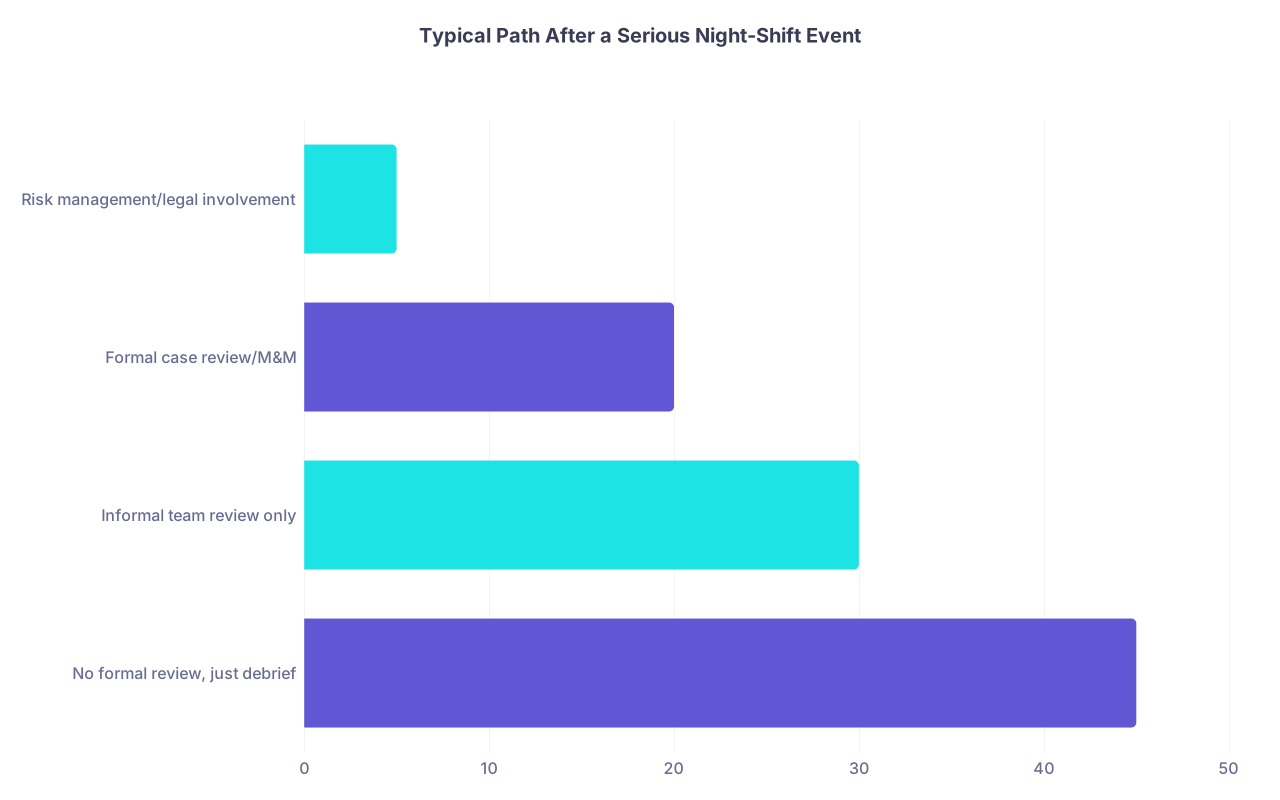
| Category | Value |
|---|---|
| No formal review, just debrief | 45 |
| Informal team review only | 30 |
| Formal case review/M&M | 20 |
| Risk management/legal involvement | 5 |
3. The formal review: M&M, QI, or “case review”
For most serious outcomes, the case goes into some sort of review process. The names vary:
- M&M conference (morbidity and mortality).
- Peer review.
- Quality improvement (QI) review.
- Sentinel event review (for truly serious stuff).
I know you’re imagining this as: “We’re here today to discuss how Dr. Intern catastrophically failed.” That’s TV. Not reality.
In real life:
- Charts are pulled.
- Labs, notes, pages, orders, vitals—everything gets reviewed.
- People look at system issues: staffing, backup coverage, access to imaging, handoff quality, communication failures.
Yes, they also look at individual decisions. But they don’t stop there, because they know medicine at 3 a.m. is not just about “Did the intern think hard enough?”
I’ve seen cases where:
- An intern missed early sepsis. Everyone initially thought, “That was a bad call.” The review found the vital sign thresholds in the EMR alert were set too high at night and that nurses had 15 patients each. The system got changed.
- A cross‑cover resident didn’t come see a patient for chest pain because it was described as “reproducible musculoskeletal pain” in the nurse page. Review showed the paging system cut off half the message, and the triage algorithm was garbage. The focus became fixing the paging templates, not crucifying the resident.
Is there sometimes direct criticism? Yes.
Is it: “This is all your fault and you’re a terrible doctor”? No. That’s the script in your head, not the one they use.
How Programs Actually Assign Responsibility (Not Just Blame)
You’re scared of blame. Administrations talk about “responsibility.” The difference matters.
Think of it like layers:
- Intern/junior: responsible for recognizing changes, calling for help, documenting, and following workflows.
- Senior: responsible for supervising you, helping with decisions, checking that plans make sense.
- Attending: responsible for the overall care plan, backup at night, and creating a culture where you feel safe asking for help.
- System/hospital: responsible for staffing, protocols, equipment, communication tools, and realistic workloads.
When a bad outcome happens, reviewers look across all these layers. You, as the night resident, are one layer. You are almost never the only layer.
| Role | Core Responsibility at Night |
|---|---|
| Intern | Recognize change, call for help, document |
| Senior | Supervise, co-manage decisions, escalate issues |
| Attending | Final oversight, availability, culture of safety |
| Hospital | Staffing, protocols, tools, backup systems |
Here’s what reviewers actually tend to focus on when it comes to you specifically:
- Did you totally ignore concerning vitals/pages, or did you at least engage?
- Did you document what you saw/thought, even if you were wrong?
- Did you call for help when things weren’t making sense?
- Were your choices wildly outside standard practice, or just imperfect in a gray zone?
In other words, they’re more concerned with “Did you behave like a doctor trying to do the right thing?” than “Did you make the perfect decision at 2:47 a.m. under pressure?”
The thing that will protect you 100x more than being “smart enough” is this: you called early, you documented honestly, and you weren’t cavalier.
The Difference Between a Bad Outcome and Negligence
Your brain lumps these together as the same event. They aren’t.
Bad outcome = medicine did everything it reasonably could and the patient still had a bad result. Happens every day. Zero percent avoidable care is fantasy.
Error = something was missed, delayed, or done imperfectly. Happens constantly. Often fixable. Usually not career‑ending.
Negligence = you acted in a way that clearly fell far below what any reasonable doctor would do, and it caused harm. That’s the level people imagine when they catastrophize. It’s rare.
The bar for “negligence” is not “you made a mistake on night float while drowning in pages.” It’s things like:
- You were drunk on call.
- You deliberately ignored an obviously unstable patient.
- You falsified documentation to cover yourself.
- You practiced far outside your scope without calling for help.
That’s not you. That’s not 99.9% of residents. That’s why most bad outcomes—even the ugly ones—do not turn into, “We’re coming for your license.”
What You Can Do During Night Shifts To Protect Patients (And Yourself)
Let me be blunt: there are patterns I’ve seen again and again in cases where residents get more scrutiny than they needed to.
It’s not usually about raw intelligence. It’s about a few key behaviors.
1. Over‑communicate when something feels off
If your gut is weirdly anxious about a patient, I’d rather you wake up a senior 10 times and be wrong than once and be right too late. And so would almost every good attending.
Even if you’re thinking, “I don’t want to sound dumb” or “They’ll think I can’t handle nights,” remind yourself: nobody gets fired for asking for help. People get in trouble for hiding uncertainty and flying solo until things are a disaster.
2. Document your thought process, not just your orders
You know what saves residents in reviews over and over? A three‑sentence note at 2 a.m. explaining what they were thinking.
Something like: “Evaluated for mild dyspnea. Vitals stable, sat 96% RA, lungs clear, no chest pain, EKG unchanged. Low suspicion for PE/ACS at this time. Plan: monitor, repeat vitals q4hr, low threshold to re‑evaluate if worsening.”
Wrong call? Maybe. But it shows you weren’t reckless. That matters more than you think.
3. Don’t minimize nursing concerns
If a nurse says “I’m worried,” don’t hand‑wave it away from the console. That phrase deserves a quick in‑person look unless you’re literally in another code. It’s not about hierarchy. It’s about the fact that they’re with the patient way more than you are.
Patterns I’ve seen in rough cases: pages brushed off, nurses feeling dismissed, and later everyone painfully agreeing the resident should’ve gone in person. That’s preventable.
4. Use your chain of command like a shield, not a threat
Your job isn’t to single‑handedly solve everything. It’s to recognize problems and pull in the right people.
If a consultant is blowing you off and you know the patient is sick, loop in your senior. If your senior is not responsive and you’re really uncomfortable, loop in the attending. That’s not “being dramatic.” It’s using the structure that’s there to protect patients.
In reviews, if you can point to: “I called the senior at X, attending at Y, documented these concerns,” it’s extremely rare for someone to pin the entire event on you.
What Actually Happens to Residents After Bad Outcomes
Here’s the piece your anxious brain refuses to believe: most of the time, the resident is not punished. They’re supported and debriefed. Sometimes clumsily, sometimes awkwardly. But not usually destroyed.
What I’ve seen:
- Private debrief with program director: Walking through the case, asking what you were thinking, where you felt stuck, what support you had.
- Some required learning: maybe reading guidelines, doing a QI project, or presenting the case at M&M.
- Possible feedback: “You need a lower threshold to see patients in person,” or “Call earlier next time.”
- Emotional fallout: guilt, shame, insomnia, flashbacks. This is the part we don’t talk about enough.
What I’ve not seen very often:
- Residents immediately fired over a single, honest‑error bad outcome.
- Boards notified because an intern didn’t order a CT at 3 a.m.
- Careers shattered from one complicated night case with system factors all over it.
Could it happen in extreme cases? Yes. But if your standard behavior is “I show up, I care, I ask for help, I document honestly,” you’re not walking around on a trapdoor.

| Step | Description |
|---|---|
| Step 1 | Serious event at night |
| Step 2 | Immediate stabilization and documentation |
| Step 3 | Morning handoff and discussion |
| Step 4 | Informal feedback only |
| Step 5 | Formal case review or M&M |
| Step 6 | Identify system and individual factors |
| Step 7 | Education and QI changes |
| Step 8 | Targeted feedback to involved staff |
| Step 9 | Meets review criteria |
How To Cope With The Fear Now (Before You’re On Call Alone)
You don’t have to wait until residency to start building a healthier mental script.
A few things that actually help:
- Ask residents on your rotations, “Have you ever been involved in a bad outcome at night? What happened afterward?” You’ll hear real stories. Almost none end with “and that’s when my career ended.”
- Watch how your attendings handle M&M. Do they go after people or talk systems? Programs that actually care about teaching don’t use M&M as a firing squad.
- Notice how often people tell you, “Call me anytime.” They’re not just being nice. They mean it, and they’ll mean it even more when you’re the one holding the pager.
And be honest with yourself: you’re probably going to have a night someday that haunts you. Everyone does. That doesn’t mean you’ll be alone, or blamed, or broken beyond repair.
FAQs
1. Could one bad night shift actually get me kicked out of residency?
If by “bad night” you mean a complicated patient outcome where you did your best, documented reasonably, and asked for help? Very, very unlikely.
Programs don’t invest years and money into training you just to eject you over a single imperfect call night. Residents get in real trouble when there’s a clear pattern of unsafe behavior, lying, unprofessional conduct, or refusal to change after feedback. One tough case, handled honestly, usually turns into a learning experience, not an exit.
2. What if I miss something obvious and everyone thinks I’m incompetent?
You will miss something at some point. Everyone does. Yes, it will be obvious in hindsight. People may question your judgment in that moment—but that’s different from labeling you incompetent forever.
What happens next matters more: do you own it, review the case, understand what biased you, and adjust? Residents who do that tend to be respected more over time, not less. Hidden errors rot careers. Acknowledged errors, learned from, don’t.
3. Will my name be all over some legal case if there’s a lawsuit?
If a case leads to a lawsuit, anyone who touched the patient’s chart may show up in the paperwork. That doesn’t automatically mean you’re being targeted. Often, residents are included because they were there, not because they’re the focus.
Hospitals and attendings carry most of the legal exposure. You’ll typically be represented by the hospital’s counsel or malpractice insurer. Again, the question is whether your behavior was reasonably in line with your role and training. If you called for help appropriately and acted within your level, you’re usually on solid ground.
4. How do I know when I should call the attending at night versus “figure it out”?
If you’re having this internal debate, you should probably call. Practical rule: call if the patient is getting worse, you’re making a big management change, the nurse is very worried, you’re considering escalation of care (ICU transfer, major procedure), or you feel out of your depth.
You don’t get bonus points for suffering in silence or white‑knuckling through uncertainty. People will question you later if things go badly and you never picked up the phone. They almost never punish you for waking someone up to say, “I’m not comfortable with this, can we talk it through?”
Key things to hold onto:
- Bad night‑shift outcomes are reviewed, but usually through a systems lens, not a “find the intern villain” lens.
- Your biggest protections are simple: ask for help early, document your thinking, and take nursing concerns seriously.
- Being involved in a bad outcome will hurt—but it almost never defines your entire career, unless you let the fear of it paralyze you into silence.