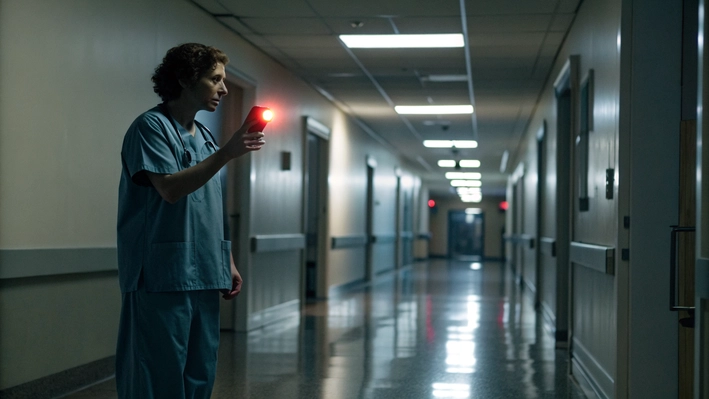
It’s 2:37 a.m. You’re staring at your phone, scrolling through Reddit threads about codes, traumas, and “the first night I watched someone die.” You keep thinking: That’s going to be me. I’m going to be the one in the room when something terrible happens. What if I freeze? What if I fall apart? What if I’m just… not built for this?
Everyone around you seems to say the same thing: “You get used to it.”
You don’t find that comforting. At all.
You’re not worried about writing orders or answering pages. You’re worried about the emotional gut-punch of it. The crying families. The alarms. The kid who doesn’t make it. The quiet moment after a code when everyone just walks away and you’re standing there thinking, What the hell just happened?
So here’s the real question you’re asking:
What if I can’t handle the emotional toll of nighttime emergencies… and that means I shouldn’t be a doctor at all?
Let’s pull that fear apart.
First: No, You’re Not the Only One Terrified of This
Nobody advertises this, but a lot of people start residency with:
- Panic about codes and “first deaths”
- Intrusive “what if I mess up and someone dies” thoughts
- A deep, irrational fear that a single bad night will expose them as a fraud
I’ve seen people:
- Throw up in the bathroom before their first night shift
- Cry in their car at 3 a.m. between consults
- Sit in the stairwell after a failed code because going back to the nurse’s station felt impossible
The ones who post online like they’re unshakeable? Either:
- Lying (a little), or
- Dissociated enough that they should probably be more concerned than you are
Your fear that this will be emotionally hard does not mean you’re weak. It means you have a functioning conscience.
The people I worry about are the ones who are not worried at all.
What Nighttime Emergencies Actually Feel Like (Emotionally)
Daytime emergencies and nighttime emergencies are not the same animal.
At 2 p.m., you have:
- Attending at the bedside
- 2 other residents
- Respiratory therapist instantly there
- A bunch of bystanders and support
At 2 a.m., it can feel like:
- You + a couple of nurses + RT if you’re lucky
- No immediate attending physically present
- Dim lights, quiet hallways, and this weird surreal “is this really happening” energy
You might imagine yourself:
- Shaking so hard you can’t place an order
- Forgetting basic ACLS
- Crying in front of everyone
Here’s how it typically actually goes:
Your body flips into “just do the job” mode.
You’re scared, but your brain starts hunting for the next step: “Check airway. Check pulse. Start compressions. Call the code. Get help.” It’s not calm. It’s automatic.The room carries you.
Nurses prompt you. Someone hands you the epinephrine. The code cart magically appears. RT sets up the vent. You’re not a lone hero; you’re part of a very practiced machine.The emotions lag.
During the thing, it’s often strangely focused.
The hit usually lands:- When you walk out and the hallway is suddenly quiet
- When you see the family
- When you’re charting what just happened
You replay everything. Repeatedly.
That’s the part you’re probably imagining already. The “Did I do enough? Did I miss something?” spiral. Welcome to being a person who cares.
So, what kills people emotionally isn’t just the emergency itself. It’s:
- Lack of support after
- No place to put the feelings
- Repeated hits with zero recovery time
- The pressure to “act fine” because “this is the job”
Your question — “What if I can’t handle it?” — is partly:
“Will I be left alone with this, and will people judge me for struggling?”
That’s a different problem than “I’m not capable of functioning in a crisis.”
What “Not Handling It” Actually Looks Like
Let’s name the monster instead of just fearing a vague disaster.
“Not handling the emotional toll” could look like:
- You cry after a bad case
- You dread going to nights so much you feel physically ill
- You have trouble sleeping because cases replay in your head
- You start feeling numb and detached just to get through shifts
- You avoid certain patients or situations because they remind you of something awful
- You think, “I made a mistake, I killed them” — whether or not that’s true
None of this automatically means:
- You’re not meant to be a doctor
- You’ve “failed at resilience”
- You’re doomed in this career
It can mean:
- You’re overwhelmed
- You’re unsupported
- You’ve crossed from “normal stress” into something like anxiety, depression, or PTSD territory — which is common and treatable, not a career death sentence
The dangerous version is:
- You’re suffering
- You tell no one
- You just keep stacking trauma on trauma
- You start fantasizing about disappearing / quitting / self-harm
That’s what I’m never going to sugarcoat: this path can absolutely push people there if they don’t have support and boundaries.
How People Actually Cope (And Where It Goes Wrong)
Let me be blunt: “You’ll get used to it” is lazy advice. What they mean is, “You’ll build some emotional callus and figure out your coping patterns.”
Some patterns are healthy. Some… not so much.
Typical (real) coping strategies:
Healthier side:
- Debriefing with co-residents: “That was rough. That sucked. You did what you could.”
- Short, informal debrief with the attending after a death
- Going to therapy (quietly, off the radar, like half your colleagues)
- Having one person outside medicine you can call on the drive home
- Writing things down — even a few lines — to get the images out of your head
- Saying the dead patient’s name to someone, so they’re not just “the trauma in bed 3”
Unhealthy but very common:
- Joking about everything to avoid feeling anything
- Drinking too much post-call “just to sleep”
- Avoiding patients that remind you of past bad cases
- Telling yourself “I should be tougher” and doubling down on suppression
Where it goes really wrong:
- You stop recognizing that you’re not okay
- You start to believe the only options are “suck it up” or “quit medicine”
That false binary is exactly what’s freaking you out right now.
How to Tell If You’re Actually Not Built for This vs Just Scared
This is the part you probably keep circling: What if this anxiety is my gut telling me I’m not cut out for this?
Here’s my honest take.
Red flags that you may need to seriously reconsider the type of work you do (or get serious help fast):
- You’ve had persistent panic attacks or severe dread about emergencies for months, not just “pre-residency jitters”
- You dissociate or go blank under moderate stress consistently (not just “I was flustered my first code” — that’s normal)
- You have unmanaged PTSD, major depression, or severe anxiety and you’re not in treatment and not willing to be
- You strongly, clearly prefer work that avoids acute crises (ex: you love pathology, hate wards, and that’s been stable for years)
- You’re already using substances to get through normal clinical days as a student
None of that equals “You’re a bad person” or “You shouldn’t be a doctor.”
It just means you need to match your career and your mental health reality. There are specialties where emergencies are rare or very controlled.
On the other hand, signs you’re probably actually fine but scared:
- You’ve handled stressful situations before (codes as a student, family emergencies, scary events) and ultimately did okay after the initial panic
- You can function during simulations or ACLS without fully falling apart
- You feel better when you talk things out with someone supportive
- Your fear focuses on imagined firsts (“first code,” “first death”) rather than actual repeated experiences that have already broken you
- You’re willing to get help if you start to struggle — not committed to white-knuckling everything alone
If you read that last list and thought, “That’s basically me, but anxious,” then no, your fear doesn’t mean you’re doomed.
Things You Can Actually Do Before You’re Thrown Into Night Float
You don’t have to just wait to be traumatized and hope you survive it.
Here’s what a more proactive version of you could do:
Make a “who I call/text after a bad night” list.
Literally: 2–3 names. Could be:- Co-resident or older resident
- Friend in another program
- Therapist Put their numbers in your favorites. Decide now: “If I have a horrible night, I will text one of these people before I go home and sleep.”
Ask your program (or future program) about debrief culture.
Not in a confrontational way. Something like:- “Do you guys do debriefs after codes or really bad cases?” The reaction tells you a lot. Some places normalize talking. Some are emotional deserts. If you have a choice, choose somewhere that treats you like a human.
Script a few phrases you can use in the moment.
Because your brain will be mush. For example:- To team after: “Can we just take 2 minutes to debrief what happened?”
- To a nurse: “I’m not sure what the next best step is — can you walk me through what’s usually done?”
- To yourself: “Next right step. Just the next right step.”
Line up mental health support now, not later.
Literally schedule:- Therapy intake for early in intern year
Not because you’re “broken,” but because things will get heavy and you deserve a pressure-release valve.
- Therapy intake for early in intern year
Clarify your boundaries about talking with families.
This is one of the most emotionally loaded parts. Ask seniors:- “How do you handle family updates at 3 a.m. after something awful?” Borrow their language. Don’t walk into that completely improvising.
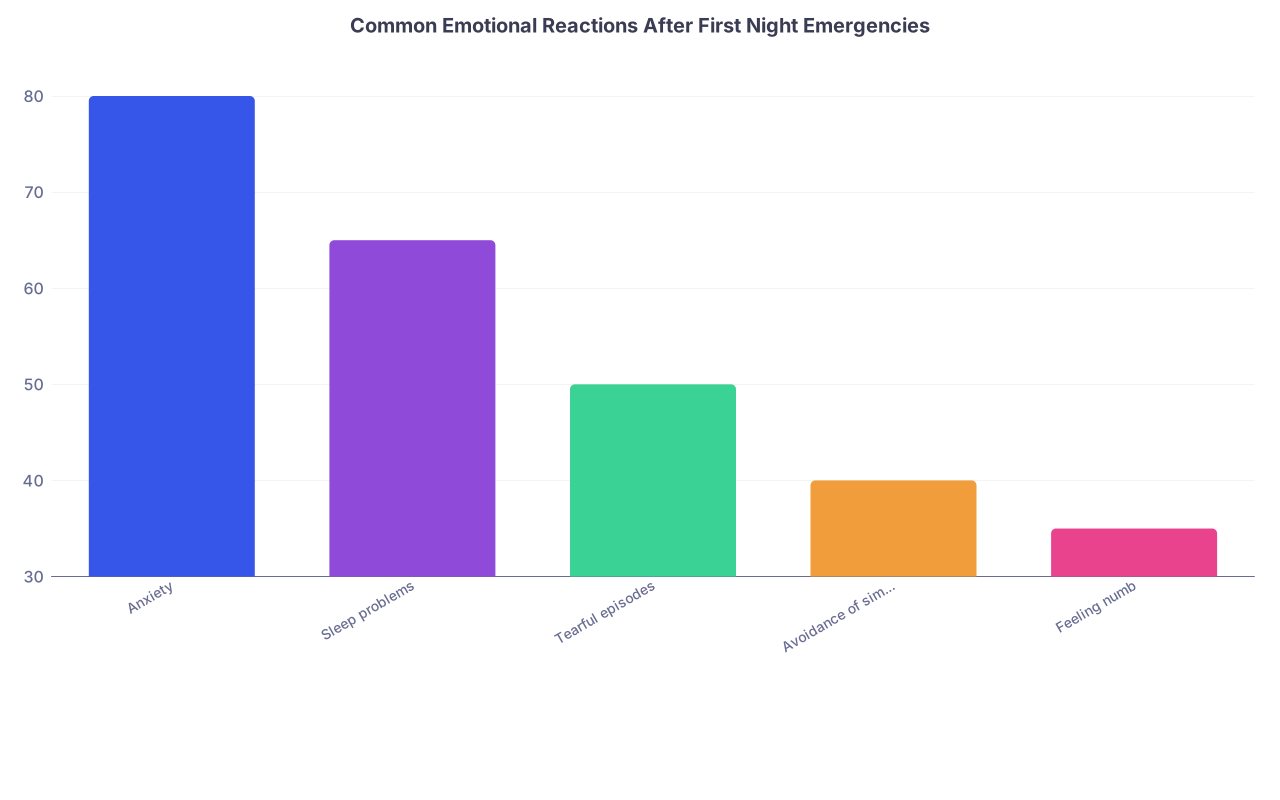
| Category | Value |
|---|---|
| Anxiety | 80 |
| Sleep problems | 65 |
| Tearful episodes | 50 |
| Avoidance of similar cases | 40 |
| Feeling numb | 35 |
The Thing You’re Afraid to Ask: What If I Completely Fall Apart One Night?
Picture it: first week of nights, bad code, you walk out of the room and you feel like you’re going to collapse.
Let’s say the worst happens emotionally. You:
- Cry in front of a nurse
- Have to step into the bathroom to breathe
- Your hands are still shaking 30 minutes later
What actually happens?
Realistic scenario:
- Nurse quietly checks on you: “You okay?”
- Senior notices you’re rattled: “That was rough. You did fine. What do you need?”
- You somehow drag yourself through the rest of the night
- You go home, can’t sleep, feel like trash, replay everything
- You talk to someone (or don’t)
- You go back the next night anyway
Over time, that experience either:
- Gets folded into the “ugly but survivable” folder in your brain, or
- Sticks in a way that means you need more support (therapy, maybe meds, maybe a leave if it’s really bad)
What doesn’t happen:
- You get fired because you cared
- Everyone decides you’re unfit because you had a human reaction
- One bad night defines your entire career forever
The system is harsh. But even within that, most attendings and seniors have their own scars. Many will meet your vulnerability with more kindness than you expect — if you let them see it at all.
If You’re Already Thinking “Maybe I Should Quit Before I Even Start”
I’m not going to hit you with the “Don’t quit” motivational poster nonsense.
Here’s my actual stance:
- If you’re only trying to quit to escape anticipatory fear — fear of something you haven’t actually lived yet — you’re making a decision based on a horror movie in your head, not data.
- If you’ve already been through repeated trauma (personal or medical) and you know emergencies rip you apart, it’s okay to choose a path with fewer acute crises. That’s not weakness. That’s alignment.
There’s a big difference between:
- “I’m scared nights will be hard” (that’s normal)
vs - “I’ve been repeatedly shattered by acute situations and every instinct in me says this type of environment is destroying me” (that deserves attention and a real plan)
You don’t need to answer “Can I handle 3 a.m. death and chaos for 40 years?” right now.
You just need to figure out:
- Can I get through the next step with support?
- Am I willing to get help if I start breaking?
If yes, you keep going. Carefully. Eyes open. Support lined up. Not blindly, but not paralyzed either.
Quick Reality Check: You Caring This Much Is Not a Liability
You’re asking:
- “What if this hurts me too much?” Not:
- “How do I stop feeling anything so this never bothers me?”
That matters.
People like you:
- Think hard before they speak to families
- Question their decisions (in a good, quality-improvement way)
- Don’t blow off distress in patients or colleagues
- Are the ones patients remember as “the doctor who really seemed to care”
Will it cost you emotionally? Yes.
Can that cost be managed, shared, processed, minimized? Also yes — if you refuse to carry it completely alone.

| Step | Description |
|---|---|
| Step 1 | Nighttime emergency occurs |
| Step 2 | Adrenaline and focus |
| Step 3 | Stabilize patient or run code |
| Step 4 | Relief with lingering anxiety |
| Step 5 | Grief and self doubt |
| Step 6 | Debrief with team or peer |
| Step 7 | Process event and recover |
| Step 8 | Accumulated stress and burnout risk |
| Step 9 | Outcome |
| Step 10 | Support available |
FAQ – The Stuff You’re Probably Still Worried About
1. What if I freeze during an emergency and everyone realizes I’m incompetent?
Freezing for a moment is common, especially early on. People expect you to be slower and more tentative at first. Nurses and seniors will usually prompt you: “Do you want epi?” “Should we intubate?” That’s not them judging you. That’s them helping you get moving. Competence isn’t “I never freeze.” It’s “I get moving again, I listen to my team, and I learn from it.”
2. Will crying after a bad case make people think I’m weak?
Short answer: no. I’ve seen attendings tear up after certain cases. What people care about is whether you can function during the emergency, not whether you have feelings afterward. If you’re sobbing in the middle of a code and can’t do your job, that’s different. But stepping into a call room after, crying for 5 minutes, then coming back? That’s human, not weak.
3. What if a patient’s death haunts me and I can’t stop thinking about it?
That happens. A lot. The question isn’t “Will I think about it?” It’s “Do I have somewhere to put those thoughts?” Talk it through with a senior, mentor, therapist, someone outside medicine. Write about it. If weeks go by and it still feels raw, intrusive, or you’re avoiding things that remind you of it, that’s not you failing — that’s a sign to get more formal help. PTSD and complicated grief are real in medicine, and treatable.
4. How do I handle family emotions in the middle of the night without breaking down?
You don’t have to be a robot. You just need to be clear and kind. Use simple language: what happened, what you did, and what it means. If you feel like you’re going to cry, that’s okay. Tears are not unprofessional if you can still communicate. You can also ask a nurse or senior to be with you. You’re allowed to say, “This is really hard, and I’m so sorry.”
5. What if nights and emergencies are destroying my mental health but I’m afraid to say anything to my program?
You’re not the first and you won’t be the last. You don’t have to open with “residency is destroying me.” Start smaller: “I’m having a really hard time emotionally with recent nights. I’m not sleeping, and I feel on edge all the time.” Talk to someone semi-safe first: chief resident, program’s wellness person, a trusted attending, or your therapist. Many programs will work with you — lighter rotations, time off, referrals. If your program responds with pure hostility? That’s on them, not you, and it’s a sign to protect yourself and document everything.
6. Does being this anxious about the emotional toll mean I picked the wrong specialty?
Not automatically. EM, surgery, ICU, OB — yeah, they come with more nighttime chaos. But anxiety before you start is normal. If once you’re in it, you consistently dread every shift, feel shattered after each emergency, and nothing helps even with support and time, then yeah, maybe your nervous system isn’t built for that environment. That doesn’t mean you shouldn’t be a doctor. It might just mean ambulatory, psych, radiology, pathology, derm, or another lower-acuity field is a better fit long term.
Bottom line
Three things I want you to walk away with:
- Being scared of the emotional toll doesn’t mean you’re weak; it means you’re awake to what this job actually costs.
- Nighttime emergencies will hurt sometimes — but that pain is survivable if it’s shared, processed, and not buried.
- You don’t have to decide your entire career based on fear of a few future nights. Take the next step, with support ready, and let real experiences — not just imaginary worst-case scenarios — guide your path.