
It is 01:47 on night float. You are half‑way through a note when the nurse calls:
“Hey doc, your guy in 712 just hit SIRS. Temp 39.1, BP is 86 over 49, HR 122, MAP 58. He looks lousy.”
You can either fumble through “sepsis bundle” in your head and lose 45 minutes, or you can run a script that you have already burned into your brain.
Let me give you the script.
This is not “the Surviving Sepsis Guidelines in theory.” This is: you, alone, on call, with one cross‑cover pager, three other admits pending, and a septic patient in front of you. What you actually do, in order, and what corners you can safely cut (and which ones you absolutely cannot).
1. First 2 Minutes: Decide If This Is Real Sepsis Or Just Noise
You hear “SIRS,” “sepsis alert,” “qSOFA,” etc. The EHR might be screaming at you. Your job in the first 2 minutes is one thing:
Is this patient actually sick right now?
You do not start with the computer. You start with the bedside.
Walk into the room and immediately take in:
- Appearance: Sitting up on phone vs tripod, diaphoretic, confused
- Work of breathing: Speaking full sentences vs single words, accessory muscle use
- Skin: Mottled? Cool and clammy? Warm and flushed?
- Mental status: Knows name, place, time? Or just staring past you?
While you are doing that, out loud, to the nurse:
“Please cycle a non‑invasive BP again now. Can you get a manual cuff if that looks weird? And pull up the last 24 hours of vitals on the screen.”
You need three vital sign facts in your head immediately:
- Current BP and MAP
- Current HR and respiratory rate
- Current O2 sat and oxygen requirement
If that BP is truly low (MAP < 65 or SBP < 90) and the patient looks unwell, stop thinking “maybe transient.” You are in sepsis territory until proven otherwise.
Now quickly anchor the suspected source:
- Pneumonia? Cough, hypoxia, infiltrate already known?
- UTI/pyelo? Foley, burning, flank pain, leukocytosis?
- Abdomen? Peritonitis, recent surgery, biliary issue?
- Line/skin? Central line, cellulitis, wound, pressure ulcer, diabetic foot?
You do not need certainty. You just need a working hypothesis so you can pick empiric antibiotics.
If the patient is:
- Hypotensive or
- Tachypneic with increased O2 needs or
- Altered
…and you suspect infection, your internal diagnosis should be: “probable sepsis, possible septic shock.” You will refine later. You do not wait for the lactate to decide if you believe it.
2. Say The Words Out Loud: “This Is Sepsis – We Are Starting The Bundle”
This is small but it changes the room.
Say to the nurse and whoever is present:
“Okay, this is sepsis. Let’s start the sepsis bundle now. I am ordering everything STAT.”
When you use the word “sepsis,” three things usually happen:
- Nurses move faster with access, fluids, and labs
- Pharmacy will understand why you want broad‑spectrum antibiotics now
- The chart will clearly reflect that this was recognized early (this matters later when someone audits your time‑to‑antibiotics and time‑to‑fluids)
Then, before you go back to the computer, give 2–3 concrete bedside orders verbally:
- “Hang a liter of LR (or NS) now, wide open. I will put in the order but please start it now.”
- “Draw two sets of blood cultures from different sites before antibiotics if we can do it right away — but do not delay antibiotics more than 10 minutes for cultures.”
- “Page RT for ABG or VBG and to help with O2 if needed.”
Then step out to a computer and put your STAT orders in while they start.
3. The Sepsis Bundle: What You Actually Click And Order
You need a mental checklist that you can run in 30 seconds. I use four buckets:
- Labs
- Cultures + source imaging
- Antibiotics
- Fluids + hemodynamics
3.1 Labs – Order All Of These Up Front
Order STAT:
- CBC with differential
- CMP (or BMP + LFTs)
- Lactate (Venous is fine at almost all institutions)
- Coagulation panel (PT/INR, PTT) if they look really sick or liver disease, DIC risk
- Blood gas: VBG usually enough; ABG if concern about PaO2/ventilation
- Magnesium, phosphorus
- Type and screen if there is any chance you will need blood, OR, or they are really unstable
- Troponin and BNP if unclear picture or older patient with chest discomfort / dyspnea (septic cardiomyopathy vs ACS)
If they already had labs 2–3 hours ago and look significantly worse, you repeat anyway. Labs trail physiology; do not believe normal labs on a crashing patient.
3.2 Cultures And Source Imaging
Cultures:
- Two sets of peripheral blood cultures from different sites
- If they have a central line that is suspicious, one set from line + one peripheral
- Urine culture and UA with reflex if any urinary symptoms or Foley present
- Sputum culture if they can provide a good sample and pneumonia is suspected
- Wound culture if obvious pus
Imaging (STAT or as soon as practical):
- CXR for any respiratory symptoms, hypoxia, or uncertain picture
- CT abdomen/pelvis with contrast if you have a strong intra‑abdominal suspicion and they are stable enough to leave the floor
- Ultrasound RUQ if biliary source possible
- CT head only if altered and no obvious explanation, trauma, or focal deficits
Do not hold antibiotics while waiting to see if imaging “confirms” the source. That is how people die.
4. Antibiotics: “Broad Now, Refine Later”
You want antibiotics hung within an hour of recognizing sepsis. For shock or impending crash, sooner.
Here is the quick mental approach:
- Hospital‑acquired vs community‑acquired?
- Likely source?
- Allergies and prior cultures?
Then pick something that covers:
- Gram positives including MRSA (if risk)
- Gram negatives including Pseudomonas (if hospital/ICU/structural lung disease)
- Anaerobes if abdominal, pelvic, or gross aspiration source
Typical regimens I see residents use (this is not “the only” way, but it is what actually happens at 2 am):
| Situation | Example Empiric Regimen |
|---|---|
| Community sepsis, unclear source | Ceftriaxone + vancomycin |
| Suspected pneumonia (CAP, no MDR risks) | Ceftriaxone + azithromycin ± vancomycin if MRSA risk |
| Hospital/ICU sepsis, unclear source | Piperacillin–tazobactam + vancomycin |
| Neutropenic or high MDR risk | Piperacillin–tazobactam or cefepime + vancomycin ± tobramycin/amikacin per local ID |
| Intra‑abdominal / pelvic | Piperacillin–tazobactam ± vancomycin; or cefepime + metronidazole + vancomycin |
Now the practical points:
Order them STAT and call pharmacy if needed:
“This is for sepsis, hypotensive and tachycardic – could you release Zosyn and vancomycin STAT? They are on their way to the floor.”Verify renal function and adjust doses if Cr is through the roof, but in true shock, start full dose and adjust on the second dose; do not delay first dose by 40 minutes debating exact vanc trough strategy.
Do not get cute with “narrow spectrum” at the beginning of clear sepsis. Overly narrow first choice is a very common resident error.
5. Fluids: The 30 mL/kg Question And How You Actually Do It
Most sepsis bundles still target 30 mL/kg of crystalloid within the first 3 hours for hypotension or lactate ≥ 4, unless there is a compelling reason not to.
For a 70 kg patient: ~2 liters
For a 100 kg patient: 3 liters
On the floor, this is what you do:
Order “Lactated Ringer’s 1000 mL bolus STAT” and “Repeat LR 1000 mL bolus STAT” with instructions like “give over 30–45 minutes each, reassess between boluses.”
While the first liter is going, you re‑examine:
- MAP target: ≥ 65
- Mental status: improving or worse?
- Urine output: any? Foley may be needed for strict I/O in shock
If they are volume sensitive (HFrEF with EF 20%, ESRD on HD, severe pulmonary hypertension), you are more cautious but still give a bolus:
- Maybe start with 500 mL, quickly reassess
- Use bedside ultrasound if you have the skill (IVC, lungs for B‑lines, LV function)
You are not exempt from fluids just because of “CHF” if they are in septic shock. You just need to be thoughtful and reassess.
6. Hemodynamic Support: When Fluids Are Not Enough
You are on the floor. BP is still 82/48 with MAP 60 after 2 liters. The patient looks mottled and more confused.
This is where most junior residents hesitate and lose time. They keep ordering “another liter,” hoping. That is how you get the 6‑liter, still‑hypotensive trainwreck that arrives late to the ICU in florid pulmonary edema.
What you do instead:
Call for help early
- “I have a patient in probable septic shock: hypotensive despite 30 mL/kg fluids, lactate pending, already on O2. I need an ICU evaluation now.”
Think vasopressors, not infinite fluids
If your hospital allows pressors on the floor with a central line (or sometimes via peripheral for short term), you want norepinephrine started early once:- MAP < 65 despite fluids, and
- Ongoing evidence of poor perfusion (altered, cool extremities, oliguria, rising lactate)
If you cannot start pressors on your service, you still:
- Ask ICU to start norepinephrine on arrival
- Make sure central access is being arranged (or at least large‑bore peripherals for temporary peripheral norepinephrine if your institution permits)
Do not let anyone reassure you with “they are young, maybe they will respond” while the MAP is 55. There is no award for “fewest vasopressors used” in septic shock.
7. The Sepsis Timeline: What Happens Over The First 3 Hours
Let me lay this out as it usually unfolds when done well.
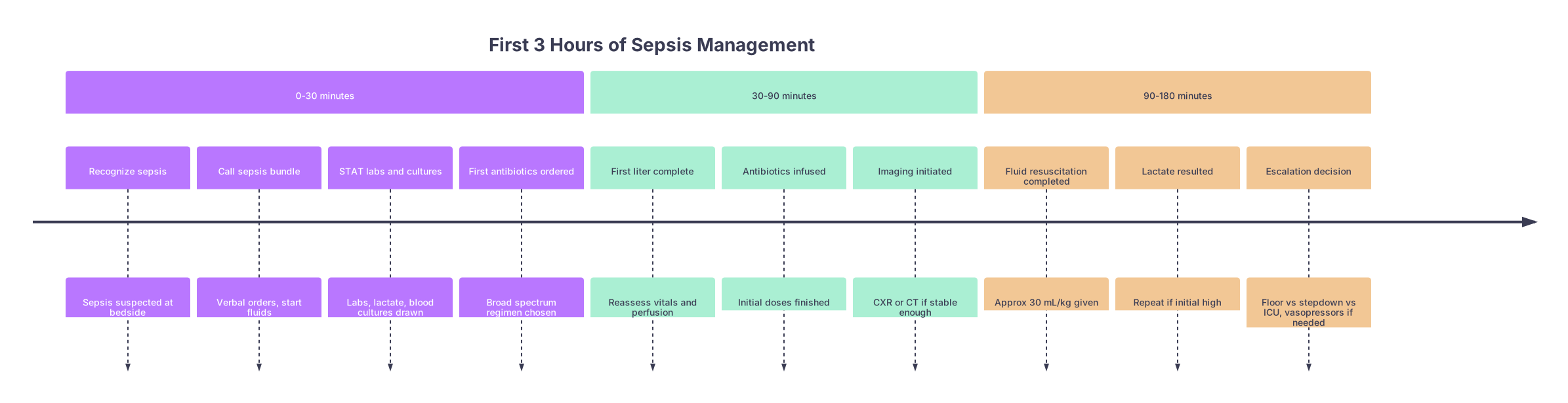
| Period | Event |
|---|---|
| 0-30 minutes - Recognize sepsis | Sepsis suspected at bedside |
| 0-30 minutes - Call sepsis bundle | Verbal orders, start fluids |
| 0-30 minutes - STAT labs and cultures | Labs, lactate, blood cultures drawn |
| 0-30 minutes - First antibiotics ordered | Broad spectrum regimen chosen |
| 30-90 minutes - First liter complete | Reassess vitals and perfusion |
| 30-90 minutes - Antibiotics infused | Initial doses finished |
| 30-90 minutes - Imaging initiated | CXR or CT if stable enough |
| 90-180 minutes - Fluid resuscitation completed | Approx 30 mL/kg given |
| 90-180 minutes - Lactate resulted | Repeat if initial high |
| 90-180 minutes - Escalation decision | Floor vs stepdown vs ICU, vasopressors if needed |
Mentally, you want these milestones:
- Within 15 minutes: sepsis recognized, orders in, fluids hanging, labs drawn
- Within 60 minutes: first full dose of broad‑spectrum antibiotics completed, not just ordered
- Within 3 hours: initial bolus volume completed or strongly justified deviation, lactate resulted and repeated if > 2, disposition decision made (floor vs ICU)
You will get dinged in your head (and sometimes in charts) if antibiotics land at 2.5 hours for a clearly septic patient because you spent 45 minutes “just checking one more thing.”
8. Bedside Reassessment: What You Actually Look At
You cannot just fire the bundle and go back to your workroom. The difference between “bundle done” and “patient survived” is in the reassessments.
When you go back into the room after the first liter and after antibiotics start, you run a focused exam:
Vitals:
- MAP trend: stable, rising, or still falling?
- HR: coming down at all? Or stuck at 130–140?
- RR: from 32 to 22 is progress. From 32 to 38 is trouble.
Mentation:
- Can they answer orientation questions now?
- Are they more interactive or more drowsy / agitated?
Perfusion:
- Cap refill (< 2 seconds vs 4+)
- Extremities warm (hyperdynamic early sepsis) vs cold and mottled (late shock)
Lungs:
- Any new crackles after fluids? Signs you are overdoing resuscitation?
- Work of breathing better or worse?
Urine output:
- Any urine in the bag? If they are not catheterized and you care about perfusion, consider putting a Foley in a sick shock patient.
If things are improving:
- Continue fluid plan but do not mindlessly push them into pulmonary edema
- Think about narrowing antibiotics later; for now, continue
If things are worsening or static:
- Push for ICU and vasopressors
- Re‑check lactate and ABG/VBG
- Question your diagnosis: any non‑septic cause (massive PE, MI, tamponade, hemorrhage) hiding here?
9. Documentation: How To Protect The Patient And Yourself
This part feels bureaucratic, but it matters. Good documentation forces you to think properly, and if things go bad, it shows that you acted fast and reasonably.
Your note (even a brief “on‑call event note”) should include:
Recognition
- “At 01:47, called by RN for hypotension and fever. On arrival, patient febrile to 39.1, BP 82/48 (MAP 59), HR 124, RR 28, SpO2 91% on 4 L. Appeared ill, diaphoretic, and confused.”
Diagnosis and severity
- “Clinical picture consistent with sepsis due to suspected pneumonia with septic shock (hypotension refractory to initial fluid resuscitation).”
Bundle elements with timestamps
- “Sepsis bundle initiated at 01:55. Blood cultures drawn at 02:00. Empiric antibiotics (piperacillin–tazobactam + vancomycin) ordered STAT at 02:03 and started at 02:14. Initial fluid bolus 1000 mL LR started at 02:00 and completed at 02:30; second liter started at 02:35.”
Response and plan
- “After 2 L LR, MAP improved to 68, HR to 104; mentation improved. ICU consulted at 02:20, evaluated at bedside; plan to transfer to stepdown with close monitoring.”
- Or, “Despite 30 mL/kg LR, MAP persistently < 65; ICU accepted patient for transfer and vasopressor initiation.”
This protects you from the retrospective, “Why did antibiotics start late?” conversation. Because you can show: they did not.
10. Common Pitfalls I See Residents Make
Let me be blunt about the frequent errors.
Undertreating early because “they do not look that bad”
Young 30‑year‑old with lactate 5 and soft BP 92/54 looks better than the 85‑year‑old at baseline. That does not mean they are fine. They crash fast.Over‑valuing one “odd” vital
“Well, the MAP was 58 but the automated cuff is finicky.”
Fine. Get a manual. If it is still low and the patient looks unwell, believe it.Waiting for labs and imaging before starting antibiotics
You are not writing a detective novel. You are preventing organ failure. If you have a >50% suspicion of sepsis and they are hypotensive or tachypneic, you start antibiotics first and refine later.“CHF, so no fluids” reflex
Stop that. A fluid‑sensitive patient may need smaller boluses, more frequent lung checks, ultrasound guidance. But septic shock without any fluids is usually a death sentence.Ignoring nurses’ concern
The sentence “He just does not look right” from an experienced ICU or stepdown nurse is worth more than whatever your last normal creatinine told you. When they escalate, you should go in person.No early escalation
You think calling the ICU is an admission of incompetence. It is not. Waiting until they are in multi‑organ failure to make that call is.
11. Putting It All Together: A Simple Mental Model
When you get that 2 am call, run this internal script:
- At bedside: “Sick or not sick?”
- If sick with likely infection: say out loud: “This is sepsis; starting bundle.”
- Start:
- STAT labs + lactate + cultures
- Broad‑spectrum antibiotics
- 30 mL/kg fluids (or as close as safely possible)
- Reassess after each liter and after antibiotics go in
- If MAP still < 65 or lactate high, call ICU and plan for vasopressors
- Document recognition time, interventions, and response
Once you have done this 10–15 times, it becomes reflexive. You will move faster, feel calmer, and your patients will objectively do better.
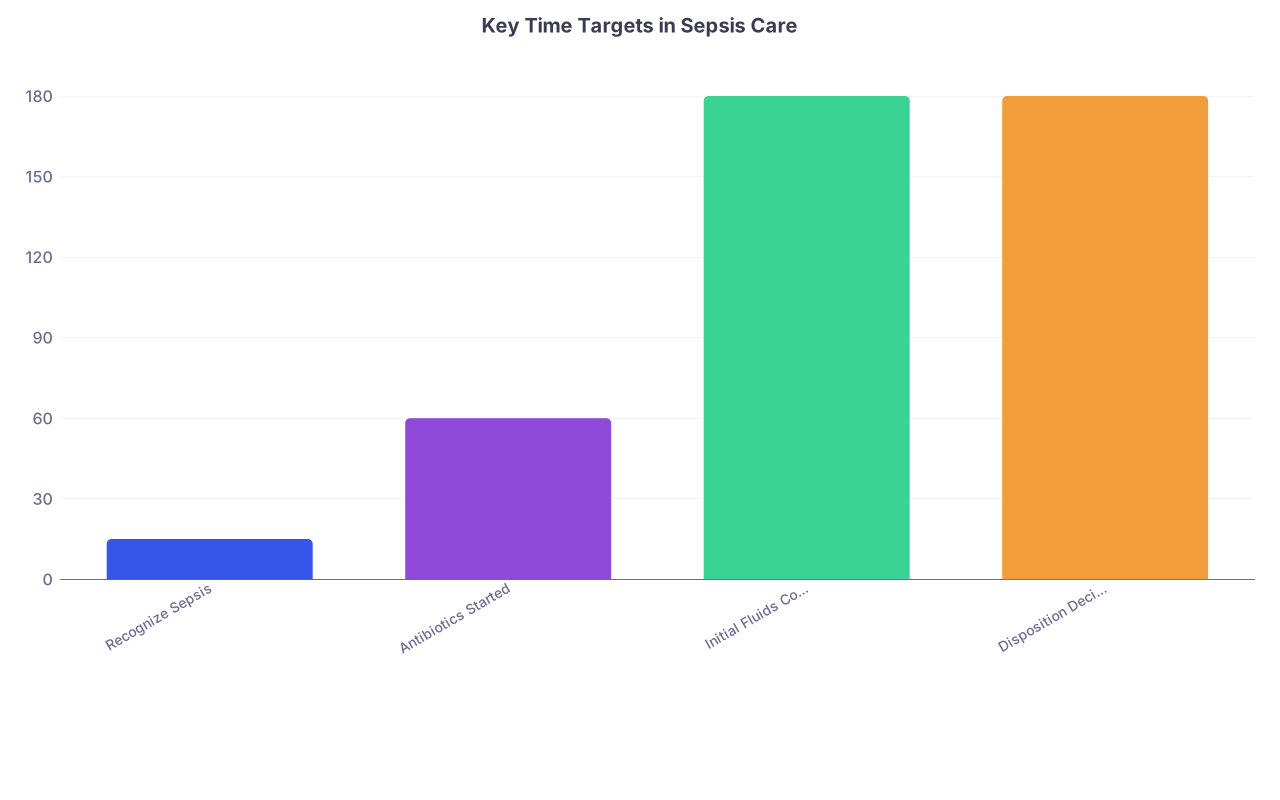
| Category | Value |
|---|---|
| Recognize Sepsis | 15 |
| Antibiotics Started | 60 |
| Initial Fluids Complete | 180 |
| Disposition Decision | 180 |
FAQ – Six Questions Residents Actually Ask
1. Do I really have to give the full 30 mL/kg in a heart failure or ESRD patient?
No, not blindly. You aim for adequate perfusion, not a magical volume number. In a volume‑sensitive patient, you might:
- Start with 500–1000 mL
- Use frequent reassessment (lungs, JVP, mental status, MAP, ultrasound if you can)
- Stop or slow down if you see evidence of pulmonary edema and move more quickly to vasopressors and ICU transfer.
But “CHF so we gave 250 mL once and stopped” in clear septic shock is poor care.
2. How fast do I need antibiotics for “possible” sepsis on the floor?
If they are frankly hypotensive, tachypneic, or altered, treat them like sepsis now. Do not wait for the second fever spike or new infiltrate. Your goal: antibiotics infusing within an hour of your recognition of likely sepsis. If this is a gray borderline SIRS case that looks clinically well, you can be more deliberate, but as soon as you are convinced they are “sick,” the clock is functionally running.
3. Can I use peripheral norepinephrine, or do I have to wait for a central line?
Depends on your institution. Many hospitals now allow short‑term peripheral norepinephrine through a good, proximal, large‑bore IV (e.g., antecubital 18g) while central access is arranged. That is vastly better than sitting on your hands waiting an hour for central line placement while MAP stays at 50. Know your local protocol, but conceptually: early low‑dose peripheral pressor is safer than 4 more liters of fluid in a non‑responder.
4. Lactate came back at 2.1 and the patient looks okay now. Is this still “sepsis”?
Potentially early or mild. A lactate slightly above 2 in a clinically improving patient with a clear source and stable hemodynamics is not the same beast as lactate 6 in shock. You still:
- Repeat lactate in a few hours to confirm it is trending down
- Continue appropriate antibiotics
- Keep a close eye on vitals and urine output
You may not need ICU or aggressive pressors, but you do not dismiss that first lactate as irrelevant.
5. When should I narrow antibiotics, and whose job is that?
Narrowing typically happens once you have:
- Culture results with susceptibilities, or
- Strong source clarification (e.g., uncomplicated pyelo in young woman, good response)
In practice, it is everyone’s job, but on call you rarely de‑escalate in the first 6–12 hours unless it is obviously wrong (e.g., documented anaphylaxis to penicillin and someone just ordered Zosyn). The primary team on rounds the next morning should always ask: “Can we narrow?” You, on call at 3 am, should prioritize adequate initial coverage, then leave fine‑tuning for daytime if the patient is stable.
6. How do I handle a borderline case where the EHR fires a “sepsis alert,” but I am not convinced?
You treat the patient, not the algorithm. That said, blowing off every alert is lazy. For a borderline case:
- Go to bedside and assess “sick or not sick”
- Check vitals trend and labs
- Look for a plausible infectious source
If they look well, have soft but stable vitals, and no solid source, you can reasonably document: “Sepsis alert fired; patient assessed at bedside, currently hemodynamically stable without evidence of organ dysfunction; will monitor closely and repeat labs.” Then you actually monitor closely. But the moment their clinical picture shifts from “fine” to “sick,” you stop arguing with the computer and start the real sepsis workup and bundle.
Key Takeaways
- Sepsis care on call is about speed plus structure: recognize, say “sepsis,” fire the bundle, then reassess.
- Fluids + early broad‑spectrum antibiotics + early escalation to ICU/pressors when needed will save more lives than any clever nuance.
- Your bedside judgment and willingness to act decisively matter more at 2 am than the exact wording of the guideline; run a clear mental script and you will not freeze when it counts.