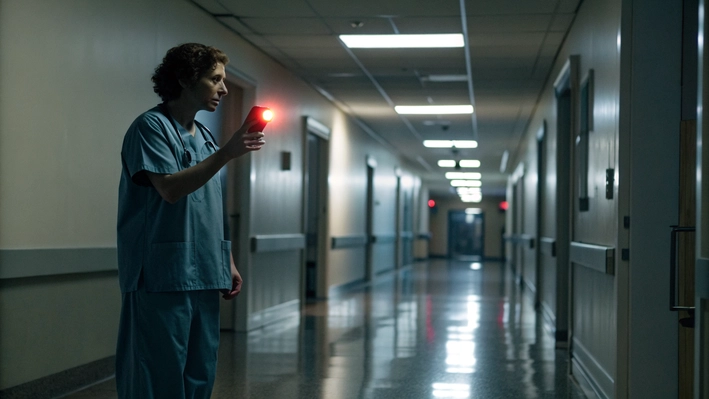
The most dangerous part of call is not 3 a.m. It is the last 30 minutes before handoff.
If you improvise that window, you’ll miss things, you’ll hand off chaos, and one day something important will fall through. You need a fixed, almost boring routine. The kind you can run on autopilot after a brutal night.
Here’s a concrete, minute‑by‑minute structure you can use for the last 30 minutes of call before morning signout, whether you’re on wards, ICU, or night float. I’ll walk you through exactly what you should be doing at 30, 20, 10, and 5 minutes to signout.
Overview: Your 30‑Minute Countdown
At this point you should stop taking on “new projects” and shift into exit mode.
Last 30 minutes of call are for:
- Stabilizing
- Summarizing
- Communicating
Not for:
- Starting new workups
- “Quick” discharges
- Re‑writing notes from scratch
Think of these 30 minutes as a flight landing checklist, not free time to “just finish one more thing.”
Here’s the skeleton:
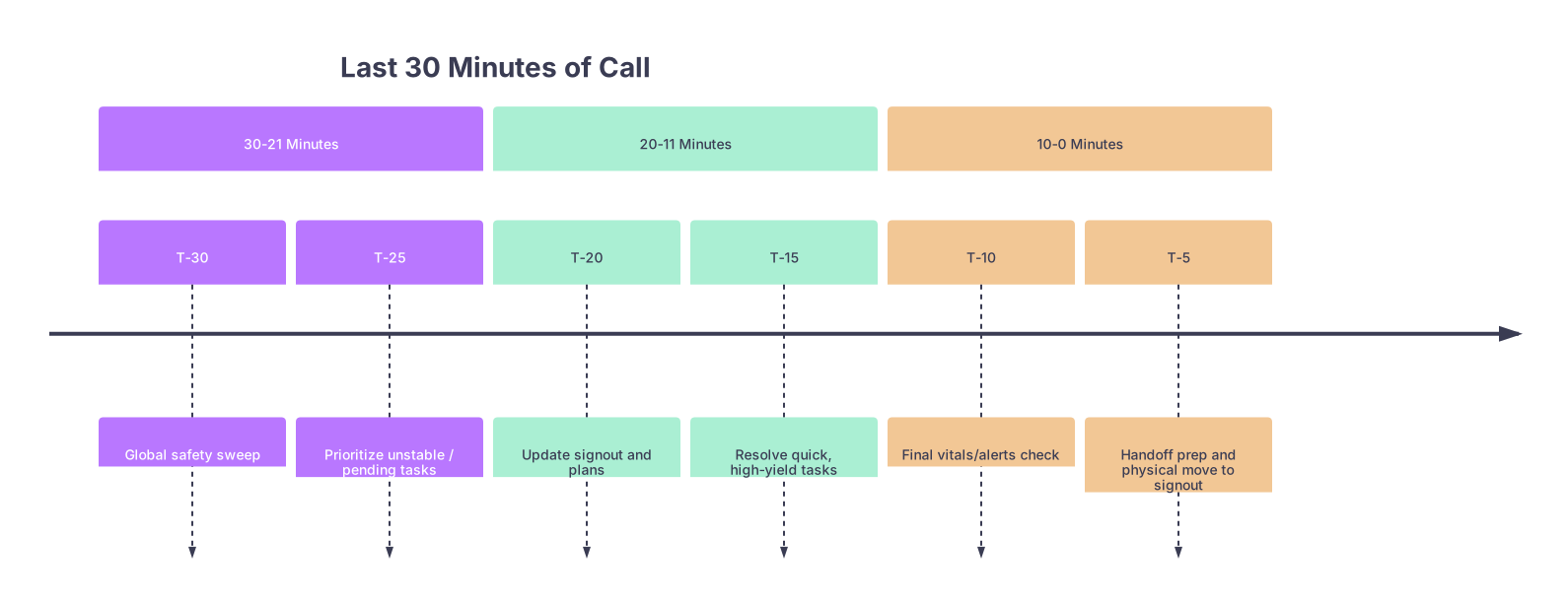
| Period | Event |
|---|---|
| 30-21 Minutes - T-30 | Global safety sweep |
| 30-21 Minutes - T-25 | Prioritize unstable / pending tasks |
| 20-11 Minutes - T-20 | Update signout and plans |
| 20-11 Minutes - T-15 | Resolve quick, high-yield tasks |
| 10-0 Minutes - T-10 | Final vitals/alerts check |
| 10-0 Minutes - T-5 | Handoff prep and physical move to signout |
We’ll go step by step.
T‑30 to T‑21 Minutes: Global Safety Sweep
At this point you should pull back from the weeds and look at your whole list.
1. Hard stop mental switch (T‑30)
You look at the clock: 6:30 a.m. signout at 7:00? This is the moment.
Do this:
- Tell yourself (and your team if you have juniors):
“We’re in handoff mode now. No new non-urgent workups.” - Stop opening new radiology results “just to see” unless they’re time‑critical.
- Stop starting fresh notes. Dot phrases can wait; signout cannot.
2. Run your patient list like a pilot checklist (T‑28)
Open your patient list. One by one, very fast:
- ICU / stepdown
- Unstable floor patients
- Fresh admissions from the night
- Everyone else
For each, ask yourself two questions:
- “Is this patient safe for the next 2–3 hours?”
- “What will the day team need to know or do this morning?”
If you can’t answer #1 with a quick yes, that patient goes into your “must address before handoff” bucket.
Make a quick scratch pad (paper or a side text field in the EMR):
- Column 1: Room / name
- Column 2: What I still need before handoff (e.g., “recheck BP,” “follow up trop,” “clarify goals with family”)
- Column 3: If not done, what to tell day team
This is your working map for the next 25 minutes.
T‑25 to T‑21 Minutes: Triage Outstanding Issues
At this point you should be ranking problems, not solving everything.
3. Classify your remaining tasks (T‑25)
Take that scratch list and sort into three categories:
Critical to do yourself before handoff
- Recheck vitals on someone who was hypotensive overnight
- Reassess respiratory status on a HFNC patient
- Confirm a stat lab or imaging result that could change management now (e.g., post‑tPA CT, repeat lactate, 6‑hour troponin)
Safe to hand off as first priorities for the day team
- “Follow up morning CBC on this GI bleeder and transfuse if Hgb <7”
- “Touch base with surgery about timing of OR”
- “Get PT/OT eval for possible discharge tomorrow”
Nice to have, but nonessential
- Perfectly formatted notes
- Re‑ordering non-critical daily labs
- Pre‑writing tomorrow’s orders
If your night was rough, category 3 dies first. Non‑negotiable.
4. Do a rapid “red flag” screen (T‑22)
Before you dive into anything, quickly check for hidden landmines:
- Any patient:
- With MAP <60, SBP <90, or new pressor overnight
- On >4–5 L NC, HFNC, BiPAP, or recent wean attempt
- With new altered mental status or agitation
- With concerning labs: rising lactate, dropping Hgb, K >5.5, Na swings, new AKI
In the EMR, this can often be:
- Sort by location → eyeball ICU / stepdown
- Sort by early warning score (NEWS/MEWS) if your hospital has it
- Scan the overnight vitals trend for outliers
Any red flag goes straight into category 1: you address or at least re‑eyeball before signout.
T‑20 to T‑11 Minutes: Build a Clean, High‑Yield Signout
At this point you should stop moving and sit down to solidify your written/typed handoff.
5. Standardize your signout structure (T‑20)
Your brain is mush at this hour. Use a fixed template so you don’t rely on memory.
For each patient, in your signout tool (EPIC, handoff report, Word doc — whatever you have), use something like:
- ID: “Mr X, 68, COPD, CHF, admitted for pneumonia and acute hypoxic respiratory failure.”
- Overnight course: “Needed escalation from 2L to 4L NC at 3 a.m., now stable at 4L, sat 93–95%.”
- To‑do / morning priorities:
- “Reassess lung exam / work of breathing by 9 a.m.”
- “Follow up 8 a.m. BMP: if Cr uptrending, consider holding lasix.”
- If‑then plan:
- “If O2 need >6L or sustained sat <90% → consider HFNC and page ICU.”
- Code status / family: “Full code. Daughter updated overnight by phone.”
You do not need novels. You do need:
- The trajectory (better / worse / same)
- The first 1–3 tasks for the day team
- How to respond if that patient destabilizes
| Element | Example Snippet |
|---|---|
| ID + Reason | 68M COPD/CHF, pneumonia, acute hypoxic RF |
| Overnight | Escalated to 4L at 3a, stable since |
| Priority Task | Reassess lung exam by 9a |
| If-Then | If O2 >6L or sat <90 → consider HFNC, page ICU |
| Code/Family | Full code, daughter updated overnight |
6. Capture the “weird stuff” explicitly (T‑17)
The things that burn you aren’t the obvious ICU train wrecks. It’s:
- The borderline patient everyone is secretly nervous about
- The unreliable historian who keeps refusing meds
- The angry family who said, “We want to talk to the day doctor first thing.”
For those:
- Write one plain‑language sentence that names the concern:
- “High risk: soft pressures all night, I’m not fully reassured.”
- “Family upset about perceived delay in surgery; expect early call.”
- “Patient frequently refuses insulin; sugars 250–350 overnight.”
Day teams do better with clear risk flags than with long prose.
7. Embed contingency plans (T‑15)
At this point you should make it very easy for the day team to act without guessing.
For each patient with any instability:
- Add 1–2 if‑then lines:
- “If SBP <90 x2 despite 500cc bolus → call ICU / attending.”
- “If pain uncontrolled with current regimen → consider adding low‑dose IV dilaudid; no allergy, used last admission.”
- “If Hgb <7 on 8 a.m. CBC → transfuse 1u PRBC, type and screen already sent.”
This is how you prevent 8 a.m. panic pages and unsafe delays.
T‑14 to T‑11 Minutes: Resolve Fast, High‑Yield Tasks
At this point you should knock out the 1–2 small things that will dramatically de‑stress the day team.
8. Do the 5‑minute tasks that change the morning (T‑14)
Examples:
Quick bedside recheck:
- Walk past the post‑rapid‑response patient
- Make sure the delirious patient isn’t climbing out of bed
- Re‑listen to lungs on the borderline fluid‑overloaded patient
EMR actions:
- Place a one‑time morning lab that everyone expects (e.g., follow‑up K) if it isn’t ordered
- Enter a simple hold parameter: “Hold metoprolol if HR <60 or SBP <100”
- Clarify diet / NPO if there’s an early procedure
This is not the time for new consults or big orders. Think: one mouse click, one quick bedside look.
9. Communicate single critical updates (T‑12)
If something changed in the last hour that the day team absolutely needs to know:
- One message or phone call:
- “FYI, room 542 had another desat; now on 6L, I added HFNC order but not started yet.”
- “The 4 a.m. troponin finally came back uptrending; I put in a cards consult as stat.”
Do not spam them with everything. One or two high‑impact updates max.
T‑10 to T‑6 Minutes: Final Safety Check
At this point you should do nothing new. Only verify and clean up.
10. Run a last vitals & orders scan (T‑10)
Use your EMR quickly and systematically:
- Vitals board:
- Any active rapid response / code?
- Any MAP <60, SBP <90, HR >130, RR >30, spO2 <90?
- Orders:
- Any stat orders pending that you placed and forgot?
- Any infusions without clear parameters (e.g., heparin without anti‑Xa ordered)?
- Any patient without VTE prophylaxis who should have it (unless clear contraindication)?
If you spot something unsafe that’s fixable in 1–2 minutes, fix it.
If it requires a big intervention, make it a clear signout item with your concern spelled out.
11. Clean the handoff tool (T‑8)
Open your signout list:
- Delete obviously outdated to‑dos from 2–3 days ago that are no longer relevant
- Move old completed items out of the active line (or strike through)
- Make sure each patient has:
- Current code status noted
- Current location and attending
- Updated problem focus (don’t leave “admitted for chest pain” if it’s now clearly pancreatitis)
Your goal: a short, accurate line per patient the day team can actually read at 7:00 a.m. without swearing at you.
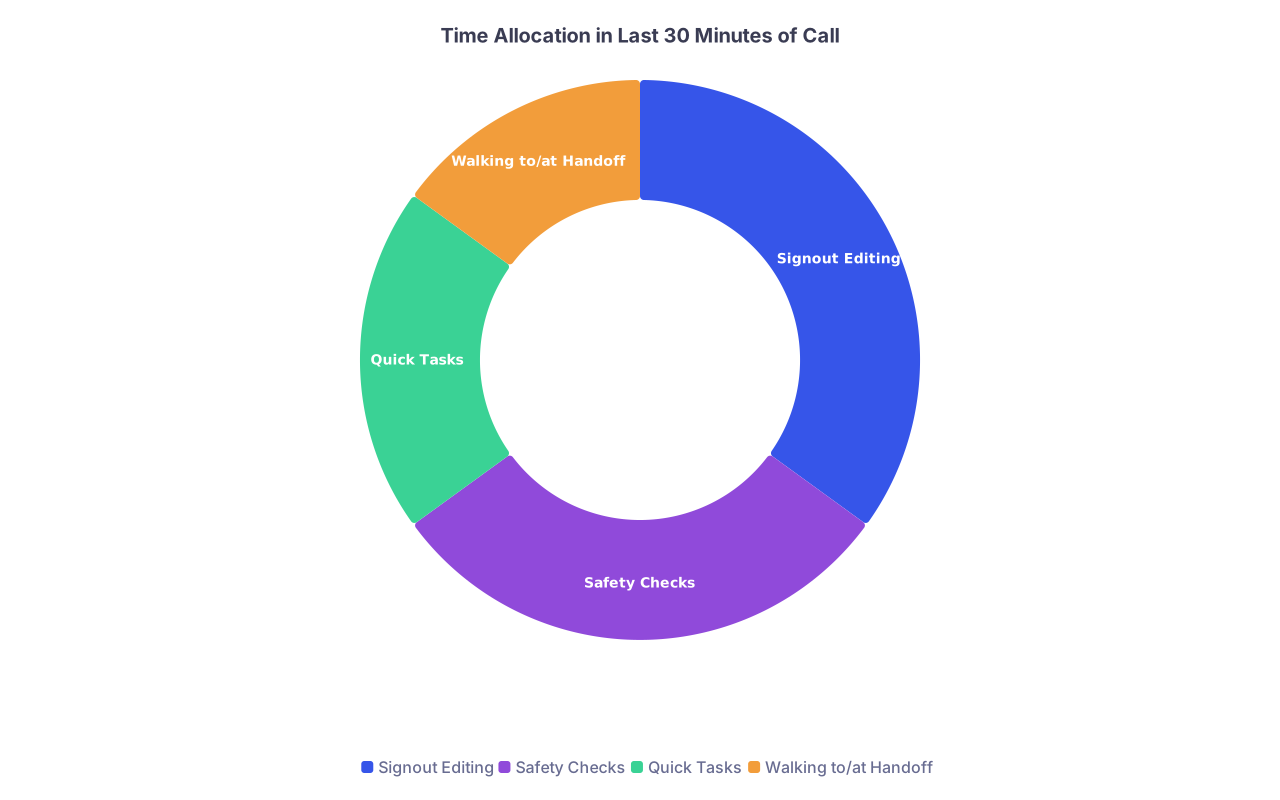
| Category | Value |
|---|---|
| Signout Editing | 35 |
| Safety Checks | 30 |
| Quick Tasks | 20 |
| Walking to/at Handoff | 15 |
T‑5 to T‑0 Minutes: Physical Handoff Mode
At this point you should be moving toward signout, not still in a patient room.
12. Stop charting and physically go (T‑5)
This is where many residents fail. They keep typing until 6:59, then bolt in late and disorganized.
Instead:
- At 5 minutes before signout:
- Log off patient charts
- Grab your list (printed or on device)
- Bring your pen, maybe coffee, definitely your brain
Aim to arrive 1–2 minutes early, not right on time. If you’re covering cross-service, be where people expect you.
13. Quick pre‑brief with co‑residents (T‑3)
If you’re handing off as part of a team (night float cross-cover + admitting resident):
- In 60 seconds, decide:
- Order of services you’ll present (ICU → stepdown → general)
- Who will start the signout for complex shared patients
- Any global announcements (e.g., “Hospitalist service is boarding two ICU‑level patients on floor, keep an eye.”)
This prevents the awkward, chaotic back‑and‑forth once the day residents sit down.
14. Deliver signout: the micro‑script (T‑0)
Your signout style matters. At this point you should be:
- Concise: 20–40 seconds per routine patient, 60–90 seconds for train wrecks.
- Forward‑looking: focus on “what next” more than “what I did.”
For each patient:
- One‑liner: ID + main problem + current stability.
- Overnight changes that actually matter.
- Today’s top priority.
- If‑then plan for deterioration.
Example for a moderate‑risk patient:
“542, 68M with COPD/CHF admitted for pneumonia and acute hypoxic respiratory failure. Overnight needed escalation from 2L to 4L NC around 3 a.m., now stable at 4L, sats 93–95. I’m a bit uneasy — his work of breathing is borderline but not ICU‑level yet. Priority this morning is reassessing lung exam and repeat BMP by 9 a.m. If his O2 requirement climbs above 6L or he’s persistently satting below 90 despite that, I’d move to HFNC and talk to ICU early rather than late.”
If they want more detail, they’ll ask. You’ve already set the frame.
Specialty / Setting Adjustments (Briefly)
You’ll tweak the details, but the structure of the last 30 minutes stays the same.
Wards / Night Float
At this point you should focus on:
- Cross-cover patients you barely know → make sure signout compensates for that.
- Disposition‑sensitive patients (possible discharge) → clarify what’s pending, don’t promise discharge.
Key nuance: Flag the “quasi‑ICU” floor patients clearly. Those are the disasters waiting to happen at 9 a.m.
ICU
At this point you should:
- Double‑check vent settings and sedation/analgesia protocols.
- Make sure:
- Drip rates are appropriate and documented
- Labs for titration (ABGs, lactate, drug levels) are actually ordered and timed
Your if‑then plans get more granular (e.g., pressor titration limits, when to call attending).
ED Holding Patients / Boarding
At this point you should:
- Clearly define who is responsible after handoff (ED or admitting team).
- In your signout:
- Indicate “boarding on ED side, but we are primary” or “ED primary until bed assigned.”
This avoids the classic 8 a.m. “I thought you were following that patient” mess.
One Page: Condensed 30‑Minute Checklist
Here’s the whole thing in a brutal, no‑nonsense form you can print or memorize.
T‑30: Switch to handoff mode
- Stop starting new non‑urgent work
- Open list, identify sickest and newest patients
T‑28 to T‑22: Global safety sweep
- For each patient: “Safe for 2–3 hours?” / “What does day team need?”
- Mark red flags: hypotension, hypoxia, AMS, scary labs
T‑21 to T‑15: Triage tasks
- Category 1: Must‑do before handoff (stability checks, key labs)
- Category 2: First priorities for day team
- Category 3: Nice‑to‑have (defer if slammed)
T‑20 to T‑15: Update signout
- For each patient: ID, overnight course, 1–3 priorities, if‑then plan, code status
- Flag weird stuff: borderline patients, angry families, noncompliance
T‑14 to T‑11: Hit fast, high‑yield tasks
- Quick bedside checks on borderline patients
- Simple orders that prevent morning chaos (labs, hold parameters, diet/NPO)
T‑10 to T‑6: Final safety check
- Scan vitals board for red flags
- Check for pending stat orders
- Clean outdated items from signout
T‑5: Move to signout
- Stop charting
- Bring updated list and pen
- Arrive 1–2 minutes early
T‑0: Deliver focused handoff
- One‑liner, key overnight events, today’s priority, if‑then plan
- Flag high‑risk patients plainly: “I’m not fully reassured about this one.”
Final Thoughts: What Actually Matters
Three things make the last 30 minutes of call safe:
- A hard mental switch into “handoff mode” at T‑30. No more new projects, only stabilizing and summarizing.
- A structured, predictable checklist you follow every single time, even when exhausted. Consistency protects you from your own fatigue.
- Clear, forward‑looking signout lines with explicit priorities and if‑then plans, especially for the borderline patients everyone is secretly worried about.
You do those three, most of the chaos of morning handoff disappears. Or at least, it becomes controlled chaos. Which is as good as residency gets.