
The way most residents approach call is backwards. They obsess over what to pack and totally ignore the clock. Survival on call is about timing, not heroics.
You live or die on call by how you use each block of hours. So let’s walk it, minute by minute, from pre‑call morning to post‑call noon. At each point on this timeline, I will tell you exactly what you should be doing, thinking, and ruthlessly avoiding.
Pre‑Call Morning: 06:00–11:00 – Loading the System, Not Burning It
This is where people already sabotage the whole shift. They treat pre‑call morning like any other day. Wrong. You are entering a 24‑30 hour physiological negotiation. You need to arrive at 16:00 with a full tank, not one-third.
06:00–07:30 – Wake‑Up and Baseline
At this point you should:
- Wake at your usual time if you are on a typical day‑night call (e.g., 07:00 rounds, call starts 16:00–18:00).
- Do a short check: headache? nausea? sore throat? If you are actually sick, this is the last semi‑ethical window to call the chief and swap.
- Eat a real breakfast: protein + complex carbs, not a pastry and caffeine blast. Example:
- Eggs or Greek yogurt
- Oatmeal or whole‑grain toast
- Water with electrolytes
Avoid:
- Energy drinks early. Spiking now means crashing at 03:00.
- “Saving calories for later.” You will not make good food decisions at 01:00.
07:30–09:30 – Light Productivity Only
If you are on a typical q4 or night float‑style call with required daytime presence, at this point you should:
Do the minimum to not screw over your team:
- Pre‑round efficiently.
- Know overnight events.
- Update yourself on any unstable patient you might inherit overnight.
Push heavy academic tasks away from today. No:
- Massive board review blocks
- New research deadlines
- Optional meetings you agreed to when you were naive
This block is for maintenance, not ambition. Your goal: arrive at midday mentally fresh, not already resentful and drained.
09:30–11:00 – Strategic Wind‑Down
At this point you should:
Front‑load documentation:
- Finish as many notes as you can.
- Enter any pending routine orders.
- Clean your inbox/messages.
Decide your sleep strategy:
- If call starts around 16:00–18:00:
- Plan a 60–90 minute nap between 13:00–15:00.
- If call is a true night float (e.g., 20:00–08:00):
- Aim for a 2–3 hour nap later in the afternoon.
- If call starts around 16:00–18:00:
You are not lazy for planning a nap. You are doing risk management.
Pre‑Call Midday: 11:00–15:30 – The Critical Nap Window
This window determines whether you are barely functional by 03:00 or actively unsafe.
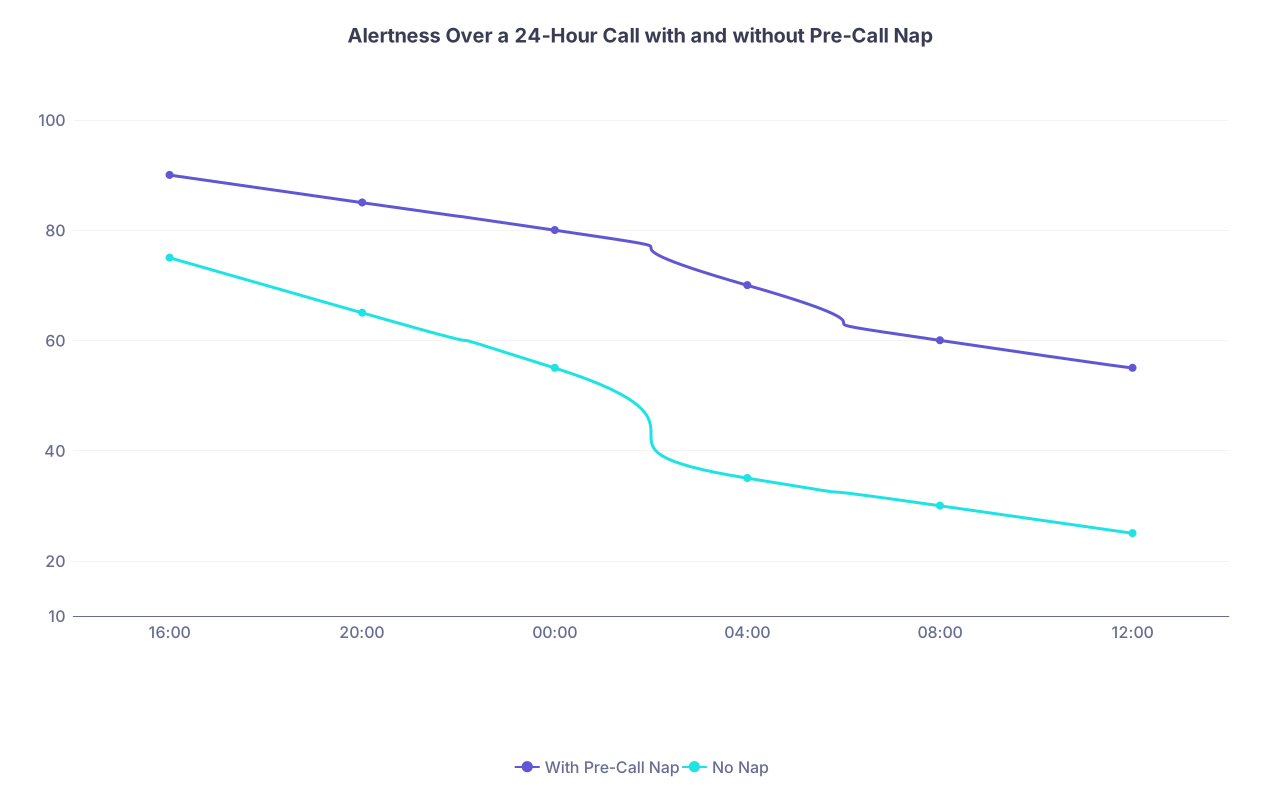
| Category | With Pre-Call Nap | No Nap |
|---|---|---|
| 16:00 | 90 | 75 |
| 20:00 | 85 | 65 |
| 00:00 | 80 | 55 |
| 04:00 | 70 | 35 |
| 08:00 | 60 | 30 |
| 12:00 | 55 | 25 |
11:00–12:30 – Handoff and Exit Strategy
If you are on a rotating ward team and going on call that afternoon, at this point you should:
Aggressively clean your list:
- Discharge what can be discharged now.
- Clarify active plans with your attending for any unstable or unclear patients.
- Make a brief “if‑then” note in your sign‑out for borderline situations:
- “If MAP <65 despite 2L fluids → start low‑dose norepi, call MICU.”
- “If pain uncontrolled after 2 PRNs → consider PCA, page ortho if neuro changes.”
Talk to your senior:
- “I’m on call tonight. Anything specific you want me to watch for on Mr. X?”
- This buys you trust and protects you when things go sideways at 02:00.
12:30–13:00 – Pre‑Nap Prep
At this point you should:
Eat a moderate lunch. Not greasy, not huge. Think:
- Salad with protein
- Rice + lean meat
- Soup + sandwich
Hydrate, then limit fluids right before nap so you do not wake up to pee 30 minutes in.
Silence your phone notifications except:
- Chief resident
- Family/emergency contact
This is not the time to “catch up on life” calls or doomscrolling. You are preparing your brain for enforced downtime.
13:00–14:30 (or 15:00) – The Pre‑Call Nap
At this point you should:
- Lie down in a dark, cool room.
- Use an eye mask and earplugs if needed.
- Set two alarms: 60 and 90 minutes.
If you cannot sleep, you still rest. Eyes closed. No screens. You are banking quiet time.
Avoid:
- Napping longer than 2 hours. You will wake up groggy and misaligned.
- Starting caffeine within 3 hours pre‑nap.
14:30–15:30 – Wake‑Up and Pack‑Up
You wake up. You will feel slightly sluggish. That is normal.
At this point you should:
- Take a short walk or do light stretching.
- Caffeine: now is your first real, intentional dose.
- Coffee or tea, not a giant energy drink.
- Pack your bag with intention, not panic:
- ID, pager, pens, small notebook
- Phone charger + portable battery
- Snacks: nuts, protein bar, fruit, something salty
- Basic toiletries: toothbrush, toothpaste, face wipes, small moisturizer, lip balm
- Extra socks, maybe compression socks, light sweater or scrub jacket
You are not going camping. You do not need half your apartment. Just what prevents you from crashing or smelling terrible.
Call Start to Evening: 16:00–22:00 – Control the Chaos Early
Here is where junior residents either earn sanity or get buried.
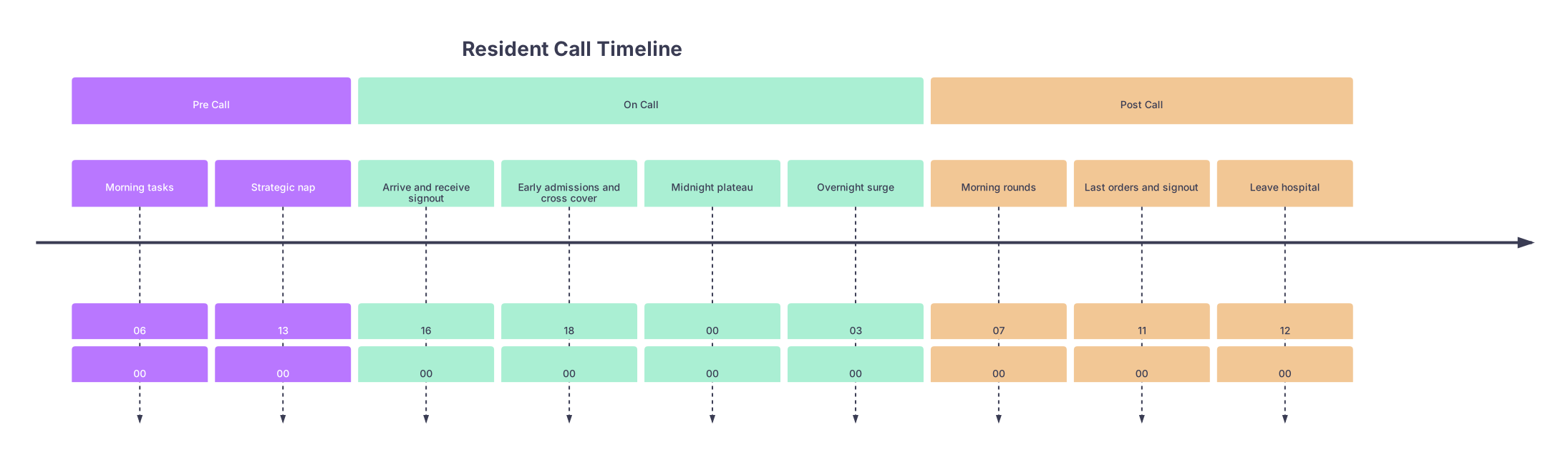
| Period | Event |
|---|---|
| Pre Call - Morning tasks | 06 |
| Pre Call - Strategic nap | 13 |
| On Call - Arrive and receive signout | 16 |
| On Call - Early admissions and cross cover | 18 |
| On Call - Midnight plateau | 00 |
| On Call - Overnight surge | 03 |
| Post Call - Morning rounds | 07 |
| Post Call - Last orders and signout | 11 |
| Post Call - Leave hospital | 12 |
16:00–17:00 – Arrival and Battlefield Mapping
At this point you should:
Arrive 10–15 minutes early. Not 30. You are not here to socialize.
Get a handle on:
- Which patients you are covering (team lists, ICU/stepdown?)
- Which services consult you directly
- Where the code carts are and the numbers for:
- Rapid response
- Code blue
- Blood bank
- MICU/CCU
During sign‑out:
- Write down names + room numbers + one‑line problems.
- Ask, explicitly: “Who are your sickest two or three?”
- Clarify DNR/DNI statuses now, not at 03:00 on the phone with a furious family.
If your senior rushes sign‑out and hand‑waves “nothing active,” assume they are wrong. Scan the list and identify:
- New admissions
- Recent transfers from ICU
- Anyone with hypotension, low sodium, new oxygen requirement
17:00–19:30 – Front‑Loading Admissions and Cross‑Cover
At this point you should:
See new admissions early when you are fresh.
Prioritize:
- Unstable or potentially unstable patients
- Unknowns with unclear diagnoses
- Straightforward admits (social admits, simple cellulitis) last
When you write your first few H&Ps, consciously structure them to avoid re‑work later:
- Problem list up top
- Clear assessment and plan per problem
- Admission orders that match the plan
For cross‑cover:
- Respond to vitals and nursing concerns quickly at the start of the night. You show nurses that you are responsive, which buys you grace later.
At this stage, you are setting the tone. If you ignore pages or delay, the entire floor learns that you are slow. You do not want that label.
19:30–20:00 – First Micro‑Break and Food
At this point you should:
Force a 10–15 minute break if stable:
- Eat something with protein.
- Refill water.
- Brief check‑in with your senior: “Here is what’s pending, here is what I am worried about.”
Calibrate your caffeine:
- If you had a coffee at 15:00–16:00, this is probably a decaf or half‑caff moment, not another full hit, unless you are very caffeine‑tolerant.
Residents who power through without eating “until things calm down” never eat. The hospital never calms down.
Late Evening to Midnight: 20:00–00:00 – Stabilize the Deck

This is often the hidden golden window. Use it correctly and your 03:00 self will thank you.
20:00–22:00 – Proactive Rounding and Anticipation
At this point you should:
Do a targeted “sick list” round:
- New admissions you started but have not re‑checked.
- Borderline patients from sign‑out (soft blood pressures, borderline saturations).
- Anyone nurses have “a bad feeling” about. They are almost always right.
Clean your orders:
- Make sure PRNs for pain, nausea, and sleep are in.
- For brittle diabetics: write clearer insulin orders or tighten monitoring.
- For frequent fallers or delirious patients: safety and sitter plans.
Address nursing questions fully:
- If a nurse calls about mild tachycardia, do not just order fluids from the desk. Step into the room at least once to examine and think.
The goal: reduce the number of preventable 02:30 disasters.
22:00–00:00 – Documentation Push and Caffeine Checkpoint
At this point you should:
Finish as much documentation as possible:
- H&Ps on new admits
- Key progress notes or sign‑out updates
Do a caffeine check:
- If you are relatively awake: small dose (half cup coffee or tea) around 22:30–23:00.
- If you are already wired: skip it. Fight the urge to “pre‑treat” your future fatigue.
Quick physical reset:
- Stand up, do 10 squats, stretch shoulders/neck.
- Refill water. Eat a small snack if you have not.
You want to hit midnight with your notes mostly done. Midnight is where the wheels tend to come off.
Graveyard Hours: 00:00–05:00 – Surviving When Your Brain Is Lying to You
This is the part no brochure prepares you for. From here until dawn, your brain is actively sabotaging you. You compensate with systems, not willpower.
| Time Block | Main Risk | What You Should Do |
|---|---|---|
| 00:00–02:00 | Rising fatigue, cognitive slowing | Finish notes, intentional caffeine, short walks |
| 02:00–04:00 | Peak microsleep risk | Avoid driving, double-check orders, verbal read-backs |
| 04:00–06:00 | Decision fatigue, irritability | Ask for second eyes, re-check vitals and meds |
00:00–02:00 – The Temptation to Coast
At this point you should:
Do a full list review at the computer:
- New labs, new vitals
- Open tasks and unsigned orders
- Any pending blood cultures, imaging results
Clean up:
- Finalize all H&Ps.
- Update sign‑out with concise, useful changes:
- “Started IV lasix 40 mg x1 at 23:30; re‑check weight and I/O in a.m.”
- “Troponins flat x3; chest pain improved; likely non‑cardiac.”
Be wary of shortcuts:
- Double‑check medication doses, especially:
- Insulin
- Anticoagulants
- Opioids in renal/hepatic patients
- Double‑check medication doses, especially:
Your brain will tell you “this is probably fine.” At 01:30, “probably” is how people get harmed. Slow down slightly.
02:00–04:00 – The Worst Block
At this point you should:
Recognize this is your lowest alertness window.
Put guardrails in place:
- For any major decision (ICU transfer, new sepsis workup, DKA management), speak to your senior or attending. Even if they sound sleepy and annoyed.
- Read back critical results out loud: “So you are saying K is 6.8, not 5.8, correct?”
Micro‑manage your environment:
- Bright lights in the workroom.
- Sit upright, not slouched.
- If you feel your eyes closing at the desk, stand up immediately, walk the hall.
If the pager slows:
- Take a 15–20 minute controlled nap, if your service and culture allow it:
- Tell your senior or night float partner exactly where you are.
- Set a loud alarm and put the pager on loud beside your head.
- Do not disappear. That is how people stop trusting you.
This is damage control time. You are not trying to be a hero. You are trying not to make a dangerous mistake.
04:00–05:00 – Pre‑Dawn Checkpoint
At this point you should:
Do one more targeted vital review:
- Check anyone with borderline blood pressures.
- Trend anyone with rising creatinine, lactate, or oxygen need.
Plan the morning:
- Identify 2–3 patients who might blow up at 06:30.
- Pre‑emptively adjust:
- Standing diuretics?
- Better pain control before PT/OT?
- Labs you want drawn STAT instead of routine?
You are now thinking not just about survival, but about handing off something that will not implode on your day team.
Pre‑Rounding to Post‑Call Noon: 05:00–12:00 – Landing the Plane
You are exhausted and irritable. This is where people snap at nurses, forget core tasks, and then stay two extra hours doing work they should have handed off.
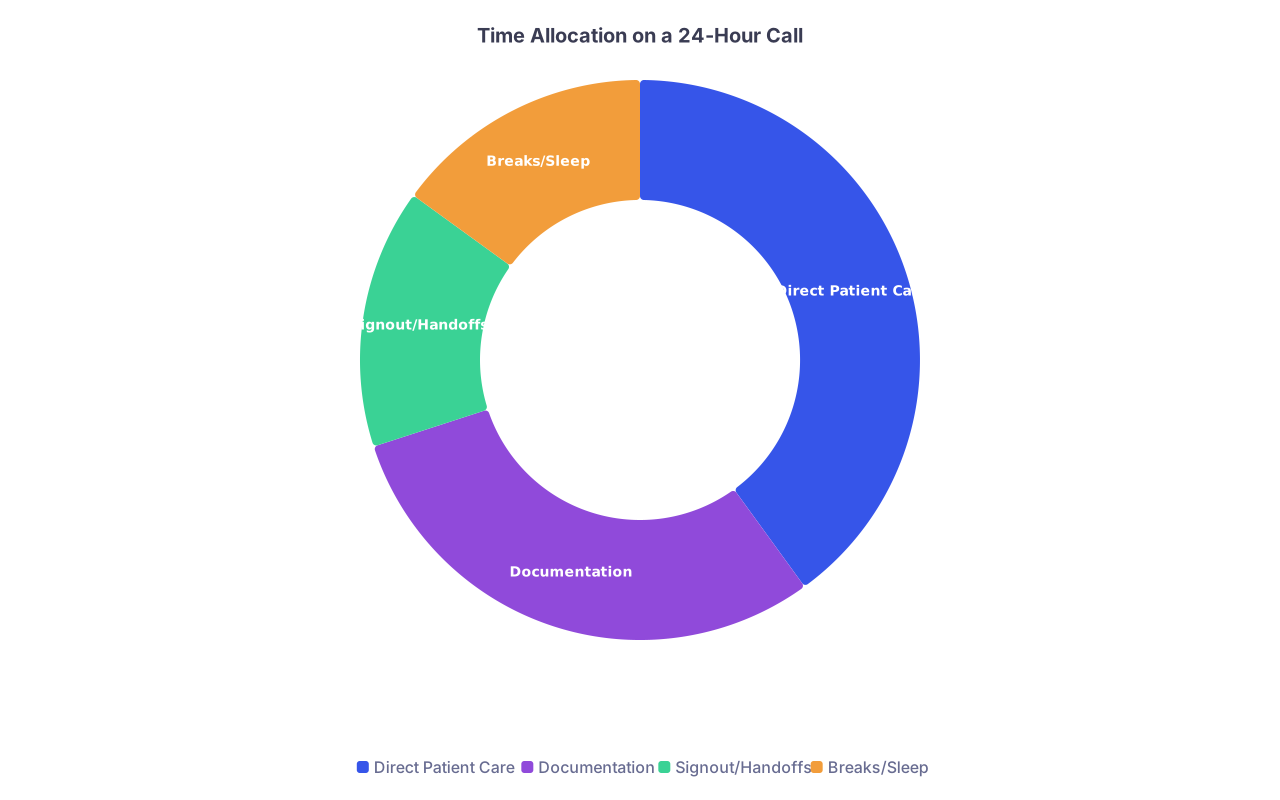
| Category | Value |
|---|---|
| Direct Patient Care | 40 |
| Documentation | 30 |
| Signout/Handoffs | 15 |
| Breaks/Sleep | 15 |
05:00–06:30 – Last Rounds and Data Collection
At this point you should:
See your sickest or most complex patients in person:
- New oxygen requirement
- New arrhythmia
- Borderline hemodynamics
Check any overnight consults you have not reassessed.
Make quick, high‑yield notes or bullet points:
- “Overnight: X, Y, Z. Interventions: A, B. Response: C.”
- You are writing the story your day team needs, not a novel.
Do not start long, elective tasks (e.g., rewriting someone’s 5‑day‑old note) now. You do not have the brain cells.
06:30–08:30 – Morning Rounds and Protecting Yourself
At this point you should:
Give focused updates on each patient:
- One sentence overnight course.
- One sentence current status.
- 2–3 key action items.
Be honest when uncertain:
- “I started antibiotics at 01:00 for possible pneumonia; CXR was equivocal; I think we should reassess this plan together now.”
- This is far better than faking confidence and doubling down on a questionable call.
Ask for backup when you sense you might miss something:
- “He looked too good for how bad his vitals were earlier. I would appreciate another set of eyes.”
Rounds while post‑call are not the time to impress with encyclopedic detail. They are the time to be accurate, safe, and concise.
08:30–10:00 – Documentation, Orders, and Clean Handoff
At this point you should:
Finish only what cannot wait:
- Critical notes needed for billing/medico‑legal reasons.
- Orders that must be in before the next medication or procedure window.
Update sign‑out comprehensively:
- Clear problem list.
- Active issues and “watch for” items.
- Explicit DNR/DNI and family contact statuses.
Do a structured handoff:
- “Sickest: X and Y, here is why. Most likely to transfer to ICU: Z. New admissions: A and B, still in flux.”
- Ask: “Any questions or clarifications you need from me?”
If you are still starting new tasks at 09:45, you are guaranteeing a 12:30–13:00 exit. Tighten it up.
10:00–12:00 – Get Out and Get Home Safely
Now the most underrated risk: getting home alive.
At this point you should:
- Perform a quick self‑check before driving:
- Are you nodding off sitting still?
- Are your eyes burning, vision blurry?
- If you are too tired to drive:
- Ask a co‑resident for a ride.
- Use rideshare if at all possible.
- Some programs will reimburse or explicitly allow this. Use it.
Once home:
- Do not immediately crash for 6 hours:
- Take a quick shower (you will feel 30% more human).
- Eat a light meal or snack.
- Set an alarm for a 2–3 hour nap, not the whole afternoon.
Oversleeping post‑call ruins the next night and starts a vicious cycle of circadian chaos.
Building Your Personal Call Timeline System
You will not execute this perfectly on your first or fifth call. That is fine. But you need a deliberate system, not vibes.

Here is how to iterate:
After each call (not immediately, but later that day), jot down:
- What time did I hit the wall?
- When did I last eat real food?
- Which hour felt most out of control?
Adjust one thing for the next call:
- Move the nap by 30 minutes.
- Bring different snacks.
- Shift caffeine timing by an hour.
Lock in what works. Ruthlessly discard what does not.
Your goal is not to love call. You probably will not. Your goal is to survive it without burning out or harming patients.
Tonight or before your very next call, do one concrete thing: open your calendar and block a 60–90 minute pre‑call nap window on every future call day for the next month. Protect it like a procedure. If that slot is not real on your schedule, the rest of this timeline collapses.