
The first month of night float will break you—or build you. The difference is not your grit. It is your system.
Most residents stumble into nights with vague advice like “sleep when you can” and “it gets better.” That is useless. You need a week‑by‑week, night‑by‑night blueprint: what to change, what to protect, what to ignore, and what absolutely cannot slip.
This is that blueprint.
Big Picture: Your First 4 Weeks of Night Float
At this point you should stop thinking of “nights” as an amorphous blur and treat it like a 4‑week training block. Each week has a different primary goal.
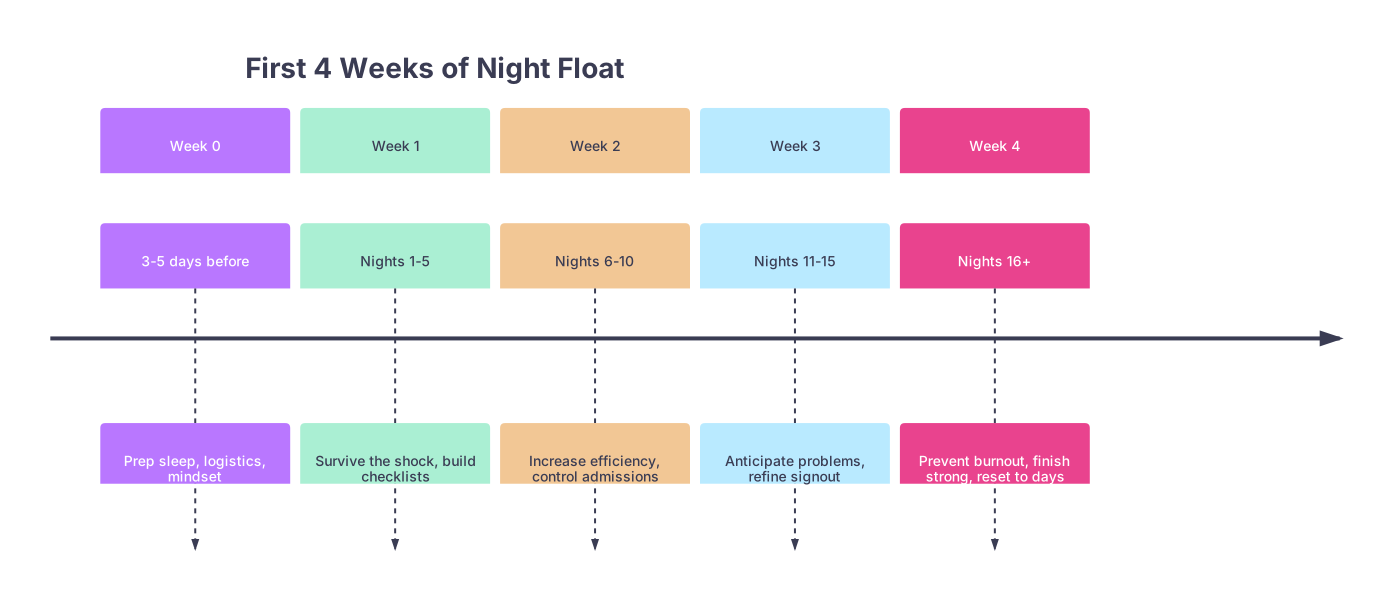
| Period | Event |
|---|---|
| Week 0 - 3-5 days before | Prep sleep, logistics, mindset |
| Week 1 - Nights 1-5 | Survive the shock, build checklists |
| Week 2 - Nights 6-10 | Increase efficiency, control admissions |
| Week 3 - Nights 11-15 | Anticipate problems, refine signout |
| Week 4 - Nights 16+ | Prevent burnout, finish strong, reset to days |
At this stage, your priorities:
- Do not wreck your body more than necessary.
- Keep patients safe during hours when mistakes spike.
- Build a repeatable routine so you are not reinventing the wheel every night.
Here is how to do it, chronologically.
Week 0: 3–5 Days Before Your First Night
At this point you should stop pretending you will “just adjust” and start engineering your schedule.
3–5 Days Before: Shift Your Clock
You are not turning into a true night owl in 3 days. You are buffering the blow.
Aim for:
- Bedtime sliding 1–2 hours later each day
- Wake‑up sliding 1–2 hours later each day
A simple progression (assuming usual 11 pm–6 am schedule):
| Day Relative to Nights | Target Sleep Time |
|---|---|
| -4 | 12 am – 7 am |
| -3 | 1 am – 8 am |
| -2 | 2 am – 9 am |
| -1 | 3–9 am + 2 hr nap |
| Night 1 | Core sleep 1–7 pm |
You will not hit this perfectly. That is fine. Direction matters more than precision.
3–4 Days Before: Lock Down Logistics
By this point you should have:
Transportation plan
- How you will get home post‑call when you are dangerously sleepy.
- Backup: rideshare money set aside or co‑resident arranged.
Food plan
- High‑protein, easy‑to‑eat meals you can microwave in 2 minutes.
- Shelf‑stable snacks in your bag: nuts, protein bars, jerky, electrolyte packets.
- Decide now: no 3 am pizza runs that will wreck your stomach and your next day.
Home setup
- Blackout curtains or a hack: trash bags + painter’s tape.
- White noise source (fan, app, or machine).
- Eye mask + earplugs ready on your nightstand.
1–2 Days Before: Communicate and Protect
At this point you should be clearing bandwidth.
- Tell family/roommates: “From X date to Y date, I am sleeping 8 am–4 pm. Please treat that like I am not in the house.”
- Autoreply or boundary text for friends: “On nights. Responses will be delayed.”
- If you have kids or other responsibilities, arrange morning coverage. Do not volunteer for daycare drop‑off and then wonder why you cannot sleep.
You are not being dramatic. You are protecting patient safety.
Week 1 (Nights 1–5): Shock, Survival, and Structure
Night 1 always feels worse than it is clinically. Your body is confused, your perception of time is strange, and everything feels like an emergency. You need structure more than you need speed.
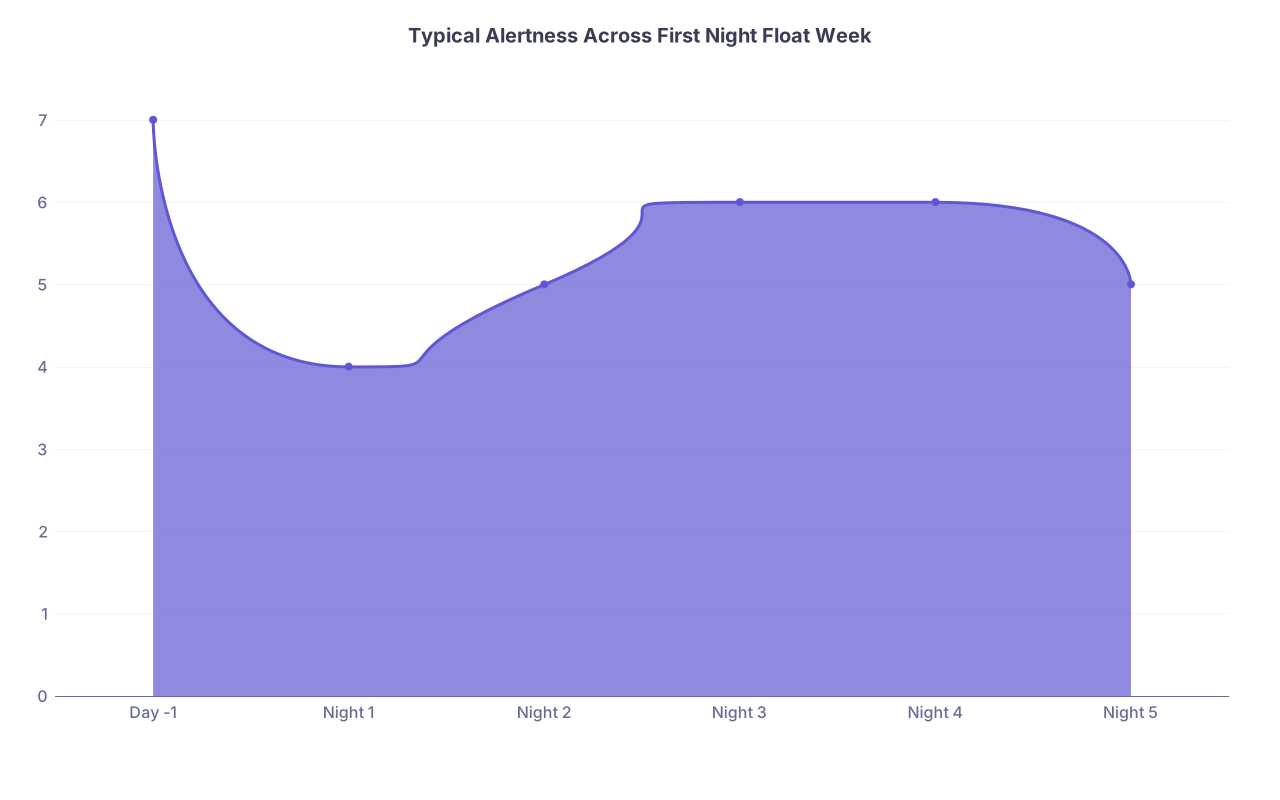
| Category | Value |
|---|---|
| Day -1 | 7 |
| Night 1 | 4 |
| Night 2 | 5 |
| Night 3 | 6 |
| Night 4 | 6 |
| Night 5 | 5 |
Night 1: Over‑Communicate and Go Slow
Before you leave home (late afternoon):
- Core sleep block: aim for at least 4–5 hours (1–6 pm).
- Light, protein‑heavy meal 60–90 minutes before leaving.
- Pack your bag:
- Printed or digital list template
- Pen, highlighter
- Headphones (for quick recharge breaks)
- Snacks, water bottle, caffeine plan (not random vending machines)
Pre‑shift (signout) – 6:30–7:30 pm
At this point you should be aggressively controlling what comes your way.
For every patient signed out to you, ask:
- “What is the one thing you are worried might happen tonight?”
- “What is NOT an emergency for this patient?” (saves you dozens of pages)
- “Any pending studies/consults I need to follow up?”
For new admissions:
- Clarify admission caps and triage expectations with senior or nocturnist.
- Ask how they prefer to be called: “Do you want to hear about every admission, or only if I am worried?”
Mid‑shift (10 pm–4 am): Build Systems, Not Heroics
You will feel behind. That is normal. Your job in this first week is not to be fast. It is to be safe and reproducible.
At this stage you should:
Use a standard admission template (paper or digital).
- HPI bullets
- PMH/meds/allergies
- Focused exam
- Problem list with 1–2 lines per issue
Batch work:
- See two new patients, then chart both.
- Place all orders for one patient at once instead of piecemeal.
When paged:
- Use a quick structure: “SBAR in 30 seconds.”
- Example: “68M PNA, now BP 85/50, HR 115, new O2 requirement 4L from 2L. Last lactate this afternoon. Nurse has already given 500 mL bolus. I am on my way.”
Early Morning (4–7 am): Plan the Landing
At this point fatigue is peaking and mistakes cluster.
Your rules:
- No high‑risk medication orders (e.g., insulin drips, pressor adjustments, weird chemo doses) without a second brain—senior, attending, or pharmacist.
- Start writing AM signout notes early (around 4–5 am) while your brain still functions.
- 30–45 minutes pre‑signout: clean your lists, mark overnight events, pending labs, and “to‑do today.”
Post‑shift (7–8 am): Transition to Sleep Intentionally
- Short ride home with no long podcasts or calls; you will be tempted to stay awake. Quiet or calming audio only.
- Quick snack if truly hungry; do not eat a second large “dinner.”
- Sleep routine: same every day—shower, dark room, fan/white noise, eye mask.
- Phone on Do Not Disturb with an emergency bypass for exactly 1–2 people.
By the End of Week 1
At this point you should have:
- A stable sleep block (even if only 5–6 hours) anchored at roughly the same daytime hours.
- A consistent admission note template.
- A simple, reliable routine for:
- Pre‑shift prep
- Signout questions
- Handling acute pages
You are not trying to feel great yet. You are trying not to crumble.
Week 2 (Nights 6–10): Efficiency and Admission Control
You are no longer shocked. Now the danger flips: you feel “comfortable,” and that is when sloppiness creeps in. This week is about tightening your systems.

At This Point Each Night, You Should…
Audit your first 2–3 admissions.
- Did you miss key pieces of history?
- Were your initial orders complete (DVT ppx, bowel regimen, pain control, code status)?
- Ask your nocturnist once per shift: “Is there anything in my notes or orders I should fix or standardize?”
Standardize your admission “starter order sets.”
For common cases (CHF, COPD, DKA, sepsis from pneumonia), you should stop reinventing the wheel.You want:
- Prebuilt order sets + your personal checklist.
- Example for sepsis/pneumonia:
- Cultures, lactate, antibiotics timed now
- Fluid bolus parameters
- Vitals frequency
- Oxygen/mobility orders
- DVT ppx, PRNs, code status
Use micro‑checkpoints in the night:
- 8–9 pm: All cross‑cover “must‑do” items clarified.
- 11 pm–1 am: Admission push. Avoid chatting at the desk.
- 2–3 am: Quick snack + short walk. Review lists for “brewing problems.”
- 4–5 am: Start shaping signout.
Handling Pages: Week 2 Upgrade
By this point your goal is to respond faster without rushing.
Use a mental script when the pager goes off:
- Ask the nurse for:
- Vitals, mental status, oxygen, recent trend.
- “Has anything already been done?”
- Decide immediately:
- Do I need to go now?
- Can I give a one‑step order and reassess?
- Can this wait 15–20 minutes while I finish something actively dangerous?
Example:
- “Patient is in pain” page → ask: vitals, appearance, prior PRNs, renal function.
- “BP dropped to 85/50” → ask: last BP, HR, mental status, new symptoms. This is a “go now.”
Week 3 (Nights 11–15): Anticipation and Proactive Medicine
Once you can handle the basic flow, your job changes. Now you are preventing problems before they explode at 3 am.
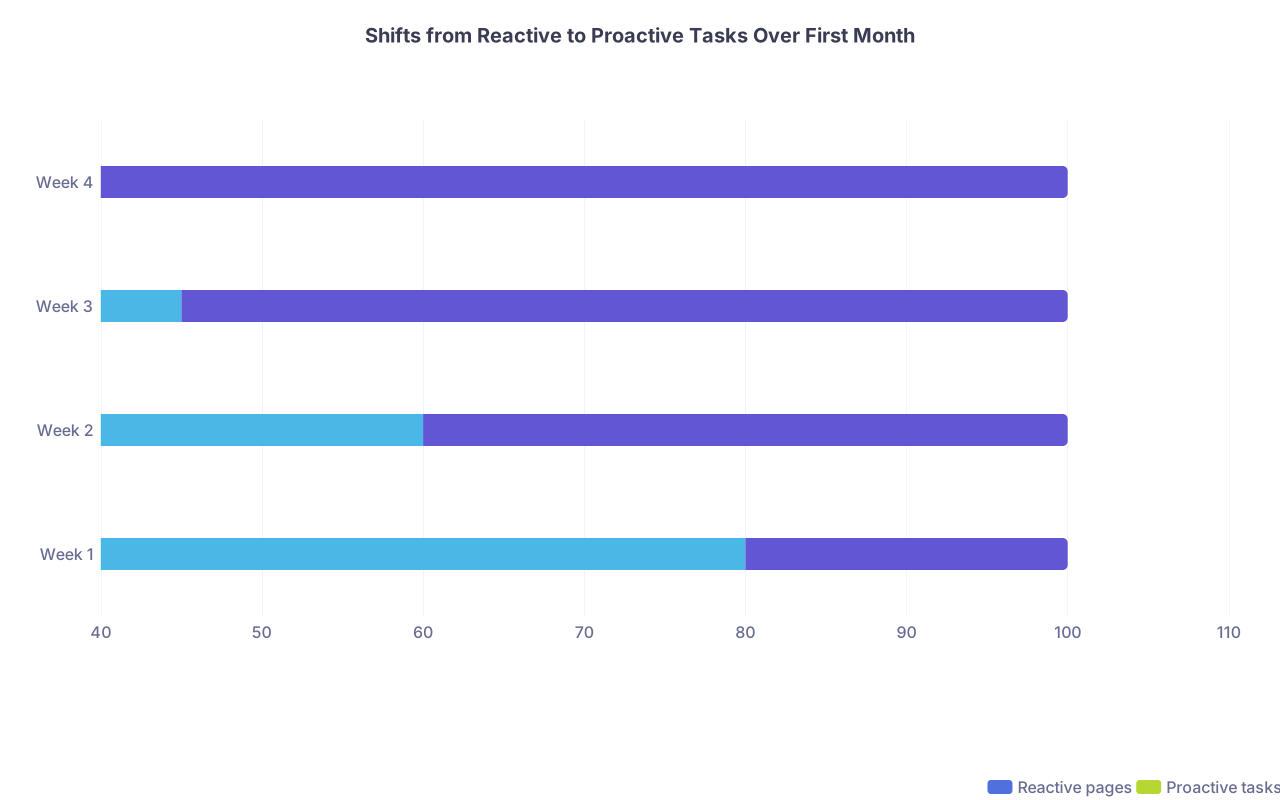
| Category | Reactive pages | Proactive tasks |
|---|---|---|
| Week 1 | 80 | 20 |
| Week 2 | 60 | 40 |
| Week 3 | 45 | 55 |
| Week 4 | 40 | 60 |
Early Shift (7–10 pm): Hunt for Landmines
At this point each night you should block 20–30 minutes for a proactive chart review of your sickest patients.
Who:
- Recent ICU downgrade
- New oxygen requirement
- Borderline blood pressures or rising creatinine
- High fall risk / delirium
What you do:
- Adjust parameters: medicine‑resident classic mistake is leaving day‑shift “tight” vitals ranges (e.g., call for HR >100). Loosen appropriately to reduce useless pages while keeping safety triggers.
- Anticipate issues:
- Delirium risk → order melatonin, minimize nighttime vitals when safe, lights off, sitter if needed.
- Diuresis → front‑load earlier in the night so you are not diuresing at 5 am.
- Pain → schedule doses to avoid peak pain at shift turnover.
Mid‑Shift (10 pm–3 am): Refine Your Admission Flow
By now you know your bottlenecks. Maybe it is writing H&P notes. Maybe it is reconciling meds. Fix them systematically.
Examples:
- Slow H&P writer?
- Create a skeleton template with prewritten headings and common phrases.
- Dictate notes using voice recognition if available.
- Meds bogging you down?
- Reconcile home meds once you have stabilized ABCs. Not before.
- Use pharmacy. They are your allies at night, not an obstacle.
Late Shift (3–7 am): Sharpen Signout and Handoff
Resident to resident handoff is where patients get hurt. By Week 3, you should be good at this.
During your night:
- Keep a running “signout to‑do” section:
- Tests pending today
- “If X, then Y” plans
- Consultant follow‑ups
- Phrase it for clarity:
- Bad: “Watch creatinine.”
- Good: “Creatinine 1.8 from 1.0. If rises above 2.2, hold ACEi and call nephrology if continuing to climb.”
Morning signout:
- Top‑down structure:
- Sickest/unstable patients first
- New admissions
- Stable cross‑cover issues
- Be explicit about what you did and what you are worried might happen.
You are now transitioning from “night coverage” to “night leadership,” even if you are an intern. The day team should feel like you were actually managing, not just putting out fires.
Week 4 (Nights 16+): Burnout Prevention and Exit Strategy
By this point the novelty has worn off and the grind feels endless. This is where residents start making quiet, dangerous mistakes—missing subtle changes, forgetting orders, snapping at nurses.
Your goal now: protect your brain and plan your transition back to days.

Nightly Non‑Negotiables: Week 4
At this stage you should have a disciplined set of “non‑negotiables” that you do every night, no matter how busy.
Examples:
Nutrition floor:
- One real meal before or early in the shift (not just vending machine sugar).
- Hydration: a full water bottle emptied twice per shift. Dehydration plus caffeine is a bad mix.
Movement:
- 2–3 five‑minute walks around the unit. Not scrolling your phone at the workstation.
- Quick stretches in the stairwell if your back and neck are seizing up.
Micro‑breaks:
- 3–5 minutes, eyes off screens, seated or standing quietly.
- I have seen residents prevent near‑misses just by taking a breath before entering a complex order.
Mental Health and Mood Checks
If by this point you:
- Dread every shift with a pit in your stomach
- Are snapping at staff or patients for minor things
- Feel detached or numb when something truly bad happens
You are not “weak.” You are sleep‑deprived and stressed. That combination distorts your thinking.
Concrete steps:
- Tell a trusted co‑resident or chief: “I am getting frayed on nights. I need a sanity check and maybe some backup on the sickest patients.”
- Use your institution’s resident counseling or wellness resources—yes, they exist for exactly this.
- Drop perfectionism. Nights are not about impressing anyone. They are about safe, steady care.
End of Block: Transitioning Back to Days
The last 3–4 days of nights are when you should start planning your re‑entry to normal life. If you just flip the switch, you will feel worse than after your first night.
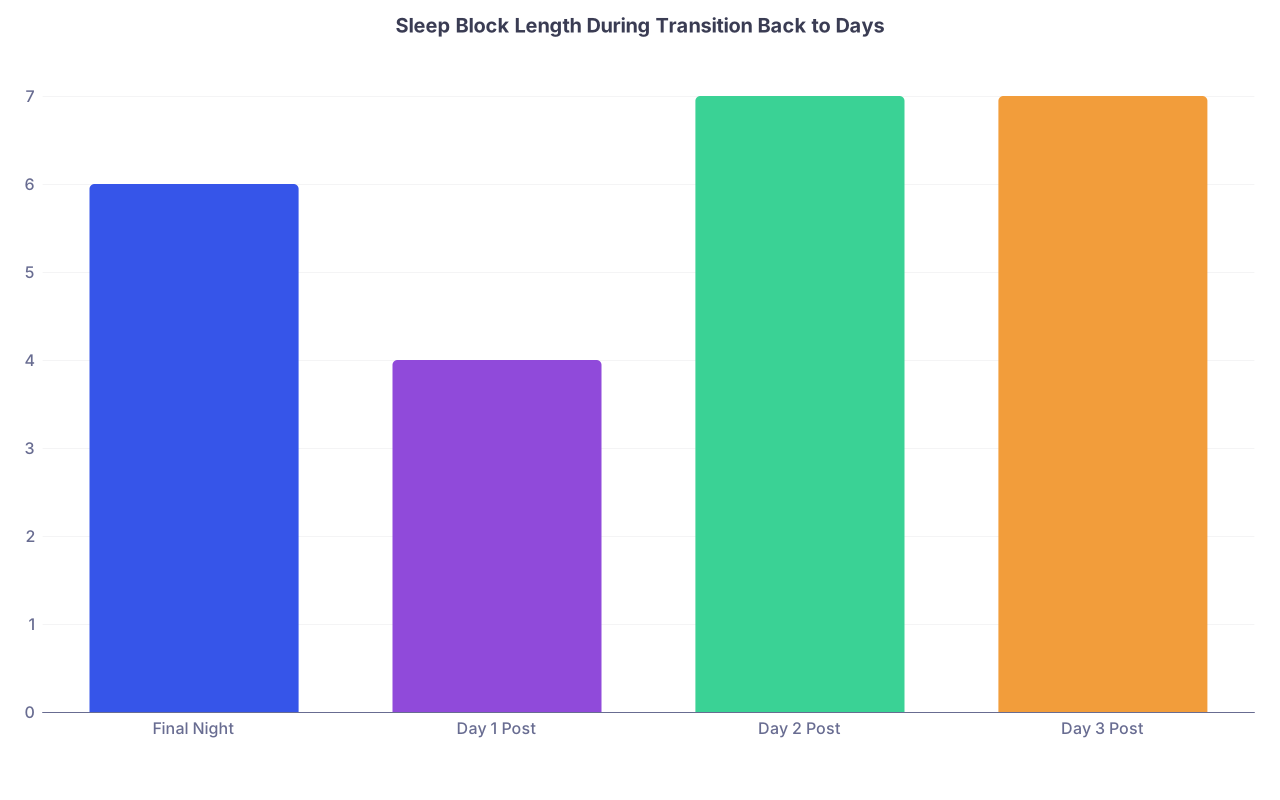
| Category | Value |
|---|---|
| Final Night | 6 |
| Day 1 Post | 4 |
| Day 2 Post | 7 |
| Day 3 Post | 7 |
Final Night Plan
At this point you should:
- Limit caffeine after 2–3 am so you can actually sleep later.
- Use your post‑shift sleep as a long nap (e.g., 9 am–1 pm), not a full night’s sleep.
- Force yourself to stay awake until 9–10 pm with light activity (walk, simple chores), then crash.
Next 48–72 Hours
Day 1 post‑nights:
- Do not schedule anything serious (no DMV, no big family event, no clinic if you can avoid it).
- Small naps (20–40 minutes) if desperate, not 3‑hour comas.
- Light exposure in the morning to reset your circadian rhythm.
Day 2–3 post‑nights:
- Lock in a normal bedtime (10–11 pm) and wake time (6–7 am).
- Gentle exercise, real meals, lots of water.
- Expect mood swings. They settle.
Practical Checklist: What You Should Be Doing When
To tie it together, here is a stripped‑down checklist by time block. Use it, tweak it, but do not wing it.

Daily (On Nights)
Pre‑shift (afternoon/evening):
- Core sleep block completed
- Light meal eaten
- Bag packed (snacks, list, charger, badge, stethoscope)
- Quick mental scan of sick patients from previous nights if still on
Start of shift:
- Get clear signout: worries, non‑issues, pending labs/tests
- Identify 3–5 highest‑risk patients
- Clarify with nocturnist: triage rules, admission cap, escalation expectations
Mid‑shift:
- Admissions batched efficiently (stabilize first, document second)
- Proactive vitals/parameters adjusted to avoid useless pages
- 1–2 short movement breaks completed
Late shift:
- Signout list cleaned and updated
- Each sick patient has a clear “if X, then Y” plan for the day team
- No high‑risk orders placed while barely conscious without a second check
Post‑shift:
- Safe ride home planned/executed
- Minimal screen time before bed
- Room dark, cool, quiet setup consistent
Final Points
- Your first month of night float is not about being a hero. It is about building repeatable systems that keep patients safe when your brain is at half power.
- Treat each week differently: Week 1 survive, Week 2 standardize, Week 3 anticipate, Week 4 protect yourself and land the plane.
- The residents who do well on nights are not the smartest. They are the ones who respect sleep, build checklists, and never pretend they can think clearly at 4 am without structure.