The way most residents handle post‑call is broken. You do not “just push through” a 28‑hour shift and then trust your brain to make good recovery decisions. You script those 24 hours in advance, or the day scripts you.
Here is a structured, hour‑by‑hour post‑call plan that actually works in real residency. Not fantasy wellness advice. The version that respects duty hours, circadian biology, and the reality that you still have a life to run.
The Night Before Call: Set Up Future‑You
At this point you are still pre‑call, which means this is the last time you will think clearly for a while. Use it.
Between 6–9 PM (Evening Before Call)
Your only job tonight is to reduce decisions for post‑call you.
Do this:
- Stage your “post‑call kit” at home
- Clean sheets on the bed. Dark room ready.
- Eye mask and earplugs on the nightstand.
- A pre‑mixed water bottle and a light snack (yogurt, nuts, banana) waiting in the fridge.
- Set expectations with your people
- Tell partner/roommate: “I will be home around 9–10 AM, phone on ‘Do Not Disturb,’ please no talking until after 3 PM.”
- If you have kids, arrange who handles morning drop‑off and late‑afternoon chaos.
- Lock in your wake‑up time post‑call
- Decide now how long you will sleep after call (often 3–5 hours).
- Decide your bedtime that night (usually 9–11 PM) and commit.
Skip the fantasy of “I’ll just nap for 20 minutes and then go to the gym.” You will not.

0–2 Hours Post‑Call: The Exit and Decompression
Assume you sign out around 7–8 AM. Adjust these times for your actual schedule.
Hour 0: Leaving the Hospital (7–8 AM)
At this point you’re mentally fried and tempted to linger. Bad idea.
Your checklist before you walk out:
- Finish a clean sign‑out. Then stop checking the EMR. You are off.
- Caffeine:
- If you have already had a lot of coffee in the last 4–6 hours, do not add more.
- If you have had little since 3–4 AM, a small coffee or tea now is acceptable. But this is your last caffeine of the day if you want real sleep later.
Commute home
The dangerous part.
- If you feel even slightly drowsy:
- Do not drive. Period.
- Use rideshare, public transit, or carpool with a post‑call buddy.
- If you must drive:
- Windows cracked, radio on, but if your eyes are rolling, pull over. I have seen too many residents nod off at a red light.
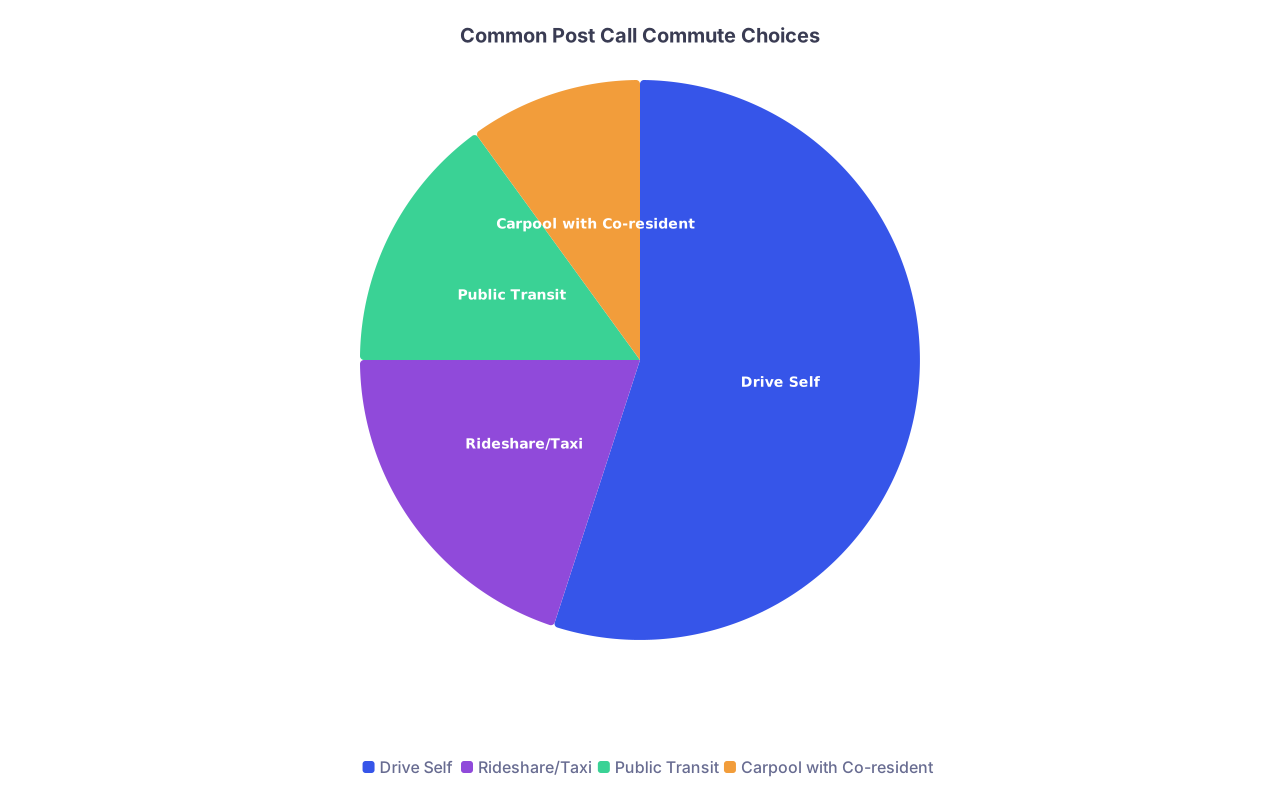
| Category | Value |
|---|---|
| Drive Self | 55 |
| Rideshare/Taxi | 20 |
| Public Transit | 15 |
| Carpool with Co-resident | 10 |
Hour 1–2: Arriving Home (8–10 AM)
This window makes or breaks your day.
Your sequence:
- Hydrate and refuel (10–15 minutes)
- 1–2 glasses of water or an electrolyte drink.
- Small, protein‑heavy breakfast: eggs, yogurt, toast with nut butter. Keep it light; heavy grease = reflux and garbage sleep.
- Quick hygiene reset (10 minutes)
- Fast shower. Wash off the hospital smell.
- Comfortable, non‑hospital clothes. This sounds trivial. It is not.
- No screens, no life admin
- Do not “just check email.” You will fall into a 45‑minute doom scroll.
- If you must tell someone you are home, send one line and put the phone on Do Not Disturb.
At this point you should be aiming to be in bed by 9–10 AM at the latest.
2–6 Hours Post‑Call: The Core Recovery Sleep Block
This is your protected sleep. Guard it ruthlessly.
Hour 2–5: Main Sleep (Approx. 9 AM–12 PM)
Target: 3–4.5 hours as a consolidated block. Not a string of naps.
Environment checklist:
- Room as dark as possible (blackout curtains if you can swing it).
- Cool temperature.
- Phone on DND, ringer off, face down across the room.
What about alarms?
- Set one primary alarm for your target wake‑up time.
- Optional: one backup 15 minutes later.
- Do not set 10 alarms in a row. You want depth, not torture.
Why 3–4.5 hours?
- That gives you 2–3 full sleep cycles without completely nuking your ability to fall asleep again that night.
- The worst pattern: sleep 6–7 hours, then lie awake until 3 AM, then go back to work wrecked.
Hour 5–6: Groggy Wake‑Up (12–1 PM)
You will wake up feeling heavy. That is expected.
What you do in the first 30 minutes matters:
- Get vertical immediately. Sit up, feet on floor.
- Light exposure:
- Open curtains or step onto a balcony. Let daylight hit your eyes (no sunglasses if safe).
- Hydrate again.
- Eat a second, slightly larger meal if you are hungry: decent carbs + protein.
Caffeine here?
- Light caffeine here is allowed if your bedtime will be ~9–11 PM.
- Keep it to 1 normal coffee or tea. No 3 PM energy drinks unless you enjoy insomnia.
6–10 Hours Post‑Call: Controlled Re‑Entry to Normal Life
This is where people blow it by over‑committing. You’re not “off.” You’re recovering.
Hour 6–8: Early Afternoon (1–3 PM)
At this point you should not be:
- Starting a big research write‑up.
- Going to IKEA.
- Volunteering to help anyone move.
Instead, this block is for light, low‑stakes activity:
- Short walk outside (15–30 minutes). Move your legs, see the sun, reset your circadian clock.
- Basic chores only if essential:
- Start laundry.
- Pay a single urgent bill.
- Quick grocery restock if you can walk there; skip the 45‑minute drive to Costco.
- Social contact: minimal, supportive.
- A brief check‑in with partner/friend is fine.
- No big emotional conversations. You are not at full cognitive capacity.
This is also a good window for:
- Mandatory meetings that you cannot reschedule (brief, virtual preferred).
- Light academic work: skimming notes, reviewing 1–2 questions. Stop before it feels like “work.”
Hour 8–10: Late Afternoon (3–5 PM)
This is the “danger nap” window. You will feel the urge to lie down “for 20 minutes.” Do not do it unless you have a night float schedule.
Your goals here:
- Gentle physical reset (optional but ideal)
- Low‑intensity exercise: easy jog, yoga, light weights <45 minutes.
- The metric: you should feel a little more awake afterwards, not exhausted.
- Prepare for the next non‑call day
- Check your schedule for tomorrow.
- Lay out clothes, pack your bag, prep lunch.
- Look at your next call day and adjust any conflicts now, while there is still time.
This is also the right zone for one focused errand:
- Pharmacy run.
- Quick haircut.
- 30‑minute grocery shop.
If you feel glassy‑eyed, skip the gym and go for a 10‑minute walk instead. You are not training for a marathon today. You are training for longevity in residency.
| Time Block | Good Choices | Bad Choices |
|---|---|---|
| 1–3 PM | Walk, light chores | Deep cleaning, big meetings |
| 3–5 PM | Light workout, one errand | Long nap, starting major project |
| 5–7 PM | Dinner prep, unwind | Social events, intense study |
10–16 Hours Post‑Call: Evening Wind‑Down and Sleep Protection
Most people wreck their post‑call day in this window by forgetting the goal: protect tonight’s sleep.
Hour 10–12: Early Evening (5–7 PM)
At this point you should be feeling “functional but not sharp.” That is enough.
Plan a simple, boring evening.
- Dinner
- Aim for normal dinner timing, not 9–10 PM.
- Balanced meal: lean protein, complex carbs, some vegetables. Heavy junk food will taste good and feel terrible at 2 AM.
- Screen discipline
- You can watch TV, but set an end time.
- Avoid starting a new 8‑episode series at 6:30 PM. You know how that ends.
Good options during this block:
- Meal prep for the upcoming days (simple batch, nothing elaborate).
- Short catch‑up call with family.
- Very light reading for fun.
Hour 12–14: Pre‑Bed Routine (7–9 PM)
This is the tightrope: you want to be tired, not wired.
Your checklist:
- One last quick glance at tomorrow’s schedule. Then close the EMR.
- No work email. If you open it, you will see something annoying, and you will stew in bed.
- Start “digital sunset” 60–90 minutes before target bedtime:
- Dim lights.
- Avoid high‑intensity blue light right in your face. If you must use your phone, use dark mode and lower brightness.
This is also when anxiety about “wasting your post‑call day” can creep in. Ignore it. You worked all night. You slept 3–4 hours. This was a full day of work.
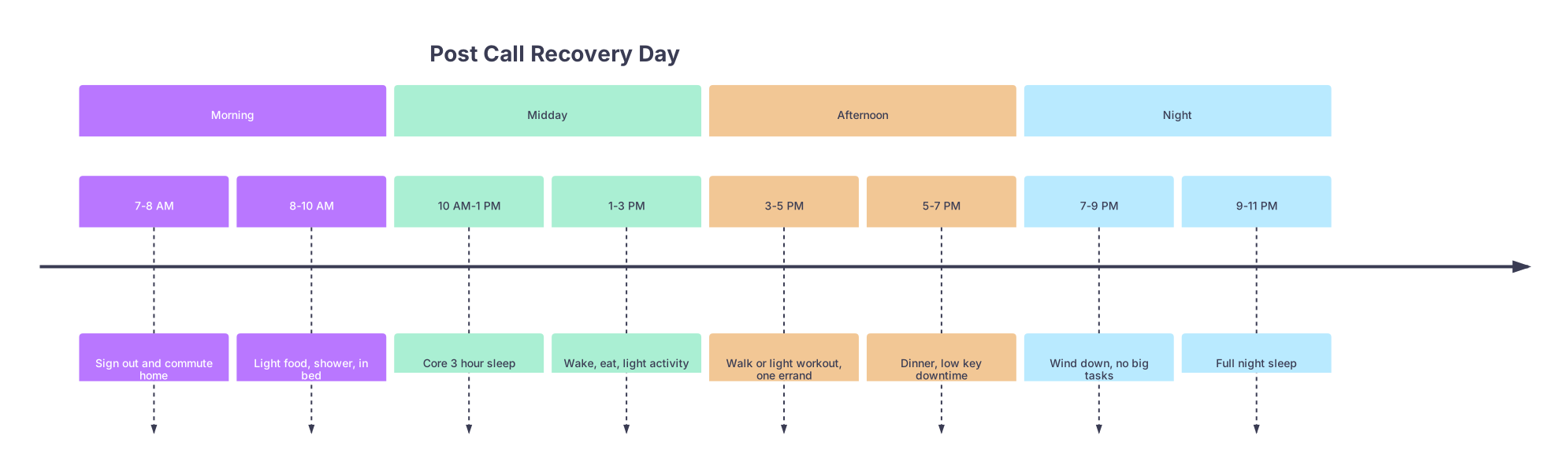
| Period | Event |
|---|---|
| Morning - 7-8 AM | Sign out and commute home |
| Morning - 8-10 AM | Light food, shower, in bed |
| Midday - 10 AM-1 PM | Core 3 hour sleep |
| Midday - 1-3 PM | Wake, eat, light activity |
| Afternoon - 3-5 PM | Walk or light workout, one errand |
| Afternoon - 5-7 PM | Dinner, low key downtime |
| Night - 7-9 PM | Wind down, no big tasks |
| Night - 9-11 PM | Full night sleep |
Hour 14–16: Bedtime (9–11 PM)
Target: your usual pre‑call bedtime. Sync to your long‑term schedule, not your fatigue alone.
Right before bed:
- Quick hygiene routine (face, teeth, etc.). Keeping this consistent anchors your brain that “we sleep now.”
- No “just one more” episode or YouTube rabbit hole.
- Phone outside the bed. Use an old‑fashioned alarm or place phone across the room.
If you are not sleepy yet:
- Read a paper book or a very boring PDF printed out.
- Gentle stretching or breathing exercises.
- If you are truly wide awake at midnight, something earlier went wrong (too long post‑call sleep, caffeine too late, long nap at 4 PM).
What Changes If Your Schedule Is Weird?
Residency is not neat. Here is how to adjust.
When You Have Clinic or Rounds the Next Day (No Golden Post‑Call)
Yes, some programs still do this. It is bad practice, but it exists.
In that case:
- Keep the post‑call sleep block shorter (2–3 hours) and shift it earlier if possible so you can still crash by 8–9 PM.
- Be even more ruthless about:
- Zero caffeine after noon.
- Absolutely no afternoon nap.
- Minimal evening obligations.
The priority here is: show up the next day somewhat intact, not pleasant.
When You Are on a String of Calls or Night Float
Different game.
- If you are transitioning into nights, you may want a shorter sleep block post‑call leading into the first night so you can push bedtime later.
- If you are already on nights, you flip the whole schedule by 12 hours:
- “Morning” becomes 6–8 PM.
- “Night” becomes 8 AM–noon.
- Same principles: a single main sleep block, strict caffeine cut‑off, predictable pre‑sleep routine.
Non‑Negotiables: The Boundaries You Actually Enforce
A lot of post‑call misery is self‑inflicted by saying yes when you should say no.
Here are the hard lines I recommend:
- No driving if you are nodding off. Ask for a ride. I have personally seen colleagues crash after call. Do not be the next story.
- No major life decisions post‑call. Do not sign a lease, break up with someone, or email your PD an angry manifesto.
- No “making up” academic work on post‑call days. You can review light material. But these are not bonus study days. They are survival days.
- No social guilt. Decline brunches, day trips, and big events that land post‑call. You are not flaking; you are preserving function.
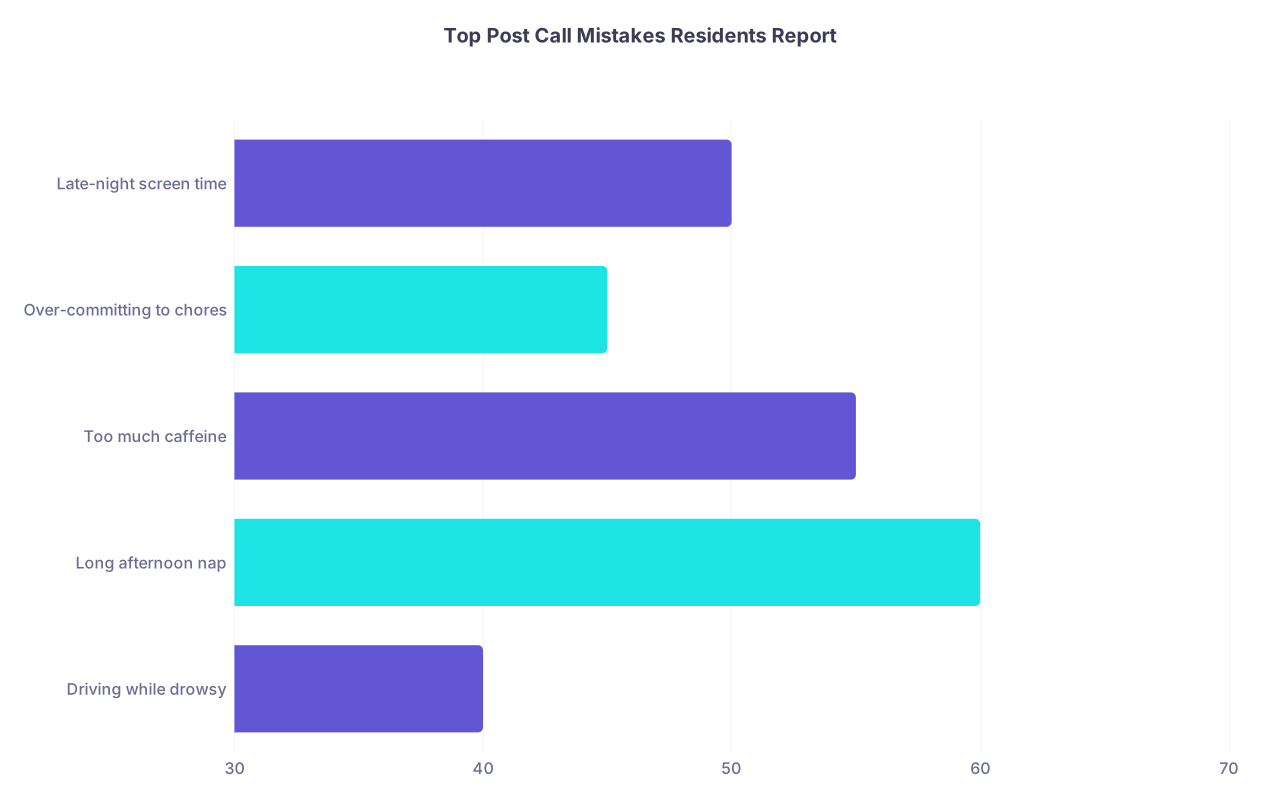
| Category | Value |
|---|---|
| Driving while drowsy | 40 |
| Long afternoon nap | 60 |
| Too much caffeine | 55 |
| Over-committing to chores | 45 |
| Late-night screen time | 50 |
A Compact 24‑Hour Post‑Call Template
Think of this as your default script. Adjust by an hour or two, but keep the structure.
- 7–9 AM – Sign out, get home, hydrate, small breakfast, quick shower, in bed.
- 9 AM–12 PM – Core 3‑hour sleep block.
- 12–1 PM – Wake, light lunch, daylight exposure.
- 1–3 PM – Walk, low‑stakes tasks, minimal screens.
- 3–5 PM – Light workout or one errand; absolutely no naps.
- 5–7 PM – Dinner, basic prep for tomorrow, low‑key downtime.
- 7–9 PM – Wind‑down routine, screens off/dim, no email.
- 9–11 PM – Full night sleep aligned with your usual schedule.
The Bottom Line
Three key points to carry into your next call:
- Treat post‑call as part of the shift, not a free day. It has a job: restore you for the next one.
- Anchor the day around one core 3–4.5 hour sleep block and a strict, normal‑time bedtime. Everything else is optional.
- Protect yourself from your own bad decisions: no dangerous driving, no late naps, no pretending you can live like your non‑resident friends on a post‑call day.
Script it once. Then repeat it every call until it becomes automatic. That is how you protect both sleep and sanity.