The worst pre‑call days are not the ones that are busy. They are the ones you drift through without a plan—and pay for at 3 a.m. when your brain is sludge and your bag is missing half of what you need.
You need a scripted pre‑call day, not vibes and good intentions.
Below is a practical, time‑anchored routine for the 24 hours before an overnight call. I will walk you from the previous evening through the hour before sign‑out, with specific blocks for sleep, studying, food, and logistics.
Assume this scenario:
- You have a 24‑hour in‑house call.
- Sign‑in is at 7 p.m.
- You had a normal clinical day before your pre‑call day.
Adjust the clock by a couple hours for your own schedule, but keep the sequence. The order matters more than the exact times.
T‑24 to T‑16: The Night Before Your Pre‑Call Day (7 p.m. – 3 a.m.)
At this point you should stop pretending you will “catch up on sleep during the day tomorrow.” You will not. Your brain will be too activated, and life will get in the way. Your pre‑call buffer starts the night before.
7 p.m. – 9 p.m.: Shutdown and Minimal Tasks
Focus:
- Short, controlled wind‑down.
- Light planning, no deep work.
What you do:
- Eat a normal dinner. Avoid huge, greasy meals that will mess with sleep.
- Check your upcoming call responsibilities:
- Which teams are you covering?
- How many patients roughly?
- Any known “frequent flyers” or chronically sick patients likely to cause issues?
Limit this to 15–20 minutes. You are not “pre‑rounding” on call patients. You are orienting yourself mentally so nothing about the role shocks you tomorrow.
Then:
- No heavy studying. Skim a single topic related to your call (e.g., chest pain triage, common cross‑cover pages). Cap it at 20–30 minutes.
- Create a very short to‑do list for pre‑call day:
- Sleep block.
- Errands.
- Bag packing.
- Food prep.
- Commute time.
Write it on paper or in your phone notes. If you wake at 10 a.m. with no list, you will waste an hour deciding what to do first.
9 p.m. – 10 p.m.: Sleep Setup, Devices Off
At this point you should be prepping like you have a 4 a.m. flight.
- Set your alarms for the pre‑call morning (more on exact times below).
- Darken the room, lower the temperature, and kill overhead lights.
- Devices off or on night mode; no doom‑scrolling, no extended texting.
- Caffeine cut‑off: If you want any chance of decent sleep, no caffeine after 5–6 p.m. tonight.
You are aiming to fall asleep by 10 p.m.
10 p.m. – 3 a.m.: Core Night Sleep (5 Hours)
This is counterintuitive: you are going to shorten your night sleep a bit to protect your pre‑call afternoon nap.
If you sleep 10 p.m. – 7 a.m., you will not nap well at 3 p.m. Your brain will not be tired enough, and you will lie awake watching the clock. I have watched interns repeat this mistake for months.
So:
- Target 10 p.m. – 3 a.m. (5 hours).
- If you cannot sleep, stay in bed and keep lights low. Do not open email.
This block gives you:
- Enough rest to function on your pre‑call day.
- Enough drive to actually nap before call.
T‑16 to T‑10: Morning of Pre‑Call Day (3 a.m. – 9 a.m.)
You will feel odd waking at 3–4 a.m. That is the point. You are shifting your cycle.
3 a.m. – 4 a.m.: Quiet Wake‑Up and Light Start
At this point you should get out of bed, even if you feel groggy.
- Hydrate: One large glass of water.
- Light snack if hungry: yogurt, banana, toast. No heavy breakfast yet.
- Light stretching or a short 5–10 minute walk (if safe and feasible). This wakes you up without overstimulating.
Caffeine:
- If you are caffeine‑dependent, this is your first small dose:
- Half cup of coffee or mild tea.
- Avoid slamming a venti anything. You want some sleep drive left for your afternoon nap.
4 a.m. – 7 a.m.: Focused, Short Study Block (2–3 Hours)
This is your best studying window. Your brain is rested from sleep, the world is quiet, and your phone is not pinging.
At this point you should do focused, exam‑relevant studying, not random reading.
Structure:
- 2–3 × 45–50 minute blocks.
- 10–15 minute breaks between.
Good targets:
- Question bank sets (20–40 questions) in your call‑related area:
- Internal medicine: electrolyte disturbances, chest pain, dyspnea, fever work‑ups.
- Surgery: abdominal pain, post‑op fevers, fluid management.
- Peds: bronchiolitis, sepsis, dehydration.
- Immediate review of rationales. Do not save them “for later.”
Avoid:
- Long, unfocused textbook reading.
- Watching 3 hours of random video lectures.
- Starting new comprehensive topics that will leave you mentally scattered.
7 a.m. – 9 a.m.: Real Breakfast and Non‑Clinical Admin
You have studied. At this point you should preserve your brain, not burn it.
- Eat a real breakfast:
- Protein + complex carb + some fat (e.g., eggs + whole grain toast + avocado or peanut butter).
- This stabilizes energy; big sugar‑only breakfasts will crash you.
- Second small caffeine dose, if you use it regularly. Last full dose should be before 10 a.m. so your nap is not destroyed.
Then:
- Non‑clinical admin for 30–60 minutes:
- Pay a bill, answer one or two personal emails, skim important life messages.
- Put in any last minute schedule trades or confirmations with co‑residents.
Cut yourself off by 9 a.m. The rest of the day needs to be controlled.
T‑10 to T‑6: Late Morning and Early Afternoon (9 a.m. – 1 p.m.)
This is where most residents ruin their pre‑call day. They either:
- Overstudy until they are already fried by 5 p.m., or
- Drift into social media + errands and then “suddenly” it is 4:30 p.m., no nap, nothing packed.
9 a.m. – 11 a.m.: Light Errands and Logistics
At this point you should be setting up your environment for call.
Core tasks:
- Laundry if needed for clean scrubs, underlayers, or socks.
- Quick grocery run for:
- High‑protein, portable snacks (nuts, protein bars, string cheese).
- Easy meals (frozen meals, prepared salads, sandwiches).
- Electrolyte drinks if you are prone to headaches.
- Confirm:
- Transportation to the hospital (car, train, ride‑share).
- Weather issues (snow, storms) that might add commute time.
Limit errands:
- Total errands block: ≤ 2 hours.
- If you are still wandering Target at 11:30 a.m., you are losing your nap.
11 a.m. – 1 p.m.: Meal Prep, Bag Packing, and Call Setup
This is non‑negotiable. At this point you should be packing for war, not hoping the hospital vending machines will save you.
Prepare:
- Food for call:
- 1 solid main meal (something that reheats decently: rice + protein, pasta + veggies, chili).
- 1–2 lighter meal options (wraps, salads, oatmeal packets).
- Snacks: nuts, bars, fruit, yogurt, cut veggies.
- Hydration:
- Refillable water bottle.
- Optional: one electrolyte drink, one caffeine drink to save for 1–3 a.m. (not earlier).
Pack your call bag:
- Essentials:
- ID badge, keys, hospital access cards.
- Stethoscope, penlight, several pens, small notebook.
- Charger(s) for phone and possibly tablet/laptop.
- Headphones (useful during any downtime).
- Comfort:
- Light jacket or hoodie (hospitals get cold at 3 a.m.).
- Extra socks.
- Toothbrush, toothpaste, small deodorant.
- Lip balm, hand lotion.
- Sleep:
- Eye mask and earplugs if your call room is near anything noisy.
| Category | Items |
|---|---|
| Clinical | ID, stethoscope, pens |
| Tech | Phone, chargers, headphones |
| Food | Main meal, snacks, water |
| Comfort | Hoodie, socks, toiletries |
| Sleep | Eye mask, earplugs |
By 1 p.m., your bag should be packed and ready by the door. No excuses.
T‑6 to T‑3: Strategic Pre‑Call Nap Block (1 p.m. – 4 p.m.)
This is the single most important part of your pre‑call routine. If you skip it, everything else becomes damage control.
1 p.m. – 1:30 p.m.: Wind‑Down for Nap
At this point you should treat your nap as mandatory, not optional.
- Light lunch first:
- Moderate size; avoid huge fried meals.
- Example: sandwich + fruit, salad with chicken and grains.
- Turn off screens 15–20 minutes before nap.
- Darken your room again. Same routine as nighttime.
1:30 p.m. – 3:30 p.m.: Core Nap (1.5–2 Hours)
Ideal target:
- 90–120 minutes.
Why:
- 90 minutes roughly equals one full sleep cycle. You wake less groggy.
- 2 hours gives extra buffer going into a night of interruptions.
If you truly cannot fall asleep:
- Stay lying down with eyes closed.
- No scrolling, reading, or studying in bed.
- Even a rest block preserves energy.
Do not:
- Drink caffeine after 11 a.m. if you want this nap to work.
- Schedule calls, FaceTime, or other social stuff in this window.
3:30 p.m. – 4 p.m.: Groggy Recovery and Light Snack
You will feel heavy when you wake. That is normal.
At this point you should:
- Get up immediately. Do not hit snooze repeatedly.
- Hydrate again.
- Have a small, balanced snack (e.g., apple + peanut butter, yogurt + granola).
Caffeine:
- If you need an afternoon caffeine, keep it tiny:
- Half cup coffee or tea.
- Or a small portion of your planned night shift drink.
- Do not take a full energy drink now. Save the heavy stuff for 1–3 a.m., when you are actually desperate.
<chart-data
title="Ideal Pre-Call Day Time Allocation" location="inline" type="bar" labels='["Night Sleep", "Study", "Errands/Prep", "Nap", "Buffer/Commute"]' values='[5, 3, 3, 2, 3]' />
T‑3 to T‑1: Final Prep, Light Review, and Mental Reset (4 p.m. – 6 p.m.)
This is where you switch from “home human” to “on‑call physician.” Not with panic. With a checklist.
4 p.m. – 5 p.m.: Light Physical Activity and Shower
At this point you should wake up your body but avoid anything intense.
- 20–30 minute walk, light jog, or basic home workout.
- The goal is circulation, not PRs.
- Full shower:
- Resets you mentally.
- Prevents that sticky, stale feeling at midnight in the call room.
Lay out:
- What you are wearing to the hospital.
- Any extra layers if the hospital is cold.
- Bad weather gear if needed.
5 p.m. – 5:30 p.m.: Micro‑Review of Call‑Relevant Content
Not deep studying. Just priming the right circuits.
Pick 1–2 focused topics:
- Example for internal medicine:
- How to manage common cross‑cover pages:
- “Patient with fever post‑op.”
- “Blood pressure 200/100.”
- “Saturation dropped to 88%.”
- Quick algorithms, not essays.
- How to manage common cross‑cover pages:
- Example for surgery:
- Post‑op fever Ddx and initial orders.
- When to call the attending for abdomen issues.
- Example for peds:
- Basic fluid bolus calculations.
- Dosing of common meds for overnight admissions.
You are not trying to learn new material. You are reminding your brain of scripts you will need at 2 a.m.
5:30 p.m. – 6 p.m.: Logistics Double‑Check and Quiet Time
At this point you should be calm and slightly bored, not racing.
Checklist:
- Bag packed? (Actually look inside.)
- Food in containers, in your bag or ready in the fridge?
- ID, keys, wallet, parking pass?
- Chargers and headphones?
Then:
- 5–10 minutes of quiet:
- Sit without screens.
- Simple breathing exercise if that is your thing.
- Mentally rehearse:
- Where you park.
- Where you pick up the pager.
- Where to find the call room.
You are lowering activation, not hyping yourself up.
T‑1 to T‑0: Commute and Arrival (6 p.m. – 7 p.m.)
This is where small, stupid mistakes tend to happen: forgetting your badge, running late, arriving frazzled.
6 p.m. – 6:10 p.m.: Final House Exit Check
At this point you should physically touch the following before leaving:
- ID badge (in hand or around neck).
- Wallet.
- Keys.
- Phone.
- Call bag.
- Food.
Do not trust your memory. Night call warps everything.
6:10 p.m. – Arrival: Commute Strategy
Commute with buffer time:
- Plan to arrive 10–15 minutes before your official start.
- Assume parking, slow elevators, or a colleague who needs 5 minutes of handoff.
On the way:
- No high‑stakes calls.
- Podcasts or music are fine; avoid intense news that will spike your stress.
- If driving and very sleepy, crack a window, chew gum, adjust posture. If you are dangerously tired, pull over. One near‑miss accident on call days is one too many.
Arrival: 15–0 Minutes Before Sign‑In
At this point you should act like the night already started.
Steps:
- Use the restroom.
- Fill your water bottle.
- Stash your food in a fridge you can access.
- Find your call room, if you have not memorized it yet.
Then:
- Get your pager, log into systems if needed.
- Be at the sign‑out spot a few minutes early, calm and ready to jot down notes.
Sample 24‑Hour Pre‑Call Timeline
To make this crystal clear, here is the full 24‑hour view, assuming a 7 p.m. call start.
| Time | Focus |
|---|---|
| 7p–10p (T‑24–21) | Light planning, wind‑down |
| 10p–3a (T‑21–16) | Core night sleep |
| 3a–7a (T‑16–12) | Study block + breakfast |
| 7a–11a (T‑12–8) | Admin + errands |
| 11a–1p (T‑8–6) | Meal prep + packing |
| 1p–3:30p (T‑6–3.5) | Strategic nap |
| 3:30p–5p (T‑3.5–2) | Wake, snack, light activity |
| 5p–6p (T‑2–1) | Micro‑review + logistics |
| 6p–7p (T‑1–0) | Commute + arrival |
Adjusting for Different Call Start Times
Quick modifications if your sign‑in time shifts:
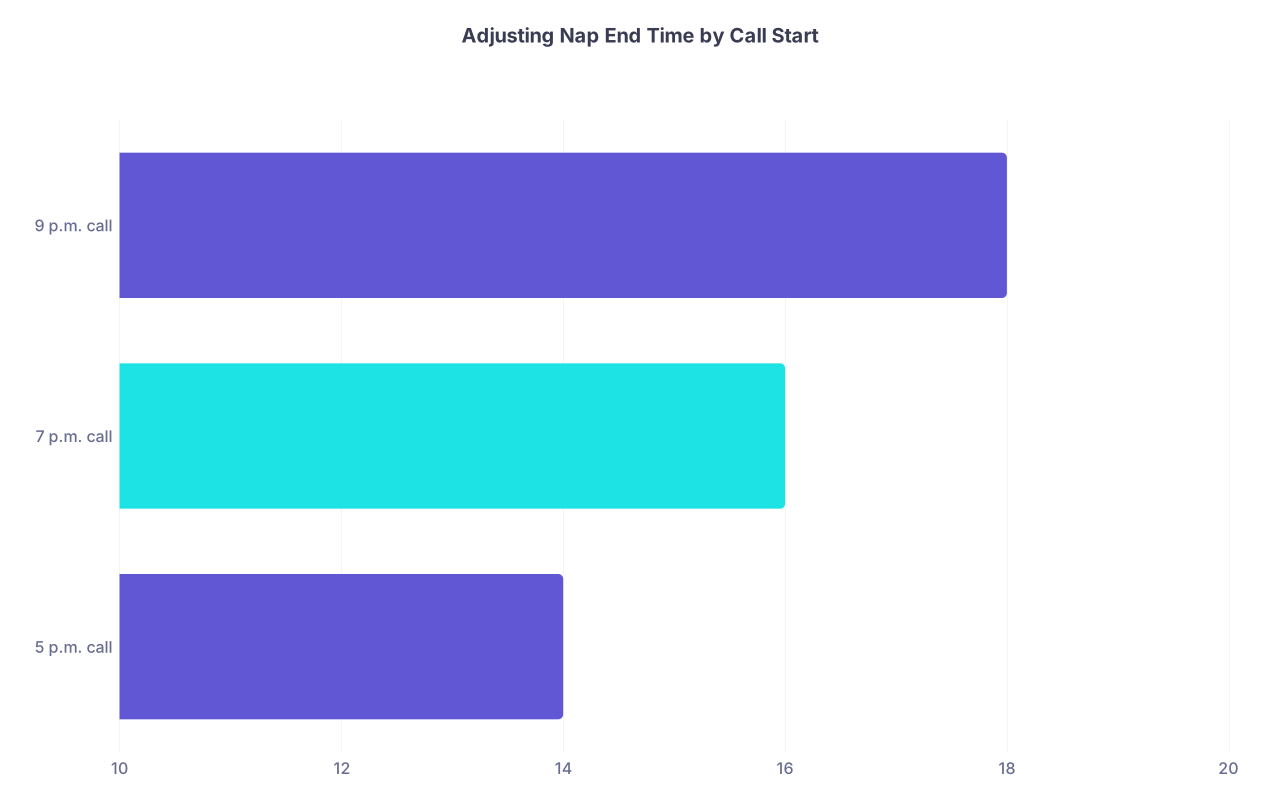
| Category | Value |
|---|---|
| 5 p.m. call | 14 |
| 7 p.m. call | 16 |
| 9 p.m. call | 18 |
- Earlier call (5 p.m.):
- Move nap earlier: 12–2 p.m.
- Pack and micro‑review before lunch.
- Later call (9 p.m.):
- Push nap later: 3–5 p.m.
- Keep morning similar, but extend errands/study window.
- Home call:
- Loosen bag/food prep a bit, but keep:
- Nap block.
- Light review.
- Early evening calm.
- Loosen bag/food prep a bit, but keep:
The backbone stays the same: plan, prep, nap, reset, arrive early.
Common Pre‑Call Mistakes to Avoid
I have watched residents sabotage themselves with the same five errors over and over.

| Step | Description |
|---|---|
| Step 1 | Pre call day |
| Step 2 | High fatigue overnight |
| Step 3 | Vending machine dinner |
| Step 4 | Mental burnout by midnight |
| Step 5 | Steady performance on call |
| Step 6 | Napped at least 90 min |
| Step 7 | Packed food and bag |
| Step 8 | Did intense study all day |
Avoid:
- “I will just sleep in and skip the nap.”
- You will not. And you will hit a wall at 3 a.m.
- Cramming all day.
- By midnight, you will not remember what you studied. Fatigue erases marginal gains.
- Leaving food and packing for the last hour.
- This is how you end up with 800 calories of chips for 24 hours.
- Chugging caffeine at 3–4 p.m.
- That 3 p.m. energy drink will be mocking you while you fail to nap.
- Arriving right at sign‑in.
- You start the night flustered. Then it just compounds.
What You Should Do Today
Open your calendar, find your next overnight call, and block off the nap window and prep window the day before—right now. Then create a one‑page “Pre‑Call Checklist” and tape it near your door so that on your next pre‑call day, you are following a plan instead of winging it.