
It’s the 11th straight night you’ve been on wards. It’s 3:17 a.m. The code pager just went off 20 minutes ago, you shoved a graham cracker in your mouth on the way back to the call room, and now you’re staring at a First Aid chapter you’ll never remember.
You promised yourself you’d “read an hour a day this month.” That plan is dead.
So you have two options:
- Keep pretending you’ll have normal study blocks during heavy night-call and feel guilty the entire month, or
- Build a reading schedule that actually fits how call works: chaotic, unpredictable, and exhausting.
You’re here for option 2.
Below is a practical, time‑anchored guide: what to do one month before, the week before, during the heavy call block (broken into days and even intra‑shift windows), and after the month ends so your knowledge doesn’t evaporate.
One Month Before Your Heavy Night‑Call Month
At this point you should be planning like you’re going into a natural disaster. Because academically, you are.
Step 1: Map Your Year at a High Level (15–20 minutes)
Sit down with:
- Your full rotation schedule
- Any known exam dates (in‑training, Step 3, boards)
- Your program’s academic calendar (noon conferences, didactics, etc.)
You’re answering one question: Where are my “heavy call” months, and what reading makes sense in them?
Typical pattern:
- ICU / trauma / busy medicine night float → low‑bandwidth, micro-reading only
- Lighter elective / clinic month → deep reading, board prep, long Q‑bank blocks
So at this level, decide:
- Heavy night‑call months = maintenance mode (flashcards, 5–10 min chunks, review only)
- Non‑call / light months = growth mode (new content, long chapters, major Q‑bank pushes)
If you try to “learn cardiology from scratch” on a brutal MICU night float, you will fail. That content belongs in an easier month.
Step 2: Choose a “Call Month Reading Kit” (30–40 minutes)
You need a minimalist reading toolbox dedicated to night call. Not your whole library.
For most residents I’ve worked with, a good call kit is:
- One primary reference app (UpToDate, or equivalent local resource)
- One concise handbook (e.g., Pocket Medicine, ICU book, Harriet Lane, depending on specialty)
- One question source (UWorld / TrueLearn / MKSAP) limited to 10–15 questions per call shift max
- One flashcard deck system (Anki, or similar), filtered appropriately
Do not plan to haul:
- Full board review books
- Multiple question banks
- Giant PDF compendiums “to skim on slow nights” (they will just live unopened in your bag)
Decide now:
- Which app/handbook is your default for on‑the‑spot learning
- Which resource you’ll use for scheduled mini‑reading (e.g., “read 1 cardiac failure page per night”)
| Specialty | On-Call App | Pocket Book | Q-Bank Focus |
|---|---|---|---|
| IM | UpToDate | Pocket Medicine | MKSAP mixed |
| Surgery | UpToDate | Surgical Recall | ABSITE-style |
| Peds | UpToDate | Harriet Lane | PREP or board Qs |
| Anesthesia | UpToDate | Baby Miller pocket | In-training Qs |
| EM | EM-specific app | Tintinalli summary | EM in-service Qs |
Step 3: Decide What NOT to Do in Call Months (10 minutes)
This is where most people screw up. At this point you should explicitly list:
- No big new topics (e.g., “learn all rheum”)
- No 2–3 hour “review sessions” after night shifts
- No expectation of 80+ Qs/day
Your only night‑call‑month academic goals should be:
- Keep your knowledge from decaying
- Deepen understanding of what you actually see on call
- Maintain a small habit so restarting after the block isn’t painful
Write this somewhere visible: “Heavy night‑call = maintenance month, not hero month.”
One Week Before the Night‑Call Month Starts
Now you shift from strategy to concrete logistics.
Step 1: Pre‑Load Content and Systems (30–45 minutes)
At this point you should:
Filter your flashcards
- Create a “Call Month” filtered deck:
- Only high‑yield, short cards
- Focused on acute issues: sepsis, arrhythmias, ventilator basics, electrolyte emergencies, etc.
- Cap daily new cards at 0. Yes, zero. This month is for review only.
- Create a “Call Month” filtered deck:
Pre‑select micro‑reading topics
- Make a list of 10–15 topics that are common on nights:
- Internal med example: DKA, GI bleed, chest pain workup, COPD exacerbation, delirium, acute kidney injury
- Surgery example: Post‑op fever, SBO, wound infections, anastomotic leak red flags
- For each topic, bookmark:
- One short guideline / UpToDate section
- One concise pocket reference page
- Make a list of 10–15 topics that are common on nights:
Set realistic numbers
- Example for a brutal MICU night float:
- 15–20 review flashcards on non-call days
- 5–10 flashcards during each call shift
- 5–10 Q‑bank questions per call shift or post‑call day (max)
- 5–10 minutes of topic reading, tied to a real patient whenever possible
- Example for a brutal MICU night float:
This isn’t “low ambition.” It’s survivable ambition.
Step 2: Protect Anchors on Non‑Call Days
Look at the calendar for that month. Mark:
- Post‑call days
- Golden weekends (if you have them)
- Any random full days off
On those non‑call days, you’ll anchor:
- A short, consistent reading block (20–30 minutes, max)
- A slightly larger Q‑bank mini‑session (15–20 questions)
You’re not going to “catch up” from the nights. You’re just going to keep the habit alive.
During the Heavy Night‑Call Month: Week‑by‑Week
Now we get into the guts: what to do week by week and within each call cycle.
Week 1: Reality Check and Baseline
At this point you should focus on observation and adjustment, not perfection.
First 2–3 Nights on Call
Your only jobs:
- Stay safe
- Learn the workflow
- Notice where natural downtime exists (if any)
During these first nights, limit academics to:
- Point‑of‑care reading:
- You get a new CHF admit → read the UpToDate summary or your pocket medicine CHF section for 3–5 minutes while orders are pending
- You’re called for hyperkalemia → skim the treatment algorithm before you call back
- 5 flashcards at some quiet point. That’s it.
Make mental notes:
- Are there predictable calmer hours (e.g., 3–4 a.m.)?
- Is sign‑out chaotic or decently structured?
- Are you dying of pages or is there room for 5–10 minute blocks?
After 2–3 nights, recalibrate. If you’re drowning, scale back further. If you have more room, you can gently add.
First Post‑Call Days
Rule: No heavy reading post‑call. Your brain is trash.
Aim for:
- 5–10 flashcards in the afternoon/evening, if you’re semi‑functional
- Maybe 5–10 Q‑bank questions, untimed, if you’re awake and not miserable
If you nap and wake up foggy, you’re done. No guilt.
Weeks 2–3: Establish the “Call Night Reading Rhythm”
By now, the shock is over. This is where you build a consistent, tiny routine.
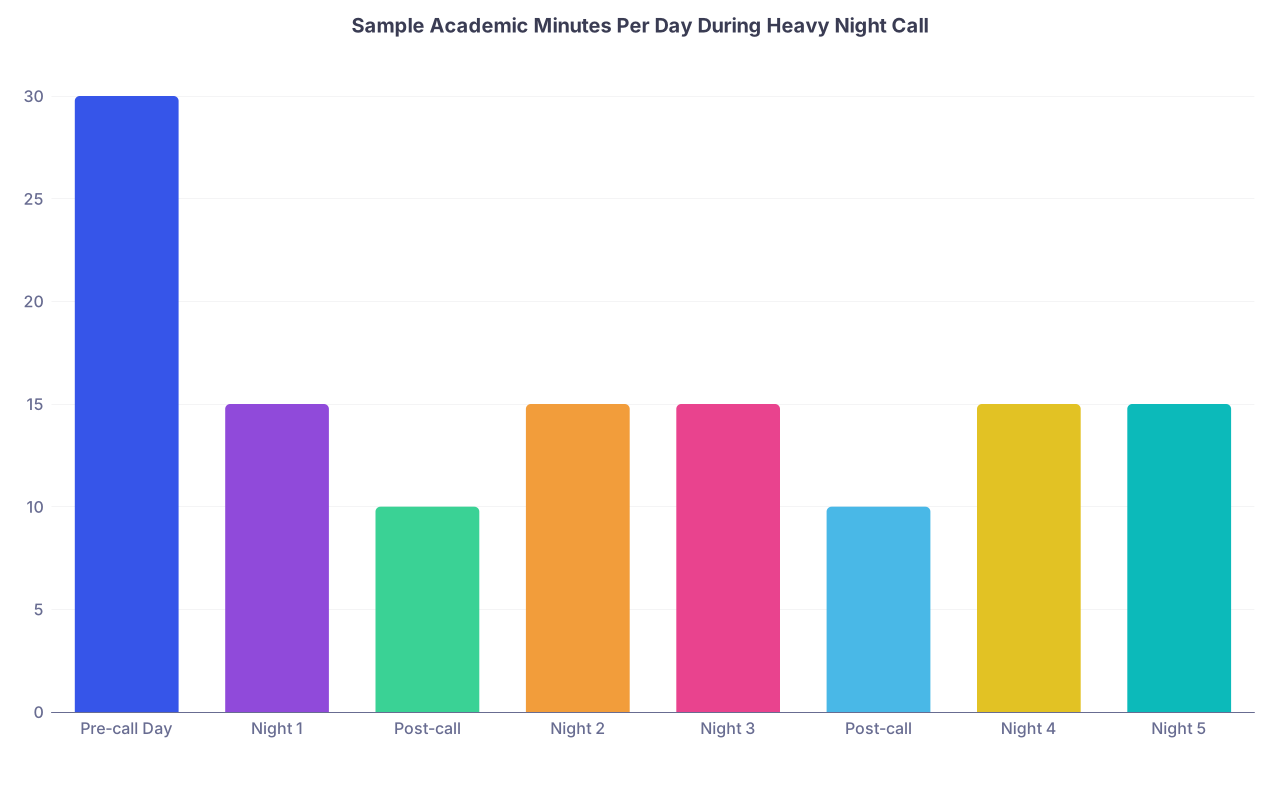
Here’s a sample structure for a typical 5‑night run:
| Category | Value |
|---|---|
| Pre-call Day | 30 |
| Night 1 | 15 |
| Post-call | 10 |
| Night 2 | 15 |
| Night 3 | 15 |
| Post-call | 10 |
| Night 4 | 15 |
| Night 5 | 15 |
Pre‑Call Day
At this point you should front‑load a bit while you’re rested:
- 20–30 minutes:
- 10–15 Q‑bank questions, mixed
- 10–15 minutes reading on 1–2 topics you know you’ll see on call (e.g., sepsis, alcohol withdrawal)
That’s your “academic deposit” for the run.
Each Night on Call – Intra‑Shift Breakdown
Think of the night in four phases and assign realistic reading to each.
Pre‑shift (30–60 min before sign‑in)
- 5–10 flashcards in the workroom
- Skim 1–2 pages of pocket reference on something relevant that you fear (e.g., vasopressors, chest tube management)
Early chaos (first 3–4 hours)
- No “planned” reading. Only point‑of‑care:
- New admit? Read 1–2 paragraphs while waiting for labs
- New consult? Skim the relevant guideline summary while walking over
- No “planned” reading. Only point‑of‑care:
Middle stretch (if/when it calms down)
- If you get a 15–20 minute quiet pocket:
- Option A: 5–10 Q‑bank questions on a topic you just admitted
- Option B: 5–10 minutes focused reading: one mini‑topic (e.g., “management of AF with RVR”)
- If you get a 15–20 minute quiet pocket:
Late night dead zone (3–5 a.m., if not slammed)
Brain is mush. Don’t pretend otherwise.
Do:
- Super‑short flashcards (e.g., “DDx of anion gap metabolic acidosis”)
- Or a short, structured summary section (pocket guidelines, algorithm)
Don’t:
- Start long review chapters
- Do timed questions
- Force complicated pathophysiology
End of Each Night: 2–Minute Debrief
Before you leave or crash in the call room, jot down:
- 1–2 things you looked up
- 1 thing you want to read for 5 minutes about tomorrow (e.g., “I was confused about ventilator modes → read that next night”)
That list becomes your targeted micro‑reading next shift.
Week 4: Protecting Yourself from Burnout and Cram Guilt
By now, fatigue is cumulative. At this point you should lower rather than raise your expectations.
Signs you’re overdoing reading on call:
- You’re skimming pages but remembering nothing
- You’re snappy or unsafe on the floor because you’re half‑thinking about questions
- You’re falling asleep mid‑paragraph repeatedly
If that’s you, cut your goals:
- Drop Q‑bank to 5 questions max on any call or post‑call day
- Restrict yourself to:
- 5–10 flashcards total
- Only point‑of‑care reading, nothing “extra”
Survival > ideal plan.
Within a Single Night: Micro‑Timeline Example
Let me show you a realistic “good” academic night on a busy but not impossible call.
18:30–19:00 – Pre‑shift
- 5 minutes: flashcards (recent admits topics)
- 10 minutes: read pocket section on “acute agitation/delirium,” because you always get those calls
19:00–22:30 – Admissions / cross‑cover chaos
- No formal reading blocks
- For a new DKA admit:
- Skim DKA management on UpToDate while fluids are running and insulin drip is being mixed
- For a rapid response:
- Quickly check your sepsis algorithm when you step out of the room
23:00–23:10 – First quiet window
- 5 flashcards while you eat something
- Jot one learning point from the DKA case
01:00–01:15 – Slight lull between admits
- 5 untimed Q‑bank questions on hyperglycemic emergencies
- Immediately review explanations, focus on 2–3 takeaways
03:30–03:40 – Sleepy dead zone, semi‑quiet
- Read 1–2 pages in pocket book: “Approach to acute hypoxia”
- No cards or questions; you’re too tired for recall
06:30–06:40 – Pre‑signout
- Add 1–2 “I need to review this later” topics to a running note in your phone
- Quick skim of one simple algorithm you used overnight
That’s it. No heroics. And still more structured than what most residents do.
Adjusting by Call Intensity: Light vs. Nuclear Rotations
Not all night‑call months are equal. Plan by category.
 Nights](https://cdn.residencyadvisor.com/images/articles_svg/chart-reading-intensity-by-call-type-8928.svg "Reading Intensity by Call Type")
| Category | Value |
|---|---|
| Light Elective Nights | 40 |
| Moderate Wards Nights | 20 |
| [ICU / Trauma](https://residencyadvisor.com/resources/residency-on-call-tips/what-to-practice-each-week-before-starting-icu-nights-as-a-resident) Nights | 10 |
Light Elective Nights (e.g., night float on a calm service)
At this point you can push a bit more:
Pre‑call days:
- 30–45 minutes reading
- 20–30 Q‑bank questions
On‑call nights:
- Aim for 20–30 minutes of real reading broken in blocks
- 10–15 questions if you get a long quiet stretch
- Still tie as much as possible to real patients
Classic Busy Wards Nights
This is middle‑ground. Reasonable target:
- Pre‑call day:
- 20–30 minutes reading, 15 questions
- On nights:
- 10–15 minutes reading total
- 5–10 questions on only 2–3 nights per week, not all
- Daily micro‑flashcards
ICU / Trauma / Absolute Chaos Nights
At this point you should give yourself permission to almost only do:
- Point‑of‑care reading
- 5 cards here and there
- Maybe 5–10 untimed questions on one of your days off, if you’re alive
Don’t romanticize it. Some months you’re just surviving.
After the Heavy Night‑Call Month Ends
Now comes the part most people ignore: what to do in the 2 weeks after the call block, so you consolidate rather than lose everything.
Day 1–3 After Call Month Ends
You’re in recovery mode.
One day fully off? Use 15–20 minutes:
- Skim through your “topics to review later” list from call
- Pick 3–5 themes (e.g., sepsis, delirium, vent settings, CHF, arrhythmias)
Do:
- 10–15 flashcards/day
- 10–15 Q‑bank questions on call‑relevant material
Don’t:
- Try to cram all the topics you felt weak on in one sitting
Week 1 Post‑Call: Consolidation Week
At this point you should turn call experiences into actual knowledge.
Plan 3–4 short sessions this week:
- Session template (30–40 minutes max):
- 10 Q‑bank questions focused on one call theme (e.g., sepsis)
- 10–15 minutes reading a structured resource chapter on that theme
- 5 minutes updating/adding flashcards from questions and reading
Do this for 3–5 of the most common things you handled on call. You’ll see them again. A lot.
Week 2 Post‑Call: Transition Back to Growth
Now you revert to your usual non‑call academic plan.
Increase:
- Q‑bank volume back toward your long‑term goal
- New flashcards if you had paused them
Decrease:
- The hyper focus on call‑specific micro‑topics
But keep one habit: tie at least one small reading chunk daily to a patient you saw or a page you got. Call teaches what actually matters.
Putting It All Together: Quick Planning Checklist
Here’s your streamlined, chronological checklist to use before and during a heavy night‑call month.
2–4 Weeks Before
- Identify which month(s) are heavy night‑call
- Label them “maintenance months,” not primary study months
- Choose your call reading kit (one app, one pocket book, one Q‑bank, one flashcard deck)
- Decide top 10–15 common night‑call topics to micro‑read
5–7 Days Before
- Set flashcards to review‑only, small daily cap
- Bookmark key guidelines/chapters for those 10–15 topics
- Mark post‑call days and true days off on your calendar
- Set realistic numeric goals (e.g., 5–10 Qs per call shift, 5–10 minutes reading per night)
During Week 1 of Call
- Observe your workflow; identify natural downtime pockets
- Limit reading to point‑of‑care plus 5 flashcards per shift
- Log 1–2 topics per night you want to revisit
During Weeks 2–3 of Call
- Stabilize a tiny but consistent routine:
- Pre‑shift: 5–10 cards
- Mid‑shift lull: 5–10 Qs or 5–10 min reading
- Late night: only very light reading
- Adjust volume up or down depending on true call intensity
Week 4 of Call
- Reassess for fatigue; lower goals if needed
- Protect sleep and safety ahead of any academic ambition
- Keep only the smallest, easiest habits alive
1–2 Weeks After Call
- Pick 3–5 big themes from your “topics to review” list
- Run 3–4 short consolidation sessions (Q‑bank + reading + cards)
- Gradually ramp reading back to your normal plan
Core Takeaways
- Heavy night‑call months are for maintenance, not heroics. Plan them as low‑volume, high‑yield review periods, not your main board‑prep window.
- Tie reading to real cases and tiny time blocks. Point‑of‑care learning plus 5–15 minute chunks beats fantasy 2‑hour study sessions that never happen.
- Recover and consolidate after the block. The 1–2 weeks post‑call are where you actually cement what you saw at 3 a.m.—if you plan for it.