
A resident raises a fair concern. Maybe it is the q4 call that keeps slipping into unsafe territory. Maybe it is the absence of senior backup at night. Maybe it is mistreatment on one rotation that everybody knows about and nobody fixes. Maybe it is a wellness initiative that consists of pizza after a 14-hour day. The resident speaks up in a town hall, in a feedback form, or quietly in a meeting with leadership.
And then comes the line.
“We are improving.”
I have heard that sentence in residency spaces more times than I can count. It lands well in the moment because it sounds responsible, calm, and forward-looking. It suggests movement. It suggests that somebody is in charge. It suggests you can relax.
Usually, you should not.
“We are improving” is not evidence. It is not a plan. It is not accountability. At best, it is the beginning of a real answer. At worst, it is a polite way to stall, deflect, or get through recruitment season without saying anything concrete.
That is the central problem: vague reassurance feels better than silence, so people accept it too quickly. Applicants want to believe the culture is getting better. Residents want to believe the workload problem will be fixed before they burn out. Faculty want to believe leadership is handling it. Everyone wants the sentence to be true.
Wanting it to be true is how bad systems survive.
This article is about how to test the claim. Not emotionally. Operationally. You need to know whether “we are improving” means there is a real intervention with a timeline, an owner, and proof. Or whether it is just a slogan floating over the same old dysfunction.
Opening Scenario: The Resident Who Keeps Hearing “We’re Improving”
Picture interview day. An applicant asks about overnight support because several current residents hinted that intern nights can get rough. The answer comes fast and smooth:
- “We have heard that feedback.”
- “We are actively working on it.”
- “A lot has changed recently.”
- “Culture change takes time, but we are improving.”
No specifics. No dates. No examples. No numbers. Just polished reassurance.
Or maybe you are already in the program. You bring up repeated duty hour overages on a brutal rotation. Leadership says the issue is “under review.” Three months later, the same schedule is still posted. Same staffing. Same burden. Same problem, now wrapped in a more refined sentence.
This is why the phrase deserves scrutiny. It often functions like verbal air freshener. The room smells better for a minute. The underlying mess is still there.
Here is my position: improvement is real only when you can see its mechanics. What changed? Who changed it? When did it start? How will anyone know if it worked? If leadership cannot answer those questions, they are not describing improvement. They are describing intent. Intent is cheap.
That does not mean every imperfect program is dishonest. Real fixes in graduate medical education do take work. Schedules have to be rebuilt. Faculty have to be recruited. supervision structures have to be redesigned. Policies have to become behavior. Fine. But real change leaves fingerprints. You can find them.
Your job as an applicant or resident is not to be cynical. It is to be precise.
Myth vs Reality: What “We’re Improving” Actually Means
The myth is simple: if leadership says improvement is happening, the problem must be getting addressed.
The reality is harsher: without specifics, “we’re improving” is often public-relations language, not operational language.
Let us break this down.
Myth 1: Any statement of improvement means the problem is being addressed
Reality: A statement is not a fix.
A real fix sounds like this:
- “We added a second night float resident starting in July.”
- “Dr. Patel now reviews all remediation plans and reports completion monthly.”
- “We removed home call from that rotation and moved to in-house backup on weekends.”
- “Our PGY-1 clinic template was reduced from 12 to 8 patients per half day beginning last month.”
That is improvement language. It names the intervention.
Fake improvement language sounds like this:
- “We are listening.”
- “This is a priority.”
- “It is in process.”
- “We are committed to better wellness.”
- “The issue is under review.”
That is not a plan. That is fog.
Myth 2: Leadership would not keep repeating the message unless change were happening
Reality: Repetition can hide stagnation.
I have seen programs repeat the same reassurance across multiple recruitment cycles. Same concern. Same answer. Different applicants. Nothing changed except the phrasing. Sometimes leadership turnover resets the script, and the new person says they are “building on prior efforts.” Translation: nobody wants to admit the prior efforts went nowhere.
Repeated optimism is not proof of progress. Often it is proof that the problem has become part of the institution’s furniture.
Myth 3: Culture problems are too complex for specifics
Reality: Complex problems still need concrete steps.
Yes, culture takes time. That line is not always wrong. But it becomes nonsense when it is used to avoid discussing actions. Even culture change has operational markers:
- new reporting pathways
- faculty coaching
- removal of repeat offenders from supervisory roles
- anonymous climate surveys
- closed-loop follow-up to complaints
- published expectations for conduct
- documented consequences
If none of that exists, “culture takes time” is just a prettier way to say, “We hope the problem ages out.”
Red-flag language patterns to watch
These phrases should make you lean in, not relax:
- “In process” with no start date
- “Under review” with no review owner
- “We are listening” with no actions taken
- “We take this seriously” with no visible response
- “Culture takes time” with no milestones
- “We cannot discuss specifics” when discussing broad systems issues
- “Residents seem happier now” without any survey or schedule data
Bottom line: if the message has no owner, no timeline, and no metric, it is probably emotional management, not program improvement.
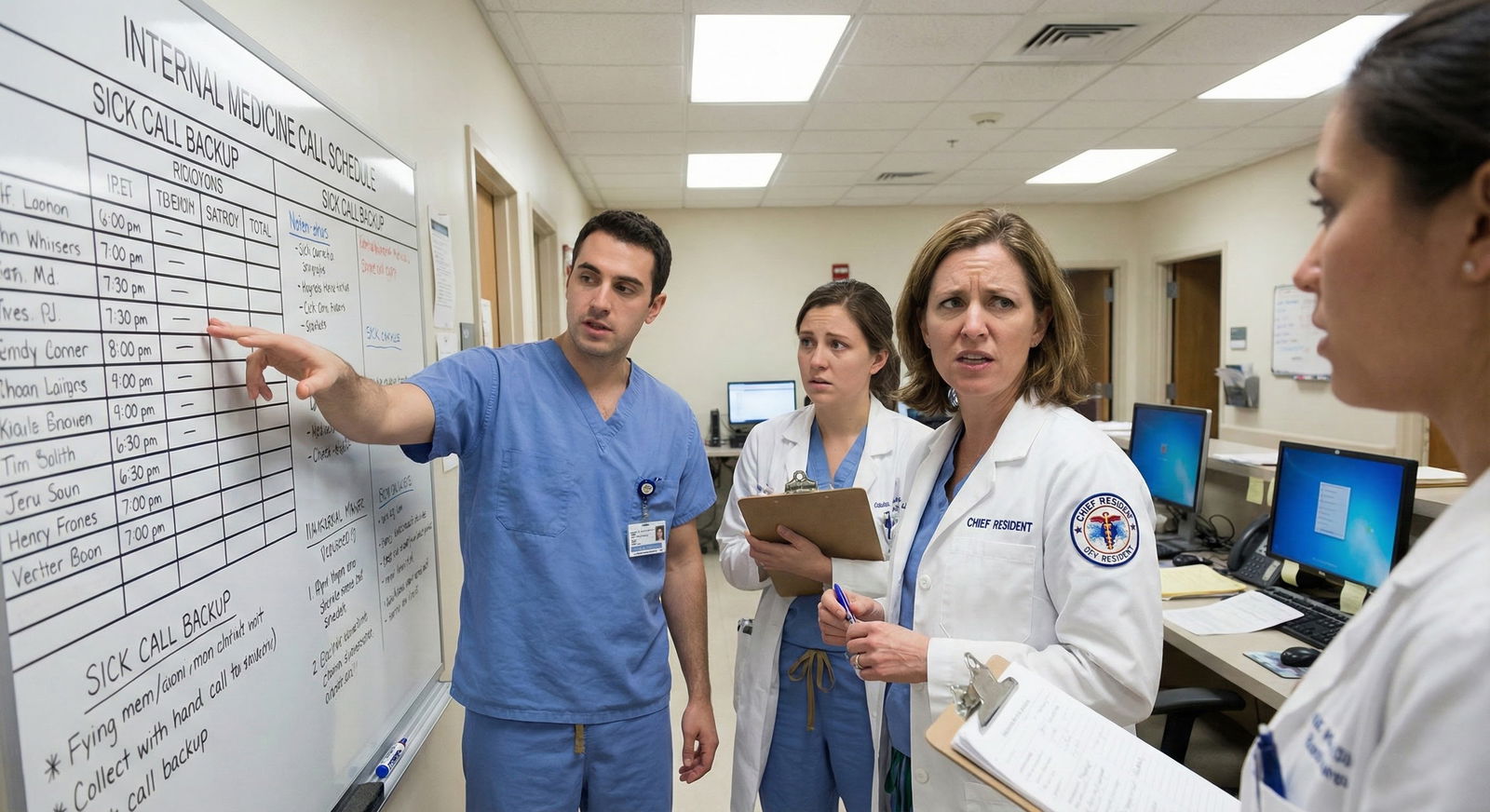
How to Verify Whether Improvement Is Real
Here is the fix. Stop responding to “we are improving” as if it is an answer. Treat it as an opening statement and move to verification.
Use this checklist.
The five-question verification test
When a program says it is improving, ask:
What exactly changed?
- policy
- staffing
- schedule
- supervision
- reporting system
- curriculum
- wellness resource
Who owns the change?
- program director
- associate program director
- department chair
- chief residents
- GME office
- rotation director
When did it start?
- last month
- this academic year
- after the annual survey
- after a site visit
- after resident complaints
What metric is being tracked?
- duty hour violations
- resident survey scores
- call burden
- clinic volume
- board pass rates
- attrition
- remediation completion
- incident reports
When is the next update due?
- monthly
- quarterly
- at the next town hall
- annual program evaluation
- resident council review
If they can answer those five questions clearly, good sign. If they cannot, warning sign.
Where to look for evidence
Do not rely on one conversation. Triangulate.
1. Call schedules and rotation structure
These are hard to fake. Ask:
- Has night coverage changed?
- Was backup added?
- Were rotation caps adjusted?
- Did clinic templates lighten?
- Did weekend burden shift?
If the schedule looks identical to the old problem, the problem probably is too.
2. Supervision coverage
A common lie-by-vagueness is saying supervision improved when what actually changed was a memo, not the staffing.
Ask:
- Is attending presence on-site or by phone?
- Are seniors double-covered?
- Who is available overnight?
- Were problem rotations reassigned or restructured?
3. Duty hour compliance
This is one of the clearest operational areas.
Ask:
- Are violations tracked?
- Are they decreasing?
- What happened after the last cluster of violations?
- Did the response involve actual staffing changes or just reminders to log hours better?
If the “fix” is teaching residents how to report less visibly, that is not improvement. That is concealment.
4. Board pass support and education quality
Programs sometimes say academics are improving while residents still get scattered didactics and no protected study time.
Look for:
- board review resources
- formal curriculum changes
- protected conference attendance
- mentorship structures
- in-training exam trends
5. Remediation and mistreatment processes
This area exposes whether a program values fairness or control.
Ask:
- Is there a written remediation process?
- Are expectations clear?
- Can residents appeal?
- Are complaints closed with feedback?
- Were known bad actors coached, removed, or protected?
Programs that say “we are improving communication” while refusing to explain how mistreatment reports are handled are telling you plenty.
Questions that force useful answers
Use these exact lines. They work.
For applicants:
- “What changed in the last six months based on resident feedback?”
- “Can you give one example of a concern that led to a concrete policy change?”
- “How do residents hear about progress after they raise a problem?”
- “What metric told you the intervention was working?”
For current residents:
- “Who is accountable for this fix, and when should we expect an update?”
- “What was the baseline problem rate, and what is it now?”
- “What will change next month if the current plan does not work?”
Those are not hostile questions. They are adult questions. Serious programs answer them.
Best sources for triangulation
Check multiple sources:
- current residents, ideally without faculty present
- recent graduates
- resident handbook and policies
- sample rotation schedules
- annual program evaluation summaries, if available
- ACGME citation history or public accreditation concerns where accessible
- GME ombuds or institutional support structures
- post-intervention follow-up from multiple classes
If multiple cohorts describe the same issue the same way, believe the pattern. Patterns tell the truth long before leadership does.
Common Red Flags That Turn “Improving” Into a Warning Sign
Not every delayed fix is sinister. But some patterns are. Learn the difference.
The core red flags
Treat “we’re improving” as a warning sign when you see any of these:
- No timeline
- No named leader responsible
- No measurable outcome
- No acknowledgment of prior failure
- No resident-facing updates
- No visible operational change
- No consistency across what residents and leadership say
This is not complicated. If nobody owns the problem, nobody is fixing it.
Delay versus avoidance
An isolated delay happens. Budget approval stalls. Hiring takes longer than expected. A faculty vacancy opens at the wrong time. That is real life.
Avoidance looks different:
- the same promise made across months or years
- rotating explanations for why nothing can be shared
- concern reframed as resident “perception”
- pressure to be patient without any interim safety step
- endless committees producing zero resident-visible change
That is not a delay. That is a strategy.
Institutional behaviors that should make you very cautious
Some behaviors move this from “maybe disorganized” to “dangerous.”
Watch for programs that:
- blame residents for speaking up
- minimize complaints as isolated or emotional
- retaliate informally through scheduling, evaluations, or exclusion
- selectively disclose problems during recruitment
- showcase polished ambassadors while avoiding unscripted resident access
- insist everything is improving while residents look exhausted and guarded
I have seen the classic version: interview day enthusiasm, glossy wellness slides, and then off-camera residents whispering, “Ask what happened on ICU nights last winter.” Listen to the whisper, not the slideshow.
Practical rule to remember
If the same issue appears in multiple resident classes, treat all improvement claims as unproven until the program shows durable data.
Not one anecdote. Not one new committee. Not one cheerful chief resident saying morale is better.
Durable data. Visible change. Multiple people confirming it.
That is the standard.
What Residents and Applicants Should Do Next
Here is the action plan. Practical. No drama required.
Step 1: Document exactly what was said
Write down:
- the concern raised
- who responded
- the exact wording
- any claimed timeline
- any promised follow-up
Why? Because vague reassurances mutate. Three months later, “we are discussing it” becomes “we already addressed that.” Notes protect you from revisionist history.
Step 2: Ask targeted follow-up questions
Use specificity to force clarity.
Interview script
- “You mentioned the program is improving in that area. What specific change was implemented most recently?”
- “Who led that change?”
- “How are residents updated on progress?”
- “What has improved so far, and what still has not?”
Town hall or feedback meeting script
- “Can leadership share the timeline, responsible party, and outcome metric for this issue?”
- “When should residents expect the next update?”
- “What contingency plan exists if the current intervention fails?”
Professional. Direct. Hard to dodge without revealing that there is nothing behind the curtain.
Step 3: Compare answers across sources
Do not trust the first answer. Compare what you hear from:
- program leadership
- chief residents
- interns
- senior residents
- recent graduates
If leadership says supervision is improved but residents still describe unsafe solo coverage, believe the frontline report.
Step 4: Separate inconvenience from danger
Some problems are frustrating but fixable. Some require escalation.
Escalate when there is:
- patient safety risk
- persistent duty hour abuse
- retaliation
- discrimination or harassment
- chronic mistreatment
- lack of supervision
- sham reporting pathways that expose residents to punishment
Appropriate escalation options may include the ombuds office, GME leadership, designated institutional officials, union representation where applicable, or formal reporting structures. Use the chain that actually works at your institution, not the one that looks nice on paper.
Step 5: Know when to walk away
This applies especially to applicants, but also to residents considering transfer options or fellowships within the same institution.
If a program depends on trust but cannot produce evidence, that tells you something important. Programs ask you to give them years of your life, your labor, your health, and your professional formation. “Just trust us” is not enough.
Walk away when:
- the same major issue spans multiple cohorts
- residents look afraid to answer honestly
- leadership cannot name a concrete intervention
- concerns touching safety or mistreatment remain vague and unresolved
- the culture punishes scrutiny
That is not being picky. That is self-protection.

Bottom Line: Trust the Data, Not the Slogan
“We’re improving” means nothing by itself. Nothing.
A trustworthy improvement claim has four features:
- specific
- measurable
- time-bound
- followed by visible change
That is the rule. Use it every time.
Skepticism is not cynicism. It is quality control. In residency, that matters because weak supervision, abusive culture, and broken schedules do not just hurt trainees. They hurt patients. They distort education. They normalize dysfunction and call it resilience. That is bad medicine.
So here is what you do next.
Ask for evidence.
Compare notes.
Track patterns.
Do not let polished language outrun reality.
If a program is truly improving, it will be able to show you. If it cannot, the slogan is the red flag.