
The biggest red flag almost nobody dissects properly is high resident turnover. People see it on forums, shrug, and think, “Every program loses a few residents.” That’s naïve. High turnover is rarely random—and it absolutely should change how you rank a program.
Let me be blunt: consistent, unexplained resident turnover is often the clearest signal that something is structurally wrong with a residency. Not a bad week. Not one malignant attending. A system-level problem.
Here’s how to actually interpret it and what to do when you see it.
What “high resident turnover” really means
People throw the phrase around without defining it. So let’s get specific.
Normal turnover:
- A resident leaves for family/health reasons.
- One person switches specialty for genuine fit.
- Rare dismissal for serious professionalism or competence issues.
That happens. Everywhere. Occasionally.
High or concerning turnover:
- Multiple residents leave the same program in 2–3 consecutive years.
- More than one resident per class disappears, transfers, or doesn’t graduate on time.
- Residents talk about “a lot of people leaving” and cannot or will not explain why.
- Program leadership minimizes or dodges questions about it.
To put rough numbers on it:
| Turnover Level | Rule-of-Thumb Pattern | Concern Level |
|---|---|---|
| Typical | 0–1 resident every 2–3 years | Low |
| Elevated | 1 resident almost every year | Moderate |
| High | 2+ residents/year or multiple classes affected | High |
| Crisis | 20–30%+ of residents over 3–4 years | Extreme |
No program is perfect. But when you see residents repeatedly bailing out of a training spot they fought hard to earn, you should assume there’s a reason until proven otherwise.
The five most common reasons residents actually leave
People don’t walk away from a secure salary, health insurance, and a defined path to board certification for fun. They leave because something is unsustainable.
1. Toxic or neglectful culture
This is the big one. When multiple residents leave, I’d bet culture is at least part of the story.
Common patterns:
- Public shaming, yelling, or “teaching by humiliation”
- Attendings or seniors undermining residents in front of patients or staff
- Retaliation after raising concerns (schedules worsened, evaluations tanked)
- Residents afraid to call in sick, ask for help, or admit they do not know something
You’ll hear phrases like:
- “You just keep your head down here.”
- “We’re working on the culture,” with no specifics.
- “You get thick skin fast,” said with a half-nervous laugh.
When that’s paired with high attrition, you’re looking at a program that burns people out and then blames them for not being “resilient.”
2. Unsafe workload and staffing
Sometimes everyone is “nice” but the system is genuinely unsafe.
Look for:
- Chronic violation of duty hours, not the occasional bad week
- No backup when someone is sick—others just absorb the work
- Cross-covering so many patients that you can’t reasonably practice safe medicine
- Constant text pages, no time to eat or sit, and zero ability to study
Residents in those places will say things like:
- “You learn a ton, but you’re always one mistake away from disaster.”
- “Everyone is exhausted all the time. It’s just normal here.”
When multiple residents tap out, that’s not weakness. That’s self-preservation.
3. Weak leadership and poor communication
Programs live or die on leadership. A PD and department chair who are disengaged, defensive, or chaotic can wreck a residency without ever yelling at anyone.
Red flags:
- Major schedule changes with no input, always announced last minute
- Inconsistent enforcement of rules—favorites and scapegoats
- Residents find out about accreditation issues from rumors, not leadership
- No clear response when concerns are raised—things just disappear into the void
Residents might tell you:
- “We never know what’s going on.”
- “Things are always changing—no one explains why.”
Chronically poor leadership is one of the most common root causes behind high turnover.
4. Accreditation or structural instability
Sometimes the problem is existential. The program itself is shaky.
Examples:
- Recent or repeated ACGME citations
- Threatened or actual probation
- Losing key training sites, major faculty, or hospital mergers with chaos
- Rapid expansion in class size without increasing faculty or resources
Residents feel the ground moving under their feet. The more “plugged in” ones transfer early before things implode. The rest are stuck.
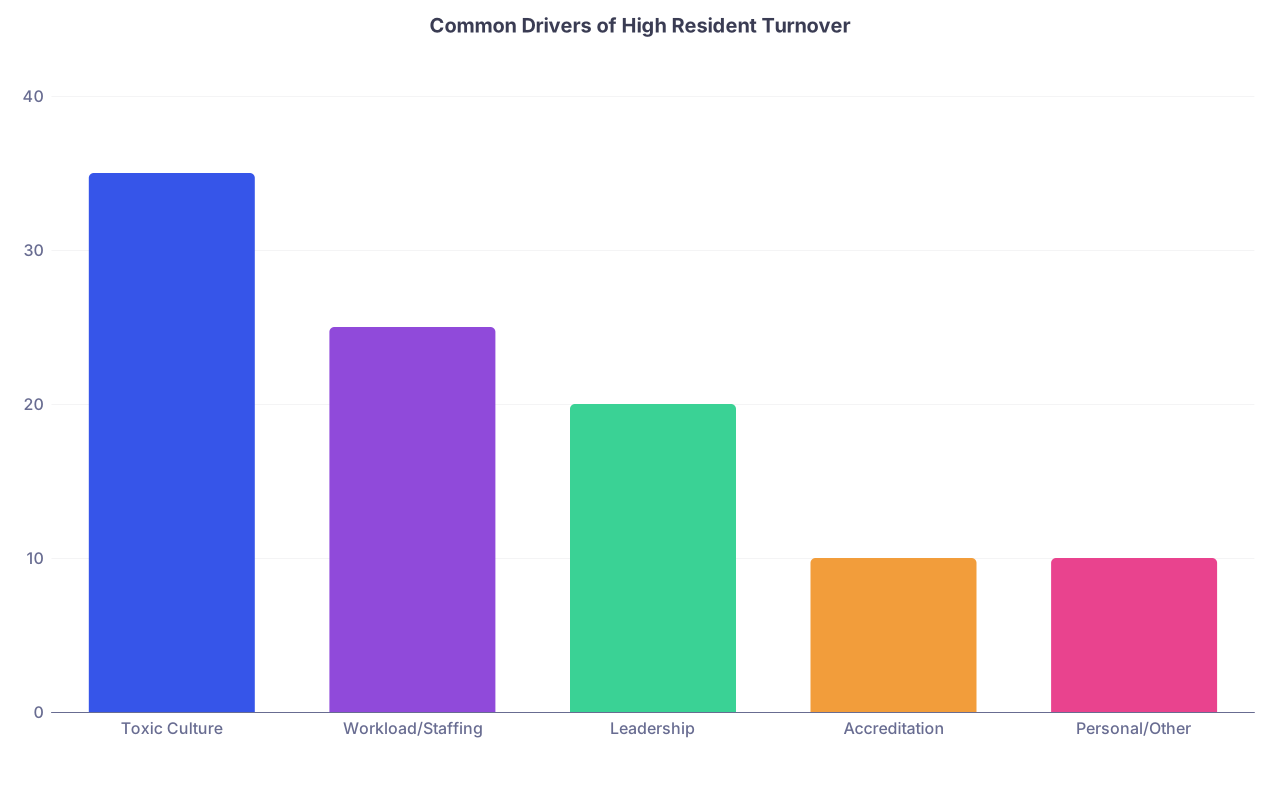
| Category | Value |
|---|---|
| Toxic Culture | 35 |
| Workload/Staffing | 25 |
| Leadership | 20 |
| Accreditation | 10 |
| Personal/Other | 10 |
Numbers are illustrative, but the proportions are about right from what I’ve seen and heard across specialties.
5. Genuine personal or fit issues (the minority)
Yes, people do leave for:
- Partner relocation
- Health problems
- Realizing they truly want a different specialty
Those are real. But here’s the key: if a program is otherwise healthy, these stories are rare and usually transparent.
If leadership keeps blaming every departure on “fit” or “personal reasons” but residents look away or shift in their chairs when you ask, believe the residents, not the script.
How to detect high turnover before you rank
You’re not going to see a banner on the website saying “We lost three residents last year.” You have to dig.
Step 1: Do the roster check
Before interviews and again before ranking, compare:
- Current resident list on the website
- Class sizes vs what they’re supposed to be
- Whether there are obvious gaps (e.g., 5 categorical IM spots but only 3 PGY-3s listed)
If multiple classes are “missing” people, ask why.
Step 2: Ask directly on interview day
Don’t dance around it. Use clear, neutral language.
Questions you can ask:
- “Have there been any residents who’ve left or transferred in the last few years?”
- “How many residents have not finished the program in the last 5 years, and why?”
- “What happens when a resident is struggling here—what support exists?”
Watch for:
- Vague answers: “Like any program, things happen.”
- Blame-oriented answers: “They just weren’t a good fit,” with no nuance.
- Different stories from faculty vs residents.
A good program can say something like: “We had one resident leave for family reasons two years ago, another switched to radiology because they realized they loved imaging more than clinic. We met with them early, helped them transfer, and they left on good terms.”
A sketchy program leans hard on “fit” and “unexpected circumstances” with no specifics, repeatedly.
Step 3: Corner the truth in the resident-only session
This is where you get the real data—if you ask well.
Try:
- “If you could go back to Match day, would you rank this place here again? Why or why not?”
- “Have any of your classmates or seniors left? What happened?”
- “What has made people the most frustrated here in the last year?”
- “What kind of resident tends to struggle here?”
You’re not looking for perfectly happy people. You’re looking for:
- Consistent, aligned narratives
- Honest acknowledgment of problems plus concrete examples of improvement
If multiple residents say some version of “We’ve had several people leave” and then their eyes drop, or they say “I’d probably rank it lower knowing what I know now,” that’s not subtle. That’s your answer.
When is high turnover a true “do not rank” red flag?
Not all turnover is equal. Here’s how I’d sort it.
Probably manageable (yellow flag)
Patterns like:
- One person left in the last 3–4 years for a clearly explained, non-systemic reason
- One resident switch specialties with PD support and no drama
- Residents can all name the same rare event and leadership owns it
Questions to ask yourself:
- Do residents generally seem supported and cohesive?
- Is there evidence that the program learned from the rare bad event?
If yes, this is background noise, not a reason to tank the ranking.
Concerning but maybe salvageable (big yellow, almost orange)
Patterns like:
- 1 resident leaving almost every year
- Explanations feel a little too rehearsed or one-sided
- Residents mention “burnout” a lot but try to laugh it off
Here, you weigh tradeoffs:
- Are there unique strengths (location, fellowship pipeline, specific training) that truly matter to you?
- Are you personally resilient enough to handle a rougher culture if the education is strong?
You don’t ignore this. But you might keep the program mid-list if everything else is weak in your options.
Hard stop / don’t-rank (solid red)
Patterns like:
- Multiple residents per class gone, especially recently
- Residents actively warning you: “Honestly, I wouldn’t come here if you have other choices.”
- Leadership becomes defensive or evasive when asked
- Rumors online match what you’re feeling in person
This is where I’ve seen people tell themselves a story: “Maybe it won’t be that bad” or “I’m tough, I can handle it.” Then they spend two years trying to escape.
If every other program on your list is equally disastrous, that’s one thing. But if you have viable alternatives, do not romanticize “surviving” a place that chews through its trainees.
How to weigh high turnover against other factors
The honest answer: it depends what you’re optimizing for. Here’s a simple way to frame it.
| Priority Type | High Turnover Impact | How Cautious to Be |
|---|---|---|
| Mental health / wellness | Huge | Extremely cautious |
| Prestige / research | Medium–High | Weigh tradeoffs carefully |
| Location / family | Medium | Depends on your support system |
| Fellowship goals | Medium | Consider alternative routes |
| Procedural volume | Low–Medium | But still matters long-term |
If you:
- Have a history of anxiety, depression, or burnout
- Rely heavily on external structure and support
- Don’t have strong local family/friend support
Then a high-turnover, high-stress program may not just be uncomfortable—it may be dangerous for your mental and physical health.
If you’re unusually robust, with a strong local support system and a clear goal that the program objectively advances (e.g., elite fellowship placement), you might tolerate more. But that should be a conscious decision, not denial.
Exact questions to ask about turnover (and how to read the answers)
Here’s a script you can essentially steal.
To the PD or faculty:
- “How many residents have left or transferred in the last 5 years?”
- “What were the main reasons they gave, and how did the program respond?”
- “What changes have you made in response to resident feedback over the last few years?”
You’re looking for:
- Concrete numbers (“We’ve had two in five years” beats “Occasionally”)
- Specific stories without trashing the departed resident
- Actual changes: schedule adjustments, added mentors, wellness initiatives that aren’t just pizza and yoga flyers
To the residents:
- “Do you feel comfortable going to leadership with problems? What happens when you do?”
- “What happened the last time someone was seriously struggling here?”
- “If someone is not doing well, do they usually get through with support, or do they tend to leave?”
If their examples involve punitive schedules, gossip, or people “mysteriously” disappearing—believe them.
FAQ: High Resident Turnover and Your Rank List
1. How many residents leaving is “too many”?
If you see more than 1–2 residents per 5-year span leaving for non-obvious personal reasons, you should start asking questions. If you’re hearing about multiple residents per class over a few years, that’s already in “avoid if possible” territory.
2. Is program leadership ever honest about high turnover?
The best ones are. I’ve seen PDs say, “Three years ago, our culture was not good. We lost residents. Here’s exactly what we changed, here’s how duty hours improved, and here’s what current residents say now.” If they combine past honesty with current proof of improvement, I take that seriously. If they hand-wave or blame residents, I do not.
3. Should I trust residents more than faculty when there’s a discrepancy?
Yes. Residents live the program 60–80 hours a week. Faculty see snapshots. When in doubt, side with the people actually doing the overnight calls and weekend shifts. If residents are quietly warning you away, don’t overthink it.
4. What if a program is perfect on paper but has a history of people leaving?
Then “perfect on paper” is a lie. Board pass rates, volumes, and fellowships don’t outweigh a culture that repeatedly drives people out. You might still choose it if you’re extremely focused on a specific outcome, but you should go in with eyes fully open.
5. Can high turnover ever be a “growing pains” issue that improves?
Sometimes. Newer programs or rapidly expanding ones can stumble, lose a few residents, then stabilize with strong leadership. The key is: can they show you actual changes (schedules, staffing, support systems) and can current residents verify that life really is better now? If yes, cautiously possible. If not, assume the problems persist.
6. How does high turnover affect my day-to-day as an intern?
You’ll feel it as: more cross-coverage, holes in schedules, fewer seniors to teach, and a culture of distrust or fear. You’ll spend more time compensating for instability and less time actually learning. That’s the real cost, more than any abstract “red flag” label.
7. Bottom line—if I see high turnover and conflicting stories, what should I do?
Default to self-protection. Put that program lower or off your list unless your alternatives are truly worse. There are very few situations where it’s rational to choose a known high-turnover program over a stable, decent one. You’re not weak for wanting a place that doesn’t chew up its residents.
Key takeaways:
- High resident turnover is almost never random; it usually signals structural problems with culture, workload, leadership, or stability.
- Ask directly, compare stories from leadership and residents, and take resident warnings seriously.
- If multiple residents are leaving and nobody can give you a clear, consistent, non-blaming story, you should treat that program as a serious red flag when ranking.