
You’re staring at your rank list. Two programs are killing you.
Program A: great location, good vibe on interview day, residents seem happy… but their board pass rate is 75–80% most years.
Program B: less exciting city, a little more rigid culture, but they bragged about a 100% pass rate for the last 5 years and showed the receipts.
You’re thinking: “Do I really rank the ‘fun’ program higher if their board pass rate is that bad? Or am I playing with fire?”
Here’s the blunt answer:
If a program has clearly poor board pass rates and can’t give you a convincing, specific plan to fix it, you should almost never rank it above a safer program with strong pass rates—unless there’s an unusually compelling reason and you understand the risk you’re taking.
Let’s break down how to think through this without hand-waving or magical thinking.
1. What Board Pass Rates Actually Tell You (And Why You Should Care)
Programs love to say “We train clinicians, not test-takers.” That line sounds noble. It’s also often a smokescreen for weak teaching, no structure, and “sink or swim” culture.
Board pass rates are a proxy for:
- The quality and structure of didactics
- How seriously the program takes education vs service
- Whether residents have protected time and resources to study
- How responsive leadership is when residents are struggling
Are they perfect? No. But a chronically low pass rate is almost never an accident.
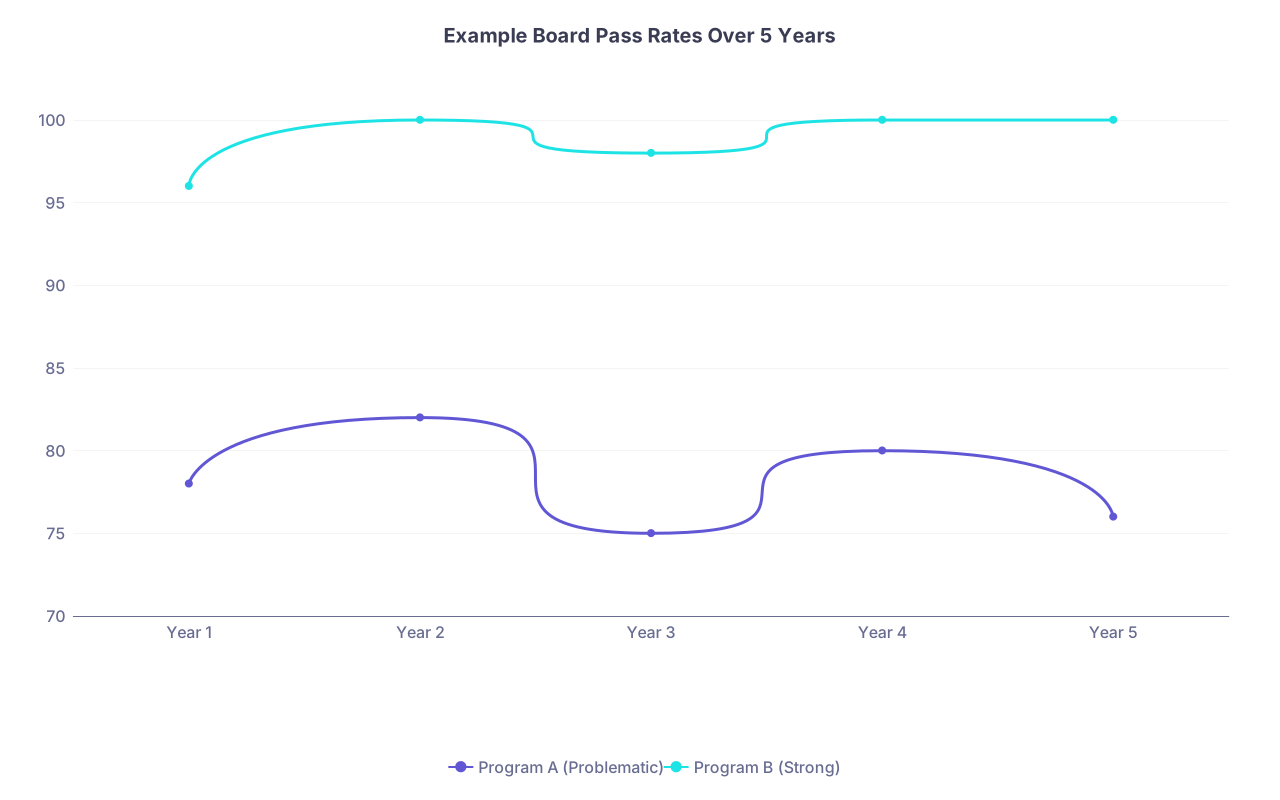
| Category | Program A (Problematic) | Program B (Strong) |
|---|---|---|
| Year 1 | 78 | 96 |
| Year 2 | 82 | 100 |
| Year 3 | 75 | 98 |
| Year 4 | 80 | 100 |
| Year 5 | 76 | 100 |
If a program is sitting in the 70–80% range for years, that usually means at least one of these is happening:
- Didactics are weak, disorganized, or routinely canceled
- The clinical workload is excessive, leaving no time or energy to study
- The program doesn’t track or intervene on in‑training exam performance
- There’s no culture of accountability around passing boards
Compare that with a program that consistently hits 95–100%. That doesn’t happen by luck either. It usually means:
- Structured board review built into the calendar
- Required question banks paid for by the program
- Regular feedback based on in‑training scores
- Protecting PGY‑3/PGY‑4 time for dedicated study
So when you see a big gap in pass rates, you’re not just seeing a test-score problem. You’re seeing a systems problem.
2. How Much Risk Are You Actually Taking?
You need to be honest with yourself about what a poor pass rate means for your career.
Why failing boards is a big deal
Failing once:
- Costs you money (exam fees, possibly remediation courses)
- Delays your ability to get licensed in many states
- May limit job offers, especially in competitive markets or specialties
Failing twice:
- Can absolutely shut doors: big hospital systems, academic positions, some fellowships
- Sometimes triggers extra scrutiny by credentialing committees
- In a few specialties, it can dramatically restrict your options
This isn’t fear‑mongering. I’ve seen residents who matched at “name brand” places but failed boards because there was zero structure. They spent a year fixing a problem that could’ve been prevented with a decent educational environment.

What’s an “acceptable” risk?
Here’s a simple thought exercise:
- If a program’s pass rate is 90–100%, that’s generally safe.
- 85–90% is not ideal but can be okay if everything else is strong and trending upward.
- Below 85% consistently? That’s a red flag. Now you’re gambling.
The key is: are you the type of person who will thrive regardless, or do you know you benefit from structure and external pressure?
If you’re someone who needed:
- Courses to keep you on track in med school
- Dedicated board prep schedules and accountability
- Extra time to digest material
Then a low‑structure, low‑pass‑rate program is a genuine risk. You don’t magically become a different learner in residency.
3. When (If Ever) It’s Reasonable to Rank the Risky Program Higher
Sometimes the safer program isn’t actually safer for you.
There are a few situations where ranking the “poor board pass rate” program higher is rational.
Case 1: The pass rates are bad, but the trend and plan are good
If the program leadership can say something like:
“We were at 78% three years ago. We instituted mandatory weekly board review, purchased UWorld for everyone, protected Friday conferences, and linked remediation to in‑training scores. Our pass rates since then have been 88%, then 92%, then 96%. We expect 95%+ going forward.”
That’s very different from:
“Yeah, our pass rates haven’t been great, but our residents are very hands‑on clinically. We think that prepares them well.”
One is data plus a plan. The other is hand‑waving.
Ask specifically on interview day or in a follow‑up email:
- What have your pass rates been each of the last 5 years?
- What concrete changes have you made to improve them?
- Do residents get a paid question bank? How much dedicated board prep time?
- How do you support residents who fail in‑training exams or boards?
If the answers are vague or defensive, that’s not a program fixing a problem. That’s a program tolerating it.
Case 2: Life realities make the “worse” program better overall
Sometimes the “weaker” program is in:
- Your support system’s city (partner, kids, parents)
- A cost‑of‑living situation where you’re not under constant financial stress
- A place that avoids a brutal commute or unsafe area
Here’s the trade: A program with solid board structure in a city that wrecks your mental health vs a program with mediocre pass rates but a life setup that’s sustainable.
If living somewhere makes you miserable, your odds of effectively studying are not great. I’ve watched residents fall apart in cities they hated. That matters too.
So, ranking the “riskier” program higher can make sense if:
- You’re confident in your own board-prep habits
- The program has at least some structure and is trying to improve
- The life factors are dramatically better in the riskier program’s location
But you need to go into that with eyes open. Not denial.
4. A Simple Decision Framework: How To Rank These Two Programs
Let me make this concrete. Say you’re weighing:
- Program A: 78–82% pass rate, great vibe, ideal city
- Program B: 98–100% pass rate, okay vibe, less ideal city
Use a quick framework.
Step 1: Score the educational environment
On a 1–5 scale (5 is great):
- Board pass rate trend (last 5 years)
- Didactics consistency (are conferences protected or constantly canceled?)
- In‑training exam support (do they track and act on scores?)
- Board resources (paid QBank, review course, study days)
| Factor | Program A | Program B |
|---|---|---|
| Pass rate trend | 2 | 5 |
| Protected didactics | 3 | 4 |
| In-training exam support | 2 | 4 |
| Board resources | 3 | 5 |
If one program is consistently 4–5 across the board and the other is 2–3, that’s a big gap. Don’t shrug that off.
Step 2: Score your personal fit and life setup
Again 1–5:
- Location/support system
- Resident culture fit (on your gut feeling)
- Fellowship or career alignment (for competitive specialties)
- Schedule/work-life sustainability
If the “safer” program is only slightly worse here (like 3 vs 4), but dramatically better educationally (5 vs 2), I’d push you hard to rank the safer one higher.
Step 3: Check for hard red flags
Regardless of scores, if you see:
- PD or faculty openly dismissing boards as “not important”
- Residents quietly warning you about multiple recent board failures
- No real awareness or data about their pass rates
That’s a program problem. Don’t pretend you didn’t see it.
5. How Much Weight Should Board Pass Rates Get Compared to Other Factors?
Board pass rates aren’t everything. But they’re a core safety issue.
If you want a simple weighting:
- 30–40%: Educational quality + board pass rates
- 30–40%: Resident culture + wellness + workload
- 20–30%: Location + family + lifestyle
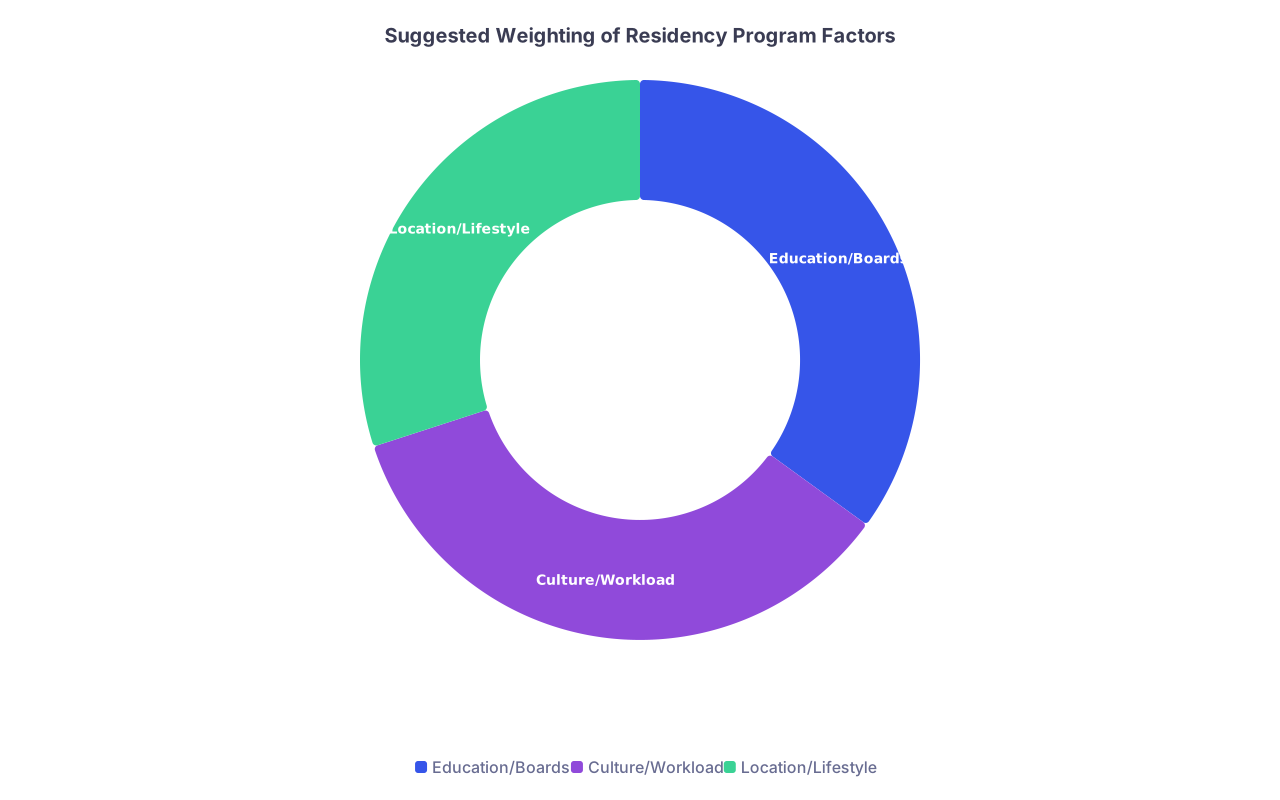
| Category | Value |
|---|---|
| Education/Boards | 35 |
| Culture/Workload | 35 |
| Location/Lifestyle | 30 |
Here’s what I wouldn’t do:
- Don’t sacrifice board safety for prestige. A “Top‑10” name with 80% pass rates is not better than a mid‑tier program with 99%. Jobs and fellowships care that you’re board certified.
- Don’t ignore pass rates because “I’ve always done fine on tests.” Residency is different. You’re more tired, more overworked, more pulled in five directions.
At minimum, treat board pass rate as a non‑negotiable floor. If a program can’t get most of its residents across that line consistently, they don’t deserve blind trust.
6. Red Flags vs Fixable Issues: What’s a Dealbreaker?
Not every blemish is a dealbreaker.
Here’s how I’d sort it:
Dealbreaker / strongly consider ranking lower:
- Pass rate consistently <85% with no upward trend
- Leadership minimizes the issue or blames “resident effort” exclusively
- No structured board prep or tracking of in‑training exams
- Multiple residents you talk to are anxious about boards and feel unsupported
Potentially acceptable if other factors are strong:
- One bad cohort with an otherwise decent trend
- Mid‑80s pass rate but real interventions in progress
- Historically weaker pass rates but new PD, new curriculum, clear plan

| Step | Description |
|---|---|
| Step 1 | Program has poor pass rates |
| Step 2 | Major red flag - rank lower |
| Step 3 | Consider ranking if strong fit |
| Step 4 | Trend improving? |
| Step 5 | Specific interventions in place? |
Your job isn’t to find a perfect program. It’s to avoid predictable disasters.
7. How to Ask About Board Pass Rates Without Feeling Awkward
You won’t be the first person to ask. Or the last.
You can say:
- “What have your board pass rates looked like over the last 5 years?”
- “How do you support residents who are struggling with ITEs or at risk for failing boards?”
- “Do you provide paid resources like question banks or review courses?”
- “Have you made any changes recently to improve board performance?”
Then watch:
- Do they know their numbers off the top of their head?
- Do they answer directly or dance around it?
- Are they proud of their track record or clearly defensive?
That reaction tells you just as much as the numbers.

Bottom Line: So, Should You Rank the Program With Poor Pass Rates Higher?
Here’s the short version:
You should not rank a program with clearly poor, persistent board pass rates above a safer one unless:
- The trend is clearly improving, with specific educational changes in place
- Leadership owns the problem and has a credible plan
- Your personal/life situation is meaningfully better there
- You’re realistically confident in your independent study discipline
If any of those are missing, you’re not being bold by ranking the risky program higher. You’re just hoping you’ll be one of the lucky ones.
Residency is already hard. Don’t sign up to fight your own program just to get across the board-certification finish line.
FAQ (Exactly 5 Questions)
1. How low is “too low” for board pass rates when ranking programs?
If a program is consistently below ~85% over several years with no clear upward trend, that’s “too low” in my book. Mid‑80s can be tolerated if the program is actively improving and strong in every other educational respect. Anything under 80% year after year is a serious red flag and should push that program down your list unless you have a very unique circumstance.
2. What if I loved everything about the program except the board pass rate?
Then you dig deeper. Ask about the last 5 years of data, what they’ve changed, and how they support struggling residents. If they show a real improvement curve and solid structure (protected didactics, question banks, remediation plans), it might be reasonable to still rank them highly. If they hand‑wave and say “our residents are just more clinical,” that’s your cue to be skeptical and protect yourself.
3. Do fellowship directors really care about board pass rates of your residency program?
They care about you being board certified. That’s the main thing. But they’re also not blind—if they know a certain program routinely has people failing boards, that can color their perception of that program’s training. You don’t want to be the candidate explaining a board failure plus defending a weak program. It’s easier to come from a place that set you up well.
4. I’ve always been a great test taker. Can I just ignore pass rates and focus on fit?
You can, but I wouldn’t. Residency drains your bandwidth in a way med school didn’t. You’re tired, on nights, doing notes at 11 pm, trying to stay human. Even strong test takers can get burned if the program cancels conferences regularly and gives zero protected study time. Being good at tests helps, but it doesn’t fully compensate for a chaotic educational environment.
5. What’s one concrete thing I can do this week to compare programs’ board safety?
Make a simple 2‑column list of your top 5–10 programs. For each, write down: their last 5 years of board pass rates (or best info you can find), whether they pay for a QBank, and whether they have protected didactics. If you don’t know, email the coordinator and ask. Seeing it all side‑by‑side usually makes the “safer” vs “riskier” programs much more obvious.
Today’s next step:
Pick the two programs on your current list that you’re most conflicted about. Right now, write one email to each coordinator asking for their last 5 years of board pass rates and a brief description of how they support residents preparing for boards. Their answers will tell you a lot—and make your rank list easier to finalize.