
The biggest residency red flags never show up on the tour; they slip out when people answer uncomfortable questions badly.
You’re not trying to trick anyone on interview day. You’re trying to smoke out reality: hidden workload, burnout, and whether you’ll survive three to seven years there without hating medicine.
Here’s exactly what to ask, how to ask it, and what answers should make you quietly cross a program off your list.
1. Core Questions That Expose Hidden Workload
If you remember nothing else, remember this section. These questions are non‑negotiable.
Ask these to residents, not faculty:
“On a typical ward month, what are your actual work hours? When do you usually arrive and when do you usually leave?”
What you want to hear:
Something like, “I’m usually in by 6:15, done by 5:30–6 on most days. Maybe 1–2 days a week I’m here later, like 7–8, when it’s crazy. Weekends are shorter.”Red flags:
- They dodge with “we’re compliant with duty hours.”
- You hear “depends on the day” with no concrete times.
- They all laugh first, then answer.
- Someone says “I’m scheduled 6–5 but I’m never out before 7–8.”
“How often do you log >80 hours in a week, and how does the program respond when that happens?”
Look for:
- “Almost never. If someone hits that, chiefs step in and adjust coverage.”
- “We had a rough month on X service last year, PD met with us and changed call structure.”
Red flags:
- “We always log under 80” with a wink.
- “Realistically everyone does more, but you just don’t log all of it.”
- “If you log too many hours, you’ll get an email asking you to ‘fix’ your entries.”
“On your busiest rotations, how often do you stay more than an hour past your scheduled sign‑out?”
Good sign:
“Maybe 1–2 days per week. On bad days we might stay an extra 2 hours, but that’s more the exception.”Red flags:
- “Honestly? Almost every day.”
- “We’re scheduled till 5 but no one leaves before 7.”
- “You learn not to make post‑work plans.”
“Do you feel like you’re mostly doing doctor work or scut work?”
Green answers:
- “Most of my time is direct patient care, thinking through plans, talking to families. There’s some scut, but nurses/secretaries help a lot.”
- “Intern year is heavier on notes and orders, but it gets better.”
Red flags:
- “I feel like a clerk/secretary/babysitter most days.”
- “We do all our own phlebotomy, transport, scheduling, prior auths…”
- “You get really fast at clicking boxes.”
“Who does admissions, and how many are you doing on a typical call or long day?”
Solid:
- “On call nights I’ll do 4–6 admits, which is busy but manageable. We cap our teams and cross‑cover is reasonable.”
Concerning:
- “I’ve had 10–12 admits in a night more than once.”
- “The cap is X but we routinely go over because ‘no one else can take them.’”
- “You’ll survive, everyone before you has.” (Translation: you will be wrecked.)
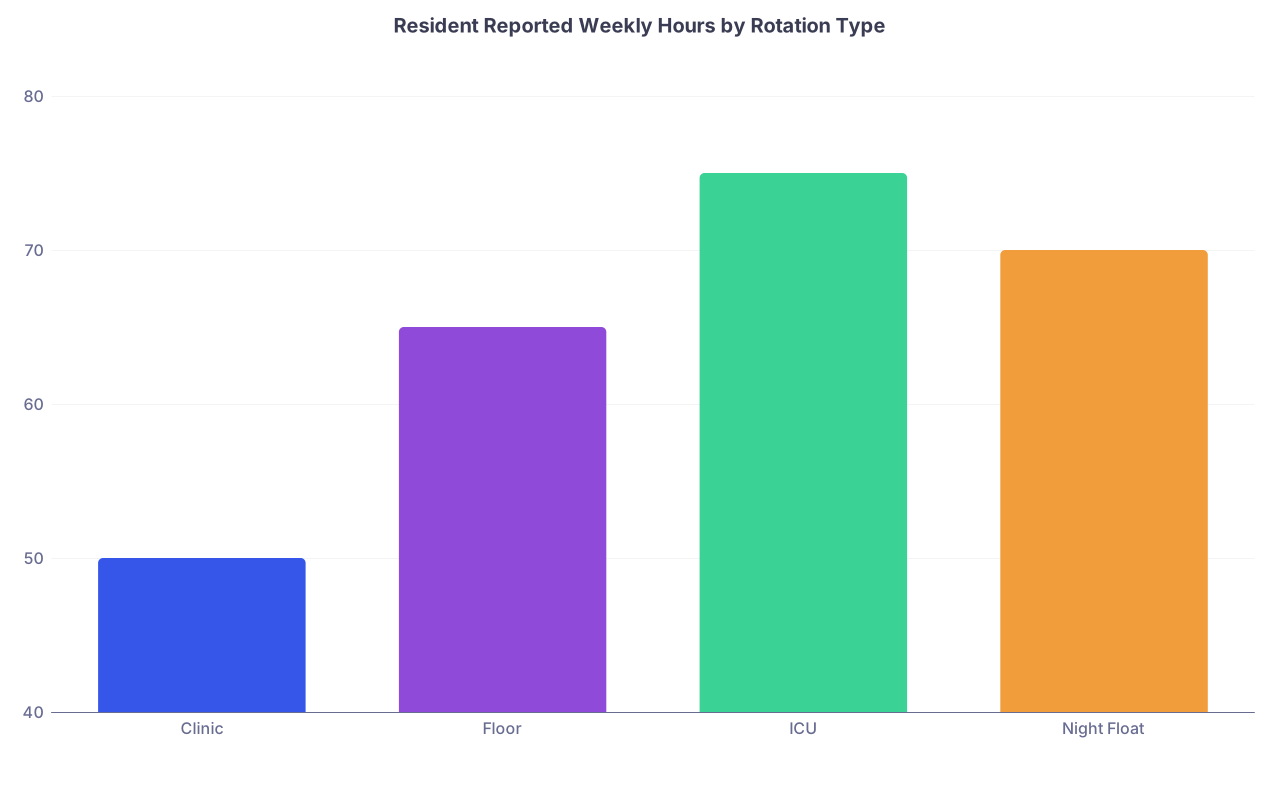
| Category | Value |
|---|---|
| Clinic | 50 |
| Floor | 65 |
| ICU | 75 |
| Night Float | 70 |
2. Questions That Reveal Burnout Culture (Or Its Absence)
Everyone has hard rotations. The question is: does the program treat burnout as a bug to fix or just “part of the culture”?
Ask residents in smaller groups or one‑on‑one:
“When you’re on your hardest rotation, do you still have time to sleep, eat, and do something non‑medical each day?”
Good:
- “I’m tired, but I can still gym/watch a show/see my partner.”
- “Sleep is pretty protected. I may not have much of a social life that month, but I’m not totally dead.”
Red flag answers:
- “You kind of put your life on hold.”
- “You eat when you can… some days not at all.”
- “Sleep is a luxury on that month.”
“How often do people cry at work? And what happens when they do?”
You want honesty plus support:
- “I’ve cried in the stairwell before. My co‑residents were great, they helped redistribute work.”
- “People have bad days, but the chiefs and attendings are usually understanding.”
Burnout culture:
- “Everyone cries intern year, it’s a rite of passage.”
- “You just suck it up; it’s residency.”
- “If you’re not tough enough, this isn’t the place for you.”
“If you emailed your PD or chiefs saying you’re overwhelmed or struggling, what would actually happen?”
Safe culture:
- “They’d meet with you, look at your schedule, help with coverage or a day off.”
- “We’ve had people switch rotations or get schedule adjustments.”
Problem culture:
- “They’d probably tell you to use vacation.”
- “We don’t really do that here. We’re expected to manage.”
- “That would reflect badly on you.”
“What percentage of your class has seriously considered quitting or changing programs?”
No program is at 0%. But if they quietly say “half”? That’s a sign.
Reasonable:
- “A couple people talked about it during weird COVID years, but most of us want to stay.”
- “One person transferred for family reasons, not because of the program.”
Red flags:
- “Honestly? A lot of us have at some point.”
- “Every year someone leaves for ‘personal reasons.’”
“What’s morale like on your worst rotation? What do residents complain about the most?”
This shows chronic pain points:
- If everyone independently names the same rotation and uses words like “toxic,” “unsafe,” or “soul‑crushing,” believe them.
- If complaints are about workload and leadership ignoring it, that’s different than “this is hard but well‑run and fair.”
3. How to Ask About Schedule, Call, and Coverage Without Sounding Clueless
You can absolutely ask direct schedule questions. Programs that get weird about it are usually hiding something.
Targeted questions:
“How are coverage and sick calls handled? If someone is out, who picks up the slack?”
Good:
- “We have a jeopardy system. People get post‑call or a replacement day when they cover.”
- “We rotate jeopardy so it’s fair.”
Red flags:
- “We just absorb the work.”
- “There’s an unofficial expectation that you come in unless you’re literally in the ED.”
- “There’s a jeopardy system, but it almost never actually gets used.”
“How often are you on call or nights, and do you feel like you can recover between stretches?”
Reasonable:
- “Night float is 1–2 weeks at a time with a real day off and some recovery.”
- “Call is q4 or q5 on our call months, and we’re protected from a heavy clinic load around it.”
Problematic:
- “We flip between days and nights quickly.”
- “We technically get days off, but we’re so behind on notes and life that it doesn’t feel like a day off.”
“What does a golden weekend look like here? How often do you actually get them?”
If they look confused by “golden weekend” (both Sat/Sun off), that’s a sign.
Good:
- “You actually get a couple per month on many rotations.”
- “Weekends off are truly off; we’re not expected to pre‑chart or come in.”
Red flag:
- “I got one golden weekend this year.”
- “You’re off one day per week, usually.”
“If the service is slammed, who actually helps—attendings, PAs/NPs, hospitalists, fellows?”
Programs with support will talk about:
- Hospitalists absorbing some admissions
- Fellows or attendings taking more patient care
- Flex/float residents
Programs without support:
- “We just grind through it.”
- “You learn how to be efficient.” (Translation: you drown efficiently.)

| Step | Description |
|---|---|
| Step 1 | Meet Residents |
| Step 2 | Note Program as Red Flag |
| Step 3 | Ask Workload Questions |
| Step 4 | Ask Burnout Questions |
| Step 5 | Ask Schedule Details |
| Step 6 | Program Likely Safe |
| Step 7 | Big Picture Vibes Good |
| Step 8 | Duty Hour Honesty |
| Step 9 | Supportive Culture |
| Step 10 | Reasonable Hours and Coverage |
4. Questions That Expose Toxic Leadership and Blame Culture
Burnout isn’t just about hours. It’s about how you’re treated when things go wrong.
Ask:
“How does the program respond when a serious error or near‑miss happens?”
Healthy:
- “We do non‑punitive M&Ms that focus on systems, not shaming individuals.”
- “The PD checks in with the resident personally if it was really rough.”
Toxic:
- “You don’t want to be the one who makes a mistake.”
- “M&M can get pretty brutal.”
- “There’s a lot of ‘this resident should have known better’ language.”
“Have you ever felt unsafe taking care of patients because of workload or supervision?”
You want:
- “Maybe early intern year, but I always had someone I could call.”
- “If we’re overwhelmed, attendings step in.”
Red flags:
- That quick look they give each other before answering.
- “Yes, but that’s just residency.”
- “We’ve had situations where we’re covering way too many patients at night.”
“How approachable are your PD and APDs, really? When was the last time they changed something based on resident feedback?”
Good signs:
- They can give a specific example: “We complained about X rotation; they added an NP and cut the cap.”
- Residents speak respectfully but not fearfully.
Bad signs:
- “We give feedback, but nothing really changes.”
- “People are kind of scared to speak up.”
- “They say their door is open, but decisions feel top‑down.”
5. What To Listen For Beyond the Words
The answers matter. The way they answer matters more.
Here’s what I pay attention to when residents talk:
Do they all answer in the same vague, PR‑safe way?
That usually means they’ve been coached hard—or they don’t trust you enough to be honest. Both are concerning.Does at least one senior resident give you a “real talk” answer when you catch them alone?
That’s gold. Believe that person.Do they distinguish between “hard but fair” and “hard and pointless”?
A good program will admit, “X is tough, but we adjusted it and there’s a clear educational purpose.”
Bad programs normalize suffering: “You just get through it; everyone does.”How fast do they talk about their co‑residents?
If they immediately say “the people are amazing” and then admit the workload is heavy, that’s very different than “the people are fine, it’s just… a lot.”

6. Quick Comparison: Healthy vs Red‑Flag Answers
Use this as your internal scoreboard while you’re nodding and smiling.
| Topic | Healthy Program Answer | Red Flag Program Answer |
|---|---|---|
| Duty hours | Specific, admits occasional 80h weeks, fixes | “We’re always under 80” with a wink |
| Staying late | “Sometimes, but not daily; we get help” | “We never leave on time” |
| Burnout response | Meetings, schedule changes, real support | “That’s just residency, everyone’s tired” |
| Sick coverage | Fair jeopardy, recovery days | “We just absorb it” |
| Error handling | Non‑punitive, system focus | Shaming, fear, “don’t mess up” vibe |
| PD responsiveness | Concrete examples of changes made | “We give feedback, nothing really changes” |

7. How To Actually Use This On Interview Day
You don’t need to grill people like a prosecutor. Pick a few questions from each bucket and rotate them across residents. Example pattern:
- Morning: Ask upper‑level on rounds, “What are your real hours like on this service?”
- Lunch: Ask interns, “How often do you feel like you’re doing scut instead of doctor work?”
- Afternoon: Ask a chief, “What have you changed recently because residents were burned out or overwhelmed?”
- Social/dinner (if they have it): Ask in a small group, “Okay, real talk—what’s the worst part of this program and how are they dealing with it?”
Then compare answers. If they don’t line up, assume the more negative ones are closer to the truth.
FAQ (Exactly 6 Questions)
1. Is it rude to ask about workload and burnout directly on interview day?
No. It’s responsible. Programs expect you to ask. The ones that get defensive when you do are telling you something you should listen to. Phrase it respectfully and you’re fine: “How has the program handled resident burnout or feedback about workload in the last couple of years?”
2. What if residents seem scared to answer honestly?
That’s a massive red flag by itself. If they give super‑vague, canned answers, look at each other before speaking, or only talk in generalities like “it’s busy but manageable” with no specifics, assume things are worse than they’re saying. Fear of speaking honestly is a culture problem.
3. How many red flags are too many before I cross a program off my list?
One or two yellow flags are normal; no place is perfect. But if you’re seeing patterns—overwork normalized, unclear duty hours, poor response to burnout, and residents talking about people quitting—you should seriously consider ranking that program low or not at all. Your health isn’t negotiable.
4. Can a program with heavy workload still be a good choice?
Yes, if the workload is:
- Transparent
- Time‑limited to certain rotations
- Paired with strong support and good culture
A hard ICU month with good teaching and backup is very different from chronically unsafe med wards where “you just survive.”
5. Should I trust online reviews (Reddit, SDN) or what I hear on interview day more?
Use both. If online chatter says “malignant” and interview day feels weirdly polished and evasive, believe the smoke. If reviews are mixed but residents give you detailed, consistent, grounded answers, give more weight to your in‑person impressions. Pattern > single opinion.
6. What’s one single question that gives the most information about burnout?
If you only ask one, ask this:
“Can you tell me about a time recently when the program changed something because residents were overwhelmed or burning out?”
If they can’t give a specific example—or they just talk about wellness lectures and pizza nights—you’ve learned a lot.
Bottom line:
- Push for specifics about hours, call, and coverage—vague “we’re compliant” answers are not good enough.
- Pay attention to how they talk about burnout, mistakes, and leadership response—this is where culture shows.
- Believe the residents who pull you aside and tell you the truth. They’re doing you a favor.