Is This Residency Program Malignant or Just Intense? Key Questions to Ask
You walk out of a pre-interview dinner and your gut is screaming: “Something feels off… but is this actually a malignant program or just hardcore?” That’s the right question. Because confusing “intense but fair” with “malignant” can wreck your training decisions.
Let’s cut through the fluff. Here’s how to tell the difference—and the specific questions you should ask to get real answers, not brochure nonsense.
First: What Does “Malignant” Actually Mean?
People throw around “malignant” way too casually. A busy surgical program isn’t automatically malignant just because you’re tired.
When I say malignant residency program, I mean:
- Systematic disrespect and fear-based culture
- Retaliation for speaking up
- Chronic violation of duty hours or rules, brushed off or hidden
- No psychological safety: you can’t admit not knowing something without getting burned
- Residents regularly burning out, quitting, or failing boards, and leadership shrugs
An intense but healthy program can still have:
- Long hours and high expectations
- Tough feedback
- High patient volume and steep learning curves
But residents:
- Feel supported and protected, especially when things go wrong
- Can ask for help without shame
- Actually graduate strong and prepared, not broken
Your job isn’t to avoid intensity. Your job is to avoid abuse.
Core Framework: What You’re Really Trying to Learn
Every question you ask should be aimed at these five things:
- Culture: Is this a fear-based or growth-based environment?
- Support: What happens when residents struggle, burn out, or make mistakes?
- Transparency: Do they talk openly about problems—or pretend everything’s perfect?
- Outcomes: Are residents graduating, passing boards, and getting jobs/fellowships?
- Sustainability: Is this training that pushes you or training that breaks you?
If you remember nothing else, use that list as your mental filter.
Questions to Ask Residents (And What the Answers Really Mean)
You trust residents more than faculty. Good. You should. But you also need to listen between the lines.
1. “How do you feel coming to work most days?”
This is my favorite litmus test question. It sounds soft, but you get hard data.
Healthy answers sound like:
- “Tired, but I like my team. I don’t dread it.”
- “Depends on the rotation. ICU is rough, but overall I feel okay.”
- “Challenged, but I feel like I’m growing.”
Red-flag answers:
- Long pause. Nervous laugh. “Uh… it’s fine.”
- “Honestly? Most days I’m just trying to survive.”
- “I feel sick on my days off thinking about coming back.”
If multiple residents give that last vibe? That’s not intensity. That’s toxicity.
2. “What happens when someone is struggling—clinically, mentally, or personally?”
You’re not asking if residents struggle. They do. Everywhere. You’re asking what the response is.
Healthy program:
- “We have a wellness or support committee that actually helps coordinate coverage.”
- “Our chiefs and PD are approachable. They’ve adjusted schedules when people had crises.”
- “We’ve had people go on leave and still graduate on time or with a clear plan.”
Malignant program:
- “Honestly, you just push through.”
- “If you can’t handle it, this might not be the right place for you.”
- “We had someone take leave… it was complicated” (followed by obvious discomfort).
If residents seem scared to mention mental health or leave, that’s a big problem.
3. “Have any residents left the program in the last 3–5 years? Why?”
This one is non-negotiable. You must ask.
Healthy program:
- “Yeah, one or two. One switched specialties, one left for family reasons. PD was very supportive.”
- “We had someone struggle with boards; they gave them an extra year and support resources.”
Malignant program:
- “We’ve had a few leave… not sure why.” (They know why. They just don’t feel safe saying it.)
- “Some people couldn’t cut it.”
- “We don’t really talk about that.”
| Pattern | Likely Interpretation |
|---|---|
| Multiple leaves, vague reasons | Culture or leadership problem |
| 1–2 leaves, clear non-cultural reasons | Normal turnover |
| Residents defensive about attrition | Fear or retaliation present |
| PD openly explains context | Transparency and safety |
You’re not looking for zero attrition. You’re looking for honest, specific explanations.
4. “How are duty hours handled—for real?”
Everyone will say, “We follow ACGME rules.” You don’t care about the brochure answer. You care about lived reality.
Ask it like this:
“So, how often do you actually record 80+ hour weeks or missed days off? And what happens when you log that?”
Healthy:
- “During certain rotations we get close to 80, but if we go over, leadership addresses it.”
- “If we’re trending high, they adjust schedules or pull in backup.”
- “We’re told to log honestly, and people do.”
Malignant:
- “We’re asked to log 79.9.”
- “We’re told to ‘fix’ our hours before submitting.”
- “If you log violations, the chief or PD asks what you did wrong.”
That last group = run.
5. “Tell me about the worst conflict between residents and leadership in recent years. How was it handled?”
Don’t ask if conflict exists. Ask how it’s managed.
Healthy answer:
- “We had a big blow-up about a call schedule. Residents met with PD; they didn’t fix everything, but some changes were made.”
- “We brought up cross-cover concerns; it took a while, but there were real adjustments.”
Malignant answer:
- “I’m not sure we’re supposed to talk about that.”
- “Someone raised concerns and it… didn’t go well.”
- “They basically told us we should be grateful to be here.”
You want to see if resident feedback leads to punishment or problem-solving, even if imperfect.
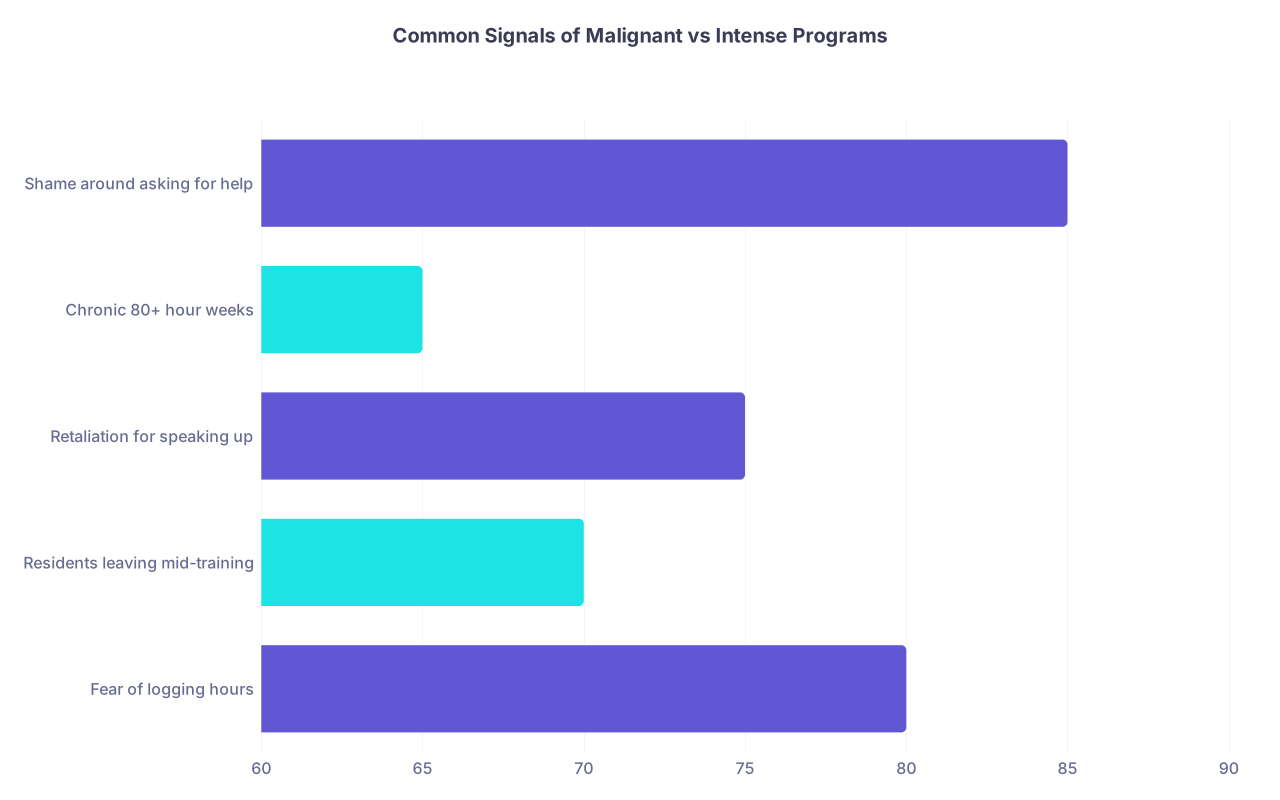
| Category | Value |
|---|---|
| Fear of logging hours | 80 |
| Residents leaving mid-training | 70 |
| Retaliation for speaking up | 75 |
| Chronic 80+ hour weeks | 65 |
| Shame around asking for help | 85 |
(Percentages represent rough frequency of these red flags in programs residents later describe as malignant.)
Questions to Ask Faculty and Leadership (And How to Read Them)
Residents give you ground truth. Leadership tells you what they value. You need both.
6. “What recent changes have you made in response to resident feedback?”
This is a direct test of whether they treat residents as disposable labor or as partners.
Strong programs:
- “We redesigned our night float schedule after residents reported fatigue.”
- “We adjusted ICU caps and added an APP on nights.”
- “We changed how we handle jeopardy or backup to avoid chronic burnout.”
Weak/malignant programs:
- “Residents don’t always see the big picture.”
- “Training is hard. We can’t make everyone happy.”
- “We’re traditional. This is how we’ve always done it.”
If they can’t name a single concrete, recent change? Either residents are silent (bad sign) or leadership doesn’t listen (worse sign).
7. “How do you support residents who fail a board exam or need extra remediation?”
You never want to need this. But you want to know whether you’ll be supported or sacrificed.
Healthy:
- “We have a structured remediation plan: protected time, funded resources, mentorship.”
- “We’ve had people take an extra year when necessary. We help them succeed.”
- “We track in-training exam performance and intervene before failure.”
Malignant:
- “We expect our residents to be self-motivated.”
- “We’ve had a few failures; they didn’t match our standards.”
- “If you’re struggling with exams, this might not be the place for you.”
You want systems, not blame.
8. “What are the most challenging aspects of this program for residents?”
If leadership pretends there are no downsides, they’re either delusional or dishonest.
Healthy replies:
- “High volume. The workload is real. But we try to protect key rest periods.”
- “Night call can be rough. We monitor duty hours more closely on those rotations.”
- “We’re very academically driven. That can be stressful around research expectations.”
Red-flag replies:
- “Honestly, I don’t think it’s more challenging than anywhere else.”
- “Our residents don’t complain much.”
- “People who come here just do what’s expected.”
If they can’t acknowledge pain points, they’re not going to fix them.

Subtle Red Flags You’ll Only Notice If You Watch Closely
Some of the best data isn’t spoken. It’s in the vibe.
Watch for this during interview day:
- Residents constantly apologizing for asking questions or existing: “Sorry, sorry, sorry…”
- Jokes that aren’t really jokes: “Yeah, we basically live here,” followed by nervous glances.
- Residents won’t speak freely around faculty; they clam up or give obviously scripted answers.
- No one makes eye contact when you ask about wellness or burnout.
- Program director interrupts residents when they try to answer honestly.
Compare that to programs where:
- Residents gently tease chiefs or faculty.
- People admit some rotations are brutal but then explain how they cope together.
- Chiefs say “Call me if you have any issues” and the residents actually nod like they mean it.
You’re not trying to find a magical unicorn program. You’re looking for human, imperfect, but honest and caring.
Distinguishing “We’re Intense” from “We’re Malignant”
Here’s the line:
- Intense: “Our ICU is crushing, but you’re never alone. Seniors and attendings back you up. We track hours and make adjustments. You’ll work hard, but you’ll come out strong.”
- Malignant: “Our ICU is a sink-or-swim environment. It makes you tough. If you survive that, you can handle anything.”
The first treats intensity as a training tool. The second treats suffering as a personality test.
| Area | Intense but Healthy | Malignant |
|---|---|---|
| Duty Hours | Occasionally near limits, addressed | Routinely violated, hidden or denied |
| Feedback | Blunt but constructive | Public shaming, personal attacks |
| Support | Structured help when struggling | “Figure it out or get out” |
| Culture | High expectations, mutual respect | Fear, intimidation, retaliation |
| Transparency | Honest about problems, working on them | Defensive, dismissive, secretive |
How to Cross-Check: Don’t Trust Just One Data Source
Don’t rely only on interview day. Everyone’s on their best behavior.
Here’s how to triangulate:
- Look at board pass rates and attrition.
- Persistent board failures + quiet explanations = likely systemic problem.
- Read between the lines on online reviews.
- One angry review? Fine.
- Multiple residents independently mentioning fear, retaliation, or cover-ups? Take that seriously.
- Talk to fellows or attendings who trained there years ago.
- Ask: “If you were applying again today, would you rank it highly again?”
- Check how many residents go on to fellowships/jobs they wanted.
- If the program claims to be elite but half the class scrambles for jobs, something doesn’t match.
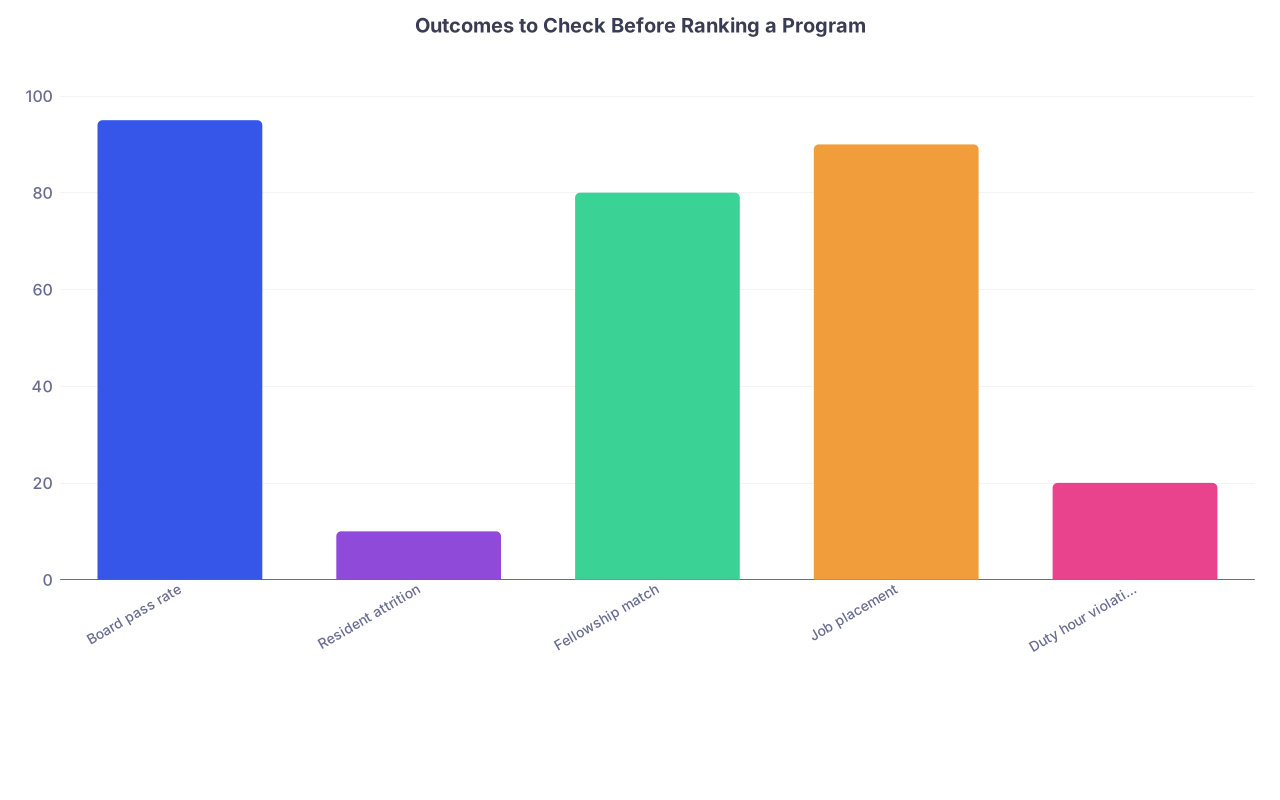
| Category | Value |
|---|---|
| Board pass rate | 95 |
| Resident attrition | 10 |
| Fellowship match | 80 |
| Job placement | 90 |
| Duty hour violations | 20 |
(Example numbers: your goal is to ask for the real ones during interviews or by email.)
Future-Facing Question: “What Are You Actively Trying to Improve in the Next 2–3 Years?”
This is a sneak attack question. It tells you if the program is coasting or evolving.
Good answers:
- “We’re adding more APP support to nights.”
- “We’re redesigning didactics based on resident feedback.”
- “We’re trying to reduce scut and increase protected educational time.”
Bad answers:
- “We’re pretty happy with where we are.”
- “We don’t anticipate major changes.”
Medicine is changing fast. If a program isn’t actively adjusting, they’re already behind.
Putting It All Together: Your 10-Question Reality Check
If you want a simple filter, here’s the short list you ask residents and faculty before you rank:
- How do you feel coming to work most days?
- What happens when someone is struggling?
- Have any residents left recently? Why?
- How are duty hours handled in practice?
- Tell me about a recent conflict and how it was resolved.
- What concrete changes have you made after resident feedback?
- How do you support residents who fail boards or need remediation?
- What are the hardest parts of this program for residents?
- Where are the last few graduating classes now?
- What are you actively trying to improve in the next few years?
If:
- Residents seem scared or vague
- Leadership is defensive or dismissive
- No one can name real changes or support systems
You’re not looking at a “tough” program. You’re looking at a malignant one.
One Action You Can Take Today
Open your interview calendar or rank list draft and pick one program you’re unsure about.
Write down these 10 questions, email a current resident or recent graduate, and ask them three of those questions directly.
If their answers make you more anxious than reassured, listen to that. Your future self on night float will thank you.