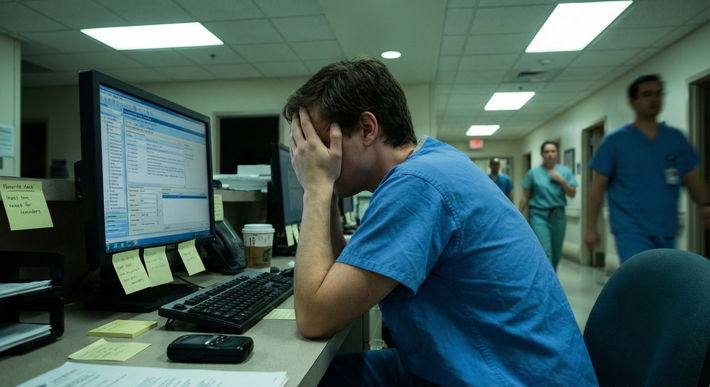
Residency isn't a marathon. It's a series of daily sprints interrupted by sudden cardiac arrests. Most residents treat their day like a reactive scramble, waiting for the pager to dictate their movements. That's a losing strategy. The ward doesn't care about your fatigue, and the EMR doesn't forgive your procrastination. If you want to survive without burning out by PGY-2, you need a rigid, chronological battle plan. Here is exactly how you structure your day to crush the afternoon surge and execute a flawless evening shutdown.
0600-0900: Establish Command Before the Ward Awakens
The ward does not wait; command your environment before the patients do. At 0600, the hospital is quiet. Use this. At this point you should review overnight admissions and stabilize pending tasks before rounding begins. Don't just read the sign-out. Anticipate the landmines. I've seen too many interns get blindsided by a critical potassium level at 0730 because they didn't check the morning labs at 0615.
Batch your administrative pagers. Non-urgent page responses wait until the post-rounding window closes at 0830. If a nurse pages you about a PRN Tylenol order while you're pre-rounding on a septic patient, ignore it. Triage later. Your cognitive bandwidth is too valuable to waste on acetaminophen.
Color-code your patient roster by acuity and discharge readiness to eliminate morning decision fatigue.
- Red: Sick, ICU watch, or highly unstable.
- Yellow: Active workup, pending major results.
- Green: Discharge ready, waiting on paperwork or placement.
When you walk into the morning huddle, you already know who needs your brain and who just needs a signature.
0900-1200: Chart Closure & Cognitive Offloading
At this point you should close 30% of outstanding charts to prevent evening cognitive overload. This is non-negotiable. If you push all your documentation to the afternoon, you will fail. The afternoon is for putting out fires, not writing pristine progress notes.
Deploy the resident-modified Pomodoro method. Do 45 minutes of focused documentation, followed by 15 minutes of inbox triage. Turn off your phone. Close your email. Just write.
Flag referrals and consult requests during lunch prep rather than allowing them to compound on your task list. Get the requests in before 1130. If you submit a cardiology consult at 3 PM, they aren't seeing your patient today.
Audit medication reconciliation queues early. Unresolved MAR issues are the primary cause of 5 PM shutdown delays. Pharmacy will hold your discharge if the med rec isn't signed and verified. Fix it now, or you'll be arguing with a pharmacist at 1745 while the patient's ride is waiting in the lobby.
1200-1400: The Midday Pivot & Energy Stabilization
At this point you should secure a nutritionally dense meal outside the EMR bubble to reset glucose levels. Eating a stale bagel over a keyboard while clicking through discharge summaries is a recipe for a 3 PM crash. Step away. Look at a wall that isn't a monitor.
Shift to low-cognitive administrative tasks. This is the time for prior authorizations, referral correspondence, and lab follow-ups. Your brain is tired from morning rounds. Do the robotic work.

Enforce hard boundaries for non-urgent communications. Delegate routine updates to PAs and medical students immediately. If a medical student asks you a deep-dive pathophysiology question while you're trying to get a prior auth for an MRI, tell them to look it up and present it at 4 PM. Protect your time. You are their teacher, but you are also the patient's physician. The patient comes first.
Assemble your 2 PM survival kit. I'm serious. Pack:
- Electrolyte hydration.
- Portable snacks (protein bars, not just sugar).
- A printed prioritized task queue.
When the surge hits, you won't have time to scavenge the pantry.
1400-1700: The 2 PM Surge Navigation Matrix
The 2 PM surge is real. Admissions pile up, discharges stall, and the ED starts calling for beds. At this point you should activate the continuous triage loop: assess, act, document, escalate.
Map incoming consults and code calls using RICE prioritization: Risk, Urgency, Complexity, Efficiency. Do not just answer pages in the order they arrive. A rapid response call beats a routine medication refill every single time.
Run situational status boards every two hours to maintain ward awareness without abandoning your physical station. Check the census. Check the ED board. Check your pending discharges. You need to know where the bottlenecks are before the charge nurse yells at you about them.
Document in real time. Verbalize clinical plans aloud to anchor memory and reduce transcription errors as fatigue mounts. I used to mutter my assessment and plan to myself while walking to the next room. It sounds crazy, but it keeps your brain locked in and prevents you from forgetting the brilliant plan you just formulated at the bedside.
1700-1800: Shutdown Sequence & Handoff Security
At this point you should complete the final chart audit and clear all active problem lists before leaving the unit. Do not leave a messy inbox for the night float. It's unprofessional and dangerous. Close the loops.
Conduct bedside handoff using strict SBAR format. Verify pending labs, imaging, and next-day orders verbally with night float. Don't just read off a screen. Look at the patient. Point to the drains. Make sure the night team knows exactly what to watch for. If the patient drops their blood pressure at 2 AM, the night resident needs to know your exact contingency plan.
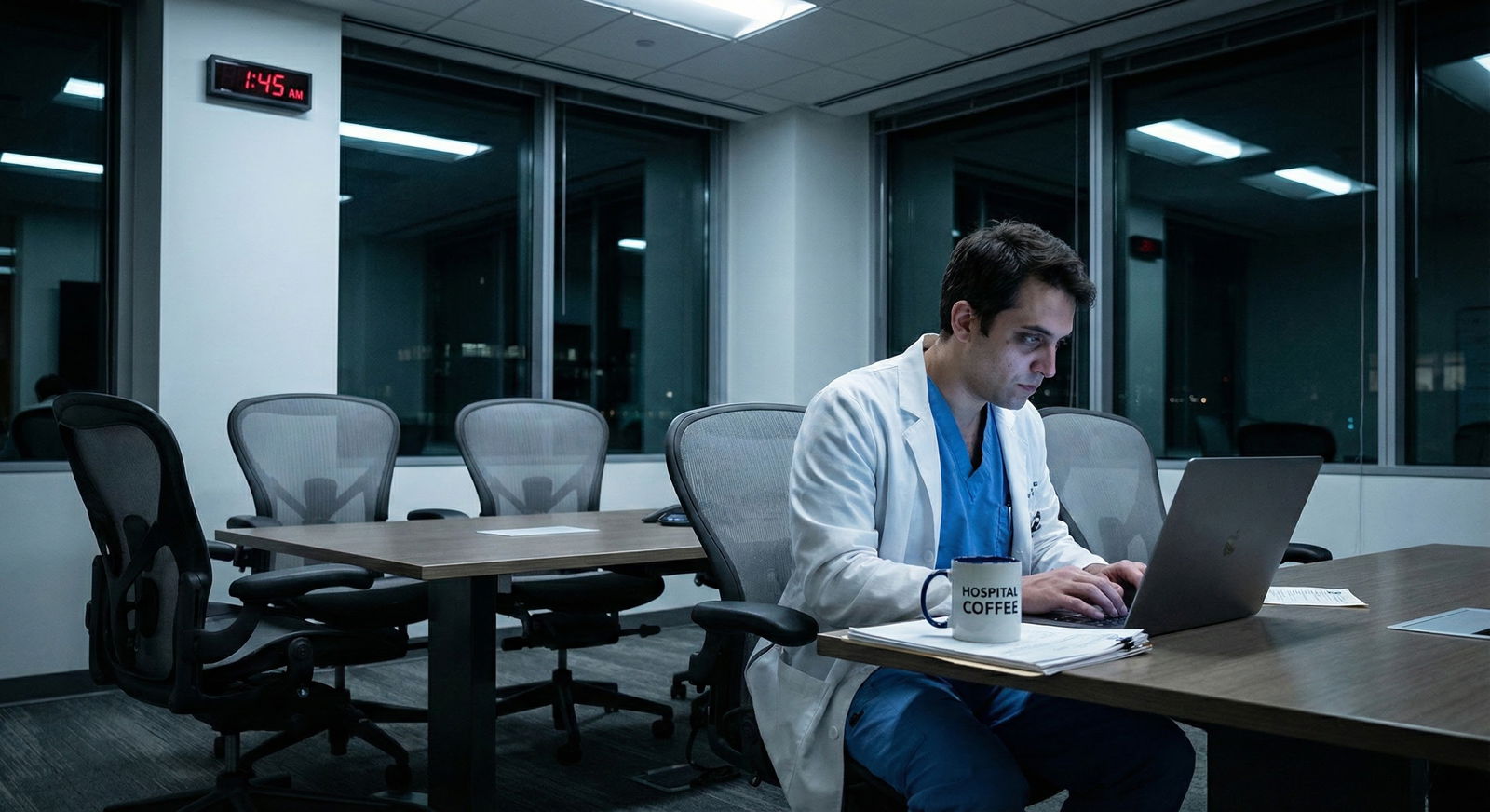
Power down administrative channels. Silence non-emergency paging only after running the emergency verification protocol. Make sure your code pager is loud and your administrative pager is dead. You are off the clock for routine tasks.
Remember: logging tomorrow's pre-emptive tasks today eliminates morning paralysis and guarantees a controlled restart. Write down the first three things you need to do at 0600. Put the list on your keyboard.
Key Takeaways
- Front-load documentation between 0900-1200 to neutralize the 5 PM shutdown bottleneck.
- Activate RICE triage and real-time note-taking at 1400 to survive the afternoon surge without cognitive collapse.
Time management in residency isn't about working faster. It's about working in the right sequence. Stick to the timeline, protect your cognitive bandwidth, and take back control of your shift.