
Educational note: This article is for medical education and workflow training only. It is not legal, regulatory, employment, compensation, tax, or institutional policy advice. Local expectations for cross-cover responsibility, documentation, notification thresholds, and scope of practice vary by hospital and program, so follow your institution's policies and ask supervising physicians when expectations are unclear.
Meta description: Why late-posting labs get missed on cross-cover, which results carry the most risk, and a practical resident workflow to catch, act on, document, and safely hand them off overnight.
This is one of those residency problems that sounds small until it burns you.
A lab gets drawn before sign-out. Or right around sign-out. Or as an add-on after someone finally remembers to order the thing they meant to order three hours ago. Then the result posts later, after the patient left the floor, after the primary team signed out, after the receiving cross-cover already did their "quick chart sweep," after everyone mentally moved on.
That's a "released later" lab. And yes, it gets missed all the time.
I've seen the usual versions: potassium comes back worse after the evening BMP reruns; a creatinine bumps after contrast and nobody notices until morning; a prelim culture turns into something that actually matters overnight; an INR drifts up after a dose change and the result sits there like a trap. Nobody intentionally ignores it. It just falls into the crack between "my shift ended" and "I didn't know that was mine."
That crack is where bad care happens.
Good cross-cover doesn't mean you review every pixel in every chart all night. That's impossible and dumb. It means you have a system that catches the stuff most likely to hurt patients: missed criticals, missed trends, and late-posted results that change management.
This article is for educational purposes only. It is not financial advice, not legal advice, and not tax advice. Figures vary by individual circumstances, consult a qualified professional before acting.
The problem in real life: "released later" labs slip through your cross-cover handoff
"Released later" labs are exactly what they sound like: results that finalize after the usual review moment has passed. Maybe the sample was collected before handoff but processed later. Maybe the patient already transferred. Maybe the day team signed out "last labs stable," but the reflex panel, culture speciation, or add-on test posted after that sentence became false.
Why do these get missed? Three reasons.
First, competing urgencies. Cross-cover is not a calm, orderly review session. It's pages, nursing calls, chest pain, fever workups, blood pressures, family questions, and somebody wanting you to reorder Tylenol that is already ordered. You respond to what's screaming.
Second, ownership confusion. This is the big one. "I already signed out the last set." "That posted after my review." "Isn't that the primary team's job?" That thinking is how results become nobody's problem.
Third, workflow gaps. Your EHR may delay notifications, bury them in an inbox nobody checks, label them strangely, or update abnormal flags only after the initial result appears. The computer is not your safety net. It is often the reason the safety net has holes.
The common traps are predictable: reflex chemistry panels, cultures that change after prelim review, timed 12- or 24-hour lab cohorts, coag studies after dose changes, and add-on tests that materialize hours later like little bureaucratic landmines.
What are you trying to prevent? Not perfection. You're trying to prevent missed critical values and missed trends. That's what "good" looks like on cross-cover: if something late-posted is clinically important, somebody notices, acts, documents, and closes the loop.
Why these labs get missed: ownership confusion, timing, and EHR friction
Let's say the day team signs out at 6:30 p.m.: "BMP okay, recheck in the morning." Sounds settled. Then the lab reruns the potassium because the first specimen hemolyzed. Final result posts at 8:14 p.m. K is 2.9. Now what?
This is where residents get trapped by timestamp thinking. The mental model is: I reviewed what existed when I signed out, so I did my part. No. Clinical responsibility doesn't end just because the computer attached a later timestamp. If the result is clinically meaningful and the patient is under your service's care, someone owns it until it's addressed or clearly handed off.
That's the first problem: ownership confusion.
The second is timing. Labs don't obey your sign-out structure. Reflex testing adds delay. Microbiology is notorious for this, prelim early, meaningful final later. Manual add-ons are even worse because they create the illusion that everything relevant was already reviewed. Overnight processing, weekend staffing patterns, and batching rules make the timing even more erratic. On some units, there's a predictable wave of results between 8 p.m. and midnight. On others, the culture updates trickle in at bizarre hours. You need to know your local rhythm, not the imaginary clean workflow from orientation slides.
Then there's EHR friction. The software often splits "results," "inbox," "orders," and "pending" across different views, as if that helps anyone at 2 a.m. Some systems show a result as "in review" before the final abnormal flag appears. Some notify only the ordering provider. Some suppress noise so aggressively that they also suppress signal. That's why you can't rely on passive alerts alone.
And then, honestly, there's the human brain. Cross-cover is interruption medicine. You're triaging ten things at once, and trainees naturally default to what's directly in front of them: the page that just went off, the nurse at the workstation, the patient actively decompensating. Proactive late-result hunting feels less urgent, so it gets deferred. Then forgotten.
A quick self-audit helps:
- Do you review for trend, not just "new criticals"?
- Do you know which results on your unit commonly finalize late?
- Do you know how your EHR labels reflex tests, add-ons, and delayed finals?
- Are you checking pending specimens collected near sign-out?
- If a result appears after handoff, do you assume someone else saw it? Bad move.
That last one is worth being blunt about: assuming the system worked is how patients get hurt. Assume nothing. Verify.
A cross-cover workflow that catches late results (without drowning in chart work)
You do not need a giant heroic chart-review ritual. You need a repeatable, low-friction system.
Mine is a two-pass approach.
Pass 1: respond to what can hurt someone now
This is the obvious stuff: critical alerts, new unstable vitals, active pages, time-sensitive meds, acute decompensation. If there's a life-or-limb issue, act first. Always.
Pass 2: targeted late-results scan
Once the immediate fires are controlled, do a short scan specifically for results likely to have posted after handoff. Not a full chart dive. A focused sweep.
That second pass is where most people fail because they never formalize it. They think, I'll check if I have time. You won't. Build it in.
Here's the practical version:
- Identify your patient list.
- Filter for pending, recently resulted, abnormal, add-on, and reflex results.
- Pay special attention to specimens collected near sign-out.
- Check the unit's usual "late windows."
Every service has a rhythm. Learn it. On one floor it may be evening chemistry reruns. On another, overnight microbiology updates. On a surgical service, maybe morning timed labs after a rough postop night. Ask your senior: "What commonly posts late here, and when?" That question is smarter than pretending you'll just figure it out.
A good trigger list for your scan:
- Pending BMP/CMP, magnesium, phosphorus
- Coags after anticoagulation changes
- Lactate or blood gas repeats
- Cultures with prelims already posted
- Add-on labs ordered late afternoon or evening
- Creatinine checks after contrast or nephrotoxic medication changes
The trick is not relying on memory. Memory is trash at 1 a.m. Use the EHR filters, status columns, and pending views. If your system has a "recently resulted abnormal" tab, use it. If it has a specimen-collected timestamp, use that too. The collection time tells you what was clinically intended; the release time tells you when the trap became yours.
Your micro-habit should take 2-3 minutes. That's it. Before you start chasing lower-value tasks, do a quick scan of pending criticals and recently resulted abnormal labs for your assignment. Short. Consistent. Every shift.
And when you find something trend-driving, creatinine rise, potassium swing, worsening sodium, coags drifting in the wrong direction, don't wait for it to become technically critical before looping in the primary team. Cross-cover is not just a "call me if dead" service. If a late result changes the trajectory, escalate early.
One more point. If your workflow repeatedly misses these, that is not a personal moral failing. Sometimes the system is badly designed. But until it changes, you still need a workaround.
What to do when you discover a "released later" abnormal result: step-by-step response
You found the lab. Good. Now don't overreact, and don't underreact either.
Work the problem in order.
1) Verify the basics
Before you fire off pages and replacement orders:
- Confirm the patient
- Confirm the sample type
- Check collection time and release time
- Look for hemolysis or specimen comments
- Make sure it's not an old result just now surfacing in a weird view
A potassium of 6.1 in a hemolyzed sample is a different problem than a clean venous specimen. An INR that posted late but was drawn before the dose change may not mean what you think it means. Timing matters.
2) Decide: critical or noncritical?
Know your institution's thresholds. Don't wing it. Labs often flag criticals, but don't trust the flag more than your own judgment. A noncritical sodium or creatinine may still be clinically urgent because of the trend, the meds, or the patient in front of you.
3) Think in trends, not isolated numbers
This is where juniors often get too literal. A creatinine of 1.6 means little without knowing it was 0.9 yesterday and 1.3 six hours ago. A potassium of 3.3 might be boring in one patient and absolutely not boring in someone on insulin, diuretics, or with ventricular ectopy. A culture final that narrows from "gram-positive cocci" to a specific organism with sensitivities may force antibiotic changes or isolation decisions.
4) Link it to meds and immediate safety
Ask yourself:
- Does this change anticoagulant dosing?
- Do I need electrolyte repletion now?
- Should insulin be adjusted?
- Do nephrotoxins need to be held?
- Does microbiology change antibiotic coverage or precautions?
- Is a repeat lab needed soon?
That question set turns a lab review into an actual clinical response.
5) Communicate like a grown-up
Bad message: "Lab abnormal." Useful message: "BMP drawn 18:05, released later at 21:12. K 2.9, down from 3.5 this afternoon after IV diuresis. Patient asymptomatic, telemetry without reported events. I ordered 40 mEq replacement, added Mg check, and recommend repeat BMP at 01:00."
That's the standard. Value. Timing. Context. Action. Recommendation.
6) Document what you did
Leave a note or event documentation that says:
- what result you found
- when it was collected/released
- what you did
- who you notified
- when the recheck is due
Otherwise the next cross-cover resident rediscovers the same lab, wastes time, and maybe assumes nobody handled it.
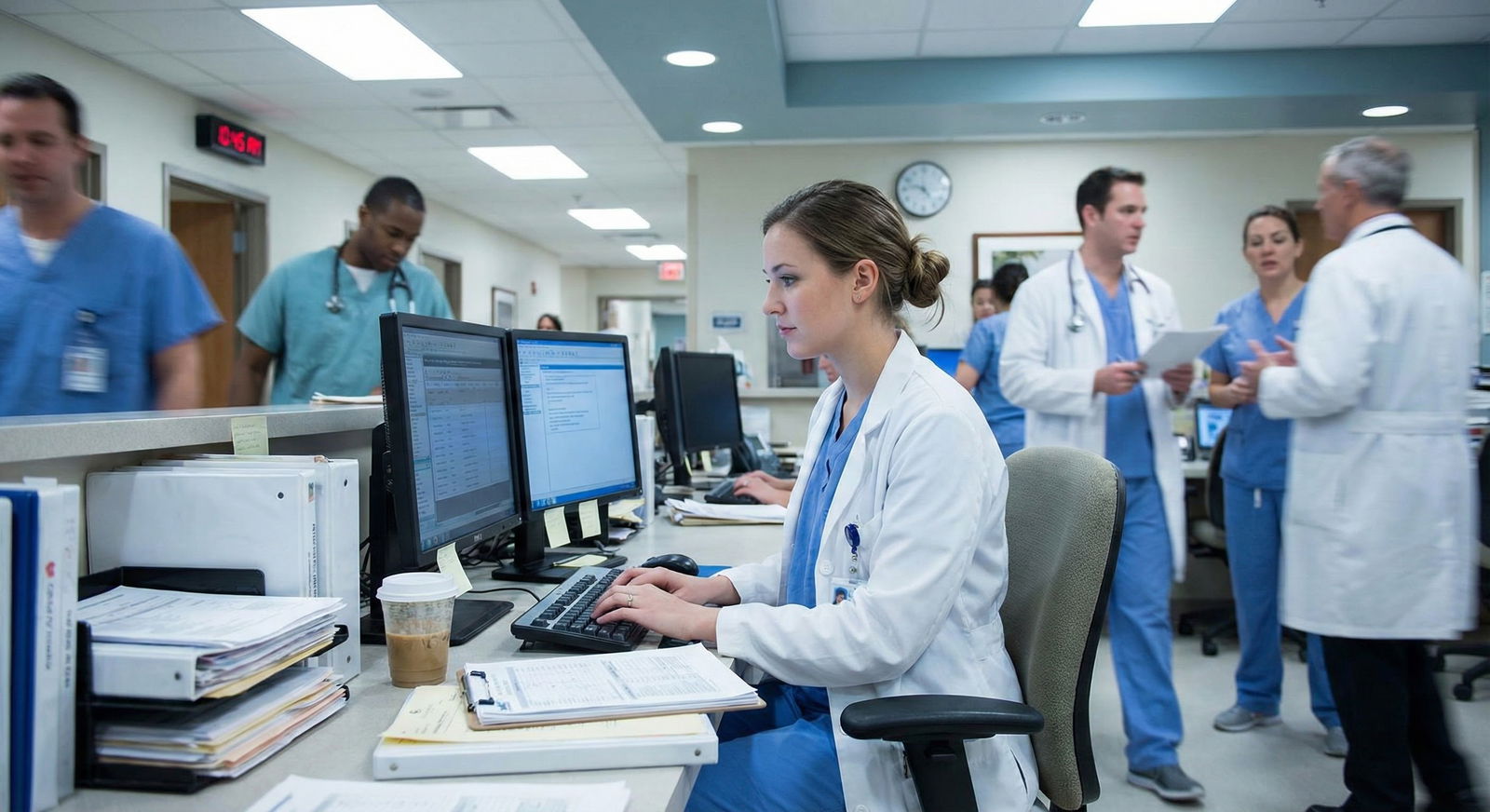
Use cases: high-yield scenarios that commonly produce "released later" labs
These are the ones that matter most because they recur.
1) Electrolytes and renal function
Classic setup: patient got IV diuresis, insulin, fluids, contrast, or nephrotoxic meds; evening BMP or CMP was drawn near sign-out; rerun or delayed release posts later.
What to check:
- Prior values and direction of change
- Recent diuretic/insulin/fluid changes
- Urine output
- Telemetry if potassium is off
- Whether magnesium/phos also need review
What to do:
- Replete or hold meds based on the result and trajectory
- Consider repeat BMP if the trend is moving fast
- Escalate early for worsening AKI, not just "critical creatinine"
Who to notify:
- Primary team for meaningful AKI or potassium shifts
- Nurse if immediate replacement/monitoring is needed
What to recheck:
- BMP, often in 4-6 hours or sooner depending on severity and treatment
2) Cultures and microbiology
Cultures are the kings of delayed significance. A prelim may be shrugged off; the final may absolutely not be.
What to check:
- Source of culture
- Prior antibiotics
- Clinical syndrome
- Whether prelim-to-final changed organism identification or sensitivities
- Whether contamination is plausible
What to do:
- Assess if antibiotics need to start, broaden, narrow, or stop
- Review whether isolation precautions change
- If blood culture final is concerning, don't sit on it waiting for daylight
Who to notify:
- Primary team, and sometimes senior/responsible attending path depending on significance
- Nursing if precautions or urgent treatment changes are needed
What to recheck:
- Repeat cultures, vitals, lactate, CBC, or source-control plan depending on the case
3) Coagulation and anticoagulation
These get missed because the number may look "just a little off" until you connect it to a dose change, active bleed risk, or procedure plan.
What to check:
- Anticoagulant or heparin adjustments
- Bleeding/bruising history
- Whether the sample timing matches the dose schedule
- Procedure plans overnight or next morning
What to do:
- Adjust or hold based on protocol and clinical context
- Escalate if the patient is bleeding, high-risk, or headed to a procedure
Who to notify:
- Primary team; pharmacy if your institution uses them heavily in anticoag management
What to recheck:
- INR, aPTT, anti-Xa, hemoglobin as appropriate
4) Toxic/metabolic panels, lactate, VBG/ABG repeats
These often post late because repeats are bundled into ongoing resuscitation, drawn from a different location, or processed on different timelines.
What to check:
- Whether the sample is actually current
- Trend, not just absolute value
- Associated vitals and clinical appearance
- Whether treatment already started before the result finalized
What to do:
- If lactate is rising, that matters even if it isn't "critical"
- If gas results worsen, reassess the bedside situation, not just the chart
- Don't treat old data as new news
Who to notify:
- Primary team and senior support if the trend suggests deterioration
What to recheck:
- Repeat lactate, gas, BMP, and bedside status on a clinically appropriate schedule
5) Imaging-adjacent labs
This one is boring until it isn't. Post-contrast creatinine checks, especially in vulnerable patients, love to show up after attention has shifted elsewhere.
What to check:
- Baseline renal function
- Timing of contrast
- Concurrent nephrotoxins
- Volume status
What to do:
- Hold nephrotoxins if appropriate
- Adjust medication dosing
- Communicate AKI risk early
Who to notify:
- Primary team if the creatinine bump is real or trending
What to recheck:
- Follow-up renal panel, urine output, medication plan
The exact timing varies by hospital, obviously. But the relative pattern matters: chemistry delays are usually short and dangerous because they affect immediate management; cultures and send-outs are slower but still clinically important because they alter therapy.
Action-steps before your next shift: build a personal system and reduce misses
Here's what to do before your next cross-cover shift. Not abstractly. Literally.
Start-of-shift ritual
Take two or three minutes before diving into new pages.
- Open your assignment list
- Check pending/reflex/add-on status
- Scan recently resulted abnormal labs
- Look at specimens collected near sign-out
That tiny ritual catches a shocking amount of nonsense.
Clarify expectations out loud
Ask your team directly: "Are we expected to own late-release results overnight, or only critical alerts?"
If the answer is fuzzy, push until it isn't. Fuzzy ownership is bad medicine.
Use a simple communication template
When you message or page, include timing. Always.
A useful format:
- Result: K 2.9
- Collected: 18:05
- Released later: 21:12
- Trend/context: down from 3.5 after diuresis
- Action taken: replacement ordered, Mg added
- Need from team: repeat BMP at 01:00, review morning diuretic plan
That structure prevents vague hand-waving and makes the receiving team trust your assessment.
Before you hand off again
Don't leave without confirming:
- late-release results were reviewed
- meaningful abnormalities were addressed
- documentation exists
- recheck timing is visible somewhere
If you don't do this, the next person starts from zero.
If you're burned and the system is bad
Say so. Seriously.
If you're repeatedly missing late results because the EHR hides them, or because notification rules are ridiculous, escalate it. Tell the senior, charge nurse, chief, informatics contact, whoever actually controls workflow. Ask for better filters, dashboards, or notification logic. Residents are often told to "be more careful" when the real problem is system design. That's lazy leadership.
After a miss or near miss
Do a 60-second debrief.
- What failed?
- Did the result post late?
- Was ownership unclear?
- Was the EHR filter bad?
- Did you skip your scan?
- Was the handoff misleading?
You don't need a formal root-cause analysis every time. But if you never name the failure point, you will repeat it.
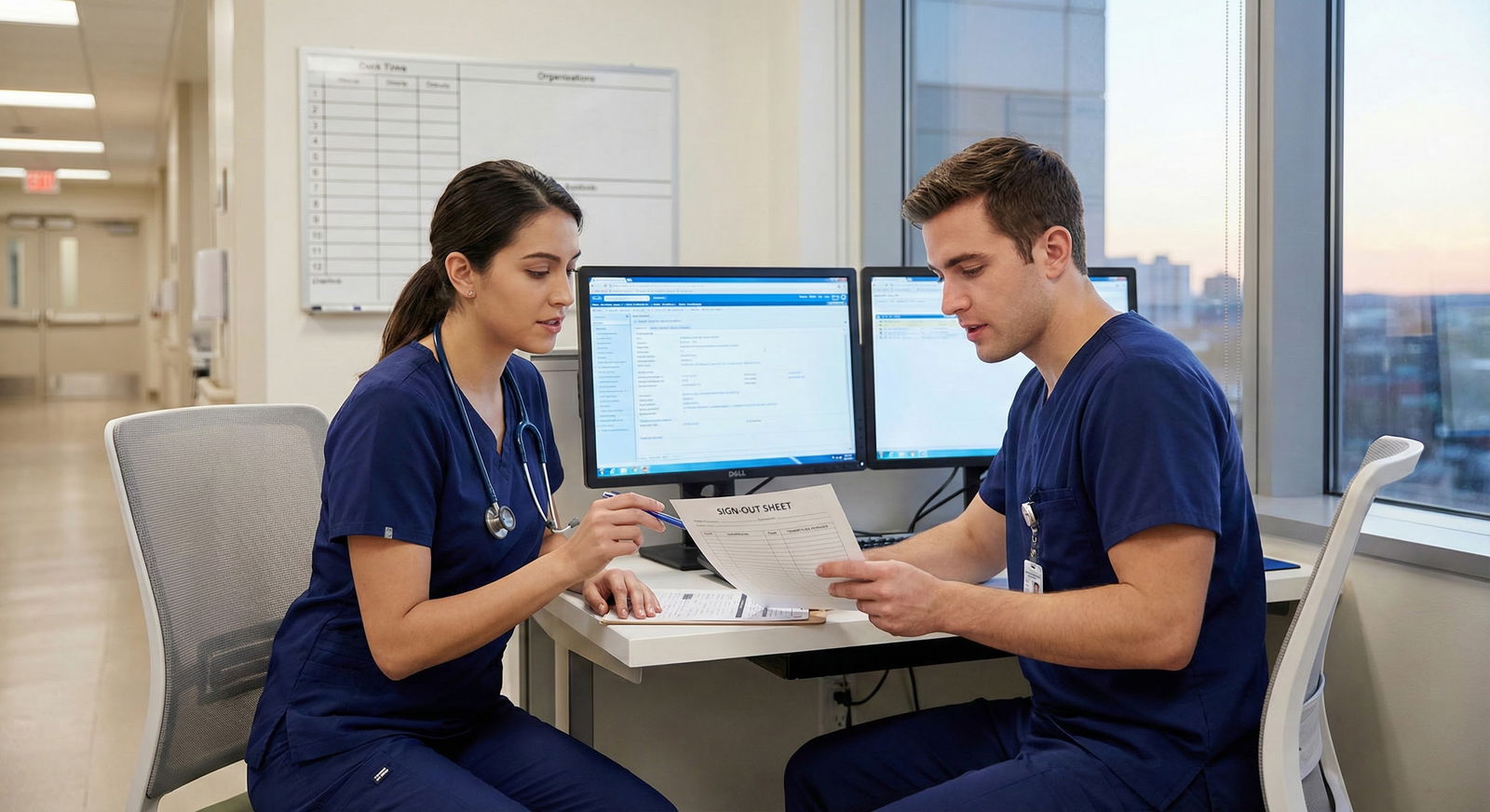
Here's the bottom line.
Assume responsibility for released-later results until they are addressed or clearly handed off with a plan. Use a two-pass workflow: urgent stuff first, then a brief targeted scan for pending, reflex, and add-on labs. And when you find something abnormal, don't just notice it, verify it, interpret the trend, act on the safety implications, communicate clearly, and document the recheck.
That's how you stop these labs from disappearing into the night shift void.