
The residents who always land the best rotations are not just “lucky.” They understand how the system actually works—and they use it.
You see the pattern. Same people get the prime electives, the lighter months before Step 3, the away rotation in the glamorous subspecialty, the “cush” block after a brutal ICU month. Meanwhile you’re stuck on night float again wondering if the universe is rigged.
It is not rigged. It is human.
Let me walk you through what really drives rotation assignments, who actually has power, and how residents quietly game the system while everyone else just “hopes for a good draw.”
The Myth of the Fair Schedule
Every program sells you the same story on interview day:
“We strive to make the schedule fair. Everyone gets equal exposure. We use a transparent system.”
Here’s the truth: there is no such thing as a perfectly fair schedule. The constraints make that impossible.
You have:
- A fixed number of residents per class
- A limited number of premium blocks (MICU, NICU, big-name electives, research, away rotations, lighter outpatient months, community hospital months with earlier days)
- Service requirements that must be met to keep the hospital running 24/7
- Faculty preferences, fellowship pipelines, and accreditation requirements
So programs build a structure that looks fair: block templates, rotation requirements, maybe even an algorithm or lottery. But underneath that, there are manual overrides, “exceptions,” last-minute swaps, and quiet phone calls.
And that is where the same names keep winning.
Who Really Runs the Schedule (Hint: It’s Not Just the Chief)
Residents love to blame the chief. “He gave his friends the best rotations.” Sometimes that’s exactly what happens. More often, it’s more complicated.
In most programs, the power structure behind rotations looks something like this:
| Role | Real Influence on Rotations |
|---|---|
| Program Director | High |
| Chief Residents | High |
| Associate PDs | Moderate |
| Rotation Directors | Moderate |
| Chief of Service | Spot High |
| GME Office | Low (but final compliance) |
The chief usually builds the draft schedule, but they’re not operating in a vacuum. I have literally sat in meetings where the PD or an APD says:
“Put her on MICU with Dr. X in February. She’s serious about pulm/crit and he’s writing her letter.”
Or:
“He struggled earlier in the year. Don’t bury him with back-to-back heavy blocks. Give him an elective in between.”
Or the classic:
“She’s coming back from maternity leave in January—don’t give her nights right away. Maybe an ambulatory block first.”
None of that ever shows up in any “fairness” policy. It’s human triage.
Who benefits? The resident who’s on the PD’s radar. The one who’s already had the conversation. The one who has a clear story.
You can complain that it’s unfair. Or you can get yourself into those conversations.
The Hidden Priorities No One Tells You About
The schedule isn’t built around what you want. It’s built around the program’s unstated priorities.
Here are a few I’ve heard, verbatim, in real scheduling meetings:
- “We need our fellowship-bound residents to get face time with faculty on X service.”
- “We should protect at least one light block for each intern around Step 3.”
- “We can’t have three ‘weak’ residents on nights at the same time.”
- “Give the rising chiefs some leadership-heavy rotations.”
- “Do not schedule all the strong seniors off-service in July, the interns will drown.”
What does that mean in practice?
The residents who always land the best rotations typically fall into one of these categories:
- The program’s “future products” – people likely to match into competitive fellowships where the program wants high match rates to brag about.
- The quietly struggling – people the leadership doesn’t want to burn out or push to failure.
- The outspoken planners – people who clearly communicate their goals and constraints early and repeatedly, in a way that helps the program meet its own targets.
Notice what’s missing: “the nicest people,” “the ones who work the hardest,” “the quiet team players.” Those traits help, but they don’t automatically translate into prime rotation spots unless someone connects the dots for leadership.
Why the Same Residents Keep Getting the Best Rotations
It’s not magic. It’s a set of behaviors that almost no one teaches you.
Let me spell out the patterns I see over and over.
1. They Treat the Schedule Like Strategy, Not Fate
Average residents do this:
They wait for an email with “Schedule Draft,” glance at it, complain in the workroom, maybe send one timid request to chief: “Any chance I could switch one of my nights blocks?”
The residents who win do something very different:
They start six to nine months before the schedule is built. They already know when ICU runs, when consult months are heavy, which clinics are malignant, when interview season peaks. They look at call schedules for prior years. They ask seniors what months are miserable on which services.
Then they walk into an APD or chief’s office with something like:
“I’m trying to apply for cardiology. I know Dr. Y is most active on the CCU in October and January. Is there any way to be on that service in that window so I can work with him and maybe get a letter?”
That’s not random complaining. That’s logistics plus program interest plus timing.
Who do you think gets the better blocks when the chief is staring at a messy spreadsheet at 1 a.m.? The resident who never said anything? Or the one whose plan is already in the chief’s head?
2. They Build Relationships With the Right People (Not Just the Nice Ones)
Another ugly truth: a lot of people you’re trying to impress don’t actually touch the schedule.
The beloved outpatient preceptor who says, “Tell me if you ever need anything”? Has zero say in ICU assignments. The fellow you got along with on wards? Has no input on electives.
The residents who consistently win rotations know exactly who matters:
- The core rotation directors (ICU, wards, EM, key electives)
- The PD and APDs who “sponsor” fellows and letters
- The chief resident in charge of scheduling (sometimes only one of them truly owns the spreadsheet; find out who)
They make sure those people know their goals, their situation, and their reliability. Not by brown-nosing. By doing consistently solid work on their services, and then having a direct, simple ask:
“I really liked working with you in the ICU. I’m very interested in pulmonary. If there are opportunities to be on your team again or work on a project, I’d appreciate it.”
That sentence, said to the right attending who the PD actually listens to, can move you from generic resident #14 to “We should help her get on that rotation.”
3. They Ask for Exceptions the Right Way
Every program has published policies about “no special treatment” and “all requests must be in by X date.”
Ignore the literal wording. Pay attention to the pattern: exceptions are granted all the time, just not evenly.
I’ve seen:
- Residents get moved off nights to accommodate wedding/honeymoon schedules.
- A competitive fellowship applicant shifted onto back-to-back subspecialty electives.
- A struggling intern get a plum ambulatory month right after a brutal MICU because the PD was afraid they’d quit.
The difference is how people ask.
Bad approach (I’ve seen this email almost verbatim):
“Hi chief,
I just saw my schedule and was really disappointed. I have nights in December again, and I feel like I’ve had a lot of hard rotations. Can we please talk about changing some things?
Thanks.”
That goes in the mental folder labeled “complaining, nonspecific, emotional, unhelpful.”
Here’s how the residents-who-win do it:
They talk early, in person if possible, and tie their request to something the program cares about.
“I wanted to ask your advice about my schedule because I’m planning to take Step 3 and apply for heme/onc. If possible, I’d like to avoid ICU in October–November because that’s when I’ll be interviewing. Would there be a way to put a lighter elective there instead and move one of my heavier blocks to earlier in the year?”
You’re not whining. You’re planning. You’re signaling you’re serious. You’re giving a clear, actionable change.
Do chiefs always say yes? No. But when they do have wiggle room, those are the requests that win.
4. They Understand “Service Value”
Here’s a dirty little secret: some residents turn themselves into the person leadership calls when they need something covered. And leadership repays that.
Think of it as “service value.”
If you are the resident who:
- Volunteers to pick up a shift when someone is sick (and doesn’t make a huge production out of it)
- Consistently shows up early, doesn’t complain loudly, doesn’t dump cross-cover on others
- Helps chiefs out during schedule catastrophes without drama
You’ve banked credit. Real credit.
I’ve literally heard conversations like:
“Give him that prime elective. He bailed us out twice this year when we were short.”
Or:
“She covered that entire weekend when we couldn’t find anyone. We owe her.”
Is this written anywhere? Of course not. Does it happen? Constantly.
The key is to be reliable selectively. The residents who always get screwed are the ones who say yes to everything but never once ask for anything in return. The smart ones step up a few strategic times and then later say:
“Hey, I know I helped cover that extra week in July. If there’s any way to prioritize me for the ultrasound elective in the spring, I’d be really grateful.”
People remember. Especially chiefs who are exhausted and trying not to burn bridges.
5. They Pay Attention to Timing
Timing is everything. There are windows where changes are easy, and windows where changes are almost impossible.
Here’s the rough reality in most programs:
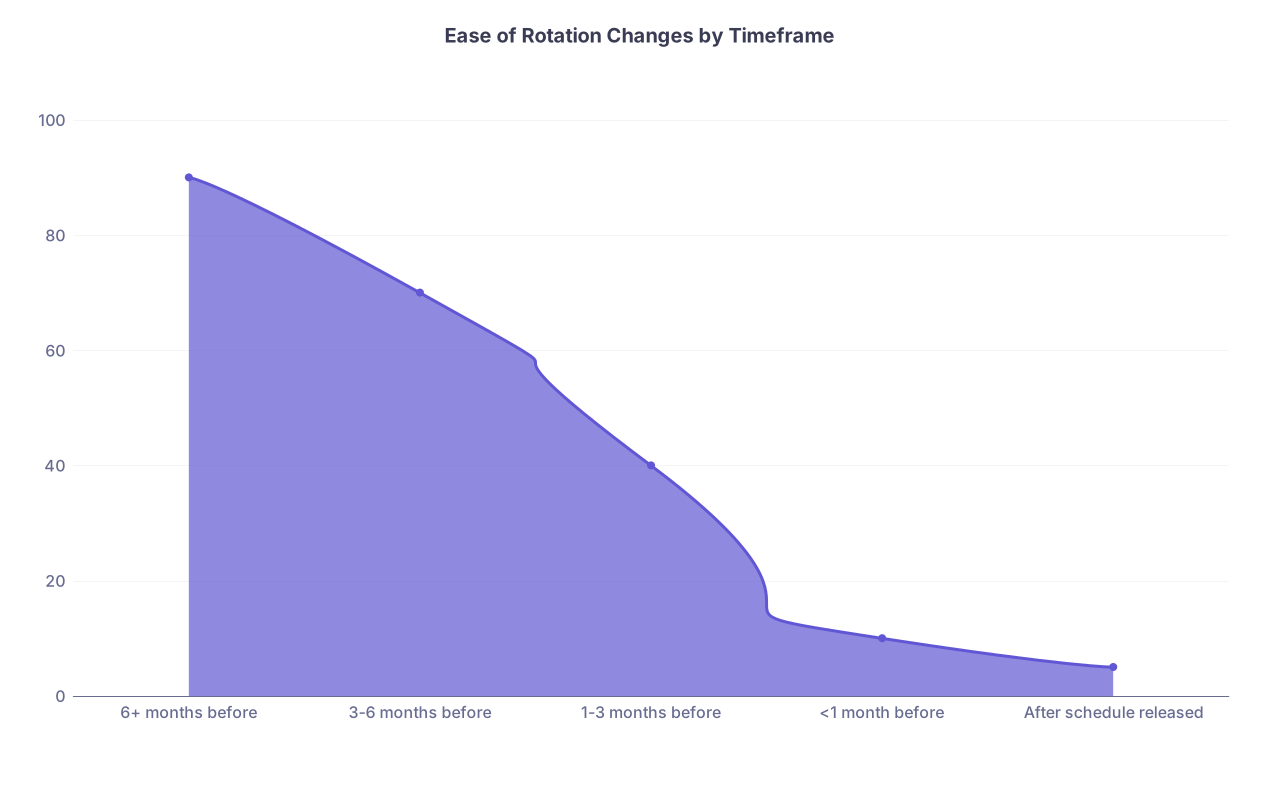
| Category | Value |
|---|---|
| 6+ months before | 90 |
| 3-6 months before | 70 |
| 1-3 months before | 40 |
| <1 month before | 10 |
| After schedule released | 5 |
Those numbers aren’t literal; they’re the feel of the system. The earlier you get in, the more flexible things are.
The residents who always end up with strong schedules do three things with timing:
They ask early. Before the schedule draft exists, they’re already saying, “Can we tentatively plan for X around Y?”
They confirm mid-year. “Just checking in to see if anything has changed with my ICU rotation in January—I’m trying to plan studying/interviews.”
They avoid last-minute demands. They know asking to move a July ICU month on June 25th will tank goodwill.
Late changes sometimes work if you’re offering value, not asking for it. Example:
“I heard someone dropped the CT consult elective in March. If you’re scrambling to fill it, I’d be open to switching from my wards month.”
Now you’re helping solve their problem, not just yours.
The Quiet Politics of “Good Rotations”
Let’s be very clear: “best rotations” doesn’t always mean light rotations. In many specialties, the heaviest, most demanding services are also the ones that matter most for fellowships and letters.
Strong residents learn to separate three categories:
- Career-defining rotations – ICU, subspecialty consults with big-name attendings, high-vision electives where letters come from.
- Life-preserving rotations – Outpatient blocks, electives with predictable hours, community months with earlier sign-out.
- Obligatory grind rotations – Night float, cross-cover-heavy wards, ambiguous electives that are really just service.
Winning residents try to maximize category 1 and sprinkle in enough category 2 to survive. Category 3 they accept as the cost of doing business—but they try to time them when they’re less catastrophic (not right before exams, not during interview season, not immediately after major life events).
Average residents treat all rotations as equivalent and let the system decide.
How Rotation Choices Quietly Shape Your Career
I’ve watched residents with similar Step scores and similar evaluations end up in very different fellowships. The difference wasn’t just research or letters. It was where and when they showed up.
Two internal medicine residents, same program:
Resident A: Got MICU with the fellowship director twice, cardiology consults early PGY-2, and a lighter ambulatory block during interview season. Took Step 3 early, wrote a small ICU QI paper, got a very strong letter. Matched cards at a top-20.
Resident B: Scheduled for MICU during peak interview season, never worked directly with the big-name ICU attending, had night float right before rank list time and was too burnt out to push for extra projects. Matched cards, but at a much smaller, less academic program.
Both competent. Both hard workers. One of them understood that rotations are not just “months to get through.” They’re exposure, relationships, and timing.
Practical Moves If You’re Not One of the “Golden” Residents
If you’re reading this already feeling behind, you’re not doomed. You just have to stop being passive.
Here’s how you start acting like the residents who always seem to land the good stuff.
Step 1: Map the Landscape
Spend one hour doing what 90% of your co-residents never do:
- Pull up the rotation catalog and block schedule from the last year.
- Ask two senior residents: “Which months were brutal? Which were great? Which are key for letters in X specialty?”
- Write down which attendings are known for strong letters in your area of interest.
You’re building your own unofficial guide. The chiefs already have this in their heads. You should too.
Step 2: Have a Real Conversation With Someone Who Has Power
Not a vague hallway chat. A deliberate sit-down with an APD or the scheduling chief that goes like this:
“I wanted to be proactive about next year’s schedule. I’m interested in [specialty/goal]. From what I understand, [ICU/consult/elective] with Dr. X is important. If there’s any way to align my rotations to support that, I’d appreciate your guidance. I’m also trying to avoid [these months] for [Step 3/interviews/family].”
You’re not demanding. You’re collaborating. You’re signaling that you’re thinking like someone the program wants to support.
Step 3: Bank Some Goodwill on Purpose
Pick your moments to be the hero:
- Volunteer once or twice a year for a tough coverage assignment when the chiefs are desperate.
- Do it cleanly. No complaining to everyone else. No public martyr narrative.
- Then, when schedule season comes, reference it kindly if you need help:
“I know you’re juggling a lot of constraints. If there’s any flexibility on [specific request], I’d be very grateful—especially since I covered that extra week in August.”
People are much more generous when they feel you’ve already been generous with them.
Step 4: Protect Your Non-Negotiables
You can’t control everything. But you can usually protect one or two things each year if you’re clear and early.
Non-negotiables might be:
- “I need a light block in this window to take Step 3.”
- “I’m getting married; I can’t be on nights that month.”
- “I’m applying for fellowship; I need at least one month with Dr. X before applications are due.”
Tell leadership early. In writing. Then remind them once, politely, midway through planning. Chiefs aren’t out to sabotage you—they’re just overwhelmed.
Step 5: Stop Assuming It’s Personal
One more uncomfortable truth: a lot of schedule outcomes that feel like targeted injustice are just collateral damage of a messy puzzle.
Sometimes you get stuck on a bad combination of rotations because someone else had a medical leave, or the GME office changed caps, or the hospital added a new service. Chiefs often feel guilty; they just don’t have the luxury of explaining every compromise to every resident.
If you take it personally, you’ll start withdrawing from the very people who can help you. If you treat it as a solvable logistics problem, you’ll ask better questions:
“Given these constraints, what can be moved? If ICU has to stay, is there a way to soften the month before or after?”
That’s the move of someone who eventually ends up getting a “better” rotation—not by magic, but by being the kind of resident leadership wants to help.

| Step | Description |
|---|---|
| Step 1 | Resident Goals |
| Step 2 | Early Planning |
| Step 3 | Talk to Chief or APD |
| Step 4 | High Value Rotations |
| Step 5 | Compromise Rotations |
| Step 6 | Bank Goodwill |
| Step 7 | Program Priorities |
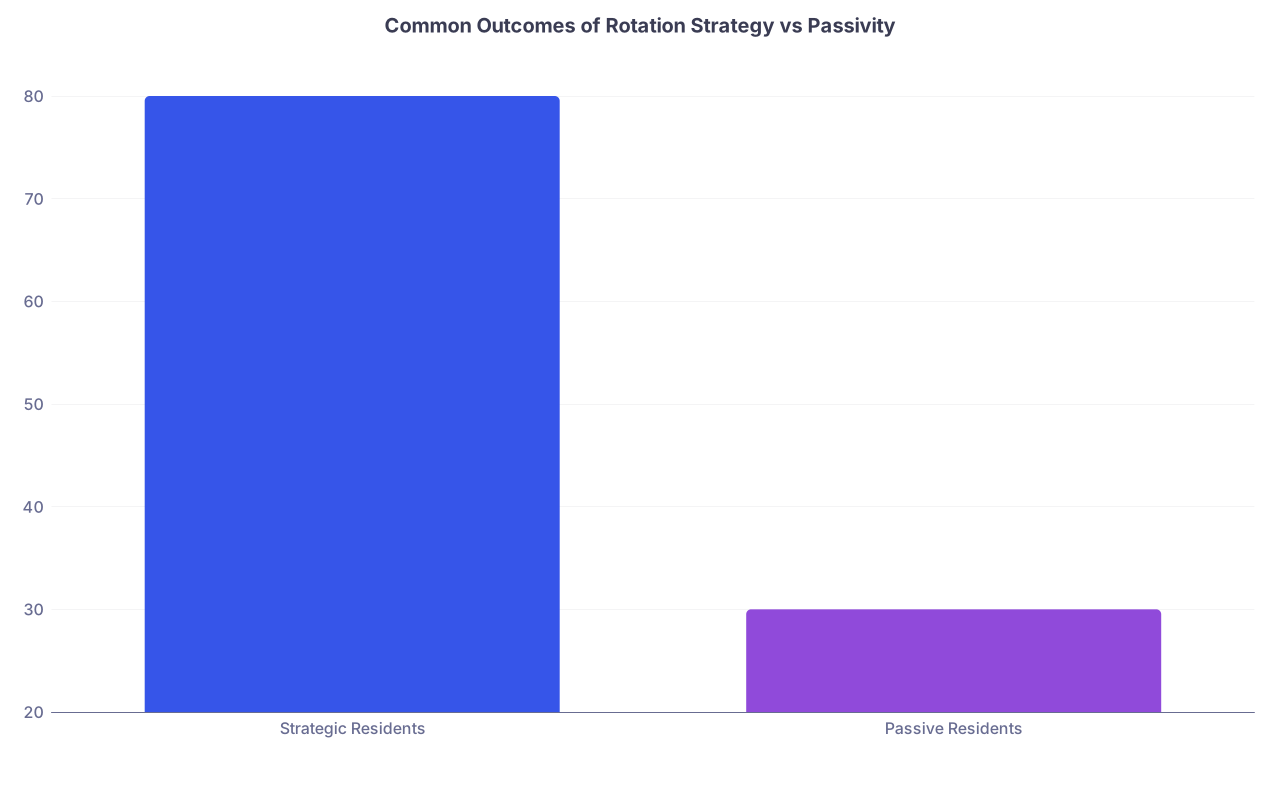
| Category | Value |
|---|---|
| Strategic Residents | 80 |
| Passive Residents | 30 |
(The numbers here reflect a simple truth I’ve watched for years: if you’re strategic, you usually end up with a schedule that actually supports your goals. If you’re passive, you occasionally get lucky—but mostly you don’t.)


The residents who always get the best rotations are not magically chosen. They’re visible. They’re strategic. They understand that the schedule is a negotiation shaped by relationships, timing, and the program’s hidden priorities.
You can keep telling yourself it’s luck. Or favoritism. Or politics you’ll never break into.
Or you can start acting like the people you’re jealous of—mapping the system, talking to the right people, making a few well-timed sacrifices, and asking for specific help early and clearly.
Years from now, you won’t remember the exact sequence of wards and electives. But the people you worked with, the mentors you impressed, and the doors those “lucky” rotations opened—that will shape where you end up. And that part is far less random than it looks from the call room at 2 a.m.