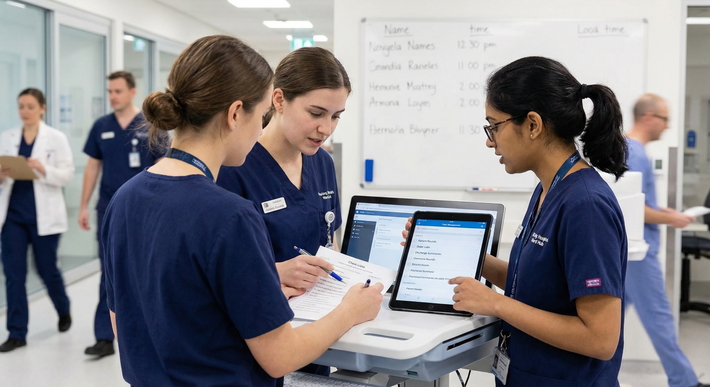
Introduction: Why Communication Skills Define Your Residency Experience
Effective communication is the backbone of modern medical practice, and nowhere is this more evident than in residency training. The transition from medical student to resident is not just a leap in clinical responsibility; it’s a radical shift in how you interact with patients, families, nurses, consultants, and attendings. Your success—and your efficiency—depends as much on how you communicate as on what you know.
During residency, you are constantly:
- Triaging multiple patients with competing needs
- Coordinating with interprofessional teams under time pressure
- Explaining complex medical conditions to patients with varying health literacy
- Negotiating plans of care with families who may be anxious, angry, or confused
- Learning from supervisors who expect succinct, accurate information
In this environment, strong Communication Skills are not a “nice-to-have” soft skill; they are core clinical tools that shape Patient Care, Team Dynamics, and your own well-being and efficiency.
This article breaks down the essential communication skills every resident should cultivate, shows how they directly impact Resident Efficiency and patient outcomes, and offers practical strategies you can start using on your next call shift.
The Central Role of Communication in Residency Training
Effective communication in Residency Training is multi-layered. It is not only about being polite or articulate—it involves patient safety, teamwork, education, and professional identity formation.
How Communication Impacts Patient Safety and Care Quality
Even the best clinical plan can fail if it’s not communicated clearly.
Reducing errors:
Miscommunication is a leading cause of adverse events in hospitals. Vague handoffs, incomplete documentation, or assumptions (“I thought the night team ordered that CT”) can lead to delayed diagnoses, medication errors, or missed follow-up.Improving diagnostic accuracy:
High-quality histories depend on your ability to listen actively and structure questions well. Patients often “tell you the diagnosis” if you create a safe space for them to share their story fully.Enhancing adherence and outcomes:
When patients understand their diagnosis, treatment options, and follow-up plan, they are more likely to adhere to medications, lifestyle changes, and appointments—directly improving outcomes.Managing risk and conflict:
Clear, transparent conversations about risks, benefits, and uncertainty help reduce complaints, misunderstandings, and potential medico-legal issues.
Strengthening Team Dynamics and Interprofessional Collaboration
Residency is a team sport. Your ability to function within complex Team Dynamics is central to both patient outcomes and your daily efficiency.
Aligning the care team:
Consistent, clear communication with nurses, therapists, pharmacists, and consultants ensures everyone is working from the same plan.Preventing conflict and burnout:
Misunderstood tone, abrupt messages, or incomplete orders create frustration and erode trust. Respectful, structured communication builds psychological safety and reduces tension, especially during high-stress shifts.Improving workflow efficiency:
Well-run rounds, clear pages, and concise updates save time for everyone. Over a long call, these minutes add up to less chaos and fewer errors.
Maximizing Learning and Professional Development
Residency is also a high-intensity Medical Education environment. How you communicate with attendings, fellows, and senior residents affects how much and how well you learn.
Presenting cases efficiently:
Clear, organized oral presentations demonstrate your thinking and allow attendings to teach at a higher level.Asking better questions:
Specific, thoughtful questions (“I’m trying to understand why we chose heparin over DOAC in this patient with CKD stage 4—can we walk through that?”) invite targeted, high-yield teaching.Receiving and using feedback:
Being open, non-defensive, and reflective about feedback builds trust and accelerates your growth.

Core Communication Skills Every Resident Needs
1. Active Listening: The Foundation of Trust and Accuracy
Active listening is more than hearing the words; it means fully concentrating, processing, and responding thoughtfully. In residency, active listening underpins accurate histories, safe orders, and constructive relationships.
Techniques to Strengthen Active Listening
Be fully present:
Put down your phone or computer when possible, face the speaker, and avoid multitasking during important conversations—especially when taking a history or receiving critical information.Use verbal and non-verbal cues:
Nod, maintain appropriate eye contact, and use brief acknowledgments (“I see,” “Go on,” “That makes sense”) to show engagement.Avoid premature interruptions:
Let patients finish their initial narrative. Many will share crucial details in the first minute if not interrupted.Reflect and summarize:
“So, what I’m hearing is that the chest pain started yesterday while you were walking, it goes away with rest, and it feels like pressure—did I get that right?”Clarify assumptions:
Instead of assuming, ask: “When you say you’re dizzy, do you mean lightheaded, or is the room spinning?”
Real-World Application
During patient history:
A patient with vague abdominal pain may provide the key clue (“It’s worse after I eat and radiates to my back”) only when given space to elaborate.When receiving instructions:
If your attending gives a rapid list of tasks, repeat back: “To confirm, I’ll order the CT abdomen with contrast, start Zosyn, check a lactate, and call surgery consult. Anything I missed?”
This not only prevents errors but signals professionalism.
2. Clarity and Conciseness: Communicating Efficiently in Busy Settings
Residency demands you communicate critical information quickly without sacrificing accuracy. Clarity and conciseness are essential for every note, handoff, page response, and family meeting.
Principles of Clear, Concise Communication
Lead with the headline:
Start with the most important information first:- “This is a 65-year-old with sepsis secondary to pneumonia, now hypotensive to 80/50.”
- “I’m calling about a new change in mental status in your patient in room 302.”
Use structured formats:
For team communication, use tools like SBAR (Situation, Background, Assessment, Recommendation) or SOAP-style structuring.Avoid unnecessary jargon with patients:
Replace “You have an acute myocardial infarction” with “You’re having a heart attack, which means one of the arteries of your heart is blocked.”Chunk information:
Break complex explanations into manageable parts, checking understanding as you go.Tailor detail level to the audience:
- Attendings may want your differential and data interpretation.
- Patients need plain language and concrete next steps.
- Consultants want focused, relevant clinical data.
Example: Explaining Hypertension to a Patient
Less effective:
“We’re going to start you on an ACE inhibitor and a thiazide because of your ASCVD risk, and we’ll titrate based on your response.”
More effective:
“Your blood pressure is higher than is safe for your heart and kidneys. We need to lower it. We can do this with medication, lifestyle changes like diet and exercise, or both. I’m recommending we start with one medication today and talk about some changes you can make at home to help.”
This approach is clear, concise, and aligned with patient-centered care.
3. Empathy and Emotional Intelligence: Connecting Beyond the Data
Residency is emotionally intense—for you, your patients, and your colleagues. Empathy and emotional intelligence (EQ) help you navigate distress, conflict, and uncertainty while preserving trust and compassion.
Components of Emotional Intelligence in Residency
Self-awareness:
Recognizing when you’re frustrated, rushed, or exhausted—and understanding how that might affect your tone and word choice.Self-regulation:
Pausing before responding to an angry family member or a critical attending, and choosing a professional, measured response.Social awareness:
Noticing non-verbal cues—tearful eyes, clenched fists, silence—and adjusting your approach.Relationship management:
Building trust over repeated interactions, addressing misunderstandings, and de-escalating tension.
Applying Empathy in Patient Care
Validate feelings explicitly:
“I can see how frightening this must be for you.”
“It’s completely understandable to feel overwhelmed with all this information.”Use supportive silence:
After delivering bad news, resist the urge to immediately fill the space with details. Give the patient or family time to process.Ask open, compassionate questions:
“What is your biggest worry right now?”
“What have you understood so far about what’s happening?”
Example: Responding to Distress
Instead of jumping directly into logistics after a new cancer diagnosis, you might say:
“I know this is difficult to hear. Let’s take a moment. When you’re ready, we can talk about what this means and the options we have moving forward. You won’t be facing this alone.”
This kind of response strengthens the therapeutic alliance and can improve adherence and satisfaction.
4. Assertiveness: Advocating for Patients and Yourself
Assertiveness is the ability to express your thoughts, needs, and concerns clearly and respectfully. In residency, being assertive is crucial for advocating for safe Patient Care and protecting your own learning time and limits.
Principles of Assertive Communication
Use “I” statements:
- “I’m concerned that this dose may be too high given his kidney function.”
- “I feel overwhelmed by my current patient load and worry something important might be missed.”
Focus on patient safety and shared goals:
Anchor your concerns in what is best for the patient and the team, not in personal preferences.Stay calm and specific:
Avoid generalizations like “The nurses never call me” or “Consults always ignore us.” Use specifics: “Yesterday, there was a delay in notifying the team when the patient’s blood pressure dropped.”Be prepared to propose solutions:
“Could we call pharmacy to review the dosing?”
“Can we redistribute two admissions so the cross-cover load is safer?”
Real-World Scenario
You’re on nights with six active patients and three new admissions. You feel unsafe managing more.
Instead of silently struggling, you say to your senior or attending:
“I’m worried about taking on another admission right now. With three new patients and six unstable ones, I’m concerned I can’t safely monitor them all. Can we discuss options to redistribute or delay the next admission?”
This protects patients and models professionalism—not weakness.
5. Effective Non-Verbal Communication: What You Say Without Words
Non-verbal communication—posture, facial expressions, tone of voice, physical distance—can reinforce or undermine your words.
Key Aspects in Clinical Settings
Body posture:
- Leaning slightly forward signals interest.
- Arms uncrossed and relaxed appear more open and approachable.
Eye contact:
Maintain appropriate, culturally sensitive eye contact with both patients and team members. Avoid staring at the computer screen while asking sensitive questions.Facial expression and tone:
Ensure your facial expression matches the content. A neutral or warm expression when delivering routine information; a more serious, gentle expression for difficult news. Tone should be calm, steady, and unhurried.Physical positioning:
When possible, sit down at eye level with the patient. Studies show that patients perceive doctors who sit as spending more time and being more attentive—even if the actual time is the same.
Case Example
When sharing a serious diagnosis, contrast these two approaches:
- Standing at the doorway, one hand on the doorknob, glancing at your pager, speaking quickly.
- Sitting at the bedside, making eye contact, speaking slowly, pausing for questions, and using a soft tone.
The second approach, even if brief, dramatically affects how supported and respected the patient feels.
Practical Strategies to Build and Sustain Strong Communication Skills
Communication Skills improve with deliberate practice, feedback, and reflection. Here are concrete strategies to incorporate into your Residency Training.
1. Participate in Communication-Focused Workshops and Simulations
Many programs offer:
- Breaking bad news simulations with standardized patients
- Difficult conversation workshops (e.g., dealing with angry families, end-of-life discussions)
- Team communication training using frameworks like TeamSTEPPS
Treat these as high-yield, not optional. Practice specific phrases, responses to conflict, and structured tools you can use on the ward.
2. Actively Seek Feedback on Your Communication Style
Don’t wait for annual evaluations.
Ask attendings after rounds:
“Do you have any feedback on how I presented that last patient? Was there anything I could have communicated more clearly?”Ask nurses or allied health staff:
“Was that page clear, or is there a better way I can structure my requests to help you?”Ask peers and seniors:
“How are my sign-outs? Anything that would make them safer or more efficient?”
Specific feedback accelerates improvement and shows maturity.
3. Practice Role-Playing with Peers
Use downtime or teaching sessions to rehearse:
- Delivering bad news
- Handling a confrontational family member
- Calling a consultant
- Negotiating for additional resources or help
Take turns being the resident, patient, and observer. Give each other targeted feedback on non-verbal cues, clarity, and empathy.
4. Use Structured Communication Tools Consistently
Adopt standard frameworks:
- SBAR (Situation, Background, Assessment, Recommendation) for calling attendings or consultants.
- I-PASS or similar formats for handoffs.
- SPIKES protocol for breaking bad news.
Using structured tools reduces omissions, enhances Team Dynamics, and improves patient safety.
5. Build a Habit of Reflection After Key Encounters
After a challenging patient interaction, family meeting, or tense team moment, ask yourself:
- What went well in how I communicated?
- What did not go as planned, and why?
- How did my words, tone, and body language affect others?
- What will I try differently next time?
Even 3–5 minutes of reflection during a break or after shift can lead to continuous refinement of your communication approach.

Frequently Asked Questions (FAQs)
Q1: How can I practice communication skills when I’m already overwhelmed with clinical duties?
You can integrate practice into your daily work rather than adding extra tasks:
- Use SBAR every time you call a consult or attending.
- Spend one minute before each family meeting planning your key messages.
- After a tough interaction, reflect briefly on what you’d do differently next time.
- Ask for quick, focused feedback (“Any tips on how I explained that?”) during or after rounds.
Small, consistent adjustments are more sustainable—and more effective—than occasional major efforts.
Q2: What are common communication pitfalls for residents, and how can I avoid them?
Common pitfalls include:
- Overusing jargon: Confuses patients; translate to plain language.
- Rushing conversations: Leads to misunderstandings and repeated explanations. Try to slow your pace, even if briefly.
- Incomplete handoffs: Increase risk of errors—use structured handoff tools.
- Defensiveness with feedback: Shuts down learning; instead, ask clarifying questions and reflect before reacting.
Consciously watch for these patterns and correct them early.
Q3: How can I improve my communication with nurses and other team members?
- Show respect and appreciation: Acknowledge their expertise and thank them for critical information.
- Be clear and organized in your requests: State the urgency, rationale, and specific orders.
- Follow through: If you promise to reevaluate a patient or adjust an order, do it promptly and update the team.
- Solicit input: Ask, “Do you have any concerns about this plan?” Nurses often catch issues early and appreciate being heard.
Better interprofessional communication improves workflow, morale, and patient outcomes.
Q4: How do I maintain empathy when I’m exhausted or burned out?
- Recognize your limits: Self-awareness is the first step.
- Use simple, genuine phrases: Even brief empathetic statements help: “This sounds really hard,” or “I wish the news were better.”
- Use team support: Debrief with peers or supervisors after difficult cases.
- Take micro-breaks: Even a few minutes to breathe, hydrate, and reset between intense encounters can help you remain present and kind.
If persistent burnout is affecting your ability to care or communicate, seek support from wellness resources or mentors.
Q5: Can being assertive harm my reputation or relationships with attendings?
If done respectfully and thoughtfully, assertiveness generally improves your professional reputation. The key is to:
- Frame concerns around patient safety and shared goals
- Use respectful language and a calm tone
- Acknowledge the other person’s expertise before raising your point
- Be open to being corrected and to learning
Most attendings appreciate residents who speak up with well-reasoned concerns. It signals engagement, responsibility, and maturity.
By intentionally developing these communication skills—active listening, clarity and conciseness, empathy and emotional intelligence, assertiveness, and effective non-verbal behaviors—you significantly enhance your efficiency as a resident, improve Patient Care, and strengthen Team Dynamics. These are not just survival tools for Residency Life and Challenges; they are core professional competencies that will serve you throughout your career as a physician.