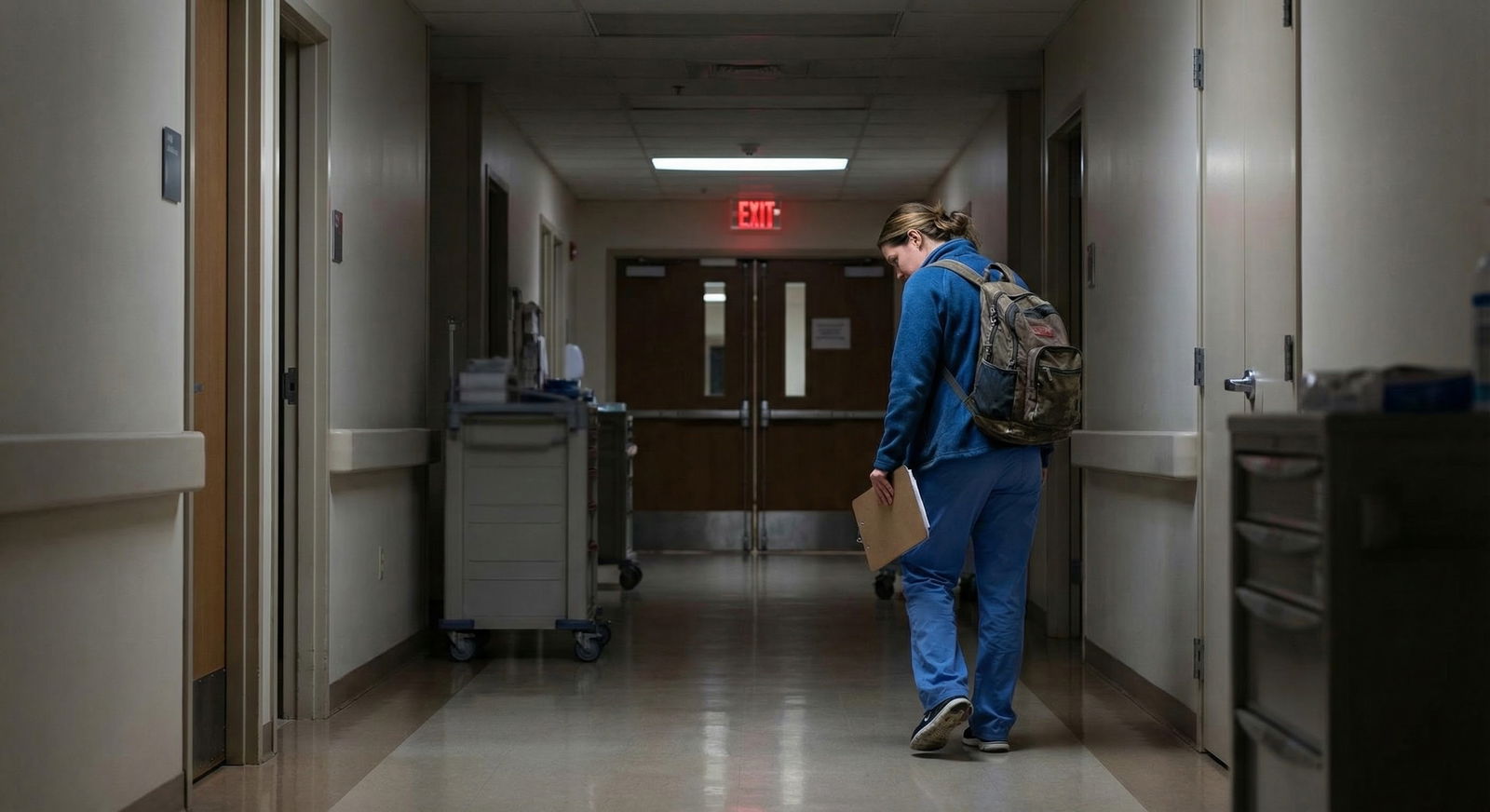
What do you actually do between your last night float shift and your first brutal 5:30 a.m. ward day so that you do not walk in foggy, disorganized, and instantly behind?
Let me be blunt: most residents handle this transition terribly. They “just try to sleep,” scroll their phone, and stumble into days with a half-updated sign-out, a wrecked sleep schedule, and no idea what’s on their to‑do list. Then they spend the entire first three day shifts digging out of a hole.
You can do better than that. And it does not require a full “wellness retreat.” You have about 24–36 hours, max. You need a plan.
Below is exactly how to reset quickly—sleep, schedule, inbox, sign-outs, brain—so you are functional and organized on day one.
Step 1: Handle the Last 2 Nights of Float Like a Pro
You cannot fix chaos on your “day off” if you let the last 2 nights be a disaster. The transition starts before you’re actually off.
Night −2: Start Controlled Drift
You’re still on shift, but you can start turning the ship.
Focus on three things:
Caffeine taper
- If you normally chug coffee at 11 p.m. and again at 3 a.m., stop that.
- On the second-to-last night:
- Last caffeine by 1–2 a.m.
- On the final night:
- Last caffeine by midnight, then switch to water.
- The goal is not to be “comfortable.” The goal is to actually be able to fall asleep during the day you flip.
Tighten your task list
- Make a running list during your shift of:
- Pending tests that will result after you leave nights
- Follow-ups you’ve been “owning” at night that need to transfer to days
- Sick patients that might blow up in the early morning
- Write it in one place: a small notebook or a note app you actually open, not scattered sticky notes.
- Make a running list during your shift of:
Clean your mental and physical workspace
- Delete or archive old PDFs, old admits, random printed notes piling up in your white coat.
- Throw away half-filled progress note drafts you’ll never use again.
- This sounds trivial. It’s not. Physical chaos bleeds into cognitive chaos when you flip schedules.
Step 2: The Final Night Float: Set Up Your Day-Team Self
Your last night is where you either tee up a smooth transition or sabotage yourself.
1. Create a “Day 1 AM Brain” Note
Somewhere you will see it—phone, folded index card in your badge holder—write:
- Your exact show-up time and location for day 1
(“6:15 a.m. at workroom 5B, not 6:30. New attending.”) - The names of:
- Attending
- Senior resident
- Co-interns (if different)
- Any “gotchas”:
- “New EMR order set for VTE prophylaxis”
- “Attending hates late sign-outs”
- “No more paper Kardex—use EMR board”
You’re writing this while you’re still awake and thinking straight, not at 5 p.m. the next day when you’re half-delirious.
2. Build a Clear, Transfer-Ready Sign-out
Your sign-out is not just for the oncoming night resident. It’s for you coming back on days too. It needs to be organized.
Good sign-out answers 4 questions for each patient:
- Why is the patient here? (1-line problem statement.)
- What is the active plan? (Bulleted, not a novel.)
- What are we worried might happen? (Airway risk, bleeding, decompensation, social disaster.)
- What’s pending and who’s responsible? (Consults, imaging, labs.)
If you’re going back to a related service on days (e.g., from night float on medicine to a day medicine team), mark patients you might still see:
- “Probable transfer to ward A team today”
- “Likely discharge Tues—keep an eye on dispo”
3. Reduce Next-Day Landmines
On your final night, avoid stacking unnecessary “time bombs” for the day team and future you:
- Don’t order imaging “for tomorrow” that you know is not urgent and will just clog up your service’s morning.
- Clarify any ambiguous code status or goals of care conversations that are half‑documented. Half-finished decisions always boomerang back during morning rounds.
- Put in clean, up-to-date problem lists and med rec when you can—this saves you time later.
Walk out of that last night feeling like you left a reasonably clean board, not a disaster someone will remember you for.
Step 3: The Flip Day Blueprint (Hour by Hour)
This is the part most people screw up. They “just wing it.” Do not wing it. Treat your flip day like a procedure with defined steps.
Assume: you leave your last night float shift around 8–9 a.m.
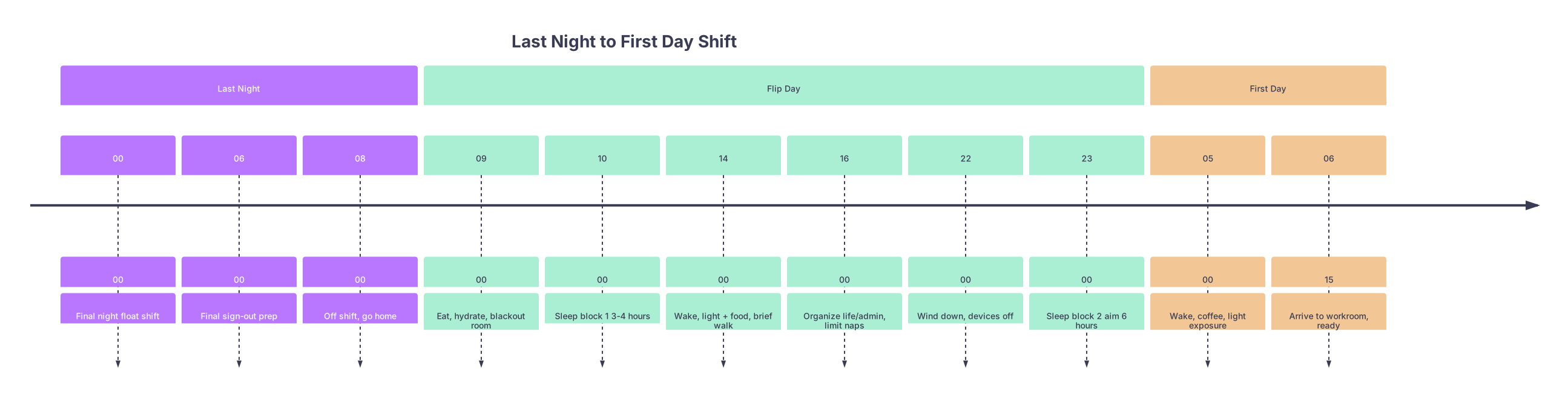
| Period | Event |
|---|---|
| Last Night - 00 | 00 |
| Last Night - 06 | 00 |
| Last Night - 08 | 00 |
| Flip Day - 09 | 00 |
| Flip Day - 10 | 00 |
| Flip Day - 14 | 00 |
| Flip Day - 16 | 00 |
| Flip Day - 22 | 00 |
| Flip Day - 23 | 00 |
| First Day - 05 | 00 |
| First Day - 06 | 15 |
0–1 hours after last shift: Controlled Landing, Not Couch Collapse
What most residents do: go home, eat something obscene, fall asleep in their clothes at 10 a.m., sleep to 5 p.m., then lie awake all night. Terrible.
Do this instead:
- Eat a modest meal (not massive; high-fat sugar bombs wreck your sleep).
- Rehydrate.
- Set an alarm for 3–4 hours from when you lie down.
Example: in bed by 10 a.m., alarm for 1:30–2 p.m.
Make your room like a bunker:
- Blackout curtains or garbage-bag improv over windows.
- Eye mask.
- White noise / fan.
Then sleep. Hard. Don’t “rest with a show on.” That’s code for not actually sleeping.
Early afternoon (2–4 p.m.): Wake and Re-anchor
When the alarm goes off, you will want to roll over and die. Get up anyway. This is where people ruin the flip.
Once you’re up:
- Expose yourself to bright light (sunlight if you can).
- Eat a real meal with protein, not just carbs.
- Move your body: 15–20 minutes of walking, light stretching, maybe a short workout if you’re not destroyed.
Now you’ve had:
- A partial recovery from your last night
- A wake window to let your circadian rhythm start shifting back toward days
Late afternoon to early evening: 2–5 hours of Functional Life + Reset
This block is your organizational goldmine. Use it.
Focus on exactly four domains.
Sleep plan for tonight
- Decide your target bedtime: usually 10–11 p.m. for a 5–5:30 a.m. wake-up.
- Count backwards from when you need to wake up:
6 hours minimum (realistic), 7–8 is ideal but rare. - Build a wind-down window:
60–90 minutes pre-bed without work or doomscrolling. Reading, shower, boring podcast.
Logistics for tomorrow morning Lay things out like you’re on an early OR case:
- Scrubs or work clothes ready.
- White coat with:
- Updated list of patients (if you know them) or blank templates.
- Pens, penlight, alcohol swabs.
- Badge, keys, parking card, cafeteria card.
- Coffee plan: home vs. hospital vs. both.
You should be able to stumble out of bed half-asleep and still walk out the door in under 15 minutes if everything goes sideways.
Information reset Sit down with:
- Your calendar (digital or paper)
- Block schedule
- Any rotation welcome email
And confirm:
- Start time
- Workroom
- Expected pre-rounding/rounding structure
- Which days you’re on call, if applicable
Then commit this to one visible place:
I like one-page “This Week” written on paper or a whiteboard with:- Post-call days
- Clinic days
- Any deadlines (evaluations, research stuff)
Life maintenance (bare minimum) You are not “catching up on life” in one day. That’s fantasy. But you can:
- Run one load of laundry.
- Refill meds.
- Pay any urgent bills.
- Order groceries or set up a quick delivery.
The whole point is to make the next 72 hours less chaotic.
Evening: Guard the Flip
This is where your friends or co-residents will sabotage you.
“Yes, come out for dinner, you can sleep later.” Ignore that.
Your only job from 8 p.m. onwards:
- Limit screens. At least 30–60 minutes off your phone/laptop before bed.
- No late caffeine “to finish just one more task.”
- If you’re not sleepy by 11–12, do something boring and calm (paper book, stretching, breathing) rather than panic about not sleeping.
You will not feel perfect. You do not need perfect. You need “good enough to be safe and semi-functional tomorrow.”
Step 4: Day 1 Back on Days – Tactical Organization
Morning comes. You probably slept 4–6 hours. Not luxurious, but it’ll do.
1. Morning: Simple Routine, No Heroics
- Wake up on the first alarm. No snoozes.
- Hydrate quickly. Caffeine: yes, but don’t mainline it. One normal coffee first.
- Bright light again—window open, overhead lights on.
Do not try to cram 30 pages of reading into this morning. That ship has sailed. Your priority is to show up on time, prepared, and not scatterbrained.
2. When You Arrive: Ground Yourself Fast
First 10–15 minutes on the unit:
- Open the EMR tracking board.
- Make your master list:
- All patients you’re covering.
- Room numbers.
- Brief 3–5 word labels (e.g., “DKA, on insulin drip,” “CHF diuresis,” “post-op POD2”).
- Mark:
- Anyone unstable.
- Anyone you remember from nights as “frequent flier” or high-anything (high risk, high complexity, high drama).
You are giving yourself a map before the day starts pulling you in ten directions.
| Column | Example Entry |
|---|---|
| Room | 521 |
| Name/Initials | J.S. |
| Label | DKA on insulin drip |
| Priority | High |
| Pending | Gap closure, anion |
3. Use Your Night Knowledge—but Don’t Overplay It
If you just came off nights on the same service, you actually have an advantage: you know who decompensates at 3 a.m., whose family calls five times, which consults are useless.
Use that.
- Warn your day team about patients you know are “ticking time bombs.”
- Suggest proactive orders:
- “He’s needed IV magnesium 3 nights in a row—maybe we fix his regimen instead of reacting at 2 a.m. again.”
But don’t walk in like, “Well, on nights we did it this way.” No one cares. Use your intel to make the day safer and smoother, not to flex.
4. Micro-Organize on the Fly
You will not have a calm hour to “set up a system.” So you need micro-habits that work under fire:
- One page per patient in your notebook or one digital note per patient.
- At the top:
ID / reason for admission / code status / dispo plan. - During rounds:
- Circle anything that’s a “must happen today” (imaging, key labs, family meeting).
- Underline deadlines (e.g., “needs rehab placement by Thurs”).
Have a column or margin that is just “Sent / Pending / Done” and cross aggressively. Your brain is not reliable today. Paper (or its equivalent) is.
Step 5: Keep the First 3 Days Tight
The flip isn’t really over after day 1. Your brain and body usually need 2–3 days to settle.
Here’s how not to let the wheels fall off.
Protect Bedtime Like an OR Start
If you’re post-call, fine, sleep more. If not:
- Aim for consistent bed and wake times for at least 3 days.
- Do not agree to random social plans that stretch you past 9–10 p.m.
- Avoid the “I survived day 1, I deserve to binge-watch” trap. That’s how you blow your chance to normalize your sleep.
Caffeine Rules: Ceiling, Not Floor
Set a hard cutoff for caffeine: usually noon–1 p.m. for early starts.
No 4 p.m. energy drinks “just this once.”
Your sleep debt from nights + badly timed caffeine = 3 a.m. staring at the ceiling.
“Small Wins” Organization
Don’t overhaul your life this week. Just:
- End each workday by:
- Updating your patient list.
- Writing tomorrow’s top 3 tasks.
- Leave the workroom knowing exactly:
- What time to be there tomorrow.
- What you need to follow up first thing.
Those two actions alone prevent 80% of the “I feel lost and behind” feeling.
Step 6: If You Get Almost No Sleep on the Flip
Sometimes your flip gets wrecked: a code at the end of the last night, unexpected errands, insomnia.
Day 1 and maybe Day 2 will be rough. Here’s how to not be unsafe.
On the Rough Day:
- Tell your senior if you are dangerously tired. Use plain language.
“I got almost no sleep between nights and today. I’m okay to work, but I’m worried about driving home alone / handling multiple rapid responses.”
Most good seniors will adjust:
Help restructure coverage.
Make sure you don’t get stuck alone with a crashing patient if you’re barely conscious.
Sometimes they’ll push you to take a brief nap post-call before driving.
Keep your cognitive load deliberately light:
- Double-check all orders.
- Ask the nurse to repeat back key med changes.
- Don’t rely on memory; write down everything.
When You Get Home:
Do not crash at 5 p.m. and then wake at 10 p.m. wide awake.
- If you absolutely must nap, set a strict 60–90 min alarm before 3–4 p.m.
- Force yourself up, light, small meal, then aim for a normal-ish 9–10 p.m. bedtime.
You’re playing the long game, not trying to feel perfect in 12 hours.
Common Pitfalls That Make the Flip Miserable
I’ve watched residents repeat the same mistakes every block change.
Here are the big ones:
- Oversleeping the first day after nights (10 a.m.–6 p.m.) and then losing the entire night.
- Leaving sign-outs messy so you spend your first three days on wards just figuring out what’s going on.
- Saying yes to non-urgent life errands on your flip day (full grocery runs, DMV, deep-cleaning your apartment).
- Pretending you do not need a plan because “I always adjust eventually.”
You do not get bonus points for suffering more. You just make your next week harder.
Quick Reference: Flip Day Checklist
Print this or screenshot it, seriously.
| Phase | Key Actions |
|---|---|
| Last 2 nights | Taper caffeine, clean sign-out, declutter |
| After final shift | Small meal, hydrate, 3–4h sleep block |
| Early afternoon | Wake, light, move, real food |
| Late afternoon/evening | Plan bedtime, lay out work gear, minimal life admin |
| Night before days | Screens off early, no late caffeine, boring wind-down |
| Morning of day 1 | Light, hydrate, moderate caffeine, arrive early with master list |