
You’re not burned out because residency is hard. You’re burned out because your system for tracking work is broken—or non‑existent.
I’m going to be blunt: bad task tracking can turn a manageable ward month into a psychological meat grinder. The same census. Same workload. Two residents. One goes home tired but intact. The other spirals into anxiety, guilt, and “I probably shouldn’t be in medicine” thoughts.
The difference is almost never “work ethic.” It’s how they track and close the loop on tasks.
You can’t afford to get this wrong.
The Hidden Problem: Your Brain Is a Terrible Task Manager
Let me start with the mistake most residents make: thinking they can “just remember” everything.
You know the script:
- “I’ll remember to recheck that potassium.”
- “I’ll call the family later this afternoon.”
- “I’ll update the discharge summary before sign‑out.”
You won’t. Not reliably. Not when you’re post‑call, six hours into rounds, and the attending just added “Oh and can you also…” for the 14th time.
Your working memory is already overloaded with:
- Differential diagnoses
- Med rec details
- Vital trends
- Attendings’ quirks
- What the heck your senior just mumbled during walk rounds
And you’re trying to also store 30–60 micro‑tasks in that mess? That’s not “resilient.” That’s reckless.
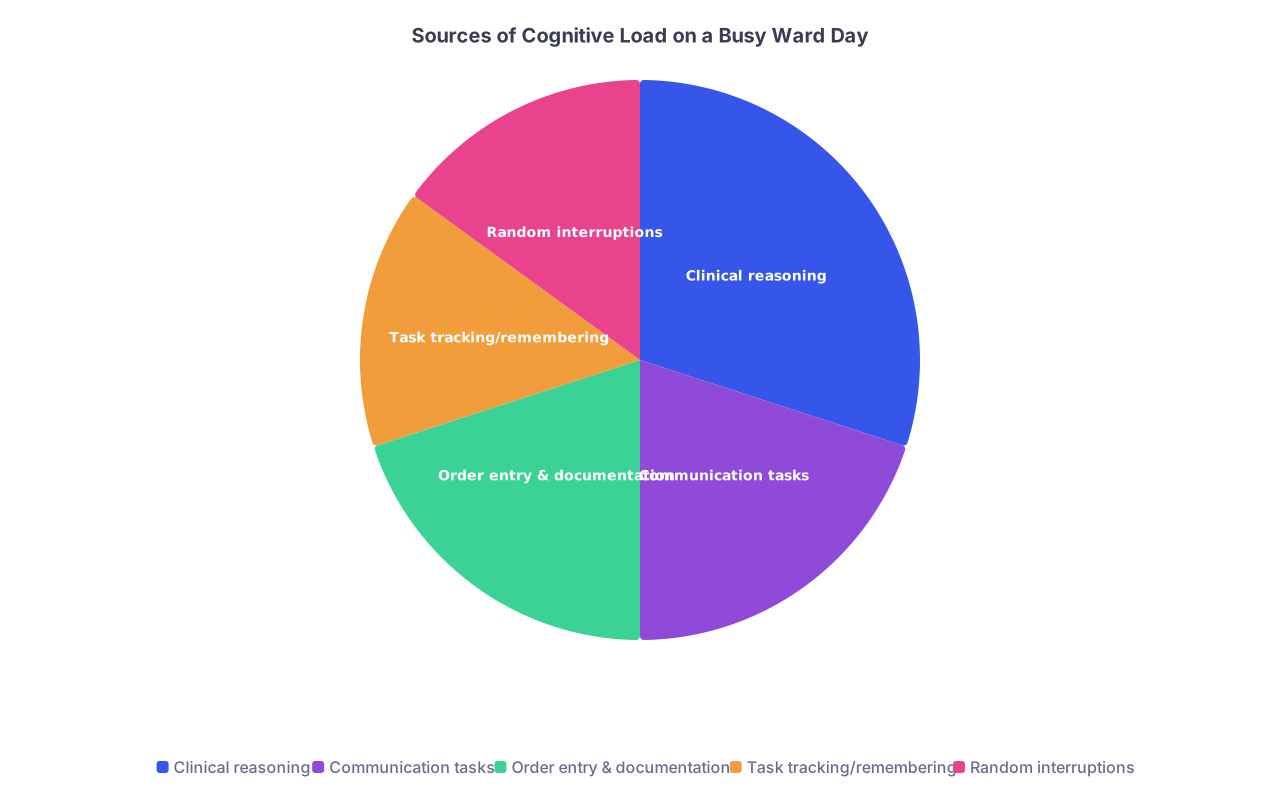
| Category | Value |
|---|---|
| Clinical reasoning | 30 |
| Communication tasks | 20 |
| Order entry & documentation | 20 |
| Task tracking/remembering | 15 |
| Random interruptions | 15 |
See that slice called “Task tracking/remembering”? That should be outsourced to a system. Not your brain.
When you do not externalize tasks in a reliable, consistent way, a few bad things start happening fast:
- You constantly feel like you’re forgetting something (because you are).
- You overcompensate by re‑checking everything repeatedly.
- You stay late “just to make sure” things are done.
- You wake up at 3 am wondering if you ever placed that DVT ppx order.
That background anxiety? That’s burnout fuel. It has almost nothing to do with how many patients you had that day and everything to do with how many open loops you’re carrying around in your head.
The Classic Mistakes Residents Make with Task Tracking
Let’s walk through the common screw‑ups I’ve watched residents make over and over. Some of them might be uncomfortably familiar.
1. The “Everything Lives in My Head” Hero
This resident insists they “don’t need lists.” They nod during sign‑out, enter a few orders, and then spend the rest of the day in a constant low‑grade panic.
What goes wrong:
- They forget soft but crucial tasks: family calls, code status discussions, PT/OT consults, follow‑up on cultures.
- They confuse rooms and patients: “Wait, who was I supposed to recheck for bleeding?”
- They miss time‑sensitive items: post‑op labs, anticoagulation restarts, stat imaging reads.
Worst part isn’t even the occasional miss. It’s the persistent fear of missing.
You don’t want to live like that for three years.
2. The Sticky Note and Random Scrap Paper Disaster
Next level of chaos: residents who “track tasks” but use whatever is closest:
- One task on the patient list
- Another on a folded progress note
- Three on different sticky notes
- One on the back of a cafeteria receipt
End of the day, they’re flipping through pockets like a magician searching for a card. Things fall out. Notes get tossed with the trash. A “call GI” post‑it gets stuck to yesterday’s sign‑out.
What goes wrong:
- Fragmented task capture = guaranteed leaks.
- No big‑picture overview of all tasks across patients.
- No prioritization—just reacting to whichever piece of paper is in front of you.
This is exactly how easy rotations feel “insane.” Not because the work is too much, but because the system is too fragmented to keep you ahead of it.
3. The Overcomplicated App Guy
Other extreme: the resident who decides to “optimize” with three note‑taking apps, color coding, tags, and sub‑tasks.
On day 1, it looks impressive. By day 3, it’s collapsing.
What goes wrong:
- Takes too long to enter tasks during rounds.
- Too many categories and filters; nothing is simple or fast.
- Phone is locked in a pocket when they need it.
- Senior and attendings move too fast for intricate systems.
Residency task tracking has to work in a hallway, on a moving team, while you’re walking, half‑listening, with a chart in your hand. If your system requires two hands and a 10‑second unlock, you’ll stop using it at the exact times you need it most.
4. The “I’ll Fix My List Later” Procrastinator
I’ve seen this one too many times: residents scribble messy notes during rounds and tell themselves they’ll “clean it up” after.
They never do. Or they try at 5 pm when half the day is gone.
What goes wrong:
- Mid‑day confusion: “Wait, did he say stop the beta‑blocker or switch it?”
- Duplicated work or missed follow‑up because the original note was unreadable.
- Massive late‑day stress when tasks don’t match what actually happened.
If your live list doesn’t stay live, your brain will have to do more remembering. Back to burnout.
How Poor Task Tracking Quietly Fuels Burnout
Residency burnout isn’t just about hours. It’s about the feel of your hours.
Poor task tracking twists your day in some specific, ugly ways.
1. You Live in Constant “Open Loop” Anxiety
Burnout isn’t only exhaustion; it’s emotional depletion from chronic stress.
Every untracked or half‑tracked task is an open loop. Your brain knows it exists but can’t see it clearly. So it keeps pinging you: “What am I missing? What did I forget?”
You know that feeling on post‑call days at 2 pm when your eyes blur and you feel both wired and empty? A good chunk of that is not physical exhaustion—it’s cognitive overload from too many unresolved threads.
2. You Stay Late for the Wrong Reasons
Staying late to deal with a crashing patient? That’s expected. Staying late because you’re combing through notes trying to see what you missed? That’s avoidable and demoralizing.
Patterns I’ve seen:
- Residents “doing one last chart review” that takes 45 minutes.
- Re‑reading notes to reconstruct tasks that should’ve been tracked at the moment decisions were made.
- Re‑checking orders three times because they don’t trust themselves.
Extra 30–60 minutes a day of this kind of nonsense will break you over a month.
3. You Feel Less Competent Than You Actually Are
Nothing tanks confidence like:
- Being reminded on rounds about a task you forgot.
- Getting a “Why wasn’t this order placed?” message from nursing.
- Realizing you missed a lab recheck.
You might be solid clinically. Smart, prepared, capable. But routine task failures make you feel incompetent. And when your self‑concept as a physician starts to crack, burnout accelerates. Fast.
4. Your Relationships with Nurses and Consultants Suffer
Poor task tracking doesn’t just hurt you. It annoys everyone around you.
- Nurses stop trusting your follow‑through.
- Consultants get frustrated when follow‑up imaging or labs aren’t done.
- Co‑residents quietly avoid being on your team.
Social friction = burnout gasoline. Medicine is already tense; you don’t need to add being “the unreliable one” on top of that.

What a Good Task Tracking System Looks Like (So You Don’t Burn Out)
Let’s be clear: there’s no single perfect system. But there are non‑negotiable features your system must have if you want to stay sane.
Here’s what I’ve seen work consistently for residents who thrive instead of melt.
Core Principles
A usable system must be:
- Fast – Should take 1–2 seconds to add or check a task.
- Visible – All tasks for all patients can be scanned in one view.
- Simple – Minimal steps, minimal categories, no over‑engineering.
- Persistent – You actually use it all day, not just in the morning.
- Flexible – Works on rounds, in the workroom, during cross‑cover.
If any part of your current method fails those five? That’s your warning sign.
The Basic Structure That Works on Most Rotations
Here’s a template I’ve seen work across medicine, surgery, pediatrics, even some ICU setups.
You need:
- One physical or digital list per patient
- A clear way to mark tasks as:
- Done
- Delegated
- Waiting (pending results/consults)
- A simple priority marker (e.g., star or underline) for truly urgent items
- A compact summary of all to‑dos across the team
An easy physical structure:
- Use your printed patient list as the base.
- For each patient, next to their name/MRN, write tasks in tiny, clear bullets.
- Use consistent shorthand:
- “LFT pm” = repeat LFTs this afternoon
- “fam call” = call family/update
- “dc sum” = discharge summary
- Cross out tasks with a single line when done, but keep them visible till end of day (for reassurance).
Digital equivalent (if your hospital computer access is reliable):
- One running text note per day (e.g., in a secure note app or even a blank Word doc)
- Header for each patient: “Rm 302 – Smith”
- Bullets under each with tasks
- Add time flags in parentheses for time‑sensitive ones: “recheck Hgb (1400)”
The tool matters less than your consistency.
| Method | Pros | Cons |
|---|---|---|
| Memory only | Fast, no tools needed | High error, constant anxiety |
| Random notes | Easy to start | Fragmented, tasks get lost |
| Simple paper | Reliable, always accessible | Needs daily rewrite/refresh |
| Basic digital | Searchable, editable | Depends on device access |
| Complex apps | Many features | Too slow, abandoned under stress |
Practical Anti-Burnout Habits for Task Tracking
Here’s where residents slip—and how to stop making those mistakes.
1. Capture Tasks Immediately, Not “Later”
If you only fix one thing, fix this.
When your attending says, “Let’s recheck BMP this afternoon,” that task should hit your list before you leave the room or move to the next patient.
Do not trust yourself to remember it.
Micro‑habits that help:
- During rounds, hold your pen over the patient name while the plan is discussed. As soon as tasks are named, write them down.
- If something comes up in the hallway—a nurse request, a family call—pause for two seconds and capture it before walking away.
Those two seconds save you 20 minutes of stress at 5 pm.
2. Use Simple Visual Cues for Priority
Here’s where people get too fancy. You don’t need color coding, multiple symbols, and legend charts.
Use one simple system. For example:
- “!” for urgent/time sensitive (e.g., “! CT PE if SOB again”)
- “*” for must be done before you leave
- Nothing for low‑level, non‑critical tasks
That way, at 3 pm when your brain is fried, you scan your list and hit the “!” and “*” items first, instead of wandering through random low‑value busywork.
3. Batch Similar Tasks
Poor task tracking makes every task feel like an isolated interruption. Better: group them.
Real examples:
- Make all family update calls in one 20–30 minute block.
- Put all discharge‑related items together and crush them in a focused burst.
- Group “check labs, adjust meds, place orders” into one loop per patient instead of 12 separate logins.
You cannot batch things if you don’t have clear, externalized tasks. That’s how a simple list protects your energy.
4. Do a 5–10 Minute “Task Reconciliation” Before Sign‑Out
This is where a lot of residents cut corners—and pay for it in guilt and anxiety all night.
Before sign‑out:
- Go patient by patient.
- Cross‑check your task list with what’s actually done in the chart.
- Convert any uncompleted but important tasks into explicit sign‑out items.
If you hand off with vague statements like:
- “I think his labs are okay.”
- “I’m not sure if the CT was done.”
…you will lie in bed wondering if you just set up your night colleague—or your patient—for a mess.
Close the loop. Or clearly delegate the loop.
5. Ruthlessly Prune Your System
Complicated systems die on busy days. And your worst days are exactly when you need your system to hold.
Watch for these red flags:
- You find yourself skipping entries because it “takes too long.”
- You maintain two parallel systems (paper + app) and neither is complete.
- You frequently think “I’ll clean this up later” and never do.
Fix: strip your system down until it’s stupidly simple and always used.
Time-Specific Pitfalls: When Task Tracking Really Matters
There are parts of the day and types of rotations where poor tracking goes from annoying to dangerous.
1. Cross-Cover and Nights
Huge mistake: treating night float like “I’ll just respond as things come up.”
No. You need a running, clearly time‑stamped list of:
- New pages and why they called
- What you did
- What you’re waiting for (labs, imaging, response to interventions)
- What needs to be handed back to the day team
Cross‑cover disasters almost always involve undocumented, untracked changes that vanished from memory at 4 am. Then the day team walks in to a confused patient, new oxygen requirement, and no idea what happened.
Your 2–3 minutes of task tracking will save you an hour of morning blowback.
2. ICU and Stepdown
In higher acuity settings, the tasks multiply and interact:
- Wean drips
- Check ABGs
- Trend labs q4
- Adjust vent settings
- Call consultants
If you’re not tracking these systematically, you end up living in reactive mode. Running room to room, responding to whichever alarm yells loudest.
Good ICU residents write micro‑checklists for each patient:
- 1000: Check vent, scan I/O, labs
- 1400: Repeat K, adjust gtt
- Pre‑round: update vent settings, review overnight events
That sounds small. It is not. It’s the difference between controlled intensity and pure chaos.
3. High-Turnover Ward Months
On heavy admitting rotations, you’ll have:
- New admits needing full workups
- Old patients needing discharges
- Active patients needing daily tasks
Poor tracking in this setting makes you feel like you’re drowning even when the absolute census is reasonable.
One very specific anti‑burnout habit:
- On admits, as soon as your plan is roughly formed, immediately list discrete tasks:
- “Orders: labs, imaging, consults”
- “Notes: H&P, problem list, med rec”
- “Calls: family, PCP if needed”
Break the blob of “admit patient” into concrete, trackable pieces. Your stress will drop instantly.
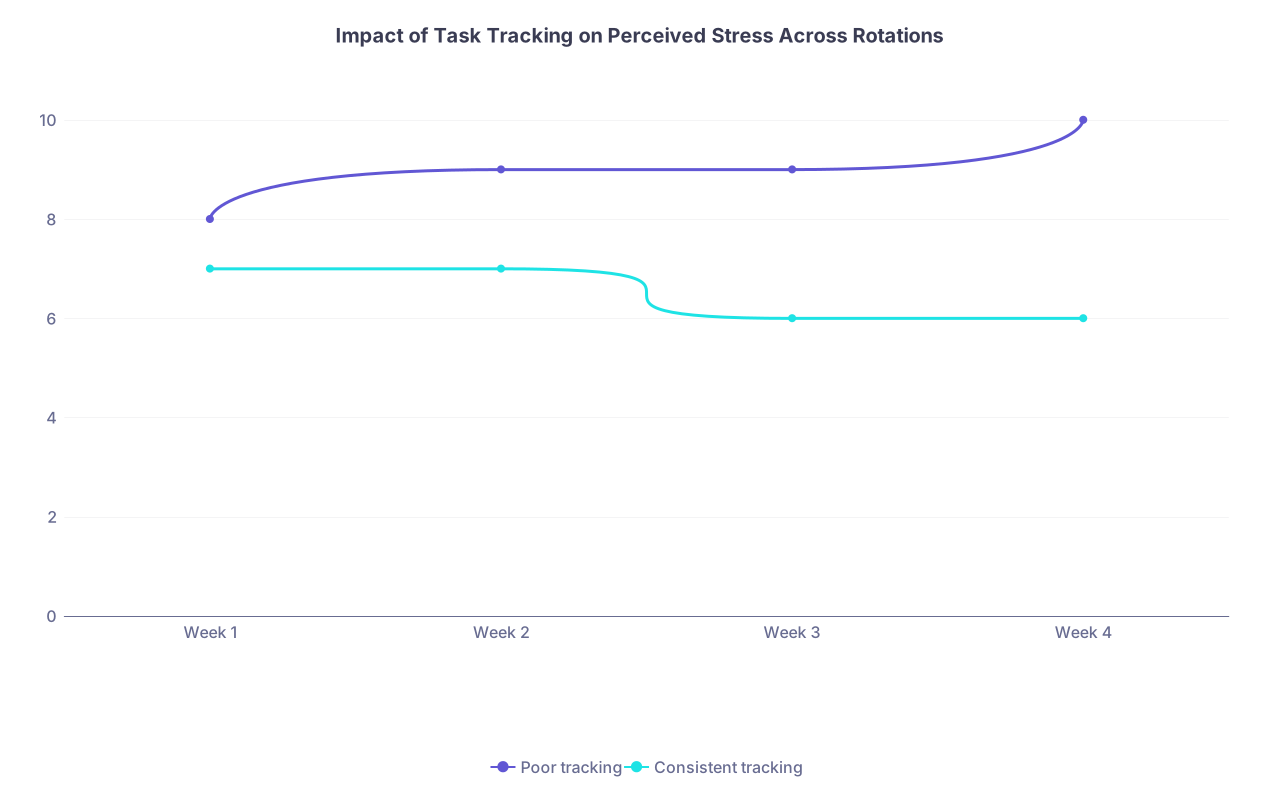
| Category | Poor tracking | Consistent tracking |
|---|---|---|
| Week 1 | 8 | 7 |
| Week 2 | 9 | 7 |
| Week 3 | 9 | 6 |
| Week 4 | 10 | 6 |
(Scale 1–10, rough real‑world estimates from what I’ve seen residents report. Not a randomized trial. Just reality.)
The Mistake That Will Burn You Out Faster Than Long Hours
Let me spell out the core mistake:
You treat task tracking as optional “personal preference” instead of as a critical patient safety and self‑preservation system.
Residents who survive the hardest rotations without crashing do not necessarily:
- Work fewer hours
- See fewer patients
- Have more support
They simply refuse to run their day out of their head.
You’ll see them:
- Pause for 2 seconds on rounds to jot a task.
- Look at their list before opening the next chart.
- Do a final 5–10 minute reconciliation before sign‑out, even when they’re tired.
It’s boring. It’s unsexy. And it’s how they avoid turning every simple rotation into burnout fuel.
Stop believing that grit and “being on top of it” can substitute for a real system. They can’t. Not sustainably. Not across an entire residency.
Protect yourself.