
The myth is that program directors judge you mainly on medical knowledge. They don’t. They judge you on whether they can trust you at 2:30 a.m. when nobody is watching.
Let me spell out what nobody tells you as an intern: your reliability and follow-through are being tracked every single day, in ways that are never documented in your evaluation forms and never said to your face. But those “soft” impressions are exactly what decide who gets strong letters, leadership positions, fellowships—and who quietly gets labeled as “not dependable.”
You will not see this in any curriculum. But it runs your life.
The Hidden Reliability Ledger
Every program director has a mental ledger on each resident. They won’t admit it, but they do. They rarely care whether you can recite the mechanism of action of every antibiotic. They care: if I assign this person something, will it actually get done?
They track this through patterns. Not one bad night or one missed task. Patterns of behavior that tell them, “I can give this resident responsibility,” or “I have to keep this one on a short leash.”
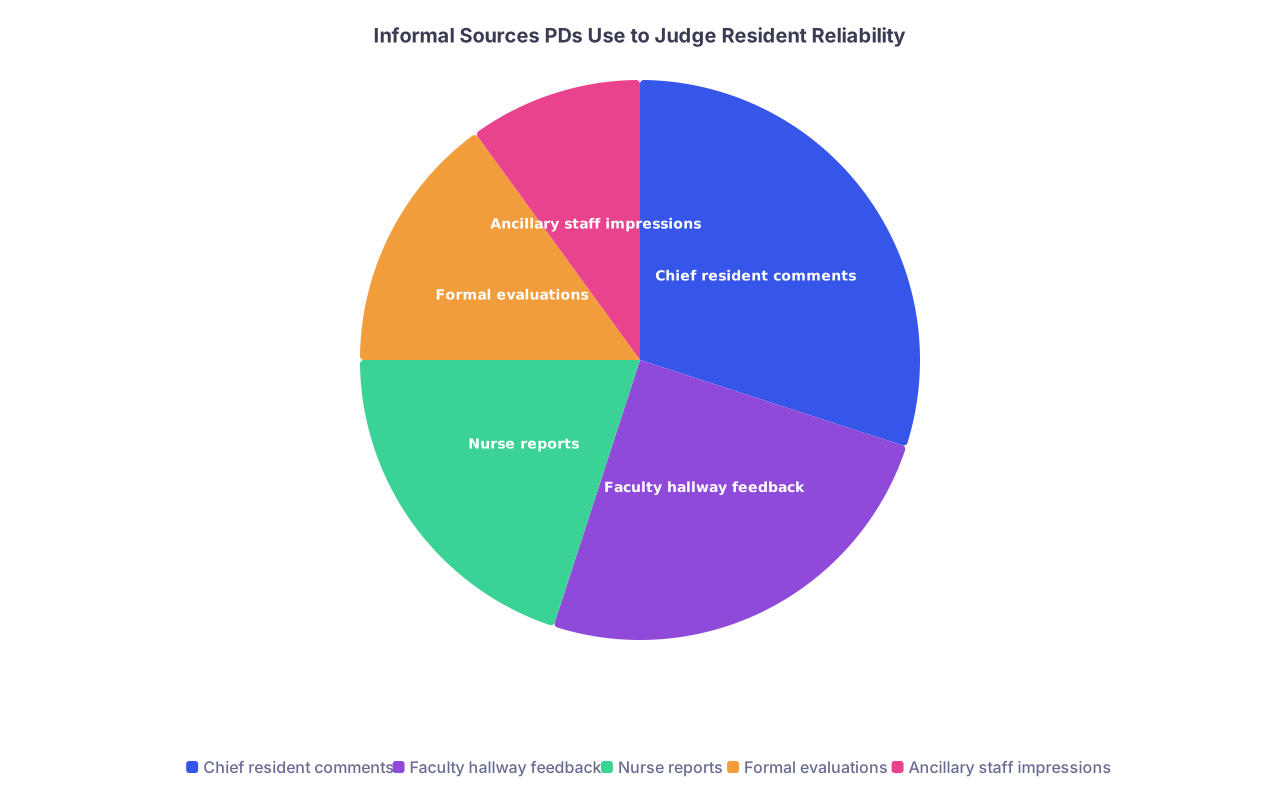
Here’s the uncomfortable truth: most of the data that goes into your reliability reputation comes from offhand comments, hallway chats, and “quick emails,” not formal evaluations. That’s why so many residents are blindsided when they hear, months later, “There have been concerns about your follow-through.”
They aren’t making it up. They’ve been hearing it over and over in the background.
| Category | Value |
|---|---|
| Chief resident comments | 30 |
| Faculty hallway feedback | 25 |
| Nurse reports | 20 |
| Formal evaluations | 15 |
| Ancillary staff impressions | 10 |
That chart matches what I’ve seen in multiple programs: the formal evaluation is the minority piece. The informal commentary is what drives the story about you.
The Silent Surveillance Network
You think you’re being evaluated by attending physicians. You are, but they’re only one node in a network. Let me show you who actually shapes your reliability label.
Chiefs: The Program Director’s Early Warning System
Chiefs are the PD’s sensors. Every PD asks some version of this, usually after a long clinic morning, half-joking but very serious:
“So… who can I trust to run things next year?”
Chiefs don’t pull up MedHub. They answer from memory. They think of:
- Who answers pages
- Who closes the loop on tasks
- Who melts down when the list is heavy
- Who quietly disappears on call nights
I remember a chief going over the call schedule saying, “We can’t put X on with Y. X never finishes sign-out prep, and Y will explode.” That comment later became: “There have been repeated concerns about timely completion of responsibilities.”
You see the difference? The lived behavior becomes abstract language in your file. The real story is in the chief’s head.
Nurses and Night Staff: The Reliability Reporters
Here’s what PDs will not say in orientation: they listen to nurses much more than you think.
When a PD repeatedly hears, “When she’s on, we know stuff gets done,” that’s gold. When they hear, “Yeah, he says he’ll put in the order, but I always have to check,” that’s death for your reliability image.
Nights and weekends are brutal for this. The night charge nurse’s opinion of you has more impact than that one research attending you impressed once.
Admins and Coordinators: The Proxy for Professionalism
You think the program coordinator is just logistics. Wrong. They are the frontline witness for your follow-through on:
- Duty hour logging
- Conference attendance
- Paperwork deadlines
- Credentialing tasks
- Licensing documents
When a PD asks, “Who’s always late with stuff?” your coordinator does not need to look at a spreadsheet. They already know.
And yes, that colors how the PD interprets every borderline situation about you for the rest of the year.

The Six Behaviors They Actually Track (Even If They Deny It)
Nobody writes these out, but attendings and PDs talk about them constantly. I’ve heard these exact phrases in faculty rooms and rank meetings.
| Behavior Pattern | What They Secretly Call It | Typical Consequence |
|---|---|---|
| Delayed orders/tasks | Slow to execute | Less autonomy on busy rotations |
| Incomplete follow-up | Does not close the loop | Reluctance to back for fellowship |
| Missed documentation | Not detail oriented | Harsh comments on evaluations |
| Late responses to pages | Not responsive | Avoided for high-acuity assignments |
| Vanishing on shifts | Disappears | Bad word-of-mouth with nursing |
| Ignoring “small” tasks | Selective follow-through | Labeled as unreliable long-term |
Let’s unpack what these look like on the ground.
1. Orders and Tasks: The 15-Minute Rule
There’s an unwritten clock that starts the second you say, “I’ll put that in.”
Nurses, attendings, and co-residents mentally expect basic, non-emergent orders to be in within about 15 minutes. No one times it. They just notice when it’s always “later.”
Patterns that sink you:
- Saying “I’ll do it right after I finish this note” and forgetting
- Agreeing to place a home health or DME order “tomorrow” and never revisiting it
- Not circling back after an attending says, “We should change that med”
When attendings review charts and see their plan not actually implemented hours later, they don’t say, “The resident was busy.” They say, often word for word, “I can’t trust them to get things done.”
Your reputation is bleeding out in those gaps.
2. Closed-Loop Communication: The Trust Multiplier
This one separates residents PDs promote from residents they just tolerate.
Closed-loop means: you don’t just do the thing; you confirm it’s done to the right person.
Example: Attending on rounds says, “Please call GI and update me.” Two hours later:
- Weak resident: calls GI, gets a recommendation, puts in order, never tells anyone.
- Reliable resident: calls GI, documents, puts in order, then tells attending/nurse, “I spoke with GI, they recommended X, I placed Y, it’s in the note.”
Same amount of work. Completely different signal.
PDs hear about this in recurring language: “She always circles back.” “He keeps me in the loop.” Translation: I trust this person with more responsibility.
3. Documentation: The Quiet Audit Trail
No, they don’t read every note. They don’t have to. They look for friction.
Red flags:
- Repeated late notes delaying discharges
- Admission H&Ps done halfway, missing problem lists
- Poor handoff documentation that leaves the night team blind
- Critical decisions with no documentation trail
What actually reaches your PD is not “notes are late.” It’s, “Whenever he’s on, our discharges back up,” or, “We had no idea what the day team was thinking.”
Your documentation speed and completeness become a proxy for how reliably you manage your work.
4. Response to Pages: The Invisible Stopwatch
I sat in on a faculty meeting once where an ICU attending said, “When I page her, I know she’ll call back within a couple minutes. When I page him, I wait 20 minutes and then call the fellow.”
Nobody had data. They just had patterns in their memory.
Your page-response habits become a trust index:
- Under 5 minutes most of the time = “responsive”
- 10–20 minutes consistently = “slow”
- No response until second or third page = “dangerous”
If nurses and attendings start bypassing you to go straight to the senior or fellow, that gets noticed very fast. You might think it’s them being “helpful.” They see it as you being unreliable.
5. Physical Presence: The Disappearing Act
Every program has That Resident. The one people joke about: “Has anyone seen him?” The jokes aren’t harmless. They calcify into real concerns.
Common patterns:
- Disappearing to “write notes” and being gone for an hour
- Chronic, unexplained absences from the unit on busy call nights
- Long, repeated “bathroom breaks” right when work heats up
- Missing at sign-out prep, wandering in at the last second
What PDs actually hear is, “When it gets busy, she’s never around,” or, “I always feel like I’m covering for him.” Those comments stick harder than a mediocre in-service score.
6. The “Small Stuff” Test
Here’s the part residents underestimate. PDs and attendings watch how you handle things that seem small:
- Do you email back about a schedule question within a day or let it sit?
- Do you finalize your procedure log on time or only when chased?
- Do you acknowledge feedback or go silent and disappear?
If you blow off “small” responsibilities, faculty assume you’ll also drop the ball on big ones. They don’t separate them in their heads. They label the whole package: not reliable.

| Step | Description |
|---|---|
| Step 1 | Small missed task |
| Step 2 | Pattern of small lapses |
| Step 3 | Co residents notice |
| Step 4 | Chief hears complaints |
| Step 5 | PD hears pattern |
| Step 6 | Unreliable label |
| Step 7 | Less autonomy and weaker letters |
How They Log You Without Writing It Down
You won’t see “unreliable” on your evaluation form. It’ll hide behind phrases.
Faculty have their own coded language they use to not sound cruel. PDs all know how to read between the lines.
Common translations:
- “Needs closer supervision” = I do not trust them to close the loop
- “Struggles with time management” = tasks and notes are consistently late
- “Could improve communication” = fails to update team or respond quickly
- “Sometimes overwhelmed” = folds when workload is heavy
- “Developing professionalism” = unreliable with deadlines or commitments
When a PD sees two or three of those phrases across multiple attendings, they don’t say, “Interesting variety of feedback.” They say, “Pattern.”
The Chief and PD Huddle
By the time you’re a senior, chief selection and fellowship recommendations are being discussed using exactly this shadow data.
I’ve sat in those conversations:
- “She’s not the strongest on exam answers, but if she says she’ll take care of something, it gets done.” → Chief material, strong letter.
- “He’s smart, but I get too many emails about dropped balls.” → No leadership role, cautious letter.
- “Nurses love her. They say she always follows up.” → PD fights for her in fellowship calls.
Nobody is tallying checkboxes. They’re replaying stories.
| Category | Value |
|---|---|
| Reliability | 90 |
| Clinical knowledge | 75 |
| Research | 50 |
| Test scores | 40 |
| Personality | 65 |
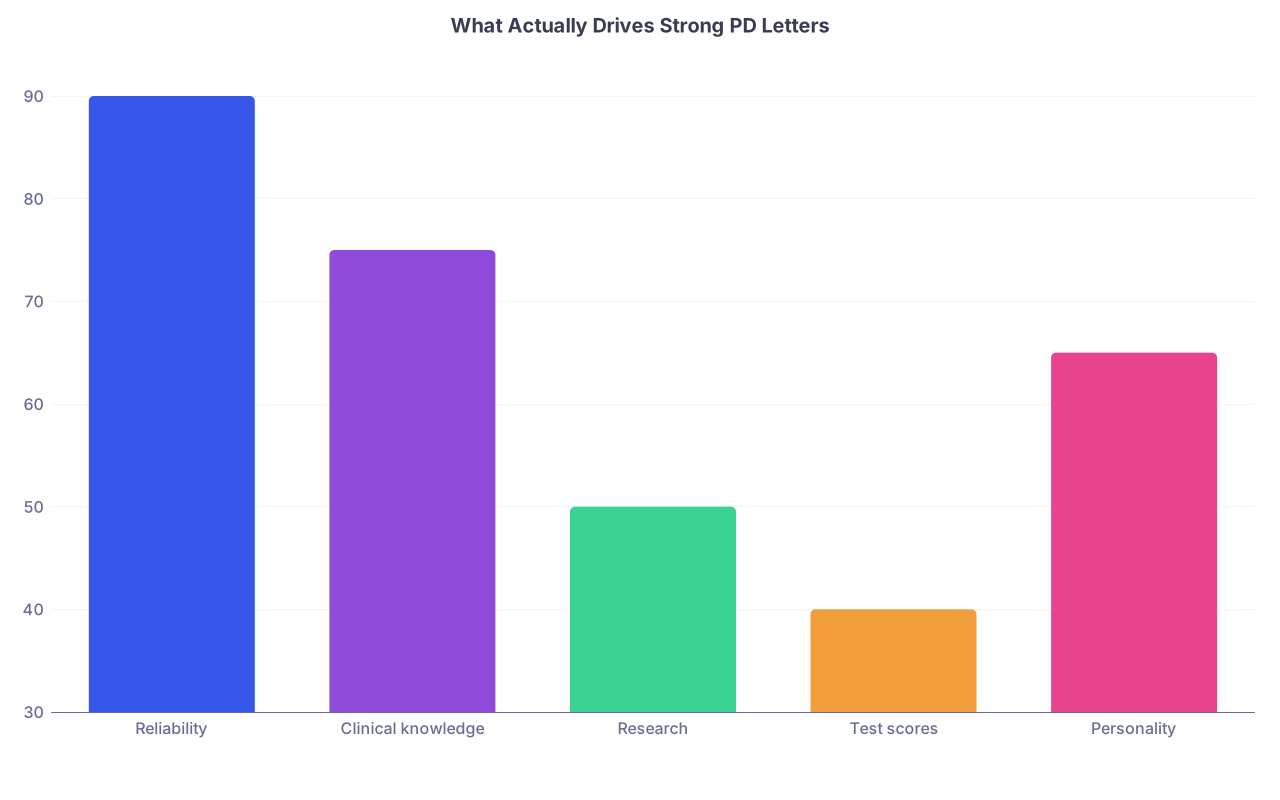
That chart is roughly how the weighting looks in real life. Reliability beats research every day of the week when PDs are picking who they’ll put their name behind.
How to Build an “Ultra-Reliable” Reputation Without Burning Out
Here’s the part that matters for you: you don’t need to be perfect. You just need to be boringly consistent on a few key behaviors that people actually notice.
Rule 1: Over-Communicate by One Step
Force yourself into closed-loop mode. You finish something? Tell the person who cares.
- “I called cardiology; they’ll see the patient this afternoon, and I placed their recommendations.”
- “I sent the email to social work; copied you on it.”
- “I finished those discharges; they should be able to leave by 2 PM.”
This does two things. It proves you actually did the work. And it makes your attending’s life easier. That’s how trust forms.
Rule 2: Create a Ruthless Task Capture System
Your brain will not remember everything. Residents who try to “just remember” tasks are always the ones labeled unreliable.
You need something external and visible:
- A running to-do list in your pocket notebook or phone (if your program allows)
- Every task written the moment it’s assigned, with a little checkbox
- A quick pass through your list before leaving each room and before sign-out
The residents I’ve seen transform their reputation didn’t become smarter. They just stopped trusting their memory.
Rule 3: Set Personal Response Standards
Decide your response times, then live by them:
- Pages: aim to at least respond within 5–10 minutes, even if it’s “I’m tied up with a code; I’ll be there as soon as I can.”
- Emails from chiefs/PD/admin: same day, even if it’s a brief “Received, will complete by X.”
- Calls from consults: answer or call back quickly, even if it’s to negotiate timing.
People aren’t upset that you’re busy. They’re upset when you vanish.
Rule 4: Fix Things Publicly When You Mess Up
You will drop balls. Everyone does. The difference is what happens next.
Bad pattern:
- Misses a task
- Hopes nobody noticed
- Says nothing
- Repeats pattern
Reliable pattern:
- Realizes they missed a task
- Owns it: “I missed that lab follow-up yesterday; that’s on me.”
- Fixes it immediately
- Changes system so it doesn’t happen again
PDs talk about residents who take responsibility in a very specific way: “I trust her.” That’s the phrase you want burned into their mind.
Rule 5: Be Where the Work Is When It’s Ugly
During the worst shifts—ICU nights, crazy ED call, snowstorms—this is what everyone remembers: who was actually visible, moving, helping.
- Stay on the unit when the list explodes, not hiding at a computer in a distant room
- Show your face to the sickest patients and the busiest nurses
- Volunteer for something small but visible: “I’ll handle all the discharge paperwork if you want to focus on admits”
People forgive delayed notes on nights like that. They don’t forgive disappearing.
Rule 6: Use Your Chiefs Strategically
If you’re worried your reputation’s already taken a hit, do not guess. Go to a chief you trust and ask directly:
“I want to make sure I’m seen as reliable. Have you heard any concerns about my follow-through or responsiveness?”
Most chiefs will be brutally honest in private. They already know what people say about you. Better to know and fix it in PGY-1 than discover it during fellowship season.
Example: The Two PGY-2s Who Looked Identical on Paper
At one program, two PGY-2s applied for cardiology. Similar Step scores, similar evals, similar research.
Resident A:
- Sometimes late on notes
- Brilliant on rounds
- Frequently “busy” when cross-cover got heavy
- Nurses described as “smart but hard to reach”
Resident B:
- Average knowledge
- Notes always done by end of day
- Known to call consultants early and follow up
- Nurses: “When she’s on, nights are smoother”
Guess who the PD went to war for on fellowship calls?
Not the genius. The reliable one.
I watched that PD on the phone say, “She’s someone I trust to take care of very sick patients unsupervised.” That single sentence did more than any abstract “excellent clinical skills” ever could.
That is the game you’re actually playing.