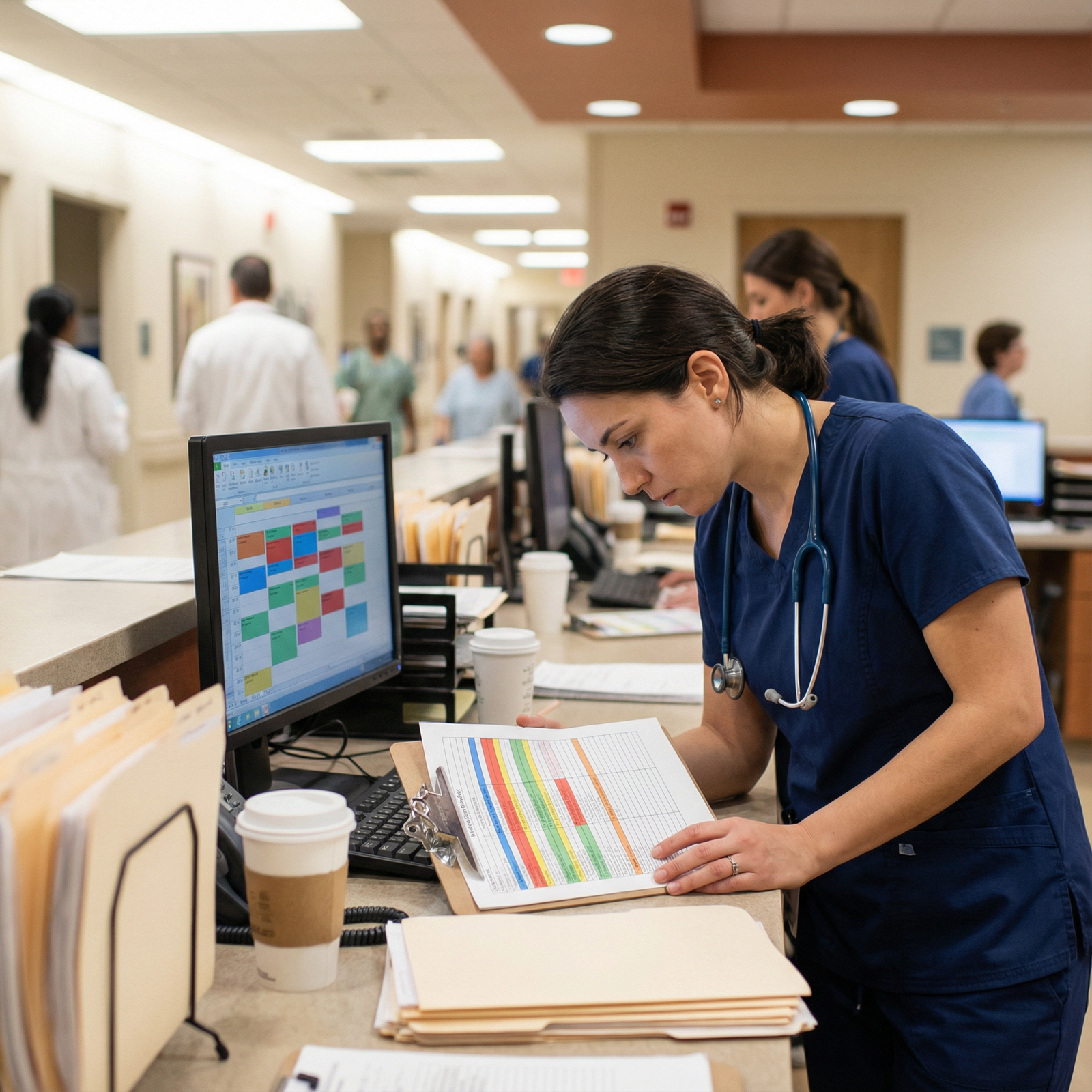
The residents who become chiefs almost never say they want to be chiefs. They just run their day in a way that makes everyone else’s life easier—and faculty notice.
Let me tell you what actually happens behind the scenes when attendings and program leadership talk about “future chiefs.” It’s not some mystical quality. It’s not who quotes the most UpToDate articles on rounds. It’s how you run your list at 6:15 a.m. when no one is watching. It’s whether your intern knows what’s going on without needing to chase you. It’s whether your notes tell the real story without a 15-minute explanation.
Faculty spot future chiefs by their day-to-day organization. Not by their brilliance on one big case conference. By their patterns.
What attendings quietly track (that you don’t see)
There’s this myth that what matters most is how smart you sound on rounds. Wrong. Here’s what faculty actually talk about in workrooms and pre-meetings:
“Her sign-outs are bulletproof.”
“He runs the list like a machine, but his patients still feel seen.”
“If I cover his patients on the weekend, I know exactly what’s happening with each one.”
Those comments are currency. They get repeated to the PD, the APD, the chiefs, the CCC. You never hear half of them. But they accumulate.
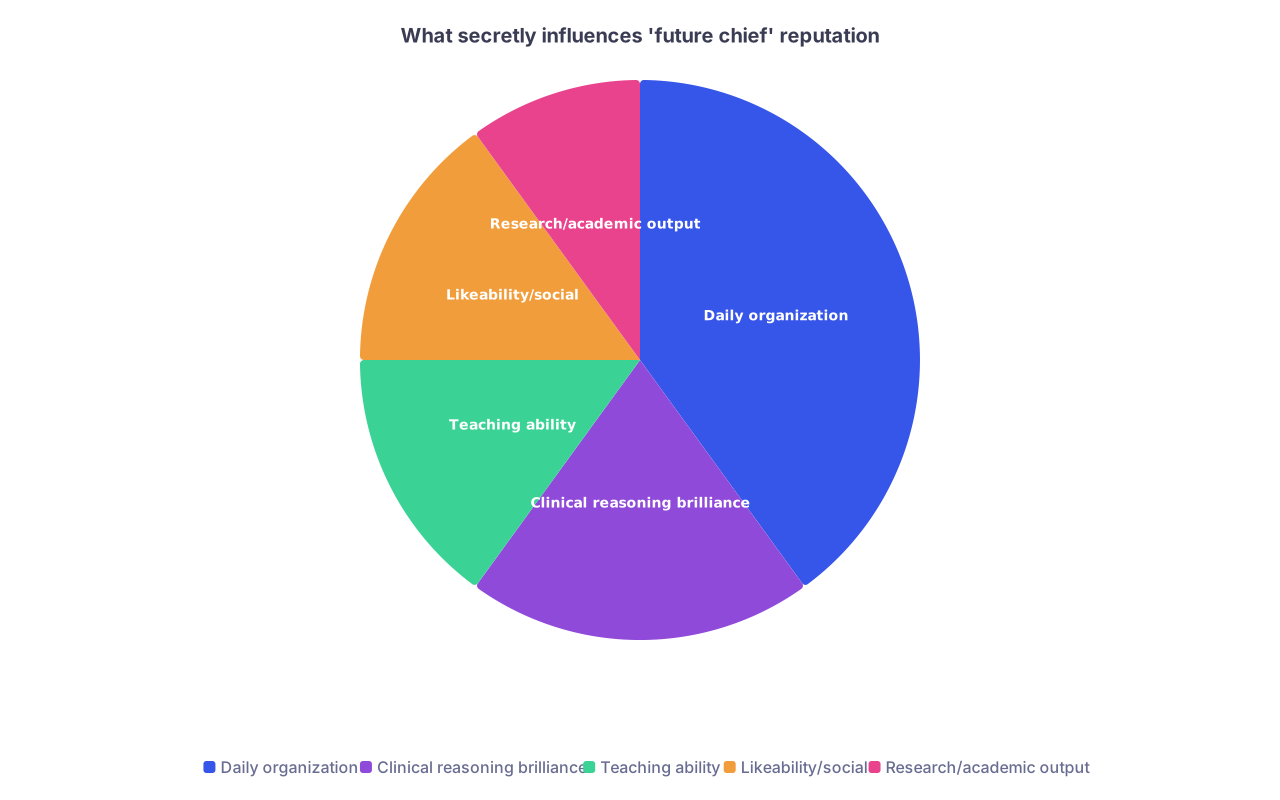
| Category | Value |
|---|---|
| Daily organization | 40 |
| Clinical reasoning brilliance | 20 |
| Teaching ability | 15 |
| Likeability/social | 15 |
| Research/academic output | 10 |
In faculty meetings, no one is saying, “They’re a little chaotic but very smart; let’s make them chief.” Chaos kills trust. Organization builds it.
There are a few specific things we watch, over and over:
- Can you find the answer in under 30 seconds when I ask, “What’s the plan for this thrombocytopenia?”
- Do your sign-outs match what actually happened in the last 24 hours?
- Do you anticipate pain points before they become problems—for patients and the team?
We don’t call it “organization” in meetings. We call it “reliable,” “safe,” “steady,” “people trust them.” But underneath that? It’s systems. It’s structure. It’s how you run your day.
Let’s break down what that actually looks like, minute-to-minute, from someone who’s watched residents get quietly pushed to chief because of this.
The list: where your chief reputation is born
You can tell, within five minutes of looking at a senior’s list, whether they’re ever going to be chief.
Future chiefs don’t carry around a pretty list. They carry around a functional one.
Here’s how it looks when I see a “future chief” list versus everyone else’s:
| Style | What faculty think |
|---|---|
| Random order, messy tasks | Unsafe, reactive, never chief |
| Alphabetical, no priorities | Fine intern, not a leader |
| By room, clear priority flags | Organized, potential leader |
| By acuity, with task timestamps | This is a future chief |
The details that matter:
- Order and grouping
On a decent senior’s list, patients are maybe sorted by room. On a future chief’s list, the grouping itself tells a story. They’ve clearly marked:
- Step-down/ICU borderline patients
- New admissions who still need workup decisions
- Discharge-likely patients for today with boxes around outstanding barriers
They do not just have a column that says “To Do.” Their “to do” is segmented: urgent clinical, time-sensitive coordination, nice-to-have.
- Tasks with owners, not just tasks
Weak lists say “PT/OT,” “cardiology,” “DC meds,” “family discussion.”
Future chief lists say:
“PT/OT – intern paged 0900, re-page if no recs by 1300 – JM”
“Cards – call fellow after TTE reads – me”
“Family – daughter at bedside after 5pm – me”
Every task has an owner. Faculty see that and think: this senior knows where the work lives. That’s a leadership mindset.
- Micro-tracking overnight events
A sloppy team shows up on rounds and finds out about overnight hypotension for the first time when the nurse says, “He was 80s/40s at 3 a.m.”
A future chief senior has on the list, from pre-pre-rounds:
“Ovnt: 3 a.m. BP 82/48 → 500 bolus, repeat BP 102/60, lactate 1.9, no pressors. Reassess standing BP today.”
That level of detail doesn’t happen by accident. It comes from a system: they skim every note, scan vitals, check events before they see you. Predictably. Daily.
Program leadership absolutely notices who runs lists like this. We talk about it.
Pre-rounds: where faculty decide if they trust you
Here’s the hidden rule: if I, as an attending, feel like I know more about the real-time status of your patients than you do, repeatedly, you’re never going to be chief. I might like you. I might say you’re “nice to work with.” But I won’t trust you with a whole program.
Future chiefs use pre-rounds like a military briefing, not a casual walk-through.
What they do differently at 6–7 a.m.
- They scan for fire, not trivia
They’re not reading every line of every note. They’re scanning the system for:
- Who changed rooms
- New consult notes that actually changed management
- Nursing communication notes (underrated and loaded with landmines)
- New imaging/lab results that demand re-thinking the plan
They have a mental checklist. It’s nearly the same every day. They don’t skip it when they’re tired.
- They walk into the room with a story already formed
On rounds, future chiefs sound “smooth” not because they’re geniuses, but because they already went through:
“OVN events → current vitals/trends → new results → today’s main question → what I propose we do.”
They’re not guessing out loud; they’re executing a script they run every morning. Faculty pick up on that pattern by day 2 of an attending week.
- They flag cases for later teaching
This is a big chief tell: they mark 1–2 patients on the list: “good teaching: diuresis physiology” or “CAUTI vs asymptomatic bacteriuria, stewardship talk.”
Later that day, they circle back: “Remember that UTI case? Let’s talk through stewardship quickly.” Chiefs think in layers like this. Their organization includes education as a task, not an afterthought.
Intern and student management: organization radiates outward
Program directors don’t care if you can keep yourself on track. They care whether a team runs well under you. That’s future-chief territory.
The proof is in how your interns and students behave when you’re the senior. There’s a world of difference between:
- A team where interns interrupt rounds three times: “Wait, what are we doing for Mr. X today?”
vs - A team where the intern calmly reads off a clear plan, and the attending just tweaks it.
The second scenario doesn’t happen because the intern is a superstar. It happens because the senior has systems.
What future chiefs do with their teams, quietly
- They do a 5-minute “battle rhythm” talk on day 1
You won’t hear it, but it sounds roughly like:
“Here’s how we’re going to run this rotation. Pre-rounds done by 7:15. I’ll touch base with each of you before 8. You’ll carry X patients each. If something feels unstable, I want to know immediately, not at sign-out. I’ll do teaching daily, but I’m going to protect you from stupid admin stuff where I can. Sign-out by 5:30 is realistic if we stay on top of tasks.”
That’s organization as leadership. Interns feel safer. Students feel oriented. Faculty see the downstream effect.
- They template expectations into the day
Future chiefs don’t just say, “Let me know if you have questions.” They schedule:
- “We’ll huddle at 11:30 and again at 3:30. Bring any stuck tasks or orders you’re not sure about.”
- “Text me a photo of your list the first 2 days so I can help you optimize it.”
That structure saves time and builds their rep as someone who can run a team. When APDs ask interns, “Who did you feel safest with?” these names come up.
- They track the team’s bandwidth, not just their own
A mediocre senior finishes their own tasks then goes to write notes. A future chief looks around and asks:
“Who’s behind? Who’s drowning in prior auths? Who hasn’t eaten? Who hasn’t seen their new admit yet?”
They keep a mental Kanban board of the entire team’s workflow. That’s pure organizational skill applied at the group level.

| Step | Description |
|---|---|
| Step 1 | Pre-rounds scan |
| Step 2 | Huddle with interns |
| Step 3 | Structured bedside rounds |
| Step 4 | Midday task check-in |
| Step 5 | Afternoon admissions |
| Step 6 | 3-4 pm regroup |
| Step 7 | Clean-up, discharge planning |
| Step 8 | High-quality sign-out |
That flow is not an accident. The seniors who follow something like this—consistently—are the ones we start quietly labeling as “future chief.”
Notes, pages, and sign-out: the unsexy things that actually get you chief
None of this is glamorous. None of this shows up in a tweet. But this is exactly what faculty obsess over when deciding who they trust.
Notes: we know who writes “defensive documentation” vs “operational notes”
I’ve seen this conversation so many times:
APD: “How’s she as a senior?”
Attending: “Her notes are outstanding. I can see the actual clinical thinking, plans are crisp, and if I cross-cover on the weekend it’s painless.”
That comment matters far more than, “She gave a great noon conference.”
Future chiefs write notes that:
- Start with the “one-line that actually matters today,” not the admission one-liner from 8 days ago.
- Put the key decision questions in the first 3 sentences.
- Clearly tie today’s plan to yesterday’s events and tomorrow’s likely needs.
It’s not pretty writing. It’s operational writing. And yes, people talk about who does this well.
Pages: how you respond under constant interruption
Nurses know before attendings do who’s a future chief. Because they see you under pressure.
If more than one nurse tells a chief, “When she’s on, I feel reassured,” that gets back to leadership. Fast.
Organized seniors:
- Have a specific method for triaging pages (not “I’ll remember,” because you won’t).
- Close the loop: “Order placed, CBC recheck at 14:00, call me if Hgb <7.5.”
- Document only when it matters, not every single page, but they never lose the important ones.
When I see a senior lose track of a critical page twice in one week, mentally I move them out of the “future chief” bucket. Harsh, but true.
Sign-out: this is the exam you take every single day
If I had to pick one place where future chiefs separate themselves, it’s sign-out.
Programs almost never tell you this, but a frightening amount of patient safety—and your reputation—lives here.
Future chiefs treat sign-out as a high-yield, daily practical exam. They:
- Update the “if/then” for each patient (“If SBP <90 after fluids, call cross-cover and consider transfer; surgery aware, no OR planned tonight”).
- Anticipate what could go wrong. Not just “watch vitals,” but “if delirium worsens, see non-pharm interventions in note; family phone number in chart; sitter already requested.”
- Make it concise but complete. No rambling storytelling, but no “watch the labs” garbage either.
Cross-cover attendings and residents quickly figure out whose sign-outs are gold. Those names come up when chief discussions start.
The subtle signals faculty use when tagging “future chiefs”
You won’t see a checkbox for “organized” on your evaluation, but it’s baked into half the things we write.
Here’s how it really looks on the back end.
| Comment on eval | Translation in chief discussions |
|---|---|
| "Very reliable, team runs smoothly" | Strong chief candidate |
| "Smart, but can be scattered at times" | Unlikely chief, needs structure |
| "Great with patients, documentation occasionally delayed" | Maybe chief if they tighten up |
| "Handles multiple tasks calmly, anticipates needs" | This is leadership material |
When chiefs and APDs sit down to propose chief candidates, they’re not saying, “She color-codes her list, so let’s pick her.” They’re saying:
- “Every time I work with him, I don’t have to worry about loose ends.”
- “Her teams are weirdly efficient without being rushed.”
- “Interns consistently say, ‘I felt like nothing got missed when she was my senior.’”
Those all come from organization. Daily. Boring. Repetitive. Necessary.
And leadership notices who can do boring, repetitive, necessary work at a high level. Every day. Those are the people they trust with chief.
How to quietly become that “future chief” starting tomorrow
I’ll give you the blueprint. Use it, adapt it to your style, but don’t ignore it.
Build a non-negotiable daily structure
You need a repeatable skeleton for your day. Not vibes. Not “I’ll figure it out.”
Something like:
- 6:00–7:00 a.m.: Solo pre-rounds: vitals, overnight events, labs, read key notes.
- 7:00–7:15: Quick sync with each intern: “Who worries you most?” “What’s the one thing you need help with before rounds?”
- Rounds: You lead with problem lists that reflect reality and a clear today-plan.
- 11:30: Midday huddle: “What’s pending? What’s stuck? Who needs help?”
- 3:30: Second huddle: clean up tasks, clarify discharges, prep sign-out.
- 4:30–5:30: Notes and final orders, then sign-out done before you’re brain-dead.
The exact times don’t matter. The consistency does. Future chiefs are predictable in the best way.
Create a system for capturing and clearing tasks
If your method for tracking tasks is “I’ll remember” or random sticky notes, you’re already behind.
I’ve seen seniors use:
- A single, ruthlessly structured notebook.
- A dedicated “Tasks” section in their list.
- A digital task manager on their phone used properly between pages and notes.
I don’t care what you use. Faculty don’t care what you use. We care whether tasks disappear into the void or get calmly closed out.
Protect your brain from clutter
Future chiefs don’t look frantic even when they’re busy. That’s not personality; that’s systems reducing their cognitive load.
They:
- Standardize what can be standardized (same order for pre-rounding review every time).
- Pre-build order sets and smartphrases that fit their patients and service.
- Offload small but important things to a checklist: lines/tubes, DVT prophylaxis, code status confirmed, discharge readiness.
It looks like “they’re just on top of things.” It’s actually: they don’t trust their working memory and instead trust systems.