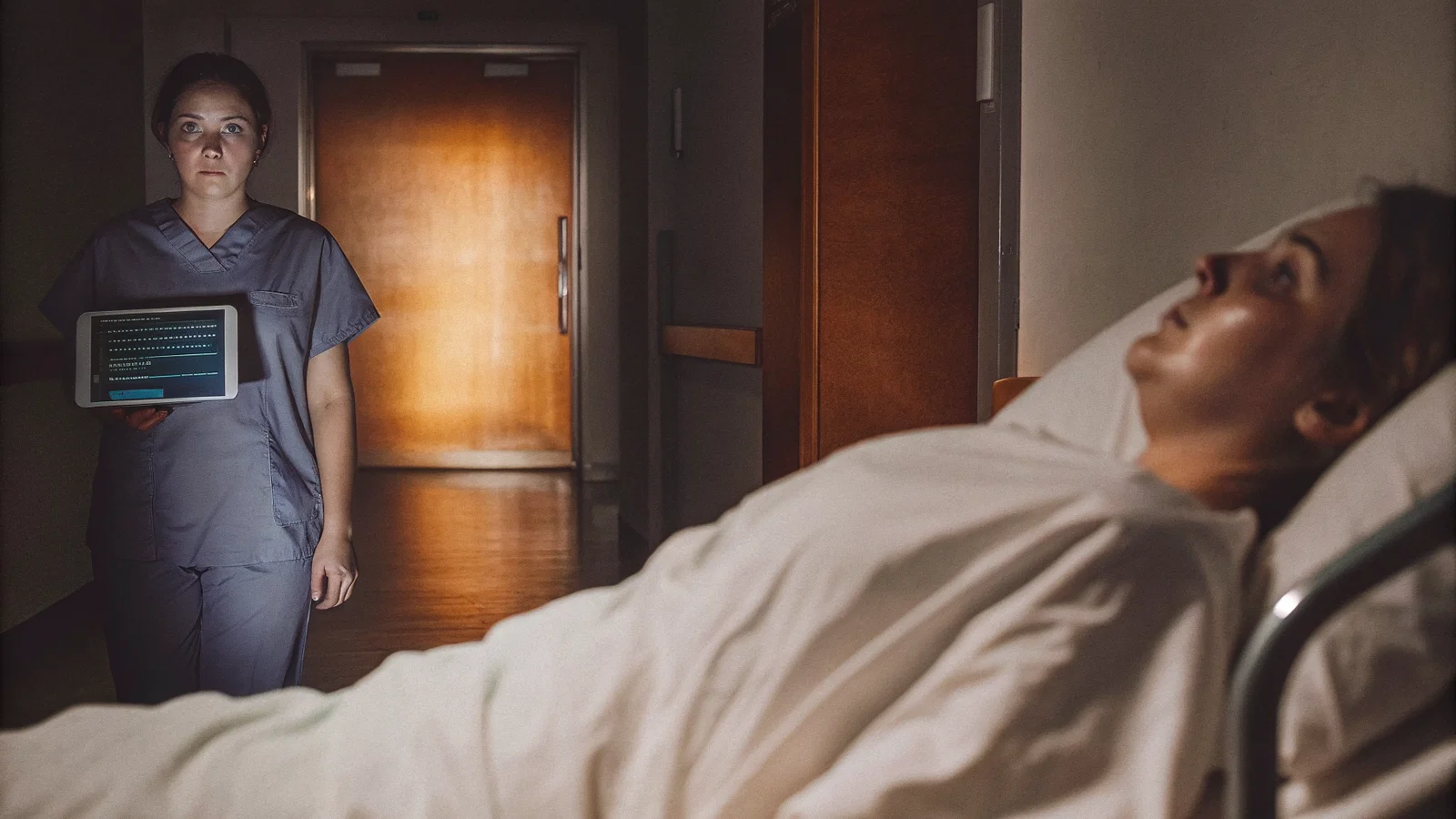
Are we quietly trading patient safety for Wi-Fi convenience?
That's the question that's been eating me alive since I started reading about hybrid rounding models. Everyone keeps saying virtual rounds are the future, efficient, data-rich, battle-tested during the pandemic. And all I can picture is myself, eight months into intern year, nodding at a pixelated patient on a tablet while a soft lung crackle goes unheard and an abdomen quietly turns rigid somewhere on the other side of a buffering screen.
So I did what anxious people do. I read everything. The multi-center trials, the workflow studies, the burnout surveys. And here's the strange part: the data calmed me down and wound me up at the exact same time.
Start with the headline finding, because it's genuinely reassuring. Across the large comparisons, virtual and bedside rounding produce statistically similar adverse event rates. Mortality, ICU transfers, rapid response activations, the differences sit inside the margin of noise. That should make you exhale. It made me exhale for about four seconds.
Because then you find the outliers. The near-miss case reports. The delayed escalation where a "stable" trend line on a dashboard masked a patient who was quietly turning grayer by the hour. Rare? Absolutely. Terrifying? Also absolutely. Those are the stories my brain queues up at 2 a.m.
What actually helps, and I mean measurably helps, not platitudes, is the infrastructure hiding underneath the screen. Modern EHRs pull vitals in continuously. Early-warning scores auto-calculate and flag deterioration before a human notices. Standardized virtual-rounding checklists force you to verbally confirm the things your hands can't: work of breathing, mental status, lines, drains, pain trajectory. The safety net is real. It's just invisible, which is exactly why people wired like us don't trust it until we've stared directly at it.
The Efficiency Trap: Are We Burning Out Faster With Screens?
On paper, virtual rounding wins the stopwatch war and it isn't close. The workflow studies clock virtual rounds at roughly 15 to 20 percent faster, around eight minutes per patient versus twelve at the bedside. No trekking between wards. No hunting for the one chart that's always mysteriously missing. Clean, quick, done.
And yet nearly every resident I've talked to describes virtual rounds as more exhausting. Not less. More.
That confused me until I looked at the cognitive load numbers. Self-reported stress scores run higher for virtual rounds, about 7.2 out of 10 versus 6.8 bedside, and error rates tick up slightly too, 2.1 versus 1.9 per hundred rounds. Small gaps. But here's what nobody warns you about: screen-based rounding isn't easier thinking, it's compressed thinking. You're flipping between overlapping EMR windows, cross-referencing labs against a video feed, half-listening for the next alert chime while trying to actually reason about a human being.
Alert fatigue is the quiet killer here. I once watched an intern I was shadowing, sharp, meticulous, frankly better than I'll ever be, swipe away a notification banner mid-round because it was the ninth one in twenty minutes. It was a critical potassium. She caught it ninety seconds later on recheck and went pale anyway. Ninety seconds of nothing, and she still talks about it.
So yes, the efficiency is real. So is the hangover. Virtual models pair their speed with a measurable spike in self-reported mental exhaustion, and some programs are quietly tracking secondary trauma symptoms in their hybrid teams. If you're prone to catastrophic thinking (hi, welcome), the fix is structural, not willpower-based. Batch your notifications instead of living inside them. Enforce screen-down moments, two minutes between patients, eyes off glass, an actual reset. Protect your stamina like it's a clinical resource, because it is one.
When Technology Fails: Surviving the Silent Killers
Now the nightmare scenario. The one that genuinely keeps me up.
Full hospital IT outage. Or worse, not a clean outage, but a sickly half-connection: audio lagging three seconds behind video during a rapid response, vitals freezing mid-trend, you guessing whether the silence on the line means stability or catastrophe. The delayed-intervention data shows it's rarely one big failure that hurts patients. It's small digital friction compounding, a frozen screen here, a garbled handoff there, until smart people start making decisions on stale numbers and guesswork.
My roommate, an intern at a large academic center, lived this in her second month. The network buckled mid-round and she froze. Not clinically, literally. She didn't know the backup protocol because nobody had shown her one. An older nurse handed her the paper downtime binder and a phone list, and the whole thing resolved in four minutes. Four minutes that felt like four years, she said.
Don't be her. Be the nurse.
The analog anchor method is simple: a physical pocket notebook with your patient list and active issues, handwritten critical values updated each morning, paper discharge skeletons, and your charge nurse's direct line saved in your actual phone, not the hospital app, your phone. When the screen stumbles, you pivot in seconds instead of spiraling.
Look at that flowchart. Memorize the shape of it. Connection stable, proceed. Connection lagging past a few seconds, you don't stand there troubleshooting like an IT tech while a patient waits. You switch to phone and paper, notify the charge nurse and attending, and only return to the bedside if the situation is critical. That red box is the moment most residents panic. Having the decision pre-made is what turns panic into procedure.
What Top Programs Secretly Watch During Interviews & Rotations
Here's a fear I didn't expect to have: what if my relationship with the screen itself is being graded?
It is. Sort of. Admissions committees and attendings notice the subtle tells, the resident who reads vitals off a tablet while the patient talks to the back of their head, the applicant who answers every scenario with "I'd check the chart" and never mentions, you know, touching the patient. Default to the screen and you look detached. Refuse the screen and you look like a dinosaur who'll fight every workflow the program spent millions building. Either way, doomed. My brain loves this dilemma. It's a perfect trap with no exits.
Except there is an exit, and the communication scoring data points right at it. Candidates and residents who verbalize what the screen shows, saying "her O2 sats dipped to 89 overnight, let's look at her work of breathing together", actually score higher on team cohesion metrics than people who either hide behind the tech or ignore it. Speaking the data out loud turns the screen from a wall into a bridge.
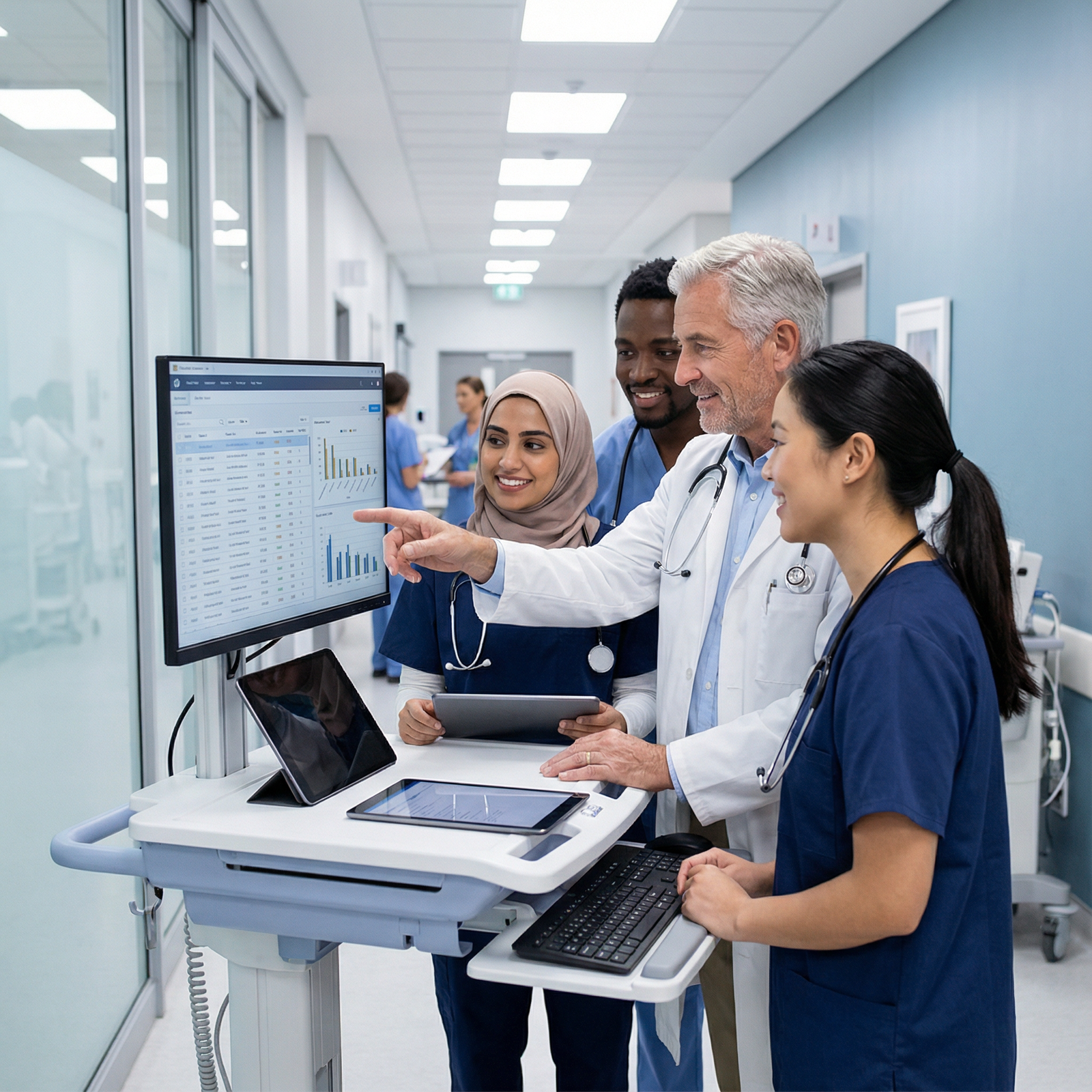
That's the reframe that finally unclenched my jaw: programs aren't judging the tool. They're watching how you communicate while the tool is in the room. Adaptability is the survival superpower here, not loving the technology, not hating it, just narrating your clinical reasoning through it like a doctor who happens to be holding a tablet.
Your Survival Blueprint: Turning Data Into Confidence
Let me say the thing I needed someone to say to me.
The fact that you're worried about this, that you've read this far, that you're mentally rehearsing tech failures before you've even matched, is not a flaw. It's the exact vigilance that makes someone safe at 3 a.m. when the alarms are screaming and everyone's exhausted. Catastrophic thinkers make excellent contingency planners. We just have to aim the catastrophizing at preparation instead of paralysis.
Because here's what the data actually says, stripped of spin: neither model is flawless. Bedside rounding carries its own risks, interruptions, inconsistent documentation, the physical impossibility of being everywhere at once. Virtual rounding trades some of that for speed and monitoring depth, at the cost of cognitive load and tech dependency. The system knows this. That's why attendings double-check, why escalation pathways exist, why checklists were invented. Nobody expects perfection. They expect preparation.
So prepare. Concretely:
- Practice saying electronic findings out loud, in plain language, like you're already presenting on rounds.
- Run one mock tech-fail drill before residency starts, seriously, role-play a frozen screen with a friend and pivot to phone-and-paper in real time.
- Normalize asking for bedside confirmation when something feels off on video. It reads as thoroughness, never incompetence.
You are not walking into a trap. You're walking into a system that expects adaptation, not flawlessness, and you now understand the actual numbers instead of the horror stories your anxiety wrote at midnight. That knowledge is the difference between arriving at rotation calm and arriving cornered. You'll arrive calm. I believe that for you. I'm working on believing it for me.