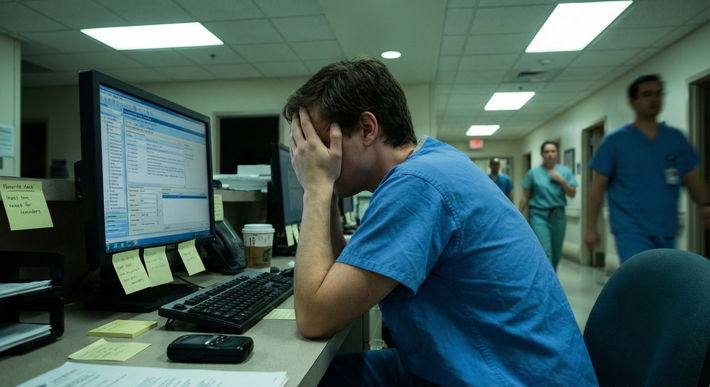
You're not imagining the fear. A lot of residents genuinely worry that the second they pull out a notebook on rounds, an attending silently labels them weak, unprepared, or worse, unsafe. I've heard the whisper campaign for years: If you need to write it down, you should've known it already. That line is nonsense, and it causes real damage.
The Anxiety That Keeps Residents Up at Night
This fear sticks because residency is built on constant interpretation. Every gesture feels graded. Where you stand. How fast you answer. Whether you make eye contact. Whether you remember the overnight potassium, the new oxygen requirement, and the exact wording of the cardiology recommendation from 6:12 a.m. You start believing that even touching a pen is a performance.
That's how the myth spreads. Not through evidence. Through hand-me-down panic.
A senior resident tells an intern, "Don't write too much during rounds or Dr. X will think you're lost." An exhausted PGY-2 watches a classmate get pimped after glancing at their list and decides the notebook caused it. Someone gets corrected for missing a plan change, and the story mutates into: "Attending hates note-takers."
That's residency culture at its worst. Half-truths turning into rules.
And look, your anxiety is understandable. You're working in a hierarchy where tiny mistakes get noticed and confidence gets rewarded, sometimes even when confidence isn't deserved. I've seen interns try to memorize everything because they wanted to "look sharp," then botch insulin adjustments, forget family updates, or misstate antibiotic durations. That's the real mistake. Not writing. Pretending you don't need to.
Here's the protective truth: attendings do not care that you write things down nearly as much as you think they do. They care whether you are present, accurate, organized, and responsive. Big difference.
What residents often miss is this: note-taking only looks bad when it replaces thinking or listening. If you're scribbling while the attending is asking you a direct question, yes, that's a problem. If you're writing down a six-part wound care plan so you don't miss step four later, that's called being responsible.
Don't let residency culture trick you into choosing appearance over reliability. That trade is dumb. And dangerous.
(See also: how program directors quietly track your reliability and follow-through for more.)
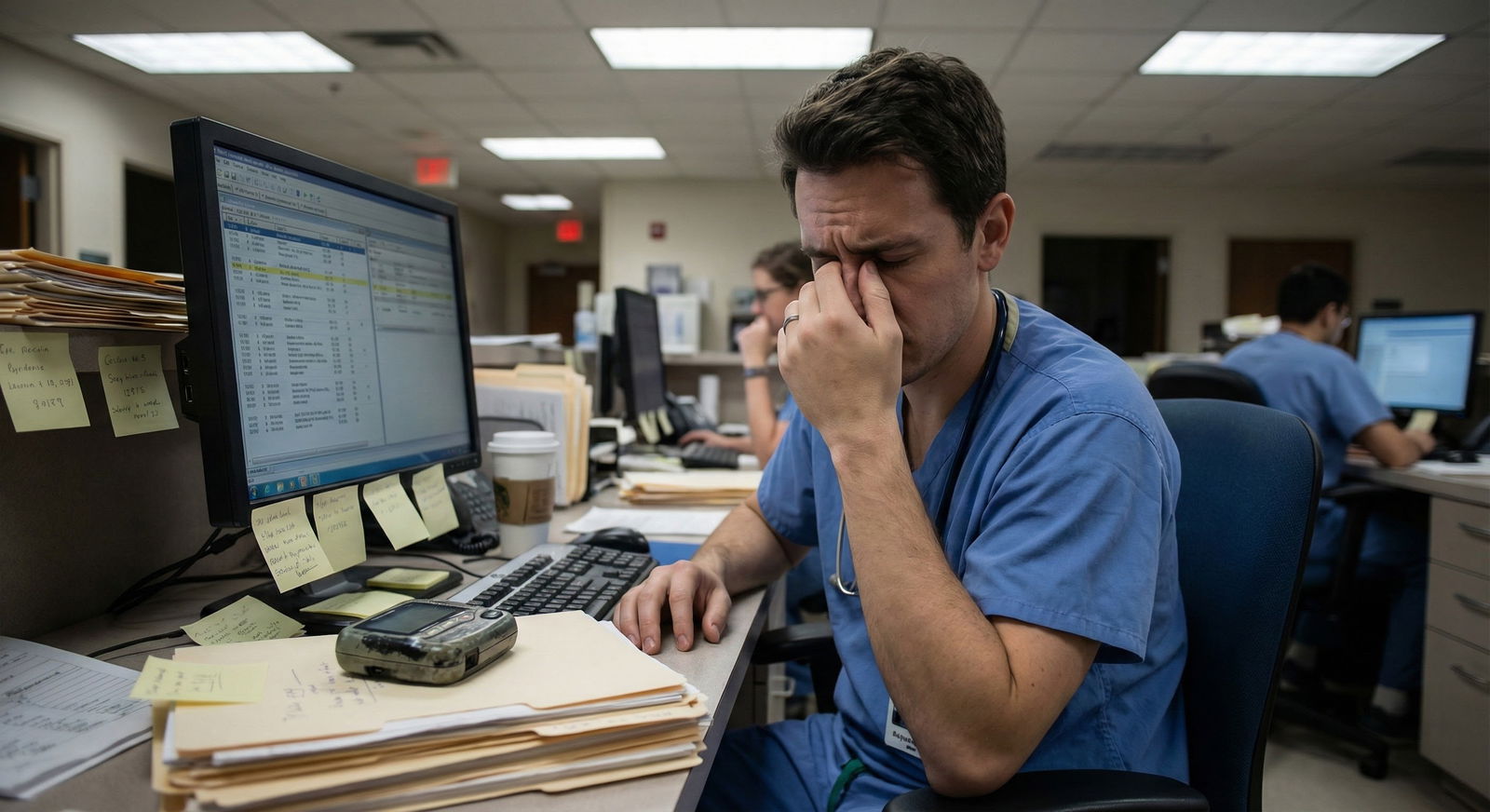
Where the Myth Originates: Separating Fact from Fiction
This myth didn't appear out of nowhere. It came from a real observation that got overgeneralized.
Historically, some attendings trained in eras where memory was treated like a moral virtue. If you couldn't retain ten patient plans after a pre-round at 5 a.m., the assumption wasn't that the workload was absurd. The assumption was that you were soft. That culture still lingers. Bad habits linger longest in medicine.
But the real issue was never the act of writing. It was the behavior surrounding it.
There's a huge difference between:
- Efficient documentation of key tasks
- Frantic note-taking because you're lost
- Writing so constantly that you stop participating
- Looking down when you should be tracking the conversation
Attendings notice disruption, not paper.
If a resident writes while:
- missing updates,
- failing to answer follow-up questions,
- delaying order entry,
- or clearly using the notebook as a shield,
then yes, the impression turns negative. And fairly so.
I've seen this happen. One resident copied every word said on rounds like a court stenographer. Sounds diligent, right? It wasn't. He stopped synthesizing information. Missed direct instructions. Couldn't summarize the plan two minutes later. The attending didn't think, writing is bad. The attending thought, this resident is disengaged and overwhelmed.
That distinction matters.
Another source of the myth: peer misuse. A few residents have used note-taking as cover when they were unprepared. Head down. Minimal eye contact. No contributions. Then they say afterward, "I think the attending judged me for writing." No. They judged you for disappearing.
That's how a stereotype forms:
- A few people use a behavior poorly.
- Faculty react to the poor execution.
- Residents simplify the lesson into a fake absolute.
And then everyone suffers from the wrong rule.
Here's the better rule: write selectively, not compulsively. Listen first. Capture what matters. Stay visibly engaged.
The Reality: What Attendings Actually Think About Note-Taking
Most attendings appreciate note-taking when it serves patient care. Full stop.
They don't want a resident who performs confidence and then forgets:
- the nephrology sodium target,
- the family meeting time,
- the exact steroid taper,
- or which drain output needed rechecking by 2 p.m.
That resident is far more dangerous than the one who quietly writes down the plan and executes it.
When attendings react negatively, it's usually because they're seeing one of two things:
1. Writing to remember
This is good.
- You jot down medication changes
- You capture contingency plans
- You note tasks with deadlines
- You preserve exact recommendations from consultants
That behavior signals conscientiousness.
2. Writing to avoid engagement
This is bad.
- You bury your face in the page
- You stop answering questions
- You miss teaching points
- You use writing as a hiding place when you're unprepared
That behavior signals insecurity and disorganization.
Attendings can tell the difference faster than you think.
And yes, context matters. In a straightforward patient with one overnight issue, nonstop note-taking can look odd. In a 17-patient list with antibiotics changing, discharge barriers stacking up, and surgery wanting repeat imaging after noon labs, writing is not just acceptable, it's smart.
The residents who get in trouble are rarely the ones who write. They're the ones who:
- don't prioritize,
- don't close the loop,
- and can't translate notes into action.
That's the trap. Don't fall into it.
My position is blunt: accurate note-taking is a professional strength. Sloppy presence masquerading as confidence is not.
I've watched strong residents do this well. They maintain eye contact, hear the discussion, then jot quick phrases:
- "hold losartan if Cr rises"
- "call daughter after CT"
- "ask ID if 7 vs 10 days"
- "ambulate before discharge"
Short. Functional. Actionable.
That looks competent because it is competent.
What attendings actually value on rounds usually comes down to four things:
- You know your patients.
- You listen when the plan changes.
- You ask clarifying questions when needed.
- You execute afterward without dropped balls.
If writing supports those four things, you are helping your reputation, not hurting it.
One more hard truth: some residents obsess over optics because they're trying to control what can't be controlled. There will always be an attending with odd preferences. Fine. Adapt where reasonable. But don't build your practice around one person's pet annoyance if it compromises safety and accuracy. That's how avoidable errors happen.
When Note-Taking Saves You: The Right Times to Write
There are moments on rounds when not writing is the bigger mistake. Memorization is not a badge of honor when the plan is complicated.
Write things down aggressively when you hear:
Complex medication details
This includes:
- changing insulin regimens,
- anticoagulation timing,
- steroid tapers,
- diuretic strategies,
- antibiotic duration and stop dates.
Don't trust your post-call brain to "just remember" that the cefepime ends after the evening dose unless cultures change and the PICC should wait until repeat blood cultures are negative for 48 hours. That's exactly how errors sneak in.
Multi-step action items
Classic example:
- repeat CBC at noon,
- if hemoglobin drops, call GI,
- if stable, resume DVT prophylaxis,
- update family,
- place discharge planning consult.
That is not one task. That is a cascade. Write it.
Consultant recommendations
Consult services often give dense plans with qualifiers. Not writing those down is reckless. For example:
- "No intervention unless pain worsens"
- "Trend lactate only if hypotensive"
- "MRI only if neuro exam changes"
- "Tube feeds restart after speech reassessment"
A single missed qualifier can create a bad day.
Long patient lists
By patient 11, your working memory is lying to you. You think you've got it. You probably don't. Especially if multiple patients have similar problems, AKI, oxygen wean, pending placement, borderline fevers. That's where crossed wires happen.

A good practical method:
- Listen to the whole recommendation first.
- Confirm if needed: "Just to clarify, continue vanc until cultures finalize?"
- Then write a shorthand task line.
- Circle anything time-sensitive.
That's clean. Efficient. Safe.
Red Flags: When Note-Taking Undermines Your Standing
Here's where residents get burned. Not by writing itself, but by writing badly.
Red flag 1: Writing during your own presentation
If you're presenting and simultaneously scribbling, you look scattered. Present first. Listen to feedback second. Then write the final plan. Trying to do all three at once is how you miss questions and sound disorganized.
Red flag 2: Missing verbal cues
If the attending says, "Actually, let's hold discharge," and you keep writing the old plan without reacting, that's a problem. Your ears have to stay ahead of your pen.
Red flag 3: Using the notebook as a bunker
This one is obvious to everyone except the resident doing it. Head down. No eye contact. No contribution. No ownership. You think you look busy. You actually look avoidant.
Red flag 4: Copying everything without synthesis
Do not become a transcription machine. Write:
- decisions,
- tasks,
- thresholds,
- deadlines,
- and changes.
Do not write every sentence anyone says. That's useless.
Red flag 5: Failing to convert notes into action
This is the reputation killer. If you write beautifully and still forget to:
- place the consult,
- update the order,
- call the family,
- or check the repeat labs,
then your notebook becomes evidence against you. Brutal but true.
What To Do Instead: Safe, Competent Note-Taking on Rounds
Use this approach. It works.
Keep your notes short. Think verbs and triggers, not paragraphs.
Maintain visual engagement. Look up often. Nod. Respond. Be part of the conversation.
Write after key decisions, not during every word. Let the discussion happen. Then capture the conclusion.
Clarify unclear plans immediately. A five-second question beats a five-hour error.
Review your list right after rounds. Don't wait until noon and wonder what your own handwriting means.
Turn notes into orders and tasks fast. Notes are not the endpoint. Execution is.
If an attending seems sensitive to it, adapt visibly. Say, "I'm just jotting down the final action items so I don't miss anything." That usually ends the issue on the spot.
Bottom line: writing things down mid-round does not make you look incompetent. Looking disengaged, confused, or unreliable does. Don't confuse the tool with the misuse of the tool.
If you want the safest path, use note-taking as a sign of discipline. Not a crutch. Not camouflage. Discipline.