
Here’s the myth everybody repeats with absolute confidence: physicians should either claim Social Security as early as possible because “they won’t really need it,” or delay until 70 because “that’s the smart move.” Both versions are lazy. Both are often wrong.
Social Security claiming isn’t a virtue test. Delaying isn’t proof that you’re disciplined. Claiming early isn’t proof that you’re careless. It’s a planning decision. That’s it. And like most planning decisions, the right answer depends on a handful of boring, powerful variables that people love to ignore because slogans are easier than math.
What actually matters? Longevity. Spousal and survivor benefits. Taxes. Whether you’re still working. Whether you have liquid assets to bridge the delay years. And your tolerance for spending down your portfolio while waiting for a larger guaranteed check later. That’s the real list. Not “I heard on a podcast that doctors always delay.” Not “my brother-in-law claimed at 62 and invested the difference.” Anecdotes are not strategy.
This article is for physicians who want the adult version of the conversation. No tribal advice. No folklore. Just the stuff that actually moves the decision.
This article is for educational purposes only and isn’t financial, legal, or tax advice. Social Security rules, taxes, and outcomes vary by household, state, and timing, so run your numbers with a qualified planner, tax professional, or attorney before you act.
Why the Usual Advice Is So Often Wrong
The most common bad advice is “delaying always wins.” No, it doesn’t. There’s usually a breakeven age where the larger monthly benefit from waiting catches up to the smaller checks you could’ve received earlier. If you die before that point, delaying may have been a losing bet in pure cash terms. If you live well past it, delaying may look brilliant. That’s the math.
But here’s where people get sloppy: breakeven analysis is not the decision. It’s just one piece of it. It assumes a neat world where you only care about cumulative dollars and ignore taxes, survivor benefits, inflation protection, portfolio withdrawals, and what happened to your assets while you waited. Real retirement doesn’t happen on a whiteboard.
<chart-data-api config='{"type":"line","title":"Claiming Age Breakeven Isn't the Whole Story","labels":["62","67","70","75","80","85","90"],"datasets":[{"label":"Claim at 62","values":[1,18,35,52,69,86,103]},{"label":"Claim at 67","values":[0,1,17,34,51,68,85]},{"label":"Claim at 70","values":[0,0,1,16,31,46,61]}],"yAxisLabel":"Illustrative cumulative benefit units"}'>
Then there’s the physician-specific myth: “Doctors are high earners, so of course they should delay to 70.” That sounds sophisticated. It isn’t. Higher income doesn’t make guaranteed, inflation-adjusted lifetime income less valuable. If anything, many physicians enter retirement with a portfolio that looks large on paper but is carrying sequence risk, tax complexity, and spending habits built during peak earning years. A larger Social Security benefit can be meaningful precisely because it’s not market-based and it lasts as long as you do.
The opposite cliché is just as flimsy: “Take it early and invest the difference.” Fine. Under what assumptions? What return are you earning after taxes? How much volatility are you willing to stomach? Will you actually invest the difference consistently, or will it quietly become travel, home upgrades, and helping adult children? I’ve seen that movie. It rarely sticks to the spreadsheet.
Social Security is not just an investment account with a claiming switch. It’s part pension, part longevity insurance, part inflation hedge. Treating it like a brokerage side bet misses the point.
What Actually Matters for Physicians
Longevity matters. Obviously. But not in the cartoonish way people discuss it. You do not need to pretend you can predict your exact lifespan from your resting heart rate and a colonoscopy schedule. What you need is a reasonable estimate of whether your household is more likely than not to benefit from higher lifetime guaranteed income. Family history matters. Your own health matters. Smoking, diabetes, frailty, prior cancer, severe cardiovascular disease—those matter more than a vague “doctors live longer.”
And yes, physicians as a group often have better longevity than the general population. That does not mean you should automatically delay. A 67-year-old orthopedic surgeon in excellent health with a younger spouse and ample taxable assets is a different case from a burned-out internist with health concerns who wants to cut withdrawals and simplify life at 62 or 64.
Marital status can matter more than your own ego about optimizing your personal check. For married couples, especially where one spouse had much higher lifetime earnings, survivor benefits can dominate the conversation. The larger benefit often continues for the surviving spouse. That means delaying the higher earner’s claim can be less about “winning” individually and more about protecting the household later. I’ve watched couples obsess over breakeven ages while ignoring the widow or widower sitting in the middle of the analysis. Bad mistake.
Work plans also matter, and physicians love to overlook this because many don’t retire cleanly. They step down. They locum. They supervise. They do part-time telemedicine. If you claim before full retirement age and keep earning above the annual limit, the earnings test can temporarily reduce benefits. That doesn’t mean the money is “lost forever,” but it absolutely changes timing and cash flow. On the other hand, if you wait beyond full retirement age, delayed retirement credits increase the benefit. Timing while still working is not trivial.
Taxes are another place where simplistic advice goes to die. Social Security benefits can become partially taxable depending on provisional income. IRA withdrawals, Roth conversions, pension income, capital gains, and even municipal bond interest can affect the tax picture. State treatment varies too. For some physicians, claiming earlier during lower-income years can fit neatly into a tax-window strategy. For others, delaying may pair better with planned withdrawals, Roth conversion years, or the onset of required minimum distributions. The point isn’t that one approach always saves taxes. The point is that taxes can make a superficially “optimal” claiming age look mediocre in the context of the whole plan.

Then there’s cash flow. Underappreciated. If delaying Social Security means you need to pull heavily from your portfolio in your 60s, that may or may not be smart depending on market conditions, account types, and your comfort with depletion risk. Some households sleep better creating an earlier guaranteed income floor. Others are perfectly happy bridging with taxable assets because they value a larger inflation-protected benefit later. Neither camp gets a medal. The winner is the one whose plan holds up under stress.
The Decision Framework: How to Think Like a Planner, Not a Myth Follower
Here’s the framework I actually like. Start with seven questions: How long do you reasonably expect at least one spouse to live? Is there a meaningful age or earnings gap between spouses? How much guaranteed income do you already have from pensions, annuities, or other sources? How flexible are your assets? Do you carry debt into retirement? What does your spending really look like—not the fantasy version, the real one? And are you behaviorally disciplined enough to follow through on whatever strategy you choose?
If the answers point to long life expectancy, a younger or financially dependent spouse, strong bridge assets, and a need for more inflation-protected guaranteed income later in life, delaying can be extremely rational. In those cases, Social Security is doing what it does best: insuring against living a long time and against the portfolio having to carry everything.
If the answers point to health concerns, a desire to reduce withdrawals now, weak liquidity, continued uncertainty about work, or a household strategy where earlier claiming supports better coordination, then early claiming can also be rational. Not glamorous. Rational. There’s a difference.
What I reject is the macho version of retirement planning where delaying to 70 is treated like a badge of sophistication. It’s not. Sometimes it’s smart. Sometimes it’s just performative optimization that ignores the family balance sheet.
The best claiming age is often a family strategy, not an individual trophy. That’s the mindset shift. You’re not maximizing a single lever. You’re coordinating insurance, taxes, investments, and household behavior.
Common Misconceptions, Corrected
Myth: physicians should always delay because they live longer. Reality: averages are not destiny. Higher average longevity helps the case for delay, but it does not erase personal health realities, spousal dynamics, or liquidity constraints.
Myth: Social Security is too small to matter for doctors. Reality: that’s nonsense. A guaranteed, inflation-adjusted income stream can meaningfully reduce portfolio withdrawal pressure, especially in bad market years. “Too small to matter” is usually said by people who don’t understand sequence risk.
Myth: taking it early is throwing money away. Reality: sometimes taking it early supports a better overall household plan. It can reduce stress, preserve spending flexibility, or fit a tax strategy better than waiting.
Myth: the claiming decision is irreversible and therefore delay is safer. Reality: irreversibility cuts both ways. Yes, claiming choices matter. But waiting too long while draining assets, ignoring survivor needs, or optimizing for bragging rights is its own kind of mistake.
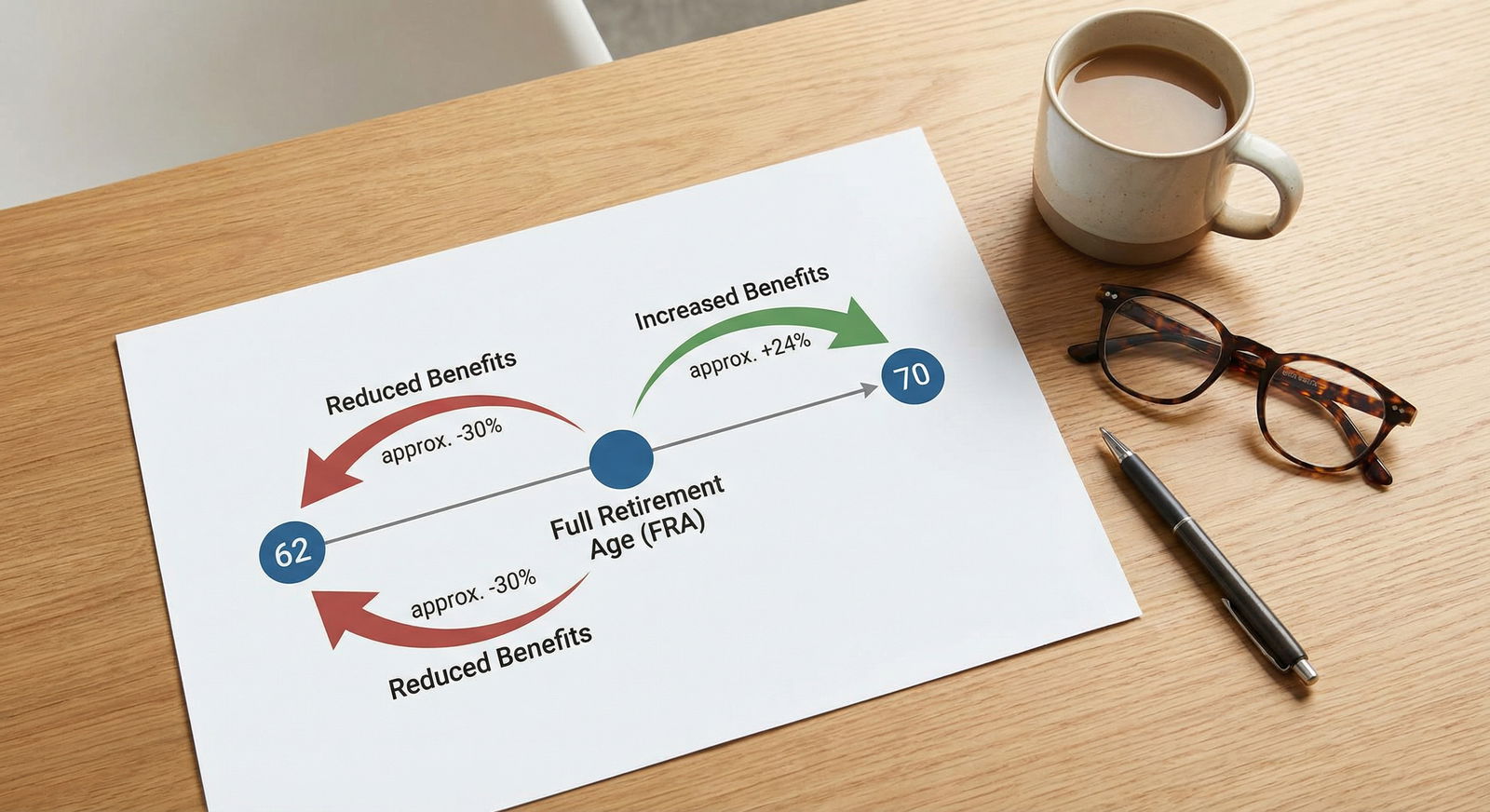
Bottom Line: The Claiming Age That Fits Your Whole Plan
The best Social Security claiming age for physicians is not the one that sounds smartest in a podcast clip. It’s the one that fits the whole household plan.
That means integrating Social Security with your investment withdrawals, tax strategy, debt, survivor planning, and actual spending behavior. Not your imagined behavior. Your real behavior. The one that shows up after a market drop, a health scare, or a grandchild arrives.
Here’s the honest ending: the data can guide this decision, but certainty is an illusion. You won’t know your exact lifespan. You won’t control future tax law. You won’t predict every market cycle. What you can do is make a decision that is coherent, evidence-based, and aligned with the life you’re actually building.
That’s not flashy. It is, however, how good retirement planning works.