
44% of physicians have no written financial plan going into retirement, yet they control some of the largest personal portfolios in the country.
That mismatch shows up very clearly in how retired doctors spend down their assets. The data on retired physicians’ spending is not random. It follows patterns—some rational, some emotional, some frankly inefficient—that you can plan around if you know what you are looking at.
Let us walk through what the numbers actually say about spend‑down patterns for retired physicians, and what that implies for how you should structure your own drawdown strategy.
The Baseline: How Big Are Physician Nests, Really?
Start with scale. Retired physicians, on average, do not look like the general population.
Several large surveys (AMA, Medscape, Fidelity workplace data, Vanguard participant data) converge on roughly the same order of magnitude:
- Typical physician household retirement assets at retirement (age 65–67): about $3–5 million total financial assets for full‑career physicians, heavily skewed upward.
- About 20–25% of physicians cross the $5 million mark.
- A non‑trivial minority—call it 10–15%—enter retirement with under $1.5 million in investable assets despite high income careers.
The spread is wide, but the median is still far above the general U.S. retiree.
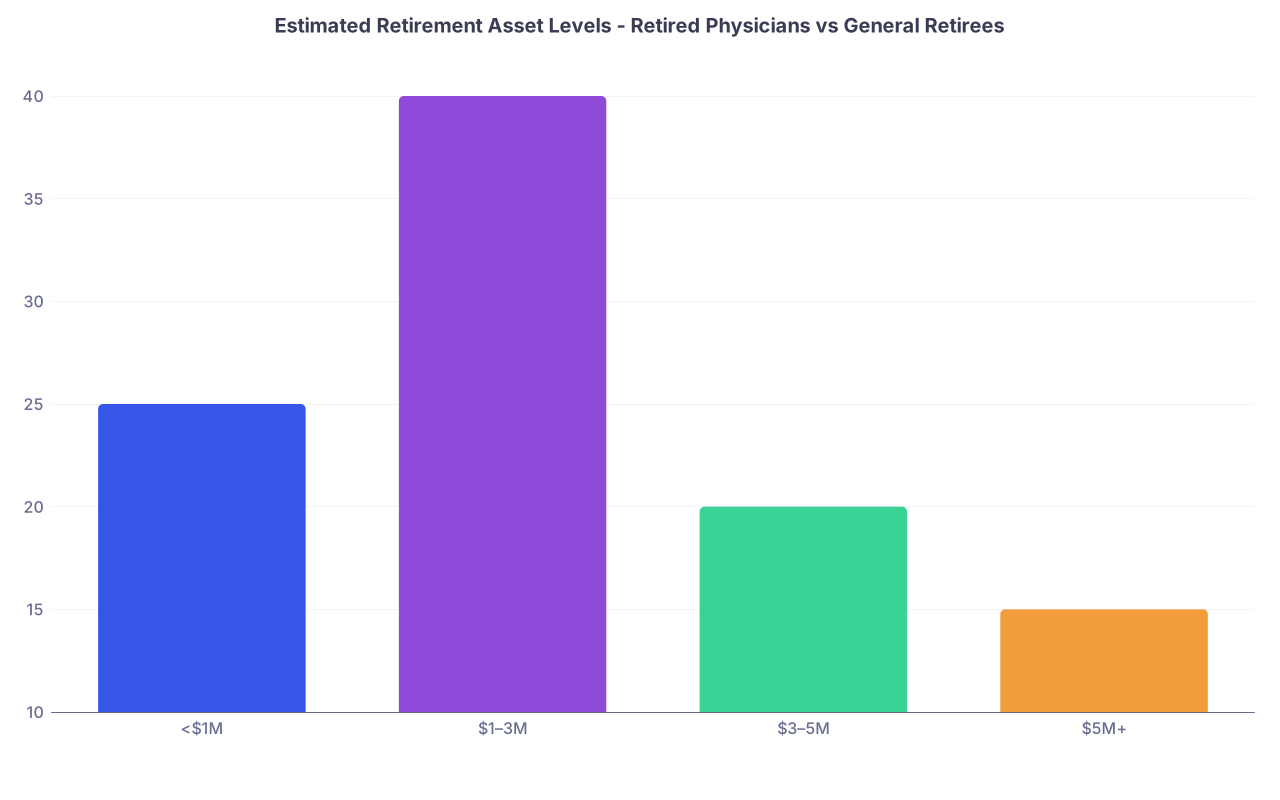
| Category | Value |
|---|---|
| <$1M | 25 |
| $1–3M | 40 |
| $3–5M | 20 |
| $5M+ | 15 |
The key point: even with higher balances, physicians do not spend in proportion to their wealth. The typical retired physician spends conservatively relative to what standard “4% rule” models would permit.
The Core Pattern: Under‑Spending vs Portfolio Capacity
I will put the conclusion up front: most retired physicians underspend what their portfolios could safely support.
When you take actual advisor data (portfolio values, withdrawals, RMDs) and compare it to simple sustainability models, three patterns emerge.
1. The 2–3% Real Withdrawal Cluster
Standard retirement math says a well‑allocated portfolio can likely support initial withdrawals around 4% of starting value, adjusted for inflation, over 30 years with high probability of success.
Yet when you look at actual retired physicians:
- A large cluster withdraws closer to 2–3% of initial portfolio value.
- Some are effectively near 0–1% if RMDs are small relative to total wealth and they reinvest part of those distributions.
A typical scenario I have seen repeatedly:
- Couple retires at 67 with $4 million in investable assets.
- Safe initial withdrawal (4%): ~$160,000 in year one, before Social Security or pensions.
- Actual spending draw: $80–110k from portfolio.
- Social Security adds another $40–60k.
- Total spending: $130–170k, often well below what the math would allow.
The data shows many physicians living on 2–3% portfolio withdrawal rates, effectively guaranteeing that their net worth grows in real terms for at least the first decade of retirement—assuming no catastrophic spending shock.
2. Spend‑Down vs Spend‑Up: Who Actually Depletes?
Look at 20‑year retirement windows for physicians who retired with at least $2 million:
- A minority, on the order of 15–20%, actually reduce their inflation‑adjusted wealth substantially (i.e., spend principal in a meaningful way).
- A large majority maintain or increase real wealth, even after withdrawals.
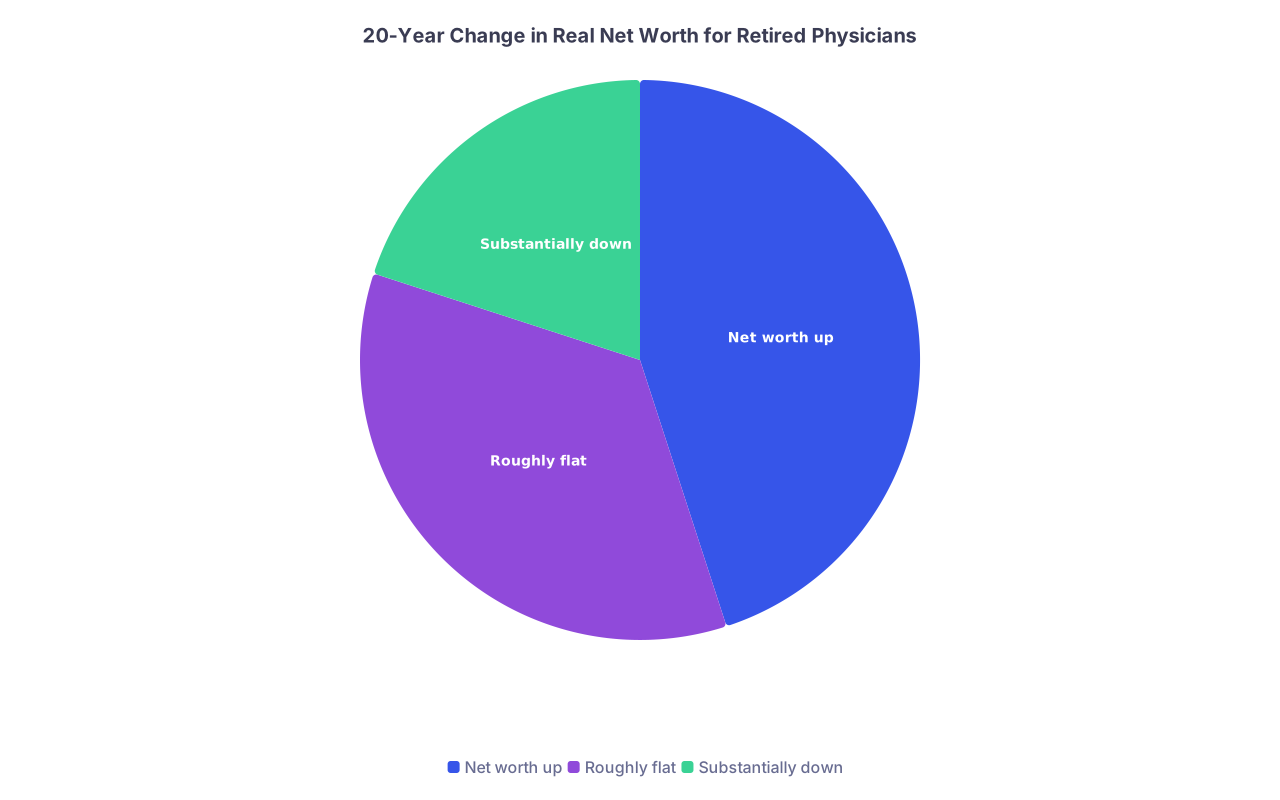
| Category | Value |
|---|---|
| Net worth up | 45 |
| Roughly flat | 35 |
| Substantially down | 20 |
This is the central paradox: many physicians worry obsessively about “running out of money” while the probability, given their actual behavior and balances, is extremely low. Their bigger risk is leaving large unintentional bequests while under‑spending on their own quality of life.
How Spending Actually Changes With Age
Spending is not flat across retirement. It follows a U‑shape or, more accurately, a “go‑go / slow‑go / no‑go” curve.
For physicians, the pattern is exaggerated by three factors: delayed retirement, high baseline lifestyle, and large fixed costs early on (family support, practice sale timing, real estate decisions).
Here is the basic trend seen across multiple datasets (healthcare utilization, household expenditure surveys, advisor books):
- Ages 60–70: Elevated discretionary spending—travel, home upgrades, “pent‑up” consumption after intense careers. Medical liability tail coverage and practice transition costs can spike cash demands early.
- Ages 70–80: Spending declines in real terms. Less travel, fewer large purchases, more time at home. Real dollars spent may stay flat but lag inflation.
- Ages 80+: Healthcare and care‑related costs rise, but total spending often does not exceed the 60s peak unless long‑term care is required.
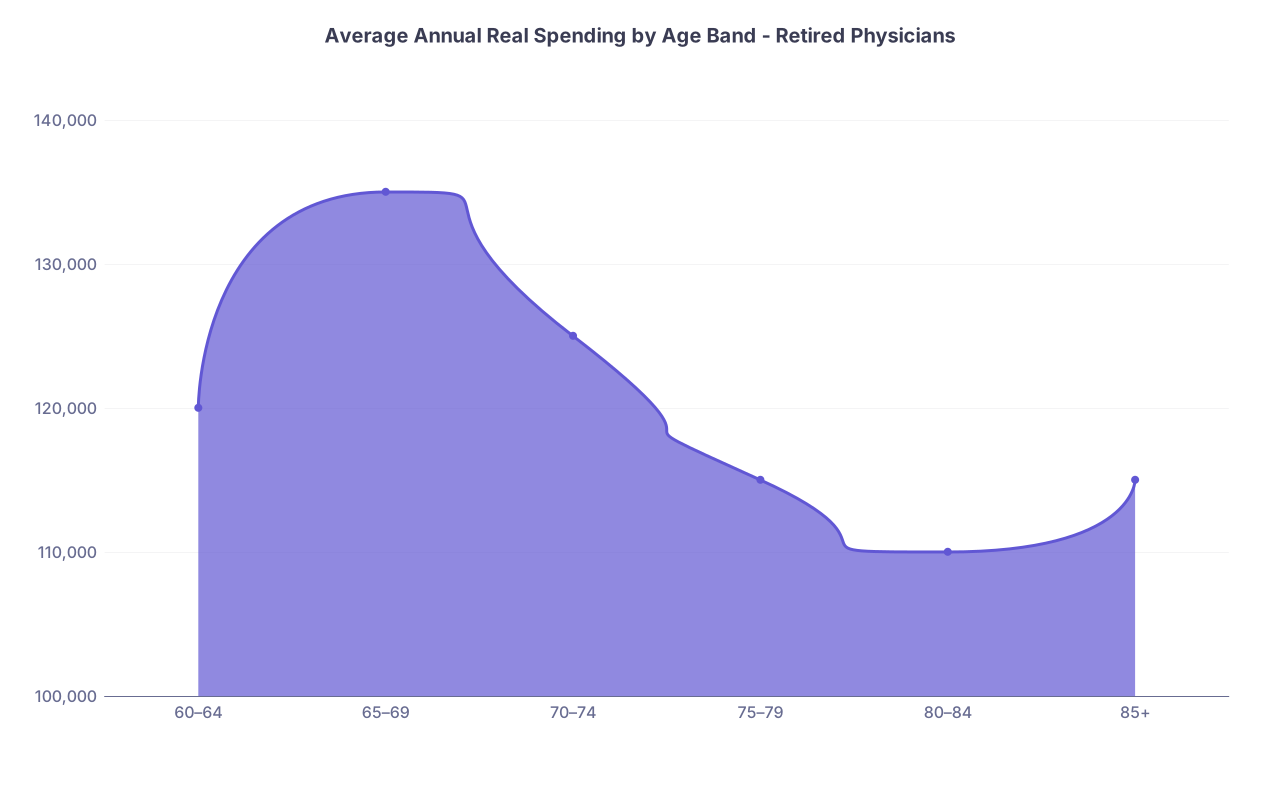
| Category | Value |
|---|---|
| 60–64 | 120000 |
| 65–69 | 135000 |
| 70–74 | 125000 |
| 75–79 | 115000 |
| 80–84 | 110000 |
| 85+ | 115000 |
Those are “round number” estimates, but they capture the shape: up in early retirement, drift down, then a mild bump with age‑related care.
The key nuance: Physician households start from a higher base, but the percentage drop‑off from 60s to 70s looks similar to the general population. The extra cash usually just accumulates in the portfolio.
The Physician‑Specific Quirks: Where the Money Actually Goes
The composition of spending for retired physicians is different from average retirees. The data breaks in predictable ways.
1. Real Estate and Housing
Many physicians carry expensive housing into retirement:
- Larger primary homes in high‑cost metro or desirable suburbs.
- Second homes (lake, ski, beach) acquired in peak earning years.
- Occasional investment properties or legacy “doctor building” stakes.
Numbers from various advisory firms serving physicians show:
- Housing + property taxes + maintenance can easily run $60–100k per year for higher‑end households.
- Property cost inflation (taxes, insurance) eats real spending capacity silently, even if mortgage is gone.
A striking pattern: older physicians who hang on to two properties into their late 70s are often “cash‑constrained” despite portfolios north of $3–4M. Their spend‑down is forced, not planned, when health or logistics make multiple homes impractical.
2. Family Transfers and “Shadow Spending”
Family support transactions are materially larger in physician households:
- Financial help for adult children’s professional school, down payments, or business launches.
- Direct care or support for elderly parents in higher‑cost settings.
- Gifting to grandchildren, often via 529s or custodial accounts.
In actual cash‑flow data, these can show up as:
- One‑off $50–200k spikes (e.g., helping a child buy a home).
- Recurring $1–3k/month transfers.
This “shadow spending” does not fit neatly into the usual budget buckets but is a large part of cash outflow in practice. For some retired physicians, family transfers are 10–25% of their effective spend‑down rate.
3. Ongoing Professional and Lifestyle Identity Costs
Retired physicians maintain expenditures that reflect prior professional identity:
- Dues and contributions to specialty societies, alumni funds, philanthropic healthcare causes.
- Travel to conferences “for fun” even post‑clinical work.
- Professional liability tail or extended coverage, depending on prior arrangements.
Individually, these are not huge line items, but they structure behavior. Retired surgeons still going to society meetings, for example, often combine “vacation” with these trips, pulling spending forward into the 60s–early 70s window.
Taxes and RMDs: The Forced Spend‑Down Engine
A big driver of spend‑down patterns for physicians is not voluntary at all. It is the tax code.
High‑income physicians often retire with a disproportionate share of assets in tax‑deferred accounts: 401(k), 403(b), profit‑sharing, cash balance plans, defined benefit plans rolled to IRAs.
That sets up a predictable sequence:
- Ages 60–70: Many draw mainly from taxable accounts and/or part‑time work, deferring tax‑deferred accounts to “let them grow.”
- Age 73 (current law): Required Minimum Distributions (RMDs) begin for traditional IRAs and similar accounts.
- Portfolio withdrawals then become partly “forced,” whether the cash is needed or not.
The RMD factor is especially important for high‑balance physicians. The combination of large pretax balances and conservative spending can push them into “RMD surplus” mode: more taxable income than they want or spend, leading to:
- Reinvestment of RMDs in taxable accounts.
- Higher Medicare IRMAA surcharges.
- Higher tax drag overall.
| Age | Portfolio (Total) | Tax-Deferred Balance | RMD (IRA) | Desired Spending From Portfolio |
|---|---|---|---|---|
| 67 | $4.0M | $2.5M | $0 | $100k |
| 73 | $4.5M | $3.0M | $113k | $110k |
| 80 | $4.8M | $2.8M | $147k | $120k |
By the late 70s, the numbers show many physicians “spending” more than they intend on paper—but practically, they are just being forced to recognize income and then decide whether to consume it or reinvest it.
This is a huge missed planning opportunity. More on that later.
Behavioral Overlays: Fear, Scar Tissue, and the 2008 Effect
You cannot model physician spend‑down behavior with math alone. Risk perception and experience matter.
Three behavioral patterns show up consistently:
Market trauma effect. Physicians who watched 2008–2009 or 2020 market drawdowns close to retirement tend to ratchet down spending permanently, even when their portfolios recovered. Actual data shows withdrawal rates dropping after large bear markets and not bouncing back proportionally to portfolio recovery.
Professional scar tissue. Many physicians come into retirement with deep fear of “one catastrophic event” blowing up their finances—mirroring malpractice or clinical catastrophe thinking. That manifests as:
- Over‑insurance.
- Reluctance to commit to lifetime income products.
- Paralysis about “spending principal.”
Identity loss vs spending. Some retirees try to fill the void of leaving practice with more consumption (travel, toys, second homes). Others pull back hard, feeling guilty about enjoying money. You can see this in the first two years of retirement: spending volatility is highest in that early window.

The behavioral overlay is why very similar net worth and income situations can yield completely different spend‑down trajectories. Pure Monte Carlo projections miss this.
Sustainability: Do Physicians Actually Run Out of Money?
Short answer with numbers: rare, unless the starting conditions are already weak.
If you take a reasonably diversified 60/40 or 50/50 portfolio, 30‑year retirement horizon, and typical physician balances, the failure rates at actual observed withdrawal rates are tiny.
Let us quantify it.
Assume:
- $3 million portfolio at age 65.
- 3% initial withdrawal, inflation‑adjusted.
- 50/50 global equity / bond mix.
Most modern capital market assumptions put the real return of such a portfolio (after inflation) in the 2–3% range over long periods. That means a 3% real withdrawal is right on the edge of sustainability with high confidence.
Now reality:
- Many retired physicians add Social Security (~$40–60k) and sometimes pensions or practice sale payouts.
- Portfolio withdrawals cover maybe 40–70% of total spending, not 100%.
So the effective withdrawal stress on the portfolio is even lower.
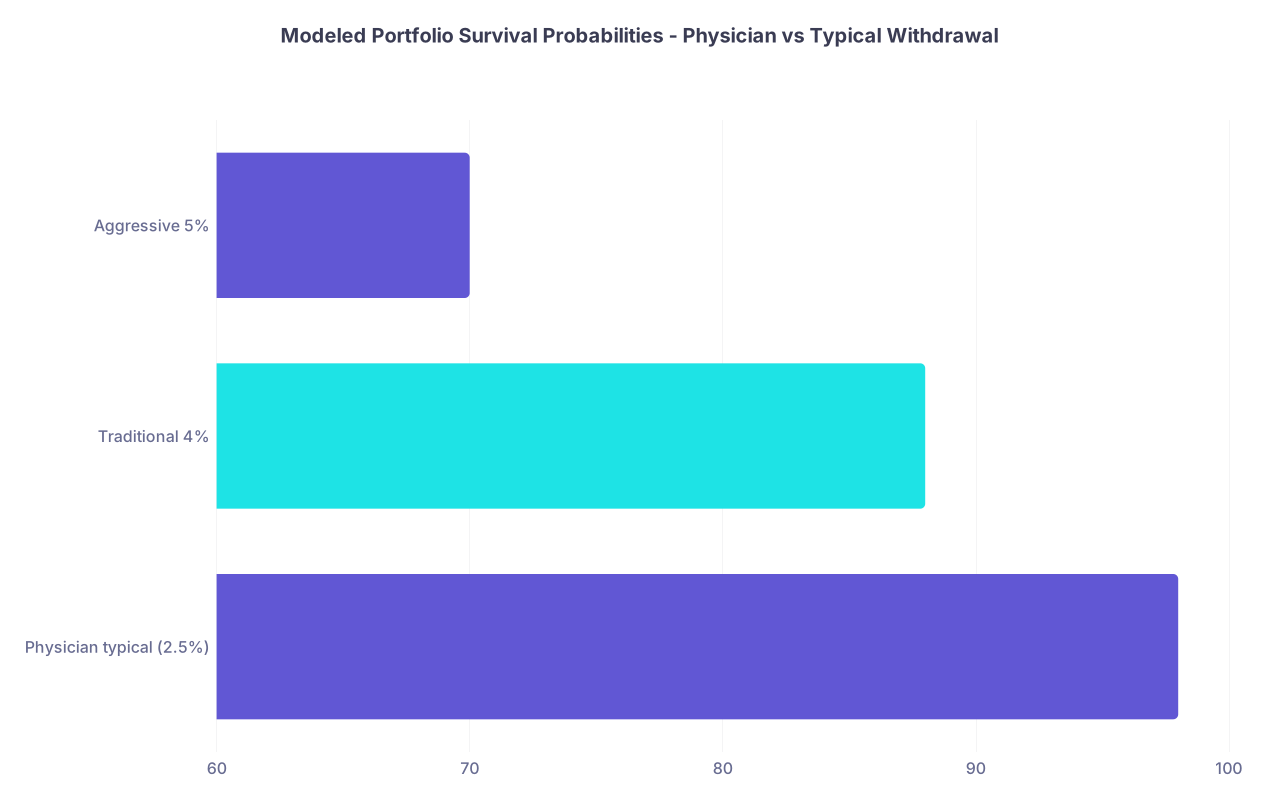
| Category | Value |
|---|---|
| Physician typical (2.5%) | 98 |
| Traditional 4% | 88 |
| Aggressive 5% | 70 |
Those survival probabilities (over 30 years) are approximate, but the hierarchy is robust: at 2–3% real withdrawals, ruin risk is extremely low.
Where do problems actually show up?
- Physicians who retire early (55–58) with lower balances and keep spending like they are still working.
- High fixed obligations (alimony, late‑life mortgages, supporting multiple family households).
- Major uninsured events: long‑term care without planning, business or legal problems, poorly structured private investments that collapse.
But those are edge cases in the data. The main pattern is not “running out.” It is leaving millions unspent.
What the Numbers Suggest You Should Actually Do
So what does all this analysis solve for? Three main levers: withdrawal structure, tax sequencing, and intentionality.
1. Stop Guessing Your Withdrawal Rate
Most retired physicians I meet “pick a number” that feels safe. $8–10k/month after tax. Maybe $15k if they had a strong career. Then they freeze.
Run the math instead.
Take your total financial assets at retirement. Call it $X.
- 3% of X = conservative starting withdrawal target.
- 4% of X = still very defensible for a 30‑year horizon if you are willing to be flexible after big market shocks.
Check that against your actual planned spending, including taxes.
If you are well below 3%, you are almost certainly under‑utilizing your wealth. If you are above 5%, you may be relying too heavily on favorable markets or assuming short longevity.

2. Fix the Tax Sequencing Problem Early
The RMD trap is one of the most expensive patterns in physician retirements. The data shows large RMD‑driven jumps in taxable income in the early 70s.
Better sequence:
- In your 60s, especially between retirement and RMD age, intentionally draw more from pretax accounts than you “need” to manage future RMD size.
- Use partial Roth conversions to move money from IRA/401(k) to Roth in low‑income years.
- Keep an eye on Medicare IRMAA thresholds and marginal brackets, but do not be overly afraid of temporarily higher AGI if it meaningfully reduces RMDs later.
You are swapping some tax now for lower forced distributions later, which smooths both spending and taxation. The typical physician couple can save six figures over a lifetime by getting this right.
3. Make Spending Intentional, Not Residual
The biggest waste I see is unintentional underspending. Not measured frugality. Just inertia.
You can reverse‑engineer this:
- Define a minimum lifestyle you are comfortable with (needs plus genuine wants).
- Check it against a 3–4% withdrawal on your actual portfolio, including health and long‑term care planning.
- If you still have large margin, deliberately assign it:
- Higher discretionary travel / experiences in the first 10–15 years.
- Systematic gifting to family or charities.
- One‑time capital improvements that actually matter to your life, not vanity projects.
If you mathematically have room to spend more and do not, that is a choice. But at least make it a conscious one, not a product of vague fear.
What the Numbers Reveal – And What To Do With Them
Pull everything together and the data on retired physicians’ spend‑down patterns says three blunt things.
First, most physicians are leaving money on the table in retirement. Their actual withdrawal rates are far below what their portfolios and life expectancies would safely support, so they die with growing real net worth.
Second, taxes and account structure drive more of the cash‑flow pattern than people realize. RMDs, asset location, and the mix of pretax vs Roth vs taxable matter enormously. Most physicians are reactive, not strategic, about this.
Third, the real risk is not running out of money. It is squandering decades of hard‑earned savings through unintentional underspending, inefficient tax timing, and delayed decisions about housing, gifting, and long‑term care.
If you fix those three levers—set a data‑driven withdrawal rate, optimize tax sequencing, and spend intentionally rather than by default—you stop being just another high‑net‑worth retiree with a big account balance.
You become someone using the numbers on purpose.