Most high‑earning doctors have dangerously incomplete estate plans—and they do not realize it until it is far too late.
If you are a physician in your late 40s, 50s, or early 60s and you think, “I have a will, I am fine,” you are almost certainly making at least one serious estate planning mistake. I have seen high‑income specialists with $4M+ net worths leave their families with chaos, unnecessary taxes, delayed access to money, and ugly conflicts. Not because they were careless. Because they were complacent.
Let me walk you through the biggest traps I see doctors fall into before retirement—and how you can avoid becoming another cautionary story your colleague whispers about in the call room.
1. Thinking “I Have a Will” Means “My Estate Plan Is Done”
Having just a basic will when you are a mid‑ or late‑career physician is like wearing gloves in the OR but skipping the surgical timeout, the checklist, and the anesthesia evaluation. Technically involved. Functionally unsafe.
The common, dangerous assumptions:
- “I signed a will when my kids were born. We are covered.”
- “The hospital offers some legal benefit; I used that 20 years ago.”
- “My spouse knows everything. They will handle it.”
Here is the problem: a will is only one tool. By itself, it does not:
- Avoid probate (the court process after death)
- Control most retirement accounts or life insurance
- Handle incapacity (you are alive but cannot make decisions)
- Protect assets from predators, creditors, or a new spouse
The minimum estate plan for a pre‑retirement physician with meaningful assets should usually include:
- A current, attorney‑drafted will
- Revocable living trust (in most states, especially if you own real estate in more than one state or have a large estate)
- Financial power of attorney
- Health care proxy / medical power of attorney
- Living will / advance directive
- Updated beneficiary designations on all accounts and policies
The mistake is thinking the will alone “covers everything.” It does not. For doctors, that assumption is one of the most expensive misunderstandings in personal finance.
2. Ignoring Beneficiary Designations on Retirement Accounts and Insurance
This one burns physicians constantly.
You can have gorgeous documents prepared by a top estate attorney, but your IRA, 401(k), 403(b), 457, and life insurance will not follow those documents if your beneficiary forms say something else—or nothing at all.
I have seen:
- Ex‑spouses still listed as primary beneficiaries 10+ years after the divorce
- “Estate” listed as beneficiary, which forces retirement accounts through probate and accelerates taxes
- Minor children named directly, triggering court‑appointed guardianship and major delays
- No contingent beneficiaries at all, leaving a vacuum if the spouse dies first
Here is the critical point: beneficiary designations override your will.
If your will says “Everything to my current spouse” but your old 401(k) lists your ex as beneficiary, that old form wins. Your current spouse will lose that account. I have sat in rooms where attorneys had to tell widows exactly that.
You must treat beneficiary designations as part of your estate plan, not an HR form you filled out once when you were a PGY‑1.

At a minimum, before retirement you should:
- List a primary and at least one contingent beneficiary on every account
- Confirm the designations match your current estate plan
- Avoid naming minor children directly; use a trust instead
- Re‑check all forms after divorce, remarriage, or birth/adoption of children
If you ignore this, your family will discover the mistake in the worst possible moment—when there is no way to fix it.
3. Failing to Plan for Incapacity (Not Just Death)
Estate planning is not just about dying. It is about what happens when you are alive but cannot manage your affairs—stroke, traumatic brain injury, early dementia, severe illness.
Physicians are especially arrogant about this. You know the probabilities, so your brain says, “Statistically, I am low risk.” Then you work 60–70 hours a week, drive home exhausted, and never consider what happens if you end up in the ICU for months.
The common missing pieces:
- No durable financial power of attorney
- No health care proxy
- Old forms that only list one agent, who lives 2,000 miles away or is now in poor health
- No HIPAA authorization for key family members
Without these, your spouse or adult child is stuck going to court to get guardianship just to pay your bills, manage practice ownership, or access brokerage accounts. That court process is slow, public, and humiliating.
You want:
- A durable financial power of attorney:
- Someone you trust can pay the mortgage, manage accounts, sign tax returns, handle practice or partnership issues if you cannot.
- A health care power of attorney / proxy:
- Someone who can make medical decisions if you are not able.
- HIPAA releases:
- So they can talk to your doctors and insurers without running into privacy walls.
Do not assume your spouse can “just do it automatically.” Institutions respect completed forms. They do not care that you were a beloved attending.
4. Leaving Assets Directly to Minor Children
Naming minor children directly as beneficiaries (on accounts or in a will) is a classic and highly destructive mistake.
On paper, “50% to my daughter, 50% to my son” sounds loving and fair. In practice, if they are minors:
- A court must appoint a guardian to manage their inheritance
- The guardian may not be the person you would have chosen
- The money is usually turned over to the child at 18 or 21, in full
I want you to envision your 18‑year‑old with instant control of $800,000 in life insurance proceeds. That is not estate planning. That is a social experiment.
The better approach for physicians:
- Create a revocable living trust with clear terms for minor children
- Direct life insurance and other assets to the trust, not the child directly
- Name a responsible trustee, not necessarily the same person who raises your kids
- Stagger distributions: maybe some at 25, 30, 35, with lifetime access for health, education, maintenance, and support

| Step | Description |
|---|---|
| Step 1 | Doctor Dies |
| Step 2 | Court appoints guardian |
| Step 3 | Funds released at 18 or 21 |
| Step 4 | Trustee manages funds |
| Step 5 | Funds used for child needs |
| Step 6 | Staggered distributions later |
| Step 7 | Beneficiary is Minor? |
If your estate plan leaves assets outright to minors without a trust structure, you are setting your kids and their guardians up for a mess.
5. Ignoring State‑Specific Tax and Probate Rules
Most doctors underestimate how quickly their estate size adds up:
- Home equity
- Retirement accounts
- Brokerage accounts
- Practice ownership / surgery center interests
- Life insurance
- Deferred compensation, RSUs, buy‑out provisions
Even if you are below the federal estate tax exemption, your state might be a different story.
Some states have:
- Separate, much lower estate tax thresholds
- Inheritance tax (taxing the recipient, not the estate)
- Painful, slow probate systems that are a nightmare for a surviving spouse
| State | Estate Tax? | Approx Exemption | Hidden Problem |
|---|---|---|---|
| New York | Yes | ~$6.9M | Cliffs that can tax entire estate |
| Massachusetts | Yes | ~$2M | Many physicians cross this |
| Oregon | Yes | ~$1M | Low threshold, hits mid-career |
| California | No estate tax | N/A | But very slow probate process |
| New Jersey | Inheritance tax | Varies | Certain heirs taxed |
If you own property in more than one state—a vacation home, rental property, or old condo you kept—you might trigger ancillary probate in each state. That means multiple court processes, multiple lawyers, and more time before your heirs see any money.
For pre‑retirement physicians, not understanding your state’s regime is lazy and expensive. A qualified estate attorney in your state can look at your numbers and quickly tell you whether:
- You should be using trusts more aggressively
- You should consider lifetime gifting strategies
- You should rethink owning real estate personally versus in entities or trusts
Guessing here is not smart. Especially not with seven‑figure estates.
6. Neglecting Asset Protection Until It Is Too Late
Doctors love to talk about asset protection in vague terms. Few actually implement it properly before trouble appears. Once there is a malpractice claim, business dispute, or divorce on the horizon, your options shrink dramatically.
Common mistakes:
- Holding rental properties in your own name
- Building large taxable brokerage accounts with no trust or entity protections
- Commingling separate property (inheritances, premarital assets) with joint accounts
- No umbrella liability policy, or limits that are absurdly low for your net worth
You cannot “quickly transfer everything to your spouse” when a lawsuit hits. Judges are not stupid. Fraudulent transfers get unwound, and you can make things worse.
Real estate, in particular, is a problem for doctors:
- Landlord liability exposures
- Tenants, contractors, slip‑and‑fall claims
- Personal name on deeds and loans

| Category | Value |
|---|---|
| Home Equity | 25 |
| Retirement Accounts | 35 |
| Taxable Investments | 15 |
| Practice or Business Equity | 10 |
| Real Estate Investments | 10 |
| Cash & Other | 5 |
Look at that breakdown. A large chunk is exposed if you have done nothing formal around asset protection.
For many physicians, sensible steps (taken well before any legal trouble):
- High‑limit umbrella insurance (often $3M–$5M+ for high net worth)
- Proper titling of assets (tenancy by the entirety where available)
- LLCs or similar structures for rental properties
- Retirement contribution maximization into protected accounts (ERISA plans are generally stronger protections)
- Targeted use of irrevocable trusts in some situations (with specialized legal advice)
Waiting until your first real scare to address this is like buying malpractice insurance after a bad outcome.
7. Never Updating the Plan After Life Changes
Estate plans age badly. Laws change. Your life changes faster.
The pattern is predictable:
- You sign documents at 35 when your first child is born
- You never look at them again until you are 58 and someone at a retirement seminar scares you
- In those 20+ years, your net worth quadrupled, you had another child, moved states, changed practices, maybe remarried
I have opened “old” documents with physicians and seen:
- Guardians listed for kids who are now 27
- Trustees named who are now dead or have dementia
- Ex‑spouses still in key roles
- Old addresses and old states of residence
- Tax strategies written for laws that changed a decade ago
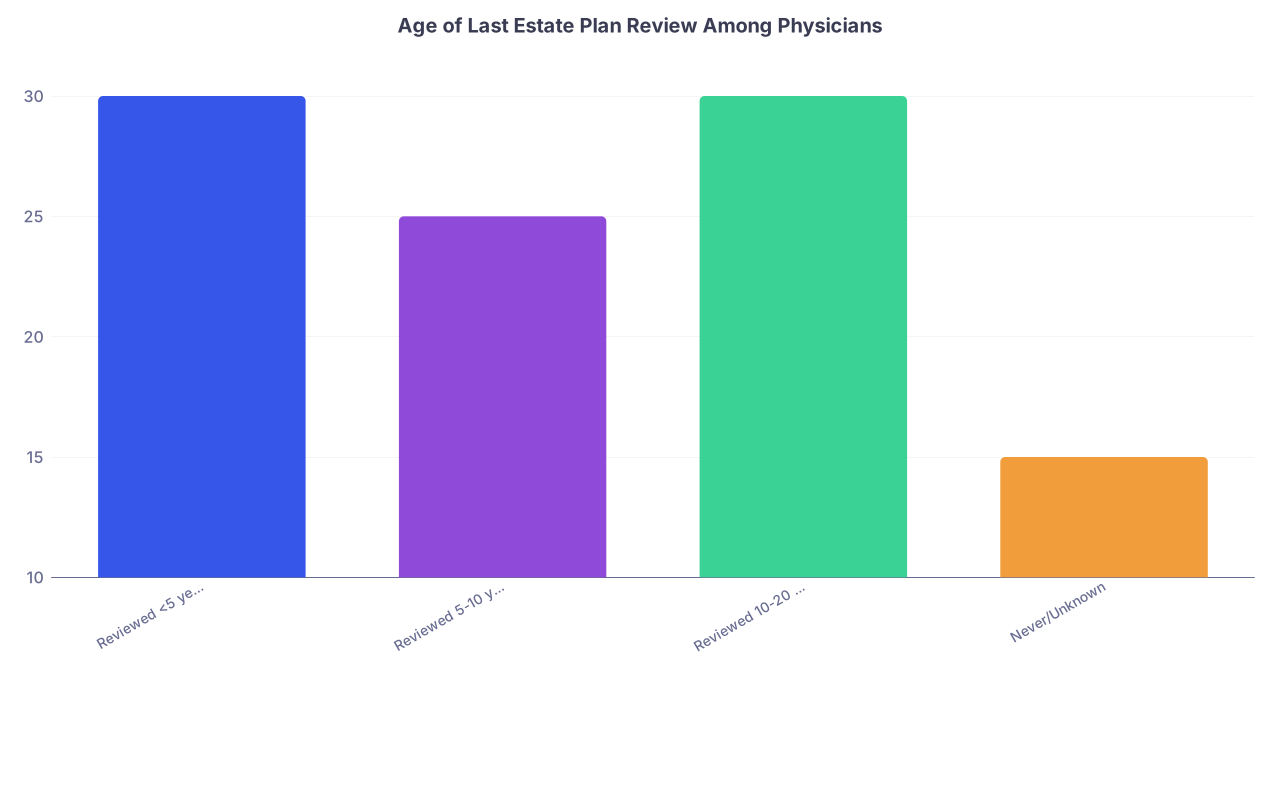
| Category | Value |
|---|---|
| Reviewed <5 years | 30 |
| Reviewed 5-10 years | 25 |
| Reviewed 10-20 years | 30 |
| Never/Unknown | 15 |
If your last comprehensive review was more than 5–7 years ago, or you have had any of these since then:
- Marriage or divorce
- Birth or adoption of a child or grandchild
- Move to a new state
- Major change in net worth (practice sale, inheritance, big market gain)
- New business or real estate investments
…then your current plan is almost certainly misaligned with your reality.
Make this a rule: review your estate plan and beneficiaries at least every 5 years, or after any major life event. Anything less is asking for an avoidable mess.
8. Assuming Your Spouse “Knows Where Everything Is”
This is the soft underbelly of physician estate planning.
You might have decent documents. You might even have a trust. But if all the practical information lives only in your head and your password manager, you are still setting your family up for confusion.
Common failures:
- No clear list of accounts, policies, and institutions
- No contact info for key professionals (attorney, CPA, financial planner, practice partners)
- No instructions for what to do with your practice ownership, disability policy, or buy‑sell agreements
- Passwords scattered or locked in a system your spouse does not know how to use
I have watched surviving spouses come into meetings with a shoe box of statements and no idea how any of it fits together. This is preventable.
At minimum, before retirement you should have a simple, organized “estate binder” or secure digital equivalent with:
- Copy of your will, trust, powers of attorney, health care documents
- List of all financial accounts: institution, last 4 digits, ownership, approximate balance
- Life insurance policies: company, policy number, coverage amounts, beneficiaries
- Retirement plans: 401(k), 403(b), 457, cash balance, IRAs
- Real estate: location, how titled, mortgage details
- Contact list: estate attorney, CPA, financial advisor, insurance agent, practice administrator
- Location of original documents and safe deposit boxes
- Basic instructions for practice or business interests (who to call, what agreements exist)

Do not assume your spouse will “figure it out.” That is cruelty disguised as optimism.
9. Overlooking Blended Family and Remarriage Complexity
If you have a second marriage, stepchildren, or children from prior relationships, estate planning becomes more delicate—and far more dangerous to ignore.
I have seen:
- All assets left outright to the second spouse, with a vague verbal promise that “she will take care of my kids.” She did not. She remarried, changed her will, and the physician’s kids got almost nothing.
- Stepchildren unintentionally disinherited because everything passed to “my children” as legally defined, excluding the ones you helped raise.
- Conflict between adult children and a new spouse over the house and retirement accounts.
You cannot rely on goodwill when emotions and money collide. You must put the structure in writing.
Often, for physicians with blended families, that means:
- Using trusts to provide income and housing for a surviving spouse, while preserving principal for children from a prior marriage
- Being explicit about stepchildren—either including or excluding them intentionally
- Coordinating prenuptial or postnuptial agreements with your estate plan
- Making sure beneficiary designations match the intended structure, not undermine it
This is where DIY planning or generic “online wills” are particularly dangerous. Your situation is not simple. Pretending it is will punish the people you care about most.
10. DIY or “One‑Size‑Fits‑All” Documents for Complex Physician Estates
Let me be blunt. If you are a physician with:
- Multiple retirement accounts
- Significant taxable investments
- Real estate beyond your primary home
- A practice, partnership, or surgery center interest
- Blended family dynamics
- Net worth anywhere near your state’s estate tax threshold
…then using an online will template or generic HR‑provided forms as your entire estate plan is a mistake. A big one.
I have read enough of these generic documents to know the pattern:
- No customization to state law nuances
- No attention to estate tax thresholds or planning
- Weak or nonexistent trust provisions for minor children
- No integrated plan for practice ownership or buy‑sell agreements
- Boilerplate language that fails under real‑world stress
You spent a decade training, you carry malpractice coverage, you buy disability insurance, you insure your car and your home. But you balk at paying an estate attorney who specializes in high‑net‑worth or physician clients?
That is false economy.
You want a board‑certified estate planning attorney (or similar credential, depending on the state) who:
- Regularly works with physicians and business owners
- Understands your state’s estate and inheritance tax structure
- Knows how to integrate retirement accounts, life insurance, and practice agreements into a coherent plan
The cost of getting this wrong is not theoretical. It is measured in tens or hundreds of thousands of wasted dollars, family conflict, and years of delay.
What To Do Right Now: A Practical Checklist
If you are a mid‑ or late‑career doctor and any of this is hitting a nerve, here is your triage list.
Within the next 30 days:
Locate your current documents
- Will, trust, powers of attorney, health care directive, living will.
- If you cannot find them quickly, assume your family will not either.
Pull a fresh list of all accounts and policies
- 401(k), 403(b), 457, IRAs, brokerage, HSAs, life insurance, pensions, deferred compensation.
- Note where each beneficiary form is and who is listed.
Schedule a consult with an estate planning attorney in your state
- Bring your documents and account list.
- Ask specifically about: probate avoidance, state estate tax, minor child provisions, and asset protection.
Decide on guardians and trustees for minor children
- These are different roles and do not have to be the same person.
- Choose people with judgment, not just biology.
Document your “estate map” for your spouse or key family member
- One consolidated summary: what exists, where it is, who to call.

Do not wait until “after I finish this quarter” or “once things slow down at the hospital.” They will not. Your schedule will never clear on its own. You must decide this matters more.
FAQ (Exactly 4 Questions)
1. At what net worth should a doctor stop using simple online wills and see an estate attorney?
The mistake is waiting for a magic number. Once you have minor children, own a home, and have retirement accounts, you are already beyond “simple.” For most physicians, by the time your net worth passes $500,000–$1,000,000—or you own a practice, rental property, or have a blended family—you should be working with a qualified estate planning attorney, not online templates. The complexity of your life, not just your balance sheet, drives the need.
2. Do I really need a trust, or is a will enough if I am under the federal estate tax limit?
Many doctors get this wrong. Trusts are not just about estate tax. They are about avoiding probate, managing assets for minor or financially immature heirs, protecting privacy, and handling multi‑state property. Even if you are far below the federal estate tax exemption, a revocable living trust is often smart for physicians with significant assets or property in more than one state. A will alone forces your family through probate and offers almost no control once assets are distributed.
3. How often should I update my estate plan as a practicing physician?
If you wait until retirement, you waited too long. As a rule, you should review your plan every 5 years at minimum, and sooner after any major life event: marriage, divorce, birth or adoption of a child, move to another state, major change in net worth, new business or practice structure, or death/incapacity of someone named in your documents. “Review” does not always mean rewriting everything, but it does mean confirming the plan still matches your life and the current law.
4. What is the single most damaging estate mistake you see doctors make?
If I had to pick one, it is the combination of outdated documents and mismatched beneficiary forms. A 20‑year‑old will, no trust for minor kids, and old 401(k) forms listing an ex‑spouse or “estate” as beneficiary. That trifecta can trigger avoidable taxes, prolonged probate, and money landing in the wrong hands. If you do nothing else this week, pull your beneficiary forms and check who is actually listed.
Open your latest retirement account statement today, flip to the beneficiary section, and read the names. If what you see does not match what you think you set up, schedule an estate planning appointment before you go back on call.