
The belief that a late-start physician “cannot catch up” for retirement is nonsense—if you treat your next 10 years like a focused, high-yield project instead of drifting.
You are not behind because you started late. You are behind because your savings rate and structure are not yet aligned with your income. That is fixable. In about a decade.
I am going to walk you through a concrete 10-year catch-up plan to retire on time, built specifically for physicians in their 40s or early 50s who feel late to the game.
1. Know Your Starting Line: Brutal but Necessary Assessment
You cannot fix what you refuse to define. First step is a hard diagnostic.
Step 1: Establish your “retirement number”
You need a target. Use this as a working rule:
- Annual spending in retirement × 25 = target portfolio (assuming ~4% rule range)
Example:
- You want $180,000 per year (before tax)
- $180,000 × 25 = $4,500,000 retirement portfolio
This is portfolio value, not including:
- Social Security
- Any pension (rare for physicians nowadays but check)
- Home equity (I treat this as a backup, not core plan)
Step 2: Map your “time to retire”
Be specific:
- Current age: 45
- Target retirement age: 60
- You have 15 working years.
- We are designing a 10-year catch-up sprint inside that 15.
If you are 50 and want to retire at 65, same math.
Step 3: Calculate current trajectory
You need three numbers:
- Current investable portfolio (not counting primary home or cars)
- Annual savings rate (actual dollars saved, not what you intend to save)
- Your portfolio allocation (stocks vs bonds vs cash vs junk)
Then do a quick projection. You do not need perfect precision. You need “are we in the ballpark or miles away?”
Let us look at a typical late-start scenario:
- Age: 48
- Current portfolio: $400,000
- Annual savings: $40,000
- Target retirement age: 63 (15 years)
- Reasonable expected real (after-inflation) return: ~5% (balanced growth portfolio)
Rough math (yes, this is simplified, but directionally right):
- Current $400k growing at 5% for 15 years ≈ $830k
- Annual $40k contributions growing at 5% ≈ $830k
- Total ≈ $1.66M
If your target is $4M, you are significantly under-target. That is the point. You need to see that in black and white.
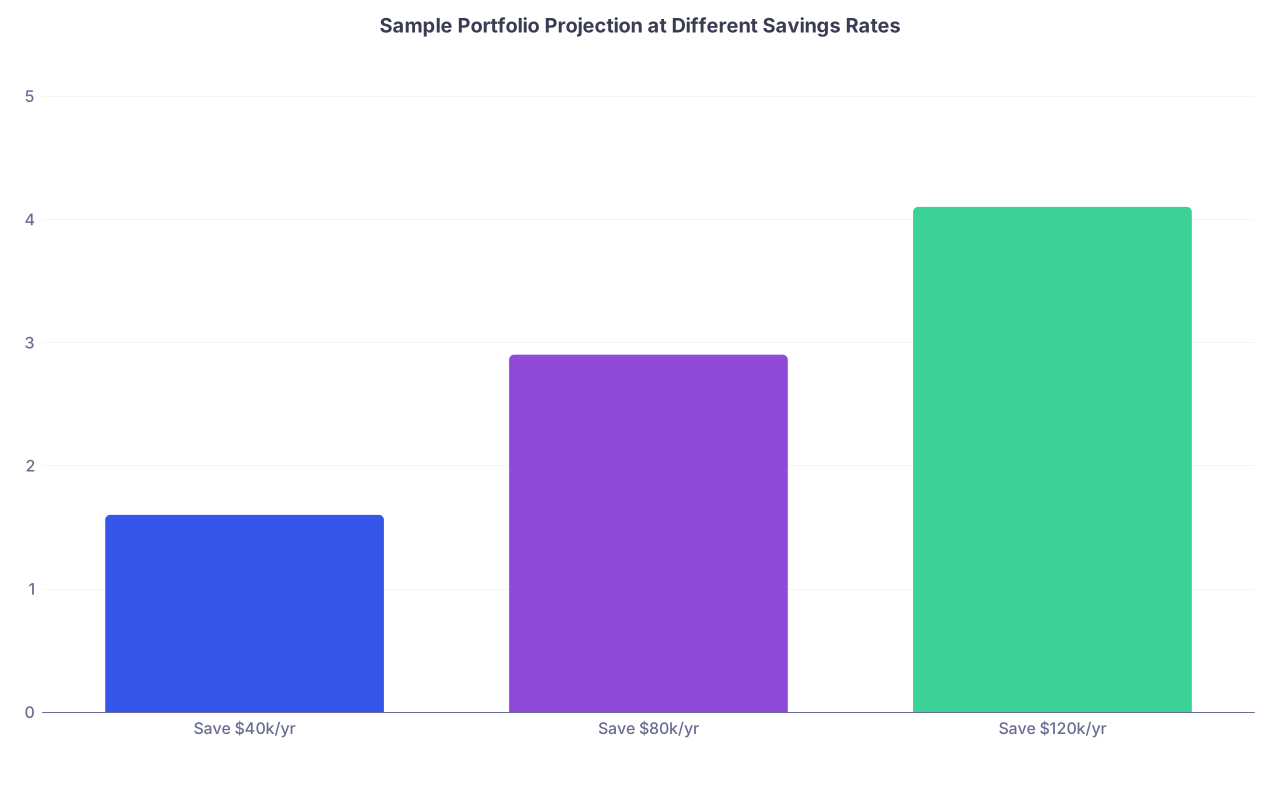
| Category | Value |
|---|---|
| Save $40k/yr | 1.6 |
| Save $80k/yr | 2.9 |
| Save $120k/yr | 4.1 |
(Values are example 15-year projections in millions with a 5% real return and a $400k starting portfolio.)
If your gut reaction is “that is depressing,” good. That discomfort fuels the 10-year sprint.
2. Diagnose the Real Problem: Cash Flow, Not Income
Most late-start physicians do not have an income problem; they have a conversion problem: poor conversion of high income into high savings.
You need to answer one blunt question:
Out of your gross income, what percentage becomes long-term investments?
For most physicians I see:
- Gross: $350k–$600k
- True annual savings: 5–10% (if that)
- Required to catch up: usually 25–35%+ for a decade
Step 1: Do an honest cash flow review (1–2 evenings max)
Do not turn this into a 6-month “budgeting project.” Use 3–6 months of history:
- Pull:
- Bank statements
- Credit card statements
- Loan statements
Sort into:
- Fixed essentials (mortgage/rent, utilities, basic groceries, insurance, childcare / tuition)
- Debt payments (student loans, car loans, credit cards)
- Discretionary lifestyle (restaurants, travel, shopping, “kid extras”)
- One-off large items (home projects, major travel, etc.)
Then back into this one number:
(Total Annual Savings / Gross Income) × 100 = Savings Rate %
If you do not know your current savings rate, you are driving with the headlights off.
3. The 10-Year Catch-Up Framework: The Big Picture
Here is the core framework that works for late-start physicians:
- Savings Rate Goal: 25–35%+ of gross income into true long-term investments
- Time Horizon: 10-year intensive “catch-up” phase, then you can ease off
- Investment Approach: Simple, low-cost, tax-efficient stock-heavy portfolio
- Debt Strategy: Aggressive, but not obsessional, especially for student loans
- Lifestyle: Stop upgrading; you are done with lifestyle creep
Why 10 years?
Because compounded growth + physician income + discipline for a decade is extremely powerful.
Example scenario:
- Age: 50
- Current portfolio: $500k
- Gross income: $400k
- New savings rate: 30% = $120k/year invested
- Real return: 5% (after inflation)
- Time: 10 years (to age 60)
Approximate projection:
- Current $500k for 10 years @ 5% ≈ $815k
- $120k per year for 10 years @ 5% ≈ $1.51M
- Total ≈ $2.3M at 60
Not enough yet? Extend to 65 with reduced savings (say 15%):
- Another 5 years with 15% of $400k = $60k/year
- Existing $2.3M @ 5% for 5 years ≈ $2.94M
- New contributions $60k annually ≈ $330k
- Total ≈ $3.27M
Add Social Security + potential home equity downsizing, and you are “on time” for many lifestyles.
This is why the 10-year sprint matters. The first decade moves you from “no chance” to “in striking range.”
4. Concrete 10-Year Plan: Year 1 Blueprint
You do not fix this with vague intentions. You fix it with a specific first-year protocol.
Step A: Lock in a required minimum savings rate
For most late-start attendings, the right minimum is:
- 25% of gross income as a non-negotiable baseline
- Aggressive catch-up: 30–35% for 5–10 years if possible
On $350k income:
- 25% = $87,500 per year (~$7,290/month)
- 30% = $105,000 per year (~$8,750/month)
This is total long-term saving, across all accounts.
| Account Type | Annual Amount | Notes |
|---|---|---|
| 401(k)/403(b) | $23,000 | Employee deferral (2024-ish) |
| Employer Match | $10,000 | “Free money” |
| Backdoor Roth IRA | $7,000 | Per spouse |
| Taxable Brokerage | $80,000 | Flexible, no limits |
You hit ~30%+ of gross across all of that.
Step B: Infrastructure (automate everything)
You cannot white-knuckle this with willpower. You need systems.
- Max your pre-tax/401(k)/403(b)/457(b) via payroll from day one of the year
- Set up automatic monthly transfers into:
- Backdoor Roth IRAs (you can coordinate with CPA for pro-rata rule issues)
- Taxable brokerage (this will often be your biggest account over time)
- Schedule an annual “raise capture”:
- Every raise or bonus: pre-commit that 80–100% goes to savings or debt, not lifestyle

| Step | Description |
|---|---|
| Step 1 | Physician Income |
| Step 2 | Taxes Withheld |
| Step 3 | Retirement Accounts |
| Step 4 | Checking Account |
| Step 5 | Fixed Bills |
| Step 6 | Automatic Investing to Brokerage |
| Step 7 | Debt Payments |
| Step 8 | Long Term Portfolio |
You want your checking account to show what is left after savings, not before.
Step C: One-time lifestyle cuts (and non-negotiables)
You can keep some luxuries. You cannot keep all of them.
Common high-yield cuts I have seen physicians make:
- Dropping from 2 luxury cars to 1, replacing the other with a paid-off reliable car
- Scaling back private school if it is crushing cash flow (yes, sacred cow, but I have seen it destroy finances)
- Capping travel at a fixed annual amount and pre-funding it in a separate “fun” account
- Halting large home upgrades unless they are safety or major repair related
You want permanent structural changes, not temporary austerity.
5. Investments: Do Not Get Cute, Get Rich
Late-start physicians do not need exotic strategies. They need:
- High savings rate
- Long runway
- Simple, cheap, aggressive-enough portfolios
Portfolio basics
For most mid-career physicians still working 10–20 years:
- 70–90% stocks
- 10–30% bonds / stable assets
More cushion if you truly cannot tolerate volatility, but if you are 45 and 40% bonds, you are kneecapping your odds.
Typical simple allocation:
- 50–60% US Total Stock Market
- 20–30% International Stock Market
- 10–30% Bonds (Total Bond Market or similar)
Use low-cost index funds (Vanguard, Fidelity, Schwab) or equivalent ETFs if in taxable accounts.
Asset location: keep taxes in check
- Put bonds in tax-deferred accounts when possible
- Hold broad stock index funds in taxable
- Use Roth for highest expected growth assets if doing backdoor Roth
You are a high earner. Taxes matter. But do not let tax optimization paralyze your contribution decisions. Contribute first, optimize second.
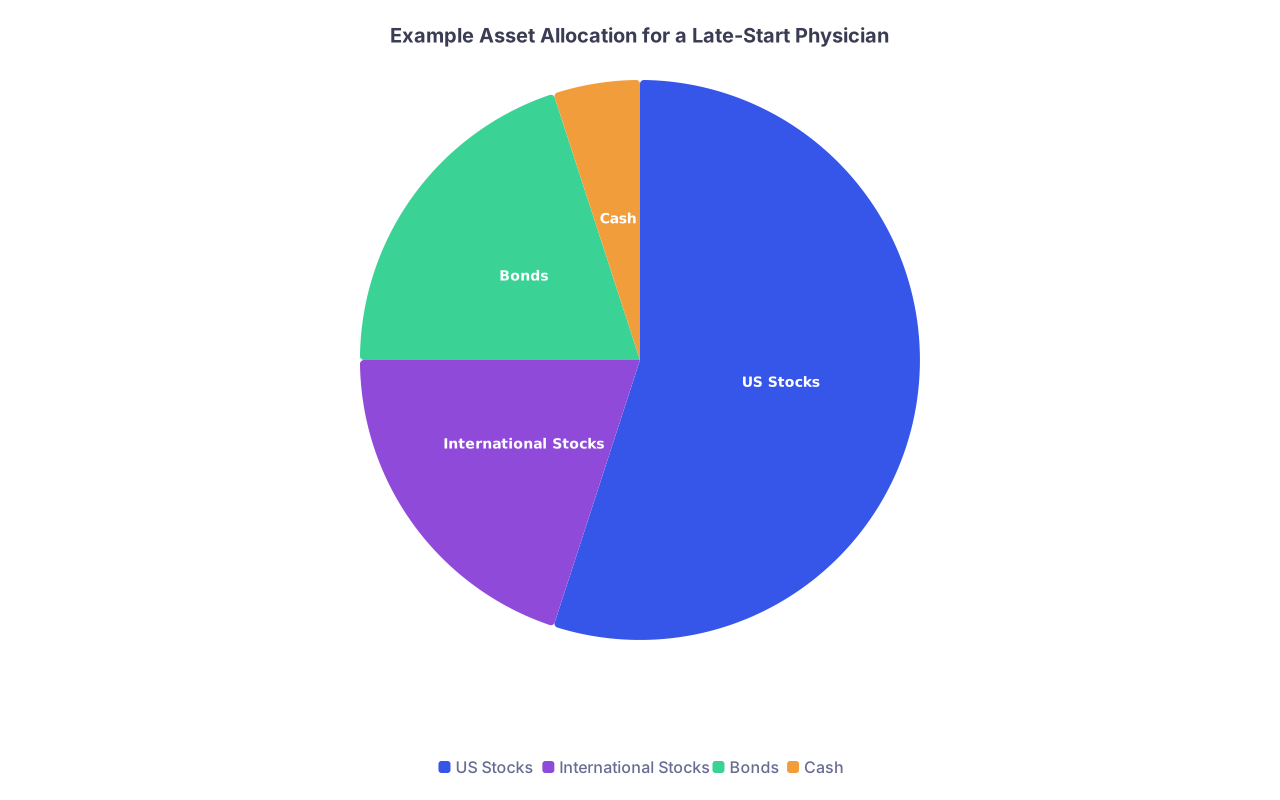
| Category | Value |
|---|---|
| US Stocks | 55 |
| International Stocks | 20 |
| Bonds | 20 |
| Cash | 5 |
6. Debt: Kill the Bad, Control the Rest
Most late-start physicians still dragging big debt around are stuck on:
- Med school loans
- Oversized mortgage
- Car loans
- Sometimes credit cards (this one is a five-alarm fire)
Student loans
Decision tree is pretty straightforward:
- If you are on track for PSLF or meaningful forgiveness:
- Stay the course, direct extra savings into investments, not loans
- If you are not going for forgiveness:
- Aim for a 5–10 year payoff schedule on student loans
- Refinance to a competitive rate if no federal protections needed
Where people screw up:
- 30-year amortized student loans while buying a $1.5M house and two Teslas
- Paying a bit extra toward loans, but not enough to finish them within a decade
I like synchronized timelines: student loans gone by year 5–10 of this catch-up plan.
Mortgage
Do not obsess over paying off the house early during the first half of your catch-up sprint if:
- Interest rate is reasonable
- You are behind on investments
But also:
- Do not stretch into a home that blocks a 25–35% savings rate. That is fatal.
If your PITI (principal, interest, taxes, insurance) is consuming 25–30%+ of your gross alone, you may have a house problem, not an investment problem.
7. Legal and Protection Structures: Do Not Build on Sand
You can have the perfect investment plan and still be ruined by one lawsuit, disability, or poorly drafted estate.
Must-have protection items
Own-Occupation Disability Insurance
- If you lose your ability to practice, your entire 10-year plan explodes
- Get a robust, true own-occupation policy, especially if you are not financially independent yet
Term Life Insurance (if others rely on your income)
- Usually 20-year term covering:
- Remaining mortgage
- College funding goals (if desired)
- Replacement of your income until expected financial independence
- Usually 20-year term covering:
Umbrella Liability Policy
- $2M–$5M coverage; this is cheap and protects against non-medical liability
- Combine with good malpractice coverage
Proper Business / Practice Structure
- If you are an independent contractor or practice owner:
- Make sure entity structure (LLC, S-corp, PC) and contracts are reviewed by a competent attorney
- If you are an independent contractor or practice owner:
Estate planning basics (do not skip)
At minimum:
- Will
- Durable financial power of attorney
- Healthcare power of attorney / advance directive
- Beneficiary designations updated on all accounts (retirement accounts, life insurance)
- A revocable living trust if you are in a state where probate is painful or you have multiple properties

This is the unsexy part. It is also what prevents your family from sorting through financial chaos while grieving.
8. Year-by-Year Milestones: A 10-Year Roadmap
Here is what a realistic 10-year catch-up window can look like for a late-start physician:
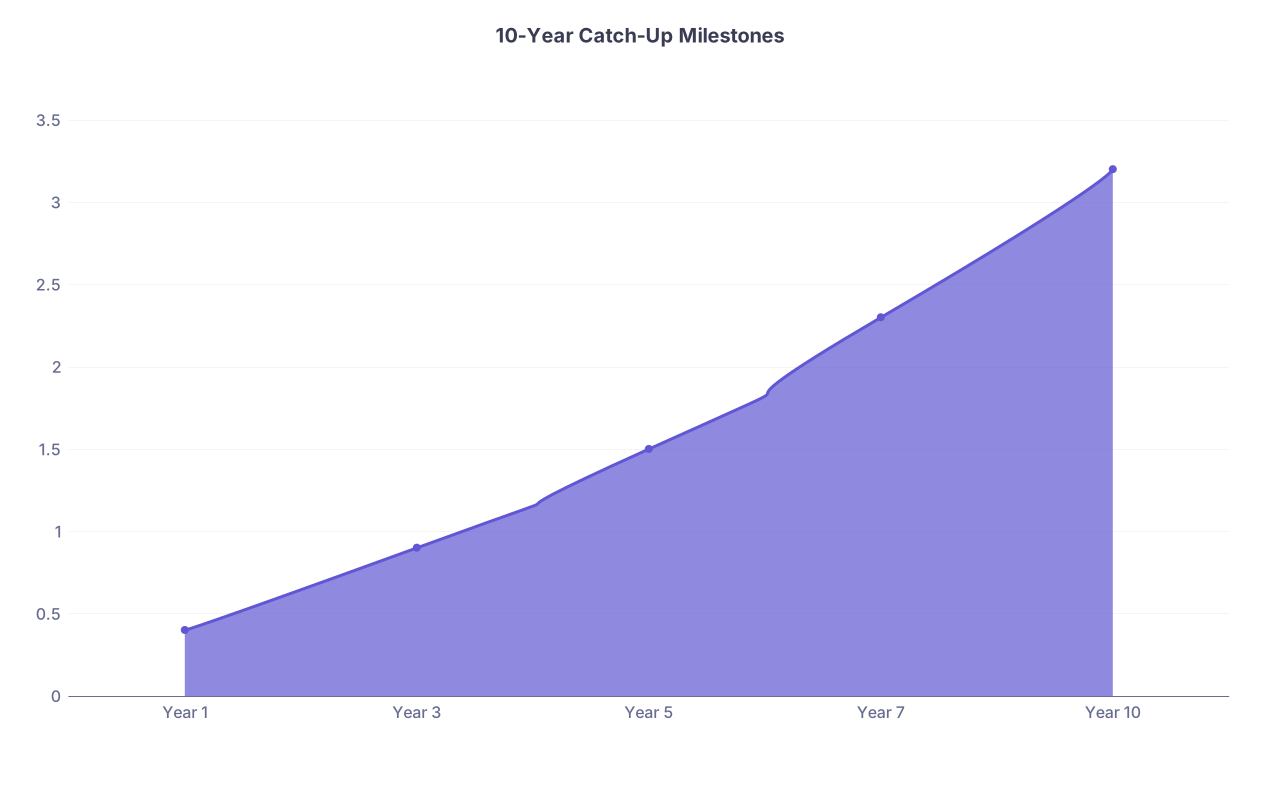
| Category | Value |
|---|---|
| Year 1 | 0.4 |
| Year 3 | 0.9 |
| Year 5 | 1.5 |
| Year 7 | 2.3 |
| Year 10 | 3.2 |
(Values shown are example portfolio milestones in millions for a high-savings physician starting at $400k.)
Years 1–2: Foundation and Aggression
Goals:
- Hit 25–35% savings rate consistently
- Max tax-advantaged accounts
- Set default investments (index funds, simple allocation)
- Get proper insurance and basic estate documents done
- Make key lifestyle cuts and lock in automation
Years 3–5: Acceleration
Goals:
- Portfolio crosses 1×–2× your annual gross income
- Non-forgiveness student loans aggressively paid down or gone
- No new large lifestyle upgrades without a corresponding savings increase
- Strong emergency fund (3–6 months of expenses) in place
Years 6–8: Optionality Phase
Goals:
- Portfolio now 3×–5× your annual spending
- You can begin thinking about partial retirement options in your 60s:
- Reducing clinical hours
- Dropping nights/weekends
- Switching to lower-stress practice settings
Do not yet assume you are done. Stay disciplined.
Years 9–10: Transition Planning
Goals:
- Portfolio nearing (or surpassing) target “retirement number”
- Start actual retirement planning details:
- Social Security claiming strategy
- Asset location and withdrawal plan
- Roth conversion strategies in low-income years (if applicable)
- Decide on retirement age with real numbers, not hope
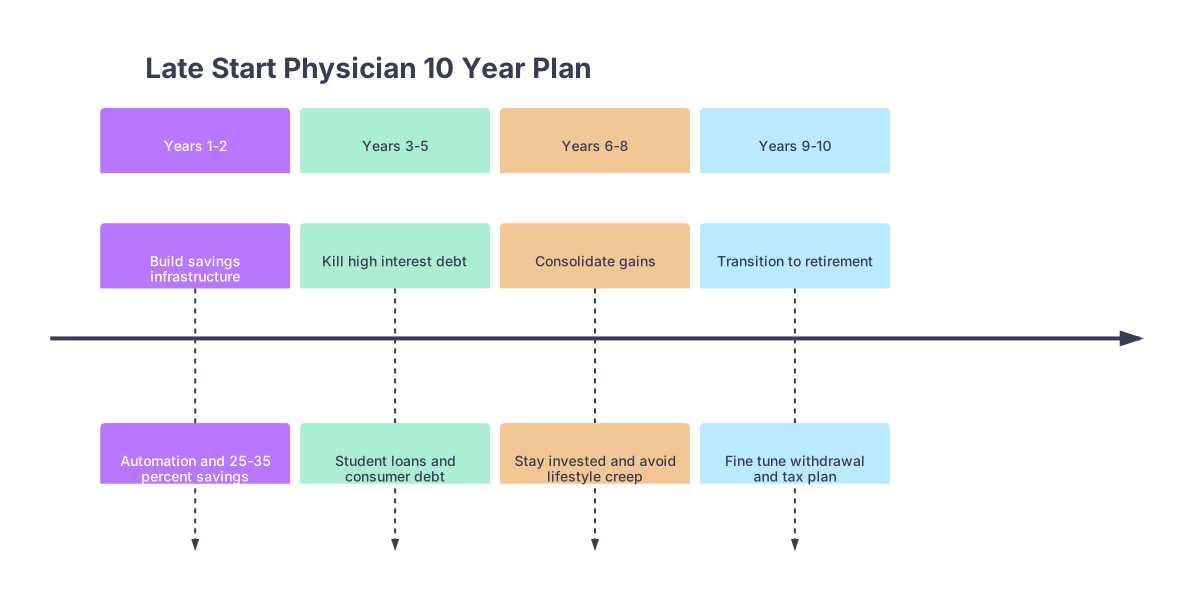
| Period | Event |
|---|---|
| Years 1-2 - Build savings infrastructure | Automation and 25-35 percent savings |
| Years 3-5 - Kill high interest debt | Student loans and consumer debt |
| Years 6-8 - Consolidate gains | Stay invested and avoid lifestyle creep |
| Years 9-10 - Transition to retirement | Fine tune withdrawal and tax plan |
9. Avoid the Landmines That Blow Up Late-Starters
Most late-start physician retirement failures come from the same five problems. You dodge these; you win.
1. Lifestyle creep with every raise
If every income increase goes to:
- Bigger house
- Fancier car
- More private school / travel / everything
Then your future is chained to endless clinical work. Brutal but accurate.
2. Complex, high-fee investments
You are a target. Whole life insurance disguised as retirement, private REITs, opaque partnerships, high-fee “physician-only” funds—it is a feeding frenzy.
Red flags:
- Illiquidity you do not fully understand
- Fees that are “not clearly stated”
- “Tax advantage” as the main selling point
- No simple index benchmark to compare
If you cannot explain how it works in 2–3 sentences, do not buy it.
3. Analysis paralysis
I have watched physicians burn 2–3 years because they:
- Could not pick between Vanguard and Fidelity
- Obsess over the “perfect” asset allocation
- Delay investing until they “learn more”
That delay is more expensive than picking an imperfect but reasonable plan now.
4. Treating retirement planning as a solo, secret project
Your spouse or partner needs to be aligned. Your CPA and attorney should know your plan. If they are clueless or dismissive of your retirement goals, replace them.
5. Assuming you will “just work longer”
You might. But I have seen careers cut short by:
- Burnout
- Health issues
- Family responsibilities (aging parents, special-needs children)
“Work until 70” is not a plan. It is a gamble. You can keep working if you want to. But you should not have to.
10. Putting It All Together: Your 30-Day Implementation Checklist
You do not need to fix everything this week. You do need to stop drifting.
Over the next 30 days, here is the minimum viable action plan:
Define targets
- Retirement age target
- Annual retirement spending estimate
- Portfolio target = spending × 25
Assess
- Total current investable assets
- True annual savings rate right now
- Debt inventory (rates, balances, timelines)
Decide savings rate
- Lock in 25–35% of gross as a 10-year minimum
- Map that to actual dollar amounts and accounts
Rebuild cash flow
- Set up automatic contributions to retirement accounts and brokerage
- Identify 3–5 permanent lifestyle adjustments that free up cash
Simplify investments
- Choose a basic index-fund-based allocation
- Stop buying new complex products without a brutal level of scrutiny
Protect the plan
- Review disability, life, umbrella, estate docs
- Fix obvious gaps with qualified professionals
Create a one-page plan
- Your target numbers
- Your savings rate
- Your investment allocation
- Your debt payoff timelines
- Your “do not do” rules (no more massive lifestyle upgrades; no speculative garbage investments)

Put that one-page plan where you will see it quarterly. Review and adjust once a year, not every time the market moves.
Frequently Asked Questions
1. I am 50 with almost nothing saved. Is a 10-year catch-up plan still realistic?
If “almost nothing” means less than $100k, the math is harsher but not hopeless. You will absolutely need:
- A very high savings rate (often 35–40% of gross)
- A willingness to work into your late 60s, or
- A major lifestyle reset for what “retirement” looks like
I have seen 50-year-old physicians go from $50k saved to over $2M by 65 by:
- Living in a reasonably priced home
- Driving non-luxury paid-off cars
- Saving 35%+ of a $350k–$450k income for 15 years into a stock-heavy portfolio
You will probably not end with a $6M balance and a private jet. You can absolutely build a solid, sane retirement and avoid working until you drop.
2. Should I delay retirement contributions until all my student loans are gone?
For most physicians, that is a mistake. Rare exception: extremely high-interest private loans (think double digits) and no employer retirement match.
In general:
- Contribute at least enough to get the full employer match—always
- Then decide how aggressively to split extra dollars between loans and taxable / Roth investing
- Try not to drag non-forgiveness loans beyond 10 years from now
You do not want to wake up at 58 with no loans but also no portfolio. Make the loans smaller while the portfolio gets larger. That is the balanced version of a real catch-up plan.
Key points:
- You are not doomed. With a 25–35% savings rate, simple investments, and a 10-year sprint, a late-start physician can absolutely retire on time.
- The hard part is not the investing. It is the cash-flow discipline and refusal to keep inflating your lifestyle.
- Build a one-page plan, automate it, protect it with proper legal and insurance structures, and stick to it for a decade. That is how you catch up.