
The most important conversations about your benefits happen in rooms you’re never invited into.
You see HR slide decks and glossy PDFs. I’ve sat in the meetings where department chairs, CFOs, and benefits consultants actually decide what you get—and what quietly gets taken away. Those are very different conversations.
You want retirement planning and financial security? You need to understand what’s really being said when the doors close.
Let me walk you into that room.
What Really Drives Decisions About Physician Benefits
Here’s the first unpleasant truth: your “benefits package” is mostly a budgeting tool and a recruitment lever, not a kindness.
In closed-door meetings, the conversation is almost never, “What would be best for our physicians’ long‑term financial health?” It’s:
- “What do we need to offer to stay competitive with Hospital X?”
- “How do we reduce liability and long‑term cost exposure?”
- “What benefits ‘feel rich’ but are cheap for us?”
The CFO usually leads. The Chief Medical Officer chimes in when they’re worried about losing people. HR and benefits consultants translate all of that into legal structures and plan designs.
You? You’re represented by “FTE counts,” “turnover risk,” and “market benchmarking.”
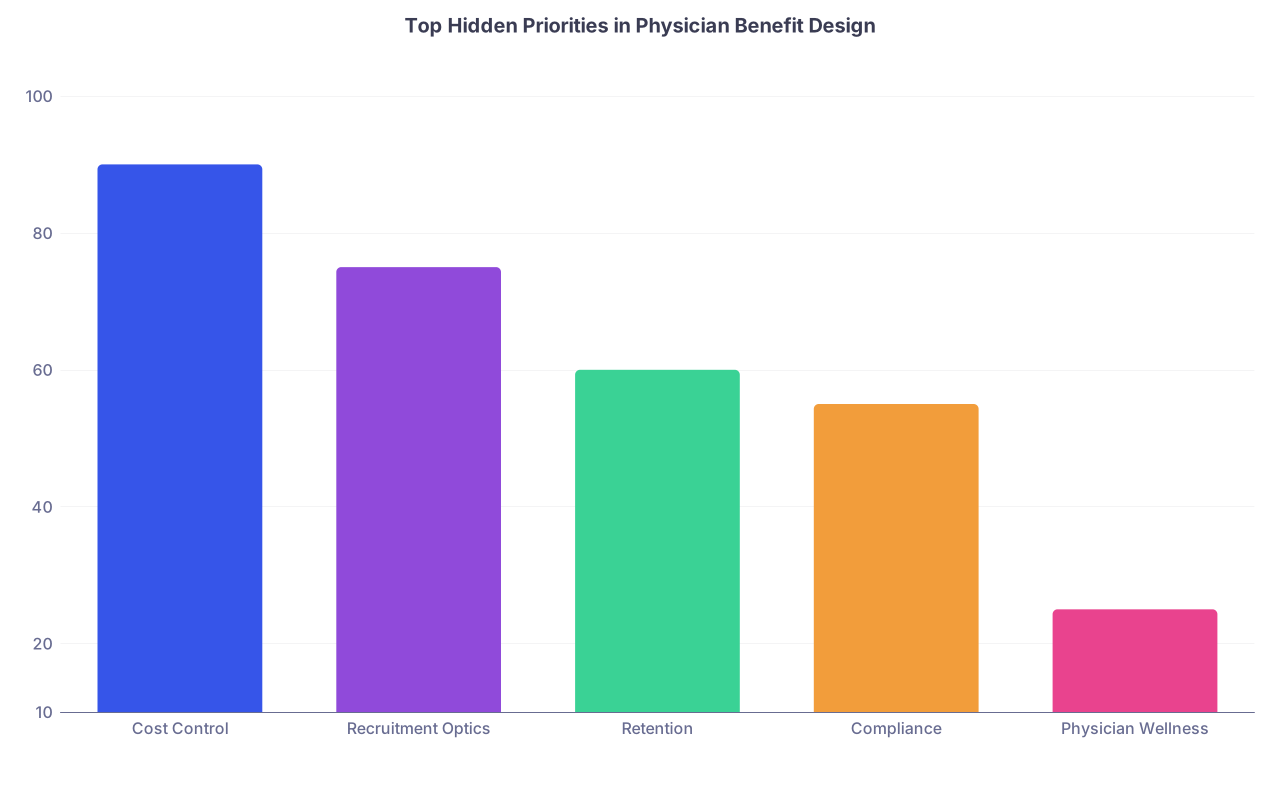
| Category | Value |
|---|---|
| Cost Control | 90 |
| Recruitment Optics | 75 |
| Retention | 60 |
| Compliance | 55 |
| Physician Wellness | 25 |
Notice where “physician wellness” ends up. They’ll invoke it in the PowerPoint, but in the back room the real hierarchy is brutally clear: cost first, then optics, then everything else.
Now let’s get specific. You care about retirement and financial security. Here’s what they actually talk about for each major area.
The 401(k)/403(b)/457: What They Won’t Say Out Loud
On the surface you see: match percentages, vesting schedules, fund menus. Behind the scenes, the conversation is much sharper.
I’ve heard versions of this verbatim:
“Can we trim the match by 1% and reframe it as ‘aligning with industry standards’? That saves us about $2M annually.”
“Most of the younger docs aren’t maxing anyway. They won’t notice.”
Here’s what really goes on with retirement plans.
1. Match and Vesting: Retention and Cheap Money
The match is not designed for your wealth. It’s designed for their retention and cash flow.
They talk about:
- “Cliff” vs graded vesting: A 3-year cliff vesting schedule is a quiet way to save money on people who leave early. Lots of early-career physicians walk away from unvested dollars they never understood.
- Match caps and wording: “Let’s say we match 50% up to 6% of pay. It sounds generous, but the max outlay is controlled.” The marketing phrase is “robust match.” Internally it’s “predictable expense.”
| Change They Make | How It’s Sold To You | What They Say In The Room |
|---|---|---|
| Reduce match by 1% | “Aligning with peers” | “Saves millions, low noise” |
| Lengthen vesting | “Encourages long-term commitment” | “We keep forfeitures” |
| Lower comp cap for match | “Updated IRS-aligned formula” | “Cap exposure to high earners” |
When the hospital’s margins are tight, the match is one of the first “levers” they discuss pulling. They’ll soften it later with wellness talks and resilience workshops. That’s not an accident.
2. Investment Options: Liability Management, Not Optimization
You ever wonder why the fund lineup is mediocre and expensive when you could just use three low-cost index funds?
Because behind closed doors the legal counsel says:
“We need a defensible menu that minimizes ERISA exposure, not the absolute best‑performing set of funds.”
Benefits consultants show “peer” lineups. There’s a lot of talk about:
- “Fiduciary defensibility”
- “Reasonable fees”
- “Avoiding employer advice liability”
The end result: a weird mix of target-date funds, some actively managed options, and a couple of indexes. Not because that’s ideal for you, but because if they mirror what other big systems do, they’re legally safer.
3. 457(b) and 457(f): The Golden Handcuffs and Quiet Risk
This one’s huge, and almost never explained well to you.
Behind doors, when they want to retain high-value specialists, the phrase that comes up is:
“Can we beef up the non‑qualified side? Maybe a 457(f) with a 10‑year cliff?”
Translation: give you a large carrot with serious strings, often fully at risk if the organization sinks or you leave “wrong.”
Here’s the difference they’re discussing when they design these:
| Plan Type | Who It’s For | Real Risk To You |
|---|---|---|
| 401(k)/403(b) | Broad workforce | Assets are yours, in trust |
| 457(b) | Higher comp, often employed docs | Employer-owned, at org risk |
| 457(f) | Execs and top earners | Forfeit if terms not met, tied to solvency |
I’ve seen CFOs flat out say: “If they want that extra tax deferral, they can share some risk with us.”
You’re thinking “extra retirement vehicle.” They’re thinking “retention plus cheap capital on our balance sheet.”
Pensions, Cash Balance Plans, and the Quiet Phase-Out
If your system has any defined benefit or cash balance plan left, you better believe that plan is a recurring agenda item.
The language they use:
- “Legacy liability”
- “Frozen accruals”
- “Long‑term balance sheet drag”
I sat in on a meeting years ago where a large academic center reviewed its frozen pension. The finance team laid out projections, and the chair said:
“Do our new hires even care about this? Or do they just want higher salaries now?”
That’s exactly how they think. Pensions are seen as an anchor. Young physicians are seen as short-sighted enough to swap lifetime guarantees for a signing bonus and a bump in RVU rates.
So they phase out or freeze defined benefit plans, then talk to recruiting:
“We’ll lead with signing bonuses, loan repayment, and a strong 403(b) match. That plays better with applicants.”
Your long‑term security is traded for immediate recruiting optics. Quietly. Surgically.
Health, Disability, and Life Insurance: Where Corners Actually Get Cut
You care about retirement. Good. But your future retirement depends on you not getting wrecked by a bad disability contract or a cheap life policy.
Behind closed doors, benefits committees focus here in a very particular way.
Disability Insurance: The Hard Truth
Here’s what they talk about with group LTD:
- Definition of disability: “Can we avoid a pure own‑occupation definition? That’s more costly.”
- Benefit caps: “Align max benefit so our highest earners aren’t fully covered. It keeps premiums stable.”
- Integration with other income: “Offset with Social Security and worker’s comp when possible.”
I’ve heard an HR director put it cleanly:
“If we give them a very strong group disability, they’re less receptive to comp pressure. We want protection but not so rich that it removes motivation.”
They will never say that to your face. But that’s the subtext.
They design a group policy that looks adequate in summary form, but once you read the actual contract you see soft spots everywhere—especially for six‑figure earners.
This is why attendings who know the game buy strong individual own‑occ policies early and treat the group coverage as backup, not cornerstone.
Life Insurance: Optics Over Substance
Life insurance discussions are even blunter:
- “We’ll offer 1x or 2x salary as basic, then optional buy‑up.”
- “Highly competitive pricing” = cheap group term, limited portability, not designed for your unique needs.
Life insurance is a recruitment checkbox. It’s not built as a thoughtful estate or long‑term planning tool for physicians with real assets and families depending on them. You have to build that yourself or with an advisor, outside the hospital ecosystem.
The Benefits Committee: Who’s in the Room and What They Care About
You probably imagine some benevolent committee of senior physicians shaping benefits with your interests at heart.
Reality looks more like this:
- CFO or VP of Finance
- CHRO / VP of HR
- Benefits manager
- One or two clinical leaders (sometimes just for optics)
- External benefits consultant

The agenda reads: “Benefits renewal and strategy.” The underlying script is:
- How much are costs increasing?
- Where can we trim or at least slow the growth?
- What do our competitors offer that could poach our people?
- What changes can we make that will create the least noise?
If your department has lost several cardiologists to the private group across town, suddenly “retention risk” for cardiology is highlighted and they talk about:
“Do we need enhanced retirement matches or supplemental benefits for this group?”
Yes, I’ve seen tiered benefits discussed explicitly. Different treatment for hospitalists vs neurosurgeons. High RVU producers get more attention because their departure hurts the P&L more.
It’s not “fair.” It’s financial triage.
What They Say About Early Retirement, Burnout, and Part-Time Work
Here’s where it gets close to the bone.
When seasoned attendings start asking HR about “phasing down,” cutting FTE, or “bridge to retirement,” those questions often get relayed up the chain. It sounds like:
- “We’re getting more requests for part‑time arrangements.”
- “Several senior oncologists are asking about early retirement options.”
In the closed room, this triggers two instincts:
- Panic about coverage and revenue.
- An opportunity to move high‑salary FTEs off the books.
You’ll hear things like:
“Can we structure a phased retirement option that works for both sides?”
But the real meaning is: “Can we keep them in clinic enough to cover service lines while easing them off the higher-cost benefits gradually?”
They’re also keenly aware of what happens when multiple older physicians leave at once. That’s when someone says:
“We should model incentivized early retirement before we face unplanned exits.”
You might later see “voluntary separation programs” or “retirement transition packages.” Those are not altruistic. They’re timing tools for the balance sheet and staffing.
The Legal and Tax Backdrop They Care About (Even If You Don’t)
The “financial and legal aspects” piece lives in the subtext of everything they do.
In the benefits meetings, the lawyers and consultants aren’t there to help you optimize your taxes. They’re there to keep the organization out of trouble and to manage regulatory constraints.
You’ll hear:
- “We must stay within 409A rules on non‑qualified deferred comp.”
- “We can’t extend this benefit broadly without violating discrimination rules.”
- “We need to document our process to maintain fiduciary protection.”
This is why, for example, they have tight rules on:
- Who can access a 457(b)
- How much can go into non‑qualified plans
- Which groups are eligible for supplemental retirement or deferred comp arrangements
It’s also why they are extremely resistant to anything that looks like individualized financial advice tied to the employer. They do not want to be seen as “recommending” specific strategies or investments.
So they give you generic webinars, vendor reps, and a 50‑page booklet. Then they check the “education provided” box and move on.
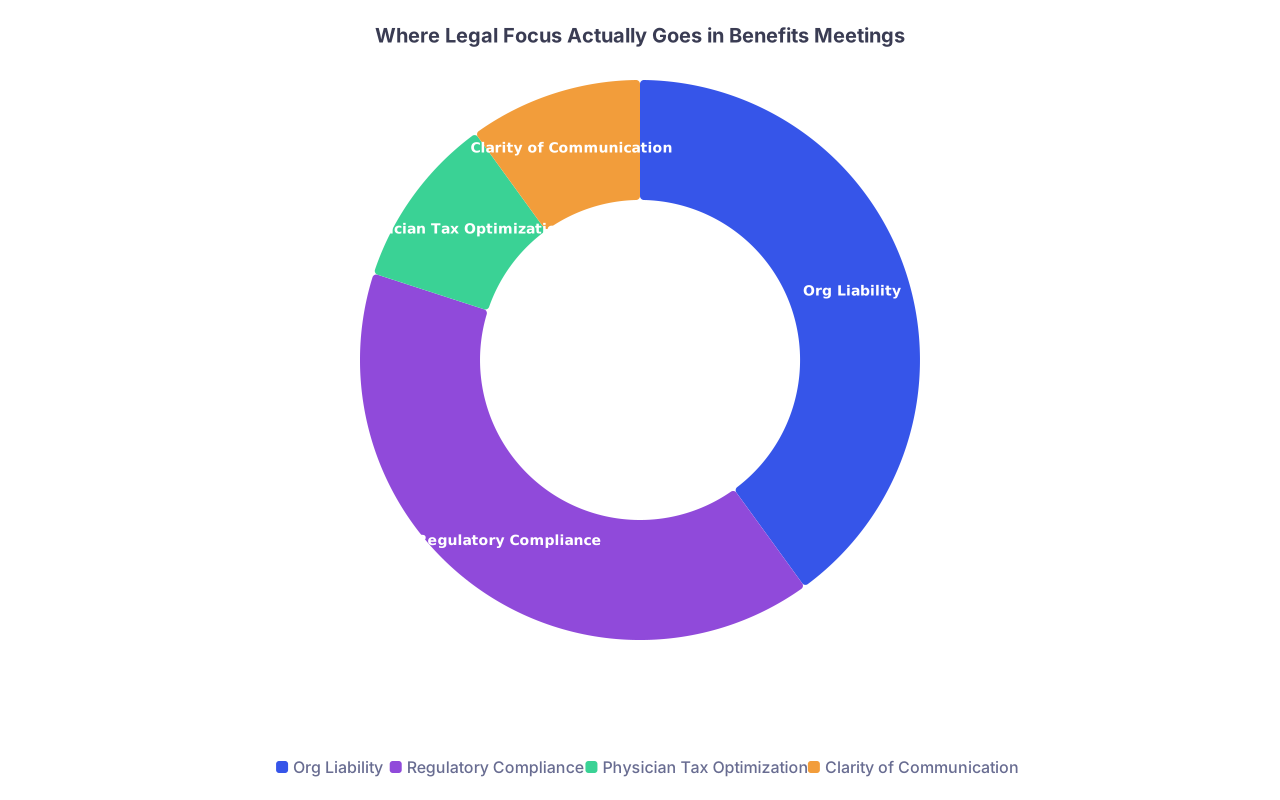
| Category | Value |
|---|---|
| Org Liability | 40 |
| Regulatory Compliance | 40 |
| Physician Tax Optimization | 10 |
| Clarity of Communication | 10 |
Notice how little space is left for your optimization. That’s not accidental.
What You Should Be Watching For (Because They’re Talking About It)
Let me be blunt: nobody in that room is going to protect your future as fiercely as you will. But you can read the tea leaves if you know what to look for.
Here’s what they’re already discussing—and how it shows up on your side of the curtain.
Rising health plan costs
Internal: “Can we increase deductibles and shift more to HSA‑eligible plans?”
What you see: New high‑deductible option with HSA seeded a bit, sold as “consumer-driven choice.”Retirement plan vendor change
Internal: “We can save 10–15 bps and get better fiduciary support.”
What you see: Mandatory “transition” meeting, new website, slightly different fund menu.Quiet benefit erosion
Internal: “Freeze pension, reduce match, but enhance wellness offerings to soften it.”
What you see: New meditation app, gym subsidy, maybe extra PTO; meanwhile long‑term financial benefits shrink.Tiered treatment by specialty
Internal: “We’re at risk of losing high-producing orthopedists. Consider special arrangements.”
What you see (if you’re not ortho): absolutely nothing. Those enhancements are often buried in individual contracts or executive-labeled plans.Burnout and exit risk
Internal: “Too many mid-career docs talking about leaving.”
Response: Resilience seminars and “recognition weeks” rather than real structural financial improvements—because the latter cost real dollars.

How to Play This Game Like a Grown-Up
You’re not going to change the incentive structure of a billion‑dollar health system. But you can stop being the clueless target of their “benefits strategy.”
Here’s how physicians who actually retire on their terms behave:
They treat the employer retirement plan as a tool, not a full solution. They:
- Max the match, then max the plan if the investment options and fees are reasonable.
- Use outside vehicles—IRAs, backdoor Roths, taxable brokerage accounts—to build independence that isn’t employer-controlled.
- View 457(b) and especially 457(f) as advanced tools with real employer credit risk, not free money.
They read the summary plan descriptions. Not exciting. But that’s where vesting schedules, match formulas, and limitations live. The stuff the committee debated.
They do not rely on group disability and life as primary protection. They layer it with high-quality individual policies they own and control.
They pay attention to drift. When the organization trims the match “just a little,” or freezes a plan, or quietly raises health premiums, they take that as what it is: data about the employer’s direction and values. Sometimes that’s the first sign it’s time to renegotiate or leave.
And, crucially, they get independent advice. Not the “financial wellness” vendor chosen by the same committee designing plans to serve the hospital. Someone who doesn’t care about the hospital’s margins—only about yours.

| Step | Description |
|---|---|
| Step 1 | Org Financial Pressure |
| Step 2 | Benefits Committee Meeting |
| Step 3 | Reduce Match or Plan Richness |
| Step 4 | New Wellness or Minor Perks |
| Step 5 | Update Plan Documents |
| Step 6 | HR Communication to Physicians |
| Step 7 | Physicians React or Ignore |
| Step 8 | Cost vs Recruitment |
You live at the bottom of that chart. Most physicians never see the top. Now you do.

FAQ: What Faculty Really Talk About in Closed-Door Benefits Meetings
1. Are they actually trying to screw physicians, or is this just business?
It’s mostly business with a side of indifference. The committee is tasked with protecting the institution, not maximizing your net worth. When your interests align—like needing competitive benefits to recruit—they’ll enhance things. When they don’t, your long‑term security loses to short‑term cost control.
2. Is a 457(b) plan safe for me to use as part of retirement planning?
“Safe” is the wrong word. It’s an unsecured promise from your employer. In those meetings they explicitly acknowledge that 457(b) assets are on their balance sheet, not in a protected trust for you. If your institution is financially solid and you’re not over-concentrating, it can be useful. But no one in that room is thinking about your personal risk tolerance—they’re thinking about their cheap access to capital.
3. Why do the retirement plan investment options kind of suck?
Because the main targets are fiduciary cover and fee structures that play well for the institution and vendor, not cutting-edge portfolio design. The benefits consultant shows what “peer institutions” do; the committee copies it. Simple, low-cost index lineups are usually an afterthought, not the core design philosophy.
4. Do physicians on the benefits committee actually have any power?
Sometimes, but usually less than you think. A strong, respected department chair can push back—“we’ll lose people if you cut this match again”—and occasionally win concessions. But if finance has decided a benefit is unsustainable, a couple of clinicians at the table are not going to reverse that. At best they can shape how it’s implemented and communicated.
5. What specific benefit changes should make me consider leaving?
A pattern. One cut doesn’t mean you run. But if you see: match reductions, increased premiums, pension freezes, and more restrictive disability terms within a few years, that’s a clear signal of shifting priorities and financial stress. Combine that with rising RVU pressure and poor support, and yes—that’s when the savvy faculty start taking recruiter calls and building their own exit timelines.
Key points: Those closed-door meetings are built around cost, risk, and recruitment optics—not your retirement. Every benefit you see is the product of that calculus. If you want real financial security, treat the employer plan as one tool, protect yourself outside the system, and never assume the committee’s priorities match your own.