
The right time for a physician to go part‑time is earlier than most doctors think—but only after the numbers and the legal details say you’re safe.
Let me walk you through exactly how to figure that out.
The Core Question: Can You Afford To Cut Your Income?
Don’t start with feelings. Start with math.
The right time to shift to part‑time is when:
- Your core living expenses are fully covered (now and in retirement),
- Your retirement plan is still on track at a lower savings rate,
- Your legal/contract risks from cutting back are understood and contained.
If any one of those three is fuzzy, you’re not ready yet.
Step 1: Know Your “Enough” Number
You can’t decide about part‑time until you know your target retirement number and where you stand today.
Rule of thumb many physicians use (not perfect, but a starting point):
- Annual retirement spending target × 25 = target portfolio
e.g., You want $200,000/year in retirement → rough target ≈ $5 million invested.
Then ask:
- Current investable assets?
- Current savings per year?
- Years to full retirement?
If you’re:
- Within 5–10 years of full retirement and already 70–80% funded, part‑time is usually very possible if you’re willing to:
- Save less per year, and/or
- Retire a bit later, and/or
- Spend a bit less in retirement.
If you’re:
- In your late 50s or early 60s, burned out, and already very close to your number (or above it), waiting “just a few more years full‑time” is often pure habit, not a financial requirement.
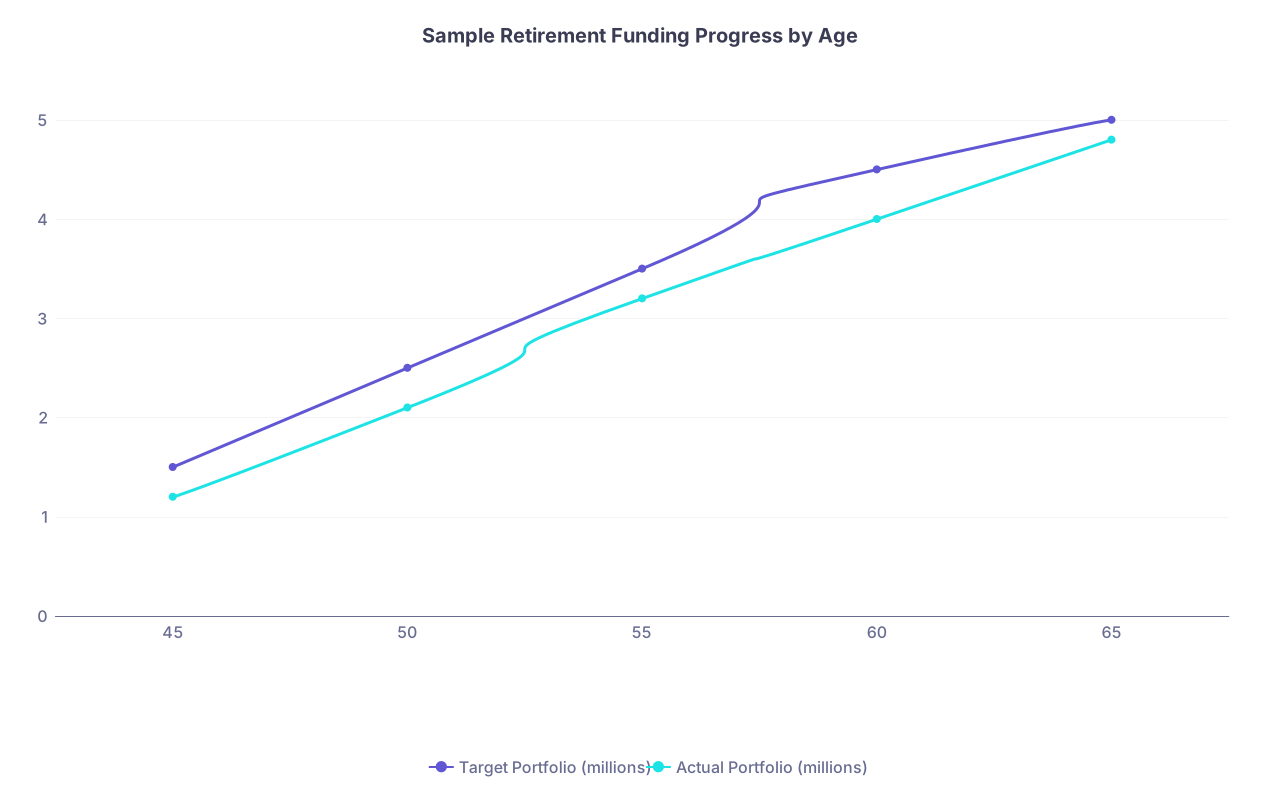
| Category | Target Portfolio (millions) | Actual Portfolio (millions) |
|---|---|---|
| 45 | 1.5 | 1.2 |
| 50 | 2.5 | 2.1 |
| 55 | 3.5 | 3.2 |
| 60 | 4.5 | 4 |
| 65 | 5 | 4.8 |
If your actual line is tracking reasonably close to your target, that’s when part‑time becomes a real option.
Financial Triggers That Say: “You’re Ready”
Here’s where people want hard thresholds. So I’ll give you some.
These aren’t universal rules, but they’re solid guardrails I’ve seen work for many physicians.
1. You’re financially independent or close
You’re in a strong position to consider part‑time if:
- Your invested assets (401(k), 403(b), IRAs, taxable, etc.) are at 20–25× your annual baseline expenses (not income—expenses).
- Your debt is either:
- Gone, or
- Contained with a clear payoff plan that doesn’t require a full‑time income.
If you’re already at true financial independence (assets ≈ 25–30× expected retirement spending), part‑time isn’t a financial decision anymore—it’s lifestyle and identity.
2. Your retirement savings rate can drop without breaking the plan
Ask this blunt question:
If I:
- Cut income by 30–50%, and
- Cut retirement savings by 30–50%,
…do I still reach my number by my desired retirement age?
This is where a retirement projection (with a real financial planner or a decent calculator) is non‑negotiable. Don’t guess this.
You want to see:
- What happens if you go part‑time at 55 instead of 62,
- Or at 50 instead of 65.
Many people are shocked that the answer is: “You’ll be fine—you’ll just delay full retirement by 2–3 years.” Which is often a fantastic trade for better quality of life in your 50s.
3. Health insurance and benefits won’t blow up your budget
This is where doctors get burned.
You can afford to go part‑time when you have clear answers on:
- Will your part‑time role still qualify you for employer‑sponsored health insurance?
- If not, what will it cost to:
- Use COBRA for 18 months, or
- Buy on the ACA exchange until Medicare?
- What happens to:
- Disability insurance
- Life insurance
- Employer retirement match
- Pension credits (if any)
| Area | Questions To Answer First |
|---|---|
| Health Insurance | Do I keep coverage? At what FTE minimum? |
| Disability | Is coverage prorated or lost entirely? |
| Retirement Match | Does the employer still contribute? |
| Pension | How is service time calculated part-time? |
| Malpractice | Who pays and how is tail handled? |
If you haven’t gone line‑by‑line through your benefits with HR or your practice’s admin, you’re guessing. Don’t guess here.
Legal & Contract Landmines You Can’t Ignore
This is the part most physicians skip—until it bites them.
Before going part‑time, you need to know how your contract, your malpractice, and your employer policies interact with your new schedule.

| Step | Description |
|---|---|
| Step 1 | Think about part time |
| Step 2 | Review finances |
| Step 3 | Adjust savings or delay change |
| Step 4 | Review contract and benefits |
| Step 5 | Negotiate or redesign role |
| Step 6 | Plan transition date |
| Step 7 | Update legal and insurance details |
| Step 8 | Retirement on track? |
| Step 9 | Restrictions or penalties? |
Contract clauses you need to read slowly
Things I’ve seen in real physician contracts:
“Full‑time requirement for partnership track”
You cut to 0.6 FTE, suddenly your eligibility clock resets—or you’re simply out.Productivity thresholds with minimums
RVU-based comp with a “minimum RVU” requirement that quietly assumes full‑time work.Non‑compete tied to any reduction in hours or status change
Some contracts treat status changes like a termination event for non‑compete timing.
You must know:
- Is there a minimum FTE to stay:
- Employed
- On partnership track
- Eligible for bonuses
- Does going part‑time:
- Trigger contract renegotiation?
- Change your termination notice requirements?
Get your contract. Read it. Then, ideally, pay a healthcare attorney a few hundred dollars to read it again with you.
Malpractice: coverage and tail
Going part‑time doesn’t mean you’re “less liable.” One bad outcome on a “light” clinic day still ruins your week.
You need clear answers to:
- Who pays for malpractice in your new part‑time role?
- Is coverage:
- Occurrence‑based (cleaner), or
- Claims‑made (tail risk)?
- If you leave this job eventually, who pays for tail coverage?
If you’re staying in the same group, just shifting FTE, this is usually minor. If you’re going part‑time somewhere else, doing locums, or starting concierge/telemed, malpractice gets more complicated—fast.
How Different Career Stages Change the Answer
The “right time” is different for a 42‑year‑old with 3 kids than for a 63‑year‑old whose mortgage is paid off.
In your 40s: Possible, but needs precision
Part‑time in your 40s can work, but you need to be sharp:
- Student loans: Are they gone or on a defined path?
- College savings: Are you okay funding less and maybe working longer?
- Retirement: Are you at least on track with a solid plan?
This is where hybrid models shine:
- 0.8 FTE with preserved benefits
- 4‑day weeks, or 3 longer days + 1 admin day
- Drop call, keep clinic
You may not fully cut back, but you reduce the grind without torching your future.
In your 50s: Prime time to design your glide path
For many physicians in their 50s, the financial runway is finally there, but they’re scared to use it.
This is the best decade to:
- Shift from maximum income to maximum sustainability
- Drop nights/weekends/call first
- Redirect part of your work to:
- Teaching
- Admin
- Consulting
- Telemedicine
If your portfolio is reasonably close to your goal and kids are off the payroll or nearly there, this is often the most logical—and healthiest—time to go part‑time.
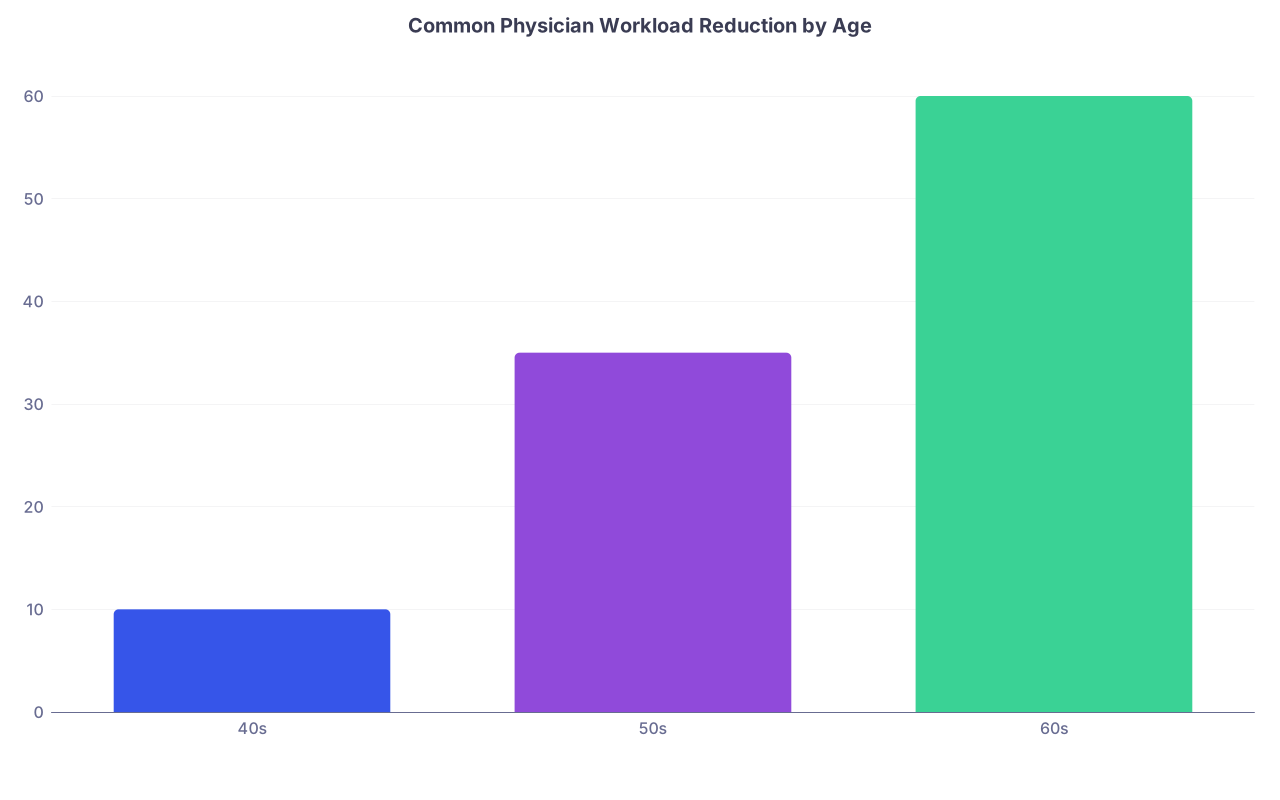
| Category | Value |
|---|---|
| 40s | 10 |
| 50s | 35 |
| 60s | 60 |
(Values = approximate % of physicians who significantly reduce hours; this trend is very real.)
In your 60s: You’re choosing between money and time
If you’re in your 60s and can afford part‑time but are “powering through a few more years to be safe,” be honest:
- Are you actually moving the needle financially?
- Or just delaying the life you say you want?
This is often where fear dresses up as responsibility.
You don’t get your 60s twice. If the math works, you’ve got my blessing: ease up.
Practical Framework: A 6‑Question Test
Here’s a quick test I’d use with any physician at this crossroads. If you can honestly answer “yes” to at least 5 of these, you’re probably ready.
- Do I know my annual spending within $10–20k (not just income)?
- Do I have a concrete retirement plan that includes projections with lower future income?
- Would going part‑time not jeopardize:
- Health insurance
- Malpractice coverage
- Critical retirement benefits?
- Have I reviewed my contract and either:
- Confirmed there are no landmines, or
- Built a plan to work around them?
- Do I have a plan for the freed‑up time that isn’t just “I’ll figure it out later”?
- Have I discussed this openly with:
- My spouse/partner (if applicable), and
- My financial planner (or done serious modeling myself)?
If you’re at 2–3 yeses, you’re early in the process. That’s fine—your job now is to turn unknowns into knowns.
How to Actually Make the Shift (Without Blowing Things Up)
Once the numbers and legal pieces line up, the implementation is where people stall. So here’s a simple sequence.
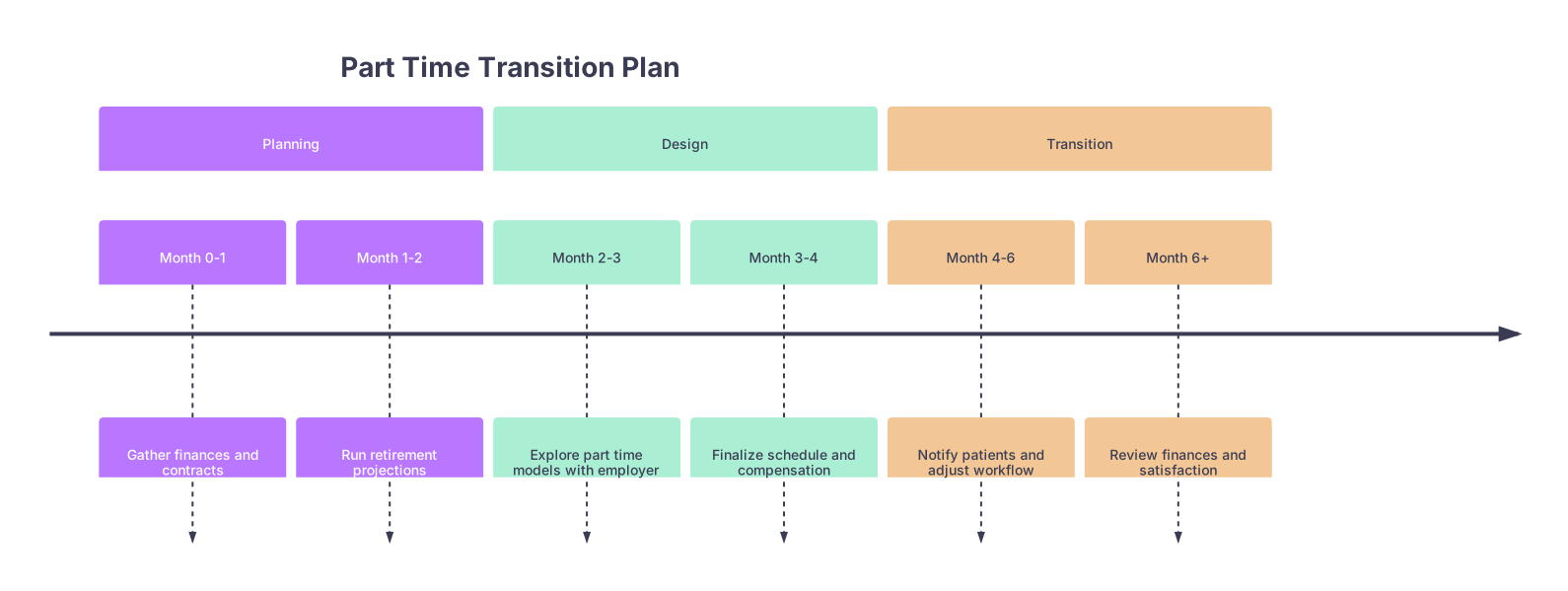
| Period | Event |
|---|---|
| Planning - Month 0-1 | Gather finances and contracts |
| Planning - Month 1-2 | Run retirement projections |
| Design - Month 2-3 | Explore part time models with employer |
| Design - Month 3-4 | Finalize schedule and compensation |
| Transition - Month 4-6 | Notify patients and adjust workflow |
| Transition - Month 6+ | Review finances and satisfaction |
1. Model multiple scenarios
Sit down (with software or a planner) and run:
- Full‑time to 65 vs part‑time at 55 and retire at 68
- Full‑time to 60 vs part‑time at 52 and retire at 65
Look at:
- Portfolio size at retirement
- Expected income in retirement
- Annual spending wiggle room
You’ll see the tradeoffs clearly—on paper. That kills a lot of the anxiety.
2. Approach your group/employer with a proposal, not a wish
Don’t walk in saying, “Can I go part‑time?” Walk in with:
- The exact FTE you want (0.5, 0.7, etc.)
- Preferred clinic days
- Call expectations you’re willing to keep/drop
- How your change still supports:
- RVU needs
- Clinic coverage
- Team balance
You make it easier for them to say yes when you show you’ve thought through operational impact.

3. Negotiate the right things
Money matters, but these are often more important:
- Minimum FTE for benefits – can they keep you at 0.7 with full benefits?
- Call expectations – fewer nights/weekends is sometimes more valuable than a slightly higher hourly rate.
- Admin/educational roles – non‑clinical work can stabilize income and lighten intensity.
Put it in writing. Verbal “understandings” are how resentment and confusion show up later.
Don’t Ignore the Psychological Side (Because It Will Hit You)
Let me be blunt: a lot of physicians are scared of going part‑time not because of money, but because of identity.
Common reactions I hear:
- “Will my partners think I’m lazy?”
- “Will I still feel like a ‘real’ doctor?”
- “What if I’m bored?”
You aren’t just adjusting hours. You’re changing how you see yourself.
Have one honest conversation with:
- A colleague who already went part‑time, or
- A retired attending you trust.
They’ll tell you the same thing: once you’re on the other side, you usually wish you’d done it 2–5 years earlier.

Quick Reality Check: When It’s Too Early
You’re probably not ready for part‑time if:
- You’re in your 30s, still paying heavy student loans, no savings plan, and mostly just exhausted from residency or early attending life.
- You have no idea what your monthly spending is, you just “pay the bills and hope.”
- Your entire retirement plan is “I’ll sell the practice someday for a ton of money,” with no backup.
In those cases, your next step is planning, not cutting hours. Get control of the financial side first. Then revisit this in 2–3 years.
FAQ: Part-Time Work & Retirement Planning for Physicians
1. Will going part-time ruin my ability to retire on time?
Not automatically. It depends on:
- How close you are to your retirement target,
- How much you still save while part‑time, and
- Whether you’re willing to adjust retirement age or spending.
For many late‑career physicians, going part‑time adds a couple years to full retirement at most—but buys much better quality of life right now. You need projections to be sure, but it’s rarely an all‑or‑nothing disaster.
2. How many hours is “part-time” for a physician?
Depends on your employer and specialty. Common definitions:
- 0.5–0.7 FTE = 2–3 clinic days/week, minimal or no call
- 0.8 FTE = 4 shorter days or 4 “normal” days but reduced call
The key isn’t the label. It’s the FTE threshold where you keep benefits and avoid triggering negative contract clauses. That might be 0.6 in one system and 0.8 in another.
3. Can I still contribute to retirement accounts if I go part-time?
Yes, usually. As long as you’re an employee:
- You can contribute to your 401(k)/403(b) up to IRS limits, but lower income may limit your practical contribution.
- Employer matches might be lower or unchanged, depending on plan rules.
- You can almost always still fund IRAs or backdoor Roth IRAs (if your income allows and rules are followed).
What changes is your capacity to save, not your basic eligibility.
4. Should I pay off my mortgage before going part-time?
It’s ideal but not mandatory. What matters more is:
- Your debt-to-income and debt-to-assets picture
- Whether your retirement projections still work with a mortgage payment
If your investment portfolio is strong and your mortgage rate is low, it’s often mathematically fine to keep it. Psychologically, many physicians feel much better going part‑time with the house paid off. That peace of mind has value.
5. What’s one concrete thing I should do before asking for part-time?
Pull together:
- Last 12 months of actual spending (not budgeted—real numbers),
- Current investment balances,
- Your contract and benefits summary.
Then either:
- Run 2–3 retirement scenarios yourself with a reputable calculator, or
- Book one meeting with a fee‑only planner who understands physician careers.
You want a yes/no answer to: “Can I go to X% FTE next year and still retire by age Y with roughly Z lifestyle?”
Open your contract and your last investment statement today. Don’t just daydream about cutting back—get the numbers in front of you and find out if you’re already closer to part‑time freedom than you think.