
Is an Early Retirement From Medicine Realistic for Most Doctors?
What actually has to be true for you to walk away from medicine at 50—or 45—and never touch a call schedule again?
Let me answer the core question first:
Yes, early retirement from medicine is realistic for many doctors.
No, it is not realistic for most doctors as they are currently spending, saving, and investing.
If you’re willing to make specific financial and lifestyle tradeoffs, early retirement is absolutely doable. If you want the big house, private school, luxury cars, and constant upgrades in a high cost-of-living city while saving “what’s left over”? Forget it. You’ll be 68 and still charting at 10 p.m.
Let’s break down what it actually takes.
What “Early Retirement” Really Means for Physicians
You have to define the target before you can hit it. “Early retirement” in medicine usually means:
- Stopping clinical work by age 45–55
- Having enough invested assets that work is optional
- Keeping your lifestyle without anxiety about money
A realistic physician version of “early” is 50–55. Under 45 is aggressive but doable if you start early and live well below your means.
Here’s the mental model: you’re buying your future time with today’s “excess” income. The earlier you want to stop, the more aggressively you have to buy.
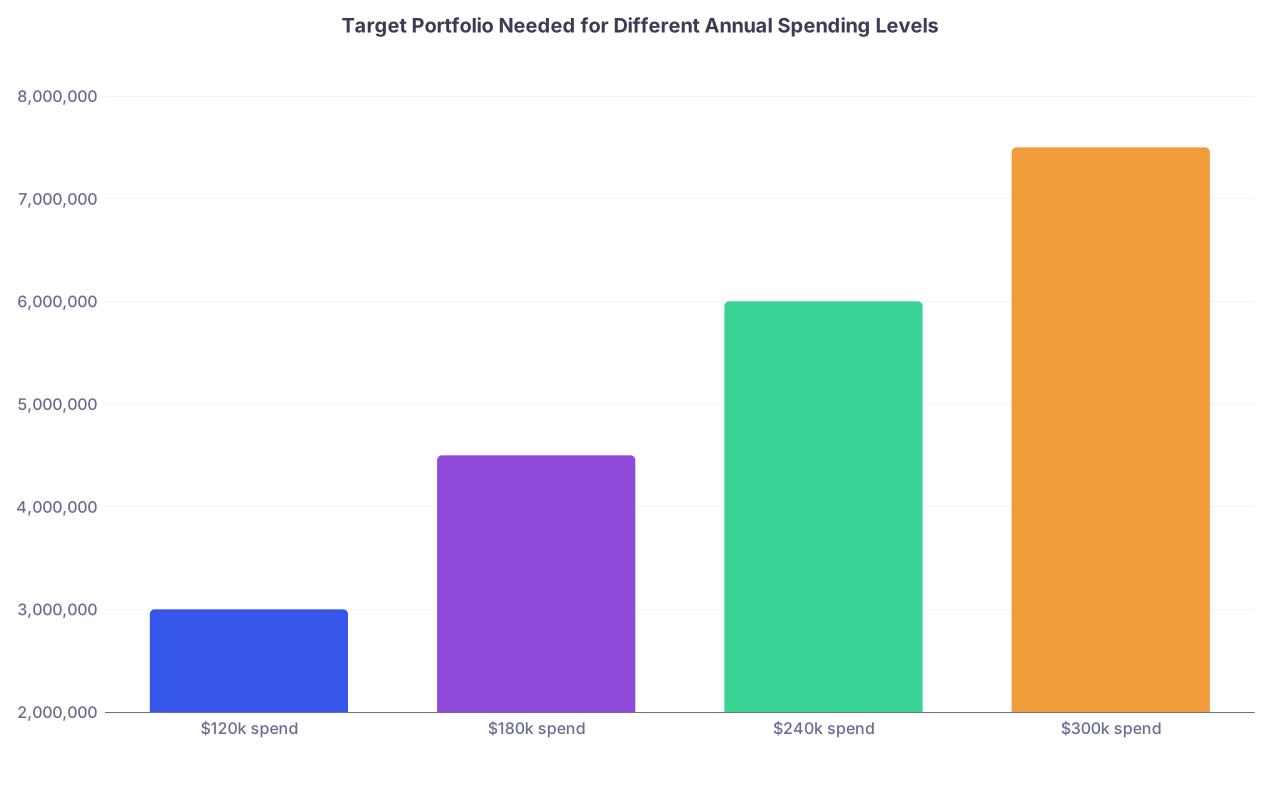
| Category | Value |
|---|---|
| $120k spend | 3000000 |
| $180k spend | 4500000 |
| $240k spend | 6000000 |
| $300k spend | 7500000 |
Those numbers use a 4% “safe withdrawal” rule of thumb (more on that shortly). You can see the point: early retirement isn’t about income—it’s about spending.
The Math: How Much Do You Actually Need?
Here’s the simple framework I use with physicians:
- Estimate your desired annual after-tax spending in retirement.
- Multiply that number by 25.
- That’s your approximate target portfolio if you want to retire around 50–60 and have the money last 30+ years.
This is based on the 4% rule: you can roughly withdraw 4% of your initial portfolio annually (inflation-adjusted) with a good probability of not running out of money over 30 years, assuming a sane stock/bond mix.
Example:
- You want to spend $200,000/year after tax
- $200,000 × 25 = $5,000,000 target portfolio
If you’re more conservative or want to retire in your 40s, use 3–3.5% instead of 4%:
- 3.5% rule → multiply by ~29
- 3% rule → multiply by ~33
So that same $200,000/year:
- At 3.5%: $200k × 29 ≈ $5.8M
- At 3%: $200k × 33 ≈ $6.6M
Most attending physicians severely underestimate this number. They think, “If I hit $2–3 million, I’m done.” Maybe, if you’re spending $80–120k/year. Not if you’re spending $250–300k.
The Real Bottleneck: Lifestyle, Not Income
Let me be blunt: income is not usually the limiting factor for early retirement in medicine. Lifestyle is.
I’ve seen:
- A hospitalist making $280k, saving $120k/year, and on track to be financially independent by his early 50s.
- A specialist making $700k, saving maybe $30–40k/year after huge house, two luxury SUVs, private school, constant travel. That person is nowhere near early retirement.
Your savings rate is the key variable. Not your salary.
For most employed physicians, realistic ranges:
| Scenario | Savings Rate | Early Retirement Likely? |
|---|---|---|
| Saving < 10% of income | 0–10% | No |
| Saving ~15–20% of income | 15–20% | Traditional retirement |
| Saving 25–35% of income | 25–35% | Possible in 50s |
| Saving 40%+ of income | 40%+ | Aggressive early FI |
If you consistently save and invest 30–40% of your gross income starting early in your attending years, early retirement is very realistic. If you’re at 10–15% and “will save more later,” you’re lying to yourself.
Typical Timelines: How Long Does It Take?
Rough, but useful numbers assuming you start as a new attending, invest sensibly (mostly low-cost index funds), and earn standard physician incomes.
Assumptions:
- Starting net worth: roughly $0 (or slightly negative; you wipe out loans fast)
- Investment return: 5–7% real (after inflation) long term
- Income: $250–500k
- Savings rate: percentage of gross income
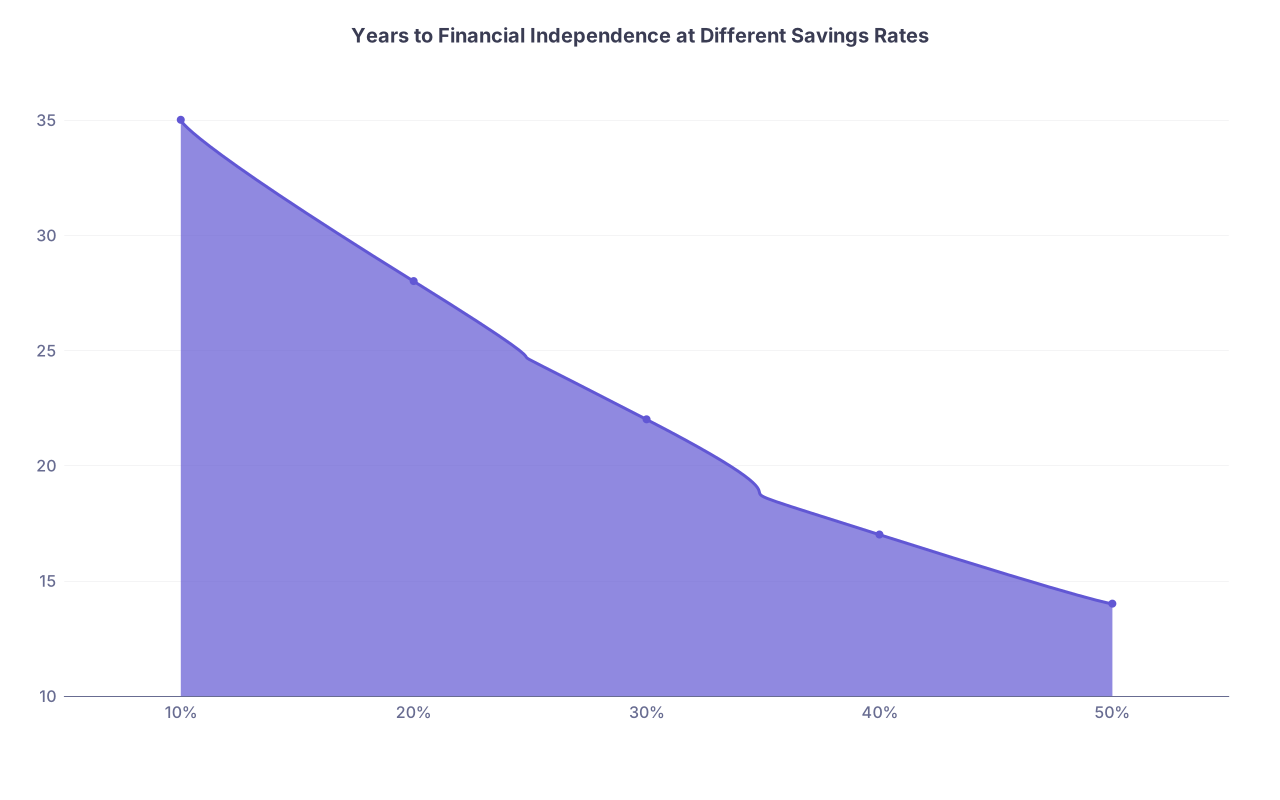
| Category | Value |
|---|---|
| 10% | 35 |
| 20% | 28 |
| 30% | 22 |
| 40% | 17 |
| 50% | 14 |
You can argue with the exact numbers, but the pattern holds: once you get above 30–35% savings, things accelerate fast.
And no, this doesn’t mean you live like a resident forever. It does mean:
- You keep housing reasonable (2–3× income, not 5–6×)
- You pay off student loans aggressively in 3–7 years
- You don’t upgrade cars, vacations, and private school all at once
The Big Enemies of Early Retirement for Doctors
If you want a short “what kills early retirement” list, here it is:
Too much house
The classic: $600–900k house on a $300k income in a high-tax state. Property taxes, maintenance, furnishing, constant upgrades—this eats into your savings for decades.Lifestyle creep
Each raise = new fixed expense: nicer cars, more subscriptions, constant home renovations, kids in everything. Easy to earn $500k and feel broke.Student loans stretched forever
Paying minimums for 20–25 years instead of crushing them in under a decade. You drag that ball and chain through your peak earning years.No clear investment plan
Cash piling up, random stock picks, chasing hot funds, or being too conservative with 80% bonds in your 30s. You lose the power of compounding.Divorce without planning
I’m not moralizing. Just telling you the math: divorce in mid-career with no prenup and messy finances can cut your net worth in half and add 5–10 years to your work life.
What a Realistic Early Retirement Plan Looks Like
Here’s a practical framework that I’ve seen work for plenty of physicians.
Phase 1: First 5 Attending Years (Foundation)
Goals:
- Kill high-interest debt and student loans
- Lock in high savings habits early
- Learn basic investing
Typical targets:
- Live like a resident (or close) for 2–3 years
- Save/invest 30–40% of gross income
- Pay off student loans in 3–7 years
- Max retirement accounts: 401(k)/403(b), backdoor Roth IRA, HSA if applicable
- Invest the rest in a taxable brokerage account (not more lifestyle)
Phase 2: Mid-Career (5–15 Years Out)
Now you have choices. You can increase lifestyle modestly while staying on track.
You should be:
- Net worth well into 7 figures by early/mid 40s if you started in early 30s
- On track for 3–6M+ by late 40s/early 50s, depending on income and savings rate
- Re-evaluating: Do you actually want full retirement, or just work optionality? Part-time? Non-clinical?
At this point, you’re not dreaming about early retirement. You can see the numbers and say, “If I just keep this going, I’m done by 52.”
Legal & Structural Pieces Doctors Ignore (But Shouldn’t)
Since you specifically asked under “Financial and Legal Aspects,” let’s hit the often-ignored legal and structural stuff that matters for early retirement.
1. Asset protection and malpractice risk
You do not want one lawsuit in your late 40s derailing your exit plans.
Basic moves:
- Maximize appropriate malpractice coverage (sometimes higher than the minimum your group sets)
- Use retirement accounts, which often have strong protection in many states
- Consider umbrella liability insurance (home/auto)
- In higher-risk environments or states, some physicians use trusts or LLCs with a real asset protection attorney—not some template online
Could you still get wiped out in a worst-case legal scenario? In rare cases, yes. But most physicians walking around terrified of losing everything are catastrophizing and under-saving, not over-saving.
2. Tax planning for high earners
You are a tax target by definition. Smart planning directly accelerates early retirement.
Key levers:
- Max pre-tax accounts where appropriate: 401(k)/403(b), 457(b) (understand governmental vs non-governmental risks), defined benefit/cash balance plans
- Use backdoor Roth IRA annually if allowed
- For partners/owners: entity structure (S-corp vs partnership), retirement plans, and income splitting where appropriate
- High earners often forget about tax-efficient investing in taxable accounts: broad index funds, long holding periods, careful with short-term capital gains
A good CPA who understands physicians is not optional if you’re serious about early retirement.
3. Sequence of returns and risk management
Retiring early = longer time exposed to market volatility without new income.
You can’t control markets, but you can:
- Avoid being 100% stocks the year you retire
- Keep 2–5 years of planned spending in safer assets (bonds/cash equivalents) so a 40% market drop doesn’t panic you back into medicine
- Be flexible: in bad early-retirement years, cut some discretionary spending or delay big purchases
Alternatives to “Full Stop” Retirement
Here’s the twist: a lot of doctors who reach “work optional” do not fully retire. Or they retire, then un-retire in a different form.
Because the job isn’t just about income. It’s also identity, structure, and meaning.
Common paths:
- Shift to 0.5–0.7 FTE in your 50s
- Drop nights/weekends/call and accept lower pay
- Move into telemedicine, consulting, utilization review, or admin roles
- Do locums a few weeks a year to cover luxuries, not core expenses
Financial independence gives you options. That’s the realistic target for most doctors: work becomes optional, not mandatory by your early–mid 50s. That alone changes how you feel on Monday morning.

So… Is Early Retirement Realistic for Most Doctors?
Here’s the honest verdict:
If “most doctors” keep doing what they’re doing now?
No. With high lifestyle creep, modest savings, and vague investing, early retirement is a fantasy.If a doctor is willing to:
- Keep housing and big expenses under control
- Save/invest 25–40% of income for 15–20 years
- Learn basic investing and avoid dumb products
- Be intentional about tax and legal structure
Then yes, early retirement—or at least true financial independence in the 50s—is very realistic.
It’s not about being a superstar investor. It’s about being a disciplined saver with a boring, effective plan.
FAQ: Early Retirement From Medicine
1. What’s a realistic retirement age target for most physicians?
If you start saving seriously in your early 30s as an attending and keep a disciplined 25–30% savings rate, a realistic “work optional” age is early to mid-50s. Under 50 is doable if you push savings above 35–40% and keep lifestyle modest relative to income.
2. How much should a doctor have saved by age 40 to be on track?
Rough ballpark: if you want early retirement, a physician in their late 30s to 40 should be aiming for 1–2× their annual gross income in net worth (excluding primary home equity for strictness). So a doctor earning $350k/year might target $350–700k+ by 40, trending toward seven figures soon after. That’s aggressive but realistic with early discipline.
3. Is it safer to pay off student loans first or invest for early retirement?
You don’t choose one or the other. You do both, but with priority. For most physicians with 5–7% loans, aggressively paying them off within 3–7 years while still contributing to retirement accounts is best. Crushing loans early dramatically improves your cash flow and flexibility, which accelerates your path to early retirement.
4. Do I need a financial advisor to retire early as a doctor?
No, but you do need a plan. A good, fee-only, fiduciary advisor can help you avoid big mistakes and optimize taxes, which pays for itself. A bad advisor selling high-fee products will absolutely slow or even destroy your early retirement goals. If you’re willing to learn the basics (and they’re not that complex), you can manage a simple, index-based plan yourself.
5. What if I like working but want the option to retire early?
Perfect. That’s actually the best mental framing: aim for financial independence, not mandatory retirement. Once your investments can safely cover your lifestyle, you gain enormous bargaining power—cutting hours, refusing toxic jobs, switching specialties, or doing only the kind of work you find meaningful. Early FI is about control, not laziness.
6. What are the top 2–3 financial moves I should make this year if I want early retirement?
Three concrete steps:
- Calculate your real savings rate and push it above 25–30% of gross income.
- Max every available tax-advantaged account, then invest extra in a taxable brokerage using low-cost index funds.
- Commit to no major lifestyle upgrades (house, cars, school) until your student loans are gone and your annual savings are consistently where they need to be.
Key takeaways: Early retirement from medicine is mathematically realistic for many doctors if you (1) control lifestyle and push your savings rate, (2) invest simply and tax-efficiently, and (3) treat financial independence as a deliberate, decade-long project—not a vague hope.