

The way program directors think about their own retirement is far more conflicted—and far less rational—than anyone admits out loud.
You imagine they’ve got it figured out. High income, stable job, lots of control, maybe a university pension. They tell residents to get their finances in order, max out retirement accounts, plan early. Then they walk back to their office, open their email, and ignore their own retirement packet for the third year in a row.
Let me walk you through what actually happens behind those closed doors.
The Emotional Truth Behind PD Retirement
Here’s the part no one puts in CME slides: most long‑tenured program directors are not staying for the extra RVUs or the marginal paycheck. They’re staying because their identity is fused to the role.
I’ve sat in those meetings where the PD has been “planning to retire in the next 3–5 years” for… 10 years. Same line. Different year. The GME office nods, the chair smiles, everyone pretends this isn’t the sixth time they’ve heard it.
The internal monologue for a lot of PDs looks like this:
- “I’ll go once the next accreditation visit is done.”
- “I owe it to this class to stay through their graduation.”
- “We’re starting a new track; I can’t leave now.”
- “I need a few more peak income years to really lock in retirement.”
That last one? That’s where the financial story hides behind the noble talk about “the program” and “the residents.”
Many PDs delay real retirement planning because:
- They’ve been financially rewarded for deferring gratification their whole career.
- Academic medicine never forces the “quit date” conversation.
- They feel like they’re abandoning “their” trainees if they step away.
So they keep working, vaguely contributing to retirement accounts, but without a concrete exit strategy. They advise you to have one. They don’t.
How Program Directors Actually Structure Their Money
Most residents think PDs are sitting on some perfectly engineered retirement machine. Here’s the reality I’ve seen when PDs finally open up—often in those vulnerable “I might retire soon” conversations.
The typical PD in a university setting has a stack of partially optimized tools rather than a clean, intentional plan.
| Tool | How PDs Commonly Use It |
|---|---|
| 403(b) or 401(a) | Inconsistent maxing, default funds |
| 457(b) (if available) | Underused or misunderstood |
| State or university pension | Relied on heavily, rarely modeled properly |
| 401(k)/SEP from prior jobs | Often ignored or not consolidated |
| Taxable brokerage | Built late, often ad hoc |
The 403(b) / 401(a) mess
Plenty of PDs started out contributing “enough to get the match” in their 30s and 40s. They bumped it up “when they could.” They didn’t max early because:
- Kids.
- Houses in expensive markets.
- Late student loan payoff.
- Spouse with inconsistent income.
Then suddenly they’re 55, looking at their balance, realizing that their “I’m in academia so I’ll be fine” assumption doesn’t exactly translate into a cushy retirement. That’s when you start seeing the frantic email to HR:
“Can you send me my current retirement projections?”
Translation: they’re late to the game, and now they know it.
The misunderstood 457(b)
The non‑governmental 457(b) is one of the most abused and feared instruments among academic PDs. You’ll hear two types of hallway comments:
- “Oh yeah, I put money in that too. I think it’s another retirement thing?”
- “I heard if the hospital goes under, that money disappears. No way.”
Both are half‑truths.
PDs who understand the risk/benefit treat the 457(b) as a powerful tool to front‑load retirement while they’re in peak earning years. The more anxious ones avoid it completely, then complain they “don’t have enough tax‑advantaged space.”
And plenty of them do something even worse: they throw money into the 457(b) without ever planning how or when they’ll draw it down, which becomes a real tax headache in their early retirement years.
Pensions: the fantasy vs the spreadsheet
The single most common sentence from a PD in their 50s:
“I’ll be fine—I’ve got the university pension.”
They say that with total confidence. Then, when you force them to print out the actual numbers, the room gets very quiet.
Here’s the problem: they remember what older colleagues got from much richer defined-benefit plans. Their own tier—especially those hired after certain cutoff years—often looks weaker:
- Later vesting
- Lower percentage per year of service
- Higher age requirement for full benefit
- Less generous cost‑of‑living adjustments
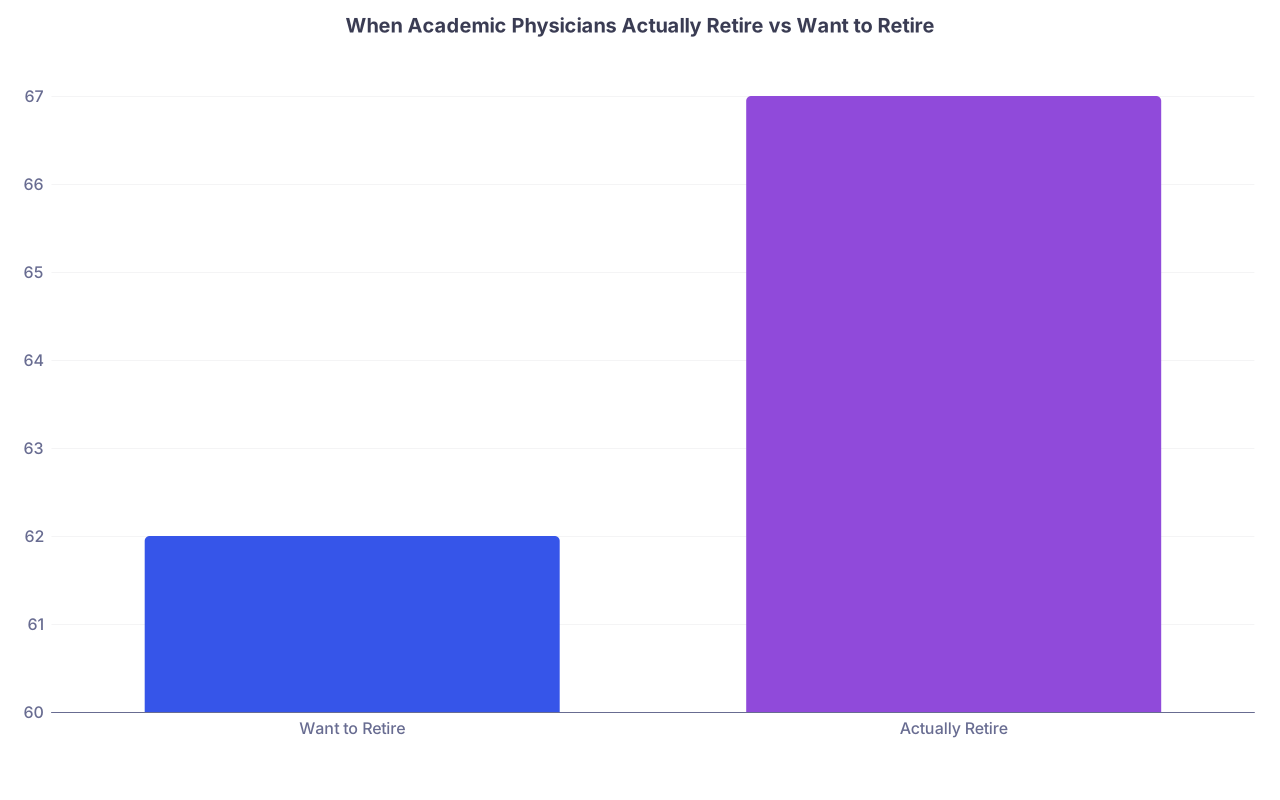
So PDs in their early 60s discover they’re facing a nasty choice: retire when they’re emotionally ready, or wait until the pension formula finally works in their favor.
| Category | Value |
|---|---|
| Want to Retire | 62 |
| Actually Retire | 67 |
Those extra 5 years? Often driven more by pension math than by “love of the job.”
How They Really Decide When to Retire
You think it’s a rational, spreadsheet-driven process. Compare assets to expenses, decide on a date, inform leadership. That’s not how it goes.
For PDs, retirement timing is a stew of ego, fear, money, and institutional pressure.
The three quiet questions PDs ask themselves
Behind closed doors, when nobody is listening, these are the questions they’re actually wrestling with:
- “If I leave, do I matter to this place anymore?”
- “Can I afford to walk away from this salary?”
- “Will the program fall apart without me—and do I secretly want it to?”
That last one can get dark. I’ve seen PDs subconsciously sabotage succession planning because they cannot tolerate the idea that things might go better once they’re gone.
Financially, the calculus they should be running looks like this:
- What’s my actual annual spending?
- What guaranteed income (pension, Social Security, annuities) do I have?
- What withdrawal rate from my portfolio do I need to make this work?
What they actually do is more primitive: “My paycheck is X. My retirement accounts are Y. That doesn’t feel like enough. I’ll stay a few more years.”
Some do smart things with those “few more years”—aggressive saving, paying off the house, locking in health insurance options. Others just increase lifestyle along with income and end up no closer to retirement readiness at 65 than they were at 58.
The Legal and Contract Side Nobody Teaches You
Program directors’ retirement is chained to a web of contracts, policies, and political landmines. This is the part residents never see.
Academic contracts and “soft landings”
Most PDs don’t simply flip a switch from full‑time to “retired.” They negotiate themselves into a landing pattern:
- Step down as PD but stay as faculty
- Reduce FTE over 2–3 years
- Keep some teaching or clinic to maintain benefits
- Maybe a named emeritus or “scholar” role for ego (and sometimes small money)
The wrinkle: the PD stipend and admin time disappear, but they’re still on the hook mentally. Everyone still comes to them with program issues. The new PD gets the title; the old PD keeps the emotional labor.
The legal/financial implications:
- Their base salary might drop 10–30% when the PD role ends.
- Their retirement contributions, which are usually % of salary, also drop.
- If they’re in a pension system, their final average salary calculation may get locked in or reduced depending on timing.
So the smart PDs—yes, there are some—time their exit so their highest earning years fall into whatever period the pension system uses (last 3–5 years, or highest 5 consecutive years, etc.). The less savvy ones discover, too late, that stepping down as PD at 62 just cut the basis for their lifetime pension.
The noncompete and “post‑retirement” work
Another quiet game: some PDs plan “retirement” from their academic post but fully intend to keep working:
- Locums
- Consulting
- Telemedicine
- Board exam prep companies
- Pharma or device advisory work
Their employment contracts and institutional policies sometimes restrict outside income during employment but are silent after retirement. So I’ve seen PDs intentionally hang on until a specific anniversary or vesting date, then abruptly flip to a cocktail of part‑time gigs that actually pay better than their strained academic job.
Legally, they need to be careful with:
- Noncompete clauses (especially if the hospital employs the physician group)
- Intellectual property policies (teaching materials, research)
- Moonlighting/consulting restrictions in their current contract
Most of them are not careful. They just assume, “I’m old, I’ve done a lot here, nobody will come after me.” Usually true. But I’ve seen one or two post‑retirement consulting arrangements get nuked when a health system decided to make an example.
How Health Insurance and Benefits Distort Retirement Timing
You want to know what really keeps a lot of PDs working into their late 60s?
Not the love of morning report. Health insurance.
The 65 problem
In the U.S., 65 is the magic Medicare age. The 60–64 band is brutal if you leave employer‑sponsored coverage. Academic PDs know this. Administrators remind them.
So you’ll see this dance:
- PD is financially able to leave at 60–62.
- They run the numbers on marketplace premiums plus out‑of‑pocket costs.
- They find out COBRA is temporary and expensive.
- They suddenly discover a “renewed calling” to stay on until 65.
The technical term: golden handcuffs by way of Blue Cross.
Some universities offer retiree health plans or subsidies for people who meet age + service thresholds (e.g., 60 years old + 20 years of service). Those PDs often have far more control over their retirement date. They’re not constantly staring at a $2,000–$3,000/month family premium if they leave.
If you want to understand who’s staying out of passion vs who’s trapped, look at:
- Whether their institution has subsidized retiree health
- How close they are to Medicare
- Whether their spouse has alternate coverage through another employer
I’ve watched more than one seasoned PD say, bluntly, behind closed doors:
“I’m here until 65 for the damn insurance. After that, I’m gone.”
And then they are.
Portfolio Structure: How Conservative They Actually Are
Program directors talk like cautious planners. Many of them invest like late‑stage residents until someone forces them to sit down with HR or an advisor.
A lot of PD portfolios I’ve seen over shoulders in office meetings look like this:
- Overweight in target‑date funds by default
- Some remnants of high‑fee actively managed funds from the 90s/2000s
- A random annuity someone sold them early in their career
- Stock options or RSUs from a spouse’s non‑medical job
- A paid‑off or nearly paid‑off home that they treat like a “savings account”
Then, once they hit 60, fear kicks in. Market dips scare them more. You’ll hear lines like:
“I can’t afford another 2008 now.”
So they swing too conservative, too fast—overshooting the glide path out of panic, which then compromises long‑term growth they actually still need if they’re going to live to 90.
The savvier PDs—usually the ones who read outside the usual physician echo chamber—do a few things differently:
- They build a clear “safe bucket” of 3–5 years of baseline expenses in cash or bonds.
- They keep a rational equity allocation even past 65.
- They coordinate withdrawal timing from 403(b), 457(b), and taxable accounts to manage tax brackets.
- They plan Roth conversions in the gap years between retirement and RMD age.
But don’t romanticize this group. It’s a minority. Most PDs are playing defense, not strategy.
Succession Planning vs Financial Planning
Here’s an ugly truth: many PDs spend more time worrying about who will lead the program after them than what their own retirement will look like.
I’ve sat in meetings where a PD will dissect the pros and cons of three potential successors for an hour. Then, over coffee, admit they have no clue what their monthly retirement income will actually be.
Their mental bandwidth goes to:
- Will the new PD keep the program’s reputation?
- Will they undo my systems?
- Will the residents suffer through the transition?
Meanwhile, they delay:
- Meeting with a fee‑only financial planner
- Reviewing pension options and early vs normal retirement
- Deciding whether to buy additional service credits (a huge one almost nobody explores properly)
- Drafting basic estate documents (yes, plenty of senior PDs still don’t have wills or updated POAs)
If you want to understand how this really plays out, watch what happens the year after a long‑time PD steps down. Half of them vanish completely from the institution. That’s not an accident. They stayed longer than they should have, fused too tightly with the role, then had to rip the cord entirely for their own sanity.
The better‑prepared PDs gradually:
- Step down as PD but remain as part‑time faculty
- Offload committees and admin work over 1–3 years
- Shift toward teaching niches they genuinely enjoy
- Use those transition years to tighten their financial and legal structures
They look calmer on their final day. That’s not personality. That’s planning.
What This Means For You (as a Future Attending)
You’re not reading this for gossip. You’re reading it because you don’t want to become the 67‑year‑old PD muttering about “one more year” for the sixth consecutive year.
Here’s the distilled lesson from watching this up close:
- If you don’t pick a rough retirement decade early (50s vs 60s) and build around it, inertia will pick 70+ for you.
- If you don’t understand your institution’s pension and benefits better than your HR rep does, you’ll leave money on the table—or worse, chain yourself to the job longer than you need to.
- If you let your identity get married to your title, your financial decisions will get distorted by ego.
You can respect your PD, learn from them, and still decide not to copy the way they’ve handled their own exit.
FAQ: Inside PD Retirement Planning
1. Do most program directors actually like their jobs enough to stay this long, or are they trapped by money and benefits?
It’s usually a mix. The early years are passion‑driven—building curricula, mentoring, shaping a program. The later years, for many, are held together by pension math, health insurance, and fear of losing identity. When a PD in their mid‑60s says, “I just love the residents too much to leave,” there’s often a second, unspoken sentence: “…and I really don’t want to pay $2,500 a month for health insurance.”
2. Are academic pensions really that big of a deal in retirement timing?
Yes. For PDs in systems with defined‑benefit plans, the difference between retiring at, say, 60 vs 65 can mean thousands of dollars a month for life. That’s why you see so many “I’ll go after the next accreditation cycle” delays that, conveniently, always line up with key pension milestones or final‑average‑salary windows. If you end up in such a system, you’d be foolish not to understand the formulas by your mid‑40s.
3. How early should a future PD or attending start thinking about their own retirement planning?
Earlier than almost anyone does. You don’t need detailed projections in residency, but by your first 5 years as an attending you should know: your target retirement decade, your institution’s pension (or lack thereof), your health insurance situation post‑retirement, and how much you need to save annually to make your preferred timeline plausible. The PDs who look calm at 60 are almost always the ones who treated retirement as a long game—not a crisis to solve in the last 3 years.
Key takeaways:
Most program directors are not the perfectly planned financial adults you imagine; they’re improvising, often late. Institutional pensions, health insurance, and identity drive their retirement timing more than pure math. If you pay attention now, you can take their experience as a warning, not a template.


