
The people who design your pension know exactly how little you understand it—and they budget around that ignorance.
That’s not paranoia. That’s the business model.
I’ve sat in rooms where hospital CFOs, HR chiefs, and benefits consultants discuss “plan design strategy” for employed physicians. Let me translate that for you: how to look generous, control costs, and keep you tethered to the system for as long as possible—without you realizing where the power (and money) actually sits.
You’re playing checkers. They’re playing actuarial chess.
Let me walk you through what hospital executives know about physician pensions that you don’t—and that no one is going to spell out at your onboarding lunch.
The First Big Lie: “We Have a Great Retirement Package”
When an executive tells you, “Our retirement benefits are very competitive,” what they usually mean is, “You have no idea how to compare this to anything, and we like it that way.”
Here’s the behind-the-scenes truth: retirement benefits are one of the quietest levers hospitals use to:
- Lock physicians in with golden handcuffs
- Shift financial risk from the institution to you
- Look generous on paper while cutting long-term liabilities
Most physicians never actually run the math. Executives know this. I’ve watched benefits presentations where the entire pitch was built around two slides: a big employer-match percentage and a glossy “projected balance at retirement” chart based on absurd assumptions.
No one explains the fine print:
- Vesting schedules
- Contribution limits
- Plan fees
- What happens if you leave early
- Who actually controls the money and the rules
The financial value of your “pension” or retirement benefits often changes radically depending on whether you stay 5 years, 10 years, 20 years, or leave in 3. Hospital leaders know those breakpoints cold. You usually don’t.
Defined Benefit vs Defined Contribution: The Power Shift You Missed
Executives understand something most physicians don’t: the golden era of true pensions is over. For you, anyway.
Traditional pensions—what your older attendings call “the good old days”—were defined benefit plans. The hospital promised a specific payout in retirement based on years of service and salary. The hospital carried the investment risk and longevity risk.
Then the accountants got involved. And the actuaries. And suddenly, all that risk started migrating to one place: you.
The modern hospital world is dominated by:
- 403(b) plans
- 401(a) employer-funded plans
- 457(b) deferred compensation plans
- Occasional frozen or watered-down defined benefit plans
Executives understand exactly what this shift did:
- It made retirement an individual problem, not an institutional liability.
- It turned “pensions” into investment accounts that rise or fall with the market.
- It allowed hospitals to advertise “up to X% in retirement contributions” while actually contributing far less than a real pension would’ve cost them.
Let me spell it out: they moved your retirement from a promise to a probability.
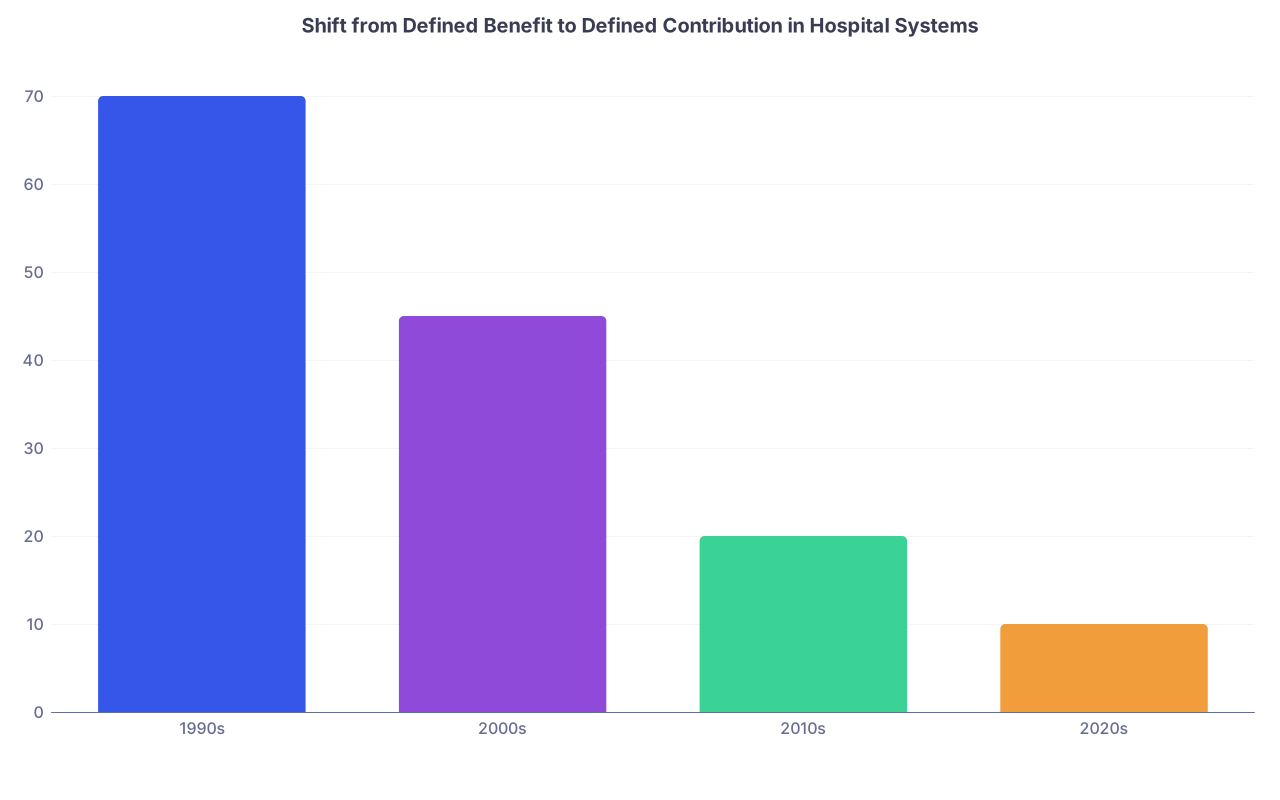
| Category | Value |
|---|---|
| 1990s | 70 |
| 2000s | 45 |
| 2010s | 20 |
| 2020s | 10 |
That’s the trend executives have been riding for decades.
The Real Purpose of Your “Employer Match”
Hospital executives love the employer match because it looks generous and costs much less than you think.
I once sat in a meeting where a benefits consultant said this, verbatim:
“If we tweak vesting to 5 years and cap eligible comp, we can advertise the same 7% contribution but reduce our real cost per physician by 18–20%.”
That’s the game.
Here’s what they’re doing that you probably aren’t seeing:
Vesting as Handcuffs
A 3–5 year vesting schedule on certain employer contributions is not there for your “long-term financial security.”
It’s there so that if you leave in 2–3 years, a chunk of that “match” never actually goes to you. It reverts to the plan. The institution wins.Eligible Compensation Caps
That “10% of salary” contribution? Yeah—up to a cap. Often they only match or contribute on base salary, not bonuses, or they cap at IRS limits.
Executives know exactly how many high earners will be quietly shortchanged by those caps.Tiered Contributions
They might contribute 3% automatically and 3% if you contribute 6%. On paper, that’s 6%. In practice, a shocking number of physicians don’t contribute the full amount, especially early career.
Hospital: “We offer 6%!”
Internal memo: “Actual average cost: 3.7%.”
I’ve watched HR teams design communication specifically to “encourage participation” just to make the plan look generous—but never with hard comparisons showing how far short it falls of a real pension.
The Plans Executives Value Most (And How They Use Them Against You)
There are three main buckets executives obsess over when it comes to physician retirement design. You need to understand each.
1. 403(b) / 401(k) Style Plans: Your Workhorse, Their Shield
Executives like 403(b)s because they’re simple to budget. A percentage of eligible comp, some match rules, done.
What they know that you often don’t:
- The legal obligation is to offer the plan, not to ensure you retire comfortably.
- As long as plan fees aren’t egregiously awful and investments are “reasonable,” they’re protected.
- Most physicians never challenge or even review the fee structure.
I’ve seen physicians leave hundreds of thousands on the table over a career because their hospital plan had lousy, high-fee fund options and no one ever told them to care.
2. 457(b) Plans: The Executive Favorites (And Your Hidden Risk)
Executives perk up when the 457(b) comes up. This is the plan that really separates those who understand the system from those who don’t.
Here’s the part you’re almost never told directly:
- A non-governmental 457(b) (what most private non-profit hospitals have) is not your asset.
- It’s a promise from the hospital. Your deferred comp remains part of the hospital’s general assets and is subject to the hospital’s creditors.
Read that again.
If the hospital goes under, that 457(b) money you “saved for retirement” can vanish or get pennies on the dollar.
Every CFO I’ve ever spoken with about this knows it cold. They also know 95% of their doctors have never once read the underlying document that explains it.
Why executives like 457(b)s:
- They attract high-comp physicians with extra tax-deferred space.
- They’re a relatively cheap golden handcuff. Once a physician builds up a few hundred thousand in a 457(b), leaving feels risky and complicated.
- The risk of the plan is on you, not them. If they stay solvent, no problem. If they don’t…well, that’s “unfortunate.”

3. Frozen or Legacy Pensions: The Quiet Liability
Older systems sometimes still have closed defined benefit plans for legacy employees. Executives treat these like a tumor: too dangerous to cut out quickly, always watching the growth.
If you’re in one of these rare setups:
- The hospital is tracking exactly when your cohort retires.
- They are constantly modeling interest rates, life expectancy, and funding requirements.
- They are never, ever going back to this model for new physicians.
You might be one of the lucky few, but make no mistake: they view your pension as a problem to be managed, not a benefit to be celebrated.
What Happens If You Leave: The Calculation They’ve Done and You Haven’t
Executives run retention and departure models that look like something out of a finance textbook. You are a line item in those models.
They know precisely:
- When your vesting cliffs hit
- When your 457(b) balance becomes psychologically sticky
- How much they “save” in unvested contributions if you leave at various time points
You, on the other hand, often make a decision like this:
“I don’t love this job, but I’ve got that pension/retirement thing. I should probably just stay a few more years.”
That “few more years” is not an accident. The plan was built that way.

| Step | Description |
|---|---|
| Step 1 | Considering Leaving |
| Step 2 | Feels stuck by unvested funds |
| Step 3 | Worries about leaving money |
| Step 4 | More likely to leave |
| Step 5 | Fully Vested? |
| Step 6 | Large 457b Balance? |
Executives count on two psychological levers:
- Loss aversion (you hate losing what you think is “yours,” even if it isn’t fully vested)
- Complexity aversion (you’ll avoid understanding the details if they’re even slightly complicated)
That’s how they keep turnover just low enough to make their staffing models work.
Fee Drag and Investment Menus: The Quiet Skim
Here’s something almost no physician asks in a benefits meeting, but every CFO has heard from consultants:
“How much can we offset plan administration costs via revenue sharing or fund fees without getting sued?”
You might think I’m exaggerating. I’m not.
While the industry has been slowly cleaning up the worst of the abuses, I still see:
- Limited low-cost index fund options
- A menu dominated by actively managed funds with higher expense ratios
- TIAA or similar annuity products with complex fee layers
- Little transparency around total plan cost
Executives notice three things:
- Very few physicians log into their retirement portal regularly.
- Almost no one reads the required fee disclosure documents.
- Complaints about the retirement plan are rare and easily deflected with jargon.
So the hospital might pay less out of pocket for administration because plan participants (you) are absorbing more cost through fund fees.
That 0.5–1.0% extra fee drag over 20–30 years? It’s six figures. Sometimes more. Quietly reversed compound interest…in the hospital’s favor.
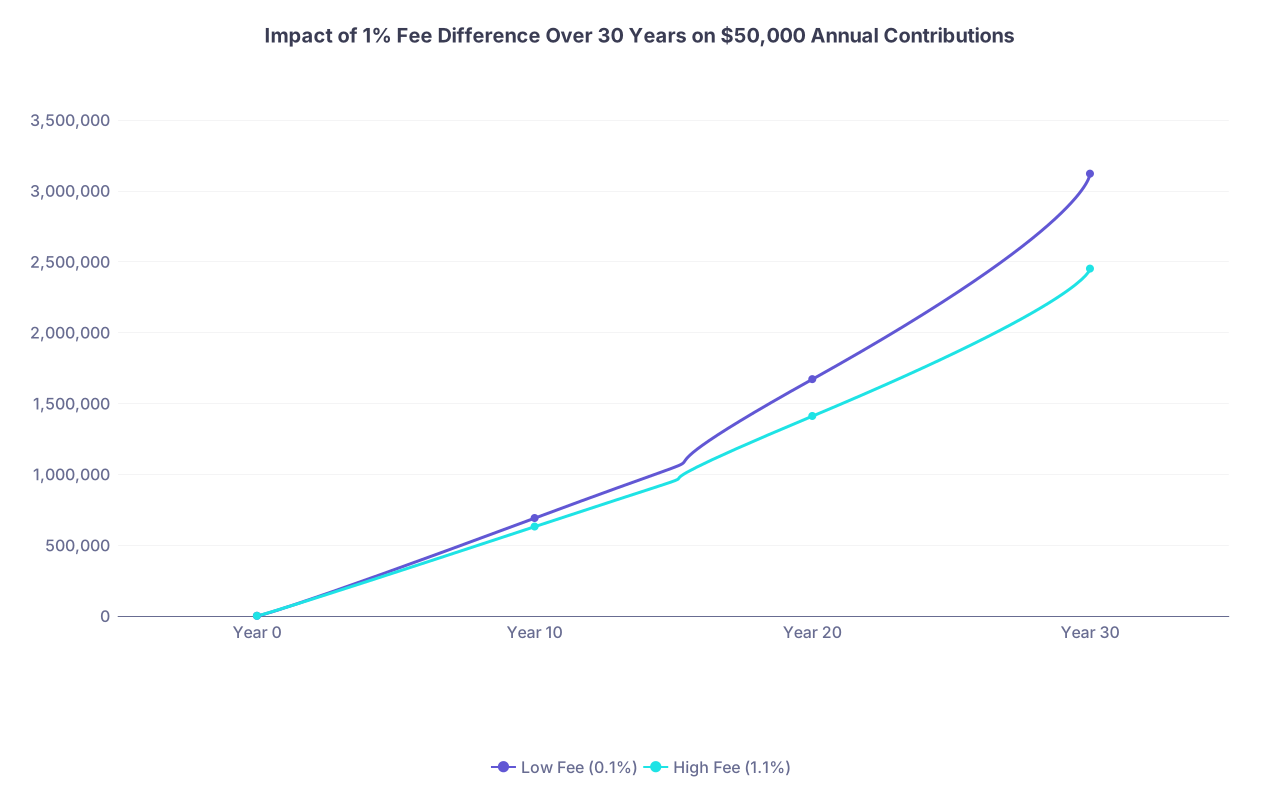
| Category | Low Fee (0.1%) | High Fee (1.1%) |
|---|---|---|
| Year 0 | 0 | 0 |
| Year 10 | 690000 | 630000 |
| Year 20 | 1670000 | 1410000 |
| Year 30 | 3120000 | 2450000 |
Executives may not run that exact chart, but trust me—they understand the directionality.
The Legal Reality: Fiduciary Duties Aren’t What You Think
Many physicians assume, vaguely, that “they have to act in our best interest.” No. That’s not how this works.
Here’s how executives actually think about it:
- They have to comply with ERISA (for 401k-type plans) or relevant rules for 403(b)s.
- They must avoid obvious abuses: outrageous fees, terrible fund choices, self-dealing.
- They do not have to optimize your retirement outcome. They have to avoid lawsuits.
The bar is “not blatantly negligent,” not “set you up for financial independence.”
For non-governmental 457(b) plans, the rules are even looser from your perspective. These are literally unfunded promises backed by the hospital’s financial health.
When a physician finally figures this out and confronts HR or an executive, the response is usually some version of: “Yes, that’s technically correct, but we’re a very stable organization.”
Maybe. Until they’re not.
You know who looks at the hospital’s balance sheet, debt covenants, and bond ratings on a regular basis?
The executives who designed your 457(b).
You know who almost never does?
The physicians deferring $30,000–$45,000 a year into it.
How To Read Your Pension / Retirement Setup Like an Insider
Let’s shift from diagnosis to strategy. Here’s how to approach your hospital retirement package the way an executive does.
First, you need to know exactly what you’re dealing with. Not the HR brochure. The actual structure.
Pull:
- The summary plan description (SPD) for each plan: 403(b)/401(k), 401(a), 457(b), pension if any.
- The vesting schedules.
- The eligible compensation definitions.
- The fund lineup and expense ratios.
Then ask the questions executives already know the answers to:
What is my all-in employer contribution if I max out my side?
Not the headline percentage. The real number. For many hospital-employed physicians, it’s in the 5–10% of salary range. Generous? Depends what you compare it to.How long until I’m fully vested in each component?
That tells you where the handcuffs are.Is my 457(b) governmental or non-governmental?
If it’s non-governmental, that money is at risk if the hospital goes under. That does not mean “never use it,” but it absolutely means “do not mindlessly stuff it.”What are my investment options and fees?
If you don’t see low-cost broad-market index funds with expense ratios under ~0.15%, the plan is mediocre at best.
| Plan Type | Whose Asset Is It? | Typical Risk Holder | Golden Handcuff Power |
|---|---|---|---|
| 403(b)/401(k) | Yours | You | Low–Moderate |
| 401(a) | Yours once vested | You after vesting | Moderate |
| 457(b) Gov | Yours (in trust) | You | Moderate |
| 457(b) Non-Gov | Hospital (your claim) | You + creditors | High |
| Defined Benefit | Hospital obligation | Hospital | Very High |
Once you look at your plans with that lens, the power dynamics become very obvious.
The Moves Executives Expect You Not to Make
Let me be blunt: the whole system assumes you will not behave like a financially literate, strategically mobile professional.
Executives expect you to:
- Underestimate the value of independent retirement planning
- Overestimate the security of anything called a “pension” or “deferred compensation”
- Stay longer than you should because of misunderstood benefits
- Rarely question plan design publicly
They do not expect you to:
- Cap your 457(b) exposure to a chosen percentage of your net worth
- Build substantial retirement assets in vehicles they don’t control (backdoor Roth IRA, taxable accounts, HSA, etc.)
- Negotiate or walk away from contracts based on retirement structure, not just salary
- Actually read their bond ratings and financial statements before deferring large sums into an unsecured promise

Executives won’t say this out loud, but they know: a physician who has their own retirement act together is much harder to trap with mediocre benefits.
That physician is mobile. Strategic. Dangerous, in the best way.
How to Flip the Script Without Burning Bridges
You don’t need to march into the CEO’s office accusing them of running a scam. That’s stupid and unnecessary.
What you do need to do is quietly reposition yourself:
Stop thinking of the hospital as your retirement provider.
They are a contributor. One piece of the puzzle. That’s all.Maximize what’s clearly in your favor.
If there’s a solid 403(b) match with good low-cost funds? Take it. Always. That’s free money.Be intentional with 457(b)s.
If it’s non-governmental, decide on a cap. Maybe you’re comfortable with 10–15% of your investable net worth exposed to that one institution. Beyond that, start channeling savings into your own accounts.Build your own “pension” on the side.
Not with annuities sold by commissioned reps. With:- Broad-based index funds in taxable accounts
- Real estate if you know what you’re doing
- Roth assets that are completely independent of your employer
Use benefits, don’t be used by them.
If a vesting cliff is 3 years away and you’re at 2.5? Sure, maybe it’s rational to grind it out if the numbers are big. But know exactly what you’re staying for. Don’t just absorb vague guilt about “walking away from benefits.”

When you operate from that posture, you change the power balance. You’re no longer the naïve employee being soothed by buzzwords. You’re a professional assessing a compensation package with clear eyes.
And executives notice. They might not say it, but they do.
The Quiet Truth: They’re Playing a System. You Can, Too.
Hospital executives are not cartoon villains. They’re running businesses in a brutal financial environment. They’re under pressure from bondholders, regulators, payors, and boards who care far more about EBITDA than your 30-year retirement horizon.
So they design systems.
Systems that:
- Contain costs
- Improve retention
- Shift risk off the balance sheet
Your retirement is collateral damage if you stay passive.
Once you see that, the strategy becomes simple: stop behaving like part of their risk-management spreadsheet and start behaving like the person actually responsible for your future.
Because that is the part they’ll never say out loud in the benefits presentation:
Your pension—whatever form it takes now—is not something the hospital “gives” you. It’s a tool in their hands. And it can become a tool in yours, if you’re willing to understand how the game is actually played.
You’re in the financial and legal phase of your career now. The phase where ignorance is expensive. The next step after understanding this stuff? Learning how to structure your contracts, side income, and asset protection so that no single employer ever again holds your future in their hands.
But that’s a conversation for another day.