You’re 62, it’s a Tuesday night, and the clinic is finally quiet. Your MA left an hour ago. The last patient squeezed in “just one more thing” that turned into a 45‑minute detour. You open your email and there it is: another message from HR about “retirement readiness resources.”
You click it, skim it, and feel that knot in your stomach.
Because if you’re honest, you don’t really know if you can step away. You’ve got accounts scattered everywhere, you’re not totally sure what’s tax-deferred vs taxable, there’s a practice buy‑in/buy‑out formula you never understood, and your spouse keeps asking, “So… when are we actually done?”
Let me tell you what the senior physicians I’ve watched actually regret about all this. Not the sanitized CME talks. The brutal, behind‑closed‑doors conversations in the lounge, the “can I ask you something privately?” chats in empty exam rooms, and the panicked calls to hospital admin six months before their planned last day.
This is what they wish they’d done differently.
The First Big Lie: “I’ll Just Work a Few More Years”
Here’s the part nobody likes to say out loud: most physicians don’t choose their retirement timing. It’s chosen for them.
Health issue. Cognitive slip. New EMR rollout they can’t stand. Group merger that changes their contract. Loss of a spouse that blows up their priorities. I have watched this play out again and again.
The classic regret goes like this:
“I always assumed I’d just keep working until 70 if money was tight. I didn’t think I’d have to stop.”
They planned based on control they never really had.
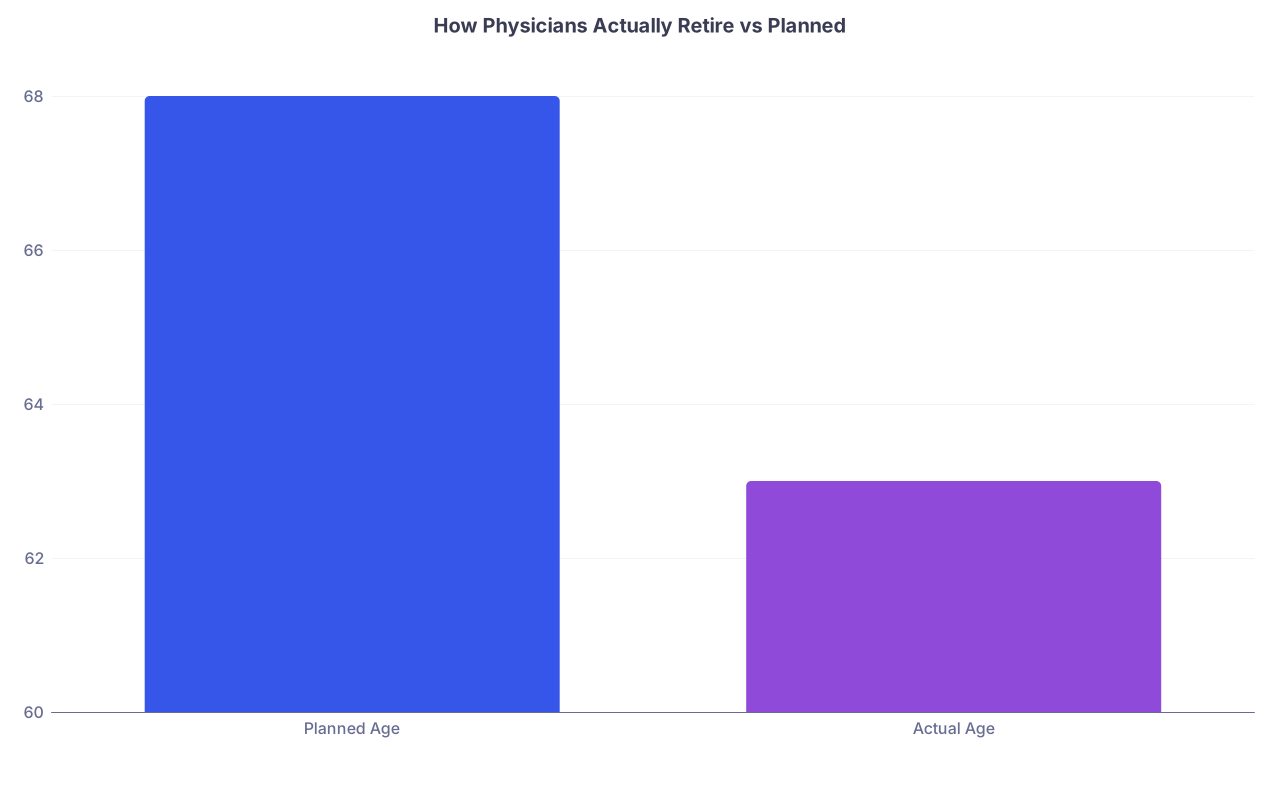
| Category | Value |
|---|---|
| Planned Age | 68 |
| Actual Age | 63 |
Here’s what I’ve seen behind the scenes:
The 67-year-old cardiologist who was called into the CMO’s office after multiple staff quietly reported “concerning forgetfulness.” Admin didn’t want a lawsuit. He didn’t want to hear it. His choice was “retire gracefully with a farewell celebration” or “forced remediation and possible loss of privileges.”
The 60-year-old internist whose back finally gave out after decades of standing and leaning over exam tables. One surgery later, he could walk fine, but he couldn’t do a full clinic day. His group had no half-day, half‑RVU model that made financial sense. There was no “work a little, earn enough” middle ground.
The anesthesiologist who thought locums would bridge everything “if needed.” Then malpractice carriers started tightening on older docs, and hospitals preferred younger physicians with more flexible schedules and fewer health restrictions.
Their regret is simple and ugly: they built a plan that only worked if they could keep practicing medicine exactly the way they were, for as long as they wanted. That’s fantasy.
What they wish they’d done 15–20 years earlier: assume retirement might come 5–7 years earlier than planned, and save like that was guaranteed.
The 401(k)/403(b) Trap: High Income, Sloppy Planning
Most physicians think maxing out their 401(k), 403(b), or 457 plan means they’re doing “enough.” Admin and benefits people feed this illusion.
I’ve sat in committee meetings where hospital HR literally said, “Our docs are in good shape — most max their plan,” like that was some kind of safety guarantee.
Here’s what senior physicians actually regret about this:
They never calculated what they really needed, so they had no idea if “maxing out” was adequate or laughable.
They didn’t understand their plan options enough to avoid obvious mistakes. Things like:
– Leaving money in a high-fee 403(b) with garbage annuity-based products for years past employment.
– Ignoring a 457(b) that was non‑governmental and technically subject to employer creditors (yes, I’ve seen someone lose sleep over this at 64).
– Using bond-heavy target date funds in every account because “that’s what HR said is age appropriate,” while still working full-time at 58 with a strong income.
| Mistake Type | What Actually Happens |
|---|---|
| Only using 401(k)/403(b) | Taxable accounts neglected, poor flexibility pre-59.5 |
| Ignoring 457(b) details | Surprised by creditor risk or distribution rules |
| Defaulting to target date fund | Wrong risk level for late-career physicians |
| Leaving old accounts at prior employer | High fees, poor oversight, lost track of balances |
| One-size-fits-all investment approach | No coordination with spouse’s accounts or pensions |
The regret isn’t “I should’ve invested in Tesla.” It’s, “I made $400–600k for 20+ years and never used that earning power properly.”
The physicians who did it right didn’t just “max” their work plan; they systematically built:
- A substantial taxable brokerage account they could tap before 59½ or for flexible spending in their 60s.
- Backdoor Roth IRAs yearly (even when they didn’t fully “get” the Roth thing, they did it anyway).
- A rough target number for annual retirement spending by their mid‑50s, and then stress‑tested whether their investments could realistically support that.
The ones who didn’t? They discovered in their early 60s that “maxing” was never enough because they started too late and never increased beyond the default limits.
The Practice Buy‑In/Buy‑Out Illusion
Let’s talk about the quiet anger you never see on LinkedIn.
I’ve watched senior partners sit in closed executive sessions absolutely fuming when they see the real math on their practice equity.
They spent 20 years believing, “The practice is my retirement plan.” Then an outside consultant comes in, does a valuation, and the number is… not what they had in their head.
Or worse — the practice merges with a big system. The buyout terms change under them, and they never saw it coming because they didn’t read the damn contract in the first place.
Here’s the regret: they never treated their practice agreement like the life‑defining financial document it actually is.
They assumed:
- “The younger docs will buy me out, that’s how this works.”
- “The goodwill of the practice has real value.”
- “The building ownership will be worth a ton when I retire.”
Reality?
Younger physicians are drowning in loans and less willing to pay big buy‑ins. Hospital systems don’t pay top dollar for private practices anymore unless you’re in a rare, high-margin specialty with leverage. Goodwill isn’t worth what it used to be. And that office building? Sometimes it’s great. Sometimes it’s in a dying medical corridor with flat rents and high upkeep.
I know a 64‑year-old surgeon who could not retire when he wanted to because the partnership documents required a multi‑year phased payout that was tied to ongoing group profits. When the hospital swallowed up half their referral base, profits dropped. And so did his payout. He was stuck working more years at a lower income because the numbers didn’t work otherwise.
The veterans all say the same thing later: “I should’ve understood my exit terms in my 40s, not when I was already packing up my office.”
Real Estate: The Double-Edged Sword They Don’t Admit
Physicians love real estate. It feels tangible. It feels smart. And yes, many docs built meaningful wealth with it.
But the regret stories? Those are real.
I’ve seen plenty of senior attendings in their 60s quietly admit they are “house poor” — not their own house, but a portfolio of rentals or syndications that looked solid in their 40s and are now a headache.
Their common regrets:
- They tied too much net worth into illiquid properties that can’t easily be sold without big tax hits or bad timing.
- They didn’t factor in the mental bandwidth required to manage problems once their energy for “dealing with stuff” was much lower.
- And the killer: they overestimated how much net income they’d actually get after repairs, vacancies, insurance, and property management.
They planned their retirement thinking, “I’ll have $15k/month from rents” when the real number after everything was closer to $7–9k/month. That gap hurts when you’re 67 and tired.
The best-prepared older docs I’ve seen either:
- Pruned their real estate holdings intentionally in their 50s, taking gains and simplifying.
- Or built a plan to transition over time from active, leveraged holdings to more passive, diversified investments.
The ones who didn’t? They ended up being full-time problem solvers for properties when they wanted to be grandparents, travelers, or part-time consultants.
The Legal Blind Spot That Blows Up Families
Here’s the part that gets very real very fast.
In private, a shocking number of senior physicians will admit: “We don’t really have our estate documents in order.” Or, “We did a will when the kids were little and never touched it again.”
I’ve watched what happens when they die or become incapacitated.
Children fighting in hallways. New spouses vs adult children at war. Practice partners scrambling because there’s no clear directive. Physicians who spent 30 years telling families to plan for the future die without basic clarity for their own.
The regrets come from two places:
- They didn’t update documents after major life changes. Divorce. Remarriage. Birth of grandchildren. Change in practice structure.
- They never coordinated their accounts and beneficiary designations with their actual wishes.
Here’s a very real scenario I’ve seen more than once:
- A physician divorces in their late 40s.
- Remarries in their early 50s.
- Updates the will to include the new spouse.
- Never updates the 401(k) or life insurance beneficiaries.
- Dies in their 60s.
The ex-spouse, still named on a retirement account or old policy, legally gets that money. I have seen adult children lose their minds over this — and the new spouse livid — while the hospital quietly says, “We must follow the beneficiary form.”
No amount of “but that’s not what he wanted” matters.
Senior physicians regret not sitting with a competent estate attorney and doing this before their health slipped or cognitive issues crept in. Because once others start to question your capacity, it gets a lot messier.
The Lifestyle Creep That Nobody Wants to Admit
Most physicians are not “bad with money” in the obvious, cartoon way. They’re not all buying Ferraris and yachts.
Their problem is more subtle. It’s slow lifestyle creep that looks completely normal inside their peer group — the private school tuition, the bigger house in the good neighborhood, the 2–3 nice trips a year — that silently locks in a spending level they never confront.
Here’s what I’ve heard more than once from 65‑year‑old attendings:
“If I’d actually tracked what we were spending in our 50s, I would’ve changed course. I had no clue we’d normalized $25–30k a month.”
They regret never forcing themselves to look at the real number. Not the mental “around 10k I think” number. The true all‑in cost of their life.
By the time they finally did, the kids were used to a certain lifestyle. The spouse was used to certain routines. And their psyche was used to a certain sense of comfort.
So when a financial planner later says, “To retire safely you probably need to cut back,” they feel it as loss. A downgrade. Which they resent.
Contrast that with the few who bucked this trend: mid‑career physicians who purposefully under‑spent their capacity for 10–15 years. They reached 60 with the ability to live the same life or better on portfolio income alone. They retired with options instead of negotiations.
The Cognitive Decline Nobody Plans For (But Should)
No one thinks it will be them.
Then they start forgetting passwords. Mixing up patient stories. Needing more notes to track simple clinic flows. They chalk it up to “burnout” or “too many EMR clicks.” Sometimes it is. Sometimes it’s not.
I’ve watched chiefs of staff dance around this with elder colleagues they deeply respect. It’s brutal. No one wants to be the one who tells the legendary surgeon that their reaction times have slipped. Or that anesthesia is nervous. Or that radiology caught a pattern of misreads.
The regret from those physicians later — or from their families — is this: they never set up guardrails before things got questionable.
Guardrails like:
- A clear personal line in the sand: “If X, Y, or Z happens, I step back from full clinical work.”
- Legal structures for who can help manage their finances and decisions if they’re slipping.
- A financial plan that doesn’t depend on them squeezing out “just 3 more years” of full clinical workload.
There’s a particular kind of quiet humiliation that comes when your career ends not with a party, but with a series of “suggestions” that you taper down. The docs who avoid that are the ones who pre-empt it — they step away on their own terms while they’re still undeniably sharp.
The Spouse and Kids Reality Check
Let me say this bluntly: a lot of physicians plan retirement as if they’re the only person in the equation.
They run numbers with a planner. They talk to colleagues. They game out tax strategies. And then they spring a plan on a spouse who has very different ideas about what “retirement” means.
I’ve seen senior docs stunned to discover, late in the game, that:
- Their spouse assumed they’d move closer to the grandkids, while the doc assumed they’d stay in the big house “because it’s paid off.”
- The spouse expects them to travel 3–4 months a year, which blows up the conservative spending projections.
- Adult children quietly assumed they’d help with grandkids or even help fund some major life events. That “free childcare” or “college help” is not in any spreadsheet.
The regret is not financial at its core. It’s relational.
They regret not pulling their family into the planning much earlier. Because when you only discover misalignment at 64, you’re not just changing a plan — you’re threatening identities and expectations that built up over decades.
The families who do this well? The physician starts asking questions in their 50s:
“What does retirement look like to you?”
“Where do you see us living?”
“How much do we want to help our kids — and what are the boundaries?”
Those conversations are uncomfortable. But they’re a lot less destructive than the alternative.
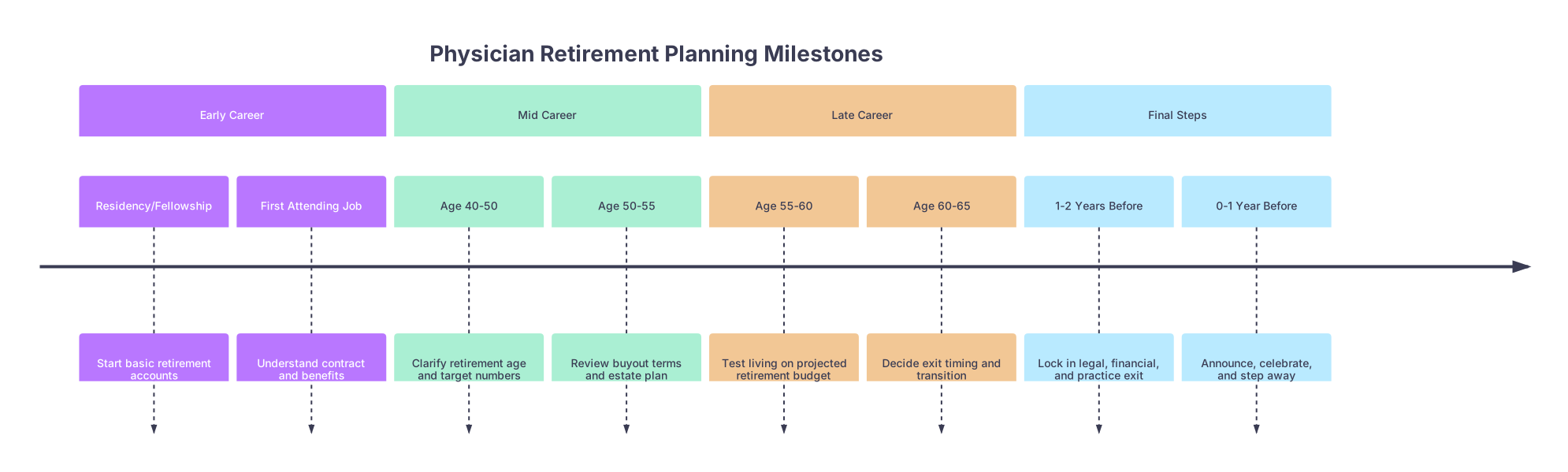
| Period | Event |
|---|---|
| Early Career - Residency/Fellowship | Start basic retirement accounts |
| Early Career - First Attending Job | Understand contract and benefits |
| Mid Career - Age 40-50 | Clarify retirement age and target numbers |
| Mid Career - Age 50-55 | Review buyout terms and estate plan |
| Late Career - Age 55-60 | Test living on projected retirement budget |
| Late Career - Age 60-65 | Decide exit timing and transition |
| Final Steps - 1-2 Years Before | Lock in legal, financial, and practice exit |
| Final Steps - 0-1 Year Before | Announce, celebrate, and step away |
What Senior Physicians Wish You’d Do 10–15 Years Earlier
Let me channel what I’ve heard from dozens of senior attendings over the years, stripped of the polite CME veneer:
- Stop telling yourself you’ll “just work longer” as your backup plan. Assume you might be forced out 5–7 years early and build like that’s guaranteed.
- Actually find out what your practice or partnership agreement says about exiting. If you don’t understand it, pay someone to walk you through it line by line.
- Build significant flexible money — taxable accounts, Roths — not just locked-up pre‑tax plans.
- Simplify your life on purpose in your 50s. Fewer accounts, fewer properties, fewer financial “projects” to watch.
- Drag your spouse and, eventually, adult kids into the conversation. Not as an afterthought; as co‑authors of the plan.
You can avoid most of the worst regrets by treating retirement as seriously as you treated getting into med school. That same level of intentionality. Just spread over years instead of months.
FAQ: What Senior Physicians Really Ask (And Are Afraid to Ask)
1. How much should a physician realistically have saved by age 60 to retire comfortably?
There’s no magic universal number, but here’s what I see in real life. Physicians who feel truly comfortable stepping away in their early 60s usually have somewhere between 20–30x their annual planned spending in invested assets (not counting the primary home). So if you want to spend $200k/year, think $4–6 million in usable investments. Yes, Social Security and any pensions lower that requirement a bit. But the docs who sleep well at night are in that range, not at “10x income” or some generic rule-of-thumb.
2. Is my practice actually part of my retirement plan, or should I mentally write it off?
Treat any practice equity as a bonus, not a pillar. Get a real valuation — not a partner’s guess, not a number someone threw out at a meeting ten years ago. Understand the buy‑out formula, how it’s funded, and what happens if the group merges or dissolves. If the math makes sense, great, include it as one piece. But don’t plan your entire retirement assuming a six‑figure buy‑out that may or may not survive the next hospital acquisition.
3. When is it “too late” to fix bad retirement planning?
I’ve seen meaningful turnarounds starting at 55. It’s not fun, and you may need to make aggressive choices: delayed retirement, downsizing, serious lifestyle cuts, or higher‑yield (but still reasonable) investing. “Too late” is really when your health or licensing status takes away your ability to earn. Until then, you still have your biggest asset: high physician income. The shift is brutal honesty — no more vague “I think we’re okay.” You need hard numbers.
4. Should I keep working part‑time after I “retire” for financial reasons?
If you want to, fantastic. Many physicians are happier with a gradual taper: locums, 2–3 days a week, telemedicine, consulting, med‑legal work. Do not, however, build a plan that requires part‑time income in your late 60s just to cover basic expenses. Options are power. Obligation is a trap. Build enough cushion that part‑time work is for purpose and extra margin — not survival.
5. What’s the single biggest financial move I can make in my 50s to avoid regret later?
Get brutally honest about your actual annual spending and then test-drive your retirement budget. For one full year, live on what you think you’ll have in retirement (after taxes), and invest the rest. If it’s miserable, better to learn that at 55 than at 68. That one exercise forces every other reality check — housing, travel, support of adult kids, debt — into the light. The senior physicians who did some version of this early are the ones who walk out of the hospital on their last day without that sick, uncertain feeling in their gut.
Key points, so you don’t miss them on the way out:
- Most senior physicians regret overestimating control — over their health, career, practice value, and timing.
- The pain rarely comes from one big mistake; it comes from decades of small, unexamined assumptions about money, family, and work.
- The ones who retire well didn’t get “lucky.” They treated retirement as seriously, and as early, as every other major phase of their career.