
You’re a new (or soon-to-be) attending. The paycheck finally looks like all those call nights were worth it. Your spouse turns to you and says, “So… do I still need to work?”
This is where a lot of physician households get stuck: emotionally, it feels like “we’ve made it.” Financially, it’s not always that simple.
Let’s walk through how to answer the real question you’re asking:
“Can my spouse stop working without wrecking our long-term retirement and security?”
Short Answer: Don’t Decide Off Vibes. Decide Off Math.
Here’s the blunt version:
Your spouse can stop working once you’re an attending if:
- You can still hit your retirement savings targets on just your income,
- Your insurance and risk exposure are covered without their job, and
- You both are clear on lifestyle trade-offs and still actually want this.
If any of those three fail, it’s usually a bad idea—or at least premature.
So let’s build the framework. You don’t need a PhD in finance. Just a clear, honest look at a few key numbers and realities.
Step 1: Run the Retirement Math First (Not Last)
Most couples do this backwards. They decide on lifestyle (house, cars, private school) and then try to figure out savings. You want the opposite: lock in savings needs, then see how much lifestyle is left.
What you actually need to answer
Forget rules of thumb like “save 20%.” You need:
- How much you want to spend in retirement (in today’s dollars)
- When you want to retire
- How much you’ve already saved
- Reasonable assumptions for growth (5–6% real is too optimistic; I use ~4–5% nominal after inflation for planning with physicians who also want safety margin)
Then the question becomes:
On just your attending income, can you save enough per year to get there?
Here’s a rough target table using a 4% rule approximation and simple assumptions:
| Age When Starting | Target Annual Retirement Spend | Annual Savings Needed (Family, One High Earner) |
|---|---|---|
| 32–35 | $150k | ~$55–70k |
| 32–35 | $250k | ~$90–120k |
| 38–40 | $150k | ~$80–100k |
| 38–40 | $250k | ~$130–160k |
These are ballpark. But they’re good enough to answer: can I do this solo?
Action: Quick gut-check
- Add up what you could realistically save each year on just your income:
401(k)/403(b) + 457(b) + backdoor Roth IRAs + taxable investing - Compare that to the range in the table above that matches your age and desired retirement lifestyle.
If your solo savings ability is way under that range, your spouse’s income is probably still critical if you care about retiring on time with your ideal lifestyle.
Step 2: Don’t Ignore the Tax Hit
Dual-income physician families almost always pay more taxes… but here’s the nuance:
Your spouse’s income may:
- Push more of your income into the highest tax brackets
- Or fill those top brackets itself
- And often unlock extra retirement space and benefits at their job
So if they stop working, yes, your tax bill drops. But so does your overall savings capacity.
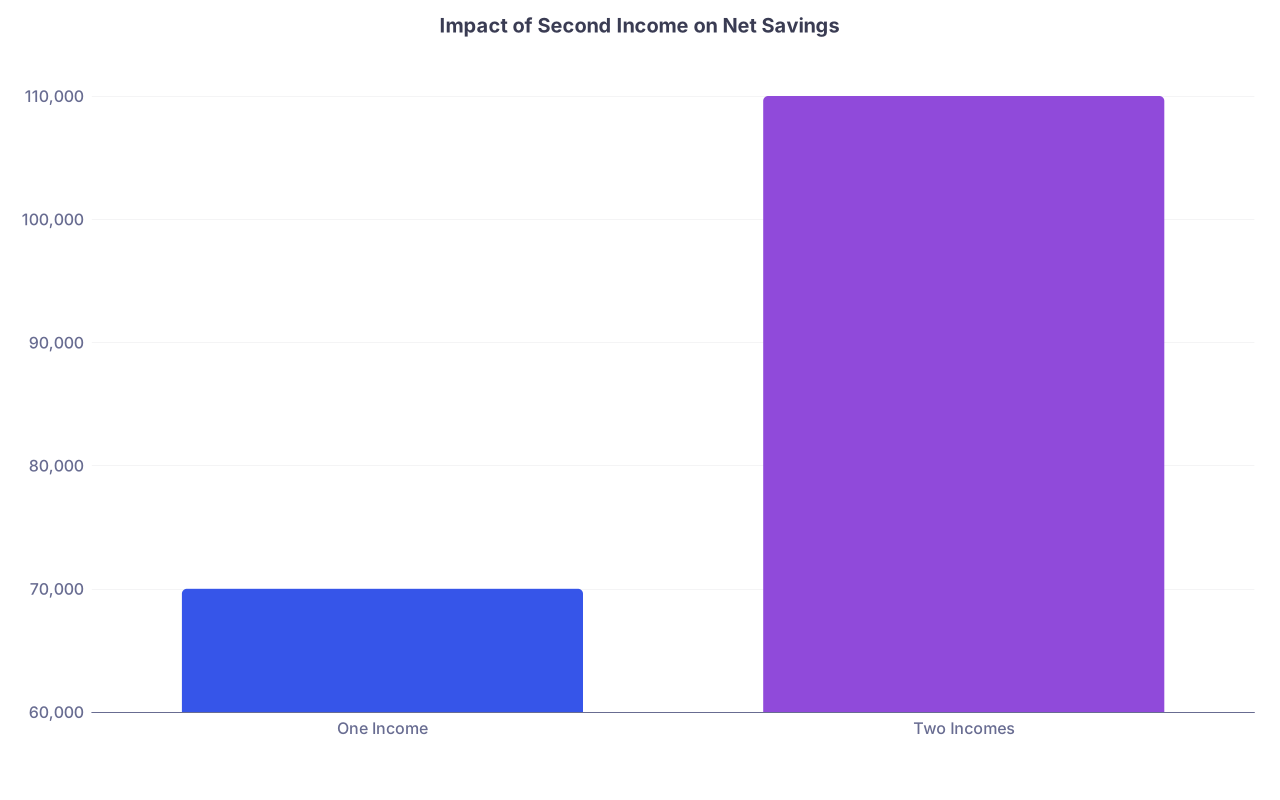
| Category | Value |
|---|---|
| One Income | 70000 |
| Two Incomes | 110000 |
Example (simplified):
- You make $400k as an attending
- Spouse makes $120k
- Together, you’re in the top brackets, but you also get:
- Their 401(k) deferral
- Their employer match
- Possibly healthcare benefits, ESPP, etc.
If spouse quits:
- Taxes drop a bit
- But your annual savings might actually drop more than you expect—especially if you weren’t maxing everything already
Rule of thumb
If your spouse’s job comes with:
- Strong retirement benefits
- Subsidized health insurance
- Good disability insurance
…it often makes mathematical sense for them to keep working at least part-time or for several more years, even if “you don’t need the money for bills.”
Step 3: Health Insurance and Legal/Financial Protections
Here’s where people get burned because they only look at the paycheck.
When your spouse stops working, you might lose:
- Employer health insurance (maybe theirs was cheaper or better than your hospital’s)
- Their life insurance and disability coverage
- Legal benefits, flexible savings accounts (FSA), dependent care accounts
If you’re moving everything under your attending job:
- Check what family coverage costs at your hospital
- Review disability insurance—especially if your spouse is the one doing unpaid childcare now. If something happens to them, you suddenly need paid help.
This is the boring part. But massively important in retirement planning because long-term wealth is usually destroyed by:
- Disability
- Major health costs
- Lawsuits / liability without proper coverage
You want all that locked down before anyone walks away from a stable employer benefits package.
Step 4: Lifestyle Creep vs. Real Freedom
You’ve seen this: the new attending who “can’t” live on $300k because the mortgage is $6k, daycare is $3k, cars are $2k, private school is $4k, and suddenly nothing is left.
One spouse quitting is not just a math issue. It’s a lifestyle discipline problem.
Here’s the test I use:
If your spouse stopped working tomorrow, could you:
- Max all reasonable retirement accounts (401(k)/403(b), 457(b), backdoor Roths)
- Put a healthy amount into taxable investments (often another 10–20% of gross)
- Live your life without going into debt or constantly feeling squeezed?
If you can’t, you’re not “attending rich” yet. You’re “high-income, high-risk.”

| Step | Description |
|---|---|
| Step 1 | Attending Income Starts |
| Step 2 | Keep Spouse Working |
| Step 3 | Spouse Can Reduce or Stop Work |
| Step 4 | Solo Savings Hit Targets |
| Step 5 | Insurance and Benefits Covered |
| Step 6 | Lifestyle Affordable On One Income |
Step 5: Non-Financial Stuff That Quietly Becomes Financial
This part gets underestimated and then shows up in my office as, “We’re fighting about money all the time.”
Identity and mental health
If your spouse likes their work—or gets a lot of identity from it—pulling them out of the workforce can:
- Lead to resentment
- Increase spending (because now their main outlet is often consumption: home projects, kids’ activities, travel, etc.)
- Create a weird power dynamic around “your” money
Not saying don’t do it. Just don’t pretend this is a purely financial decision.
Re-entry risk
If your spouse is in a field where skills decay fast (tech, finance, clinical roles), leaving can:
- Make it harder or impossible to go back later
- Turn a “temporary break” into a permanent one
That’s a retirement planning problem. Because if something happens to you—health issue, burnout, job loss—that second potential earner might no longer be employable at that prior level.
Planning move:
If they step back, I like part-time, consulting, or per diem work initially. Keeps skills fresh, keeps resume alive, keeps the option value.
Step 6: When It Actually Makes Good Sense for Spouse to Stop
Let’s talk about the “green light” scenarios I see that do work.
Good scenarios:
You’re a high-earning attending (think $400k–700k+), low-debt, modest lifestyle.
- You can easily save six figures per year.
- Mortgage and fixed costs are sane.
- You’re on track for financial independence in 15–20 years on just your income.
Your spouse genuinely wants to:
- Raise kids
- Manage the household
- Or pursue something non-monetized (art, volunteering, further schooling)
…and you both are aligned that this is “worth” the lost income.
You lock in:
- Adequate term life insurance on you and ideally on your spouse
- Individual long-term disability insurance for you
- Clear agreements on money decisions and savings goals
Another solid option that’s underused: phased reduction.
Rather than “quit vs. not,” consider:
- Going 0.6–0.8 FTE
- Going PRN or consulting
- Switching to remote or flexible work
You keep most of the financial/benefits upside but buy back time and sanity. This is often the sweet spot for 5–10 years.
Step 7: How This Affects Long-Term Retirement Planning
Retirement planning is really just lifetime cash flow planning. One spouse quitting changes:
- How much you can save during peak years
- How resilient you are to surprises
- How many years you need or want to work as the physician
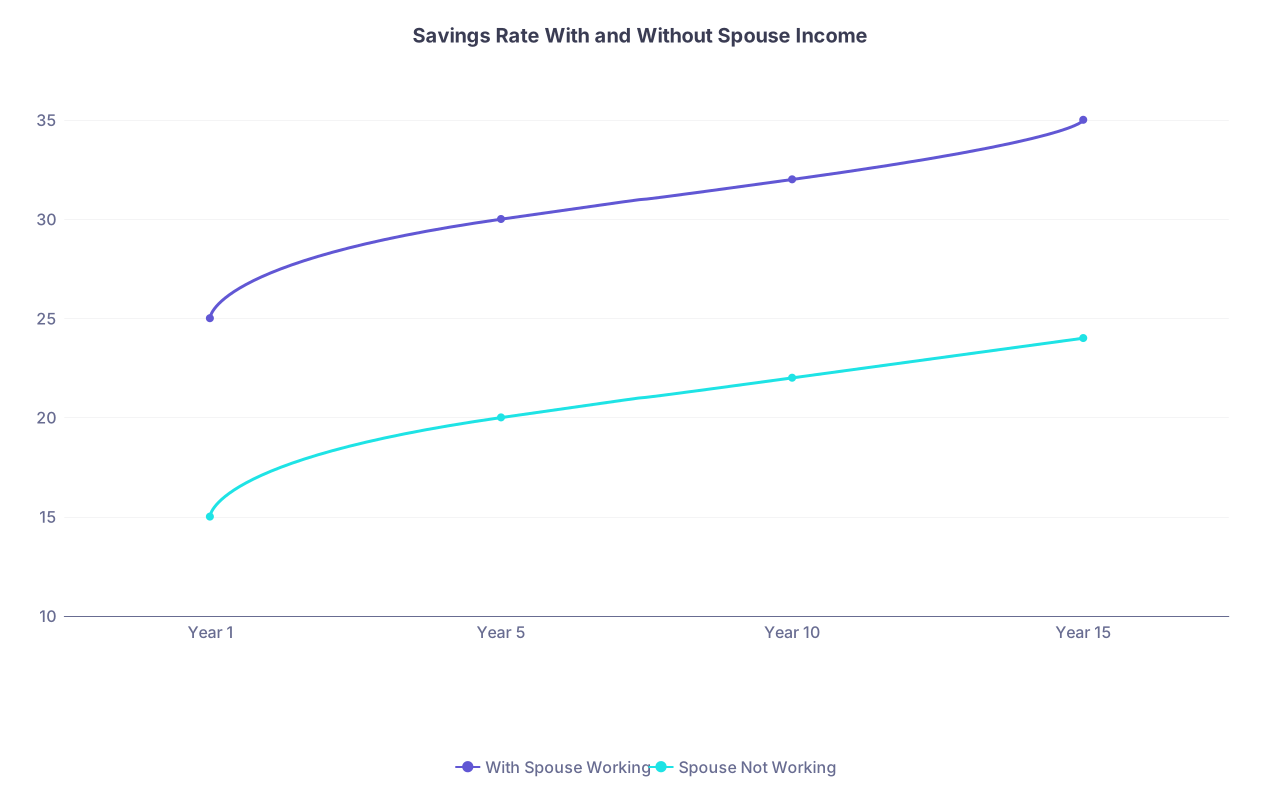
| Category | With Spouse Working | Spouse Not Working |
|---|---|---|
| Year 1 | 25 | 15 |
| Year 5 | 30 | 20 |
| Year 10 | 32 | 22 |
| Year 15 | 35 | 24 |
What I see in practice:
- Dual-income physician couples hitting financial independence in 10–15 years
- One-income physician households taking more like 18–25 years—unless they’re very intentional and live well below their means
So if your dream is to be done clinical work at 55 or earlier, pulling your spouse out of the workforce at 35 may push that to 60+ unless you compensate with higher savings or lower lifestyle.
A Simple Step-by-Step Process for You Two
If you want a clean, adult way to make this decision together, here’s the order:
Write down your goals
Age you want to be work-optional. Retirement spending. Big-ticket items (college, second home, etc.).Run a simple plan
Use a retirement calculator or a one-time session with a fee-only planner. Model both scenarios:- Spouse keeps working at current income
- Spouse drops to 0 or to part-time
Stress test it
Ask:- What if my income drops 20–30%?
- What if I burn out and want part-time at 50?
- What if we have another kid / major health issue?
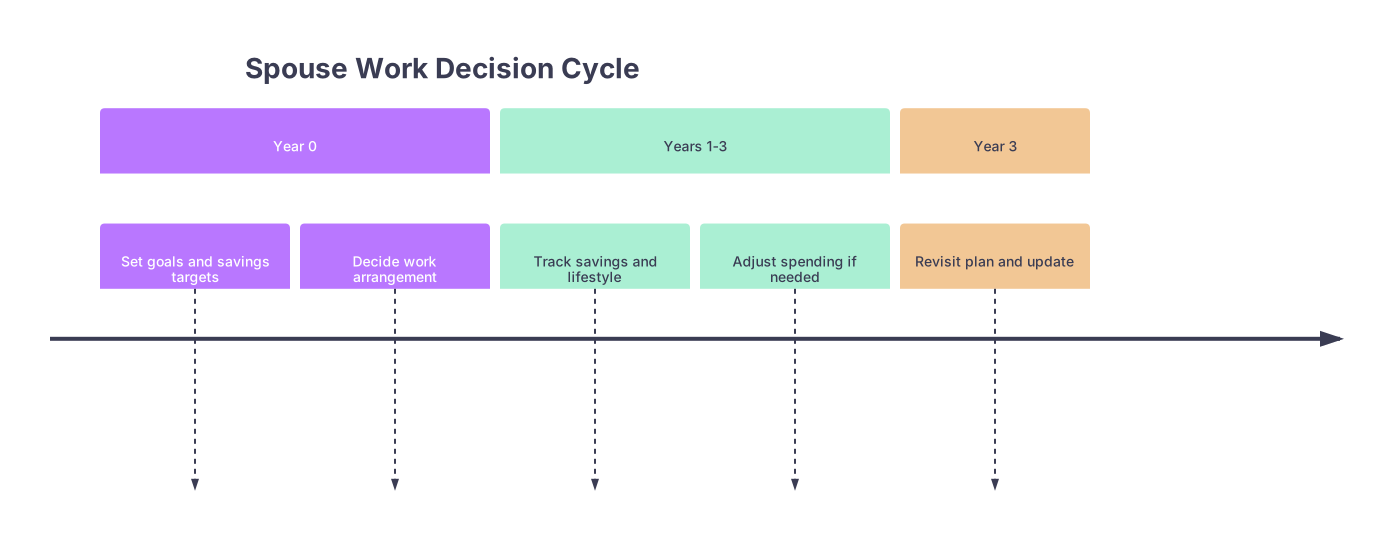
Decide for the next 3–5 years, not forever
You don’t need to decide “for life.” Decide what you’ll do for the next few years and calendar a formal revisit.Put numbers in writing
- Minimum annual savings target
- Debt-paydown goals
- Guardrails (e.g., “We won’t buy a house over $X unless spouse goes back to work”)
Examples: When It Works vs. When It Blows Up
Example 1 – Works Well
- You: 34-year-old hospitalist, $350k, loans refinanced, $220k remaining
- Spouse: 33-year-old engineer, $120k
- You live on ~$150k, save ~$150k, throw $50k at loans each year
- You want kids in 1–2 years, spouse wants to step back
You run the math:
- On your income alone, still able to save ~$80–100k/year once loans gone
- Lifestyle remains under control; house is not insane
- You’re still on track for FI in early to mid 50s
Spouse drops to 0.5 FTE for 5 years, keeps benefits. This is a very reasonable compromise.
Example 2 – Train Wreck in Slow Motion
- You: 40-year-old surgeon, $600k
- Spouse: 38-year-old in marketing, $150k
- You have $25k in retirement accounts and just bought a $2M house
- Private school, two car leases, lots of lifestyle burn
Spouse says: “Now that you’re making real money, I want to stop working.”
On paper, maybe you can pay the bills. But you’re saving $30–40k/year at best and are way behind for retirement.
If I’m advising you? Hard no. At least not until:
- Savings rate is fixed
- Lifestyle is sized to allow one income to support both today and retirement
- You’ve built some actual wealth, not just income
FAQ: Should My Spouse Stop Working Once I Make Attending Income?
1. If we can cover our bills on my attending income, is that enough reason for my spouse to quit?
No. Covering bills is the floor, not the goal. You need to cover bills, max appropriate retirement accounts, build taxable investments, and still have margin. If you’re just “able to pay monthly expenses,” you’re setting up future you to be trapped at work.
2. How much should we be saving if we go down to one income?
For most physician households wanting a solid retirement in their 50s or early 60s, I like seeing at least 20–30% of gross income going toward retirement savings (401(k), 457(b), Roth IRAs, taxable investing). Higher if you’re starting late or want an earlier retirement.
3. Should my spouse at least keep working until we’re done with student loans?
Usually yes, that’s smart. Dual incomes speed up debt payoff dramatically. Once loans and any stupid high-interest debt are gone, you have more flexibility to pull a spouse out of the workforce without sabotaging long-term plans.
4. What about staying home with kids—how do we weigh that against money?
You treat it like any big value decision: make the tradeoff explicit. If spouse staying home is a top family priority, you accept that you may need to: work longer, reduce lifestyle, move to a lower cost-of-living area, or delay full financial independence. That’s not wrong; it just needs to be conscious, not accidental.
5. Is it better for my spouse to go part-time instead of fully quitting?
Often yes. Part-time preserves skills, income, and (sometimes) benefits while giving back time and flexibility. From a retirement planning perspective, even $30–60k of extra income plus some benefits can massively improve savings and reduce risk.
6. What’s the biggest mistake couples make with this decision?
They treat it as an emotional milestone—“We made it, you can quit now”—without running the long-term numbers. They upgrade house, cars, travel, and drop to one income, then wake up at 50 realizing they’ve built a lifestyle but not wealth. The better move: lock in savings and protections first, then adjust work and lifestyle around that.
Key takeaways:
- Don’t decide on spouse quitting work based on vibes. Decide based on whether you can still hit retirement and savings targets on your income alone.
- Consider the full package: taxes, benefits, insurance, lifestyle creep, career re-entry, and your actual goals for work and retirement.
- You don’t have to go straight from full-time to zero. Part-time or phased reduction is often the best financial and emotional middle ground.