You've just scrolled through your ERAS Experiences section after hitting submit. The "Scribe" entry stares back: "Assisted with charting. Verified patient histories. Charted in Epic." The "EMT" entry: "Transported patients. Monitored vitals. Maintained equipment." It's sterile. It's dutiful. And Program Directors have seen 500 identical versions of it today alone.
That's not an application. That's a grocery list.
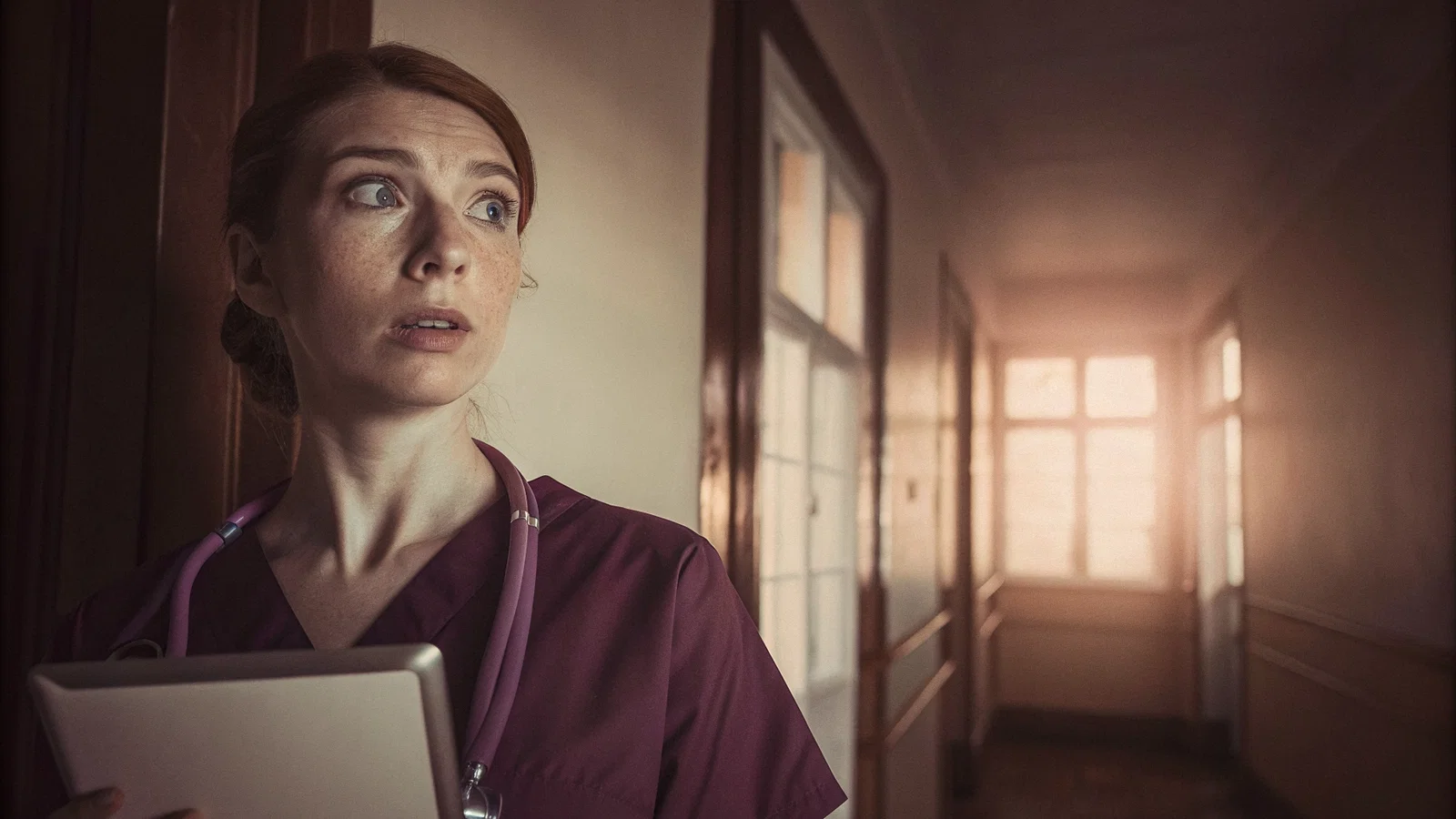
Here's the fix. Your scribe or EMT job isn't an entry-level gig you survived. It's a translational clinical education hidden in plain sight. I'm going to show you exactly how to extract those stories and weaponize them across your residency application, so you stop looking like a passive bystander and start reading like the clinically battle-tested candidate a program actually needs.
The Ambulance-to-Residency Pipeline: Why Your Clinical Job is Your Secret Weapon
Let's call the problem by its name: ERAS's "Experience" text boxes trick you into thinking like HR, not like a physician. You list duties because that's what you think they want, scope of practice, equipment familiarity, documentation systems. In reality, a Program Director wants evidence you've already started thinking like a resident. They're hunting for clinical interpretation, not task completion.
I've sat on selection committees. When I see "Transported patients," I know nothing. When I see "Calmed an agitated dementia patient mid-transfer while continuously reassessing vitals to rule out an evolving stroke," I know you can handle uncertainty, communicate under pressure, and think clinically on your feet. The first bullet is a warm body. The second is someone I want on my team.
Residency directors are drowning in applications that all look the same. They're starved for specific, granular clinical narratives that prove you've already crossed the chasm from observer to active participant. The magic move? Frame every experience not as what you did, but as how you thought. You weren't "charting in Epic"; you were synthesizing disparate data points into a cogent medical story that influenced downstream decision-making. That's a competency. And you can learn to surface it in about an hour.
The 'Checklist' Trap: Why Your Current ERAS Entry is Quietly Sabotaging You
For a systematic approach to structuring every ERAS entry, explore our guide on structuring your ERAS experiences. (See also: Structuring Your ERAS Experiences: Impact-First vs Chronological for more.)
For more on extracting meaningful narratives from routine shifts, see: understanding how program directors evaluate non-traditional clinical roles.
Passive duty language is application Kryptonite. It signals "I was there, but I didn't really process what was happening." And in a residency, processing is the job.
Here's the gap laid bare:
Almost everyone writes about teamwork as "worked alongside nurses and physicians." That description gets filed under "unremarkable." A handful write about the moment they navigated a disagreement between a nurse and resident about a patient's opioid orders, and how they learned to de-escalate while preserving patient safety. That gets highlighted, discussed, and remembered.
Stop telling me you "monitored vitals." That's passive observation. Tell me you "detected an asymptomatic hypertension in a BLS transport patient who turned out to have an aortic aneurysm, and then coordinated with the receiving ED to expedite a CT scan." That's clinical reasoning and closed-loop communication. That's a story I can assess against ACGME milestones.
The data confirms it: most applicants submit experiences that read like an Indeed posting. Program Directors want to see behaviors that mirror intern-level responsibilities. You have those behaviors. You just haven't learned to mine them.
The 'Story Mine' Protocol: A Step-by-Step Guide to Extracting Gold from Your Shift Logs
This is the meat. I'll walk you through a four-step conversion pipeline that turns any scribe or EMT hour into a residency interview highlight. Do this over a weekend, and you'll have a completely rewritten application.
Step 1: The Story Audit, Identify 5 Pivotal Moments
Pull out your old shift logs, notes app scribbles, or just memory. Hunt for moments where:
- You were scared, confused, or emotionally activated.
- A patient outcome changed because of something you noticed or did.
- You had to make a decision when nobody else was available.
- You corrected a medical error caught in the chart.
- You witnessed a system failure and had to work around it.
Don't edit yet. Just write down 10-15 raw moments. An EMT might recall the time they recognized stroke symptoms that the 911 call taker had mis-triaged as intoxication. A scribe might remember seeing an allergic reaction misdocumented as a previous infection and catching it before the resident ordered the wrong antibiotic.
Step 2: The 'So What?' Bridge, Connecting Moments to ACGME Core Competencies
Take each raw moment and force yourself to write one sentence that starts with "This shows I can..." and maps to an ACGME competency:
- Patient Care: "This shows I can perform a focused assessment in an unstable environment."
- Medical Knowledge: "This shows I can apply pathophysiology to prioritize differentials on the fly."
- Systems-Based Practice: "This shows I can identify a care coordination gap and bridge it using existing hospital resources."
- Professionalism: "This shows I can maintain composure and ethical judgment when a patient's family escalates."
- Interpersonal Skills: "This shows I can translate complicated medical information into plain language for an anxious parent."
This bridge is the engine. It transforms a memory into a piece of portable evidence that a Program Director can instantly value.
Step 3: The Specialty Alignment Filter, Curating Stories That Fit Your Target Field
Now apply a ruthless filter. An EM residency wants high-acuity, quick-decision stories with limited information. Psychiatry wants narrative complexity, motivational interviewing, and disguised suffering. Surgery wants precision, sterile technique, and pre- or post-op insights.
Your 5 finalists should make the specialty scream. A scribe heading to Internal Medicine might pick the moment they found a critical drug interaction buried in a medication list. An EMT heading to Pediatrics might pick the moment they calmed a child by demonstrating a pulse ox on a stuffed animal first. These are not generic, they're custom-built value signals.
Step 4: The Verb Upgrade, Transforming Passive Observation Into Active Clinical Cognition
Swap "Observed," "Helped," "Participated" for:
- Interpreted (for data synthesis)
- Triaged (for prioritization under pressure)
- De-escalated (for conflict or agitation)
- Flagged (for safety catches)
- Coordinated (for system navigation)
- Adapted (for resource constraints)
This isn't fluff. It accurately captures the cognitive work you were doing, work that an intern does daily.
If you are an international medical graduate leveraging EMS experience, learn how to turn a nonclinical job into match-relevant IMG experience.
Here's the entire protocol visualized:
You now have a crystallization procedure. Let's apply it to your actual ERAS sections.
The ERAS Rewrite: How to Deploy These Stories Across Your Application
Narratives without placement is wishful thinking. Here's the tactical map.
Personal Statement: Anchor It to a Critical Clinical Moment
Most personal statements start with "I've always wanted to be a doctor because I love science and helping people." Instant deletion. Instead, open with one of your 5 pivoting moments, in raw, sensory detail. Not a summary. A scene.
"The 2 AM gas station had worse lighting than our rig's cabin lights. Jenna was seizing on the pavement, and the only history I could get was her boyfriend screaming that she'd 'taken something.' I ran a quick blood glucose while radioing the base hospital and heard the attending ask if we had naloxone on board, the med box was jammed. I used my trauma shears to pry it open. Pupils pinpoint. We push naloxone, she breathes again. That was the first time I understood that clinical reasoning isn't a textbook algorithm, it's a real-time synthesis of environment, history, and what your hands can do when seconds count."
Now you've established clinical grit, problem-solving, teamwork, and specialty interest, all in a single paragraph. The rest of the essay simply expands on how that formative experience shaped your path into X specialty.
Experience Section: Replace Generic Task Lists with the CAREBE Narrative Method
CAREBE stands for:
- Context (setting, constraints)
- Action (what you specifically did, not the team)
- Result (quantifiable or patient-centered)
- Evidence of Behavior (which competency it maps to)
- Echo (how it connects to your future)
Example rewrite for a scribe:
Old: "Transcribed patient histories and physical exams into EHR."
New: "Flagged a mismatched allergy history during a rushed morning handoff; correlated the EHR discrepancy with a pending antibiotic order, and paused the workflow to alert the senior resident before the wrong agent was administered, preventing a potential anaphylactic event and reinforcing the role of documentation integrity in medication safety."
One bullet, massive signal. That's an interview-worthy talking point waiting to happen.
Interview Prep: Build a 'Story Bank' of 3 Powerful Narratives
Don't wing it. Choose three stories from your filtered set that together cover:
- A clinical catch or decision (shows knowledge application).
- A communication or team conflict resolution (shows interpersonal/professionalism).
- A systems failure you compensated for (shows systems-based practice and adaptability).
Rehearse them in STAR format (Situation, Task, Action, Result) but infused with the active verbs. These become your go-to answers for "Tell me about a time you made a difference" or "Describe a clinical challenge you faced." You'll deliver them conversationally, not robotically, but you'll know the story beats cold.
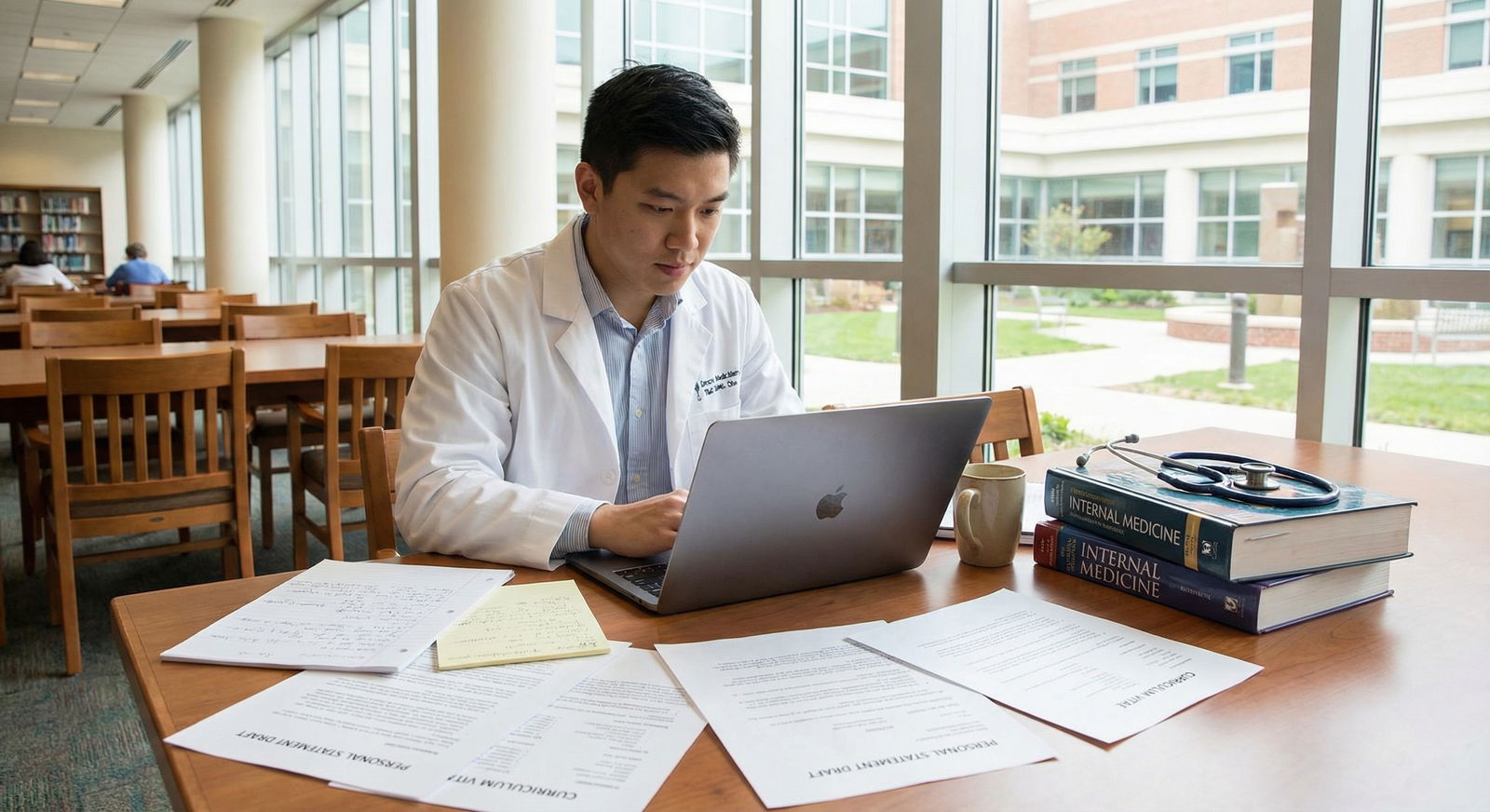
Beyond the Box: Turning a Routine Job into a Leadership Case Study
Program Directors don't just want clinical hours. They want proactive engagement. If you turned a scribe or EMT job into a launchpad for something bigger, you've got leadership and scholarship material that separates you from the masses.
Initiative: Did you notice a pattern of undiagnosed hypertension in your transport logs? Start a mini QI project: track the numbers, propose a protocol for automatic referral slips to free clinic follow-ups, and present it to your medical director. Add that as a separate entry or fold it into the experience description as a bullet. You just demonstrated system improvement instincts.
Teaching: Did you train new EMTs on how to give a crisp ED handoff, patient age, chief complaint, vitals, pertinent negative, and an open-ended question? Write that up as a teaching experience. That's pedagogy, mentorship, and communication in one tidy package.
Advocacy: Did you notice that non-English-speaking patients routinely had less thorough chart documentation? Did you start using a translation app to ensure chief complaints were captured accurately, then flag the disparity for your supervisor? Frame that as health equity advocacy. It shows you're not just doing a job, you're diagnosing system-level inequities.
These aren't padding. They're tangible expansions of your role that signal leadership readiness.
The Prescription for a Standout Application
You've been told clinical jobs are "nice to have" on a resume. That's wrong. They're the highest-fidelity evidence that you can function in the messy, unscripted reality of medicine.
Stop listing duties. Start demonstrating impact and clinical maturity. Your ERAS should read like a mini case log of moments that made you ready for day one of residency.
Here's your action item this weekend: pull out three scribe or EMT shifts. Run them through the Story Mine Protocol. Audit the moments. Bridge to competencies. Filter for your specialty. Upgrade your verbs. Write one new bullet, one personal statement opening line, and one interview story. That's the beginning of an application that doesn't just get read, it gets flagged with a "Must Interview" sticky note.
Your interview invitation depends less on your hours and more on how you narrate them. Go turn hours into highlights.