
You do not need a home program to match well. But you do need a plan that is sharper and more deliberate than your peers who have one.
A home residency program gives automatic advantages: built‑in mentors, easy letters, “audition” rotations without travel, name recognition. You do not have those. Fine. Then you cannot afford a generic, hope‑for‑the‑best application strategy.
What follows is how you systematically compensate for no home program and still build a strong, competitive residency application.
1. Accept the Reality—and Stop Wasting Time
The worst mistake I see students without home programs make is pretending the playing field is level. It is not. Program directors openly admit they know their own students better, trust their letters more, and can assess “fit” with less risk.
Instead of whining about that (I have heard the same complaints for a decade), you do three things:
- Identify exactly what a home program gives.
- Recreate each advantage through alternative routes.
- Over‑index on professionalism and preparation so your lack of a home program becomes a non‑issue.
Let’s break down what a home program typically provides:
- Built‑in clinical advocates (attendings who know you well)
- Departmental letters with local reputation
- Easier research connections
- Department leadership who can pick up the phone for you
- “Audition” experience where faculty can test‑drive you as a resident
- A clear “signal” to other programs: “We would rank this student”
You are going to replace each of these with something specific.
2. Build Your “Pseudo‑Home” Network Intentionally
You cannot invent a home program. But you can construct a functional equivalent: a tight group of faculty and mentors who know you well, advocate aggressively, and have relevant reputations in your target specialty.
Step 1: Lock in a Primary Specialty Mentor Early
You want one senior person who thinks of you as “my student.” That is your pseudo‑home chair.
Ideal profile:
- Associate professor or full professor in your target specialty
- Actively involved in education or residency selection
- Known beyond one small hospital (publications, society leadership, lectures)
How to find them if your school has no department:
- Regional academic centers within driving distance
- Faculty at affiliated hospitals where your school places students
- National society mentorship programs (e.g., AAD, ACC, SAGES, AAEM, ACOG mentorship tracks)
What you actually do:
Make a list of 5–10 potential mentors at nearby or regional centers.
Email them a short, tight message:
- Who you are (school, year, specialty interest)
- What you want (guidance + chance to help with a project or clinic)
- Why them specifically (specific paper, role, or talk you read)
Offer something concrete: “I would be happy to help with data collection, chart review, or preparing a presentation.”
Aim to build a relationship with 1–2 of these people over 6–12 months. That is your core advocate pool.
Step 2: Use Away Rotations as “Adopted Home” Programs
For students without a home program, away rotations are not optional. They are your primary way to get:
- Specialty‑specific letters
- Face time with decision‑makers
- Proof that you can function at the level of their residents
You should treat at least one away rotation like your “home department month.”
Pick these away rotation targets strategically:
- Programs that frequently interview or take students from your school
- Places where your new mentor has connections
- Mid‑to‑high tier, not just “top 5” aspirational places
If you can do 2–3 aways in your specialty, all the better. But at least one must be at the level of: “I would be happy to train there.”
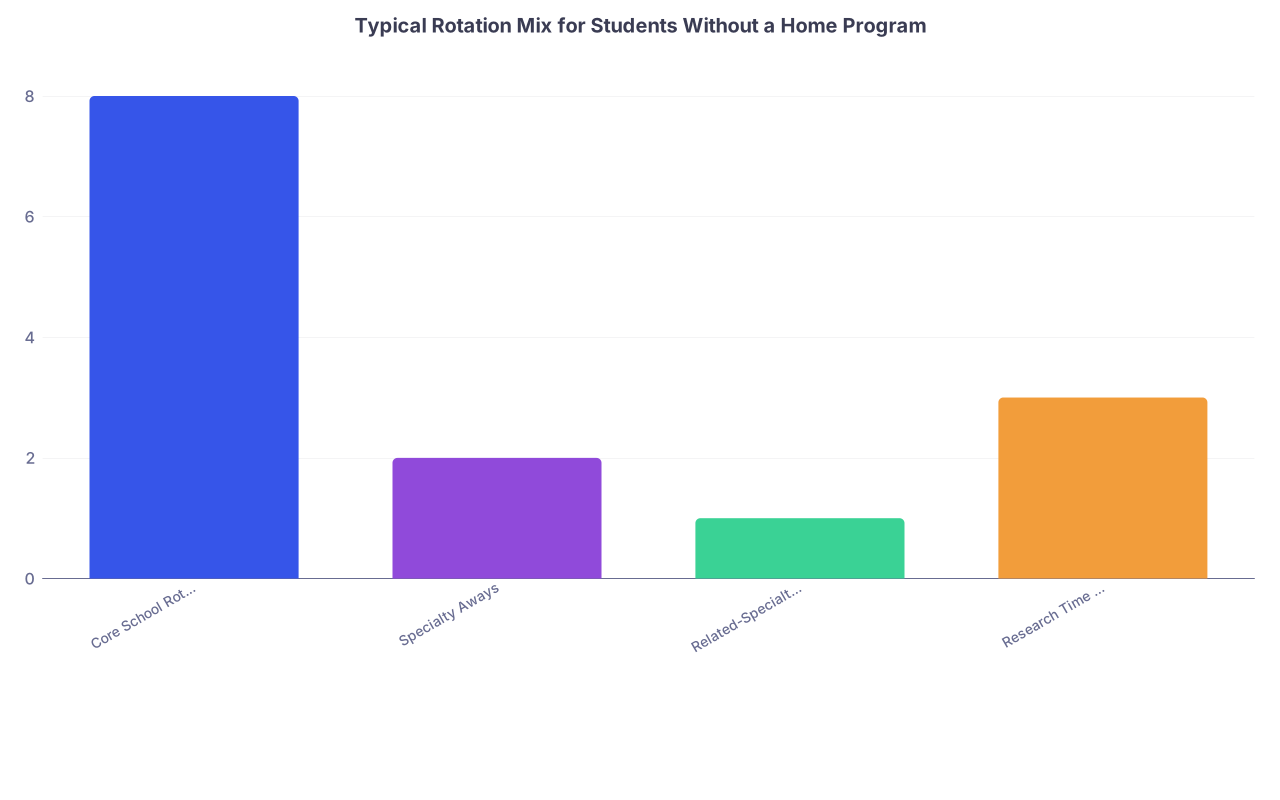
| Category | Value |
|---|---|
| Core School Rotations | 8 |
| Specialty Aways | 2 |
| Related-Specialty Rotations | 1 |
| Research Time (months) | 3 |
During the away, you are not just “trying out the specialty.” You are auditioning to be a resident. That means:
- Show up early. Beat the residents.
- Read the night before on every patient you’re assigned.
- Ask for feedback after week 1 and week 3. Then actually fix what they say.
- Work like a junior resident, not a shadow.
You want at least one attending to say, “We would be lucky to have you here,” and you respond, “Would you feel comfortable writing a strong letter of recommendation for me?” Not “a” letter. A strong letter.
3. Replace the “Home Chair Letter” with a Strategic Letter Portfolio
Programs like applicants with a powerful departmental letter from their own institution. You will not have that. Fine. You will build a different but equally compelling letter mix.
Aim for 3–4 letters with clear roles:
Specialty‑Specific Attending from a Strong Program (Away)
- Role: Your de facto “home program” advocate
- Needed: “Top 1–3 students I have worked with in the last 5 years” level language
Research Mentor in the Specialty (or Closely Related Field)
- Role: Demonstrates academic potential, long‑term relationship, reliability
- Good for: Showing depth, initiative, and persistence
Clinical Faculty Who Saw You in a Busy, High‑Responsibility Setting
- Role: Validates your work ethic, team skills, and reliability under pressure
- Emergency medicine, ICU, surgery, busy wards—anywhere you carried weight
Optional: School‑Level Letter (Dean / Clerkship Director)
- Role: Contextualizes your performance relative to classmates
- Especially important if your school is not well known
Your ask should be explicit. When you request a letter, say:
“I am applying in [specialty], and I do not have a home department. Your perspective would be key for programs to understand my fit and performance. Do you feel you know me well enough to write a strong, comparative letter of recommendation?”
If they hesitate or say something lukewarm, thank them and do not use them. A mediocre letter hurts more than no letter.
| Scenario | Typical Letter Mix |
|---|---|
| With Home Program | Home Chair, Home Faculty, Research |
| No Home, Poor Strategy | Random IM, Random Surgery, Dean |
| No Home, Strong Strategy | Away Faculty, Research Mentor, ICU/EM, Dean |
4. Use Research as Your Reputation Engine
Without a home program, the specialty probably does not know your school. Or you. Research is your workaround.
You are not trying to become a PhD. You are trying to become familiar.
What “Good Enough” Research Looks Like
In most specialties (except the hyper‑research ones like dermatology, neurosurgery, radiation oncology):
- 1–3 specialty‑related publications or abstracts
- Mix of retrospective clinical, case reports, QI projects
- At least one presentation at a regional or national meeting
If you are targeting an ultra‑competitive field: dermatology, plastics, neurosurgery, you probably need more volume. Not 30 fake authorships. 5–10 real contributions with your name in a visible position.
How You Get Research Without a Department
Piggyback off your mentor’s ongoing work.
You are not starting from zero. You ask, “Do you have any projects where you need help with data collection, chart review, or manuscript editing?”Leverage QI and clinical projects where you rotate.
Busy services always have half‑started QI work: reducing ED boarding times, improving post‑op order sets, etc. Those can become abstracts and sometimes publications.Join multi‑center or virtual collaborations.
There are national student/resident collaboratives in EM, surgery, IM, peds. These let you contribute data and be part of multi‑institutional projects.
The key is not just output. It is contact. The more faculty who have your name on a paper or abstract, the more people who will say, “Oh yeah, I know that student, they did good work,” when your application crosses their desk.
5. Maximize Your Clinical Scores and Narrative
You do not have home‑program reputation. So your objective metrics and clinical narrative carry more weight. There is no hiding behind, “Our chair loves them.”
Step 1: Crush the Clinical Year
Programs look very closely at:
- Core clerkship grades (especially Medicine and Surgery)
- Narrative comments from attendings
- Your MSPE (“Dean’s letter”) comparative language
Your goals:
- Honors or high passes in Medicine and/or your specialty‑adjacent clerkships
- Zero professionalism dings. None.
- Comments that clearly show: takes ownership, communicates well, works hard, improves with feedback.
You can influence the narrative by:
- Asking faculty for feedback halfway through each rotation
- Telling faculty at the end: “I plan to apply in [specialty]. I would appreciate if you could comment in your evaluation on my work ethic and ability to function at the level of an intern.”
Step 2: Manage Board Scores Strategically
Step 1 is now pass/fail. Step 2 is not.
If your school has no home program, borderline Step 2 scores will hurt more, because there is less local advocacy to offset them.
My blunt recommendation:
- For competitive specialties, aim for above the national matched average by at least 10–15 points.
- For less competitive fields, aim to be clearly “safe,” not barely passing.
If you already took Step 2 and the score is weaker than ideal:
- Do not panic. Shore up every other part of your application.
- Consider taking an in‑specialty exam or relevant shelf early and excelling.
- Use strong letters and concrete performance stories to counterbalance.
6. Use Away Rotations as Weapons, Not Vacations
You cannot afford to “just see if I like it” on an away. That is what students with home programs can do. You are there to:
- Generate at least one powerful letter
- Earn an interview at that program
- Acquire a local champion who knows other programs
Pre‑Rotation Preparation Protocol
Know the basics cold.
Before you start:- Read the first 5–10 chapters of the standard resident text for that specialty.
- Review common consults, emergencies, and post‑op care patterns.
Study the program.
You should know:- How many residents they take
- Their major clinical sites
- Any notable faculty or niche strengths
Reach out to the chief resident or coordinator.
Ask:- “Any tips on how students excel on this rotation?”
- “Recommended resources or expectations unique to this site?”
On‑Rotation Behaviors That Actually Matter
- Be early. Every day. No excuses.
- Pre‑chart and know your patients’ data before rounds.
- Do the unsexy tasks without complaint: calling consults, following up labs, arranging family meetings.
- Read at night on whatever cases you saw that day. Mention what you read tomorrow in a single, concise sentence.
- Never, ever disappear. Tell the intern/resident where you are at all times.
At the end:
- Tell one or two key faculty directly: “This program is at the top of my list. I would be grateful for any feedback and, if you feel it is appropriate, your support with a letter of recommendation.”
7. Communicate Your “No Home Program” Story Without Sounding Defensive
You do need to explain the lack of home program in some fields (e.g., derm, ortho, ENT), because programs will wonder.
You do not write a sob story. You write a professional, strategic narrative.
How to Frame It in Your Personal Statement
Bad:
“I did not have the opportunity to train at a home dermatology program, which put me at a disadvantage compared to my peers.”
Better:
“My medical school does not have a dermatology department, so I sought out opportunities at [Institution A] and [Institution B] where I could learn from faculty and participate in research. Those experiences confirmed my interest and allowed me to contribute to projects on [brief topic].”
Structure:
- State the fact once, clearly.
- Immediately describe what you did about it.
- Emphasize initiative, not victimhood.
How to Handle It in Interviews
When asked: “So you do not have a home program?”
You:
“That is correct. My school does not have a [specialty] department, so I worked with [Mentor Name] at [Institution] and did away rotations at [Program X, Program Y]. That gave me exposure to different practice environments and allowed faculty to know me well enough to write strong letters.”
Then stop. If they want more detail, they will ask.
8. Target Programs Where “No Home” Hurts Less
Some programs lean heavily toward their own students and other home‑program applicants. You will waste cycles chasing them. Others are more open to “outside” students and have a track record of taking people from schools like yours.
You want to systematically favor the latter.
How to Identify “Friendly” Programs
Look at resident bios.
- Do they have a mix of schools, including DOs, Caribbean, and schools without departments?
- Or is it all the same 10 med schools?
Ask upper‑class students at your school.
- Where have people matched from your school in your specialty?
- Which places gave your school’s students interviews?
Ask your mentors directly.
- “Which programs do you think are open to interviewing strong students without a home program?”
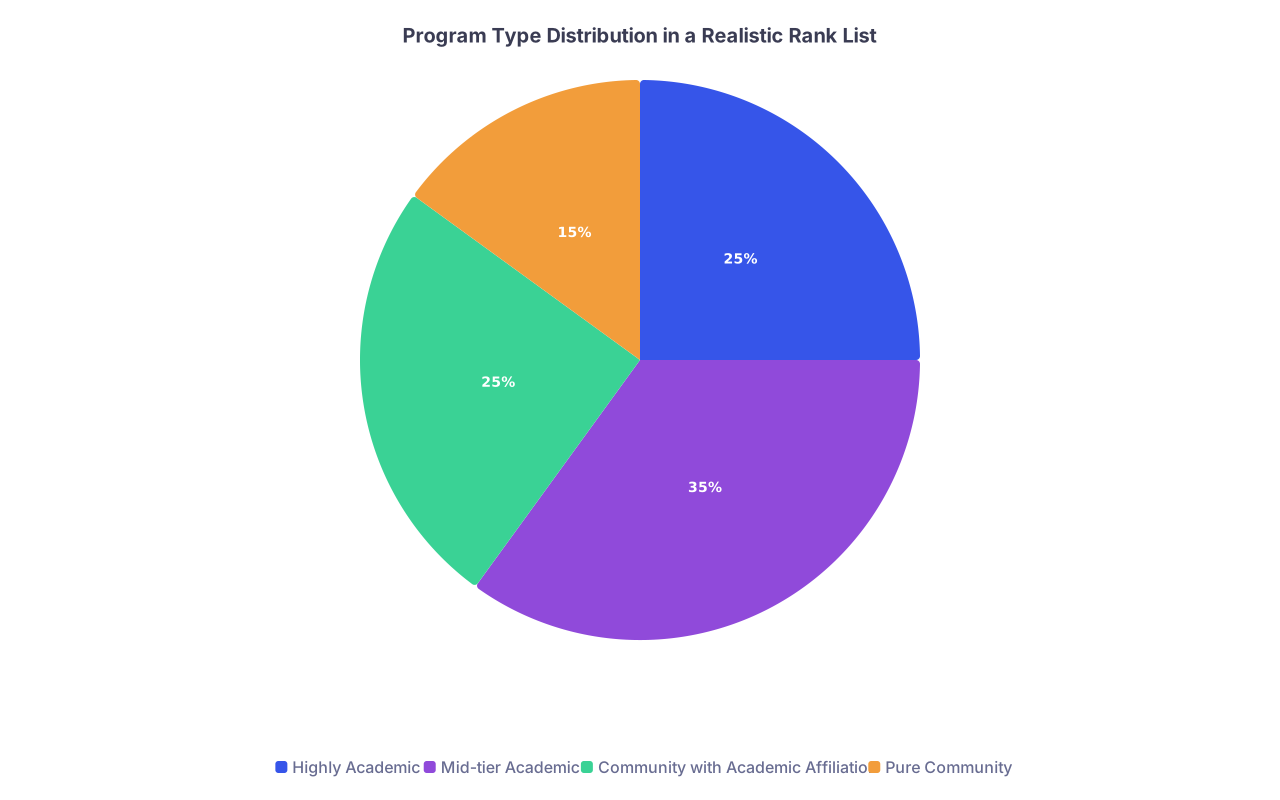
| Category | Value |
|---|---|
| Highly Academic | 25 |
| Mid-tier Academic | 35 |
| Community with Academic Affiliation | 25 |
| Pure Community | 15 |
Your final list should be diversified:
- A few stretch academic programs where you have a connection
- A solid core of mid‑tier academic and hybrid programs
- Some strong community programs where performance and personality matter more than school name
9. Over‑Index on Professionalism and Reliability
Home programs sometimes “forgive” their own students’ minor issues because they know them. You do not have that cushion.
Anything that looks like a professionalism problem will be amplified:
- Late evaluations with “needed redirection” comments
- Repeated absences or tardiness
- Passive‑aggressive feedback about “not a team player”
Fix this proactively:
- Be chronically early.
- Overcommunicate when you are stepping away or leaving.
- Own every mistake quickly and without excuses.
- Ask residents, “What can I do today that would be most helpful for the team?”
I have seen borderline applicants without home programs match to excellent places because every single narrative comment on their MSPE read some version of: “Hard working, kind, humble, reliable.” That is not fluff. It adds up.
10. Build a Clear, Aggressive Application Timeline
Without a home program, you cannot apply late. You cannot figure it out after ERAS opens. You need an aggressive, backward‑planned calendar.
Here is a simple, functional version.
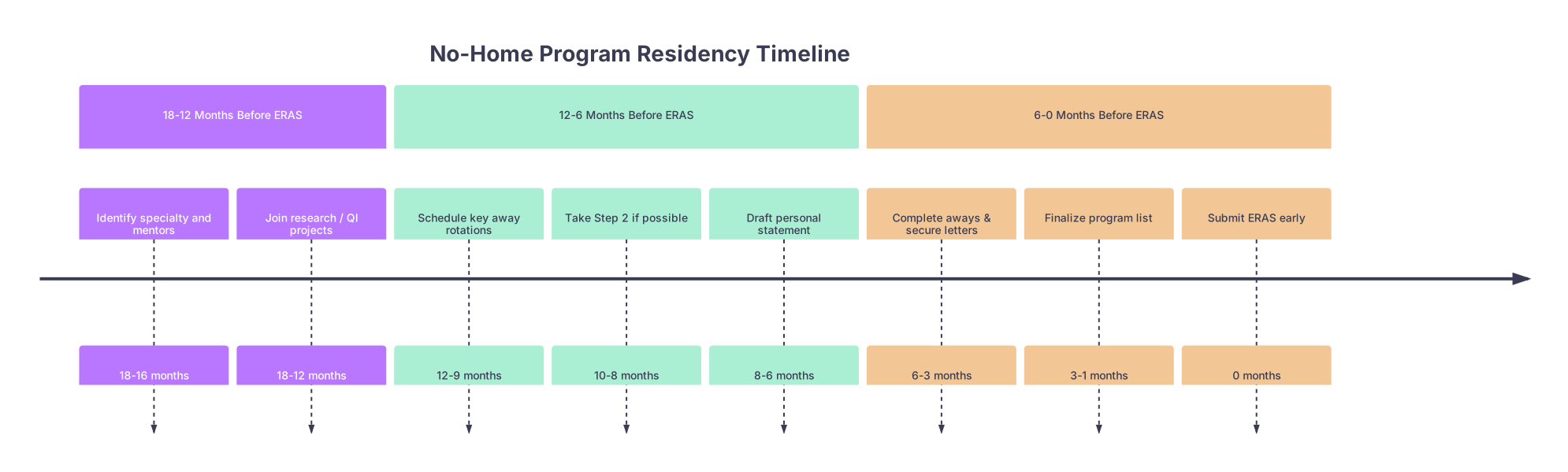
| Period | Event |
|---|---|
| 18-12 Months Before ERAS - Identify specialty and mentors | 18-16 months |
| 18-12 Months Before ERAS - Join research / QI projects | 18-12 months |
| 12-6 Months Before ERAS - Schedule key away rotations | 12-9 months |
| 12-6 Months Before ERAS - Take Step 2 if possible | 10-8 months |
| 12-6 Months Before ERAS - Draft personal statement | 8-6 months |
| 6-0 Months Before ERAS - Complete aways & secure letters | 6-3 months |
| 6-0 Months Before ERAS - Finalize program list | 3-1 months |
| 6-0 Months Before ERAS - Submit ERAS early | 0 months |
If you are behind this ideal timeline, you tighten the loop:
- Prioritize one strong away rotation over three weak ones.
- Double down on 1–2 research projects you can realistically finish.
- Spend real time refining your letters and personal statement asks.
11. Pull It Together: Your Concrete Action Plan
Let me make this brutally simple. Over the next 3–6 months, your priority list should look like this:
Secure 1–2 serious mentors in your target specialty.
- Email them this week.
- Ask for a meeting and offer help on existing projects.
Lock in away rotations at 1–3 programs that could be your “adopted home.”
- Talk to your dean’s office and specialty advisor.
- Apply early. You are not the only one without a home program.
Join or advance at least one real research or QI project.
- Aim for something that can reasonably yield an abstract or submission before ERAS.
Map out your letters of recommendation strategy.
- Identify exactly who you want letters from.
- Tell them early you are hoping for a letter so they can pay attention.
Tighten up your clinical performance.
- Act like every rotation from now on will be read and quoted by PDs. Because it will.
- Ask for feedback, then fix the issues fast.
Draft your personal statement with a proactive narrative.
- One paragraph that shows: no home program → you built your own path.
- Then focus on why the specialty, what you bring, and what kind of resident you will be.
Build a program list that reflects reality and opportunity, not fantasy.
- At least half your list should be places where your mentors think you are solidly competitive.
Open your calendar right now and block 60 minutes in the next 24 hours. Use that hour to do three things: list potential mentors, list realistic away rotation targets, and email two faculty to request meetings. That hour will do more for your match chances than another passive week of “thinking about options” ever will.