
The score drops. Your heart rate spikes. You refresh the page. Then what?
Most applicants immediately spiral into a chaotic blur of Reddit threads, frantic group chats, and reactive emails to program directors. It's a mess. Uncertainty and inbox overload hijack your brain right when you need cold, hard execution. This 72-hour window isn't for emotional decision-making. It's for controlled, chronological strategy.
Here is your hour-by-hour, day-by-day playbook for the first 72 hours, and exactly what to prepare next. Stop panicking. Start executing.
This article is for educational purposes only. It is not financial advice, not legal advice, and not tax advice. Figures vary by individual circumstances, so consult a qualified professional before acting.
First: 0-2 Hours After Scores Post, Secure Your Mind, Then Confirm Data
At this point you should breathe. Seriously. Step away from the screen for five minutes before you even look at the number. Let your nervous system settle.
Then, verify the data. Log into the official portal. Note the date, time, and total score. Pass/fail isn't the focus here unless there's an anomaly. Take a 10-20 minute 'data-only' break. No Twitter. No Student Doctor Network. No group chats. Write down exactly what you know on a physical piece of paper. Getting it out of your head and onto a desk stops the mental looping.
At this point you should check for administrative issues. Look closely at your name, graduation year, and reporting status. A typo in your name or a reporting delay can hold up your ERAS transmission. Screenshot everything. If your name is misspelled, that's an administrative emergency.
At this point you should decide whether you need urgent outreach. If your score completely contradicts your NBME averages and you suspect a scoring error, or if there is a glaring administrative glitch, contact NBME/USMLE support and your school coordinator immediately. Otherwise, keep your mouth shut and your phone down.
Next: 2-24 Hours, Make a Realistic Strategy for Applications and Communication
At this point you should compare your score to your target programs' typical ranges. Use actual MSPE data, FREIDA, and ERAS residency explorer tools. Do not rely on vibes from an anonymous forum user who claims a 245 is "competitive for dermatology." Look at the hard data.
At this point you should update your program list. Mark programs to prioritize, maintain, or drop. If your score came in 15 points lower than you expected, your "reach" category just got a lot smaller. Be ruthless. Cut the programs where you are statistically invisible. Add a few realistic backups if you need to pad your interview yield.
At this point you should draft key messages, but do not send them yet. Write the update to your advisors. Draft your Letters of Intent (LOI) contingency notes. Outline your interview scheduling requests. Get the words on paper while your mind is sharp, but keep your finger off the send button.
At this point you should check your application status. Log into ERAS. Are all letters of recommendation uploaded? Is your transcript received? Are your rotation grades finalized? A great score means nothing if your application is flagged as incomplete because a letter writer forgot to hit submit.
At this point you should set a strict 24-hour rule against reactive messaging to programs. Sending a panicked email to a program director at 2 AM because you scored a 240 instead of a 250 is a rookie mistake. It screams insecurity and poor judgment. Wait. Let the dust settle.

Then: 24-48 Hours, Targeted Outreach + Budget Your Time for Interview Momentum
At this point you should reach out to mentors and advisors with a concise summary. Give them the score, explain what it changes, and state exactly what you need from them next. "My score is X. I am dropping my top 3 reaches and adding 5 community programs. Can we review my updated list on Thursday?" That is a professional, actionable email.
At this point you should decide on LOI timing. If you use them, ensure you're sending them to programs that align with both your profile and your updated competitiveness. Don't waste money and time spamming reaches that just became statistically impossible. Target the programs where your score keeps you firmly in the "interview" pile.
At this point you should manage communications for interviews. Confirm scheduling logistics. Keep your calendar reminders updated. Avoid last-minute changes unless absolutely urgent. Program coordinators are swamped; be the applicant who makes their job easier, not harder.
At this point you should prepare a "story" for your application narrative. If your score dropped, how are you reflecting on it without over-apologizing? Own it. "I struggled with the time management on test day, but I've since implemented a strict pacing strategy that I'm applying to my clinical workflow." Never sound defensive. Never blame the test.
At this point you should protect your remaining energy. Sleep. Do some light exercise. Eat a real meal. The next steps require sustained focus, and you can't run on cortisol and energy drinks for the next six months.
Finally: 48-72 Hours, Lock in Updates, Build the Next-30-Day Plan, and Close the Loop
At this point you should finalize any updates you plan to submit to advisors or programs. Send them once, cleanly, and consistently. Do not send a follow-up email three hours later because you thought of another detail.
At this point you should update your next 30-day schedule. Block out specific hours for interview prep, networking, and remaining application tasks. Treat your calendar like a shift schedule. If it's not on the calendar, it doesn't exist.
At this point you should revisit any gaps revealed by your preparation. Did you bomb biostats? Did you rush through ethics questions? Apply that insight to your ongoing learning. You are a doctor now; your education doesn't stop just because the test is over.
At this point you should complete a "closure checklist" so you stop refreshing. Unsubscribe from unnecessary email notifications. Turn off push alerts for medical forums. Define specific times to check your inbox (e.g., 8 AM, 12 PM, 5 PM). Constant refreshing is a symptom of anxiety, not productivity.
At this point you should identify one long-term action regardless of score outcome. Commit to a research project, a clinical skill, a letter follow-up, or a resilience plan. The match is a marathon. Anchor yourself to something bigger than a three-digit number.
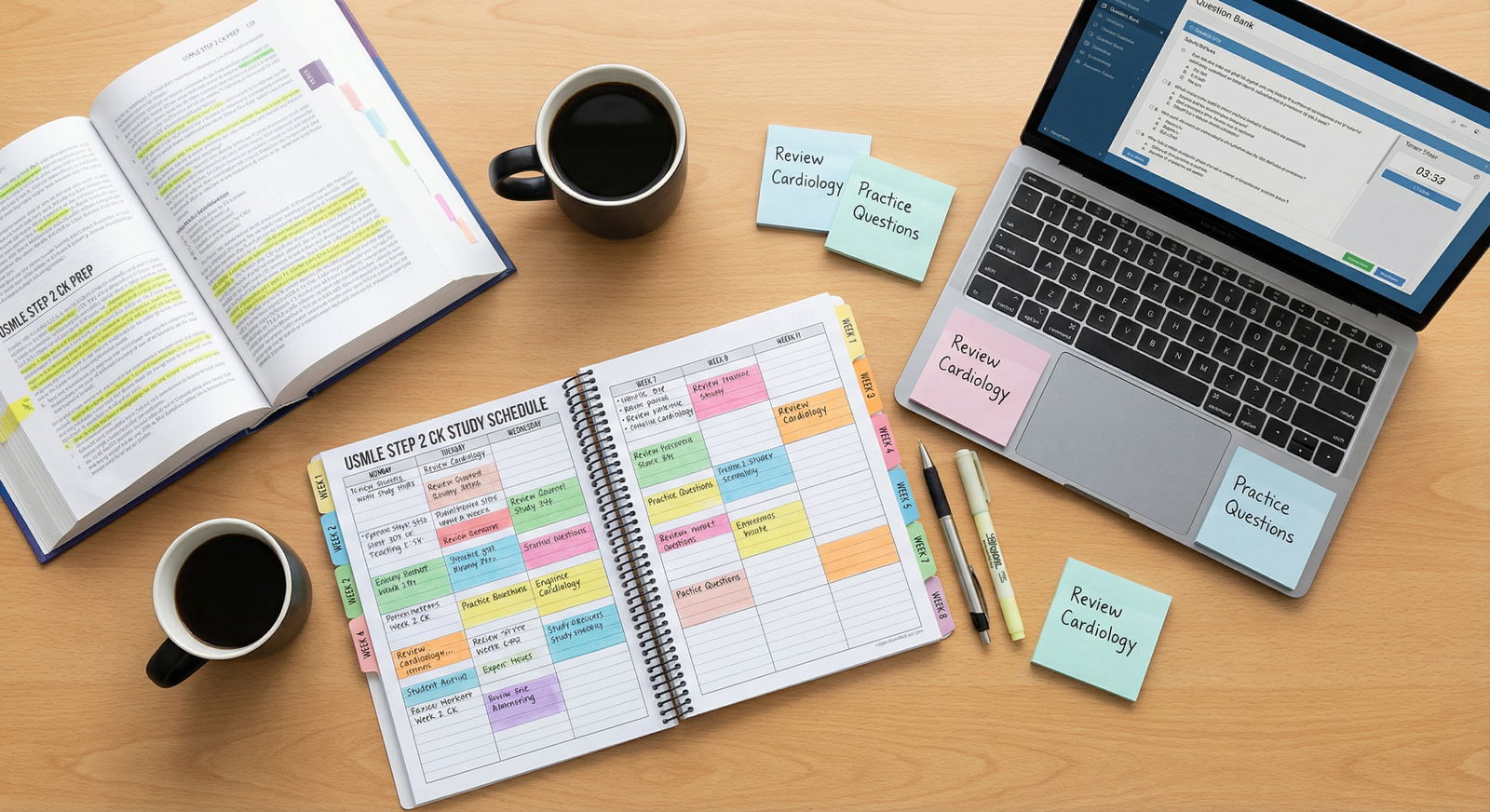
Quick Month-After Roadmap (Because 72 Hours Is Only Step One)
At this point you should decide what you'll do in the next month based on your updated competitiveness. Do not overcorrect from anxiety. Stick to the data.
Weeks 1-2 After the Score: Focus heavily on interview preparation, high-yield question refresh, and proactive mentorship touchpoints. Do mock interviews. Record yourself answering "Tell me about yourself." Review high-yield communication and ethics scenarios. Check in with your mentors to ensure your application narrative is cohesive.
Weeks 3-4 After the Score: Shift to finalizing any remaining application gaps, continuing routine networking, and stabilizing your daily routine. This is where burnout usually hits. Protect your sleep. Keep your workouts consistent. Do not sacrifice your physical health to send one more "checking in" email to a program coordinator.
The Bottom Line
- Use the first 72 hours to verify data, update your strategy, and communicate concisely. Avoid reactive messaging and social media spirals at all costs.
- Turn time into a system. Follow the 0-2h (confirm), 2-24h (plan/draft), 24-48h (targeted outreach), and 48-72h (finalize/close loop) workflow.
Your Step 2 CK score is just one data point in a massive application portfolio. It doesn't define your clinical ability, and it certainly doesn't define your worth as a future physician. Control what you can control. Execute the timeline. Now, close this tab and go take a walk. Your 72-hour clock is ticking.