Cover: J-1 Offer Then H-1B Later, What Timing DS-2019 and Waiver Decisions Actually Mean
The phrase "J-1 offer then H-1B later" sounds like a clean sequential plan. It is not. This arrangement lives and dies on timing. Three moving parts determine whether it works: DS-2019 issuance and start dates, the 212(e) two-year home residency requirement trigger and waiver pathway, and the H-1B petition calendar. Mismanage any one, and you lose the start date. Lose the start date, and the program may revoke the offer. I have watched this unfold too many times.
This article is for educational purposes only and is not financial advice, not legal advice, and not tax advice. Immigration outcomes and processing timelines figures vary. Consult a qualified professional for your specific situation.
1) The Big Picture: How J-1 (DS-2019) and H-1B Interact for IMGs
You are dealing with two separate immigration systems that people constantly confuse. The J-1 is an exchange visitor program. Your DS-2019 is the certificate of eligibility that defines your specific program: the sponsor, the start date, the end date, the category, and the funding source. It is not a work visa in the traditional sense. The H-1B is an employment-based work authorization tied to a specific employer and a specific job. The J-1 gets you into training. The H-1B transitions you from "trainee" to "employee" under a different set of rules.
The typical workflow for an international medical graduate looks like this: ECFMG processes your J-1 physician category after the Match. Your training program's start date lands on the DS-2019. You enter the United States in J-1 status. If your DS-2019 triggers the 212(e) two-year home residency requirement, you either comply with that requirement (by returning home for two years) or pursue a waiver, often the No Objection Statement (NOS) or an interested government agency waiver. Only after the waiver is approved or the requirement is satisfied can you be eligible for H-1B status. That sequence sounds linear. It is not. The waiver timeline, the H-1B cap season, and the DS-2019 program dates all compete with each other. Misalignment kills start dates.

2) Timing DS-2019: Where People Get Burned (Start Dates, Waiver Windows, and Program Terms)
The DS-2019 is not a formality. It is the spine of your entire J-1 period. The start date printed on that document dictates when you can legally begin training. The program length determines when you can even start thinking about a waiver or H-1B transition. Delays in DS-2019 issuance are common. When the start date slips by three weeks, your entire downstream timeline slips by three weeks: board eligibility windows, waiver filing readiness, and the H-1B cap season. I have seen a resident lose an H-1B cap window entirely because the DS-2019 arrived late, the waiver filing was delayed, and April 1 filing deadline came and went.
There are three classic burn patterns.
First: mismatch between the offer letter and the DS-2019. The offer letter says July 1. The DS-2019 says August 15 because the program's GME office submitted paperwork late or the sponsor made an error. You cannot start on July 1 under J-1 if the DS-2019 says August 15. Programs do not always hold your spot. Some will. Some will not. You need to audit every field: name, dates, program name, funding source, category. One wrong character can cause a delay at the port of entry or during a future waiver.
Second: changing fellowship or residency plans after the DS-2019 is locked. Say you match into a preliminary year, get a DS-2019 for that one year, then end up staying for a categorical position. You need a new DS-2019 or an extension. Every new document creates a new opportunity for a date mismatch or a waiver trigger you did not anticipate. I have seen a fellow start a new program three weeks late because the new DS-2019 did not align with the old end date.
Third: underestimating the waiver clock. The 212(e) two-year requirement is not a countdown from your J-1 start date. It is a requirement that you must either fulfill or waive before you can change to H-1B or adjust status. The waiver process itself takes months, often six to nine months, sometimes more. If you wait until the end of your J-1 program to start the waiver, you are already too late for the next H-1B cap cycle. You need to start the waiver conversation no later than 12 to 18 months before you want to transition.
3) Waiver Strategy Essentials: When You Need a Waiver vs When J-1 Carrying Through Is Not the Same Thing
The 212(e) two-year home residency requirement is not an administrative nuisance. It is a statutory bar. If it is triggered, you cannot receive an H-1B, change status, or adjust to permanent residence until you either complete two years in your home country or obtain a waiver. Many IMGs believe that because they are working in a hospital, they are automatically exempt. That is wrong. The trigger depends on three factors: your country of nationality or last residence, the funding source of your J-1 program, and the specific skills list for your country.
Decision logic that I teach to program coordinators and IMG candidates:
- If your J-1 is funded by the U.S. government or your home government, you likely have a 212(e) trigger. No amount of "I did not know" fixes that.
- If your country appears on the Exchange Visitor Skills List for your specialty, you likely have a trigger.
- If you are from a country that is not on the list and you are not government funded, you may have no trigger at all. In that case, H-1B can be pursued without a waiver.
The "No Objection Statement" waiver works if your home government will issue a letter stating they do not object. That is not always possible, some governments refuse. The interested government agency waiver works if a U.S. federal or state agency (often a health department or the VA) certifies that your departure would cause harm to a program or patient population. That path is powerful but slow and unpredictable.
I have seen a high number of IMGs assume that the waiver is automatic. It is not. You must file, wait, respond to requests for evidence, and then wait more. The waiver approval notice does not mean you are in H-1B status. It only removes the bar. You still need an H-1B petition filed and approved. The phrase "J-1 carrying through" means staying in J-1 status for the full length of training. That is a valid strategy if you never plan to switch to H-1B. But if your long-term goal is employment-based permanent residence, you need to understand that J-1 with a 212(e) trigger locks you out of adjustment until the waiver is done. Carrying through is not the same as having an H-1B later.
4) H-1B Later, Timing Mechanics: Cap Season, Start Dates, and Petition Fit After a J-1 Foundation
The H-1B calendar is brutal for anyone coming off a J-1. There are two H-1B categories: cap-subject and cap-exempt. Most residency and fellowship training programs are cap-exempt because they are affiliated with universities or nonprofit research institutions. That is the good news. If you are going from J-1 to an H-1B at the same or another cap-exempt institution, you can file any time of year, and the petition can start as soon as it is approved. That is the path I recommend if the goal is to avoid a gap in status.
But many IMGs finish J-1 training and then want a job at a private practice or a non-cap-exempt employer. That is cap-subject. You must have an H-1B approved under the annual cap. The filing window opens the first week of April, with employment starting October 1 if approved. That means your J-1 must remain valid until October 1 or you need a gap-cap strategy. If your J-1 ends in June and your cap-subject H-1B will not start until October, you have a status gap. You cannot just "wait it out" in the United States without authorization. That gap kills many offers.
Classic mismatch errors I have seen repeated:
- Assuming H-1B approval equals work-start date. Approval is not authorization to start before the validity date on the petition. If the petition says October 1, you cannot start August 1.
- Ignoring specialty and board requirements. Some H-1B employers require you to have ECFMG certification and sometimes a state medical license before filing. After a long J-1 tenure, your documents (USMLE transcripts, ECFMG certificate, license) may need to be refreshed or re-issued. That takes time. Plan for it.
- Underestimating the document refresh intervals. Transcripts from ECFMG can take weeks. State medical boards move slowly. An H-1B petition filed without the correct credential evaluation will get an RFE, and the start date will push back.
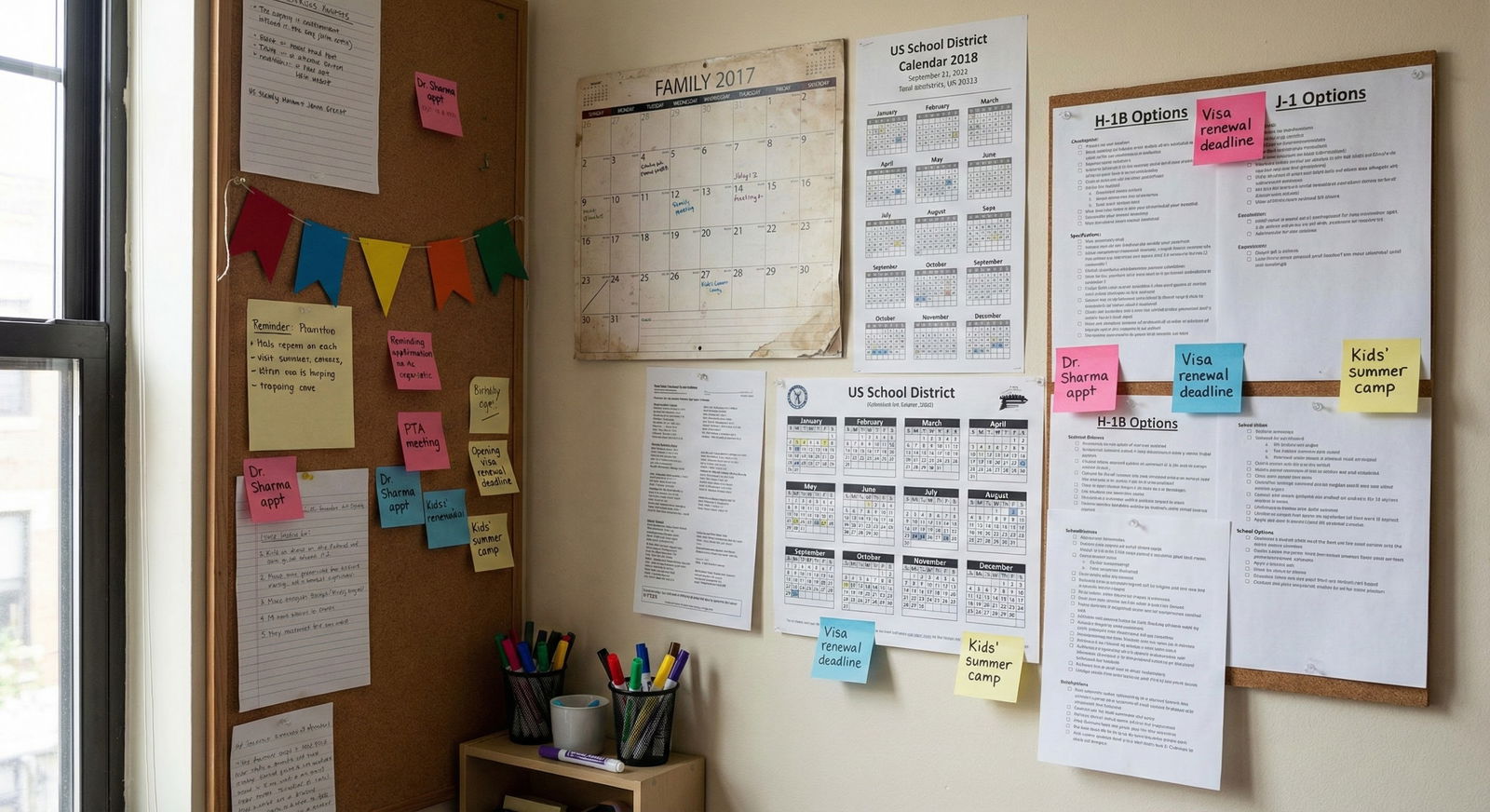
5) Admission and Program Risks: "J-1 Offer Then H-1B Later" Failure Modes You Should Actively Prevent
The failure mode that hurts the most is the one you did not see coming. I have seen a residency program rescind an offer because the incoming resident could not produce a valid work authorization by the start date. The program had already moved down the rank list. The IMG was left without a position and without a visa. That is the consequence of treating the J-1 to H-1B transition as an afterthought.
There are two buckets of risk: admission to the training program and immigration status maintenance.
Admission risks include sponsor inconsistency. If your DS-2019 is issued by ECFMG but your program later wants to directly sponsor an H-1B, the transition must be seamless. Any gap in the program's understanding of your status can lead to a delay in credentialing. Another admission risk: DS-2019 scope issues. A DS-2019 for general surgery does not automatically cover a hepatobiliary fellowship rotation at a different site. If you rotate off-site without proper approval, you violate status, and the program may place you on leave. That leave can cost you your H-1B slot.
Visa and immigration risks are often self-inflicted. Overstaying a J-1 grace period is not a minor error. The 30-day grace period after the program end date is not a "free month to figure things out." Unauthorized stay can trigger a three- or ten-year bar. Status lapses happen when you assume "we'll file later" and then the petition arrives after your I-94 expires. RFEs and denials cascade: a late RFE response delays approval, which delays employment start, which violates the program's start date requirement. The program then reports you as a no-show, and your immigration file gets a black mark.
Action-First Closing: A High-Performance Checklist for IMG Teams (Timing DS-2019, Waiver, H-1B Fit)
Stop guessing. Run the checklist.
Do now: Confirm whether your DS-2019 triggers 212(e). Ask the sponsor in writing. Do not rely on an online forum. Audit every DS-2019 field against your offer letter. Decide on a waiver path if needed, do not wait until the last year of training.
Do later: File the waiver. Then align the H-1B petition with the cap calendar or cap-exempt filing. Have your document package ready 90 days before the filing date.
Document audit list for IMG and immigration counsel coordination: passport, visa stamps, I-94 records, all DS-2019s (old and current), ECFMG certificate, USMLE transcripts, state medical license, program offer letter, waiver approval notice if applicable, and H-1B petition evidence.
Treat DS-2019 timing as a downstream dependency, not an administrative detail. The phrase "J-1 offer then H-1B later" fails most often when 212(e) is misunderstood. Align three calendars: DS-2019 program dates, waiver processing milestones, and H-1B cap or cap-exempt petition timelines. Mismatches cause admission and training start risks.