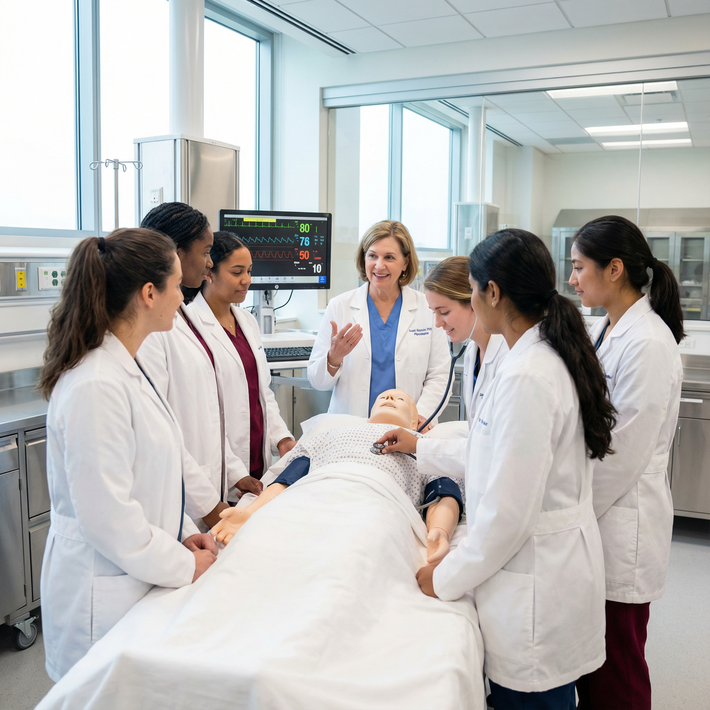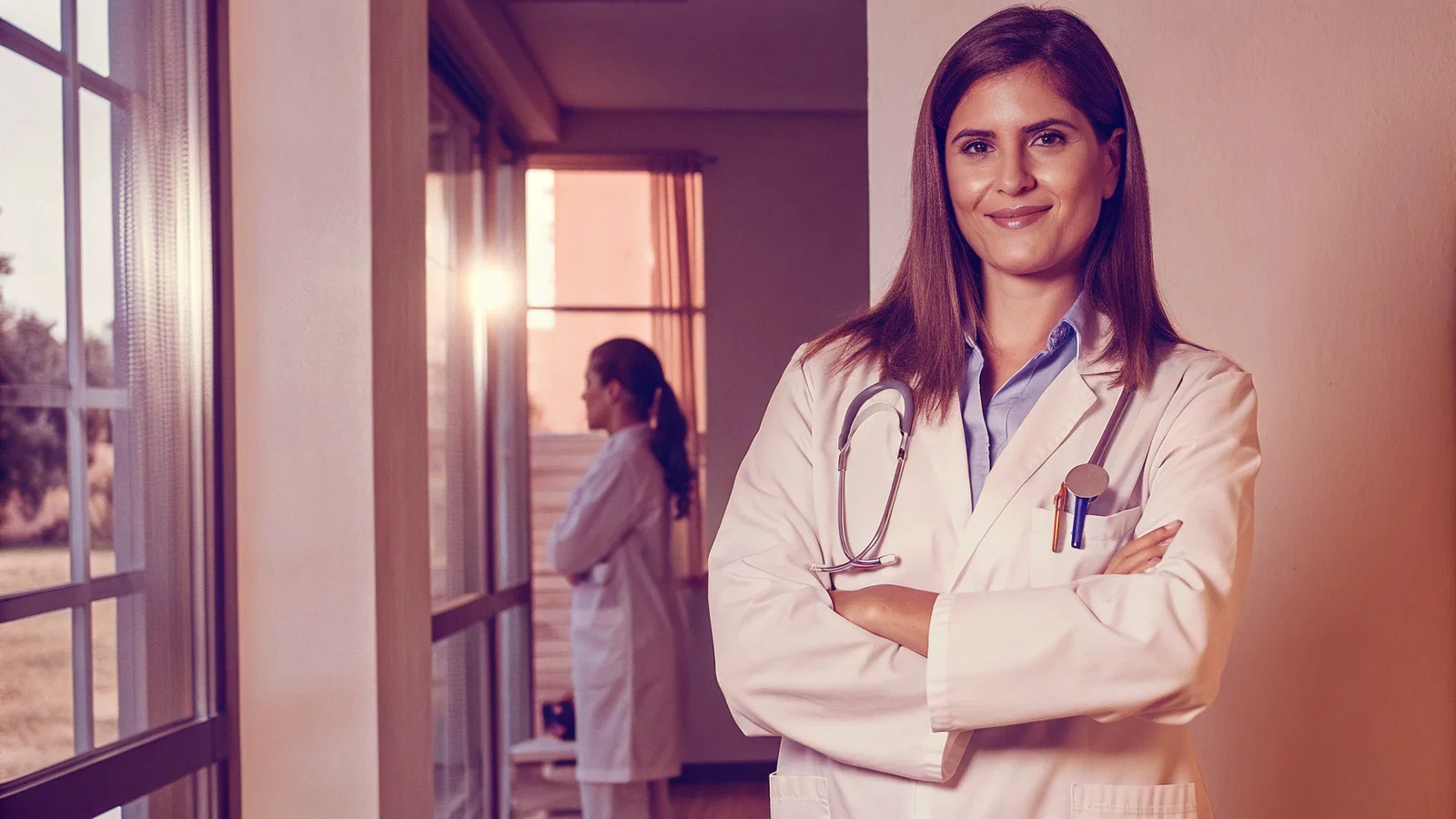
Let me say it plainly: the idea that female physicians must be warmer, gentler, and more nurturing than their male counterparts to succeed is a tired, unhelpful myth. And it's one that actively harms the doctors it's supposed to help.
The pressure shows up early. In medical school, during residency interviews, in the first awkward months of attending life. Patients call you "sweetie." Colleagues praise your "bedside manner" as if it's your primary asset. Senior partners suggest you smile more, soften your delivery, add a laugh to break the tension. And somewhere along the way, you start wondering: is competence alone actually enough, or do I need to perform a version of femininity to earn patient trust?
Here's the timeline we're walking through. We'll trace where this expectation comes from, what research actually says about what patients value, the real drivers of female physician success, and the practical strategies that work better than performed warmth. By the end, you'll have a clear framework for defining professional success on your own terms.
This article is for educational purposes only. It is not financial advice, not legal advice, and not tax advice. Figures vary by individual circumstances, so consult a qualified professional before acting.
Where the Myth Comes From
The "warm female doctor" trope didn't materialize from nowhere. It has roots deep enough to deserve a proper excavation.
Go back 150 years and women in medicine were largely confined to roles as nurses, midwives, and caretakers. When women finally broke into formal medical practice in the late 19th and early 20th centuries, they were framed as a softer, more compassionate alternative to the stern, authority-figure male doctor. Elizabeth Blackwell and her successors weren't just fighting for the right to practice, they were navigating a culture that wanted them to be reassuring presences rather than commanding clinicians.
That framing stuck. Societal conditioning links femininity with nurturing, emotional availability, and self-sacrifice. Media portrayals reinforced it. Think of the TV doctor archetype: male physicians are decisive heroes (House, Hawkeye, Gregory House), while female physicians are often the empathetic listeners who hold the team together emotionally (Miranda Bailey, Meredith Grey in her softer moments). The trope is so embedded that patients carry it into the exam room without realizing.
This creates what researchers call the competence-warmth gender bias. Female physicians face higher expectations of warmth and lower default assumptions of competence. Male physicians get the opposite: competence is assumed, warmth is optional. The result? Female doctors do more emotional labor to reach the same baseline of patient trust that male colleagues receive automatically.
I want to be direct about the practical effect. A male physician can walk in, deliver a complex diagnosis in 7 minutes, and walk out. Most patients accept it. A female physician delivers the same information in the same timeframe, and patients rate her as "cold" or "rushed." The data on this is consistent and damning. Female physicians spend more time per patient on average, and they still receive lower satisfaction scores tied to perceived warmth.
Here's what that means at the ground level: the expectation isn't just annoying. It's a tax. Every female physician is doing extra emotional work that her male colleagues aren't, and the cultural script expects her to be grateful for the opportunity.
What Research Actually Shows
Now the good part. The data on what actually drives patient outcomes and satisfaction is clearer than most people realize.
Multiple studies, including large systematic reviews published in JAMA and BMJ, have examined patient satisfaction by physician gender. The findings are consistent. Patients value clinical competence above everything else. Clear communication runs a close second. Empathy and active listening matter, but they sit third, and "warmth" as a standalone quality ranks even lower.
Notice something important here. Empathy and warmth are not the same thing. Empathy is a clinical skill: the ability to understand what a patient is experiencing and respond in a way that supports their care. Warmth is an interpersonal affect: smiling, being friendly, expressing warmth. You can be highly empathic without performing warmth, and you can perform warmth without being genuinely empathic. Patients, particularly experienced patients, can tell the difference.
The "double bind" phenomenon deserves its own moment. Research by Madeline Heilman and others shows that women in leadership roles face a punishing tradeoff. If they're warm, they're seen as less competent. If they're assertive, they're seen as less likable. There is no winning combination in the stereotype. But here's what the research also shows: when female physicians focus on demonstrable competence, clear communication, and authentic patient engagement, the double bind weakens. Performed warmth actually reinforces the trap because it signals compliance with the stereotype.
The gap between patient satisfaction scores and actual health outcomes is critical to understand. Female physicians consistently achieve equal or better clinical outcomes compared to male physicians, particularly in areas like chronic disease management, preventive care, and patient adherence. This is true even when their satisfaction scores are lower. The implication is uncomfortable but important: when patients rate female doctors as "less warm," they're often rating the performance of femininity, not the quality of care.
What patients actually remember and trust is whether you knew what you were doing, whether you explained it clearly, and whether you treated them as a person with agency. The smile is a bonus, not the foundation.
The Real Factors Behind Female Physician Success
So if warmth isn't the engine of success, what is?
Communication style is the obvious starting point. Female physicians, on average, tend to use more collaborative communication: shared decision-making, open-ended questions, explicit explanation of reasoning. This is empirically linked to better patient adherence and satisfaction. The catch is that this isn't about warmth, it's about effectiveness. You're not being "softer" when you ask a patient to repeat back their care plan. You're being a better clinician.
Trust built on demonstrated competence is stickier than trust built on rapport. When you nail a difficult diagnosis, catch a medication interaction, or handle a complication with confidence, that patient is yours for life. Performed warmth fades. Competence compounds.

Authenticity outperforms performance. Every time. Patients can sense performed warmth, the slightly too-bright smile, the extra "sweetie" tossed in, the performative concern that feels manufactured. It reads as inauthentic and actually erodes trust. The physicians who build the strongest patient relationships are the ones who show up as themselves: competent, engaged, sometimes serious, sometimes warm, but never playing a character.
Confidence and authority are not masculine traits. They are professional traits. When you speak with authority about a diagnosis, set clear expectations about a treatment plan, or push back on a patient request that isn't appropriate, you are doing your job. Patients want a physician who will lead, not one who will ask permission to lead.
And yes, there are situations where "warmth" can actively work against female doctors. When you lead with warmth, patients sometimes mistake it for availability, or worse, for lack of expertise. They bring you their social problems alongside their medical ones, they expect you to be the one who handles the difficult phone calls, they assume you'll be the one who stays late to comfort the family. None of that serves your career or your patients. Clarity and competence are the antidote.
Strategies for Navigating Patient Expectations
Theory is helpful, but you need a playbook. Here's the chronological approach I'd recommend, starting from the first patient encounter of the day.
Before each encounter, take 30 seconds to reset. Drop the performance of the last patient. Walk into the room grounded in your own authority. You are the expert here.
During the encounter, lead with competence signals. Introduce yourself with your full title. State the purpose of the visit in the first 60 seconds. Use specific, evidence-based language when discussing diagnosis and treatment. These are not cold moves. They are clear moves.
When you feel pressure to perform warmth, ask yourself: is this for me or for the patient? If it's for the patient, check whether it's actually serving them or just soothing your own anxiety about being perceived as cold. Most of the time, the answer is the latter.
When a patient explicitly expects "warmth" and you deliver professionalism instead, address it directly. "I'm going to be straight with you about what I think is going on" is not cold. It's honest. Patients respect honesty.
When setting boundaries, be specific and unapologetic. You don't owe patients your weekend. You don't owe them unlimited phone calls. You don't owe them the version of yourself that exhausts you by Thursday. Boundaries are a form of professional integrity.
Build competence signals into your workflow deliberately:
- Use precise clinical language
- Reference current evidence when relevant
- Document thoroughly and visibly
- Follow up systematically on test results
- Demonstrate that you remember the details of their case
These things build trust faster than any amount of performed warmth.
Conclusion: Redefining Success on Your Terms
The myth that female physicians need to be "warmer" to succeed is exactly that: a myth. It is a gender bias dressed up as professional advice, and it deserves to be retired.
The reality is straightforward. Patients value clinical competence. They value clear communication. They value authentic engagement. Performed warmth is not a substitute for any of these, and in some cases, it actively undermines them. Female physicians who lead with confidence, communicate with precision, and show up as their authentic professional selves achieve equal or better outcomes than their male colleagues, despite facing higher baseline expectations of emotional labor.
The bias exists. You will encounter patients who expect a warmer, softer version of you. You will encounter colleagues who praise your bedside manner while ignoring your diagnostic skills. You will encounter systems that ask more of you emotionally than they ask of your male peers. None of that defines your career or your worth as a physician.
Your warmth, when it's real, is a gift. Your competence is the foundation. Build on that.
Key Takeaways
- The expectation that female doctors must be 'warmer' is a gender bias myth, not a professional requirement.
- Research shows patients value clinical competence and communication far more than performed warmth.
- Authenticity outperforms performed warmth. Patients detect and respect genuine professionalism.
- Success as a female physician comes from confidence, competence, and effective communication, not from meeting stereotypical warmth expectations.