
Scenario: The Dean/Program Calls, No Sub‑I/Away Spots, Now What?
You lined it up. Or thought you did. Then the away rotation never came together, no slot, no funding, no housing, no eligibility window, no institutional approval, no VSLO luck. I've seen this a lot. Good students get boxed out by logistics and then panic because they think they lost their one chance to "audition."
You didn't.
Here's the answer: you can absolutely build a residency-ready audition without a traditional sub‑I or away. Not a fake version. A real one. One that gives programs what they actually care about:
- strong clinical performance
- visible teamwork
- evidence of judgment
- people willing to write about you like they mean it
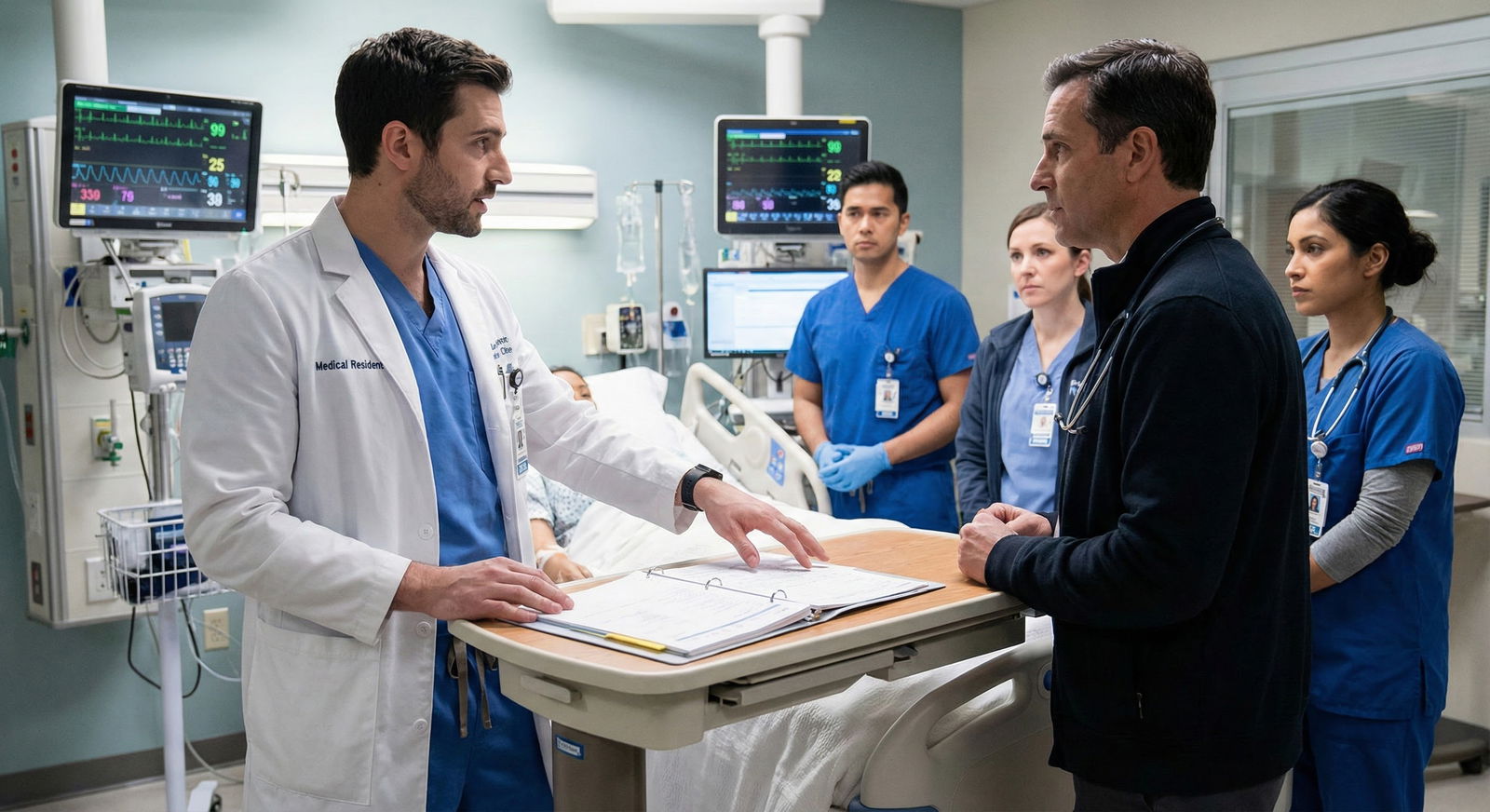
That's what an ICU/consult rotation audition is. You deliberately choose a high-interaction service where people see you work over and over again. Bedside rounds. Consult responses. Family updates. Procedure prep if allowed. Rapid feedback. Real accountability.
No, it's not identical to a sub‑I. It doesn't have to be. The goal isn't to cosplay as an acting intern. The goal is to leave with three things: performance, relationships, and documentation. That package matches better than most students realize.
Why ICU/Consult Rotations Can Work as a Sub‑I/Away Substitute
Programs aren't obsessed with the label "sub‑I." They're obsessed with signal. Can you function like a reliable future resident? ICU and consult rotations often show that faster than a random elective ever will.
Why these rotations work:
- You're visible. ICU rounds are long, detailed, and exposed. Consult services move quickly and repeatedly. People notice who's prepared and who's faking it.
- The evaluation domains are the same ones residency cares about. Communication. Prioritization. Escalation. Maturity. Follow-through.
- You meet more evaluators. Residents, fellows, attendings, nurses, RTs, pharmacists. That matters. One person's opinion helps; a whole team's impression is stronger.
- Your work is witnessed. Presentations, consult notes, updates, sign-out summaries, overnight issue tracking. These are concrete outputs.
And here's the underrated part: ICU and consult services create many chances to show judgment in small moments. Not just "I knew the answer on rounds," but:
- "I noticed the urine output trend before rounds."
- "I flagged a rising lactate early."
- "I clarified the consult question so the team stopped spinning."
- "I told the resident quickly when the patient looked worse."
That's resident behavior. Programs love that.
Reality check, though. Don't lie to yourself. An ICU or consult month does not automatically replace a sub‑I. If you drift around waiting to be taught, it won't help much. But if you treat it like an audition, with deliberate visibility, repeated accountability, and a plan for letters/evals, it can produce a very similar package.
Choose Rotations Strategically: ICU, Consult Teams, and "Audition Physics"
Not all rotations are equal. Some make you easy to evaluate. Some hide you in the wallpaper. Choose accordingly.
Your goal is simple: pick a rotation where the same people see you repeatedly doing useful work.
Look for services with:
Daily structured rounds
- ICU
- step-down critical care
- inpatient consult services with consistent census
Frequent opportunities for short-cycle feedback
- new consults
- response to overnight changes
- follow-up planning
- repeat presentations
Real team interaction
- residents and fellows who actually work with you
- attendings who hear you present more than once
- interdisciplinary rounds or huddles
Work products that can be remembered later
- concise consult notes
- clean assessment/plan presentations
- structured sign-outs
- organized family-facing summaries, when appropriate
A few smart pairing examples:
- Internal medicine applicants: MICU, cardiology consults, nephrology consults, ID consults, hospital medicine acting roles
- Anesthesia applicants: SICU, CTICU, perioperative medicine, pain consults, airway/procedure-heavy critical care exposure if your school allows hands-on participation
- Neurology applicants: neuro ICU, stroke consults, inpatient neurology consults
- General surgery or surgical subspecialties: SICU, trauma ICU, surgery consult-heavy services
- PM&R, psych, peds, or other fields: still useful if you choose rotations that showcase communication, triage, and interdisciplinary teamwork relevant to your field
Ask practical questions early. Before you accept the block if possible:
- Who completes student evaluations?
- How many attendings will I rotate under?
- Will residents or fellows give input?
- Can I join weekend rounds?
- Are students allowed to present every day?
- Is there enough continuity to build relationships?
That's audition physics. Repetition creates trust. Trust creates better evaluations. Better evaluations create letters. If a rotation is all fragmented observers and no one knows your name by week two, it's a weak audition no matter how prestigious the service sounds.
Your Audition Game Plan (Without a Sub‑I): What to Do Starting Day 1
This is where students either help themselves or waste the month.
Day 1: set a learning contract
Don't give a vague "excited to learn" introduction. That's wallpaper language. Say something useful:
- "I'd love to take ownership of a few patients and give concise updates every morning."
- "I'm trying to improve my assessment/plan and escalation judgment, so I'd appreciate direct feedback."
- "If helpful, I can track overnight changes, pending cultures, and follow-up tasks."
That tells the team two things: you want accountability, and you understand how to be useful.
Get a defined role fast
If your role is vague, you'll disappear. Ask directly:
- "What would be most helpful for me to own?"
- "Would you like me to prepare the morning consult summary?"
- "Can I be responsible for updating the plan after rounds and checking back on action items?"
Good options include:
- presenting one or more patients daily
- organizing a consult question
- tracking labs/cultures/imaging
- preparing end-of-day summaries
- drafting notes, if permitted
- updating problem lists
Be the reliable finisher
The fastest way to look mature is not brilliance. It's closure.
Say things like:
- "Here's what changed since yesterday."
- "These are the pending items."
- "This recommendation needs follow-up tonight."
- "This patient looks better/worse because of these trends."
That's the stuff residents remember. Not your textbook recital on ventilator modes.
Communicate like a future intern
Short. Timely. Calm.
Use this framework:
- Situation: what changed?
- Background: what matters?
- Assessment: what do you think is going on?
- Plan: what should happen next?
And when you're unsure, say it cleanly:
- "I'm concerned but not certain. The trend that worries me is..."
- "I don't think this can wait until rounds."
- "I'd like to run this by you before I place too much weight on it."
That's strong communication. Fake confidence is dangerous and obvious.
Create visibility through consistency
Show up with:
- latest vitals
- labs and trend awareness
- relevant microbiology
- imaging updates
- medication changes
- guideline-level context when appropriate
Use a repeatable note or presentation template. Teams trust students who are organized. Messy students create work. Nobody writes glowing letters for students who create work.
Ask for feedback before the end
Do not wait until the final day and then act shocked by a generic evaluation.
Ask mid-rotation:
- "What's one thing I should improve this week if I want a strong evaluation?"
- "Am I functioning at the level you'd want for a future intern?"
- "What would you need to see from me to feel comfortable writing a strong letter?"
That last question is gold. It forces specifics.
How to Get Evaluations and Letters When You're "Just a Rotating Student"
You are not "just" a rotating student. Stop thinking that way. You're an evaluator management project. Harsh, but true.
There are three separate products here:
- Formal evaluation forms
- Informal verbal comments passed along
- Letters of recommendation
They overlap, but they aren't the same. You need to influence all three.
Build an evidence packet
At the end of the rotation, hand your evaluator something usable. Keep it tight.
Include:
- updated CV
- draft personal statement or specialty goal paragraph
- your transcript if relevant and appropriate
- 3-5 bullets of rotation accomplishments
Examples of good bullets:
- "Tracked culture results and antibiotic adjustments daily for ICU patients; provided concise morning updates that changed follow-up timing."
- "Recognized worsening respiratory status from rising oxygen needs and ABG trend; escalated concern to resident before rounds."
- "Consistently framed consult questions and proposed time-based recommendations for same-day versus next-day workup."
- "Prepared organized end-of-day summaries that improved sign-out efficiency."
This isn't bragging. It's memory support. Attendings are busy. Help them help you.
Ask in a letter-ready way
Don't say:
- "Can you write me a letter?"
Say:
- "I'm applying into X, and I've really valued working with you. Based on my performance here, would you feel comfortable writing a strong letter of recommendation?"
If the answer is lukewarm, move on. A polite weak letter is dead weight.
Timing matters
Best window:
- near the end of the rotation once you've shown consistency
- or within 1-2 weeks after the rotation ends if that's the local norm
Too early is awkward. Too late means they barely remember you.
If they can't write a letter
Then ask for the next best thing:
- a strong evaluation
- direct feedback sent to the clerkship director
- permission to list them as someone who worked closely with you
A sharp evaluation in the right domains can still help:
- reliability
- communication
- clinical judgment
- teamwork
- initiative
Network without being weird
You don't need fake coffee-chat energy. Just learn the service and respect the workflow.
Ask:
- "What do students usually do that actually helps this team?"
- "What makes someone stand out in a good way here?"
- "What do you wish applicants understood about your specialty?"
That's normal. Credible. Mature.
Clinical Performance That Programs Notice: Communication, Judgment, and Teamwork
Students often think standing out means sounding smart. Wrong. Standing out means being safe, useful, and easy to trust.
Here's what programs actually notice.
Communication
Use structured sign-out and recommendation language.
Good phrasing:
- "The main issue today is shock that appears more distributive than cardiogenic because..."
- "The consult question is whether this patient needs urgent dialysis versus close monitoring."
- "I'm less confident about the cause of the fever, but the immediate priority is source evaluation and hemodynamic stability."
Clear uncertainty is a strength. Rambling is not.
Judgment
Judgment shows up in small calls:
- escalating a concern early
- noticing a pattern instead of a single data point
- understanding what can wait and what can't
- knowing when to ask for help immediately
If you can interpret trends in:
- MAP
- lactate
- urine output
- ABGs
- ventilator settings
- creatinine trajectory
you'll look much more advanced than the average student. Not because you're a genius. Because you're paying attention.
Consult-specific skill
A good consult student can answer three questions:
- What are we being asked?
- What do we recommend?
- When does each step need to happen?
That timing piece matters. "Consider workup" is lazy. "Recommend repeat imaging today if unstable; otherwise tomorrow morning after X" is useful.
Family-centered contribution
Within your scope, you can help a lot:
- summarizing the day's changes for the team
- preparing questions before family meetings
- identifying confusion points
- modeling calm, respectful communication
You are not there to freelance goals-of-care conversations beyond your role. Don't get cute. Be helpful and aligned with the team.
Procedures
Only do what's permitted. Safety first. Always. But if procedures are available:
- be prepared
- know the indication
- know the contraindications
- understand the steps
- ask to observe first if needed
- log appropriately if required
People remember students who are ready without being reckless.
Residency Application Translation: Turn Rotation Work Into a Coherent Narrative
A rotation only helps if you can explain what it meant.
Don't list random experiences. Build a story:
- where you started
- how you improved
- what kind of doctor you were becoming
A good narrative sounds like this:
- "On my ICU and consult rotations, I grew from reporting information to synthesizing it."
- "I became the student who tracked changes reliably and escalated concerns early."
- "I learned that I like high-accountability environments where communication and systems thinking matter every hour."
That's stronger than "I enjoyed critical care because it was interesting."
Use measurable anchors:
- a time you recognized deterioration
- a moment you framed a consult problem correctly
- a case where your follow-up changed timing or action
- a family interaction that showed empathy and clarity
Then tie those actions to values:
- reliability
- calm under pressure
- teamwork
- systems awareness
- ownership
For ERAS/activity descriptions, include relevant responsibilities:
- inpatient consult follow-up
- ICU daily presentations
- longitudinal trend tracking
- interdisciplinary rounds participation
- procedure readiness or supervised involvement, where appropriate
And yes, interview prep matters. Have 2-3 ICU/consult stories ready in STAR format. Programs will ask. If your answer is fuzzy, they'll assume your role was fuzzy too.
Practical Constraints & Troubleshooting: If It's Not Going Well
Sometimes the rotation is a mess. Bad fit. No role. Chaotic service. Thin supervision. It happens.
What to do:
If your role is unclear
Ask directly, early:
- "What can I own every day?"
- "Would it help if I tracked consult follow-up and summarized updates before rounds?"
If you aren't getting attending face time
Find another repeated observer:
- fellow
- senior resident
- associate attending
- clerkship director connected to the service
One strong advocate is better than ten vague acquaintances.
If you're struggling clinically
Don't hide. That's the worst move.
Instead:
- ask for one focused improvement target
- read on the specific problems you're seeing
- tighten your presentation structure
- prioritize safety and escalation
Improvement is respected. Pretending is not.
If the environment is volatile
Stay calm. Be professional. Don't absorb the chaos and start sounding frazzled yourself. Students who remain steady during messy services stand out for the right reason.
Closing: So How Do You Win the Audition Without the Away?
You stop worshipping the label.
A sub‑I or away is one route to the same destination: a credible, specific signal that you're ready for residency and that people want you on their team. ICU and consult rotations can absolutely get you there if you use them correctly.
So here's the framework:
- choose a high-visibility service
- get a defined role
- be consistently useful
- communicate early and clearly
- ask for feedback before the end
- package your work into an evidence-based letter/eval request
That's how you turn a "backup" rotation into a real audition.
If your next rotation started Monday, what's the one move you'd make on day 1 to make sure people actually remember your performance?