
You just checked your phone in the supply closet. The Match didn't happen. You're staring at the screen, heart pounding, while an attending three rooms down is waiting for you to present a borderline CHF exacerbation. Panic is the enemy. Right now, strategy is the only solution.
You feel stuck. Being on an active rotation during the Supplemental Offer and Acceptance Program (SOAP) is a brutal logistical nightmare. You can't just go home and cry. You have patients. You have notes. You have a grade to salvage.
But you also have a deadline.
This is a tactical reset for the SOAP cycle. I've seen students crumble under this exact dual pressure, letting their clinical performance tank while simultaneously sending out garbage, rushed applications. We are not doing that. At this point, you need to compartmentalize. Here is your hour-by-hour survival plan.
This article is for educational purposes only. It is not financial advice, not legal advice, and not tax advice. Figures vary by individual circumstances, so consult a qualified professional before acting.
The Morning Reset: The 'Keep or Drop' Decision Matrix
By 8:00 AM, you need a clear head. The first thing you must do is sit down, bring your laptop to the workroom or hide in the call room, and review your rank list with ruthless objectivity.
Stop romanticizing programs. This isn't about where you wanted to go. This is about where you have a statistical chance. At this point, you should look at the programs that didn't rank you high enough to match and accept reality. If you didn't interview there, or if you know your Step scores are 20 points below their minimum filter, drop it. Stop wasting your emotional energy on statistical impossibilities.
Here is your morning protocol:
- Export your original rank list. Look at the top 20% of programs. If you didn't match, those are gone. They are not coming back in SOAP.
- Identify your 'safe' matches. Look at the community programs, the new unaccredited programs, and the programs in locations most students avoid. These are your targets.
- Identify your 'reach' programs. Pick two or three university programs that sometimes go unmatched because they are looking for a very specific candidate.
- Cut the rest. Delete the middle. It's dead weight.
By 9:00 AM, your list should be lean, mean, and mathematically realistic. You are not applying to 200 programs. You are applying to the 30 that might actually look at you.
The Midday Pivot: Maximizing Clinical Impact
Noon hits. You've submitted your targeted, lean program list to the SOAP system. Now you have to walk back onto the wards and pretend you care about the potassium levels on Patient 4.
Here is the reality: your clinical grade for this rotation is still a massive bargaining chip. If a SOAP program calls your school to ask about you, you need your clerkship director to say you are a hard worker, not a liability. At this point, you should pivot your clinical strategy to maximize your visibility.
Stop doing the low-yield scut that no one sees. You don't have time for passive observation today. Instead:
- Seek immediate feedback. Corner your attending. "I know I'm a few weeks in, but I want to make sure I'm hitting the mark. How is my presentation style?" Do not wait until the end of the rotation to find out you're doing something wrong. Fix it today.
- Volunteer for high-visibility tasks. If there's a procedural opportunity, a central line, a lumbar puncture, an echo, be the first to scrub in. If there's a family meeting, be in the room taking notes. Be seen.
- Shadow the residents. If you're applying to Internal Medicine but you're on a Surgery rotation, shadow the hospitalist during your downtime. Build relationships. Tell them exactly what you're looking for. Residents talk to attendings. Attendings talk to program directors.
At 2:00 PM, when the post-lunch slump hits, you need to be the most active person on the team. Your clinical performance is your safety net.
The Evening Prep: Building the Narrative
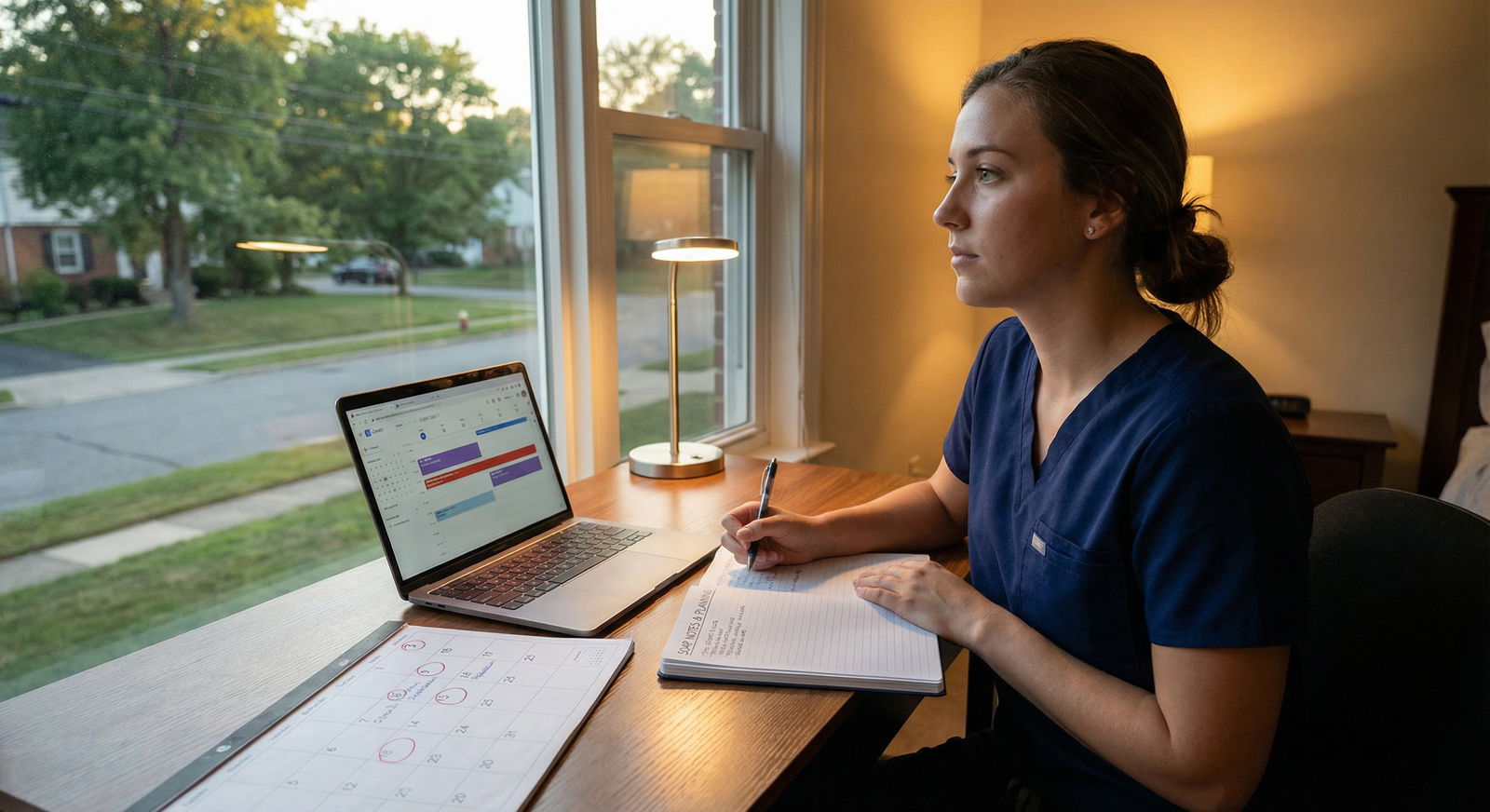
It's 6:00 PM. You've signed out your patients. You've driven home. You're sitting at your desk with a cup of bad coffee. This is where the real work begins.
The SOAP application is not a place for generic pleasantries. You have maybe 24 to 48 hours to make an impression. At this point, you should be drafting your SOAP narrative, formatting your CV, and tailoring everything to the specific programs you identified this morning.

Here is your evening checklist:
- Draft the SOAP narrative. Forget "I love patient care." That means nothing. Focus on specific, granular patient interactions. I managed a complex hospital discharge for a non-English speaking patient, coordinating with social work and pharmacy to ensure medication compliance. That is a story. That is a reason to interview you.
- Gather and organize LORs. By now, you should have at least two solid letters. If you don't, send a polite but urgent email to an attending who liked your work from a previous rotation. Do not ask someone who gave you a Pass. Ask the one who gave you Honors.
- Format the CV. Strip it down. Clean margins. No weird fonts. Put your most relevant clinical experiences at the top. Highlight any research or presentations that align with the specialty you're trying to match into.
- Customize the Personal Statement. You can't send the same statement to 30 different programs. At least change the first and last paragraph. Mention the specific city or the specific mission of the program. It takes 10 extra minutes. It makes you look human.
By 9:00 PM, your applications should be loaded into the system. Read them twice. Check for typos. Check the program names. You do not want to send a love letter to St. John's Hospital when you meant to apply to St. Mary's.
The Closing Action Steps: Submit and Move On
It's 11:00 PM. The applications are in. The rank list is submitted.
At this point, you should just walk away. Seriously. Disconnect from the application portal. Close your laptop. Turn off your phone. Staring at the NRMP dashboard will not make offers appear faster. It will only give you an ulcer.
You've done the work. You've been ruthless with your list. You salvaged your rotation. You built a narrative. Now, you have to let the system do its thing.
Your action steps for tomorrow morning:
- Wake up on time. Don't hit snooze. Get to the hospital.
- Focus on the next rotation. If you get an offer, great. If you don't, you still have a medical degree to finish. Your board exams are looming. Start doing questions.
- Be present. The patients on the floor don't care about the Match. They care about their disease. Give them your attention.
You survived the day. You didn't let the panic win. Now, go to sleep.
Key Takeaways
- At this point, you must ruthlessly prioritize your rank list based on statistical fit rather than hope. Drop the programs that didn't want you the first time.
- During the rotation, seek active feedback immediately. Don't let your clinical grade tank while you're distracted by the SOAP cycle. Salvage it by being highly visible.
- Your SOAP narrative is your second chance to tell your story. Focus on specific patient interactions and tangible skills rather than generic, meaningless praise.