
It is Wednesday afternoon of SOAP week. You just matched into a categorical internal medicine spot through a second SOAP round after two brutal days of refreshing ERAS and talking to coordinators. Everyone around you is celebrating “having a job.” You are staring at an email that says:
“Please confirm acceptance by 5:00 PM ET. Orientation begins June 24. Report in person no later than June 17 to complete onboarding.”
Problem: you are across the country, your lease runs to August, you still have to finish school requirements, and you have no idea what you can or cannot negotiate without putting this offer at risk.
Let me break this down very specifically: what is actually negotiable in a late SOAP offer, what is fantasy, and how to handle start dates, visas, moving, and onboarding without looking disorganized or unprofessional.
1. What Is Fixed vs. Flexible in a SOAP Offer
First, you need to separate hard constraints from negotiable details. A lot of anxiety in this phase comes from assuming everything is up for debate. It is not.

The parts that are basically non‑negotiable
These are the things you are very unlikely to change in a late SOAP context, especially if the program filled you under real time pressure:
- PGY level (e.g., PGY-1 vs PGY-2)
- Salary scale and standard benefits
- Overall program type (categorical vs prelim)
- ACGME-required start window (typically July 1 or the institution’s standard)
- That you show up before orientation and complete required onboarding
Programs participating in SOAP are usually filling accredited, pre-approved positions with fixed institutional start dates. They are not going to redesign their HR or GME processes for one last-minute SOAP hire.
The parts where there is some real room
These tend to be workable, especially if you ask early, clearly, and with a plan:
- Exact arrival day (e.g., can you arrive June 19 instead of June 17)
- Remote completion of some pre-hire paperwork or online modules
- Short unpaid leave in the first year for immovable events (wedding already planned, etc.)
- Initial rotation order (switching you off ICU or nights in week one, if possible)
- Stringing together sick days/vacation days later in the year to make up for a slightly delayed physical arrival (rare, but I have seen it done carefully)
The later the SOAP round, the less leverage you have. A “Monday SOAP” offer is a bit more negotiable than a late Wednesday “we filled our last emergency spot” offer. But even late, you are not completely stuck.
2. Timeline Reality: Why SOAP Start Dates Feel So Rigid
You need to understand why programs seem inflexible. It is not just stubbornness. There are constraints stacked on constraints.
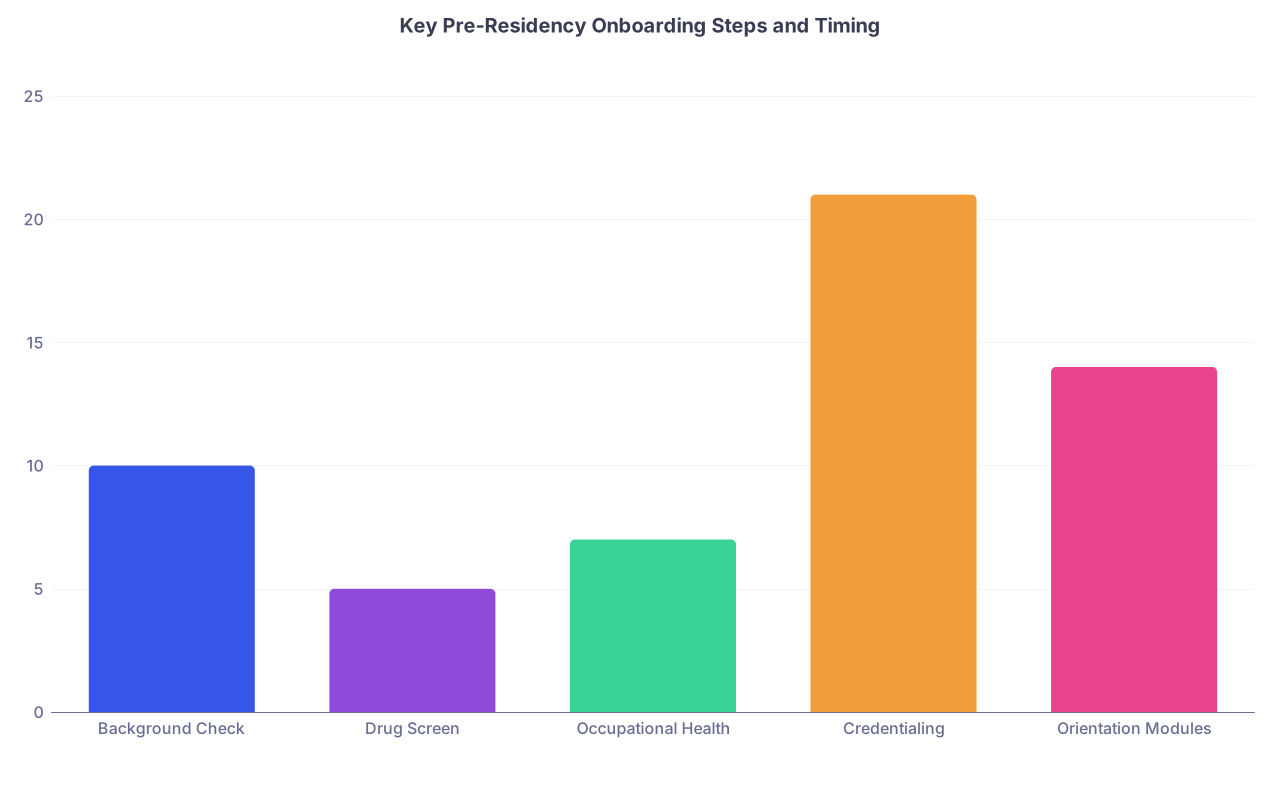
| Category | Value |
|---|---|
| Background Check | 10 |
| Drug Screen | 5 |
| Occupational Health | 7 |
| Credentialing | 21 |
| Orientation Modules | 14 |
Those numbers are typical days needed from “task initiated” to “cleared to work.” Many hospitals stack these.
Here is what programs are juggling once they SOAP you in:
- GME office deadlines: GME often has a hard internal deadline for “all residents must be HR-cleared by X date.”
- Credentialing: If you are touching EMR, ordering, or writing notes, credentialing has to be done first.
- Occupational health & background checks: Cannot have anyone on the floor or in the ED without cleared TB, immunizations, drug screen, background check.
- Orientation structure: They batch you with 30–40 other interns for live sessions, EMR training, BLS/ACLS renewals, etc.
From your side, it feels like: “I just got this offer late, so they should be flexible.” From theirs, it feels like: “We are already behind and you just dropped into our system at the last second.”
So instead of asking “Can I start in August instead of July?” which is almost always dead on arrival, you need to think in terms of:
- “How can I meet the minimum requirements to be cleared to start on time?”
- “Where can we sequence things remotely vs in person?”
- “If I physically cannot be there for [X days], how can I minimize the operational impact?”
3. First 24 Hours After a Late SOAP Offer: Exact Playbook
Your instincts in the first 24–48 hours matter more than you think. You want to look like someone who is solving problems, not adding them.

| Step | Description |
|---|---|
| Step 1 | Receive SOAP Offer |
| Step 2 | Decline quickly |
| Step 3 | Call coordinator |
| Step 4 | Clarify start and orientation dates |
| Step 5 | Identify conflicts |
| Step 6 | Email concise plan |
| Step 7 | Confirm in writing |
| Step 8 | Accepting? |
Step 1: Decide fast if you are accepting
Late SOAP is not the time for long soul-searching. If this is your only or best realistic offer, accept it. Programs know SOAP candidates are stressed; what they hate is indecision.
If you are torn between two SOAP offers and timing/logistics is a major factor, ask bluntly about start date flex and onboarding in your phone calls before you commit. Some institutions are drastically more rigid than others.
Step 2: Get a live human on the phone
Email is slow. In late SOAP, time kills options. Call the program coordinator or whoever sent the offer. Script it loosely like this:
“Thank you again for the offer. I am very excited to join your program.
I want to make sure I can meet all of your onboarding and orientation requirements.
Could you walk me through your key dates for HR paperwork, occupational health, and orientation, and whether any of that can be completed remotely?”
Do not start with “Here are my problems.” Start with “Help me understand your system so I can fit into it.” Different tone entirely.
Step 3: List your actual constraints, not your preferences
You get one shot at credibility here. Do not overplay this.
Legitimate constraints:
- Mandatory med school coursework or exams that cannot be moved
- Visa timing (J-1 / H-1B processing windows)
- Family situation you physically cannot change (immigration appointments, dependent visas, etc.)
- Existing school policies on graduation date, diploma issuance
Preferences (which will get you nowhere if framed as needs):
- “My lease is until August, can I start later so I do not waste rent?”
- “I planned a trip to Europe in June.”
- “I wanted a few weeks off before intern year.”
You can sometimes salvage parts of those, but you never lead with them in SOAP. Programs are bailing you out of being unmatched. Treat it like that.
4. Negotiating the Start Date without Spooking the Program
This is the core: how to ask for adjustments without sounding like you are not committed.
| Resident Ask | More Realistic Version |
|---|---|
| Start in August instead of July | Arrive late June; miss 1–2 days of orientation |
| Skip entire in-person orientation | Attend key days; do other parts online |
| Delay onboarding 3–4 weeks | Start HR/online modules immediately, remotely |
| Take a 2-week vacation before starting | Negotiate 2–3 days off or use leave later |
The big rule: never ask to shift your official PGY-1 start out of the cohort
Programs hate off-cycle starts because:
- Scheduling software and block rotations are built on one cohort date.
- Off-cycle residents become permanent scheduling headaches (vacations, coverage, graduation).
- GME sometimes will not allow a different contract date.
So instead of “Can I start August 1?”, you frame it as:
“I can absolutely start as part of your July cohort. I do have [specific constraint] that might require me to miss [X days] of orientation or be physically present [a few days later].
I am trying to figure out the cleanest way to handle that on my side so I do not disrupt your schedule.”
Then propose a specific, minimal adjustment:
- “Is there a way for me to complete online modules and HR paperwork remotely in May/June and then report in person by June 24 instead of June 17?”
- “If I miss the first half-day of EMR training because of a pre-scheduled graduation event, is there a make-up session I can join?”
Programs are more willing to work with concrete, bounded asks.
How much can you actually move the date?
Realistic ranges I have seen in late SOAP:
- 0–3 days of leeway: Very common. Especially for long-distance moves or unavoidable obligations.
- 4–7 days: Sometimes possible if it does not intersect with core orientation or first clinical shifts.
7 days: Rare without unpaid leave and serious program buy-in. This starts to affect rotation schedules.
If they are completely rigid, you pivot from “move the date” to “what can we do remotely to compress the in-person time.”
5. International Grads (IMGs): Visa and Start Date Realities
If you are an IMG in SOAP, your primary “negotiation” is really about feasibility: can they get your visa done in time for their start date.
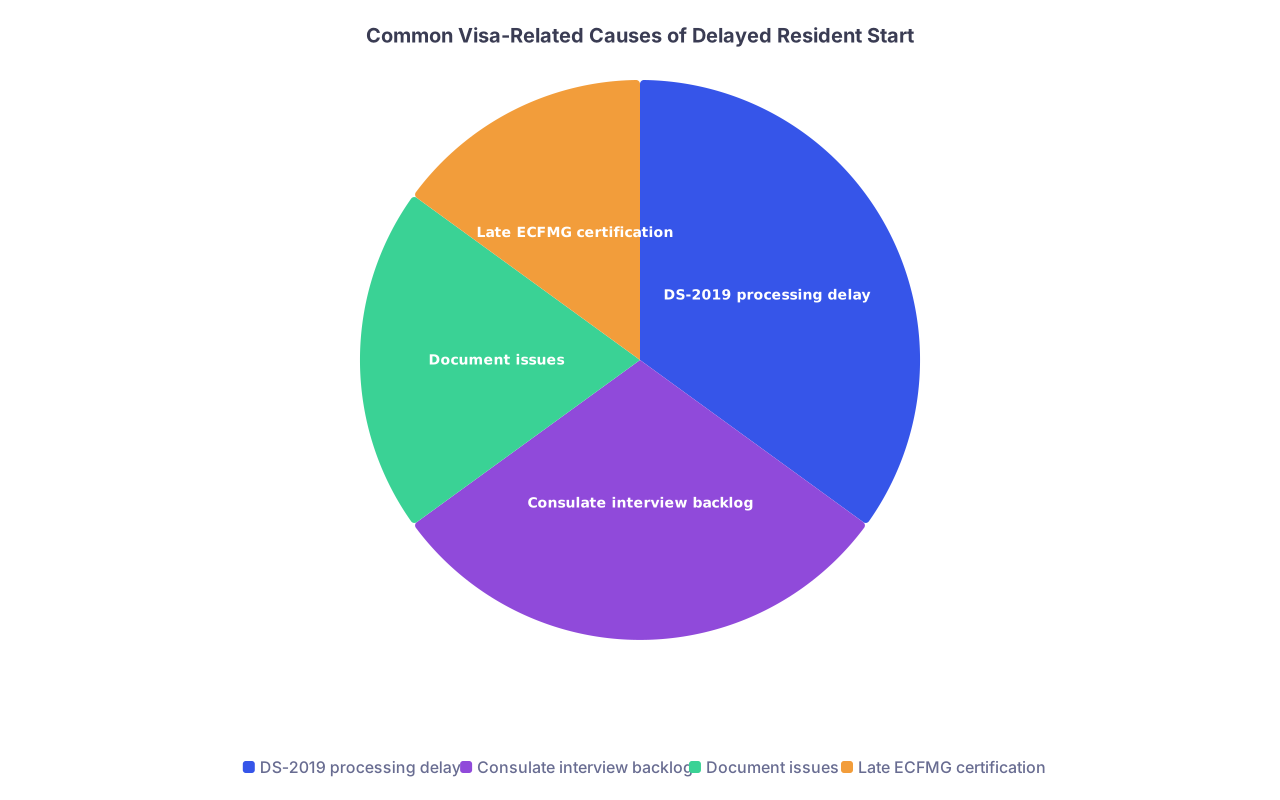
| Category | Value |
|---|---|
| DS-2019 processing delay | 35 |
| Consulate interview backlog | 30 |
| Document issues | 20 |
| Late ECFMG certification | 15 |
Here is the blunt truth: no program in SOAP wants to risk a position going unfilled because your visa cannot process in time. They will be conservative.
What you should ask, very directly
On the phone, you say:
“As an IMG, I want to be transparent about visa timing. Are you able to sponsor [J-1 / H-1B]? What has your timeline been like for prior residents starting on July 1?
If there are visa-related delays, what is your institutional policy about late arrivals or deferring a start?”
You want them to tell you:
- Whether they have done late SOAP with IMGs before (some have; some learned from disasters and avoid it now)
- If they allow late arrivals with unpaid leave until your visa clears
- Whether they ever push someone to an off-cycle or next-year start (rare, but some do)
ECFMG certification and graduation timing
A recurring mess in SOAP: candidates who graduate in late summer but received a SOAP offer for a July start.
If your diploma or ECFMG certification is not going to be ready by their credentialing deadline, you need to surface this early:
“My school’s official graduation date is August 10 and ECFMG has told me my certification will be available around [X]. Do you have any flexibility for a later physical start or an off-cycle contract in that scenario?”
Most U.S. programs will say no for SOAP. They are trying to fill this year’s active slot, not park it.
If they seem vague or hopeful without specifics, assume the risk is on you. I have seen people lose offers when the program finally realized the dates did not work.
6. Moving, Housing, and “Life Logistics” – What You Can Ask For
You are not weak for asking about this. You just need to sound like someone solving logistics, not complaining about them.

Relocation support during SOAP
Do not expect miracles. But ask:
“Do you offer any relocation stipend or temporary housing support for incoming residents, especially those moving on short notice?”
Typical answers:
- Some large academic centers offer a standard relocation stipend (e.g., $1,000–$5,000) for all interns.
- Certain hospitals have internal discounted housing or short-term options.
- Many community hospitals offer nothing. You are on your own.
You cannot “negotiate” a relocation stipend in SOAP if it is not a standard benefit. But knowing what exists shapes your moving plan.
Ask about realistic arrival expectations
Clarify:
- “By what exact date do I need to be in town for occupational health and in-person onboarding?”
- “Is there any flexibility to complete some components earlier or later due to moving logistics?”
- “Do you have specific days blocked for mandatory in-person tasks like drug screening, fit testing, EMR in-person labs?”
Once you have that, you can reverse-plan your move. Then you send a confirmation email summarizing:
“Just to confirm, I will aim to arrive in [City] by June 20, complete occupational health on June 21, and attend the full orientation starting June 24.”
That kind of email makes coordinators breathe easier.
7. Handling Pre-Existing Commitments: Weddings, Exams, Family Events
You probably have things on the calendar that felt immovable six months ago. SOAP does not respect your calendar.
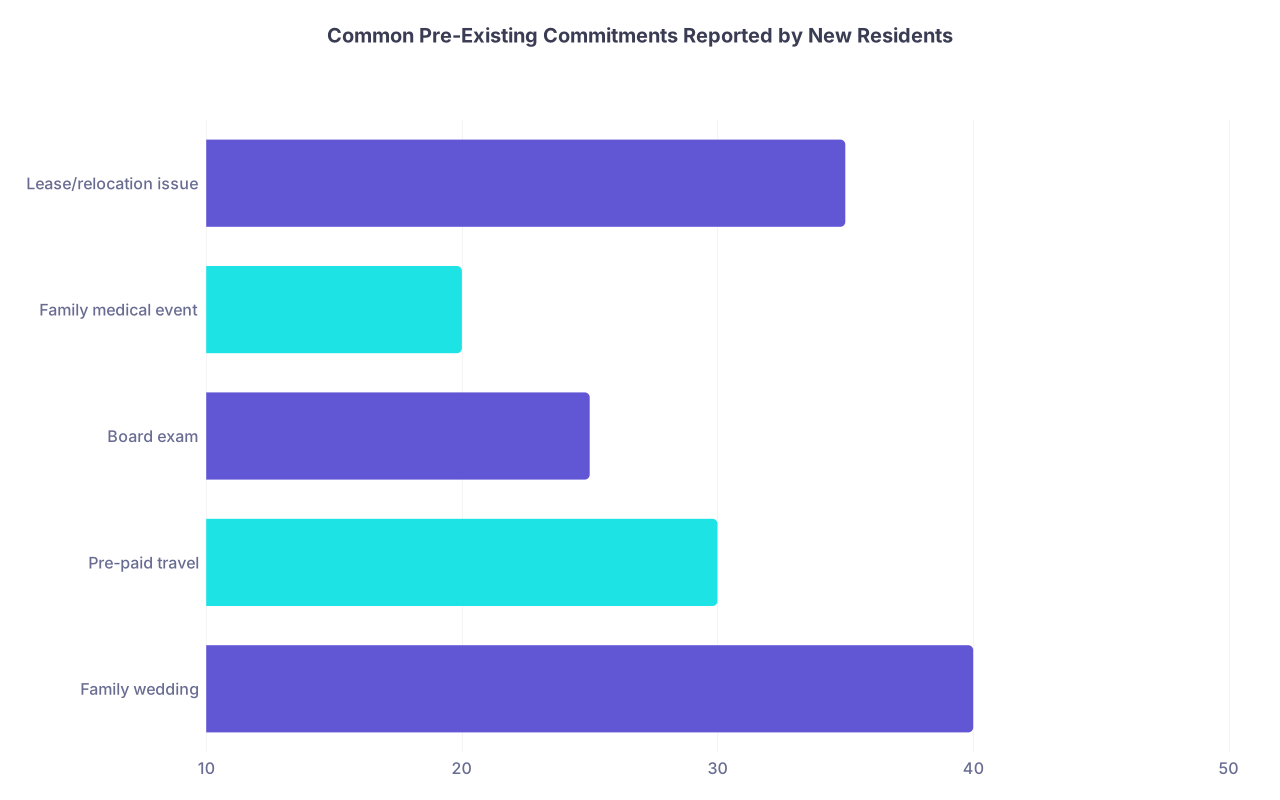
| Category | Value |
|---|---|
| Family wedding | 40 |
| Pre-paid travel | 30 |
| Board exam | 25 |
| Family medical event | 20 |
| Lease/relocation issue | 35 |
What is worth raising
These are the ones worth mentioning explicitly, even in SOAP:
- You are the bride/groom in a wedding (yes, I have seen this negotiated).
- You have a Step 3 / licensing / required school exam scheduled and change fees are huge or slots are unavailable.
- Serious family medical situation where your presence is required on specific days.
In those scenarios, your ask should be narrow and specific:
“I have a previously scheduled wedding on [exact date]. I am the [role]. Is there any way to use vacation or unpaid leave to be off that single day (and related travel day, if absolutely needed), as long as it does not fall during ICU or night float?”
Programs will not love it. But many will try to accommodate a single known day off later in the year. What they hate is you disappearing for a week in your first month.
What you probably need to silently absorb
These are almost always sacrificed in SOAP, especially late offers:
- Prepaid nonrefundable vacations in June/July
- Extended family reunions
- “I wanted two weeks to rest before intern year”
You can try to reclaim some time later as vacation once you have proven yourself. But in the first ask, you focus on the minimum disruption.
8. How to Communicate Like a Professional, Not a Problem
This part matters more than the content of your ask. I have seen candidates with reasonable requests torpedo themselves with clumsy, self-centered emails.

Principles for any negotiation email or call
Lead with commitment to the program.
“I am very excited to join your residency and want to make sure I meet all of your requirements.”Show you understand they have constraints.
“I know orientation and onboarding dates are structured around your entire intern class.”Present the constraint as a constraint, not a preference.
“My school’s graduation is on [date] and attendance is mandatory for completion.”Offer a proposed solution, not just a problem.
“I can be available for remote modules earlier and arrive in person by [date].”Be concise. Coordinators are slammed during SOAP. Two short paragraphs, not an essay.
Example email you can adapt
Subject: Clarification of Onboarding and Start Dates – [Your Name], PGY-1 [Specialty]
Dear [Coordinator Name],
Thank you again for the opportunity to join the [Program Name] residency. I am very excited to train with your team and want to be sure I complete all required onboarding steps on time.
I wanted to clarify the key dates for HR paperwork, occupational health, and orientation. I have a fixed obligation on [briefly describe constraint, e.g., “my medical school’s mandatory graduation ceremony on June 20”], but I am flexible around that and eager to comply with your requirements.
Would it be possible for me to complete any online modules or HR paperwork remotely before arrival, and then report in person by [earliest feasible date you can manage]? If there are specific deadlines I must meet, I will adjust my plans to fit them as closely as possible.
I appreciate your guidance and will follow whatever process works best for your office.
Sincerely,
[Your Name]
[AAMC ID, if helpful]
[Phone number]
That tone says: I know you are doing me a favor by giving me this job. I am trying to make your life easy.
9. Document Everything and Close the Loop
Verbal agreements during SOAP week get lost. People are exhausted. Documenting is not paranoia; it is survival.
After any phone call where something was “worked out,” send a short confirmation email:
“As discussed on our call today, I will complete online modules by [date], attend occupational health on [date], and be present for orientation starting [date]. Please let me know if I misunderstood anything.”
If they agreed to any slight flexibility (e.g., you can arrive June 20 instead of June 17), restate that. Not aggressively—just clearly.
You are not trying to “build a legal case.” You are preventing miscommunication when everyone is juggling 40 incoming interns.
10. Red Flags and When Not to Push
There are times you accept the rigid answer and stop negotiating. Pushing further will damage your relationship before you even start.
Red flags:
- The PD or coordinator uses language like “GME will not allow”, “this is a hard institutional policy”, “there is no flexibility on this date.”
- They reference prior bad experiences with late starts or missed orientation.
- They seem supportive but clearly constrained (e.g., “I wish we could, but payroll and credentialing are tied to this date.”)
In these cases, you move from negotiation mode to execution mode:
- Reorganize your personal life around their dates.
- Cancel what you need to cancel.
- Eat the lost money on a flight or lease if you must.
Not fair. But you chose to accept a late SOAP offer. The alternative was no position at all.
FAQ (Exactly 4 Questions)
1. Can I legally refuse to start on the program’s stated date after signing, and push for a later start?
You can refuse, but the program can just as easily revoke the offer or not process your appointment. Residency “contracts” at this stage are less like fully negotiated employment contracts and more like conditional offers contingent on you meeting institutional requirements and dates. If you decide you cannot or will not meet their start and orientation timeline, you are effectively walking away from the position. In SOAP, programs almost always prefer to find someone who can comply rather than redesign their systems around a late start.
2. Is it realistic to negotiate salary or a signing bonus in a SOAP offer?
No. Salary and benefits for residents are standardized at the institutional GME level, not the program level. They are set for all PGY-1s in that hospital, not for you individually. You do not negotiate salary, bonus, or call pay as a SOAP candidate. The only “money” conversation that makes sense is a factual one about existing benefits: relocation stipend, housing options, meal stipends, etc. And even those are typically fixed for all residents.
3. What if my school’s official graduation date is after the residency start date?
That is a serious problem. Many programs require that you have graduated and, for IMGs, be ECFMG-certified by a specific credentialing deadline before you can start. If your official graduation date is later than their start date, you must raise this immediately. Some institutions absolutely will not allow off-cycle starts or late arrivals tied to graduation. A rare few might offer an off-cycle start or a position the following year, but count on that only if they explicitly say so. Hoping it “works out” is how people end up with voided offers in June.
4. How much can I safely ask for without looking high-maintenance?
You can safely ask for clarity on all onboarding dates, whether any components can be completed remotely, and whether 1–3 days of flexibility around arrival are possible. You can flag one truly immovable commitment (graduation, visa interview, your own wedding) and ask if there is a way to accommodate a single day off or slight shift. Once you start stacking multiple requests—later arrival, weeks off, skipping orientation—you cross the line into high-maintenance. In SOAP, you want to be the candidate who solves problems, not the one who adds scheduling complexity. Two concise, well-framed asks are usually the limit.
Key points to keep: In a late SOAP offer, assume the start date framework is fixed and aim to adjust around it with small, specific requests. Lead every conversation with commitment to the program and a clear understanding of their constraints. And above all, document agreements in writing and execute your end fast—your professionalism in these first chaotic weeks is your first impression as a resident.