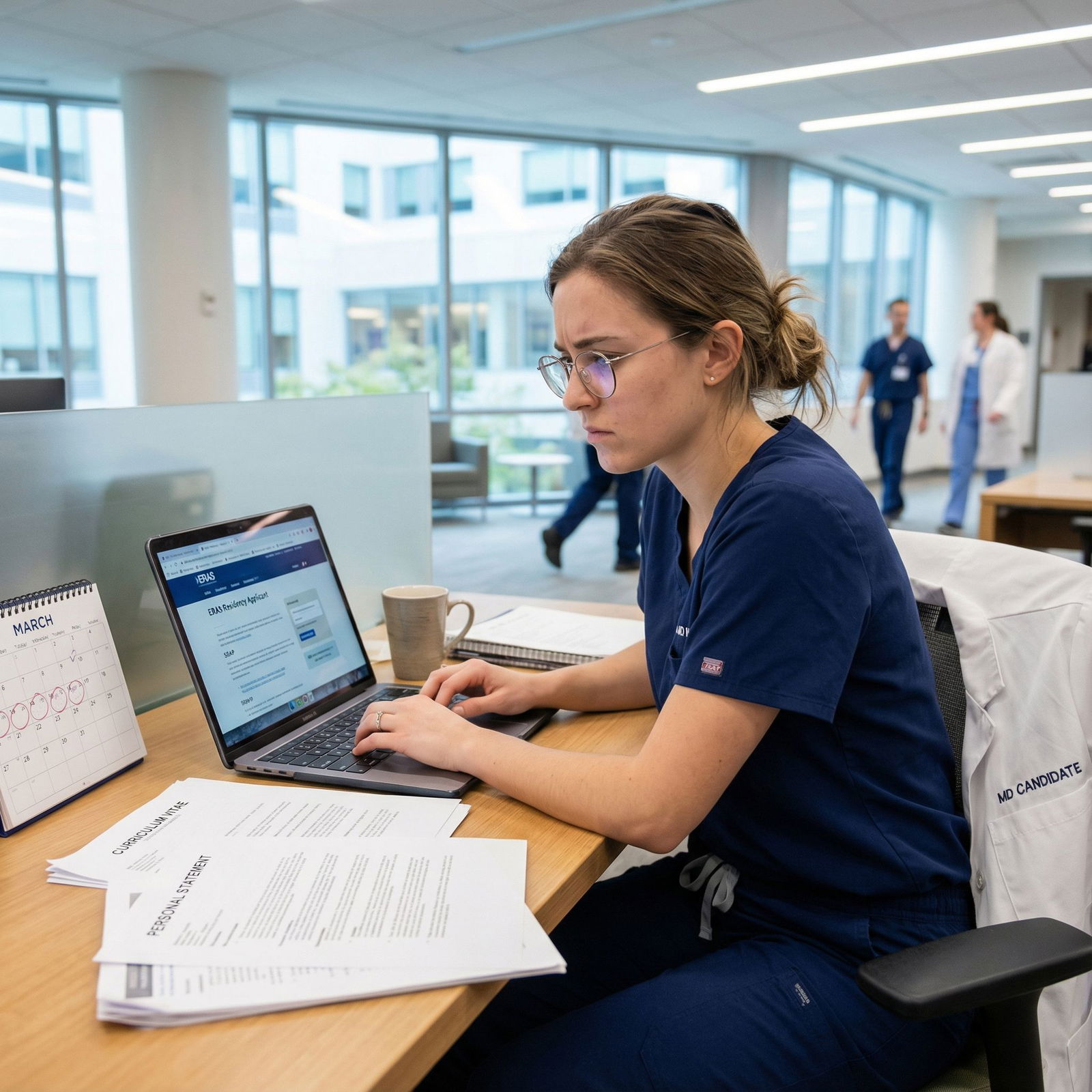
Navigating the Residency Match can be one of the most emotionally intense phases of medical training. When the initial Match results don’t go as planned, the days that follow can feel overwhelming—but they also present a critical second chance. The Supplemental Offer and Acceptance Program (SOAP) is that structured opportunity for unmatched candidates to secure a medical residency position.
This expanded guide takes you step by step through the SOAP process, clarifies common misconceptions, and outlines concrete strategies to help you move from uncertainty to a well-earned residency spot.
Understanding the SOAP Process in the Residency Match
The Supplemental Offer and Acceptance Program is a formal, time-limited process run by the National Resident Matching Program (NRMP). It exists to connect unmatched or partially matched applicants with unfilled residency positions after the main Residency Match algorithm has run.
What SOAP Is—and What It Is Not
SOAP is:
- A structured, rules-based process run during Match Week
- The official pathway for unmatched candidates to apply to unfilled positions in ACGME-accredited programs participating in the NRMP
- Conducted exclusively through ERAS and NRMP platforms—no direct cold-calling or unsolicited emailing of programs is allowed for SOAP-eligible openings
SOAP is not:
- A second full Match (there is no ranking algorithm—positions are filled directly through offers)
- A time for mass, unfocused applications
- A process you should wait to think about until you find out you didn’t match
Understanding this difference helps you plan realistic Match Day strategies and respond quickly if you find yourself in the SOAP pool.
Who Is Eligible for the SOAP Process?
You are typically SOAP-eligible if:
- You registered for the NRMP Main Residency Match
- You are unmatched or partially matched at the start of Match Week
- You are eligible to start residency on July 1 of that year (meeting graduation, ECFMG, and licensing requirements as applicable)
- You have certified a rank order list or have been withdrawn by the NRMP due to ineligibility
Partially matched candidates (for example, matched to a preliminary year but not an advanced position) may still participate in SOAP to secure additional compatible positions. However, there are nuances:
- If you are matched to a categorical position, you are not SOAP-eligible.
- If you have a prelim year but no advanced spot, you may use SOAP to secure an advanced or categorical role starting the appropriate year.
Always confirm your personal eligibility with your dean’s office or NRMP guidance as specific rules can change subtly year to year.
Overview of SOAP Week Timeline
SOAP typically takes place over four intense days of Match Week. While exact times can vary, the general structure is:
- Monday (11:00 a.m. ET): You learn if you are matched, partially matched, or unmatched.
- Monday (Noon ET): Unfilled program list becomes available to SOAP-eligible applicants and their schools.
- Monday–Thursday: Multiple application, interview, and offer rounds occur through ERAS and NRMP.
Knowing this structure ahead of time helps you prepare with deliberate Match Day strategies instead of reacting in panic.
Strategic Preparation for SOAP Before Match Day
The most successful SOAP outcomes typically start weeks to months before Match Week. Waiting until Monday at 11:00 a.m. to think about a contingency plan places you at a significant disadvantage.
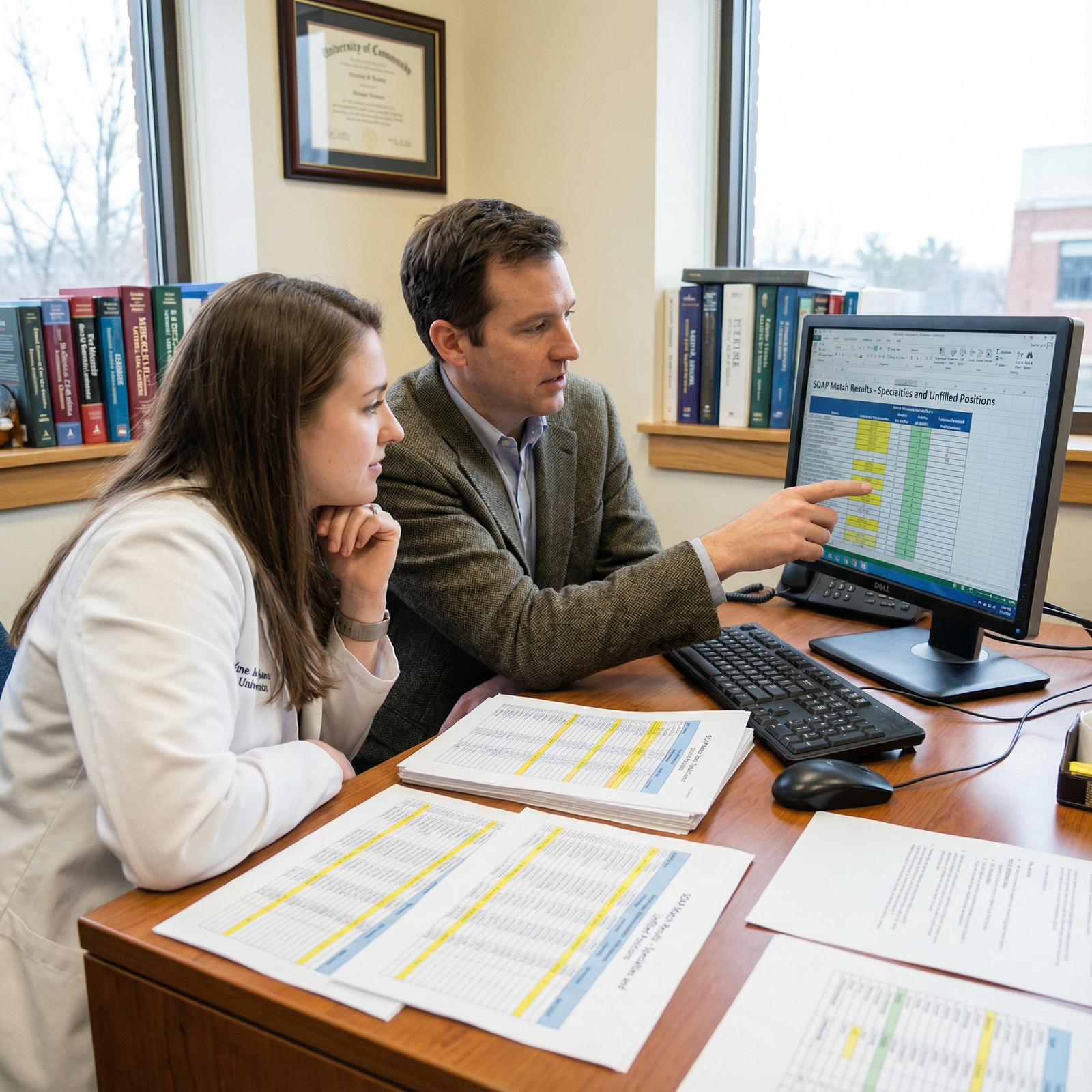
Build a Thoughtful Backup Strategy
Even if you feel confident about the Residency Match, having a SOAP strategy is a sign of maturity and professionalism, not pessimism.
Key pre-Match planning steps:
Clarify your acceptable alternatives.
Decide in advance:- Which specialties you’d realistically consider in SOAP (e.g., internal medicine, family medicine, prelim transitional year)
- Whether you would accept a position in a different geographic region if needed
- Whether you’d accept a preliminary year while planning to reapply to your preferred specialty
Discuss your options with advisors early.
Schedule meetings with:- Your dean or student affairs office
- Specialty advisors (including backup-specialty mentors)
- Residents or recent graduates who have gone through SOAP or reapplication
Proactive discussions help you make clearer choices under pressure if you do not match.
Prepare Core Documents for Rapid Customization
During the SOAP process, you must move fast, but not sloppily. Have your core documents ready in advance so that only minor tailoring is needed.
Update and organize:
Curriculum Vitae (CV):
- Ensure all recent rotations, honors, and experiences are included
- Emphasize core clinical skills applicable across multiple specialties
- Keep both a general and specialty-leaning version ready (e.g., one more medicine-focused, one more surgery-focused)
Personal Statements:
- Prepare at least 2–3 versions:
- Primary specialty version
- Internal medicine or family medicine generalist version
- Preliminary year / transitional year version
- Keep a short “SOAP version” that directly addresses resilience, adaptability, and your readiness to start residency immediately
- Prepare at least 2–3 versions:
Letters of Recommendation (LoRs):
- Maintain strong, broadly applicable letters (e.g., from internal medicine, surgery, pediatrics attendings)
- If your original specialty was competitive (e.g., derm, ortho), ensure you also have at least one letter from a core clerkship in a broader specialty that often has SOAP positions
Transcript and MSPE (Dean’s Letter):
These are typically already in ERAS, but confirm everything is uploaded and accurate well before Match Week.
Research Residency Programs and Historic SOAP Trends
Use NRMP and ERAS resources to understand where unfilled positions commonly appear:
NRMP’s “Results and Data” reports:
- Review tables showing the number of unfilled positions by specialty and program type in recent years
- Identify specialties more likely to have SOAP vacancies (often internal medicine, family medicine, pediatrics, psychiatry, preliminary surgery or medicine, transitional year, and some categorical programs in less competitive locations)
Program characteristics to note:
- Geographic regions historically with more unfilled spots
- Community vs. university-affiliated programs
- Programs that welcome IMGs, DOs, or non-traditional applicants
Create a short list of programs and regions that might be realistic SOAP targets for your profile. This list doesn’t guarantee those exact programs will have openings—but it primes you to act quickly on similar options.
Step-by-Step Walkthrough of SOAP Week
SOAP Week is fast-paced and emotionally charged. Time management and clear communication are critical.
Monday: Match Status and Initial SOAP Planning
Check your NRMP status (11:00 a.m. ET).
You’ll see:- Matched
- Partially Matched
- Unmatched
If you are unmatched or partially matched and otherwise eligible, you will receive instructions on participating in the SOAP process.
Access the list of unfilled positions (Noon ET).
- The list appears through NRMP and is also accessible via your dean’s office.
- This list updates as positions fill during SOAP rounds.
Prioritize programs quickly but thoughtfully.
- Filter by specialty, program type (categorical, preliminary, advanced), and location.
- Cross-reference with your pre-made backup plan.
- Note programs where your profile is a reasonable fit (USMLE/COMLEX scores, graduation year, visa status, IMG considerations, etc.).
Tuesday–Thursday: Applications, Interviews, and Offers
SOAP typically proceeds through several rounds. The exact schedule (application windows and offer rounds) is published annually by NRMP.
Submitting Applications Through ERAS
- You are allowed a fixed maximum number of applications during SOAP (historically 45, but confirm current rules each year).
- You cannot contact programs directly about SOAP-eligible unfilled positions outside ERAS.
- Prioritize:
- Programs where your credentials align well
- Locations and specialties you’d genuinely consider accepting
- A mix of reach, target, and safer options within this constraint
Application tips:
Customize each personal statement as much as time allows.
Even a short paragraph that references:- The program’s patient population
- Training style (community vs. academic)
- Your specific fit with their mission
can distinguish you from generic applications.
Ensure all ERAS sections are polished.
- Update experiences with clear impact statements.
- Double-check that your contact details are accurate and you can be reached easily (phone, email, voicemail).
Receiving and Responding to Interview Invitations
Programs may reach out quickly—sometimes the same day your application is submitted.
Stay constantly reachable.
- Keep your phone on and charged.
- Check email frequently.
- Respond promptly and professionally to all communication.
Be ready for short-notice interviews.
Virtual interviews are common during SOAP, often scheduled within hours. Prepare:- A professional backdrop and attire
- A brief, clear narrative explaining your path, your unmatched status, and your strengths
- Specific questions about the program to demonstrate genuine interest
Understanding SOAP Offers and Acceptance
NRMP coordinates several offer rounds during SOAP (typically Wednesday and Thursday). In each round:
- Programs extend electronic offers through NRMP.
- You may receive no offer, one offer, or multiple offers in a given round.
- You have a short window (usually 2 hours) to accept or reject an offer.
Important points:
- If you accept an offer, you are automatically withdrawn from the SOAP process and bound to that position (similar to the Match).
- If you let an offer expire, it is considered a rejection—use that option only if you are certain.
- If you reject an offer, you may still receive other offers in later rounds.
Think ahead about what you would accept, so you can make a timely decision when the clock is ticking.
Crafting Strong SOAP Applications That Stand Out
In a compressed timeline, content quality and strategic messaging matter more than ever.
Tailoring Your Application to New Specialties
If you’re pivoting from a competitive specialty to a broader one during SOAP (e.g., from orthopedic surgery to internal medicine):
Reframe your experiences.
Highlight:- Broad clinical competencies (history, physical exam, diagnostic reasoning)
- Teamwork, communication, and reliability
- Rotations in the new specialty, even if not originally your primary focus
Address the transition honestly but briefly.
Your personal statement might include:- What draws you to the new specialty’s scope of practice
- How your prior interests and skills translate to this field
- Your commitment to building a long-term career in this area (avoid sounding like it’s purely a backup)
Strengthening Your Narrative After Not Matching
Programs understand that many strong candidates go unmatched due to specialty competitiveness or other factors. What they want to see:
Insight, not excuses.
You can briefly mention:- Competitive specialty or geographic preferences
- Late decision on specialty choice
- Limited interview invites due to timing or application volume
Avoid blaming others; focus on what you’ve learned and how you’ve grown.
Evidence of resilience.
Emphasize:- Ongoing clinical work or meaningful activities during the application year
- Steps you’ve taken to improve your skills or application
- Professionalism and maturity in managing disappointment
Navigating SOAP Offers, Decision-Making, and Long-Term Strategy
Choosing whether to accept a SOAP offer can feel high-stakes, particularly if the specialty or location differs from your initial goals.
Evaluating SOAP Offers Strategically
When an offer arrives, consider:
Training quality and accreditation:
- ACGME accreditation
- Board-eligibility upon completion
- Program stability (not newly opened without track record unless you’re comfortable with that)
Fit with long-term goals:
- Does this specialty and program allow pathways to your envisioned career (hospitalist, primary care, fellowship, etc.)?
- If a preliminary year, does it provide a solid platform to reapply to your preferred advanced specialty?
Geographic and personal considerations:
- Family or support networks
- Visa sponsorship (for IMGs)
- Cost of living and lifestyle factors
When Accepting a Preliminary or Different Specialty Makes Sense
Scenarios where accepting a SOAP offer is often wise:
You secure a preliminary or transitional year that gives you:
- US clinical experience
- Letters from US faculty
- A stronger platform to reapply next cycle
You receive a categorical position in a less competitive but well-aligned specialty (e.g., internal medicine, family medicine, pediatrics) that you can see yourself doing long term, even if it wasn’t your original first choice.
Remember: Many physicians discover fulfilling careers in paths they originally saw as “plan B.” The key is ensuring the position is accredited, supportive, and safe.
What If You Don’t Receive a SOAP Offer?
If SOAP concludes without an offer:
Debrief quickly but thoughtfully.
- Meet with your dean, advisors, or mentors to review:
- Application strengths and weaknesses
- Specialty choice and competitiveness
- Interview performance and communication style
- Meet with your dean, advisors, or mentors to review:
Formulate a structured gap-year or reapplication plan. Consider:
- Clinical work (research assistant, hospitalist scribe, teaching, externships/observerships for IMGs)
- Research positions in your target specialty
- MPH, MS, or other graduate studies—only if they clearly strengthen your long-term goals, not as a default
Stay connected and engaged.
Continue clinical exposure and scholarly work whenever possible. A well-planned reapplication after a constructive year can lead to a strong Match outcome.
Realistic Case Examples from the SOAP Process
Case 1: The Networker Who Pivoted Successfully
Dr. Sarah Jones applied initially to a highly competitive specialty with a narrow geographic focus and went unmatched. On Monday of Match Week, she immediately contacted her internal medicine clerkship director and a trusted mentor.
They:
- Reviewed the list of unfilled internal medicine positions
- Identified programs that historically welcomed candidates with strong clinical performance but fewer research experiences
- Helped Sarah tailor a concise internal medicine–focused personal statement overnight
Sarah’s clerkship director also reached out—within NRMP rules—to a program where they had a strong relationship, encouraging a closer look at her file. Sarah received multiple interviews on Tuesday and Wednesday, and by the second offer round, she accepted a categorical internal medicine position in a mid-sized city. Today, she is pursuing a cardiology fellowship—a path that began with a SOAP pivot.
Case 2: The Researcher Who Used Prior Work Strategically
Dr. David Lee originally applied to neurology but went unmatched due to a late specialty switch. During SOAP, he targeted internal medicine and prelim medicine programs at academic centers where his neurology research background would be an asset.
In his SOAP applications, David:
- Highlighted his research on vascular neurology in his CV and personal statement
- Emphasized his interest in becoming an academic hospitalist with a neurology focus
- Discussed how his research skills would contribute to quality improvement projects and resident scholarly output
He received offers from both a categorical internal medicine program and a preliminary position at a major academic center. After consulting his mentors, he accepted the categorical spot, providing a stable path to academic internal medicine while keeping neurology-related research in his long-term plans.
Case 3: The Prepared Communicator Who Thrived in Pediatrics
Dr. Maria Rodriguez knew pediatrics might have SOAP positions based on NRMP data. Prior to Match Week, she prepared:
- A pediatrics-focused personal statement
- A list of regions where she’d be willing to move for the right program
- Talking points about her passion for advocacy and working with underserved children
When she learned she was unmatched, she was understandably devastated—but she already knew her next steps. She applied early in SOAP to a carefully chosen list of pediatric and family medicine programs, followed up promptly on interview invitations, and conveyed her enthusiasm clearly on video calls. By the first offer round, she secured a categorical pediatrics position at a safety-net hospital, where she is now thriving.

Frequently Asked Questions About the SOAP Process
1. Can I participate in SOAP if I partially matched?
Yes, many partially matched candidates are eligible for the SOAP process, particularly if they:
- Matched to a preliminary year but not an advanced position
- Matched to an advanced position but need a preliminary year
However, if you are fully matched to a categorical position, you are not eligible for SOAP. Always verify your exact status and eligibility with NRMP and your dean’s office, as policies and interpretations can change slightly each year.
2. How many programs can I apply to during SOAP?
The NRMP sets a maximum number of SOAP applications (historically 45). This cap makes strategy crucial. Instead of applying randomly to dozens of programs:
- Prioritize programs that match your credentials and interests
- Include a mix of geographic regions and program types
- Avoid wasting applications on clearly unrealistic reaches in the SOAP context
Check the current year’s NRMP and ERAS guidelines for the exact limit and any updates.
3. Are interviews always required to receive a SOAP offer?
Not always, but they are very common and highly recommended. Many programs:
- Use brief virtual interviews (phone or video) to confirm professionalism, communication skills, and fit
- May rely on prior knowledge of a candidate (former rotator, strong mentorship connection) in rare cases
You should prepare as if every program might interview you, with:
- A clear, honest explanation of your unmatched status
- Specific reasons you’re interested in that program and specialty
- Examples of teamwork, resilience, and growth from your clinical experiences
4. How can I figure out which specialties or programs usually have SOAP positions?
Use a combination of:
NRMP “Results and Data” reports:
- Look for tables listing unfilled positions by specialty and program type in prior years.
- Note recurring patterns (e.g., internal medicine or family medicine positions in certain states).
Advice from your medical school advisors:
- Student affairs offices often track which programs historically utilize SOAP.
- They can help you identify realistic target programs based on your profile.
Informal networks:
- Recent graduates, residents, or mentors with program knowledge can offer insight into programs that routinely participate in SOAP or have mid-tier competitiveness.
5. What should I do if I don’t receive any offers by the end of SOAP?
Not receiving a SOAP offer is painful, but it is not the end of your path to residency. You can:
Debrief thoroughly:
- Meet with deans, advisors, and mentors to analyze what went wrong: test scores, specialty choice, limited interviews, or application weaknesses.
Create a 6–12 month structured plan:
- Pursue clinical work, research, or further training that strengthens your candidacy.
- Gain strong new letters of recommendation, ideally in the specialty you’ll target next cycle.
Reassess specialty choices and geographic flexibility:
- Consider whether a less competitive but still fulfilling specialty might be a better fit.
- Expand geographic preferences in future applications.
Maintain professionalism and perspective:
Many successful physicians experienced one or more unsuccessful Match cycles before finding the right program. A focused, well-supported reapplication can still lead to an excellent residency outcome.
Conclusion: Turning SOAP Into a Launchpad for Your Medical Residency
The SOAP process can feel high-pressure, but with preparation and strategy, it becomes a powerful opportunity rather than a last resort. By:
- Understanding the structure and rules of SOAP
- Preparing your documents and backup specialty plans well before Match Week
- Applying strategically rather than indiscriminately
- Communicating with honesty, professionalism, and enthusiasm
- Evaluating offers in the context of your long-term goals
you can transform a setback in the main Residency Match into a successful entry into graduate medical education.
Whether you ultimately secure a position during SOAP or use the experience to sharpen your application for the next cycle, this phase of your journey can build the resilience, insight, and adaptability that will serve you throughout your career.
Use Match Day strategies that include a SOAP contingency, lean on your mentors and advisors, and approach the process with clarity and purpose. Many residents and attending physicians standing where you want to be once sat where you are now—using SOAP as the bridge to their medical residency and, ultimately, a rewarding career in medicine.