Understanding SOAP for Radiation Oncology IMGs
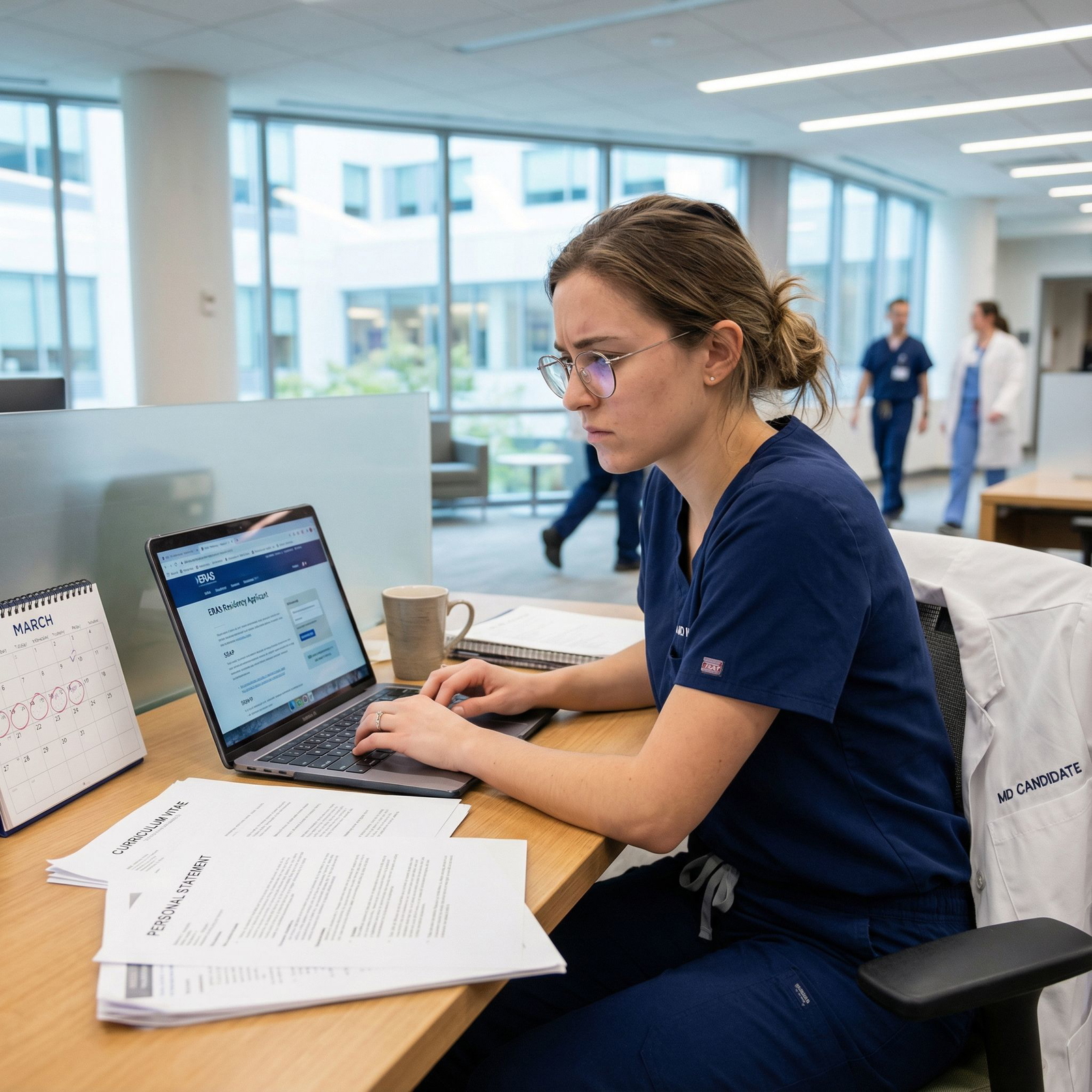
The Supplemental Offer and Acceptance Program (SOAP) can feel mysterious and intimidating—especially as an international medical graduate (IMG) targeting a highly competitive field like radiation oncology. But with deliberate SOAP preparation, you can transform Match Week from pure panic into a structured, opportunity-focused process.
As an IMG residency guide for radiation oncology, this article will walk you through:
- What SOAP is and how it works
- Why SOAP matters for international medical graduates in radiation oncology residency
- How to prepare strategically before Match Week
- Step-by-step actions during Match Week
- How to strengthen your long‑term rad onc match prospects if SOAP doesn’t result in a position
Throughout, the focus is practical and IMG‑specific, with examples, templates, and checklists.
What Is SOAP and Why It Matters for IMGs in Radiation Oncology
What is SOAP?
SOAP (Supplemental Offer and Acceptance Program) is the structured process the NRMP uses during Match Week to fill unfilled residency positions. It replaces the old “scramble.” Eligible unmatched or partially matched applicants can apply in rapid cycles to unfilled positions, receive offers, and accept one position.
For an international medical graduate, SOAP can be:
- A last‑minute pathway into radiation oncology residency
- A realistic bridge into a related preliminary or transitional year (e.g., internal medicine, prelim surgery) that keeps you clinically active and aligned with future rad onc match attempts
How SOAP Works (High-Level Overview)
Before Match Week
- You certify your rank list in NRMP.
- You must have an active ERAS application with documents uploaded.
- You ensure you meet eligibility criteria for SOAP (NRMP-registered, unmatched/partially matched, no unmatched withdrawals).
Monday of Match Week
- 10:00 AM ET: You learn whether you are matched, partially matched, or unmatched.
- If unmatched/partially matched and eligible, you enter SOAP.
- NRMP releases the list of unfilled programs to SOAP‑eligible applicants only.
SOAP Application Rounds
- You can apply to up to 45 programs total during SOAP (not per round).
- ERAS is used to send applications.
- Programs review and may conduct rapid interviews (often same-day).
- NRMP sends offers in up to four rounds; you may receive, accept, or reject.
After SOAP
- Once you accept an offer, you are bound by NRMP rules.
- Unfilled positions post-SOAP may be listed independently, but NRMP-bound applicants cannot seek other PGY-1 positions.
For radiation oncology, there are two main SOAP‑related realities:
- Pure rad onc categorical slots very rarely go unfilled.
- However, preliminary and transitional year positions—often required before starting rad onc—do appear in SOAP.
So for many IMGs, your SOAP strategy is less about “I will SOAP into rad onc” and more about “I will SOAP into the best possible PGY-1 clinical year that positions me for future success in radiation oncology.”
Pre–Match Week SOAP Preparation for Radiation Oncology IMGs
Most applicants think about SOAP only when they see “You did not match.” That is too late. Competitive IMGs in radiation oncology start SOAP preparation months in advance.

1. Confirm SOAP Eligibility and Understand the Rules
Make sure you:
- Register with NRMP on time.
- Register and apply through ERAS.
- Are unmatched or partially matched (e.g., you matched an advanced position but not a PGY-1).
- Do not withdraw or be barred for professionalism violations.
For IMGs specifically:
- Ensure ECFMG certification is completed or will be by the program’s start date (check each program’s requirement).
- Confirm visa status and understand which visas you can accept (J‑1 vs H‑1B), and keep this documented clearly in your CV and ERAS.
Action item:
By January, read the NRMP and ERAS SOAP guides and confirm your understanding of how the 45‑program limit and offer rounds work. Save the PDFs and highlight key sections.
2. Build a SOAP‑Ready ERAS Profile
During SOAP, you will not have time to rewrite your entire application. A SOAP‑ready ERAS application is:
- Complete: No missing exam scores, experiences, or personal statements.
- Flexible: Easily adapted to different types of positions (prelim medicine, prelim surgery, transitional year, occasionally radiation oncology).
- Clear: Emphasizes your clinical readiness and professionalism.
Key components:
a. Personal Statements
Prepare 2–3 targeted personal statements in advance:
Radiation Oncology Statement
- Focused on your radiation oncology passion, research, and long‑term goal.
- Used if an unexpected rad onc SOAP position appears or for future cycles.
Internal Medicine / Transitional Year Statement
- Highlights your commitment to becoming an excellent general clinician, your interest in longitudinal patient care, and your ability to thrive in high-volume inpatient settings.
- Shows how your oncologic interest strengthens your value (e.g., comfort with complex cancer patients, multidisciplinary discussions).
General Clinical Statement
- Versatile for surgery prelim, family medicine, or any internship.
- Emphasizes adaptability, work ethic, and commitment to teamwork, education, and patient safety.
You can upload multiple personal statements in ERAS and assign them to different applications quickly during SOAP.
b. Experiences Section: Emphasize Clinical Reliability
For SOAP, program directors are looking for someone who can:
- Show up on time
- Handle heavy clinical workload
- Document accurately
- Work well with the team
- Take feedback and improve
In your experiences:
- Emphasize hands-on clinical roles, including sub‑internships, observerships, and externships in the US.
- Highlight on‑call responsibilities, admissions, and continuity of care when applicable.
- Give concrete examples of system-based practice: EHR use, QI projects, multidisciplinary oncology clinics, tumor boards.
For IMGs in radiation oncology:
- Keep your rad onc research and interest visible, but make it clear that you are fully committed to excelling in any clinical role you are offered during SOAP.
3. Curate Letters of Recommendation with SOAP in Mind
Radiation oncology often places strong value on:
- Oncology‑related research mentors
- US clinical supervisors
- Program directors or department chairs
For SOAP preparation:
- Aim to have 3–4 strong letters:
- At least one from a US clinical supervisor in internal medicine, surgery, or a core clinical rotation.
- At least one from a radiation oncologist (ideally US-based) describing your clinical judgment, reliability, and communication.
- Optional: A third/fourth letter from research mentors or additional clinical attendings.
Why it matters in SOAP:
- Even if you apply to prelim internal medicine, a letter from a radiation oncologist who testifies that you are reliable, hard‑working, and good with patients still helps.
- Programs want to trust that an IMG has been thoroughly observed by US faculty and deemed ready for residency-level responsibility.
Action item:
By December–January, request letters that specifically mention your:
- Professionalism
- Work ethic
- Ability to handle complex cases (e.g., oncology patients)
- Communication skills with team and patients
Ask letter writers to upload early, well before Match Week, so your application is fully SOAP‑ready.
4. Strategize Your SOAP Targets: Realistic for Radiation Oncology
Because pure radiation oncology residency positions rarely show up in SOAP, your IMG residency guide strategy should be:
Primary Goal:
- Secure a solid preliminary or transitional year that:
- Has exposure to oncology patients
- Offers strong IM/Surgery training
- Is at an institution with a radiation oncology department (if possible)
- Secure a solid preliminary or transitional year that:
Secondary Goal:
- If a rare rad onc SOAP slot appears and you are competitive:
- Apply quickly, tailor your personal statement to rad onc, and highlight all relevant experiences.
- If a rare rad onc SOAP slot appears and you are competitive:
Long-Term Goal:
- Build a CV and network during your SOAP-obtained year that will strengthen your next‑cycle rad onc match application.
Make a SOAP targeting list in advance:
- List regions or institutions where you could realistically live and work.
- Identify:
- Transitional year programs
- Prelim internal medicine
- Prelim surgery
- Occasionally family medicine or categorical internal medicine if you are open to broader career paths.
You won’t know exactly which programs will be unfilled, but having categories and locations pre‑thought helps you move fast.
5. Prepare Your Logistics: Documents, Technology, and Support
During SOAP, everything happens fast. Prepare:
- Up-to-date CV (1–2 pages) mirroring your ERAS content
- Central folder with:
- Passport, visa documents
- ECFMG certificate
- USMLE transcripts and score reports
- Medical school diploma and transcript
- Reliable tech setup:
- Stable internet
- Headset and quiet interview space
- Professional backdrop for video calls
- Time zone management:
- If you are outside the US, plan to be awake and fully available during US business hours for several days.
Also plan your emotional support:
- Inform a small circle (family/close friends) about SOAP so they understand that you may be stressed and less responsive.
- Identify 1–2 mentors who can offer quick advice during Match Week.
Executing During Match Week: Step-by-Step SOAP Preparation in Action
When Monday of Match Week arrives and you discover you are unmatched or partially matched, having a prepared SOAP road map will prevent paralysis.
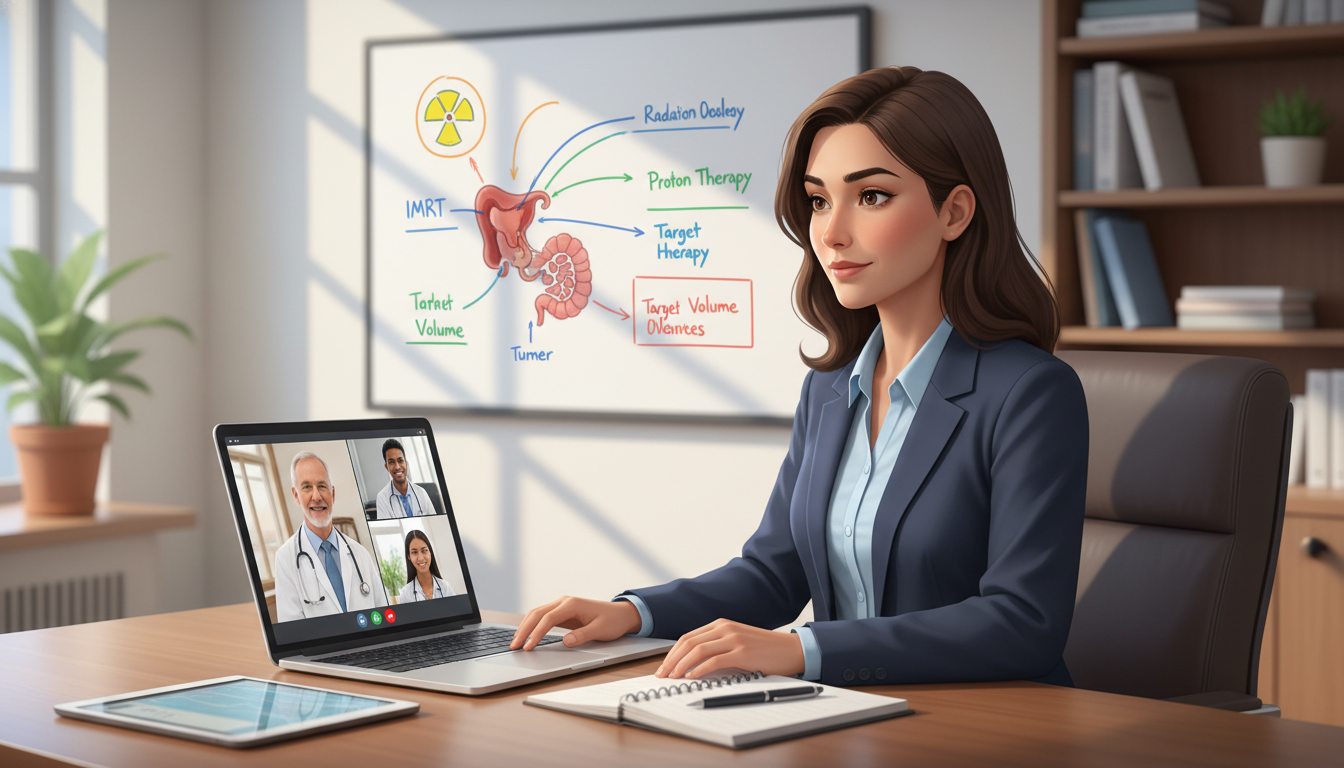
1. Monday Morning: Accept the Reality, Move Immediately into Action
At 10:00 AM ET (Monday), you see one of three messages:
- Matched – You’re done; SOAP does not apply.
- Partially Matched – You matched to an advanced (PGY-2) but not a PGY-1 position OR vice versa.
- Unmatched – No matches.
If you are partially matched with a PGY-2 radiation oncology residency position but no PGY‑1:
- SOAP is your critical pathway to a preliminary or transitional year.
- You must treat the next 3–4 days as a full‑time job.
If you are completely unmatched:
- You may not get a rad onc or even a prelim spot—but many IMGs secure solid positions through SOAP, especially in IM prelim and transitional year roles.
2. Review the List of Unfilled Programs Thoughtfully, But Quickly
Around 11:00 AM ET, NRMP releases the List of Unfilled Programs to SOAP-eligible applicants via NRMP/ERAS.
Steps:
Filter by specialty:
- Transitional Year
- Preliminary Internal Medicine
- Preliminary Surgery
- Categorical IM or FM if you’re open to alternative paths
- Very rarely: Radiation Oncology
Filter by state/region, visa status, and any personal constraints.
Label programs in three tiers:
- Tier 1: Programs at academic centers or with strong oncology exposure; programs at institutions that also have a rad onc department.
- Tier 2: Solid community programs with stable training and good board pass rates.
- Tier 3: Programs with less information available, but still acceptable if needed.
Remember the 45-application limit. Do not spend them all in round 1 without strategy.
3. Assign Targeted Personal Statements and Finalize ERAS Submissions
For each specialty you plan to target, assign the appropriate personal statement:
- Transitional year / prelim IM → Use your IM/transitional focused statement.
- Prelim surgery → Use a statement that emphasizes procedural interest, stamina, and teamwork.
- Rare rad onc slot → Use your radiation oncology personal statement, clearly explaining:
- Your long-term commitment to the field
- Your research and clinical exposure
- Why you will be a good resident from day one
Check that:
- USMLE/COMLEX scores are correct.
- Letters are properly assigned.
- Contact information (phone/email) is current and monitored.
Submit your first batch of SOAP applications as early as allowed (usually Monday afternoon), to your Tier 1 and Tier 2 programs.
4. Prepare for SOAP Interviews: Fast, Focused, and Professional
RAD ONC–ADJACENT SOAP interviews (e.g., IM prelim, transitional year) will often ask:
- Why did you go unmatched?
- Why are you applying to this specialty/program through SOAP?
- How do you handle high-stress environments and long hours?
- Will you be happy here, or are you going to be distracted by reapplying to rad onc?
As an IMG aiming at a future rad onc match, your answers must balance honesty with reassurance.
Sample Answer: “Why did you go unmatched?”
“Radiation oncology is extremely competitive, and I focused most of my applications there. In hindsight, I was perhaps too narrow and underestimated how challenging it is as an international medical graduate, even with strong research. I did receive encouraging feedback on my interviews, but ultimately I did not match. I now recognize the importance of building a strong clinical foundation and am fully committed to contributing at the intern level, whether I eventually pursue radiation oncology or another path. For this year, my priority is to be the most reliable and hard‑working intern I can be.”
Sample Answer: “If you still want radiation oncology, why should we take you?”
“I am very interested in oncology long‑term, but that does not change what I owe to my internship program. I know this year is critical for patient care and for my professional development. My plan is to treat this role as my primary responsibility—show up early, be prepared, support my co‑interns, and provide safe, compassionate care. If I pursue radiation oncology later, it will be based on a strong foundation I build here, which I believe ultimately reflects well on the training I receive from your program.”
Practice 2–3 minute responses to:
- Your background story as an IMG
- Your interest in oncology and/or internal medicine
- Examples of resilience, teamwork, and clinical growth
- Handling difficult oncology patients or end-of-life discussions
5. Managing Offer Rounds Logically (Not Emotionally)
During SOAP, offer rounds occur on Wednesday and Thursday. Mental preparation is essential:
- You may receive no offers in the first round.
- You may get offers from programs that were not your top choice.
- You must respond within tight time windows.
Principles for decision-making:
A bird in the hand principle:
- For an IMG still seeking a PGY-1, a confirmed prelim/TY spot at a decent program is usually better than the uncertain hope of something “better” in a later round.
Red lines:
- Have a short list of conditions under which you would not accept a program (e.g., location where you cannot legally work, inability to support your visa, clear documented program instability).
- Keep this list realistic and short.
Long-term vision:
- A one-year prelim or transitional year in a functional program is usually sufficient to keep your rad onc dream alive.
- Use it as a launching platform: stellar evaluations, strong mentorship, and US clinical credibility.
Coordinate with mentors if possible before final decisions, but remember that SOAP timelines can be minutes, not hours.
After SOAP: Strengthening Your Future Rad Onc Match as an IMG
Whether SOAP leads to a position or not, your journey isn’t over. For an international medical graduate targeting radiation oncology residency, you must think in multi-year strategy, not single-cycle success.
1. If You Secured a Prelim/TY Position Through SOAP
You are now in a stronger starting position than many unmatched applicants.
Use your year to:
Excel clinically
- Aim for top evaluations.
- Be known as the reliable intern.
- Volunteer for oncology-related admissions or consults when appropriate.
Connect with radiation oncologists at your institution
- Ask your program director or mentors if you can attend tumor board or radiation oncology grand rounds on your days off or during elective time.
- Request elective time in radiation oncology if permitted by your curriculum.
Build research and scholarly output
- Identify panels, case reports, QI projects, or retrospective studies in radiation oncology.
- Even during your intern year, you can contribute to chart reviews, manuscript writing, or dosimetry/plan review projects with resident or faculty mentorship.
Plan your next-cycle application strategically
- Begin updating your CV and personal statement early.
- Highlight your intern‑year accomplishments: strong US clinical experience is a huge asset for IMGs in the rad onc match.
2. If You Did Not Secure Any Position Through SOAP
This outcome is painful, but still not the end of your path.
Immediate next steps:
- Request feedback from any programs that interviewed you, if they’re willing to share.
- Meet with trusted mentors (ideally including a radiation oncologist and an IM/FM mentor).
- Reflect honestly on your application strengths and weaknesses:
- USMLE scores
- Visa issues
- Limited US clinical experience
- Weak or generic letters
- Overly narrow application strategy
Then, design a 12–18 month plan which may include:
- Additional US clinical exposure (observerships, externships, research years)
- Dedicated radiation oncology research positions or fellowships
- Improving language and communication skills
- Strengthening your overall application with new publications, presentations, and volunteer experiences
You can treat each year as compounding preparation—not just for the next SOAP cycle, but for a more competitive, well‑rounded image in the eyes of program directors.
Practical Tips and Common Mistakes for IMGs in SOAP
To close this IMG residency guide for SOAP, here are focused do’s and don’ts:
Do:
- Prepare months early: personal statements, letters, and ERAS all SOAP-ready.
- Understand what SOAP is and how it works—read NRMP rules carefully.
- Target prelim/TY positions strategically with oncology exposure when possible.
- Stay reachable: keep your phone and email close during Match Week.
- Practice short, focused interview answers emphasizing reliability, teamwork, and resilience.
- Protect your mental health: limit social media, lean on supportive contacts, sleep and eat regularly.
Don’t:
- Assume you will match and ignore SOAP preparation “just in case.”
- Waste all 45 SOAP applications on one narrow category (e.g., only categorical IM at top academic centers).
- Overemphasize your disappointment about not matching rad onc in interviews.
- Suggest you will be “half engaged” as an intern because rad onc is your “real goal.”
- Make impulsive decisions about offers—have a pre‑defined framework.
FAQ: SOAP Preparation for IMGs in Radiation Oncology
1. Is it realistic to SOAP directly into a radiation oncology residency as an IMG?
It is possible but highly uncommon. Radiation oncology has few positions overall, and most fill through the main Match. In a given year there may be zero SOAP rad onc spots nationwide. As an IMG, your SOAP strategy should prioritize securing a strong PGY-1 clinical year (transitional year or prelim IM/surgery) that sets you up for a more competitive rad onc application in a future Match cycle.
2. How should I explain being unmatched in radiation oncology during a SOAP interview for internal medicine or transitional year?
Be honest and concise. Acknowledge that radiation oncology is extremely competitive and that you may have aimed too narrowly or underestimated the difficulty as an IMG. Then pivot to emphasize that your priority now is to commit fully to being an excellent intern, providing high‑quality patient care, and being a dependable member of the team—regardless of your long-term subspecialty interests.
3. If I get a preliminary or transitional year through SOAP, when should I reapply for radiation oncology?
Many applicants apply during their intern year, especially if they already have strong rad onc research and mentorship. However, some IMGs benefit from one or two additional research years or clinical experiences before reapplying. Talk to multiple mentors (including program directors in both IM and rad onc) to decide the right timing. The key is to present a significantly stronger application each cycle, not just reapply with minimal changes.
4. What are the most important elements of SOAP preparation specifically for an IMG?
For an international medical graduate, the highest-impact elements are:
- Early and complete ECFMG certification
- A SOAP-ready ERAS application with multiple tailored personal statements
- Strong US clinical letters attesting to reliability and readiness for residency
- A realistic, diversified application strategy across prelim, transitional, and possibly categorical programs
- Clear communication about visa status and work eligibility
Combining these with deliberate SOAP preparation and calm, organized execution during Match Week will maximize your chances of securing a position that keeps your radiation oncology goals alive.