Understanding SOAP for US Citizen IMGs in Medical Genetics
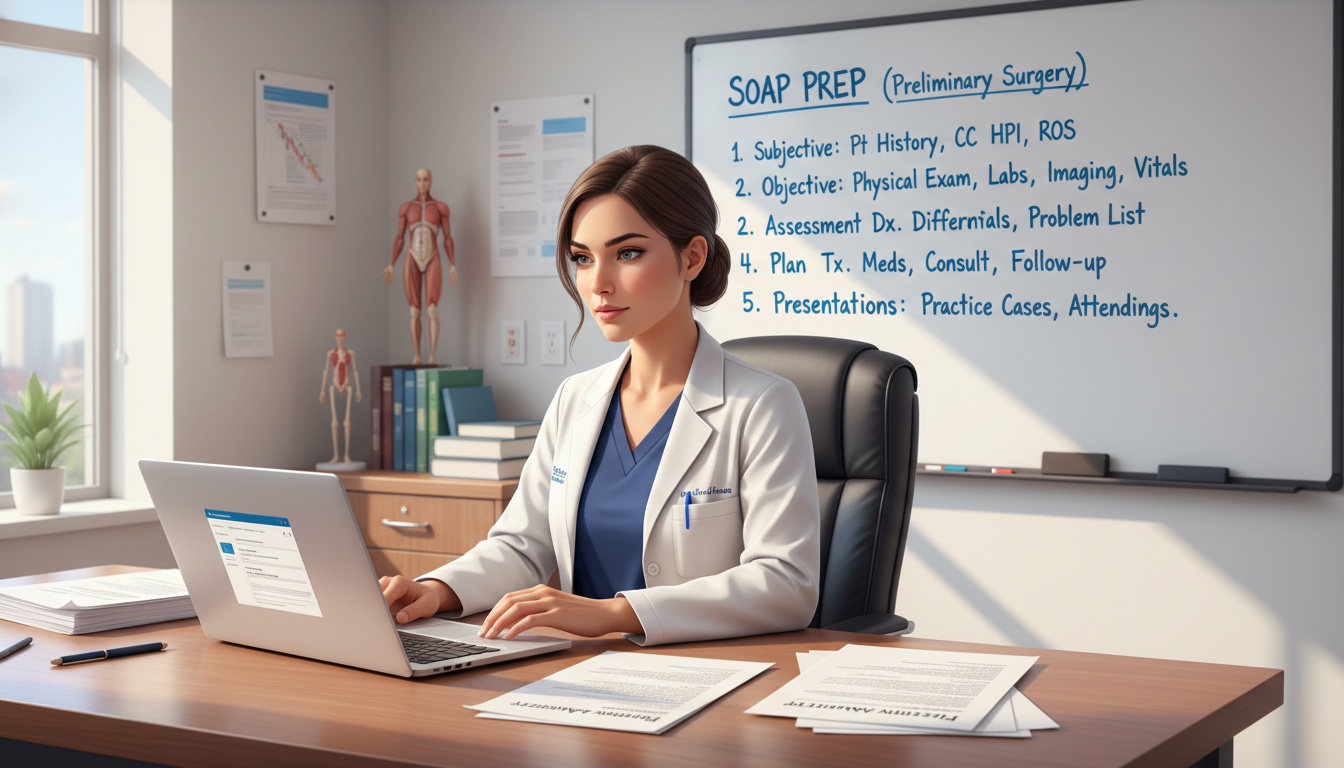
As a US citizen IMG (American studying abroad), the Supplemental Offer and Acceptance Program (SOAP) can be your crucial second chance to enter residency—especially in a specialized and relatively small field like medical genetics. Effective SOAP preparation is not something you start on Monday of Match Week; it begins months in advance.
This guide focuses on SOAP preparation specifically for US citizen IMGs interested in medical genetics residency (including combined programs like Pediatrics–Medical Genetics or Internal Medicine–Medical Genetics), with practical, step-by-step strategies tailored to your situation.
What Is SOAP?
The Supplemental Offer and Acceptance Program (SOAP) is the NRMP-managed process that allows unmatched or partially matched applicants to apply to unfilled residency positions in an organized, time-limited, and strictly regulated way during Match Week.
Key points:
- SOAP occurs Monday–Thursday of Match Week
- Only SOAP-eligible applicants (per NRMP rules) can participate
- Applications are submitted through ERAS, but offers and acceptances are managed through NRMP’s R3 system
- There are multiple offer rounds throughout the week
- You cannot contact programs directly unless they contact you first during SOAP
For a US citizen IMG targeting medical genetics, SOAP is often about:
- Being open to combined programs (e.g., Pediatrics–Medical Genetics, Internal Medicine–Medical Genetics)
- Considering preliminary or categorical positions in feeder specialties (Pediatrics, Internal Medicine, OB/GYN, etc.) that can lead toward genetics
- Strategically using SOAP to stay connected to your long-term goal of a medical genetics match, even if your immediate SOAP position is not labeled as genetics.
Pre–Match Week SOAP Preparation: The Foundation
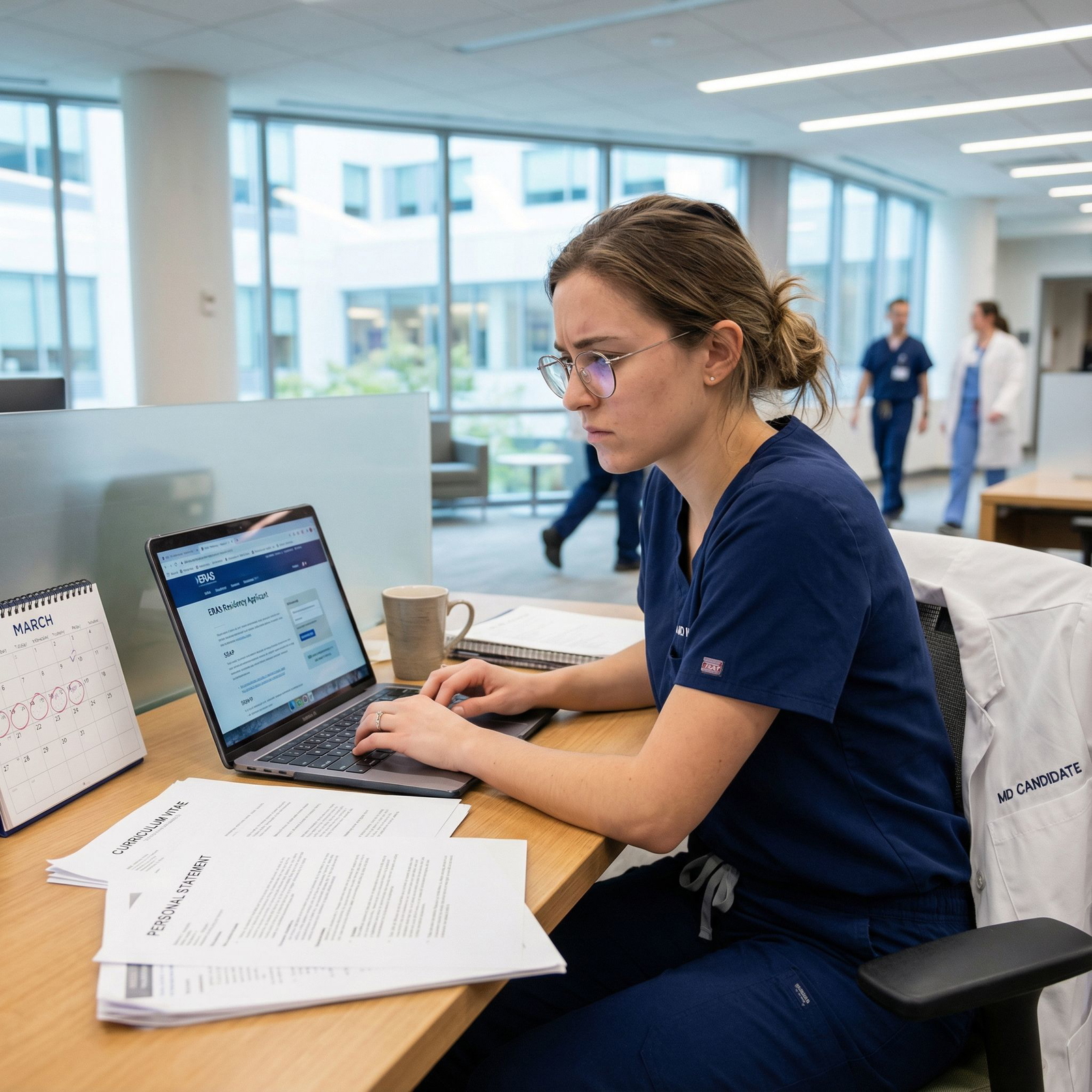
SOAP is stressful and moves fast. US citizen IMGs who succeed in SOAP generally have systems ready before Match Week. Begin preparing 3–4 months in advance if possible.
1. Confirm Your Eligibility and Understand the Rules
You must be NRMP-registered and participating in the Main Match, and unmatched or partially matched at the start of Match Week to enter SOAP.
Check:
- You have no NRMP violations
- Your USMLE exams are all passed and available in ERAS
- Your ECFMG status (for IMGs) is confirmed or will be by the rank order list deadline
- You understand what is SOAP according to NRMP:
- A controlled application process
- Strict communication rules (no unsolicited outreach to programs)
- No external offers outside the NRMP system
Action item:
- Download the latest NRMP SOAP Guide and Communication Policies and save them in a folder labeled “SOAP Preparation.”
2. Know the Role of Medical Genetics in SOAP
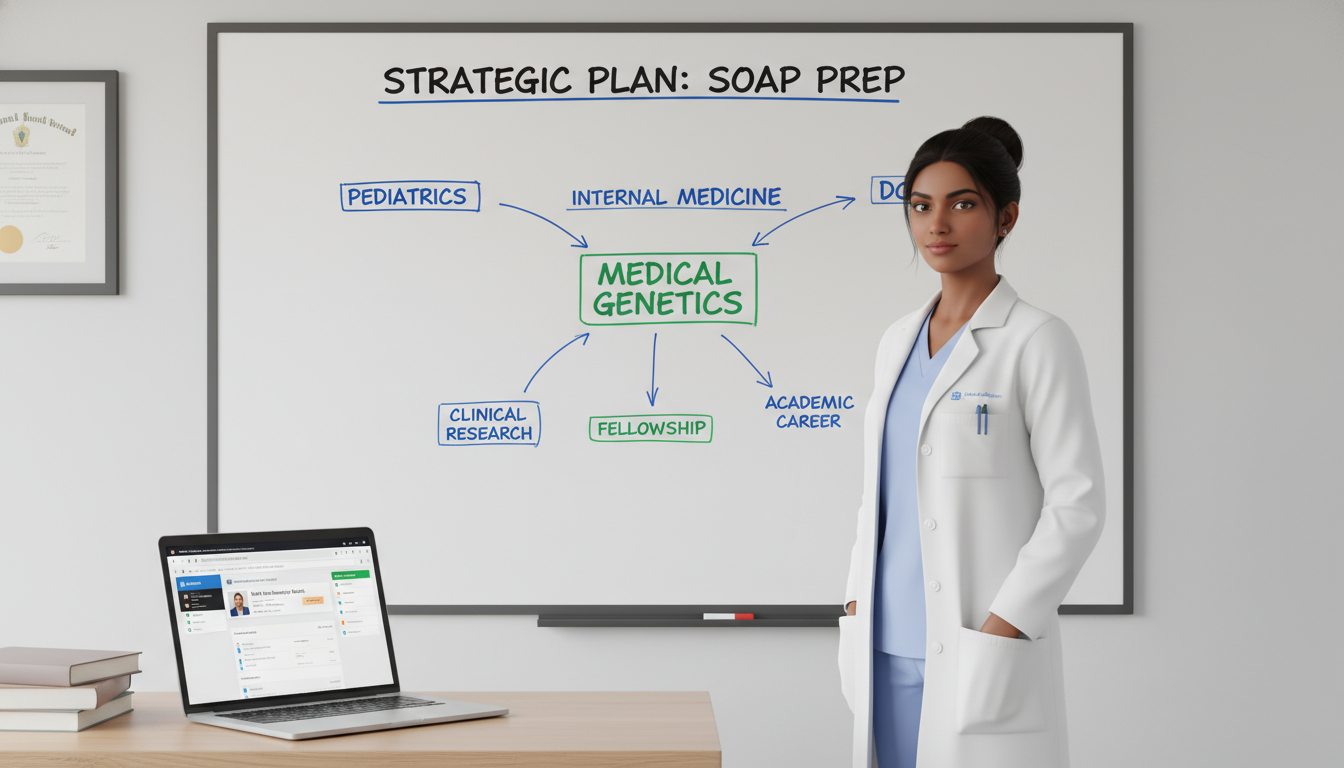
Pure Medical Genetics & Genomics categorical PGY-1 positions are relatively few and often competitive. However, your overall strategy should consider:
- Combined programs (e.g., Pediatrics–Medical Genetics, Internal Medicine–Medical Genetics, Maternal-Fetal Medicine–Genetics) may appear in SOAP some years, but not consistently.
- Feeder specialties:
- Pediatrics: A common pathway to clinical genetics
- Internal Medicine: Another standard route
- OB/GYN: Can be relevant for reproductive genetics
- Family Medicine: Occasionally leads to genetics-related careers (e.g., primary care with strong genetics focus)
- Some programs may have unfilled spots due to geography, less recognition, or new accreditation status.
As a US citizen IMG wanting a medical genetics residency long-term, SOAP should prioritize:
- Direct genetics or combined genetics programs if available
- Pediatrics or Internal Medicine positions in academic centers with active genetics departments
- Other categorical residency spots in institutions with strong genetics exposure
Building a Targeted SOAP Strategy as a US Citizen IMG
1. Create a Personalized SOAP Roadmap
Before Match Week, outline what you’re willing to accept during SOAP. For a US citizen IMG with a goal of genetics match, your roadmap might look like this:
Tier 1 – Ideal (If Available in SOAP):
- Categorical Medical Genetics & Genomics PGY-1
- Combined Pediatrics–Medical Genetics PGY-1
- Combined Internal Medicine–Medical Genetics PGY-1
Tier 2 – Strong Pathway to Genetics:
- Categorical Pediatrics in academic centers with:
- A dedicated Division of Medical Genetics
- A Genetics Fellowship
- A strong Children’s Hospital
- Categorical Internal Medicine programs with robust genomics, cancer genetics, or inherited disease programs
Tier 3 – Indirect but Acceptable Pathways:
- Community Pediatrics/Internal Medicine with some subspecialty exposure
- Categorical Family Medicine in systems with good genetics referral opportunities
Tier 4 – Safety Options:
- Preliminary Internal Medicine or Transitional Year only if you clearly understand how you’ll use that year to improve your profile and reapply effectively for a medical genetics path.
Be honest with yourself:
- Are you open to relocating anywhere in the US?
- Are there visa issues? (US citizen IMGs generally don’t have visa barriers, which can be an advantage in SOAP.)
- What type of workload and setting are you willing to accept for a secure training spot?
2. Research Programs with Genetics Connections
Start this well before Match Week:
Make a list of:
- Institutions with ACGME-accredited Medical Genetics & Genomics programs
- Children’s hospitals with genetic clinics
- Academic centers leading in genomics research (NIH Undiagnosed Diseases Network sites, large cancer centers, etc.)
For each:
- Identify their Pediatrics and Internal Medicine residencies
- Note whether these have historically had unfilled positions (you can sometimes infer from past SOAP lists, program reputation, or size)
- Look for:
- Faculty profiles indicating clinical genetics or genomic medicine
- Research programs in rare diseases, metabolic disorders, or inherited cancer syndromes
Action item:
- Build a spreadsheet with columns:
- Institution
- Program type (Peds/IM/FM/Genetics)
- Location
- Known genetics resources (clinic, fellowship, research)
- Notes on IMG-friendliness (previously matched IMGs, stated policies)
- Your “tier” ranking (1–4)
During SOAP, when the List of Unfilled Programs appears, you’ll cross-reference this list quickly against your spreadsheet instead of starting from zero.
3. Understand How Program Directors View US Citizen IMGs
As an American studying abroad, you often have:
- Advantage: No visa requirement
- Mixed perception: Training outside the US or Canada can raise concerns about:
- Clinical standards
- Familiarity with US healthcare system
- Communication and documentation style
- Opportunity: During SOAP, programs may become more open to strong US citizen IMGs who:
- Are immediately available
- Communicate well
- Have evidence of US clinical experience
SOAP preparation for you should emphasize:
- Clear documentation of US clinical rotations (especially in Peds/IM or genetics-adjacent fields)
- Strong letters of recommendation from US faculty
- Demonstrated interest in Medical Genetics (research, electives, case reports, etc.)
Document Preparation: Optimizing ERAS for SOAP in Medical Genetics
During SOAP, you cannot substantially rewrite or overhaul your ERAS application, but you can adjust which documents go to which programs and update certain sections (e.g., personal statements, program signaling if enabled, etc.). Preparing multiple, tailored documents before Match Week is essential.
1. Personal Statements for SOAP
For an aspiring medical genetics physician, plan to have at least two personal statements ready:
Genetics-focused statement
- Emphasizes:
- Interest in inherited disorders, rare diseases, or genomics
- Clinical experiences involving genetic counseling, metabolic disorders, or dysmorphology clinics
- Your long-term goal to become a clinical geneticist or physician-scientist in genetics
- Use this for:
- Any direct Medical Genetics & Genomics or combined programs
- Pediatrics or Internal Medicine programs with strong genetics resources
- Emphasizes:
Core Specialty–focused statement (Peds/IM) with genetics emphasis
- Emphasizes:
- Your motivation for Pediatrics or Internal Medicine (patient relationships, continuity, complex medical care)
- Your interest in genetics as a subspecialty or area of focus
- Use this for:
- General Peds/IM programs without explicit genetics connection, while still signaling long-term interest in the field
- Emphasizes:
Optional: 3. General SOAP statement
- Broad, focused mostly on willingness to work hard, learn, and contribute
- For programs outside your genetics pathway if you decide they are still worth applying to as a safety net
2. Letters of Recommendation Strategy
You likely cannot upload brand-new letters during SOAP, but you can manage which letters are assigned to which programs.
As a US citizen IMG targeting a genetics match:
- Aim for a mix of:
- Pediatrics or Internal Medicine letters from US faculty
- Any letter from a Genetics or Metabolism specialist (even if from an elective or research)
- For genetics-related programs:
- Assign your strongest Peds/IM letters plus any genetics-specific letter
- For broader Peds or IM programs:
- Use letters that emphasize:
- Clinical judgment
- Teamwork
- Adaptability in US settings
- Use letters that emphasize:
Prepare a short document for your own reference summarizing:
- Who each letter writer is
- What they emphasize (clinical skills, research, genetics, professionalism)
- Which type of program each letter is best for
3. Update Your Experiences and CV With Genetics Emphasis
Before the ERAS submission deadline (or any allowed update window):
- Highlight any genetics-related experiences:
- Rotations in genetics clinics, NICU, PICU, oncology, metabolic clinics
- Case reports or posters on genetic conditions
- Participation in rare disease days, genomics conferences, etc.
For SOAP programs in Pediatrics or Internal Medicine, a well-framed genetics interest shows:
- You have a clear academic direction
- You’re likely to be engaged and productive in research or scholarly activity

Logistical and Communication Preparation for SOAP Week
1. Set Up Your Environment
SOAP moves quickly, and programs may call or invite you to brief interviews with little notice.
Prepare:
- A quiet, professional-looking space with neutral background
- Reliable internet, backup device (tablet/phone), and headphones
- Professional outfit easily accessible
- Calendar cleared as much as possible from Monday–Thursday of Match Week
Have ready:
- One-page “SOAP summary” of your application:
- Key strengths as a US citizen IMG
- Your interest in Pediatrics/IM and medical genetics
- 2–3 concise stories that show your clinical skills and resilience
2. Anticipate SOAP Communication Scenarios
During SOAP:
- Programs may contact you via email or phone to:
- Request additional information
- Offer a brief interview
- You cannot reach out to them first, but you can (and should) respond promptly and professionally when they initiate contact.
Prepare short scripts for common questions:
- “Tell me about yourself and why you’re interested in our Pediatrics program.”
- “You’re an American studying abroad. How have you adapted to different health systems, and how will that help you in our US residency?”
- “We’re not a genetics program per se. Why are you applying here?”
- Example response:
- “My long-term goal is to work in medical genetics, and I know that strong training in Pediatrics is the essential foundation. Your program’s diverse patient population and exposure to complex pediatric conditions would give me excellent preparation, and I hope to get involved with any genetics or complex care clinics here.”
- Example response:
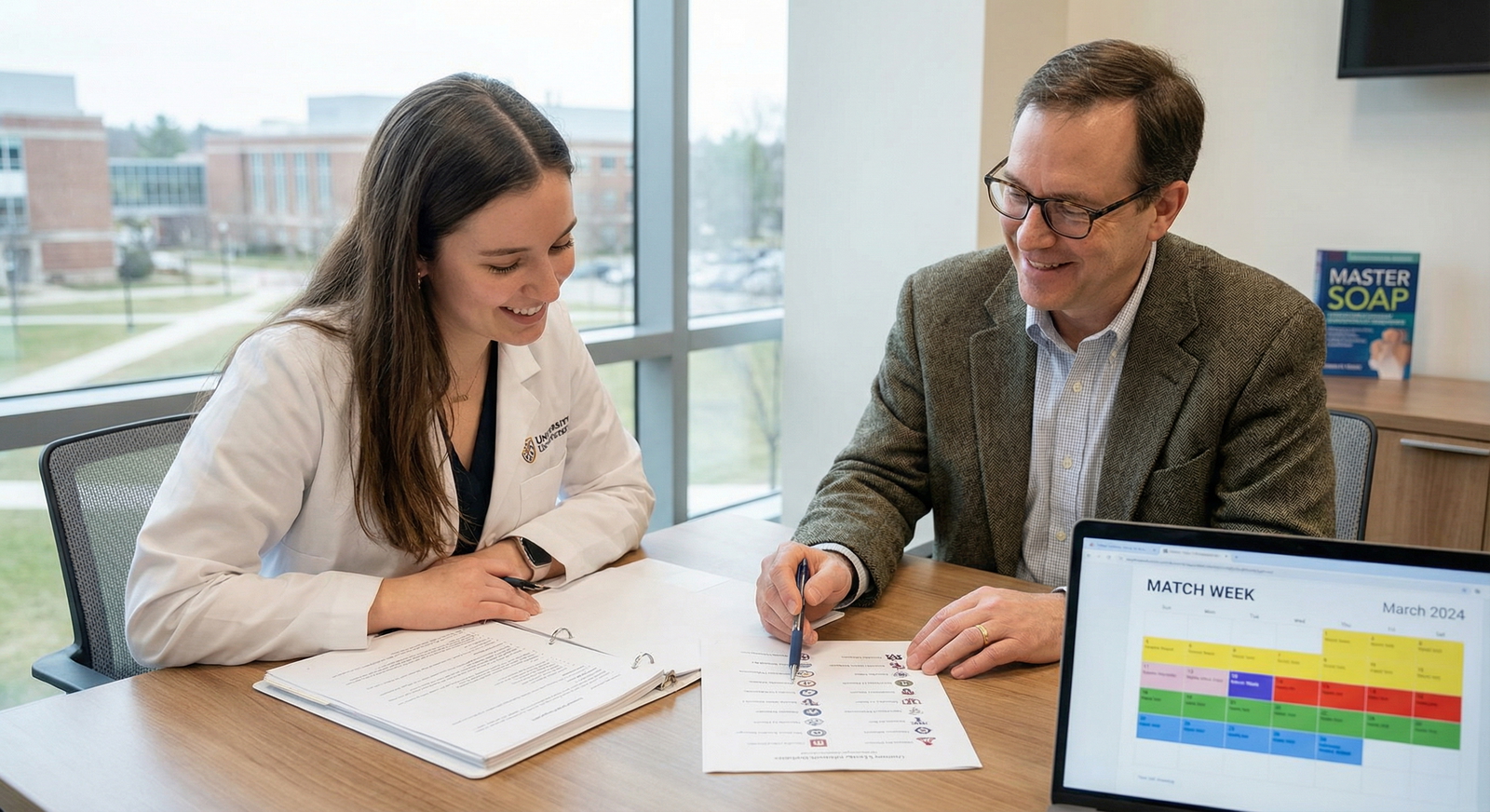
3. Know the SOAP Timeline and Rounds
While exact times may vary by year, the overall flow is:
- Monday morning: You find out if you’re matched, partially matched, or unmatched.
- If eligible, you gain access to:
- List of unfilled programs
- ERAS SOAP application portal
- Monday–Thursday:
- You submit a limited number of applications (traditionally up to 45 total) to unfilled programs across several rounds.
- Programs review applications, contact selected applicants, and submit lists to NRMP.
- NRMP generates offers in several rounds; you can accept or reject an offer in each round.
SOAP preparation tasks:
- Before Match Week:
- Understand exactly how many applications you can send.
- Decide your priority tiers for where to apply first.
- During SOAP:
- Track where you’ve applied and any communication from programs.
- Be ready to quickly decide if you will accept offers, especially if they’re not genetics-related but still viable training options.
Decision-Making: Balancing Genetics Goals with Realistic SOAP Outcomes
1. Clarify Your Risk Tolerance
For a US citizen IMG in medical genetics, there’s often a tension between:
- Holding out for a program closely aligned with medical genetics
- Taking a broader specialty spot to secure any residency now
Key questions:
- How many attempts at the Match are you willing to take?
- Do you have financial, family, or immigration pressures to start residency immediately?
- How strong is your application (scores, attempts, clinical experiences, letters)?
If your profile is:
- Strong (solid USMLE, good US clinical experience, research, no red flags):
- You may prioritize programs that maintain a clear path toward genetics (Tiers 1–2).
- Moderate to weaker (average scores, limited USCE, gaps):
- It may be wise to more heavily consider Tiers 2–4 to ensure you enter residency and build your profile from within the system.
2. Think Long-Term About a Genetics Match
Even if you accept a non-genetics SOAP position, you can still aim for a medical genetics residency later by:
- Excelling in your residency (Peds/IM)
- Seeking genetics electives and mentors
- Doing research in inherited diseases, metabolic disorders, or genomic medicine
- Applying to a Medical Genetics & Genomics fellowship after completing a primary residency
From a program director’s perspective, an intern who:
- Does strong clinical work
- Demonstrates academic interest in genetics
- Builds good relationships is a competitive candidate for future genetics positions or fellowships.
3. Example SOAP Pathways for US Citizen IMGs
Scenario 1:
- You see a combined Pediatrics–Medical Genetics program in the SOAP list.
- You have solid Peds letters, genetics research, and strong scores.
- Strategy:
- Apply immediately to this program with your genetics-focused personal statement.
- Also apply to several Pediatrics programs with active genetics divisions.
- If offered the combined spot, accept—it aligns directly with your goal.
Scenario 2:
- No genetics or combined programs are available in SOAP.
- Several university-affiliated Pediatrics programs with genetics clinics are on the list.
- Strategy:
- Apply to those first using your Peds + genetics-emphasis personal statement.
- Fill remaining slots with IM programs that have oncology/genomics research opportunities.
- If you receive an offer from a strong Peds program with good genetics exposure, accept and plan to apply for a genetics fellowship later.
Scenario 3:
- Limited Peds/IM positions are available that fit your profile.
- You receive an offer from a community IM program with limited explicit genetics exposure.
- Strategy:
- Assess your personal circumstances.
- If you need to start residency this year and the program is stable, it may be wise to accept, while still seeking genetics-related opportunities (e.g., tele-genetics electives, remote research, case reports on inherited conditions).
FAQ: SOAP Preparation for US Citizen IMG in Medical Genetics
Q1: As a US citizen IMG, do I have an advantage in SOAP compared with non-US IMGs?
Yes, in several ways. Programs do not need to sponsor a visa for you, which removes administrative and financial barriers. During SOAP, when decisions are time-sensitive, being a US citizen IMG often makes you more attractive than an equally qualified candidate who needs visa sponsorship. However, you still must overcome concerns about international training by emphasizing your US clinical experience, communication skills, and performance.
Q2: Are there usually many medical genetics residency spots in SOAP?
Typically, pure Medical Genetics & Genomics PGY-1 positions are few, and some years there may be none in SOAP. More commonly, your genetics-related path during SOAP will involve Pediatrics or Internal Medicine spots at institutions with active genetics services. Your SOAP preparation should assume that direct genetics slots may be scarce and plan for Peds/IM-based pathways.
Q3: How should I explain my interest in medical genetics when I’m applying to general Pediatrics or Internal Medicine programs in SOAP?
Frame genetics as a strength and an academic focus, not as a sign that you’re only temporarily interested in their program. For example: “I’m deeply interested in inherited diseases and genomics, and I see strong clinical training in Pediatrics as the essential foundation. I’d like to contribute to your program through research or quality improvement projects related to complex or genetic conditions while fully committing to being an excellent pediatric resident.”
Q4: If I don’t match through SOAP this year, what should I do to improve my chances of a future genetics match?
Use the year to strengthen your profile:
- Gain US clinical experience (especially in Peds/IM or genetics clinics)
- Engage in research related to genetics or rare diseases
- Improve USMLE performance if you still have Step 3 ahead
- Network with medical genetics faculty, attend genetics conferences, and present case reports or posters
- Work with an advisor who understands the genetics match landscape
This targeted growth can make you more competitive both for core residencies (Peds/IM) and later for a dedicated medical genetics residency or fellowship.
By preparing early, tailoring your documents, and building a clear strategy that connects SOAP outcomes to your long-term goal of a medical genetics career, you can use SOAP as a powerful tool rather than a last-minute scramble. As a US citizen IMG, you are well-positioned—if you prepare deliberately—to turn a challenging week into a pivotal opportunity on your path to practicing medical genetics.